The best time to visit Réunion is from May to November, during the austral winter: drier weather, moderate heat on the coast and ideal conditions for hiking in the cirques and on the volcano. The most balanced months are September, October and early November: little rain, warming days and humpback whales still around in September–October. From December to April, the austral summer is hot, humid and coincides with the cyclone season. Réunion has a tropical climate: 25 to 30 °C (77 to 86 °F) in the afternoon in Saint-Denis depending on the season, with sharp contrasts between the dry west coast, the very wet east coast and the cooler highlands (the “Hauts”).
The island is small, but its relief creates very strong contrasts. The east coast, exposed to the trade winds (the “windward coast”), receives several times more rain than the west coast (the “leeward coast”), and it is 8 to 10 °C (46 to 50 °F) cooler in the Hauts than on the beaches. Here is how to choose your time, based on the official 1991–2020 climate normals from Météo-France.

Our travel deals for Reunion
Affiliate links: we earn a commission, at no extra cost to you.
 FlightsKiwi.comCompare flights and airline combinations to Reunion.Compare flights

When to go to Réunion at a glance
- Best time overall May to November (austral winter, dry season)
- For hiking (cirques, volcano, Piton des Neiges) May to November; September–October for a good balance of dry and mild weather
- For humpback whales roughly June to October, mostly off the west coast
- Cyclone season November to April according to Météo-France, with a higher risk from January to March
- Wettest months January to March, especially on the east coast and in the Hauts
- West coast (Saint-Gilles, L’Hermitage) the driest all year, with less than 10 mm (0.4 in) of rain a month from July to October at Le Port
- Flagship event the Grand Raid (Diagonale des Fous), in October
When to go to Réunion by priority
- Best weather: May to November (dry season), ideally September–October for hiking
- Cheapest: February–March (accepting the cyclone risk), June and September
- Fewest crowds: May and June, before the peak holiday period; avoid July–August, the Grand Raid weeks in October and the year-end holidays
- Events: humpback whales roughly June to October, Grand Raid in October, Deepavali in October or November (check dates every year)
Reunion: the calendar at a glance
✅ Best months: may, June, July, August, September, October, November
❌ Period to avoid: February
Réunion climate month by month
The table below gives the normals for Saint-Denis (Roland-Garros airport station, at Gillot), on the north coast, where most flights arrive. The west coast is drier, the east coast much wetter and the Hauts distinctly cooler: these differences are detailed below.
| Month | Avg. max | Avg. min | Rain | Crowds | Prices | Verdict |
|---|---|---|---|---|---|---|
| January | 30.2 °C (86 °F) | 23.6 °C (74 °F) | 270 mm (10.6 in) | High (holidays) | High | Hot, humid, cyclone risk ⚠️ |
| February | 30.3 °C (87 °F) | 23.7 °C (75 °F) | 279 mm (11.0 in) | Low | Low | Wettest month, cyclone peak ❌ |
| March | 30.0 °C (86 °F) | 23.3 °C (74 °F) | 264 mm (10.4 in) | Low | Low | Still very wet, cyclones possible ⚠️ |
| April | 29.2 °C (85 °F) | 22.3 °C (72 °F) | 133 mm (5.2 in) | Moderate (Easter holidays) | Moderate | Transition, rainfall easing ⚠️ |
| May | 27.6 °C (82 °F) | 20.7 °C (69 °F) | 96 mm (3.8 in) | Moderate | Moderate | Start of the dry season ✅ |
| June | 26.2 °C (79 °F) | 19.1 °C (66 °F) | 67 mm (2.6 in) | Low | Low | Cool and dry, ideal for hiking ✅ |
| July | 25.4 °C (78 °F) | 18.2 °C (65 °F) | 51 mm (2.0 in) | High (peak holiday period) | High | Coolest month, whales ✅ |
| August | 25.5 °C (78 °F) | 18.2 °C (65 °F) | 55 mm (2.2 in) | High (peak holiday period) | High | Dry, whales, cold nights in the Hauts ✅ |
| September | 26.0 °C (79 °F) | 18.7 °C (66 °F) | 48 mm (1.9 in) | Moderate | Moderate | Dry and mild, whales ✅ |
| October | 27.0 °C (81 °F) | 19.9 °C (68 °F) | 43 mm (1.7 in) | High (Grand Raid) | High | Very dry, Grand Raid ✅ |
| November | 28.3 °C (83 °F) | 21.1 °C (70 °F) | 62 mm (2.4 in) | Moderate | Moderate | Heat returns, still dry ✅ |
| December | 29.5 °C (85 °F) | 22.7 °C (73 °F) | 160 mm (6.3 in) | High (year-end holidays) | Very high | Start of the hot, humid season ⚠️ |
Worth noting: temperature differences between seasons remain small on the coast (about 25 °C (77 °F) in the afternoon in July, 30 °C (86 °F) in January). What really changes is the rain: in Saint-Denis, more than six times as much rain falls in February as in October.
Seasons in Réunion: pros and cons
Météo-France distinguishes two main seasons in Réunion, separated by short shoulder seasons: the hot, rainy season (austral summer, roughly December to April) and the cool, dry season (austral winter, roughly May to November). The seasons are therefore reversed compared with the Northern Hemisphere. The same reversed seasons apply on neighboring Mauritius: our comparison to choose between Mauritius and Réunion sets the two islands side by side.
Austral winter (May to November): the dry season
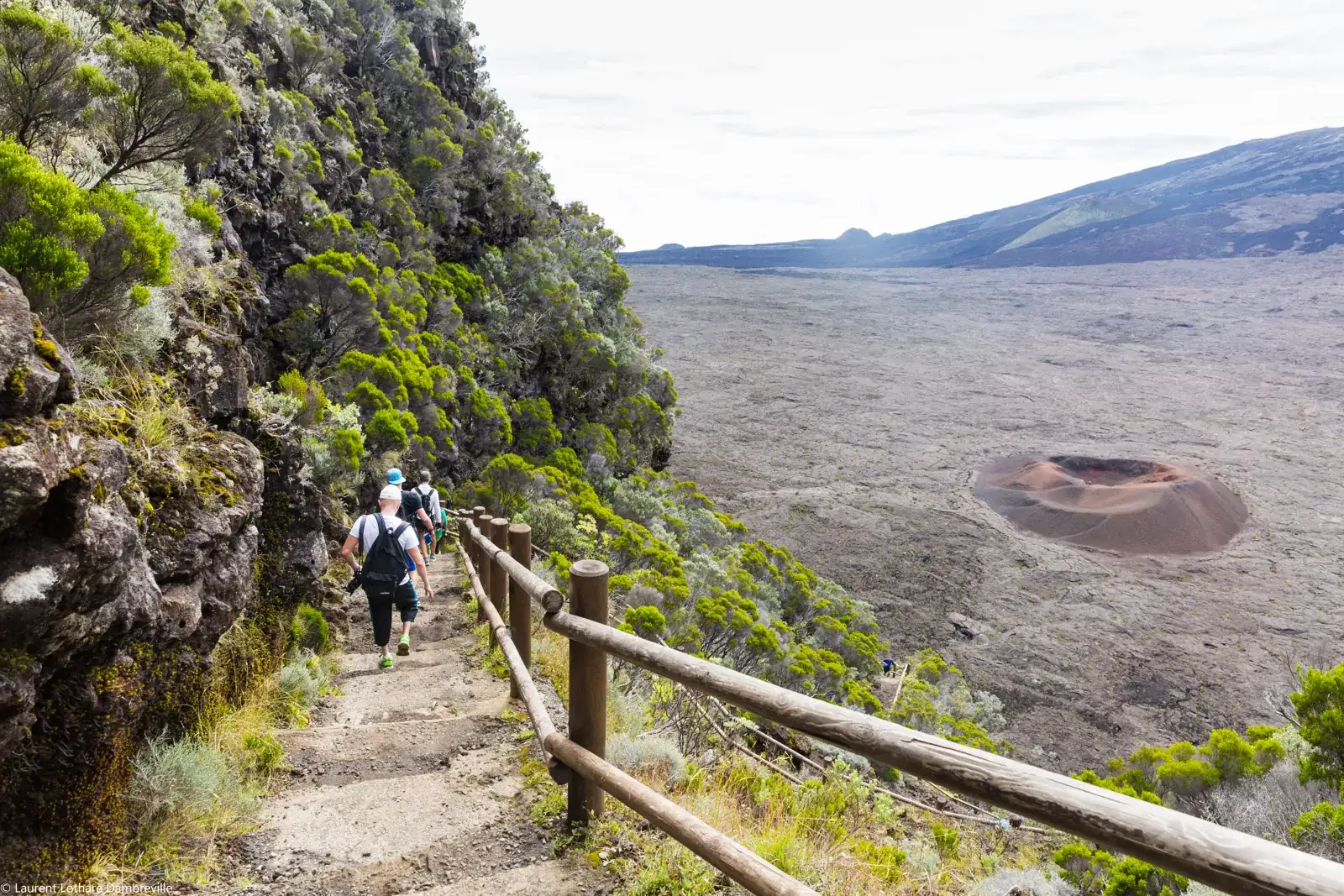
This is the most pleasant time to discover the island. On the west coast it barely rains: less than 10 mm (0.4 in) a month from July to October at Le Port. On the coast, highs are around 25 to 28 °C (77 to 82 °F). In the Hauts it is cool: at the Plaine des Cafres (1,560 m, 5,118 ft), lows drop to around 5 to 6 °C (41 to 43 °F) in July–August, and frost is possible at the summits of the peaks.
- Pros: passable trails, skies often clear in the morning on the summits, bearable heat, humpback whale season, no cyclones
- Cons: cold nights at altitude (bring a fleece and a windbreaker for the Piton des Neiges or the volcano), strong demand during the July–August peak holiday period
- Good to know: even in the dry season, clouds often roll over the high ground by late morning. Set off early to enjoy the views
- Our tip: September and October offer the best compromise: little rain, rising temperatures and still some whales
Austral summer (December to April): heat, rain and cyclones
Summer is hot and humid: about 30 °C (86 °F) in the afternoon on the coast, and abundant rain, especially in the east and in the Hauts. At Saint-Benoît, on the windward coast, more than 500 mm (19.7 in) of rain falls in February and in March. This is also the tropical cyclone season in the southwest Indian Ocean, which runs from November to April according to Météo-France; the UK FCDO (GOV.UK, updated 22 October 2026) says it normally runs from December to April. A cyclone does not hit the island every year, but one passing can block roads, close trails and disrupt flights for several days. To place the windward coast and the drier west, see the map of Réunion.
- Pros: lush vegetation, waterfalls and natural pools full of water, warm sea, tropical fruit (lychees in December–January, mangoes), lower prices in February–March
- Cons: heavy rain that can make trails dangerous or close them, humid heat, cyclone risk, oppressive heat for long hikes
- Good to know: the UK FCDO advises monitoring local news, checking the French weather service and the World Meteorological Organization, and following the advice of the local authorities (GOV.UK, updated 22 October 2026)
- Who is it for? Flexible travelers who favor the west coast, the sea and the waterfalls over long hikes
When to go to Réunion by region
The island’s relief blocks the trade winds from the east and southeast. The result: the east coast and the exposed slopes receive most of the rain, while the west stays dry. Here is a comparison of the normals at four stations:
| Month | Saint-Denis (north) | Le Port (west) | Saint-Benoît (east) | Plaine des Cafres (1,560 m, 5,118 ft), highlands |
|---|---|---|---|---|
| January | 30.2 °C (86 °F) / 270 mm (10.6 in) | 31.5 °C (89 °F) / 118 mm (4.6 in) | 30.2 °C (86 °F) / 469 mm (18.5 in) | 21.9 °C (71 °F) / 426 mm (16.8 in) |
| February | 30.3 °C (87 °F) / 279 mm (11.0 in) | 31.9 °C (89 °F) / 118 mm (4.6 in) | 30.5 °C (87 °F) / 541 mm (21.3 in) | 22.0 °C (72 °F) / 428 mm (16.9 in) |
| March | 30.0 °C (86 °F) / 264 mm (10.4 in) | 31.5 °C (89 °F) / 105 mm (4.1 in) | 30.1 °C (86 °F) / 535 mm (21.1 in) | 21.6 °C (71 °F) / 303 mm (11.9 in) |
| April | 29.2 °C (85 °F) / 133 mm (5.2 in) | 30.9 °C (88 °F) / 40 mm (1.6 in) | 29.3 °C (85 °F) / 349 mm (13.7 in) | 20.7 °C (69 °F) / 124 mm (4.9 in) |
| May | 27.6 °C (82 °F) / 96 mm (3.8 in) | 29.3 °C (85 °F) / 18 mm (0.7 in) | 27.7 °C (82 °F) / 260 mm (10.2 in) | 18.7 °C (66 °F) / 81 mm (3.2 in) |
| June | 26.2 °C (79 °F) / 67 mm (2.6 in) | 27.7 °C (82 °F) / 16 mm (0.6 in) | 26.0 °C (79 °F) / 179 mm (7.0 in) | 16.6 °C (62 °F) / 62 mm (2.4 in) |
| July | 25.4 °C (78 °F) / 51 mm (2.0 in) | 26.7 °C (80 °F) / 5 mm (0.2 in) | 25.0 °C (77 °F) / 179 mm (7.0 in) | 15.7 °C (60 °F) / 62 mm (2.4 in) |
| August | 25.5 °C (78 °F) / 55 mm (2.2 in) | 26.6 °C (80 °F) / 8 mm (0.3 in) | 25.2 °C (77 °F) / 155 mm (6.1 in) | 16.1 °C (61 °F) / 50 mm (2.0 in) |
| September | 26.0 °C (79 °F) / 48 mm (1.9 in) | 27.0 °C (81 °F) / 8 mm (0.3 in) | 25.7 °C (78 °F) / 145 mm (5.7 in) | 17.1 °C (63 °F) / 43 mm (1.7 in) |
| October | 27.0 °C (81 °F) / 43 mm (1.7 in) | 28.0 °C (82 °F) / 10 mm (0.4 in) | 26.6 °C (80 °F) / 133 mm (5.2 in) | 18.8 °C (66 °F) / 42 mm (1.7 in) |
| November | 28.3 °C (83 °F) / 62 mm (2.4 in) | 29.2 °C (85 °F) / 20 mm (0.8 in) | 27.8 °C (82 °F) / 181 mm (7.1 in) | 20.3 °C (69 °F) / 63 mm (2.5 in) |
| December | 29.5 °C (85 °F) / 160 mm (6.3 in) | 30.7 °C (87 °F) / 72 mm (2.8 in) | 29.3 °C (85 °F) / 330 mm (13.0 in) | 21.4 °C (71 °F) / 163 mm (6.4 in) |
In one table: the recommended period for each main region, month by month.
| Region | Jan | Feb | Mar | Apr | May | Jun | Jul | Aug | Sep | Oct | Nov | Dec |
|---|---|---|---|---|---|---|---|---|---|---|---|---|
| West coast (Saint-Gilles, Saint-Leu) | ⚠️ | ⚠️ | ⚠️ | ✅ | ✅ | ✅ | ✅ | ✅ | ✅ | ✅ | ✅ | ⚠️ |
| North (Saint-Denis) | ❌ | ❌ | ❌ | ⚠️ | ✅ | ✅ | ✅ | ✅ | ✅ | ✅ | ✅ | ⚠️ |
| East (Saint-Benoît, Sainte-Rose) | ❌ | ❌ | ❌ | ❌ | ⚠️ | ⚠️ | ⚠️ | ⚠️ | ✅ | ✅ | ✅ | ❌ |
| South (Saint-Pierre) | ⚠️ | ⚠️ | ⚠️ | ⚠️ | ✅ | ✅ | ✅ | ✅ | ✅ | ✅ | ✅ | ⚠️ |
| Hauts, cirques and volcano | ❌ | ❌ | ❌ | ⚠️ | ✅ | ✅ | ✅ | ✅ | ✅ | ✅ | ✅ | ⚠️ |
The west coast, leeward (Saint-Gilles, L’Hermitage, Saint-Leu)
This is the sunniest and driest area, with the lagoon and most of the beaches. At Le Port, rainfall stays at around 20 mm (0.8 in) a month at most from May to November, and around 100 to 120 mm (3.9 to 4.7 in) from January to March, much less than on the rest of the island. The west coast can be visited year-round, with peak comfort from May to November. In summer, it is the best refuge when it rains elsewhere.
The north (Saint-Denis)
The main town has an intermediate climate: dry from August to November (less than 65 mm (2.6 in) a month), very wet from January to March (more than 260 mm (10.2 in) a month). The ideal period runs from May to November.
The east coast, windward (Saint-Benoît, Sainte-Rose, Saint-Philippe)
This is the wettest region of the island. At Saint-Benoît, it still rains more than 130 mm (5.1 in) in October, the driest month, and more than 500 mm (19.7 in) in February and March. This rain explains its forests, waterfalls and rivers. Choose September to November to visit, and pack rain gear in any case.
The south (Saint-Pierre)
Drier than the east, the south stays sunny for much of the year. At Saint-Pierre, rainfall is low from August to November (less than 31 mm (1.2 in) a month) and moderate in summer (about 100 to 116 mm (3.9 to 4.6 in) a month from January to March). It is a good base for reaching the volcano and the wild south. Our guide to the Piton de la Fournaise covers access to the volcano and hiking precautions.
The Hauts, the cirques and the volcano
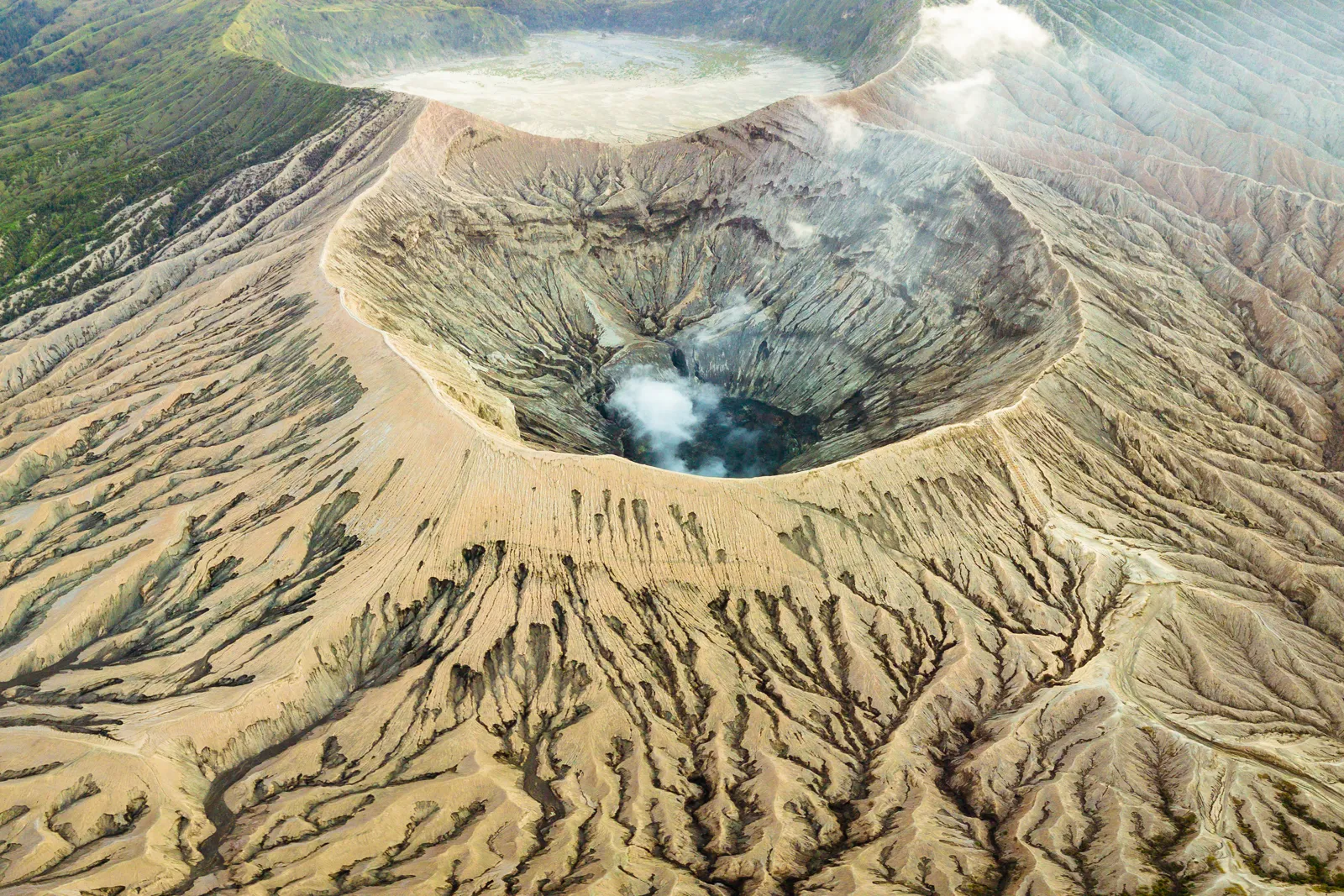
At altitude it is distinctly cooler: an average high of about 16 °C (61 °F) in July at the Plaine des Cafres, compared with 25 °C (77 °F) in Saint-Denis. Summer rains there are as heavy as on the east coast (more than 420 mm (16.5 in) in January and February). At Cilaos (1,197 m, 3,927 ft), about 30 to 45 mm (1.2 to 1.8 in) falls a month from June to October, compared with more than 430 mm (16.9 in) in January–February. For Mafate, Cilaos, Salazie, the Piton des Neiges and the Piton de la Fournaise, aim for May to November. The UK FCDO notes that there are active volcanoes in Réunion, including the Piton de la Fournaise (GOV.UK, updated 22 October 2026): check local access conditions before you set out. To stay there, see our guide to the Cirque de Cilaos.
When to go to Réunion by trip type
| Trip | Best time | Where? |
|---|---|---|
| Hiking (cirques, Piton des Neiges) | May to November, ideally September–October | Mafate, Cilaos, Salazie |
| Volcano (Piton de la Fournaise) | May to November, start early in the morning | Pas de Bellecombe, Plaine des Sables |
| Humpback whale watching | Roughly June to October | West coast (Saint-Gilles, Saint-Leu, Saint-Paul) |
| Beach and lagoon | Year-round, most comfortable from May to November | L’Hermitage, La Saline, Saint-Leu, L’Étang-Salé |
| Waterfalls and forests | April–May and November (plenty of water, easing rain) | East coast, Bélouve, Langevin |
| Budget | February–March (accepting the cyclone risk), June, September | Whole island |
| Family trip | Summer holidays and other peak holiday periods | West coast, Saint-Pierre |
| Honeymoon | September to November | West coast, Cilaos |
| Trail running | October (Grand Raid) | Island crossing |
Major events to plan your trip around
| Period | Event | Location |
|---|---|---|
| January or February (depending on the lunar calendar) | Chinese New Year | Saint-Denis, Saint-Pierre |
| Roughly June to October | Humpback whale season | West coast |
| October | Grand Raid: Diagonale des Fous and other races | Island crossing, from the south to the finish in Saint-Denis |
| October or November (depending on the Hindu calendar) | Deepavali, Hindu festival of lights | Saint-André |
| December 20 | Abolition of Slavery Day (public holiday) | Whole island |
| Late December – early January | Year-end holidays (prices at their highest) | Whole island |
Réunion weather month by month: what to expect
January: Hot (30 °C (86 °F) in Saint-Denis) and rainy, in the middle of cyclone season. Year-end holidays at the start of the month, high prices. Stay flexible and favor the west coast.
February: Wettest month in Saint-Denis (279 mm, 11.0 in) and Saint-Benoît (541 mm, 21.3 in), at the heart of the period most exposed to cyclones. Low prices, but long hikes are often compromised.
March: Still very hot and rainy, cyclones possible. The waterfalls are spectacular. Moderate prices.
April: A transition month: rainfall drops sharply (133 mm (5.2 in) in Saint-Denis), and so does the heat. Last cyclone threats. Easter holidays.
May: Start of the dry season: 28 °C (82 °F) in the afternoon on the coast, trails drying out, vegetation still very green. A good month to avoid the crowds.
June: Cool and dry. Nights become cold in the Hauts. The first whales usually arrive. One of the quietest and cheapest months.
July: Coolest month: 25 °C (77 °F) in Saint-Denis, a high below 16 °C (61 °F) and a low below 6 °C (43 °F) at the Plaine des Cafres. Whale season, but crowds and prices are high with the peak holiday period.
August: Dry, sunny on the west coast, cool at altitude. Excellent for hiking and whales, but book early because of the holidays.
September: Temperatures rise, rain stays low everywhere except in the east. Whale season. One of our favorite months, along with October.
October: Driest month in Saint-Denis (43 mm, 1.7 in) and Saint-Benoît. Ideal conditions for hiking. The Grand Raid fills up the accommodation.
November: The heat returns (28 °C (82 °F) in Saint-Denis), with still little rain. A good compromise between hiking and the beach. The cyclone season officially begins, but the risk stays low early in the season.
December: Start of the hot, humid season, rain on the rise (160 mm (6.3 in) in Saint-Denis). Lychee season. Year-end holidays: prices and crowds at their highest.
When to book your trip to Réunion
Flights to the island are in high demand during peak holiday periods (July–August, the Grand Raid weeks in October and the year-end holidays). For these dates, book your flights 4 to 6 months ahead. The same goes for the gîtes in Mafate and the Piton des Neiges mountain hut, where places are limited. Outside peak periods, 2 to 3 months is usually enough. Also remember to book your rental car early in high season. Our guide to car rental in Réunion covers licenses and mountain roads.
Planning your trip to Réunion
- Entry requirements: Réunion is an overseas department of France. See our page on the entry requirements for Réunion, with the rules for US and UK citizens.
- Time difference: Réunion is on UTC+4 all year (no daylight saving time): 4 hours ahead of London in winter and 3 in summer; 9 hours ahead of New York in winter and 8 in summer.
- Currency: the euro (EUR).
- Health: the UK FCDO lists chikungunya and dengue among the health risks in Réunion and advises checking the latest vaccine recommendations at least 8 weeks before your trip (GOV.UK, updated 22 October 2026). Protect yourself against mosquito bites.
- Swimming: there have been shark attacks in Réunion. Follow the advice of the local authorities or your tour operator about which beaches are safe (GOV.UK, updated 22 October 2026).
To go further, see our complete Réunion travel guide. Hesitating with the neighboring island? Also see when to go to Mauritius.
Also worth reading: our Réunion travel guide (what to see, itineraries, budget), as well as when to go to Madagascar and when to go to Seychelles to compare with the neighboring Indian Ocean islands.
Frequently asked questions
What is the rainy season in Réunion?
The rainy season corresponds to the austral summer, from December to April. In Saint-Denis, 264 to 279 mm (10.4 to 11.0 in) falls a month from January to March, compared with 43 to 67 mm (1.7 to 2.6 in) from June to November (Météo-France 1991–2020 normals). The east coast stays the wettest all year, the west coast the driest.
What is the cheapest month to go to Réunion?
In the dry season, May, June and September are the most affordable months, outside peak holiday periods. February and March are also cheap, but they are the wettest months and those with the highest cyclone risk. Prices rise in July–August and during the year-end holidays.
What is the best month to visit Réunion?
September and October are the most balanced months: little rain, mild weather on the coast, passable trails and humpback whales still present. May and June are also very good months, quieter and cheaper.
When is the cyclone season in Réunion?
According to Météo-France, the cyclone season in the southwest Indian Ocean runs from November to April, with a higher risk from January to March; the UK FCDO says it normally runs from December to April. Not every summer brings a cyclone to the island, but stay flexible and follow the local news and weather bulletins.
When can you see whales in Réunion?
Humpback whales visit Réunion’s waters roughly from June to October, during the austral winter. They are mostly seen off the west coast.
Is it cold in Réunion in winter?
Not on the coast: it is still around 25 to 27 °C (77 to 81 °F) in the afternoon in July–August. It is cold in the Hauts, though: at the Plaine des Cafres, lows drop to around 5 to 6 °C (41 to 43 °F) in July–August, and it can freeze at the summit of the Piton des Neiges.
When is the Grand Raid?
The Grand Raid, whose flagship race is the Diagonale des Fous, takes place every year in October (October 15 to 18 in 2026). The exact dates are published on the organizers’ official website: check them before booking, as the island is very busy during the race.
Can you go to Réunion in January or February?
Yes, but it is the wettest period and the one most exposed to cyclones. Favor the west coast, the driest, and keep some flexibility in your hiking plans.
Can you swim year-round in Réunion?
Yes: it is warm on the coast all year (about 25 °C (77 °F) in the afternoon in July, 30 °C (86 °F) in January in Saint-Denis) and the sea is warmest during the austral summer. Because there have been shark attacks, follow the advice of the local authorities about which beaches are safe (GOV.UK, updated 22 October 2026).
When should you go to Réunion to avoid the crowds?
May, June and September, outside peak holiday periods: this is the dry season, with fewer people and lower prices. Crowds are highest in July–August, during the Grand Raid in October and over the year-end holidays.
Our sources
- Météo-France: 1991–2020 climate normals for the Saint-Denis Gillot, Le Port, Saint-Benoît, Saint-Pierre, Plaine des Cafres and Cilaos stations
- Météo-France: cyclone season in the southwest Indian Ocean
- Safety and health information read on 24 October 2026: UK FCDO, foreign travel advice for Réunion (GOV.UK, updated 22 October 2026)
- Grand Raid 2026 calendar (Finishers)
- Our methodology
Updated November 2026.