
To visit Dijon, follow the little brass owl set into the pavements: the Owl’s Trail (parcours de la Chouette) links, in 22 stages, the Palace of the Dukes of Burgundy, the church of Notre-Dame and its lucky owl, Rue des Forges and the old mansions. Add the Fine Arts Museum, Les Halles market, the International City of Gastronomy and Wine, and the Route des Grands Crus, which starts at the edge of the city. Allow 2 days; the best times are May-June and September.
The former capital of the Dukes of Burgundy makes an ideal weekend destination. Its historic centre is part of the Climats of the Burgundy vineyards, a UNESCO World Heritage Site since 2015. This guide covers the Owl’s Trail, the highlights, the vineyards, and a comparison of the climate in Dijon and Paris, based on Météo-France data.

Our travel deals for Dijon
Affiliate links: we earn a commission, at no extra cost to you.
 FlightsKiwi.comCompare flights and airline combinations to Dijon.Compare flights

Dijon at a glance
- Getting there TGV high-speed trains to Dijon-Ville station, including from Paris-Gare-de-Lyon
- Ideal length 2 days, 3 with the Côte de Nuits or Beaune
- Best time May-June and September; September-October for the grape harvest
- Entry Schengen rules; no visa for US or UK citizens for stays of up to 90 days (see below)
- Getting around pedestrian centre, 2 tram lines, Divia buses, self-service bikes
- Specialities mustard, gingerbread, blackcurrant and kir, bœuf bourguignon, œufs en meurette (eggs poached in red wine)
- Currency the euro
The Owl’s Trail
The Owl’s Trail is the best way to discover the historic centre on foot. Triangular plaques stamped with an owl, set into the ground, guide you from one stage to the next. According to the tourist office, the traditional version has 22 stages; three themed loops added since 2011 offer 15 more. The trail booklet, with a commentary for each stage, is sold at the tourist office’s visitor centres.
The owl that gives the trail its name is carved on a buttress of the church of Notre-Dame, on Rue de la Chouette. Tradition says you should stroke it with your left hand while making a wish; worn smooth by generations of visitors, it has lost its features.
| Section | What you will see | Tip |
|---|---|---|
| Place Darcy → Rue de la Liberté | Porte Guillaume, Darcy garden, the main shopping street | A convenient starting point from the station |
| Palace of the Dukes and Place de la Libération | Palace, Philippe le Bon tower, Fine Arts Museum, semicircular square | Climb the tower for the view of the glazed-tile roofs |
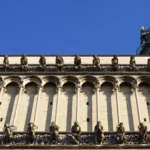
| Notre-Dame and Rue de la Chouette | Façade with gargoyles, jacquemart clock, the owl, Hôtel de Vogüé | Arrive early to touch the owl without queuing |
| Rue des Forges, Les Halles | Half-timbered houses, Hôtel Chambellan, covered market | The market is held several mornings a week |
| Saint-Bénigne and Saint-Michel | Cathedral and crypt, church of Saint-Michel | End of the trail, towards the archaeological museum |
Things to do in Dijon: the highlights
The Palace of the Dukes and States of Burgundy
Once the residence of the dukes, then the seat of the States of Burgundy, the palace now houses the town hall and the Fine Arts Museum. The 46-metre (151 ft) Philippe le Bon tower is open to visitors and offers a panorama over the city and its glazed-tile roofs. Facing the palace, the semicircular Place de la Libération is the city’s drawing room.
The Fine Arts Museum
One of the oldest museums in France, thoroughly renovated, it displays collections from Antiquity to the 20th century. Its jewel is the hall of the tombs of the Dukes of Burgundy, with their carved mourners. According to the official Dijon museums website (checked 26 October 2026), admission to the permanent collections is free, only temporary exhibitions are charged, and the museum is closed on Tuesdays; it opens from 9:30 am to 6 pm from October to May and from 10 am to 6:30 pm from June to September.
The mansions and Rue des Forges
Wealthy families of the Burgundy parliament left many mansions (hôtels particuliers): the Hôtel de Vogüé, with its glazed-tile roof and accessible courtyard, the Hôtel Chambellan, on Rue des Forges, with its Gothic spiral staircase, and the Maison Millière, on Rue de la Chouette.
Les Halles and food
Les Halles, built in the Baltard style of iron and glass, host the market several mornings a week. You will find jambon persillé (parsley ham), Époisses cheese, gingerbread and mustard. « Dijon mustard » refers to a recipe, not an origin: for mustard made in Burgundy, look for the « moutarde de Bourgogne » geographical indication.
The International City of Gastronomy and Wine
Housed in the former general hospital, the Cité opened in May 2022. It brings together exhibitions on food and wine, the Burgundy Wine School, a cinema, a bookshop and tasting areas; according to its official website, access to the site is free. Note that several businesses in its « gastronomic village » closed in 2026. Check the Cité’s website for what is open before you go.
The Chartreuse de Champmol and the Well of Moses
Within the grounds of a hospital west of the centre, the chapel portal and the Well of Moses survive, a masterpiece by the sculptor Claus Sluter (late 14th century). Access is free according to Bourgogne Tourisme, with guided tours by appointment.
Gateway to the Climats: the Route des Grands Crus
South of Dijon begins the Route des Grands Crus, which runs through the Côte de Nuits and then the Côte de Beaune: Marsannay, Gevrey-Chambertin, Vougeot and its Château du Clos de Vougeot, Nuits-Saint-Georges, as far as Beaune and its Hospices. The « climats » are the precisely defined vineyard plots that earned the World Heritage listing. Allow half a day to a full day, ideally with a guide so you do not have to drive after tastings.
Gardens and Lac Kir
The Jardin de l’Arquebuse, a botanical garden near the station, and the Jardin Darcy offer green breaks. To the west, Lac Kir, named after the canon and mayor of Dijon who also gave his name to the aperitif, is good for walks and water sports in summer.
Itinerary: Dijon in 2 days
- Day 1, morning: the Owl’s Trail, from Place Darcy to Notre-Dame
- Day 1, afternoon: the Palace of the Dukes, the Philippe le Bon tower and the Fine Arts Museum (closed on Tuesdays)
- Day 1, evening: a Burgundian dinner around Les Halles
- Day 2, morning: Les Halles market (on a market day), Rue des Forges, Saint-Bénigne
- Day 2, afternoon: the City of Gastronomy and Wine, or the Route des Grands Crus as far as the Clos de Vougeot
A third day lets you reach Beaune by train. For more ideas, see our cheap weekend breaks.
When to go to Dijon
May, June and September are the best months to visit Dijon: 20.0 to 24.2 °C (68 to 76 °F) in the afternoon in May-June, 21.7 °C (71 °F) in September. The climate is more continental than in Paris: winters are cold, with 16.0 frost days on average in January according to Météo-France, and summers are warm but rarely scorching (7.5 days above 30 °C, 86 °F, in July). The September-October grape harvest brings the Côte de Nuits to life.
| Month | High °C (°F) | Low °C (°F) | Rain mm (in) | Rainy days | Sun / day | Sun vs Paris | Verdict |
|---|---|---|---|---|---|---|---|
| January | 5.6 (42) | −0.2 (32) | 56.8 (2.2) | 10.6 | 2.0 h | +0.1 h | ❌ Cold, frequent frost |
| February | 7.6 (46) | 0.0 (32) | 42.9 (1.7) | 8.4 | 3.4 h | +0.4 h | ⚠️ Cold, museums |
| March | 12.5 (55) | 2.6 (37) | 48.2 (1.9) | 9.2 | 5.2 h | +0.8 h | ⚠️ Cool, late spring |
| April | 16.2 (61) | 5.2 (41) | 57.5 (2.3) | 9.1 | 6.5 h | +0.5 h | ✅ Mild, some frost possible |
| May | 20.0 (68) | 9.2 (49) | 76.1 (3.0) | 10.3 | 7.0 h | +0.5 h | ✅ Pleasant |
| June | 24.2 (76) | 12.8 (55) | 65.8 (2.6) | 8.9 | 8.0 h | +1.2 h | ✅ Ideal, long days |
| July | 26.7 (80) | 14.9 (59) | 64.9 (2.6) | 7.8 | 8.3 h | +1.1 h | ✅ Warm and sunny |
| August | 26.2 (79) | 14.6 (58) | 62.0 (2.4) | 7.9 | 7.7 h | +0.8 h | ✅ Warm, quieter city |
| September | 21.7 (71) | 11.0 (52) | 56.4 (2.2) | 7.9 | 6.4 h | +0.5 h | ✅ Ideal, grape harvest |
| October | 16.1 (61) | 7.6 (46) | 73.6 (2.9) | 9.8 | 3.8 h | −0.0 h | ⚠️ Cool, autumn colours |
| November | 9.7 (49) | 3.3 (38) | 77.6 (3.1) | 11.1 | 2.2 h | −0.1 h | ❌ Grey and damp |
| December | 6.1 (43) | 0.7 (33) | 61.6 (2.4) | 11.3 | 1.7 h | −0.1 h | ⚠️ Cold, Christmas market |
Dijon or Paris: which climate?
| Indicator (annual average) | Dijon-Longvic | Paris-Montsouris | What it means |
|---|---|---|---|
| Frost days (low ≤ 0 °C / 32 °F) | 62 | 21 | Much colder winter mornings: pack gloves and a hat |
| Average January high | 5.6 °C (42 °F) | 7.6 °C (46 °F) | Harsher winter than in Paris |
| Days above 25 °C (77 °F) | 64 | 56 | Summer slightly warmer than in Paris |
| Hours of sunshine | 1890 | 1717 | More sun in spring and summer, the same or less in winter |
| Rain | 743 mm (29.3 in) | 634 mm (25.0 in) | Wetter, especially in May and autumn |
In summer, Dijon gets about one hour more sunshine a day than Paris (June: 8.0 h against 6.8 h); from October to December the difference disappears or even reverses slightly, because of the fog and grey skies of the Saône plain.
Where to stay in Dijon
| Area | Best for | Strengths |
|---|---|---|
| Historic centre (Libération, Notre-Dame) | First visit | Everything on foot, charm |
| Darcy, station | Arriving by train | Convenient, tram, slightly lower prices |
| Les Halles, Rue des Forges | Food lovers | Market, restaurants |
| Route des Grands Crus | Wine stay | Guesthouses in the villages; car or bike needed |
Getting around Dijon
- On foot: the historic centre is largely pedestrianised.
- Tram and bus: two tram lines and the Divia network, useful for the station and Lac Kir.
- Bike: self-service bikes; the Voie des Vignes cycle path links Beaune and Santenay, further south.
- Train: TER regional trains to Gevrey-Chambertin, Nuits-Saint-Georges and Beaune.
- Getting there: TGV high-speed trains serve Dijon-Ville; the nearest major international airports are in Paris and Lyon. See our tips for travelling cheaply by train.
Entry requirements, health and safety
- US citizens: France is in the Schengen area, which you may enter for up to 90 days for tourism or business without a visa. Immigration officers may ask for proof of sufficient funds and a return ticket, and France does not recognise the 12-page US emergency passport for visa-free entry (U.S. Department of State, travel.state.gov, last updated August 11, 2025).
- UK citizens: no visa for up to 90 days in any 180-day period as a tourist. Your passport must have been issued less than 10 years before the day you arrive and be valid at least 3 months after the day you plan to leave the Schengen area; you may be asked for proof of travel insurance and sufficient funds. The EU Entry/Exit System (EES) may require fingerprints and a photo at your first entry (UK FCDO, GOV.UK, updated 22 October 2026).
- ID and safety: you must be able to prove your identity when asked by the police, or within 4 hours at a police station, and the UK FCDO considers that terrorists are very likely to try to carry out attacks in France: stay vigilant in crowded places (GOV.UK, updated 22 October 2026).
- Health: UK travellers need a GHIC or a valid EHIC for medically necessary state healthcare, which is not a substitute for travel insurance; the European emergency number is 112 (GOV.UK).
Practical tips for Dijon
- Tastings: do not drive after a wine tasting; choose a guide, the train or a bike.
- Winter: mornings are cold; the Christmas market livens up the centre in December.
- Museums: the Fine Arts Museum is closed on Tuesdays and on some public holidays; check the closing days of the others.
- Safety: a calm city; take the usual care in the evening around the station.
Frequently asked questions
How many stages are on the Owl’s Trail?
22 stages for the traditional version according to the Dijon tourist office, plus three themed loops (15 stages) added since 2011. The booklet is sold at the tourist office.
How many days do you need in Dijon?
Two days are enough for the city; allow a third day for the Route des Grands Crus or Beaune.
What is the best time to visit Dijon?
May, June and September. Winter is cold: Météo-France records about 62 frost days a year at Dijon-Longvic, against 21 at Paris-Montsouris.
Is the City of Gastronomy open?
The site remains free to enter according to its official website, but several businesses in the gastronomic village closed in 2026: check before you go.
What to do in Dijon for free?
The Owl’s Trail, the permanent collections of the Fine Arts Museum (free according to the Dijon museums website), the courtyard of the Hôtel de Vogüé, the churches, Les Halles and the gardens.
Can you visit Dijon without a car?
Yes for the city and Beaune (TER trains). For the villages of the Côte de Nuits, a guided tour or a bike is more practical.
Our sources
- Météo-France: climate data sheet, 1991-2020 statistics, Dijon-Longvic station; and Paris-Montsouris station for the comparison (data sheets consulted on 21 October 2026)
- Destination de Voyage calculation: Dijon/Paris comparison (frost, heat, sunshine, rain) and sunshine per day
- Destination Dijon tourist office (destinationdijon.com): Owl’s Trail, consulted on 21 October 2026
- Dijon museums, practical information (free permanent collections, opening hours, closed on Tuesdays), checked 26 October 2026
- Bourgogne Tourisme: visiting Dijon (Chartreuse de Champmol), consulted on 21 October 2026
- International City of Gastronomy and Wine (official website) and Wikipedia (history, 2026 situation), consulted on 21 October 2026
- Wikipedia: « Dijon » (UNESCO Climats 2015)
- Entry requirements, health and safety checked on 26 October 2026: U.S. Department of State, France country information (last updated August 11, 2025) and UK FCDO, GOV.UK foreign travel advice for France (updated 22 October 2026)
- Our methodology
Updated October 2026.
To go further, see our France travel guide, our pages on Troyes, Lyon and Alsace, and our other destinations in Europe.