Things to do in Lyon: climb up to the Fourvière basilica, get lost in the traboules (hidden passageways) of Vieux-Lyon and the Croix-Rousse, walk the Presqu’île between Bellecour and the Terreaux, visit the Musée des Confluences, picnic in the Parc de la Tête d’Or and dine in a bouchon. To visit Lyon, allow two to three days; the best times are May-June and September, and early December for the Festival of Lights.
France’s third-largest city, Lyon grew up where the Rhône meets the Saône. Its historic site, from Fourvière to the Croix-Rousse via the Presqu’île, is a UNESCO World Heritage Site. The city is compact, well served by public transport and renowned for its food. This guide brings together the must-see sights, 1- to 3-day itineraries, where to stay, budget and the month-by-month climate based on Météo-France.

Our travel deals for Lyon
Affiliate links: we earn a commission, at no extra cost to you.
 FlightsKiwi.comCompare flights and airline combinations to Lyon.Compare flights

Lyon at a glance
- Airports Lyon-Saint-ExupéryLinked to Part-Dieu station by the Rhônexpress tram
- By train TGV high-speed trains to Lyon Part-Dieu or Perrache
- Ideal length 2 to 3 days, 4 with a day trip (Pérouges, Beaujolais)
- Best time May-June and SeptemberEarly December for the Festival of Lights
- Entry US and UK citizens: no visa for up to 90 days in the Schengen area · travel.state.gov · GOV.UK
- Transport 4 metro linesTrams, 2 funiculars to Fourvière and Saint-Just, Vélo’v bike sharing
- Currency the euro · currencies
- Budget see our budget section
Things to do in Lyon: the highlights
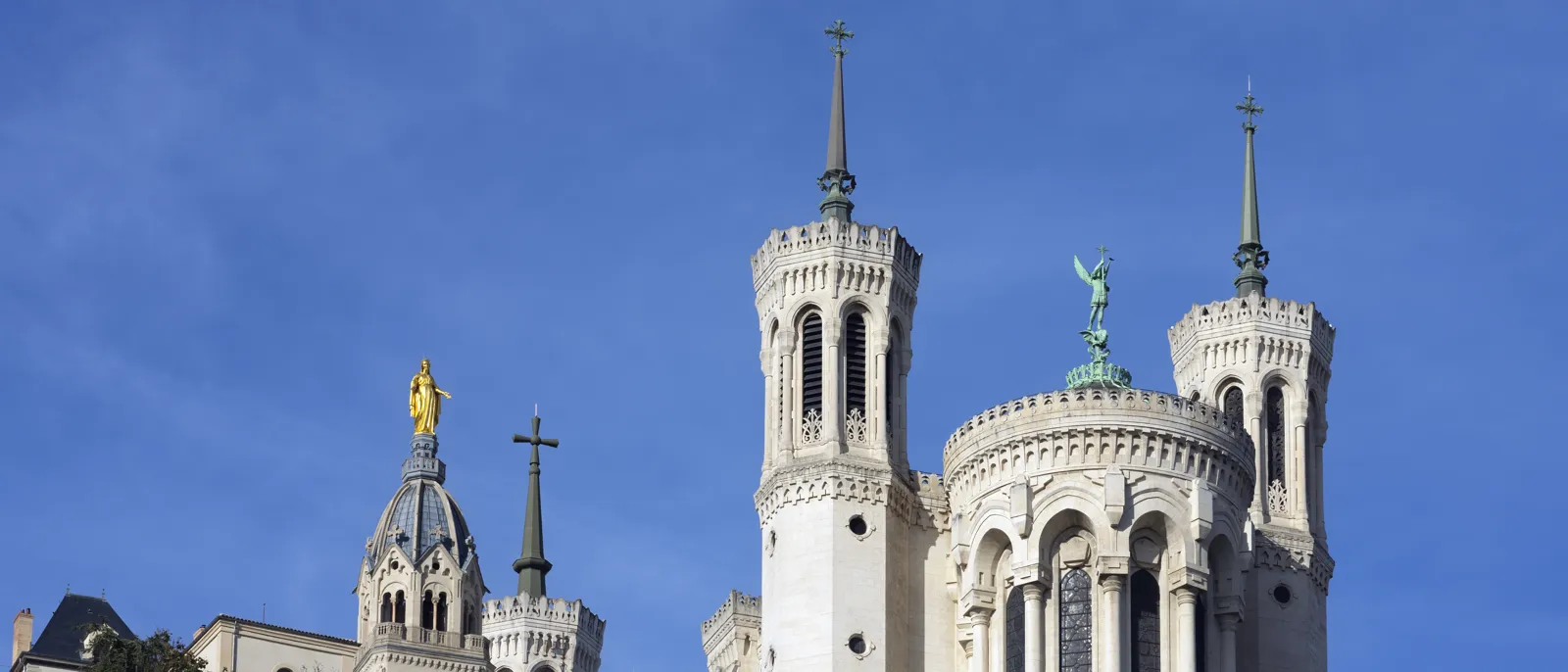
Fourvière hill and its basilica
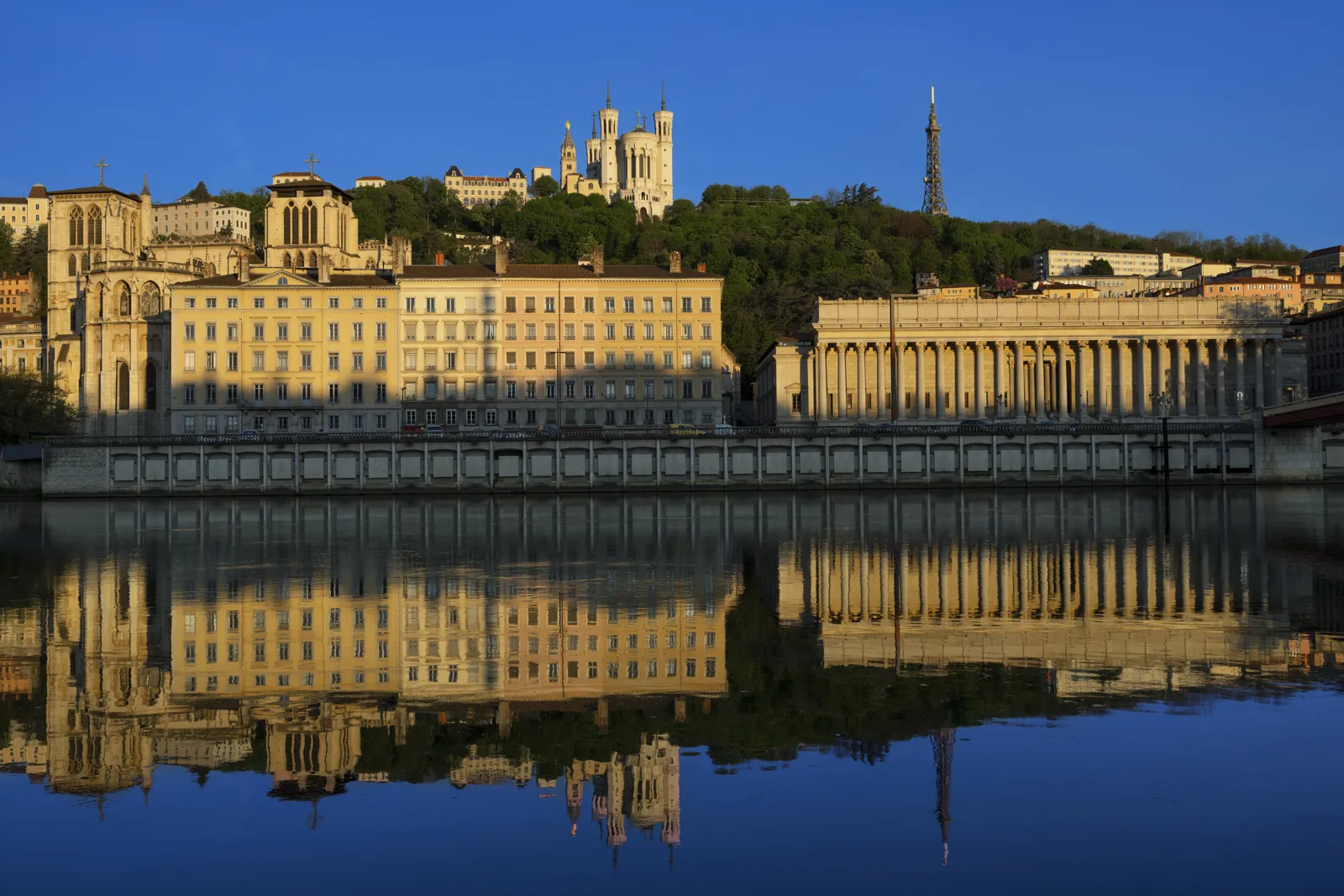
Nicknamed « the hill that prays », Fourvière overlooks the city. The Basilica of Notre-Dame, completed at the end of the 19th century, is striking for its interior mosaics; the nearby esplanade offers the finest panorama over Lyon, as far as the Alps on a clear day. Go up by funicular from Vieux-Lyon station, or on foot through the Jardin du Rosaire. Right next door, the Gallo-Roman theatres are a reminder that Lugdunum was a capital of the Gauls; the Lugdunum museum, dug into the hillside, displays the ancient collections.
Vieux-Lyon and its traboules
At the foot of Fourvière, Vieux-Lyon (the Saint-Jean, Saint-Paul and Saint-Georges districts) is one of the largest Renaissance ensembles in Europe. The traboules, passageways that cut through buildings from one street to the next, once let people move around under cover; some are open to the public during the day (the long traboule at 54 rue Saint-Jean, the Tour Rose at 16 rue du Bœuf). They are parts of residential buildings: keep the noise down. Saint-Jean cathedral and its astronomical clock round off the walk.
The Presqu’île: Bellecour, the Terreaux and the opera
Between the Rhône and the Saône, the Presqu’île is the shopping heart of the city. Place Bellecour, one of the largest pedestrian squares in Europe, features the statue of Louis XIV. Further north, Place des Terreaux brings together the town hall and the Bartholdi fountain; the Musée des Beaux-Arts, housed in a former abbey, has one of the richest collections in France and a cloister open to the public. Rue de la République, Place des Jacobins and the Saône quays are all easy to explore on foot.
The Croix-Rousse, hill of the silk workers
North of the Presqu’île, the Croix-Rousse was the district of the canuts, the silk workers, whose buildings with tall windows housed the looms. You climb up via the slopes and their traboules (the Cour des Voraces is the best known). The Maison des Canuts tells the story of weaving, and the Mur des Canuts, a huge trompe-l’œil fresco, is one of the city’s many painted walls, like the Fresque des Lyonnais on the Saône quays. The boulevard hosts a market every morning except Monday.
The Musée des Confluences and the Confluence district
At the southern tip of the Presqu’île, where the Rhône meets the Saône, the Musée des Confluences, opened in 2014 in a glass and steel building, combines natural science and human societies (dinosaurs, ethnographic objects). The surrounding district, a former port area, has become a showcase of contemporary architecture, best explored along the quays.
The Parc de la Tête d’Or
Covering more than 100 hectares (250 acres), the Parc de la Tête d’Or is one of the largest urban parks in France. It has a lake, a zoo and large greenhouses, a rose garden and a botanical garden; according to the official City of Lyon website (checked 26 October 2026), the park, botanical garden, zoo and rose gardens are all free. It is bordered by the Cité Internationale and the Museum of Contemporary Art.
Les Halles Paul Bocuse and Lyon food
Lyon is also a city to explore at the table. Les Halles Paul Bocuse, in the Part-Dieu district, bring together cheesemongers, charcutiers, oyster sellers and pastry makers. In the bouchons, the traditional restaurants, you can try salade lyonnaise, saucisson brioché (sausage baked in brioche), quenelles with Nantua sauce, andouillette or cervelle de canut (herbed fromage blanc); praline tart is the local dessert. The « Les Bouchons lyonnais » label helps you spot traditional addresses.
The Rhône banks, the Saône quays and the Institut Lumière
The banks of the Rhône, laid out for pedestrians and cyclists, come alive in fine weather with barges and terraces. On the Saône side, a guided cruise lets you see the city from the water. In the Monplaisir district, the Institut Lumière occupies the Lumière family villa, next to the hangar where the first film, Workers Leaving the Lumière Factory, was shot. Île Barbe, to the north, is a small green haven on the Saône.
Day trips from Lyon
Pérouges, a medieval town in the Ain department, is about 40 minutes away. The golden-stone villages of Beaujolais, to the north, make a good day of driving and wine tasting. Vienne and its Roman remains (Temple of Augustus and Livia, ancient theatre) are a short regional train ride away. Further south, beyond Vienne, our Ardèche travel guide covers gorges, villages and swimming spots to extend your trip from Lyon.
Itinerary: Lyon in 1, 2 or 3 days
Lyon in 1 day
- Morning: Vieux-Lyon and its traboules, Saint-Jean cathedral
- Late morning: funicular up to Fourvière, the basilica and the Gallo-Roman theatres
- Lunch in a bouchon
- Afternoon: the Presqu’île (Bellecour, Terreaux, Musée des Beaux-Arts)
- Evening: the Saône quays and the illuminated footbridges
Lyon in 2 days
- Day 1: as above
- Day 2: the Croix-Rousse and its slopes in the morning, Les Halles Paul Bocuse at lunchtime, the Parc de la Tête d’Or and the Rhône banks in the afternoon
Lyon in 3 days
- Days 1 and 2: as above
- Day 3: the Musée des Confluences and the Confluence district, then the Institut Lumière or a Saône cruise; or a day trip to Pérouges or Beaujolais
A stay in Lyon fits well into a budget weekend in France: book your TGV early for the best fares.
When to go to Lyon
The best months are May, June and September. Lyon has a transitional climate, between continental and Mediterranean influences: cool, grey winters, hot summers (28 °C (82 °F) in the afternoon in July-August, often more during heatwaves), and rain spread across the year with a peak in autumn. In early December, the Festival of Lights draws huge crowds.
| Month | Avg max | Avg min | Rain | Crowds | Prices | Verdict |
|---|---|---|---|---|---|---|
| January | 7.1 °C (45 °F) | 1.1 °C (34 °F) | 49.8 mm (2.0 in) | Low | Low | ❌ Cold, grey, short days |
| February | 9.0 °C (48 °F) | 1.4 °C (35 °F) | 41.6 mm (1.6 in) | Low | Low | ⚠️ Cool, ideal for museums |
| March | 13.8 °C (57 °F) | 4.2 °C (40 °F) | 49.4 mm (1.9 in) | Moderate | Moderate | ⚠️ First fine days, changeable weather |
| April | 17.4 °C (63 °F) | 7.2 °C (45 °F) | 68.9 mm (2.7 in) | Moderate | Moderate | ✅ Mild spring, parks in bloom |
| May | 21.5 °C (71 °F) | 11.2 °C (52 °F) | 80.9 mm (3.2 in) | Moderate | Moderate | ✅ Terraces and riverbanks, some showers |
| June | 25.6 °C (78 °F) | 15.0 °C (59 °F) | 74.1 mm (2.9 in) | Moderate to high | Moderate to high | ✅ Long days, Nuits de Fourvière festival |
| July | 28.2 °C (83 °F) | 17.0 °C (63 °F) | 67.4 mm (2.7 in) | Moderate | Moderate | ⚠️ Hot, heatwave risk, quieter city |
| August | 28.0 °C (82 °F) | 16.6 °C (62 °F) | 65.5 mm (2.6 in) | Low to moderate | Moderate | ⚠️ Hot, some restaurants closed |
| September | 23.1 °C (74 °F) | 12.8 °C (55 °F) | 82.5 mm (3.2 in) | Moderate | Moderate | ✅ Mild, new cultural season |
| October | 17.7 °C (64 °F) | 9.6 °C (49 °F) | 99.8 mm (3.9 in) | Moderate | Moderate | ⚠️ Wettest month |
| November | 11.4 °C (53 °F) | 4.9 °C (41 °F) | 87.2 mm (3.4 in) | Low | Low to moderate | ❌ Rain and grey skies |
| December | 7.7 °C (46 °F) | 2.0 °C (36 °F) | 53.7 mm (2.1 in) | Very high in early December | Very high during the festival | ⚠️ Festival of Lights: magical but packed |
- Spring (April-June): the best season for walking and enjoying the parks and terraces. May and June are a little wet (75 to 81 mm, 3.0 to 3.2 in), mostly as showers.
- Summer (July-August): hot (28 °C (82 °F) on average in the afternoon, with much higher peaks); many locals leave, but the riverbanks and festivals stay lively.
- Autumn (September-November): September is mild and pleasant; October and November are the wettest months (nearly 100 mm, 3.9 in, in October).
- Winter (December-March): cold and often grey, but ideal for museums and bouchons. The Festival of Lights livens up the city in early December.
The Festival of Lights (Fête des Lumières) is held every year around 8 December, over several evenings: the exact dates and programme are published by the City of Lyon. Hotels are fully booked months in advance. For other end-of-year ideas, see where to go in December.
Where to stay in Lyon
| Area | Best for | Highlights |
|---|---|---|
| Presqu’île (Bellecour, Cordeliers, Terreaux) | First visit | Everything on foot, metro, restaurants |
| Vieux-Lyon | Historic atmosphere | Renaissance lanes, funicular, but noisy streets at night |
| Croix-Rousse | A more local stay | Village feel, market, views |
| Part-Dieu | Arriving by train or a short stay | TGV station, Rhônexpress to the airport, Les Halles Paul Bocuse |
| Confluence and Perrache | A practical stay | Perrache station, modern district, Musée des Confluences |
How much does a trip to Lyon cost?
| Item (per person per day) | Budget | Comfort |
|---|---|---|
| Accommodation (sharing a double room) | roughly €35 to €55 (hostel, simple hotel) | roughly €80 to €150 |
| Meals | roughly €25 to €35 (set lunch in a bouchon, Les Halles) | roughly €50 to €80 |
| Transport | roughly €5 to €10 (TCL ticket or pass) | roughly €10 to €20 |
| Sightseeing | roughly €5 to €15 (park, districts and many free visits) | roughly €20 to €40 (museums, cruise, guided tour) |
| Total | roughly €70 to €110 per person per day | roughly €150 to €250 per person per day |
Getting there and around Lyon
- By train: direct TGV high-speed trains link Part-Dieu and Perrache with Paris and many other cities. See our tips for cheap train travel.
- From the airport: the Rhônexpress links Saint-Exupéry airport with Part-Dieu station.
- Public transport (TCL): metro (lines A, B, C, D), trams, buses and funiculars to Fourvière and Saint-Just, all on the same ticket.
- On foot and by bike: the Presqu’île, Vieux-Lyon and the riverbanks are best on foot; Vélo’v bikes are available all over the city.
- Car: not recommended in the city centre (traffic, paid parking, low-emission zone); useful only for day trips.
Entry requirements, health and safety
- US citizens: you may enter the Schengen area, including France, for up to 90 days for tourism or business without a visa; your passport should be valid at least three months beyond your period of stay (six months recommended), and immigration officers may ask for proof of sufficient funds and a return ticket (U.S. Department of State, travel.state.gov, last updated August 11, 2025).
- UK citizens: no visa for up to 90 days in any 180-day period as a tourist; your passport must have been issued less than 10 years before you arrive and be valid at least 3 months after the day you plan to leave the Schengen area. The EU Entry/Exit System (EES) is being implemented: fingerprints and a photo may be taken at the border, free of charge (UK FCDO, GOV.UK, updated 22 October 2026).
- Health and emergencies: UK travellers need a GHIC or valid EHIC for medically necessary state healthcare; everyone should have travel insurance covering medical costs. Emergency numbers: 112 (European emergency number, with some English-speaking staff) and 15 (medical emergencies) (GOV.UK; travel.state.gov).
- Safety: the UK FCDO (GOV.UK, updated 22 October 2026) advises sensible precautions against street crime and pickpockets, who can work in gangs; watch your belongings on the metro and in crowds, especially during the Festival of Lights.
Practical tips for Lyon
- Bookings: reserve well-known bouchons at weekends and during the Festival of Lights.
- Traboules: they go through residential buildings; respect the opening hours and keep quiet.
- Museums: many close one day a week (often Monday or Tuesday): check before you go.
- Fourvière: the climb on foot is steep; take the funicular up and walk down through the gardens.
- Mobile data: check your home carrier’s roaming charges before you go.
Events in Lyon
| When | Event |
|---|---|
| June-July | Les Nuits de Fourvière (Gallo-Roman theatres) |
| September (depending on the year) | Contemporary Art Biennale or Dance Biennale, in alternate years |
| September | European Heritage Days |
| Around 8 December | Festival of Lights |
Lyon: who is it for?
Our view by type of traveller, based on the information in this guide (sights, budget, seasons).
| Profile | Our view | Why |
|---|---|---|
| Couples | Very well suited | A compact city: traboules, the Fourvière panorama, the Saône quays in the evening and dinner in a bouchon. |
| Families | Well suited | Parc de la Tête d’Or (free zoo), the Musée des Confluences and its dinosaurs, funiculars up to Fourvière. |
| Tight budget | Well suited | Roughly €70 to €110 per person per day: free districts and parks, set lunch in a bouchon, Lyon City Card to compare with your visits. |
| Culture | Very well suited | UNESCO-listed historic site, Musée des Beaux-Arts, Institut Lumière, Gallo-Roman theatres. |
| Food lovers | Very well suited | Les Halles Paul Bocuse and traditional bouchons (quenelles, saucisson brioché, praline tart). |
| Nature and beach | Less suited | An urban destination; for the countryside, plan a day trip to Pérouges or Beaujolais. |
Frequently asked questions
What to do in Lyon in a weekend?
On day one, Vieux-Lyon, Fourvière and the Presqu’île; on day two, the Croix-Rousse, Les Halles Paul Bocuse and the Parc de la Tête d’Or. Keep an evening for a bouchon and a walk along the illuminated quays.
How many days do you need in Lyon?
Two days are enough for the essentials; three days let you add the Musée des Confluences, the Institut Lumière or a day trip to Pérouges.
What is the best time to visit Lyon?
May, June and September: 21 to 26 °C (70 to 79 °F) in the afternoon according to Météo-France 1991-2020 normals at Lyon-Bron. Early December for the Festival of Lights, if you book very early.
What to do in Lyon when it rains?
The Musée des Confluences, the Musée des Beaux-Arts, the Musée des Tissus, the Institut Lumière, Les Halles Paul Bocuse and the traboules, which let you get around under cover.
What are the free things to do in Lyon?
Fourvière and its esplanade, the traboules, Vieux-Lyon, the Parc de la Tête d’Or and its zoo, the painted walls, the Rhône banks and the courtyard of the Musée des Beaux-Arts.
Do you need a car in Lyon?
No. The metro, trams, funiculars and bikes cover the whole city; a car is only useful for Beaujolais or the surrounding villages.
Read also: for the Festival of Lights, see our ideas for travelling in December. Lyon makes a good budget weekend, especially by train. For other regions, see our France travel guide.
Near Lyon, our Parc des Oiseaux page covers the season, prices and regional train access to Villars-les-Dombes.
Our sources
- Météo-France: climate sheet, 1991-2020 statistics, Lyon-Bron station
- City of Lyon, Parc de la Tête d’Or page (free entry to the park, zoo and botanical garden), checked 26 October 2026
- Entry requirements, health and safety checked on 26 October 2026: U.S. Department of State, France country information (last updated August 11, 2025) and UK FCDO, GOV.UK foreign travel advice for France (updated 22 October 2026)
- Our methodology
Updated October 2026.
To extend your trip, see our France travel guide, our pages on visiting Alsace and visiting Normandy, and our other destinations in Europe.