Accra, the capital of Ghana, is the gateway to the country: a large coastal city with markets, urban beaches, independence landmarks and dense traffic. This Accra travel guide covers what to see, the safety advice of the UK FCDO and the U.S. State Department, and the climate measured at the Accra station.
Our travel deals for Accra
Affiliate links: we earn a commission, at no extra cost to you.
FlightsKiwi.comCompare flights and airline combinations to Accra.
Accra: safety advice from the FCDO and the State Department
Neither government advises against travel to Accra itself. The UK FCDO (GOV.UK, updated 4 November 2026) advises against all but essential travel only to the Bawku Municipal area in the Upper East region, far to the north.
The FCDO says that robbery, burglary and serious assault have become more common since 2021 and that street crime such as pickpocketing and bag-snatching is increasing in Accra. It advises being particularly careful after nightfall, avoiding walking alone and using licensed taxis.
Burglaries have been reported in Airport Residential, Cantonments, Ridge and Kokrobite. The FCDO says theft is the main problem on beaches, with isolated violent incidents, and advises not visiting beaches alone.
The U.S. Department of State (travel.state.gov, last updated July 9, 2026) reports that violent crime such as armed robbery and kidnapping occasionally occurs, that street crime is a serious problem in Accra and that armed robbers sometimes target vehicles coming from Kotoka International Airport.
LanguagesEnglish (official); Ga is the historic language of Accra and Twi is widely understood there
CurrencyGhanaian cedi (GHS); ATMs are common in large towns, and the FCDO notes that Mastercard is not widely accepted (GOV.UK, updated 4 November 2026)
Time zoneGMT (UTC+0) all year: the same as London in winter and 1 hour behind in summer; 5 hours ahead of New York in winter and 4 in summer (time difference in Ghana)
AirportKotoka International Airport (KIA); check airlines and routes when you book
EntryUK citizens need a visa before travel and a yellow fever certificate; US citizens should check visa rules with the Embassy of Ghana (travel.state.gov, GOV.UK)
Best timeNovember to February (driest season)
Things to do in Accra
Independence landmarks
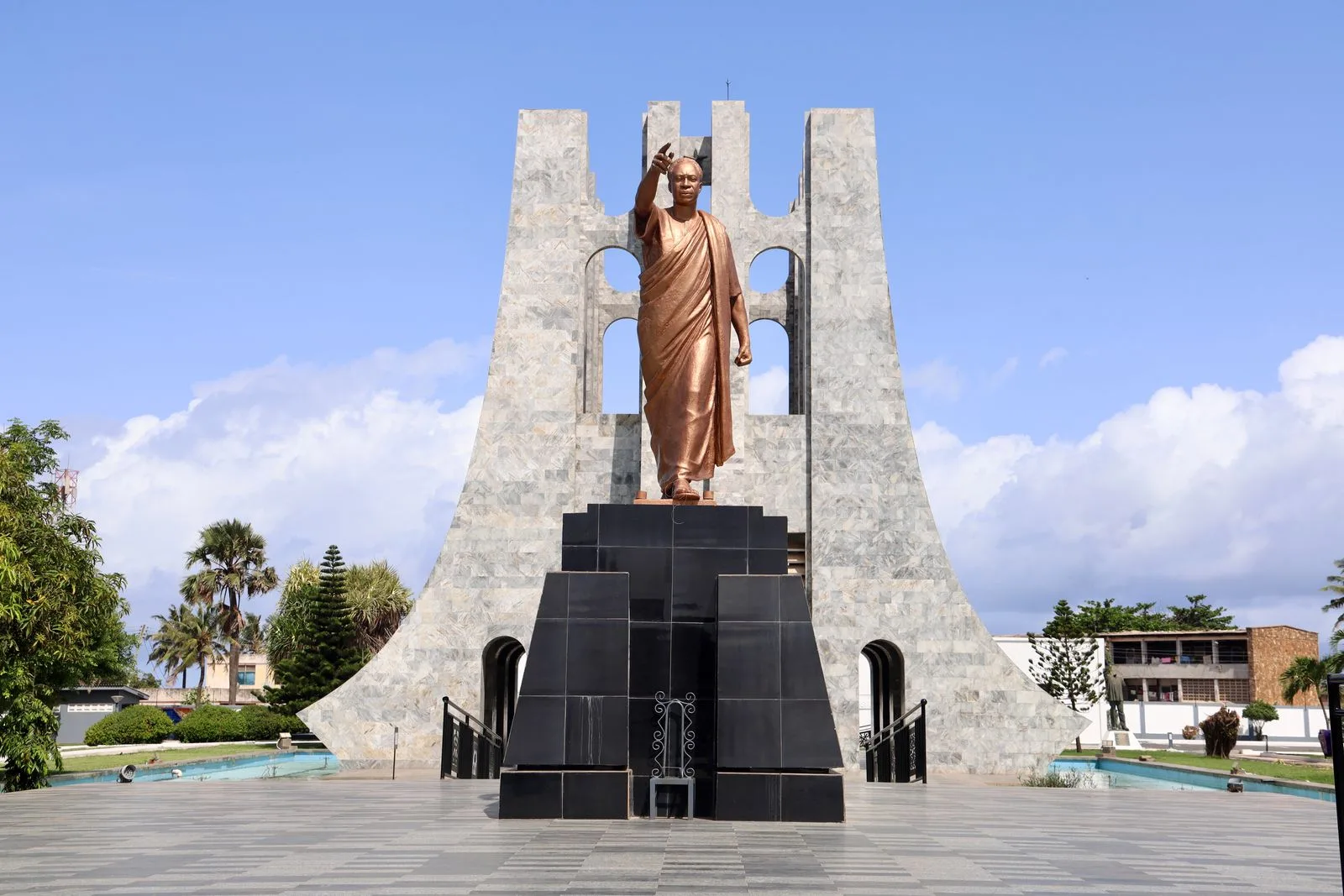
On 6 March 1957, Ghana became the first colony in sub-Saharan Africa to gain independence. In Accra, the mausoleum and memorial park of Kwame Nkrumah, the country’s first leader, and the vast Independence Square, with its Black Star Gate, tell that story. Visit them by day.
The Kwame Nkrumah Mausoleum. Photo: Ana Kenk / Pexels
Jamestown and old Accra
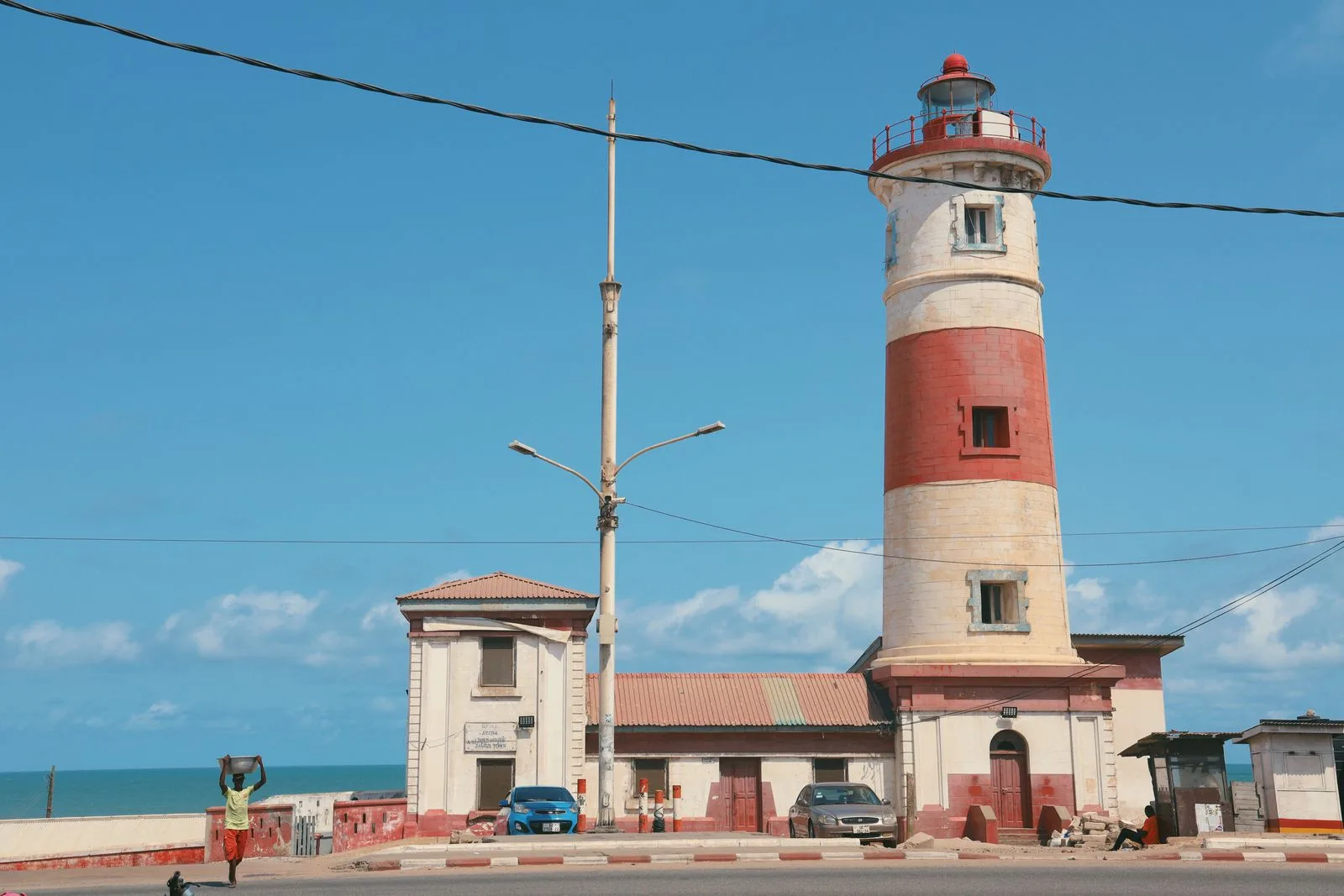
The historic Jamestown district, with its lighthouse and fishing harbor, is one of the oldest in the city. The FCDO advises being particularly careful after nightfall in Accra and avoiding walking alone: come by day, ideally with a local guide.
The Jamestown lighthouse. Photo: Ana Kenk / Pexels
The markets
Makola Market, in the city center, is one of the liveliest in Accra: fabrics, fresh produce and everyday goods. The crowds are dense, and the FCDO warns of pickpocketing and bag-snatching in Accra, so keep your phone and wallet out of sight.
Osu and the lively districts
Osu has restaurants, shops and nightlife. Street crime such as bag-snatching is on the rise in Accra (FCDO), so get around by car in the evening, even for short distances.
The beaches
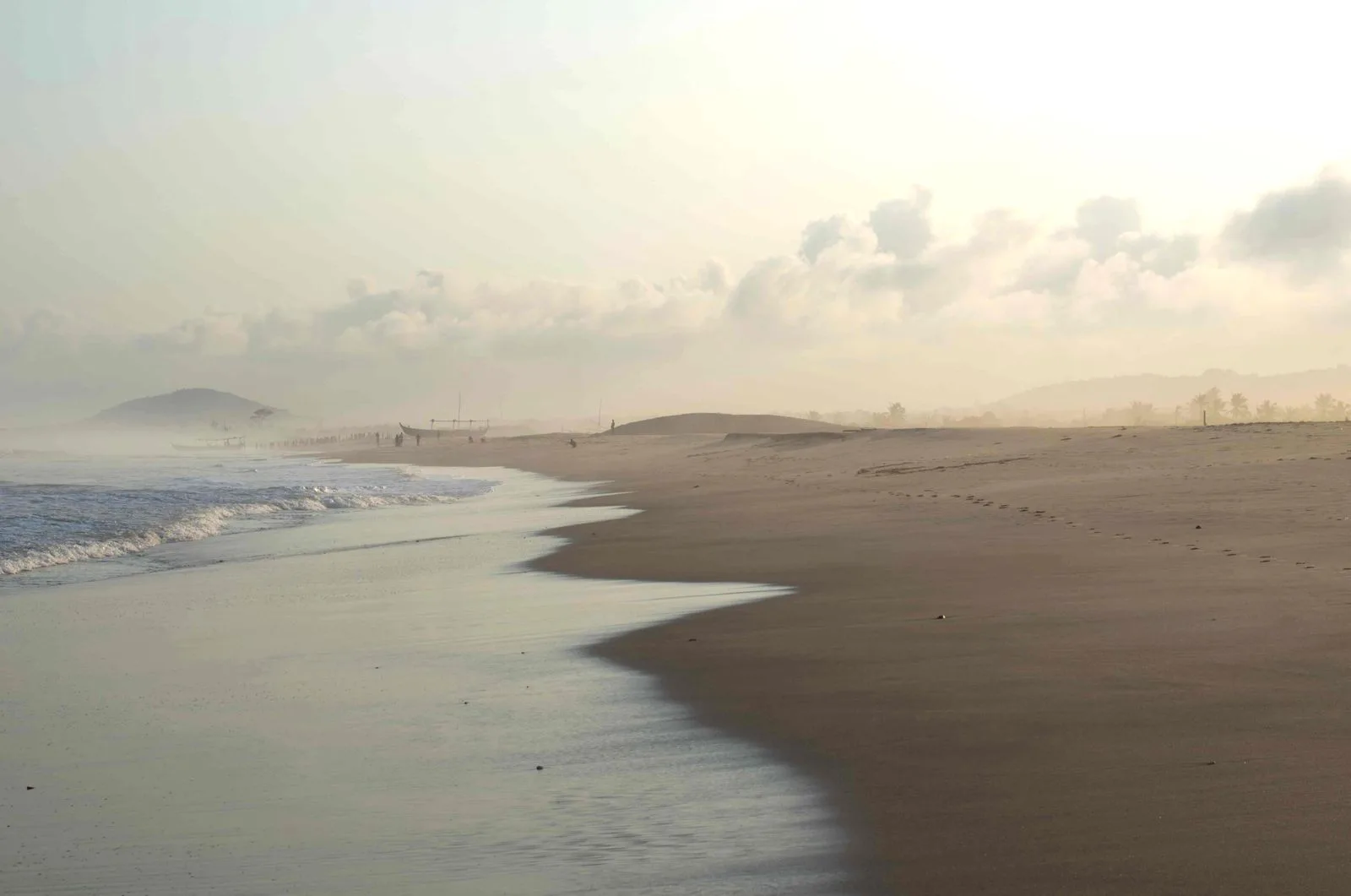
Several beaches line the city and its surroundings. The FCDO and the State Department both flag crime in beach areas, including at Kokrobite to the west, where the FCDO also reports burglaries; the FCDO advises not visiting beaches alone. Avoid isolated beaches. Swimming is dangerous on the beaches of Ghana’s southern coast because of rip tides and undertows, with occasional deaths of adults and children (FCDO): swim only where it is clearly safe to do so.
Bojo Beach, west of Accra. Photo: Kevin Quarshie / Pexels
Day trips from Accra
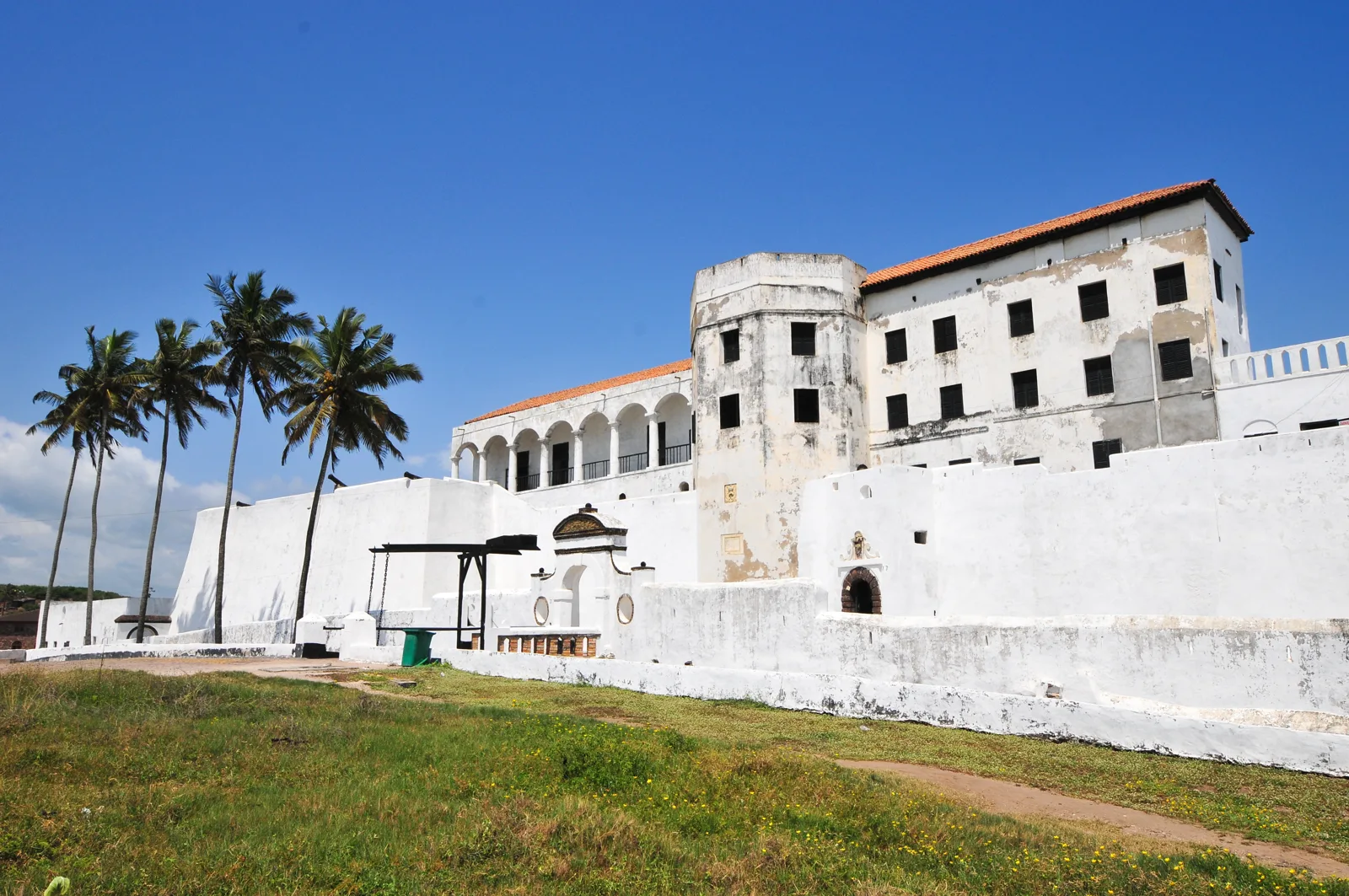
The Cape Coast and Elmina castles and Kakum forest can be visited from Accra, allowing at least one night on site so that you never drive at night: the FCDO advises avoiding travel by road outside the main towns after dark. See our Ghana travel guide and our Kumasi guide for Ashanti country.
Accra climate
Accra is hot all year: 28.3 to 33.1 °C (83 to 92 °F) in the afternoon and 22.7 to 25.1 °C (73 to 77 °F) at night. The rains are concentrated in May and June (148 and 175.5 mm / 5.8 and 6.9 in), with a weaker second peak in October. From December to February, less than 26 mm (1.0 in) falls per month.
Month
Avg. max
Avg. min
Rain
Rainy days
Day/night gap
Sunrise / sunset on the 15th
Day length
January
32.4 °C (90 °F)
24.1 °C (75 °F)
10 mm (0.4 in)
1
8.3 °C (15 °F)
6:15 am / 6:05 pm
11 h 50 min
February
33.1 °C (92 °F)
25.0 °C (77 °F)
14 mm (0.6 in)
1
8.1 °C (15 °F)
6:16 am / 6:13 pm
11 h 57 min
March
33.0 °C (91 °F)
25.1 °C (77 °F)
55 mm (2.2 in)
4
7.9 °C (14 °F)
6:07 am / 6:12 pm
12 h 5 min
April
32.7 °C (91 °F)
25.1 °C (77 °F)
82 mm (3.2 in)
5
7.6 °C (14 °F)
5:53 am / 6:08 pm
12 h 14 min
May
31.6 °C (89 °F)
24.4 °C (76 °F)
148 mm (5.8 in)
8
7.2 °C (13 °F)
5:46 am / 6:08 pm
12 h 22 min
June
29.7 °C (85 °F)
23.6 °C (74 °F)
176 mm (6.9 in)
10
6.1 °C (11 °F)
5:47 am / 6:14 pm
12 h 27 min
July
28.4 °C (83 °F)
23.1 °C (74 °F)
65 mm (2.6 in)
5
5.3 °C (10 °F)
5:54 am / 6:19 pm
12 h 25 min
August
28.3 °C (83 °F)
22.7 °C (73 °F)
22 mm (0.9 in)
4
5.6 °C (10 °F)
5:56 am / 6:14 pm
12 h 18 min
September
29.5 °C (85 °F)
23.1 °C (74 °F)
47 mm (1.9 in)
5
6.4 °C (12 °F)
5:51 am / 6:00 pm
12 h 9 min
October
31.0 °C (88 °F)
23.5 °C (74 °F)
64 mm (2.5 in)
6
7.5 °C (14 °F)
5:46 am / 5:46 pm
12 h 0 min
November
32.0 °C (90 °F)
24.2 °C (76 °F)
32 mm (1.3 in)
3
7.8 °C (14 °F)
5:49 am / 5:41 pm
11 h 52 min
December
32.1 °C (90 °F)
24.3 °C (76 °F)
25 mm (1.0 in)
1
7.8 °C (14 °F)
6:01 am / 5:49 pm
11 h 48 min
Temperatures, rain and rainy days: 1981–2010 normals for Accra station, Ghana Meteorological Agency, published by the World Meteorological Organization (World Weather Information Service). Sunrise, sunset and day length: Destination de Voyage calculation using the NOAA solar algorithm (15th of each month, 2027).
Destination de Voyage calculation from these normals: August, with 22.2 mm (0.9 in) of rain and a high of 28.3 °C (83 °F), is the coolest month and one of the driest, an option if you can only travel in summer. The sun sets between 5:41 pm and 6:19 pm depending on the month: plan your return trips accordingly.
Arriving at the airport and getting around
At Kotoka International Airport, the FCDO and the State Department both report thefts of luggage and travel documents. Keep your passport secure, never leave bags unattended, and accept help only from uniformed porters or officials (airport staff wear ID cards with a name and photo). If someone is collecting you, ask the driver for ID: the FCDO says British nationals have been robbed by impostors pretending to be their driver.
In the city, a car with a driver or a ride-hailing app is the simplest option, but the FCDO notes isolated crimes in all types of taxis, including licensed taxis, minibuses (« tro tros ») and app-based services. Use licensed taxis, check the driver’s ID and the vehicle, keep windows up and doors locked, and avoid traveling alone in taxis after dark. The FCDO also says that drivers of tro tros and popular app-based taxis are not centrally licensed.
Where to stay in Accra
Hotels are concentrated around the airport, Osu, Cantonments and the center. The FCDO reports burglaries in areas used by the international community, including Airport Residential, Cantonments and Ridge: make sure doors and windows are locked, keep valuables in a safe, and use the room safe for your passport.
Entry requirements, health and safety
UK citizens: according to the FCDO (GOV.UK, updated 4 November 2026), you must have a visa. Complete the online application on the Ghana High Commission website, pay online, upload your supporting documents (including a yellow fever certificate) and send hard copies by post as directed; processing takes 10 to 15 days, and an express service is available in person in London. Your passport must expire at least 6 months after your arrival date.
US citizens: the U.S. Department of State (travel.state.gov, Ghana page last updated July 9, 2026) directs travelers to the Embassy of Ghana’s website for current visa information; check the requirements there before you book. Proof of yellow fever vaccination is required on arrival for anyone over nine months old.
Health declaration: the FCDO says additional Ebola screening is in place at Ghana’s entry points and that international travelers must complete an online Ghana Health Declaration before travel; thermal screening and a travel history check may also apply. Check the latest rules before you fly.
Money: declare all hard currency on arrival; carrying more than the equivalent of 10,000 US dollars in cash can lead to confiscation (FCDO).
Emergency numbers: 999 or 112 (ambulance, fire, police); 192 for police (FCDO).
Health: the FCDO lists yellow fever, malaria and dengue among the health risks and says medical facilities are poor outside towns; make sure your insurance covers medical evacuation.
Scams and fraud: the FCDO warns that scam artists target foreign visitors and residents, and both governments warn about bank card fraud and skimming: keep your card in sight and monitor your statements.
Visa sorted before departure (UK citizens) and yellow fever certificate in your carry-on.
Online Ghana Health Declaration completed before you fly.
Licensed taxi or a ride booked in advance on arrival; check the driver’s ID.
No walking alone after dark, and no hailing taxis on the street at night.
Phone kept out of sight in busy streets: bag-snatching is on the rise.
Caution with card payments and ATMs, and with online requests for money.
Police: 192; ambulance, fire and police: 999 or 112.
Frequently asked questions about Accra
Is Accra dangerous?
Neither the FCDO nor the State Department advises against travel to Accra, but both report serious street and vehicle crime. The FCDO advises being particularly careful after nightfall, avoiding walking alone and using licensed taxis.
When is the best time to go to Accra?
November to February: 9.5 to 32 mm (0.4 to 1.3 in) of rain per month (1981–2010 normals). May and June are the wettest.
What language is spoken in Accra?
English is the official language. Ga and Twi are widely spoken.
What is the time difference in Accra?
Accra is on GMT all year: the same time as London in winter and 1 hour behind in summer, and 5 hours ahead of New York in winter (4 in summer).
Can you swim in Accra?
Swimming is dangerous on Ghana’s southern beaches because of rip tides and undertows (FCDO). Swim only where it is clearly safe, avoid isolated beaches and do not go alone.


 FlightsKiwi.comCompare flights and airline combinations to Accra.Compare flights