This page contains affiliate links: if you book through them, we may earn a commission at no extra cost to you. Our recommendations stay independent (how we fund the site).
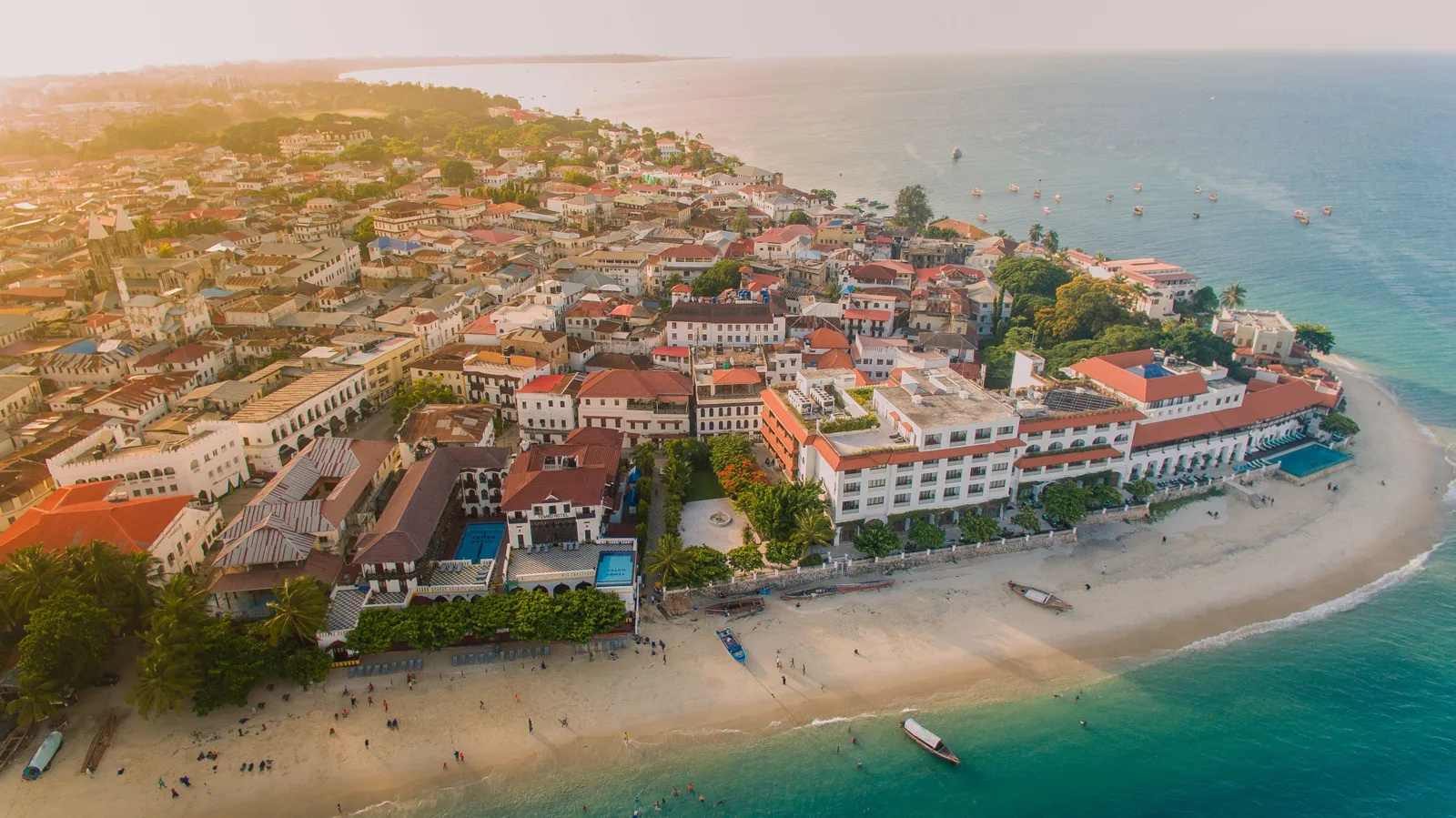
Stone Town, the « stone city » (Mji Mkongwe in Swahili), is the old quarter of Zanzibar on the west coast of Unguja island: a maze of lanes lined with coral-stone houses, bazaars and mosques, listed as a UNESCO World Heritage Site in 2000. Former capital of the sultans and a crossroads of the spice trade and the slave trade in the 19th century, it can be visited on foot in one or two days. This guide covers what to see in Stone Town, how to find your way around, when to come and what the UK FCDO and the U.S. State Department say about safety.
For the beaches, Mnemba Atoll and the rest of the island, see our Zanzibar travel guide and the when to go to Zanzibar calendar; to combine with a safari, see the Tanzania travel guide.
Guided tours: Stone Town
 East Africa's Masai Mara & Zanzibar12 days
From $5,220 pp
View tour Good Value Migration & Beach10 days
From $6,440 pp
View tour Good-Value Migration, Crater & Zanzibar11 days
From $11,120 pp
View tour -15 %Road to Zanzibar (13 destinations)12 days · from Nairobi★ 4.6 (12 reviews)
From €1,832 pp
View tour Kenya & Tanzania: The Safari Experience with Zanzibar17 days · from Nairobi★ 5.0 (23 reviews)
From €10,163 pp
View tour -15 %Road to Zanzibar (14 destinations)12 days · from Nairobi★ 4.6 (12 reviews)
From €1,948 pp
View tourTours by local and international operators, booked via Go2Africa & TourRadar (affiliate link). Indicative “from” prices per person, checked on 22 November 2026: check dates, inclusions and cancellation terms on the tour page.

Our travel deals for Stone Town
Affiliate links: we earn a commission, at no extra cost to you.
 Learn the languageTargumiLearn a few words of Swahili before you go — 30% off via our link.See the course
- FlightsKiwi.comCompare flights and airline combinations to Stone Town.Compare flights
- Tailor-made safariGo2AfricaSafari specialist since 1998 for East and Southern Africa: tailor-made itineraries with a dedicated travel consultant.Plan a safari
- Airport transferKiwitaxiPrivate driver booked in advance at a fixed price.Book a transfer
- Tours and activitiesGetYourGuideTours, day trips and activities to book online; most can be cancelled for a full refund up to 24 hours before.See activities
- eSIMSimbyeData plans for 190+ countries: QR code by email within minutes, top-ups in the app (eSIM-compatible phone). 15% off with code MXIOWLSZ.See Simbye plans




Stone Town at a glance
- Time zone UTC+3 all year (Tanzania does not change its clocks): 3 hours ahead of London in winter and 2 in summer; 8 hours ahead of New York in winter and 7 in summer
- Climate average highs of 29 to 33 °C (84 to 92 °F) all year; long rains in April–May (1991–2020 normals)
- Entry visa required for US and UK citizens, and mandatory Tanzanian government travel insurance for visitors (buy it from the Zanzibar Insurance Corporation if you arrive in Zanzibar first) (travel.state.gov, GOV.UK)
- Safety the FCDO says incidents have taken place in Stone Town, at hotels and on popular tourist beaches; avoid walking alone at night
- Main sights Old Fort, House of Wonders, former slave market, Forodhani Gardens, carved doors
What to see in Stone Town: the highlights
The lanes and carved doors
The heart of Stone Town is a labyrinth of lanes too narrow for cars, where pedestrians, bicycles and motorbikes circulate. The houses, built of coral stone, have a reddish tint; many have a baraza, a long stone bench along the facade, used for sitting or as a raised sidewalk when rains make the street impassable. The carved wooden doors are the most photographed feature: Indian-style doors have a rounded top and sometimes brass studs, Omani-style doors are rectangular. The mix of Arab, Persian, Indian, European and African influences is the reason for the UNESCO listing.
The waterfront: Old Fort and House of Wonders
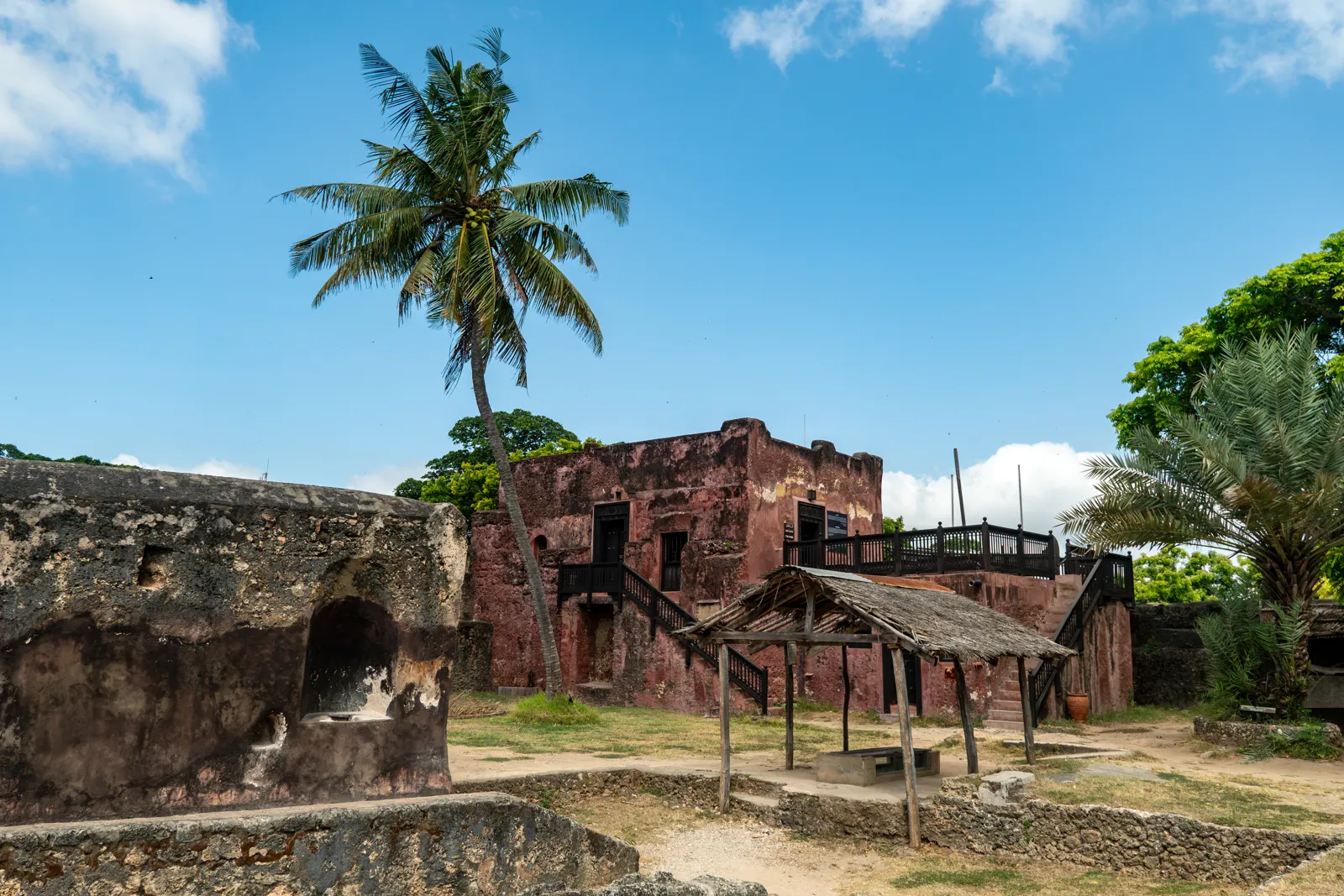
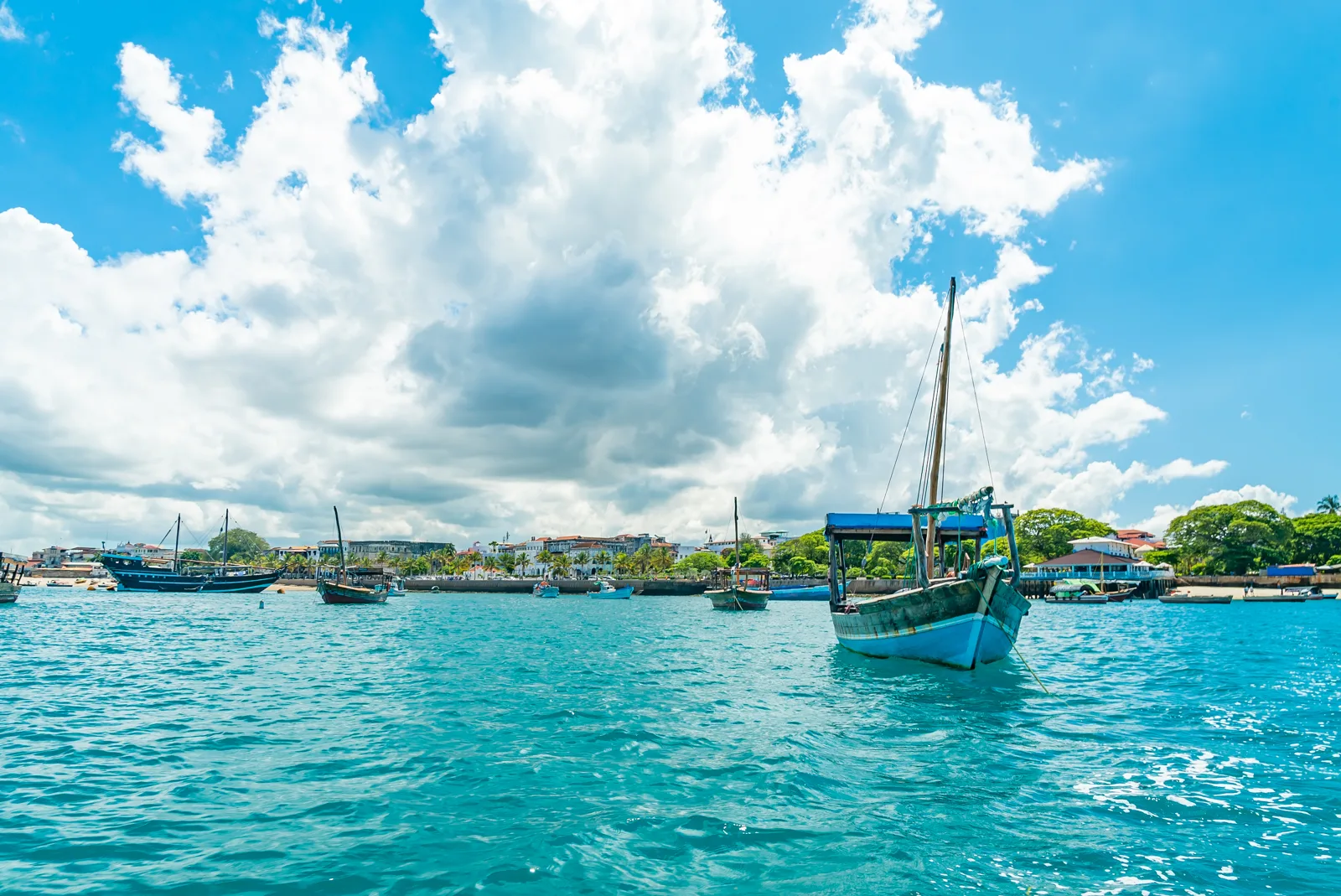
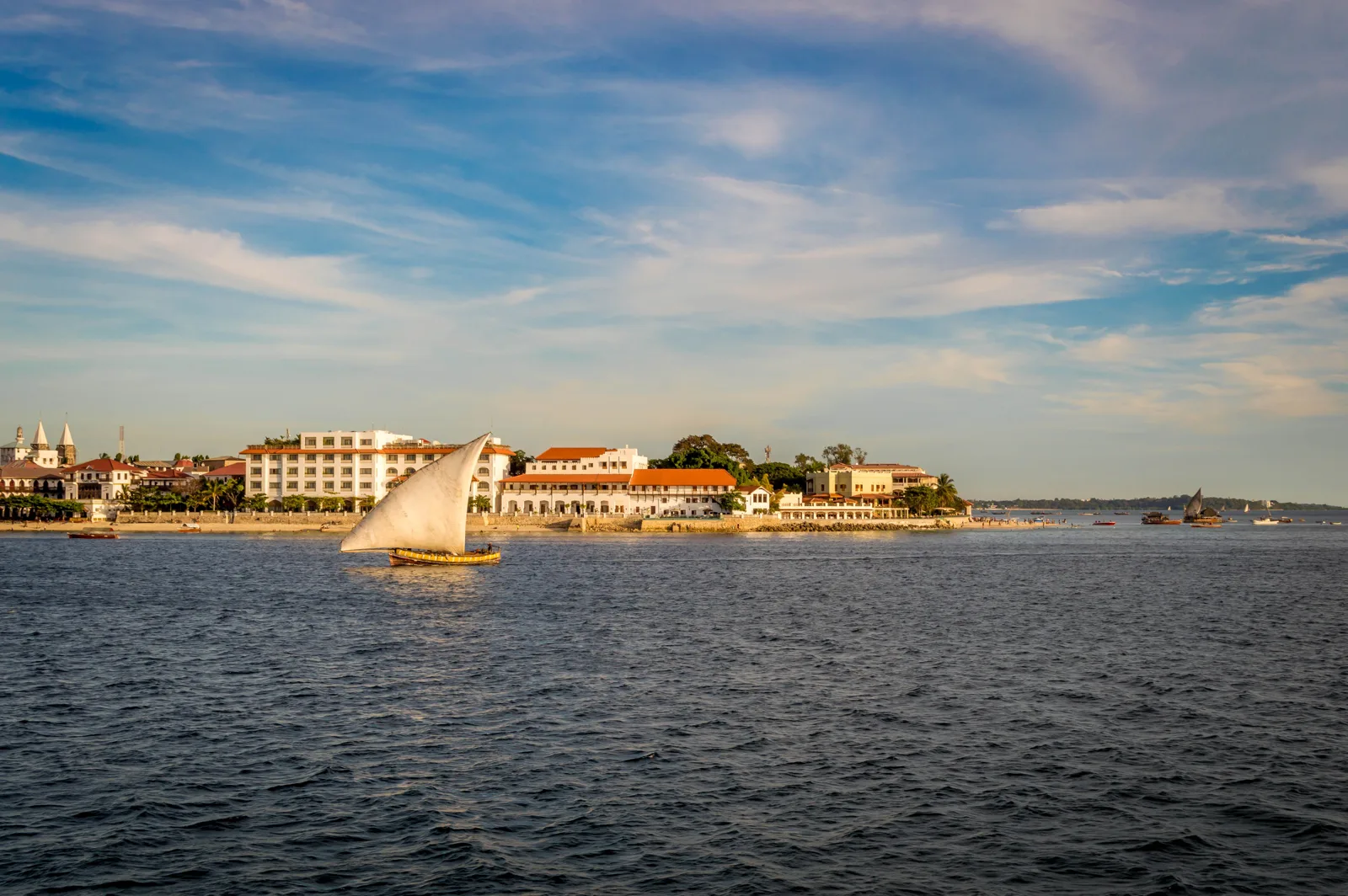
The fort (Ngome Kongwe), built by the Omanis in the late 17th century, is the oldest building in the city; its courtyard hosts a cultural center with shops, workshops and small performances, and is a venue for the Zanzibar International Film Festival. Next to it, the House of Wonders (Beit al-Ajaib), a palace from 1883, was the first building in Zanzibar with electricity and the first in East Africa with an elevator; a large part collapsed in December 2020 during works: check whether it has reopened before planning your visit. Farther north, the Sultan’s Palace (Beit el-Sahel) houses a museum on the life of the royal family.
The former slave market and the Anglican cathedral
Christ Church Cathedral was built in the late 19th century on the site of Zanzibar’s largest slave market, deliberately chosen to celebrate the end of the slave trade; the altar is said to stand on the site of the main whipping post. A slave memorial and a museum devoted to the history of slavery are next to it. It is the most important visit for understanding the city’s history.
Forodhani Gardens at sunset
Facing the fort and the House of Wonders, Forodhani Gardens, restored by the Aga Khan Trust for Culture, host a night market of grilled fish and Zanzibari dishes every evening after sunset. The sun sets between 6:14 pm and 6:46 pm depending on the month (our calculation), a small variation near the equator: the market therefore comes alive at roughly the same time all year. The FCDO advises avoiding walking alone at night: go back in a group or by a taxi arranged through your hotel.
The dispensary, St. Joseph’s Cathedral and Freddie Mercury’s house
The former Ithnashiri Dispensary (1887–1894), with its carved wooden balconies and stained glass, was restored by the Aga Khan Trust for Culture. The Catholic St. Joseph’s Cathedral, built by French missionaries between 1893 and 1897, is inspired by Marseille Cathedral; its two spires can be seen from the sea. Stone Town is also the birthplace of Freddie Mercury, and the explorer David Livingstone prepared his last expedition there in 1866.
Darajani Market
Near the boundary between Stone Town and the new town (Ng’ambo), Darajani Market has spices, fruit and fish; the main daladala (shared taxi) station is right next to it.
Stone Town in 1 or 2 days
- Morning: Darajani Market, then the Anglican cathedral and the memorial to the former slave market.
- Midday: the lanes and carved doors, as far as St. Joseph’s Cathedral and the old dispensary.
- Afternoon and evening: Old Fort, waterfront and Sultan’s Palace, then Forodhani Gardens at sunset.
- Day 2: museums you did not have time to see, or departure for the beaches of the north and east.
When to go to Stone Town: climate month by month
It is hot all year; the rains make the difference. The table combines the official normals with our calculations.
| Month | Avg. max | Avg. min | Rain | Rainy days (≥ 1 mm / 0.04 in) | Day/night gap | Sunrise / sunset on the 15th | Day length |
|---|---|---|---|---|---|---|---|
| January | 32.6 °C (91 °F) | 24.5 °C (76 °F) | 74 mm (2.9 in) | 5.6 | 8.1 °C (15 °F) | 6:19 am / 6:45 pm | 12 h 27 min |
| February | 33.2 °C (92 °F) | 24.3 °C (76 °F) | 51 mm (2.0 in) | 3.6 | 8.9 °C (16 °F) | 6:28 am / 6:46 pm | 12 h 18 min |
| March | 32.5 °C (90 °F) | 24.5 °C (76 °F) | 177 mm (7.0 in) | 11 | 8.0 °C (14 °F) | 6:27 am / 6:36 pm | 12 h 8 min |
| April | 30.6 °C (87 °F) | 24.5 °C (76 °F) | 408 mm (16.1 in) | 17.5 | 6.1 °C (11 °F) | 6:24 am / 6:22 pm | 11 h 58 min |
| May | 29.7 °C (85 °F) | 23.8 °C (75 °F) | 298 mm (11.7 in) | 13.8 | 5.9 °C (11 °F) | 6:24 am / 6:14 pm | 11 h 50 min |
| June | 29.3 °C (85 °F) | 22.9 °C (73 °F) | 52 mm (2.0 in) | 5.3 | 6.4 °C (12 °F) | 6:30 am / 6:16 pm | 11 h 46 min |
| July | 29.0 °C (84 °F) | 22.1 °C (72 °F) | 31 mm (1.2 in) | 4.3 | 6.9 °C (12 °F) | 6:35 am / 6:23 pm | 11 h 48 min |
| August | 29.4 °C (85 °F) | 21.1 °C (70 °F) | 38 mm (1.5 in) | 6 | 8.3 °C (15 °F) | 6:30 am / 6:25 pm | 11 h 54 min |
| September | 30.4 °C (87 °F) | 21.0 °C (70 °F) | 37 mm (1.5 in) | 5.1 | 9.4 °C (17 °F) | 6:16 am / 6:20 pm | 12 h 4 min |
| October | 31.2 °C (88 °F) | 22.0 °C (72 °F) | 116 mm (4.6 in) | 6.9 | 9.2 °C (17 °F) | 6:02 am / 6:16 pm | 12 h 14 min |
| November | 31.0 °C (88 °F) | 23.1 °C (74 °F) | 201 mm (7.9 in) | 13.7 | 7.9 °C (14 °F) | 5:55 am / 6:19 pm | 12 h 24 min |
| December | 31.8 °C (89 °F) | 24.0 °C (75 °F) | 168 mm (6.6 in) | 12.2 | 7.8 °C (14 °F) | 6:03 am / 6:32 pm | 12 h 29 min |
Reading the table: the long rains peak in April (408 mm / 16.1 in, 17.5 rainy days) and May; the short rains return in November and December. From June to September, less than 55 mm (2.2 in) falls per month and the average high is around 29–30 °C (84–86 °F): this is the most pleasant period for walking the lanes. January and February are hotter (33.2 °C / 92 °F in February) but remain dry. In April the barazas show their usefulness: some lanes become hard to use.
Getting to Stone Town and getting around
Zanzibar International Airport is south of Stone Town; it is linked to mainland Tanzania and to several African airports. The port, in the heart of Stone Town, receives the regular ferries from Dar es Salaam and Pemba. If you take the ferry, the State Department advises using the high-speed ferry and buying tickets inside the ferry terminal or online in advance. In the old town, almost everything is done on foot. To go farther, daladalas leave from Darajani Market, but the State Department advises avoiding dala-dalas, bajajis and boda-bodas, which are often poorly maintained and ignore traffic rules.
Transfer from the airport or the port
The simplest option is a transfer booked by your hotel or a licensed taxi. The FCDO says it is safest to arrange a taxi through a hotel or travel operator, always to ask to see the driver’s ID and to use reputable taxi services, and not to accept lifts from strangers or anyone offering to find a taxi for you. Before booking a transfer or excursion, compare the direct operator and resellers: meeting point, cancellation terms, what is included.
Where to stay in Stone Town
Sleeping in the old town lets you do everything on foot and enjoy the waterfront in the evening; many hotels occupy former houses, with steep stairs and sometimes no car access to the door. Hotels near the waterfront are the most convenient for the evening. Given the safety advice, choose a secure property and check that doors and windows lock; the FCDO advises locking all doors and windows, especially at night.
Safety: what the FCDO and the State Department say
We read the UK FCDO (GOV.UK, updated 20 October 2026) and the U.S. Department of State (travel.state.gov, last updated September 3, 2026) on 26 October 2026. The FCDO advises against all but essential travel only within 20 km of the border with Mozambique’s Cabo Delgado province, far to the south of Zanzibar. For Stone Town:
- Crime: the FCDO says there is a risk of armed crime throughout Tanzania and that in Zanzibar incidents have taken place in Stone Town, at hotels and on popular tourist beaches. Bag snatching is a well-known tactic, sometimes from cars or motorbikes.
- At night: the FCDO advises avoiding walking or cycling at night or alone, and not carrying large amounts of cash or displaying valuables; leave your passport in a safe place and carry a copy for ID checks.
- Taxis: in Dar es Salaam, the FCDO reports tourists being « express kidnapped » after getting into unlicensed taxis or being befriended by strangers; use licensed taxis only.
- Dress: the FCDO says Zanzibar is mostly Muslim, advises dressing modestly, notes that women wearing shorts or sleeveless tops away from tourist resorts, particularly in Stone Town, may cause offense, and says Zanzibari authorities can fine you 700 US dollars or more for what they consider inappropriate clothing in public.
- Emergency number: 112 (FCDO); the State Department lists 111, 112 and +255 787 668 306, and notes that response times can be very slow.
- Laws: same-sex sexual activity is illegal in Tanzania, including Zanzibar (FCDO). To drive in Zanzibar you also need a local Zanzibar driving permit, available through your hire car company (FCDO).
Entry requirements and insurance
- US citizens: according to the State Department, tourists must obtain a one-year multiple-entry visa for $100, which can be applied for and paid online in advance or obtained on arrival. You need a passport with at least one blank page and six months’ validity, a round-trip ticket and proof of sufficient funds. Proof of yellow fever vaccination is required for travelers arriving from endemic countries.
- UK citizens: according to the FCDO, you must have a tourist or business visa; apply for an e-visa before you travel, or get a single-entry visa on arrival at the main ports of entry. Your passport must expire at least 6 months after arrival and have at least one blank page.
- Mandatory insurance (both): all visitors to mainland Tanzania and Zanzibar, except residents, must have mandatory Tanzanian government-provided inbound travel insurance, even with a personal policy, valid up to 92 days. If you arrive in Zanzibar first, buy it from the Zanzibar Insurance Corporation (ZIC) on arrival or online beforehand; you may be refused entry without it (FCDO). See also our travel formalities guides and our travel insurance guide.
Staying connected
An eSIM installed before you leave lets you call your hotel or a licensed taxi as soon as you arrive and find your way around the lanes with an offline map. Check your phone’s compatibility: see our travel eSIM guide.
If you… then…
| If you… | Then… |
|---|---|
| Arrive directly in Zanzibar | Buy the local ZIC insurance before departure (FCDO) |
| Want to walk without rain | Aim for June to September: less than 55 mm (2.2 in) per month |
| Want to avoid the heat | Prefer July–August (29 °C / 84 °F average high) to February (33 °C / 91 °F) |
| Go out in the evening at Forodhani | Return in a group or by a taxi arranged through your hotel |
| Have only one day | Darajani, the former slave market, the lanes, the fort, Forodhani |
| Are looking for a beach | Stay one night in Stone Town, then head to the north or east of the island |
Frequently asked questions about Stone Town
How long does it take to visit Stone Town?
One day on foot is enough for the main sights; a second lets you see the museums and enjoy the waterfront without rushing.
Is Stone Town dangerous?
The FCDO says incidents have taken place in Stone Town and advises avoiding walking alone or at night and not displaying valuables. Use licensed taxis arranged through your hotel.
When is the best time to go to Stone Town?
From June to September: less than 55 mm (2.2 in) of rain per month and an average high of 29–30 °C (84–86 °F) (1991–2020 normals). Avoid April and May, the months of the long rains.
Do you need special insurance for Zanzibar?
Yes: Tanzanian government travel insurance is mandatory for visitors, and if you arrive in Zanzibar first you buy it from the Zanzibar Insurance Corporation (ZIC), even if you have private insurance (FCDO).
Do you need a visa for Zanzibar?
Yes: US and UK citizens need a Tanzanian visa, applied for online or obtained on arrival, with a passport valid for at least 6 months.
Why is Stone Town a UNESCO site?
For its architecture, mostly of the 19th century, which mixes Arab, Persian, Indian, European and African influences, characteristic of Swahili culture.
Our sources
- UK FCDO, foreign travel advice for Tanzania (GOV.UK, updated 20 October 2026), read on 26 October 2026
- U.S. Department of State, Tanzania country information (travel.state.gov, last updated September 3, 2026), read on 26 October 2026
- World Meteorological Organization: 1991–2020 climate normals, Zanzibar station (Kisauni airport, 63870) (NOAA/NCEI archive)
- Wikipedia « Stone Town » (EN and FR)
- Astronomical calculations: NOAA solar algorithm, applied by Destination de Voyage to the coordinates of Stone Town (15th of each month, 2027)
- Our methodology
Updated November 2026.