Malacca (Melaka), on the Strait of Malacca, is Malaysia’s oldest port, founded around 1400, and one of the two historic cities inscribed on the UNESCO World Heritage List in 2008 together with George Town. Portuguese in 1511, Dutch in 1641 and British in 1824, the trading post kept its red Dutch buildings, the remains of a fortress, Chinese shophouses and a Portuguese-creole-speaking community. This Malacca travel guide covers what to see, how to get there, where to stay, what weather to expect month by month and what official sources say about entry and safety.
To place Malacca in a trip, see our guide to travel in Malaysia, the calendar for when to go to Malaysia, the map of Malaysia, our guide to Kuala Lumpur and the one for Singapore.

Our travel deals for Malacca
Affiliate links: we earn a commission, at no extra cost to you.
 FlightsKiwi.comCompare flights and airline combinations to Malacca.Compare flights
- eSIMAiraloData plan to install before you leave (eSIM-compatible phone).See plans


Malacca at a glance
- Time zone UTC+8, no daylight saving; 8 hours ahead of London in winter (7 in summer) and 13 ahead of New York in winter (12 in summer)
- Climate hot all year (31 to 33 °C / 88 to 91 °F in the afternoon); February is the driest month
- Entry no visa for tourist stays of up to 90 days for US and UK citizens; an online arrival card is required (U.S. Department of State, last updated February 26, 2026; UK FCDO, updated 19 March 2026)
- Safety the UK FCDO’s regional warning concerns the islands and dive sites off the eastern Sabah coast, not Malacca
- Main sights Stadthuys, Christ Church, St Paul’s Hill, Porta de Santiago, Jonker Walk, the river, the Portuguese Settlement
What to see in Malacca: the highlights
The red square: Stadthuys and Christ Church
In the heart of the old town, the “red square” takes its name from the colour of its Dutch buildings. The Stadthuys, built by the Dutch in 1650 for the governor and his deputy, later served as a treasury, post office and offices under the British. Around it: Christ Church, the Queen Victoria Fountain and the Tan Beng Swee clock tower.
St Paul’s Hill and the Porta de Santiago
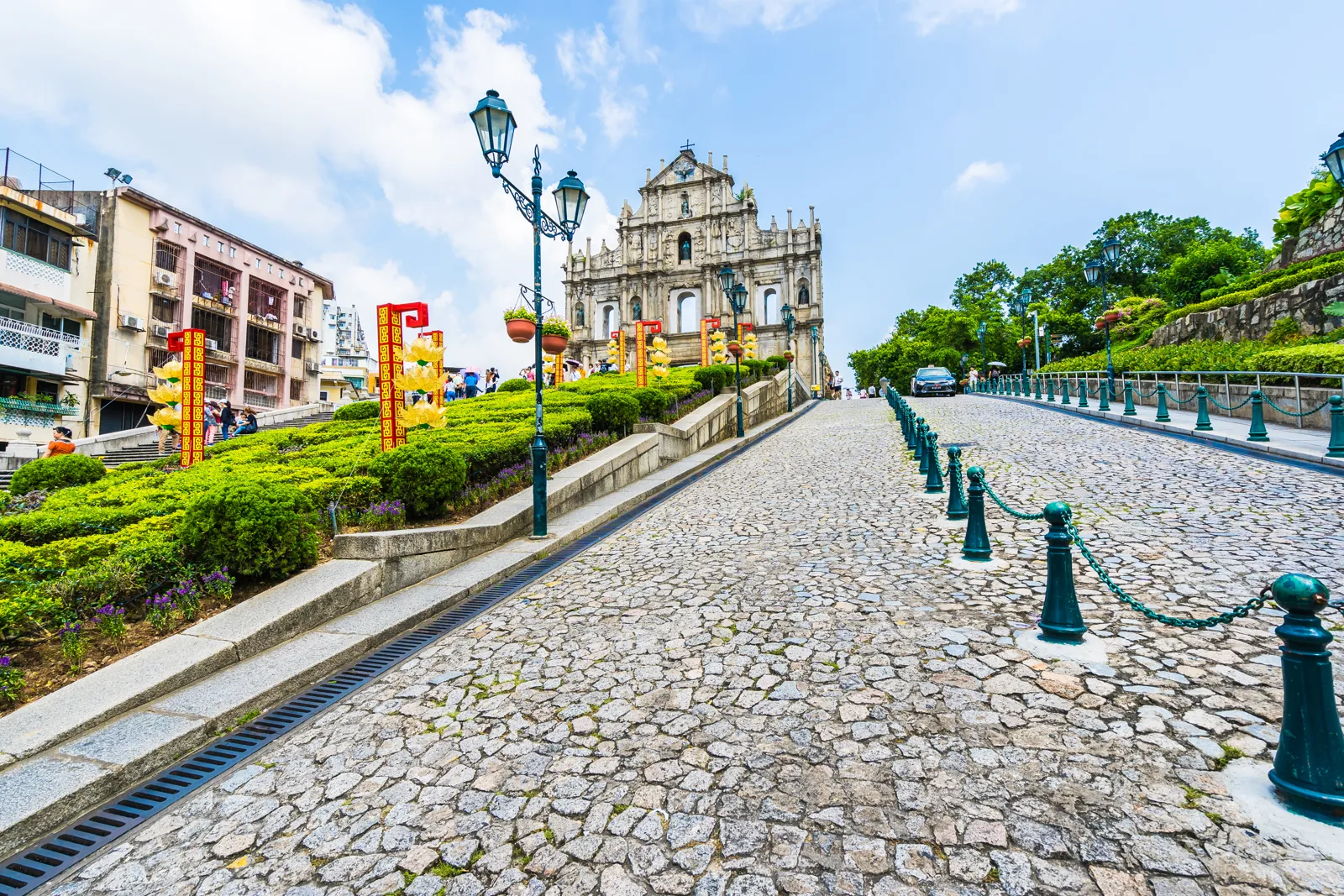
Behind the square, St Paul’s Hill carries the ruins of a church and several museums (Governor’s Museum, literature museum). At its foot, the Porta de Santiago and the rebuilt Middelburg Bastion are all that remains of A Famosa, the fortress the Portuguese built around 1512. The Dutch enlarged it after 1641, and the British almost entirely destroyed it in 1811.
Jonker Walk and Chinatown
Across the river, Jonker Walk (Jalan Hang Jebat) runs through Chinatown: old houses, some dating from the 17th century, and shops selling antiques, textiles and crafts. According to its encyclopedia entry, the street becomes a pedestrianised night market on Friday, Saturday and Sunday evenings (check times on site). Along the street and nearby: the Baba Nyonya Heritage Museum, Cheng Hoon Teng Temple, the Cheng Ho Cultural Museum and Kampung Kling Mosque.
Malacca’s cultures: Baba Nyonya and Kristang
The Baba Nyonya, Straits-born Chinese, descend from traders who settled in the days of the sultanate and married Malay women: they adopted the Malay language while keeping part of their Chinese traditions. The Kristang, descendants of the Portuguese, speak a Portuguese creole and live in the Portuguese Settlement, where the Feast of St Peter is held. These two communities give the city its character.
The river and the viewpoints
A cruise on the Malacca River, especially in the evening, follows the boundary between Chinatown and the Malay quarter. For an overview, the Taming Sari Tower offers a panorama of the centre. The Maritime Museum, housed in a replica of the Portuguese ship Flor de la Mar, tells the port’s trading history, and the Sultanate Palace Museum, a replica of a Malay palace built without nails, evokes the period before the Europeans.
Malacca in 1 or 2 days
- Day 1: the red square and Stadthuys, St Paul’s Hill, Porta de Santiago, the Sultanate Palace Museum; Jonker Walk and the night market if you are there at the weekend.
- Day 2: Baba Nyonya Heritage Museum and Cheng Hoon Teng Temple in the morning, Maritime Museum, the Portuguese Settlement late in the day, a river cruise in the evening.
Where to stay in Malacca
The historic centre and the riverside let you do everything on foot and enjoy the town in the evening, after the day visitors have left. Renovated shophouses in Chinatown are a popular choice. If you come for the weekend night market, book early.
Getting to Malacca and getting around
Malacca lies south of Kuala Lumpur, on the west coast of the peninsula. Malacca International Airport, north of the town, has very few flights; most visitors arrive via Kuala Lumpur International Airport and continue by bus. The Melaka Sentral bus terminal handles buses and taxis, for the town and for intercity services; some long-distance taxis serve Singapore. In town, the historic centre is walkable; taxis and ride-hailing apps complement this for Melaka Sentral and the Portuguese Settlement.
Transfer from Kuala Lumpur: bus, private transfer or rental car?
The bus to Melaka Sentral, then a taxi to the centre, is a simple solution. A private transfer from Kuala Lumpur airport avoids changes. Before booking, compare the carrier’s official site with resellers: timetables, luggage allowance and cancellation terms.
When to go to Malacca: climate month by month
Malacca has an equatorial climate: hot and humid all year, with no true dry season. The table combines the official normals with our calculations.
| Month | Avg. max | Avg. min | Rain | Rainy days | Day/night gap | Sunrise / sunset (15th) | Daylight |
|---|---|---|---|---|---|---|---|
| January | 31.8 °C (89 °F) | 23.7 °C (75 °F) | 102 mm (4.0 in) | 8.0 | 8.1 °C (15 °F) | 7:19 am / 7:20 pm | 12 h 01 min |
| February | 32.9 °C (91 °F) | 23.9 °C (75 °F) | 80 mm (3.1 in) | 6.5 | 9.0 °C (16 °F) | 7:23 am / 7:26 pm | 12 h 03 min |
| March | 33.2 °C (92 °F) | 24.3 °C (76 °F) | 129 mm (5.1 in) | 10.1 | 8.9 °C (16 °F) | 7:17 am / 7:22 pm | 12 h 06 min |
| April | 33.0 °C (91 °F) | 24.5 °C (76 °F) | 166 mm (6.5 in) | 11.9 | 8.5 °C (15 °F) | 7:06 am / 7:15 pm | 12 h 10 min |
| May | 32.6 °C (91 °F) | 24.6 °C (76 °F) | 167 mm (6.6 in) | 10.6 | 8.0 °C (14 °F) | 7:00 am / 7:13 pm | 12 h 13 min |
| June | 32.1 °C (90 °F) | 24.4 °C (76 °F) | 173 mm (6.8 in) | 9.4 | 7.7 °C (14 °F) | 7:03 am / 7:18 pm | 12 h 15 min |
| July | 31.6 °C (89 °F) | 23.9 °C (75 °F) | 196 mm (7.7 in) | 11.7 | 7.7 °C (14 °F) | 7:09 am / 7:24 pm | 12 h 14 min |
| August | 31.6 °C (89 °F) | 23.9 °C (75 °F) | 220 mm (8.7 in) | 12.4 | 7.7 °C (14 °F) | 7:09 am / 7:21 pm | 12 h 11 min |
| September | 31.8 °C (89 °F) | 23.9 °C (75 °F) | 162 mm (6.4 in) | 11.4 | 7.9 °C (14 °F) | 7:02 am / 7:10 pm | 12 h 07 min |
| October | 32.1 °C (90 °F) | 24.0 °C (75 °F) | 189 mm (7.4 in) | 12.1 | 8.1 °C (15 °F) | 6:54 am / 6:58 pm | 12 h 04 min |
| November | 31.7 °C (89 °F) | 23.9 °C (75 °F) | 233 mm (9.2 in) | 15.7 | 7.8 °C (14 °F) | 6:54 am / 6:56 pm | 12 h 01 min |
| December | 31.3 °C (88 °F) | 23.8 °C (75 °F) | 177 mm (7.0 in) | 12.5 | 7.5 °C (14 °F) | 7:05 am / 7:05 pm | 12 h 00 min |
Reading the table: temperatures vary little: 31 to 33 °C (88 to 91 °F) in the afternoon and 24 °C (75 °F) at night, all year. February is the driest month (80 mm / 3.1 in over 6.5 days), followed by January; November is the wettest (233 mm / 9.2 in, 15.7 days). The sun rises at about 7 am and sets at about 7 pm all year, giving days of roughly 12 hours (calculation).
Very hot days (Destination de Voyage calculation from WMO normals): the station averages 25.6 days at 32 °C (90 °F) or above in March, 83% of the days of the month, against 12.2 in December (39%). From February to May, more than two days in three reach 32 °C (90 °F): plan visits for early morning and late afternoon. From December to February, February has the least rain, and December and January are slightly less hot: this is the best window, consistent with our page on when to go to Malaysia.
Safety: what the official sources say
We read the safety sections of the UK FCDO (GOV.UK, updated 19 March 2026) and the U.S. Department of State (travel.state.gov, last updated February 26, 2026) for Malaysia on 26 October 2026. The FCDO’s only regional warning concerns the islands and dive sites off the eastern Sabah coast from Sandakan to Tawau, because of the threat of kidnapping; Malacca is not mentioned. Useful points:
- Drugs: penalties for using, having or selling illegal drugs are much harsher than in the United States and can include the death penalty (U.S. Department of State). Never carry luggage for someone else. The FCDO adds that authorities may ask for a urine test on arrival if they suspect drug use.
- Theft: bag-snatching is common, particularly in major cities, and thieves on motorbikes can target tourists; they can cut straps or pull off bags carried on the shoulder closest to the road (UK FCDO).
- Drinks: the FCDO warns about drink spiking and methanol poisoning: it is not possible to identify methanol in alcoholic drinks by taste or smell.
- Sea: piracy in South-East Asian waters is an ongoing problem, with attacks in and around Malaysian waters, particularly in the Strait of Malacca (UK FCDO).
- Storms and floods: seasonal storms affect Malaysia; flooding and landslides are common and can interrupt essential services (UK FCDO).
Entry requirements
- US citizens: according to the U.S. Department of State (travel.state.gov, last updated February 26, 2026), you do not need a Malaysian visa for business or tourism for 90 days or less. Your passport must be valid for at least six months beyond arrival, with at least one blank page for the entry stamp. All travelers must complete the Malaysia Digital Arrival Card (MDAC). Carry your passport at all times.
- UK citizens: according to the UK FCDO (GOV.UK, updated 19 March 2026), you can visit Malaysia without a visa for tourism and will normally be allowed to stay for 90 days on arrival. Your passport must have an expiry date at least 6 months after the date you arrive. You must submit an arrival card online before you travel.
- Overstays: both governments warn that Malaysian authorities take overstays seriously: you can be fined, detained, deported and banned from returning.
- The two sources agree on the 90-day visa-free stay and the six-month passport rule. For anything else, confirm with the Malaysian embassy or high commission in your country. See also our guide to entry requirements.
Staying connected
Malaysia is outside the European Union and the US and UK, so roaming on your home plan can be expensive. An eSIM installed before departure lets you order a ride-hailing car as soon as you land in Kuala Lumpur. Check that your phone is compatible with our travel eSIM guide.
If you… then…
| If you… | Then… |
|---|---|
| Want the least rain | Aim for February, then January |
| Struggle with heat | Avoid March and April (more than 24 days at 32 °C / 90 °F or above); visit early in the morning |
| Want to see the night market | Come from Friday to Sunday and stay overnight |
| Have only one day | Red square, St Paul’s Hill, Porta de Santiago, Jonker Walk |
| Arrive via Kuala Lumpur | Complete the online arrival card before your flight |
| Combine with Singapore | Ask at Melaka Sentral about long-distance taxis |
Frequently asked questions
What is the best time to visit Malacca?
December to February: February is the driest month (80 mm / 3.1 in, WMO 1991–2020 normals from MetMalaysia). It is hot all year, 31 to 33 °C (88 to 91 °F) in the afternoon.
How many days do you need in Malacca?
One day is enough for the historic centre; a night on site lets you enjoy the night market and the quieter evening town.
How do you get from Kuala Lumpur to Malacca?
By bus to the Melaka Sentral terminal, by private transfer or by car; Malacca’s airport has very few flights.
When is the Jonker Walk night market?
According to its encyclopedia entry, on Friday, Saturday and Sunday evenings; check on site.
Is Malacca safe?
Malacca is not covered by the UK FCDO’s regional warning, which concerns the eastern Sabah coast. Both governments warn about bag-snatching in big cities and the severity of drug laws.
Do you need a visa for Malacca?
Not for tourist stays of up to 90 days, for US or UK citizens (U.S. Department of State, February 26, 2026; UK FCDO, 19 March 2026), but the online arrival card is required and your passport must be valid for six months after arrival.
Our sources
- UK FCDO, Malaysia foreign travel advice (GOV.UK, updated 19 March 2026): entry requirements, safety and security, regional risks; read 26 October 2026
- U.S. Department of State, Malaysia country information (travel.state.gov, last updated February 26, 2026): entry and exit requirements, safety and security, local laws; read 26 October 2026
- World Meteorological Organization, 1991–2020 climate normals, Melaka station (48665), Malaysian Meteorological Department (NOAA/NCEI archive)
- Wikipedia: “Malacca City”, “Stadthuys”, “A Famosa”, “Jonker Walk”
- Astronomical and very-hot-day calculations: Destination de Voyage, from the NOAA solar algorithm and WMO normals (15th of each month, year 2027)
- Our methodology
Updated November 2026.
Opening hours and prices may change: check on site before you go.