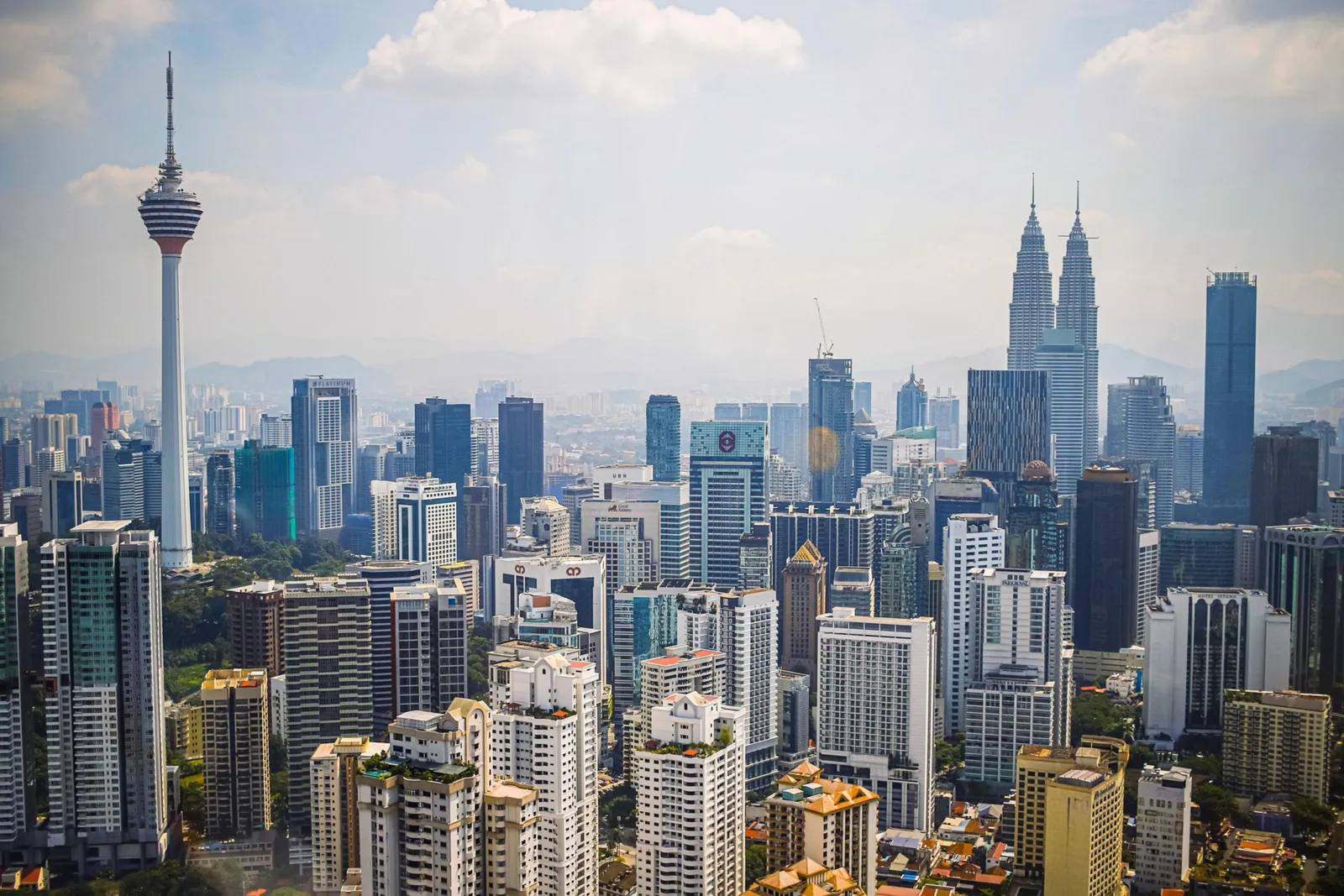
When is the best time to visit Malaysia? There is not one best time but two, depending on the coast: December to March for the west coast (Penang, Langkawi, Malacca), and April to September for the east coast islands (Perhentian, Redang, Tioman), which are hit by the northeast monsoon from November to February. If you can only pick one window for a full tour, aim for June to August: the east coast is in full season, Kuala Lumpur has its least rainy months and Borneo remains practicable. May is a good, quieter alternative. These least rainy months suit the capital well: our guide on what to do in Kuala Lumpur presents the districts and excursions. For a cultural stop on this coast, see our guide to visiting Malacca.
⚠️ Safety: the UK FCDO advises against all but essential travel to all islands and dive sites off the coast of eastern Sabah (Borneo), from Sandakan to Tawau, due to the threat of kidnapping; this does not apply to the mainland of Sabah (GOV.UK, updated 19 March 2026). The U.S. State Department urges caution in eastern Sabah (travel.state.gov, last updated February 26, 2026). Check the latest advice before you go.
Close to the equator, the country is hot and humid all year (29 to 34 °C (84 to 93 °F) in the afternoon on the lowlands): everything depends on the rain, and on where it falls. Here is how to choose, based on the official 1991–2020 climate normals of the Malaysian meteorological service (MetMalaysia), published by the World Meteorological Organization.

Our travel deals for Malaysia
Affiliate links: we earn a commission, at no extra cost to you.
 FlightsKiwi.comCompare flights and airline combinations to Malaysia.Compare flights
- eSIMAiraloData plan to install before you leave (eSIM-compatible phone).See plans


When to go to Malaysia at a glance
- West coast (Penang, Langkawi, Malacca) December to March, the least rainy months; September–October are the wettest
- East coast (Perhentian, Redang, Tioman) April to September; from November to February, northeast monsoon, rough seas and many closed accommodations
- Kuala Lumpur can be visited year-round; June to August are the least rainy months, April and November the stormiest
- Borneo (Kota Kinabalu) February to April, the driest months; October is the wettest
- Least favorable month November, rainy almost everywhere
- Haze forest fires in Indonesia can cause haze between June and October (GOV.UK, updated 19 March 2026)
- Festivals to plan around Chinese New Year and Thaipusam (January–February), Hari Raya Aidilfitri (variable date), National Day on August 31
When to go to Malaysia by priority
- Best weather: December to March for the west coast (Penang, Langkawi); April to September for the east coast islands
- Cheapest: October and November, the wettest months
- Fewest crowds: May, as well as the rainy-season months; July–August attract holidaymakers from Europe and North America
- Events: Chinese New Year and Thaipusam (January or February), Hari Merdeka (August 31), Deepavali (October or November); lunar and religious dates vary
Malaysia: the calendar at a glance
✅ Best months: January, February, March, may, June, July, August
❌ Period to avoid: November
Malaysia weather and climate month by month
The table gives the normals for Kuala Lumpur (Subang station). The verdict takes the whole country into account: when the capital is wet, another region may be dry. Details by region below. To place these regions, see the map of Malaysia.
| Month | Avg. max | Avg. min | Rain | Crowds | Prices | Verdict |
|---|---|---|---|---|---|---|
| January | 32.6 °C (91 °F) | 23.8 °C (75 °F) | 227 mm (8.9 in) | Moderate (high at Chinese New Year) | Moderate | Dry west coast, east coast closed ✅ |
| February | 33.3 °C (92 °F) | 24.0 °C (75 °F) | 193 mm (7.6 in) | Moderate | Moderate | Least rainy month of the winter ✅ |
| March | 33.7 °C (93 °F) | 24.5 °C (76 °F) | 270 mm (10.6 in) | Moderate | Moderate | West coast still good, dry Borneo ✅ |
| April | 33.7 °C (93 °F) | 24.7 °C (76 °F) | 302 mm (11.9 in) | Moderate | Moderate | Storms in KL, east coast reopening ⚠️ |
| May | 33.6 °C (92 °F) | 25.0 °C (77 °F) | 230 mm (9.1 in) | Moderate | Moderate | Good compromise, east coast in season ✅ |
| June | 33.3 °C (92 °F) | 24.8 °C (77 °F) | 146 mm (5.7 in) | Moderate | Moderate | Least rainy month in KL ✅ |
| July | 32.8 °C (91 °F) | 24.4 °C (76 °F) | 165 mm (6.5 in) | High (school holidays in Europe and North America) | High | Ideal east coast, risk of haze ✅ |
| August | 32.8 °C (91 °F) | 24.5 °C (76 °F) | 174 mm (6.9 in) | High (school holidays in Europe and North America) | High | Ideal east coast, risk of haze ✅ |
| September | 32.7 °C (91 °F) | 24.2 °C (76 °F) | 220 mm (8.7 in) | Moderate | Moderate | Rain increasing on the west coast ⚠️ |
| October | 32.6 °C (91 °F) | 24.2 °C (76 °F) | 284 mm (11.2 in) | Low | Low | Rainy in Penang and KL, east coast closing ⚠️ |
| November | 32.3 °C (90 °F) | 24.1 °C (75 °F) | 356 mm (14.0 in) | Low | Low | Wettest month almost everywhere ❌ |
| December | 32.0 °C (90 °F) | 24.0 °C (75 °F) | 281 mm (11.1 in) | Moderate (high over the holidays) | Moderate to high | West coast improving, east coast closed ⚠️ |
In Kuala Lumpur, there are from 10 days of rain in June to 20 in November, according to the same normals. Rain most often falls as thunderstorms in the late afternoon or evening: mornings are generally usable for sightseeing.
Sea temperature month by month
The sea is warm all year, between 27 and 30 °C (86 °F), whichever coast. What determines swimming is the monsoon: on the east coast, the sea becomes rough during the northeast monsoon.
| Month | Penang (west coast) | Kuantan (east coast) | Kota Kinabalu (Borneo) |
|---|---|---|---|
| January | 27 °C (81 °F) | 27.3 °C (81 °F) | 27.2 °C (81 °F) |
| February | 28 °C (82 °F) | 27.6 °C (82 °F) | 26.7 °C (80 °F) |
| March | 29 °C (84 °F) | 28.3 °C (83 °F) | 27.3 °C (81 °F) |
| April | 29 °C (84 °F) | 29.1 °C (84 °F) | 28.4 °C (83 °F) |
| May | 29 °C (84 °F) | 29.6 °C (85 °F) | 29.3 °C (85 °F) |
| June | 29 °C (84 °F) | 29.4 °C (85 °F) | 29.2 °C (85 °F) |
| July | 28 °C (82 °F) | 29.1 °C (84 °F) | 28.8 °C (84 °F) |
| August | 28 °C (82 °F) | 28.9 °C (84 °F) | 28.8 °C (84 °F) |
| September | 28 °C (82 °F) | 28.9 °C (84 °F) | 28.9 °C (84 °F) |
| October | 28 °C (82 °F) | 29.0 °C (84 °F) | 28.7 °C (84 °F) |
| November | 28 °C (82 °F) | 27.8 °C (82 °F) | 28.8 °C (84 °F) |
| December | 27 °C (81 °F) | 28.7 °C (84 °F) | 28.2 °C (83 °F) |
Seasons in Malaysia: pros and cons
MetMalaysia distinguishes the northeast monsoon, the southwest monsoon and two shorter inter-monsoons. During the northeast monsoon, the east coast of the peninsula, western Sarawak and the northeast coast of Sabah receive heavy rain, while regions sheltered by mountains are relatively spared. For a traveler, this gives three main periods. The UK FCDO notes that seasonal storms affect Malaysia, that their timing depends on location, and that flooding and landslides are common (GOV.UK, updated 19 March 2026).
December to March: the west coast season
While the east coast gets the monsoon, the west coast, protected by the peninsula’s central mountain range, has its driest period. In Penang, 80 mm (3.1 in) falls in January and 86 mm (3.4 in) in February, compared with more than 300 mm (11.8 in) in September–October. In Malacca, further south, February is also the driest month (80 mm, 3.1 in).
- Pros: good conditions in Penang, Langkawi and Malacca, Kota Kinabalu fairly dry from February to April, Chinese New Year and Thaipusam festivals
- Cons: the Perhentian, Redang and Tioman islands are largely closed until February or March; Kuala Lumpur stays fairly rainy (more than 190 mm (7.5 in) a month)
- Who is it for? Travelers who go during the northern winter and combine Kuala Lumpur, Malacca, Penang and Langkawi
April to September: the east coast season
The southwest monsoon barely affects the peninsula, sheltered by the island of Sumatra. This is the best period for the east coast: in Kota Bharu, in the northeast, rainfall stays between 69 and 163 mm (6.4 in) a month from February to September, and in Mersing, the gateway to Tioman, between 111 and 168 mm (6.6 in) from February to September. Kuala Lumpur has its least rainy months from June to August. For this capital, whose calendar differs from the east coast’s, the best time to visit Kuala Lumpur is detailed month by month.
- Pros: east coast islands open and seas generally calm, good time for snorkeling and diving, Kuala Lumpur less wet in summer
- Cons: higher crowds and prices in July–August; possible haze from June to October linked to forest fires in Indonesia (GOV.UK, updated 19 March 2026), with air quality usually worst in the dry season from July to October according to the U.S. State Department (travel.state.gov, last updated February 26, 2026); inter-monsoon storms in April–May on the west coast
- Who is it for? Summer travelers, families, divers and those who want to combine city and east coast beaches
October–November: the most delicate period
This is the autumn inter-monsoon, then the arrival of the northeast monsoon. The west coast gets its heaviest rain (337 mm (13.3 in) in October in Penang), Kuala Lumpur peaks in November (356 mm, 14.0 in), and the east coast enters its rainy season: 677 mm (26.7 in) in November in Kota Bharu, 533 mm (21.0 in) in December in Mersing.
- Pros: low prices, few tourists, Deepavali in late October or November
- Cons: rain almost everywhere, rough seas on the east coast, risk of flooding
- Who is it for? Flexible travelers who stay in cities
When to go to Malaysia by region
The key point is the contrast between the two coasts of the peninsula. According to MetMalaysia, the west coast has two rainfall peaks (October–November, then April–May), while the east coast receives most of its rain from November to January. Here is a comparison of four cities:
| Month | Kuala Lumpur | Penang (west coast) | Kota Bharu (east coast) | Kota Kinabalu (Borneo) |
|---|---|---|---|---|
| January | 32.6 °C (91 °F) / 227 mm (8.9 in) | 31.9 °C (89 °F) / 80 mm (3.1 in) | 29.5 °C (85 °F) / 150 mm (5.9 in) | 31.3 °C (88 °F) / 141 mm (5.6 in) |
| February | 33.3 °C (92 °F) / 193 mm (7.6 in) | 32.4 °C (90 °F) / 86 mm (3.4 in) | 30.4 °C (87 °F) / 69 mm (2.7 in) | 31.4 °C (89 °F) / 78 mm (3.1 in) |
| March | 33.7 °C (93 °F) / 270 mm (10.6 in) | 32.6 °C (91 °F) / 146 mm (5.7 in) | 31.4 °C (89 °F) / 140 mm (5.5 in) | 32.1 °C (90 °F) / 93 mm (3.7 in) |
| April | 33.7 °C (93 °F) / 302 mm (11.9 in) | 32.3 °C (90 °F) / 188 mm (7.4 in) | 32.6 °C (91 °F) / 93 mm (3.7 in) | 33.0 °C (91 °F) / 123 mm (4.8 in) |
| May | 33.6 °C (92 °F) / 230 mm (9.1 in) | 32.1 °C (90 °F) / 229 mm (9.0 in) | 33.0 °C (91 °F) / 116 mm (4.6 in) | 33.1 °C (92 °F) / 212 mm (8.3 in) |
| June | 33.3 °C (92 °F) / 146 mm (5.7 in) | 32.0 °C (90 °F) / 164 mm (6.5 in) | 32.7 °C (91 °F) / 138 mm (5.4 in) | 32.6 °C (91 °F) / 284 mm (11.2 in) |
| July | 32.8 °C (91 °F) / 165 mm (6.5 in) | 31.6 °C (89 °F) / 190 mm (7.5 in) | 32.3 °C (90 °F) / 155 mm (6.1 in) | 32.3 °C (90 °F) / 288 mm (11.3 in) |
| August | 32.8 °C (91 °F) / 174 mm (6.9 in) | 31.4 °C (89 °F) / 246 mm (9.7 in) | 32.2 °C (90 °F) / 158 mm (6.2 in) | 32.4 °C (90 °F) / 279 mm (11.0 in) |
| September | 32.7 °C (91 °F) / 220 mm (8.7 in) | 31.1 °C (88 °F) / 316 mm (12.4 in) | 31.9 °C (89 °F) / 163 mm (6.4 in) | 32.2 °C (90 °F) / 287 mm (11.3 in) |
| October | 32.6 °C (91 °F) / 284 mm (11.2 in) | 31.0 °C (88 °F) / 337 mm (13.3 in) | 31.1 °C (88 °F) / 267 mm (10.5 in) | 31.8 °C (89 °F) / 387 mm (15.2 in) |
| November | 32.3 °C (90 °F) / 356 mm (14.0 in) | 31.1 °C (88 °F) / 233 mm (9.2 in) | 29.8 °C (86 °F) / 677 mm (26.7 in) | 31.9 °C (89 °F) / 283 mm (11.1 in) |
| December | 32.0 °C (90 °F) / 281 mm (11.1 in) | 31.3 °C (88 °F) / 117 mm (4.6 in) | 29.2 °C (85 °F) / 572 mm (22.5 in) | 31.7 °C (89 °F) / 262 mm (10.3 in) |
Kuala Lumpur and the center
The capital receives about 2,850 mm (112.2 in) of rain a year. The least rainy months are June, July and August (146 to 174 mm, 5.7 to 6.9 in); the stormiest are April (302 mm, 11.9 in) and November (356 mm, 14.0 in). The city can be visited year-round, keeping museums and shopping malls for late afternoons.
Penang, Langkawi and the west coast
The best period runs from December to March: in Penang, rainfall stays under 150 mm (5.9 in) a month from December to March, with a minimum in January–February. The season deteriorates from April–May, and September–October are the wettest months (316 and 337 mm (13.3 in)).
The east coast: Perhentian, Redang, Tioman
This is the other face of the peninsula. In Kota Bharu, the large town closest to the Perhentian Islands, 677 mm (26.7 in) falls in November and 572 mm (22.5 in) in December, compared with 69 mm (2.7 in) in February and 93 mm (3.7 in) in April. The favorable season runs from April to September, with conditions often good from March and until early October. During the monsoon, the sea becomes rough, boats are reduced and many accommodations close: in March or October, check that places are open before booking. Further south, Tioman follows the same pattern (533 mm (21.0 in) in December in Mersing).
This climate pattern on the east coast is like that of Ko Samui and the Gulf of Thailand, just to the north; a combined trip to Thailand is therefore easy to time for the same season.
Borneo: Sabah and Sarawak
In Kota Kinabalu, the capital of Sabah, the driest months are February, March and April (78 to 123 mm, 3.1 to 4.8 in). From May to December, it rains markedly more (212 to 387 mm, 8.3 to 15.2 in), with a peak in October. In Sarawak, the calendar is different: in Kuching, the wettest season runs from December to February (672 mm (26.5 in) in January), and the least rainy months are June to September (201 to 264 mm, 7.9 to 10.4 in). An important reminder: the UK FCDO advises against all but essential travel to the islands and dive sites off eastern Sabah, from Sandakan to Tawau (GOV.UK, updated 19 March 2026).
The table below summarizes, month by month, the recommended period for each region.
| Month | Kuala Lumpur | Penang, Langkawi and the west coast | East coast islands (Perhentian, Redang, Tioman) | Kota Kinabalu (Sabah) |
|---|---|---|---|---|
| January | ⚠️ | ✅ | ❌ | ⚠️ |
| February | ✅ | ✅ | ❌ | ✅ |
| March | ⚠️ | ✅ | ⚠️ | ✅ |
| April | ⚠️ | ⚠️ | ✅ | ✅ |
| May | ⚠️ | ⚠️ | ✅ | ⚠️ |
| June | ✅ | ⚠️ | ✅ | ⚠️ |
| July | ✅ | ⚠️ | ✅ | ⚠️ |
| August | ✅ | ⚠️ | ✅ | ⚠️ |
| September | ⚠️ | ❌ | ✅ | ⚠️ |
| October | ⚠️ | ❌ | ⚠️ | ⚠️ |
| November | ⚠️ | ⚠️ | ❌ | ⚠️ |
| December | ⚠️ | ✅ | ❌ | ⚠️ |

When to go to Malaysia by trip type
| Trip | Best time | Where? |
|---|---|---|
| First trip (cities and beaches) | April to August | Kuala Lumpur, Malacca, Penang, then Perhentian or Tioman |
| Beach in winter | December to March | Langkawi, Penang |
| Beach in summer (July–August) | June to August | Perhentian, Redang, Tioman |
| Snorkeling and diving | April to September | Perhentian, Redang, Tioman |
| Climbing Mount Kinabalu | February to April (the driest months in Kota Kinabalu) | Kinabalu Park (Sabah) |
| Jungle and wildlife | March to September | Taman Negara, Kuching and Bako National Park |
| Budget | October–November, staying in cities | Kuala Lumpur, Malacca, George Town |
| Festivals and cultures | January–February, October–November | Kuala Lumpur (Batu Caves), Penang, Malacca |
| Family trip | School holiday periods | Kuala Lumpur, Langkawi in winter, east coast in summer |
Major events to plan your trip around
| Period | Event | Location |
|---|---|---|
| January or February (lunar calendar) | Chinese New Year | Kuala Lumpur, George Town, Malacca |
| January or February (Tamil month of Thai) | Thaipusam, major Hindu festival | Batu Caves (Kuala Lumpur), Penang |
| Variable date, moving about 11 days earlier each year | Ramadan, then Hari Raya Aidilfitri (end of the fast) | Nationwide |
| May 30 and 31 | Kaamatan, harvest festival | Sabah |
| June 1 and 2 | Gawai Dayak, harvest festival | Sarawak |
| August 31 | Hari Merdeka, National Day | Kuala Lumpur and nationwide |
| September 16 | Malaysia Day | Nationwide |
| October or November (Hindu calendar) | Deepavali, festival of lights | Kuala Lumpur (Brickfields), Penang |
Malaysia month by month: what to expect
January: Good for Penang and Langkawi (80 mm (3.1 in) in Penang). The east coast is in full monsoon, islands largely closed.
February: The driest month of the winter: 86 mm (3.4 in) in Penang, 78 mm (3.1 in) in Kota Kinabalu. The east coast islands reopen late in the month or in March.
March: Still good on the west coast and in Kota Kinabalu. The east coast islands gradually reopen.
April: Frequent storms in Kuala Lumpur (302 mm, 11.9 in), but the start of the good season on the east coast (93 mm (3.7 in) in Kota Bharu).
May: A good compromise: east coast open, moderate crowds.
June: The least rainy month in Kuala Lumpur (146 mm, 5.7 in), excellent for the east coast islands. Harvest festivals in Borneo.
July: Very good for the east coast and Kuala Lumpur. School holidays in Europe and North America: book the islands early. Haze possible.
August: Like July. National Day on August 31. Rain picks up in Penang (246 mm, 9.7 in).
September: Still good on the east coast, but rainy in Penang (316 mm, 12.4 in). Prices falling.
October: The wettest month in Penang (337 mm, 13.3 in) and Kota Kinabalu (387 mm, 15.2 in). The east coast islands close late in the month.
November: The least favorable month: 356 mm (14.0 in) in Kuala Lumpur, 677 mm (26.7 in) in Kota Bharu, risk of flooding.
December: The west coast improves (117 mm (4.6 in) in Penang); east coast under the monsoon. Prices rise over the holidays.
When to book your trip to Malaysia
For July–August and the year-end holidays, book your flights 3 to 5 months ahead. Accommodation on the Perhentian and Redang islands, limited in number, goes quickly in the northern summer. For Mount Kinabalu, places are limited: book several months ahead. Outside holiday periods, 1 to 2 months is usually enough.
Planning your trip to Malaysia
- Entry requirements: see our page on the entry requirements for Malaysia, with the rules for US and UK citizens. All travelers must complete the Malaysia Digital Arrival Card (MDAC) on arrival (travel.state.gov, last updated February 26, 2026).
- Time difference: Malaysia is on UTC+8 all year (no daylight saving time): 8 hours ahead of London in winter and 7 in summer; 13 hours ahead of New York in winter and 12 in summer.
- Currency: the ringgit (MYR). Estimate your budget with our currency converter.
- Health: dengue is among the health risks listed by the UK FCDO (GOV.UK, updated 19 March 2026): protect yourself against mosquito bites and check the latest vaccine recommendations before you go.
To go further, see our complete Malaysia travel guide.
Frequently asked questions
What is the best month to visit Malaysia?
For a trip combining Kuala Lumpur, the west coast and an east coast island, June and July are the most balanced: it is the least rainy period in Kuala Lumpur and full season in the Perhentians. For a winter trip, February is the best month for Penang, Langkawi and Kota Kinabalu.
When should you go to the Perhentian Islands?
From April to September. The east coast of the peninsula receives the northeast monsoon from November to February: in Kota Bharu, the closest town, 677 mm (26.7 in) falls in November and 572 mm (22.5 in) in December according to the official normals. Many island accommodations close during this period.
Can you go to Malaysia in December or January?
Yes, by choosing the west coast: Penang, Langkawi and Malacca are in their driest period. Avoid the east coast (Perhentian, Redang, Tioman), in the middle of the monsoon, though.
What is the difference between the west and east coasts of Malaysia?
Their rainy seasons are offset. The west coast, sheltered from the northeast monsoon by the mountains, is driest from December to March and wettest in September–October. The east coast is dry from April to September and receives very heavy rain from November to January.
What is haze in Malaysia?
Air pollution linked to forest fires in Indonesia. The UK FCDO says it can occur between June and October and can disrupt local travel, regional air travel and schools (GOV.UK, updated 19 March 2026). The U.S. State Department notes that air quality is usually worst in the dry season from July to October (travel.state.gov, last updated February 26, 2026). Check the air quality index before and during your stay.
Can you go to Malaysia in July or August?
Yes, these are good months for a full tour: the east coast (Perhentian, Redang, Tioman) is in full season and Kuala Lumpur receives 165 mm (6.5 in) in July and 174 mm (6.9 in) in August according to the official normals, compared with 356 mm (14.0 in) in November. Rain picks up in Penang in August (246 mm, 9.7 in), however. It is also the school holiday period in Europe and North America, which is pricier, and haze is possible. See also our ideas for where to go in August.
To combine with a neighboring country, also see when to go to Singapore and when to go to Thailand.
Our sources
- Malaysian Meteorological Department (MetMalaysia), via the World Meteorological Organization 1991–2020 climate normals (NOAA archive): Subang (Kuala Lumpur), Bayan Lepas (Penang), Kota Bharu, Mersing, Malacca, Kota Kinabalu and Kuching stations
- MetMalaysia: description of the climate and monsoons in Malaysia
- Safety, health and entry information read on 24 October 2026: UK FCDO, foreign travel advice for Malaysia (GOV.UK, updated 19 March 2026), and U.S. Department of State, Malaysia country information (travel.state.gov, last updated February 26, 2026)
- Deutscher Wetterdienst (DWD), Klimatafeln: average sea temperature at Penang, Kuantan and Kota Kinabalu
- Our methodology
Updated November 2026.