When is the best time to visit Singapore? The city can be visited all year, but the best period is February to April: this is when it rains least, with 105 mm (4.1 in) in February, the driest month according to the official normals. November, December and January are the wettest months, with episodes of continuous rain at the start of the northeast monsoon. The rest of the year, the weather is hot and humid, with frequent afternoon thunderstorms. To plan your visits district by district, use the map of Singapore. For entry rules, see our page on the entry requirements for Singapore.
Located about 1.5 degrees north of the equator, the city-state has no real seasons: average highs stay between 30 to 32.5 °C (86 to 91 °F) and average lows between 24 to 26 °C (75 to 79 °F), every month. The choice of dates therefore depends mostly on rain, festivals and prices. Here is how to choose, based on the official 1991–2020 climate normals of the Meteorological Service Singapore.

Our travel deals for Singapore
Affiliate links: we earn a commission, at no extra cost to you.
 FlightsKiwi.comCompare flights and airline combinations to Singapore.Compare flights
- City passGo CityMulti-attraction pass at a fixed price: worth it only if you visit a lot.See passes
- eSIMAiraloData plan to install before you leave (eSIM-compatible phone).See plans



When to go to Singapore at a glance
- Best times February to April, the least rainy months, and June to September
- Wettest months November (252 mm (9.9 in)), December (332 mm (13.1 in)) and January (222 mm (8.7 in))
- Temperatures 30 to 32.5 °C (86 to 91 °F) in the afternoon and 24 to 26 °C (75 to 79 °F) at night, all year
- Humidity about 81 to 86% monthly average, higher in November–December
- Watch out for smoke (“haze”) from forest fires in Indonesia or Malaysia, some years
- Top events Chinese New Year (January or February), National Day on August 9, Deepavali (October or November)
- Ideal for a 2- to 4-day stopover on the way to Southeast Asia or Oceania
When to go to Singapore by priority
- Best weather: February to April; February is the driest month (105 mm (4.1 in)) and September the second driest
- Cheapest: outside the year-end holidays, Chinese New Year, July–August and the Grand Prix weekend
- Fewest crowds: February to May and September to November, outside major events
- Events: Chinese New Year in late January or February, National Day on August 9, F1 Grand Prix usually in September or October, Deepavali in October or November
Singapore: the calendar at a glance
✅ Best months: February, March, April, June, July, August, September
❌ Period to avoid: December
Climate in Singapore month by month
The table below gives the normals for the Changi climate station, in the east of the island, which serves as the official reference. The west of the island generally receives slightly more rain than the east.
| Month | Avg. high | Avg. low | Rain | Crowds | Prices | Verdict |
|---|---|---|---|---|---|---|
| January | 30.6 °C (87 °F) | 24.3 °C (76 °F) | 222 mm (8.7 in) | High (Chinese New Year possible) | High | ⚠️ Rainy early in the month, drier afterward |
| February | 31.5 °C (89 °F) | 24.6 °C (76 °F) | 105 mm (4.1 in) | Moderate | Moderate | ✅ The driest month |
| March | 32.2 °C (90 °F) | 24.9 °C (77 °F) | 152 mm (6.0 in) | Moderate | Moderate | ✅ Fairly dry, sunny |
| April | 32.4 °C (90 °F) | 25.3 °C (78 °F) | 164 mm (6.5 in) | Moderate | Moderate | ✅ Hot, afternoon thunderstorms |
| May | 32.3 °C (90 °F) | 25.7 °C (78 °F) | 164 mm (6.5 in) | Moderate | Moderate | ⚠️ Heavy heat, thunderstorms |
| June | 31.9 °C (89 °F) | 25.7 °C (78 °F) | 135 mm (5.3 in) | High (local school holidays) | Moderate | ✅ Moderate rain |
| July | 31.4 °C (89 °F) | 25.4 °C (78 °F) | 147 mm (5.8 in) | High | High | ✅ Moderate rain, European holidays |
| August | 31.4 °C (89 °F) | 25.3 °C (78 °F) | 147 mm (5.8 in) | High (National Day) | High | ✅ Moderate rain |
| September | 31.6 °C (89 °F) | 25.2 °C (77 °F) | 125 mm (4.9 in) | Moderate | Moderate | ✅ The second driest month |
| October | 31.8 °C (89 °F) | 25.0 °C (77 °F) | 168 mm (6.6 in) | Moderate | Moderate | ⚠️ More thunderstorms |
| November | 31.2 °C (88 °F) | 24.6 °C (76 °F) | 252 mm (9.9 in) | Moderate | Moderate | ⚠️ Rainy, frequent thunderstorms |
| December | 30.5 °C (87 °F) | 24.3 °C (76 °F) | 332 mm (13.1 in) | High (holidays) | High | ❌ The wettest month |
In Singapore, a “rainy” month does not mean gray skies all day. The weather service mostly describes afternoon and early-evening thunderstorms, short but violent, and, at the start of the northeast monsoon, episodes of continuous rain. According to the normals, it rains between 9 days (February) and 19 days (November and December) a month.
The seasons in Singapore: pros and cons
The Meteorological Service Singapore describes two monsoons, separated by two inter-monsoon periods. They mainly change the frequency and form of the rain, and temperatures much less.
Northeast monsoon (December to early March)
The first half, generally December to early January, is the wet phase: “monsoon surges” bring continuous rain, moderate to heavy, sometimes with wind. The second half, from late January to early March, is by contrast windy and relatively dry. This explains the gap between December (332 mm (13.1 in)) and February (105 mm (4.1 in)).
- Pros: slightly lower temperatures (highs around 30.5 °C (87 °F) in December–January), Christmas decorations on Orchard Road, Chinese New Year
- Cons: long rain spells in December, high prices during the year-end holidays and Chinese New Year
- Our tip: aim for the second half of January or February, which are drier
Inter-monsoon (late March to May)
Winds are light and variable. Afternoons are hot, often above 32 °C (90 °F), and sometimes violent thunderstorms break out late in the day. April and May are among the hottest months of the year. According to the National Environment Agency (NEA), lightning activity is highest in the inter-monsoon periods.
- Pros: mornings generally sunny, moderate crowds outside holidays
- Cons: heavy heat, thunderstorms almost every afternoon
- Who is it for? Travelers who plan outdoor visits in the morning and indoor ones in the afternoon
Southwest monsoon (June to September)
This is a rather favorable period: monthly rainfall stays moderate (125 to 147 mm (4.9 to 5.8 in)). “Sumatra squalls”, lines of thunderstorms coming from the west, can cross the island between late night and midday, with strong gusts. Afternoon showers are short.
- Pros: moderate rain, a good time to combine Singapore with Bali or the islands of eastern Malaysia
- Cons: higher crowds and prices in July–August and around National Day; risk of “haze” some years
- Who is it for? Families on summer vacation and travelers heading to Indonesia
Inter-monsoon (October–November)
Winds become light and variable again, and afternoon thunderstorms multiply. Rainfall rises markedly in November (252 mm (9.9 in)), before the northeast monsoon arrives.
- Pros: Deepavali and its lights in Little India, average prices outside major events
- Cons: frequent thunderstorms, risk of “haze” some years through October
The “haze” question
Some years, vegetation fires in Indonesia or Malaysia send smoke laden with fine particles toward Singapore. For example, the NEA’s haze situation updates reported smoke from fires in Sumatra and Kalimantan drifting toward Singapore in September and October 2026, with its final update of the season on November 7, 2026. Air quality is generally good the rest of the time. The NEA publishes an air quality index that is updated regularly: check it before and during your stay, and limit outdoor physical activity during a smoke episode.
Where to go by season: Singapore and its neighbors
Singapore is small, but what you can do varies a lot depending on whether you stay in the city, visit the nature parks or combine your trip with a neighboring country. Here is a comparison of Singapore with two destinations often combined with it:
| Period | Singapore | Suggested combination |
|---|---|---|
| December–January | Rainy at the start of the season, festivities | Thailand (Bangkok, Andaman coast), in the dry season |
| February–April | The driest | Malaysia (Kuala Lumpur, Langkawi), Thailand |
| June–September | Moderate rain | Bali and Indonesia, east coast of Malaysia |
| October–November | More thunderstorms | Short stopover preferred |
To go further: when to go to Malaysia, when to go to Bali and when to go to Thailand, as well as when to go to Bangkok and when to go to Vietnam.
Downtown and Marina Bay
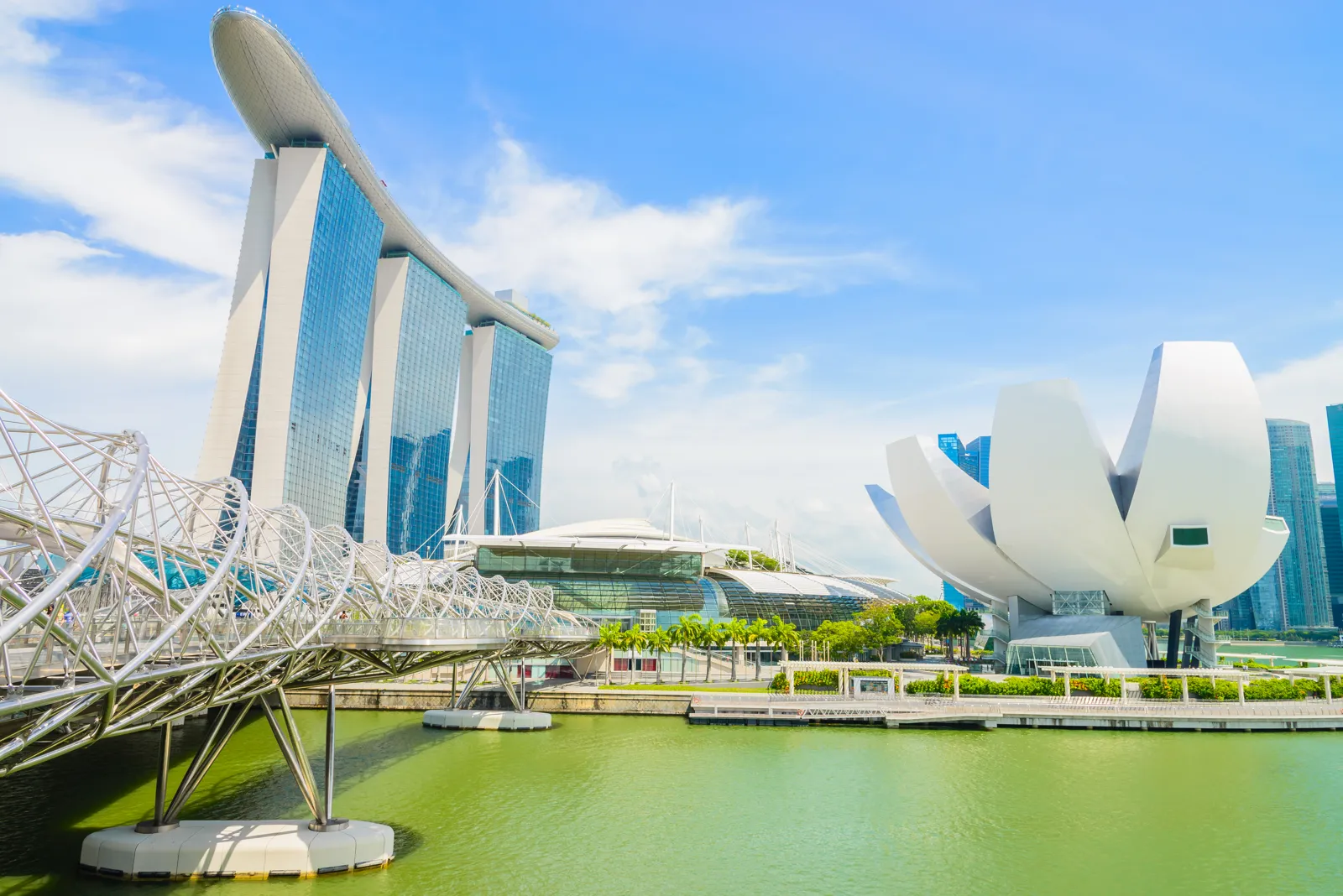
Marina Bay, Chinatown, Little India and Kampong Glam can be visited all year. The network of shopping centers, covered walkways and museums makes it easy to shelter during thunderstorms. Start walking tours early in the morning, and keep museums for the afternoon.
Parks and nature (Botanic Gardens, MacRitchie, Pulau Ubin)
For hikes in the nature reserves or a bike ride on Pulau Ubin, favor February to April or June to September, and set out in the morning. Thunderstorms are common, and lightning activity is highest in the inter-monsoon periods (NEA): leave open spaces and get out of the water as a storm approaches.
Sentosa and the beaches
Sentosa’s beaches are accessible all year. Swimming is most pleasant on the mornings of the least rainy months. For a real beach holiday, Singapore is best combined with the neighboring Indonesian or Malaysian islands.

When to go to Singapore by trip type
| Trip | Best time | Tip |
|---|---|---|
| First stay (2 to 4 days) | February to April, June to September | Early-morning visits, museums in the afternoon |
| Stopover before Australia or Asia | All year | If possible, avoid December for outdoor activities |
| Nature and hiking | February to April | MacRitchie Reserve, Pulau Ubin, Botanic Gardens |
| Festivals and culture | January–February, October–November | Chinese New Year in Chinatown, Deepavali in Little India |
| Family trip | February, Easter and summer holidays | Sentosa, the zoo, Gardens by the Bay |
| Budget | Outside festivals and major events | Compare hotel prices, which vary widely |
| Combined with Bali | June to September | Dry season in Bali, moderate rain in Singapore |
Major events in Singapore
| Period | Event | Location |
|---|---|---|
| Late January or February (lunar calendar) | Chinese New Year (decorations, street market, parade) | Chinatown, nationwide |
| According to the Islamic lunar calendar | Hari Raya Puasa, end of Ramadan | Kampong Glam, Geylang Serai |
| August 9 | National Day (parade, fireworks) | Marina Bay |
| Usually in September or October | Formula 1 night Grand Prix (hotel prices rise sharply) | Marina Bay street circuit |
| October or November (Hindu calendar) | Deepavali, the festival of lights | Little India |
| November to December | Christmas lights | Orchard Road |
Singapore weather month by month: what to expect
Singapore in January: Still rainy early in the month (222 mm (8.7 in) in total), drier afterward. Chinese New Year sometimes falls in late January: festive atmosphere, higher prices.
Singapore in February: The driest month (105 mm (4.1 in), 9 rainy days on average). An excellent month for doing everything, including the parks. Watch the dates of Chinese New Year. To compare with other destinations, see our selection of where to go in February.
Singapore in March: Still relatively dry, with good sunshine. Inter-monsoon thunderstorms begin at the end of the month.
Singapore in April: Hot (32.4 °C (90 °F) average high) with afternoon thunderstorms. Mornings often fine.
Singapore in May: Among the hottest months, with a heavy feel. Plan air-conditioned breaks.
Singapore in June: Moderate rain (135 mm (5.3 in)). Start of the local school holidays. A good month for a combination with Bali.
Singapore in July: Conditions close to June. Crowds rise with the holidays. Keep an eye on “haze” announcements.
Singapore in August: National Day on August 9, with a parade and fireworks over Marina Bay. Hotels are more in demand around that date.
Singapore in September: The second driest month (125 mm (4.9 in)). The Formula 1 Grand Prix, when it is held in September, pushes up hotel prices.
Singapore in October: Thunderstorms increase (168 mm (6.6 in)). Deepavali can fall in October or November.
Singapore in November: Rainy (252 mm (9.9 in), 19 rainy days). Christmas lights on Orchard Road go up during the month.
Singapore in December: The wettest month (332 mm (13.1 in)), with episodes of continuous rain. Festive atmosphere, high prices.
When to book your trip to Singapore
For the year-end holidays, Chinese New Year, summer holidays and the Grand Prix weekend, book 3 to 5 months ahead: downtown hotels then charge their highest rates. The rest of the year, 1 to 2 months is generally enough. Accommodation is the main expense in Singapore: compare neighborhoods, as the price gap is large between Marina Bay and areas such as Little India or Chinatown.
Singapore is also a frequent stopover on the route to Australia, Bali or Southeast Asia: a stop of two or three days can often be built into a multi-destination ticket.
Planning your trip to Singapore
- Entry requirements: rules depend on your nationality and can change, so check the entry requirements for Singapore before you book.
- Currency: the Singapore dollar (SGD). Cards are accepted almost everywhere. Use our currency converter to estimate your budget.
- Health: check the current health advice and insurance options for your nationality before you travel.
To go further, see our complete Singapore travel guide.
Frequently asked questions
What is the best month to visit Singapore?
February is the driest month, with 105 mm (4.1 in) of rain on average according to the official 1991–2020 normals. March, April and the period from June to September are also favorable. If possible, avoid December, the wettest month.
What is the rainy season in Singapore?
There is no real dry season: it rains every month. The wettest months are November, December and January, at the start of the northeast monsoon. The rest of the year, rain falls mostly as short afternoon thunderstorms.
Is Singapore hot all year?
Yes. Average highs range from 30.5 °C (87 °F) (December) to 32.4 °C (90 °F) (April), and lows stay between 24 to 26 °C (75 to 79 °F). Humidity is high all year, around 80 to 85%.
Can you visit Singapore in December?
Yes, the city is very easy to visit thanks to its many covered and air-conditioned spaces. December is, however, the wettest month (332 mm (13.1 in)), with sometimes continuous rain, and prices are high during the holidays.
What is the “haze” in Singapore?
It is smoke from vegetation fires in Indonesia or Malaysia that reaches Singapore some years. The NEA publishes an air quality index and haze situation updates: check them and limit outdoor activities during an episode.
When is the monsoon season in Singapore?
The Meteorological Service Singapore distinguishes the northeast monsoon, from December to early March (wet until early January, drier afterward), and the southwest monsoon, from June to September, with moderate rain. Between the two, the inter-monsoons of late March to May and October–November bring afternoon thunderstorms.
Is July–August a good time to visit Singapore?
Yes. July and August each receive 147 mm (5.8 in) of rain according to the 1991–2020 normals, with average highs of 31.4 °C (89 °F). It is a favorable period, but busier: school holidays and National Day on August 9 push up hotel prices.
Our sources
- Meteorological Service Singapore (National Environment Agency): 1991–2020 climate normals for the Changi station, and description of the seasons (“Climate of Singapore”)
- Haze, lightning and storm information read on November 11, 2026: National Environment Agency, Haze Situation Update (14 October 2026), Weather Systems (weather.gov.sg); event dates checked on Visit Singapore
- Our methodology
Updated November 2026.