
Choose Scotland for the Highland mountains and lochs, the Isle of Skye, castles and Edinburgh. Choose Ireland for a road trip along the Atlantic west coast, cliffs and pub music, and for simpler logistics if you are a UK citizen (no passport rule, no electronic travel authorisation). Climate and budget are very close. If Scotland wins, our Scottish Highlands guide covers lochs, roads and stops for a road trip in the north.
Scotland or Ireland? The two destinations are alike in many ways: a cool, changeable oceanic climate, driving on the left, three-pin plugs, country B&Bs and similar budgets (our guides estimate $90 to $135 per person per day on a tight budget). They differ in landscape, more mountainous in Scotland and greener and more coastal in Ireland, and above all in entry rules: Scotland is part of the United Kingdom, Ireland is a separate country and an EU member that uses the euro. This comparison uses only data published in our guides to Scotland and Ireland.
Scotland or Ireland: key points
- Simplest entry rules: depends on your passport. US citizens need an ETA for Scotland (£20) and only a passport for Ireland; UK citizens need nothing special for either
- Mountains, lochs and hiking: Scotland (Glen Coe, Skye, Cairngorms, Ben Nevis)
- Cliffs and Atlantic coast: Ireland (Cliffs of Moher, Connemara, Kerry, Dingle)
- Climate: almost identical, about 19 °C (66 °F) in the afternoon in July in both Edinburgh and Dublin
- Budget: a tie, roughly $90 to $135 a day on a tight budget and $200 to $315 for comfort
- Everyday practicalities: Ireland uses the euro, Scotland the pound sterling; check your phone plan’s roaming terms for both
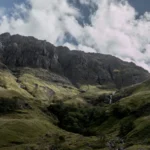
Scotland or Ireland: the criterion-by-criterion comparison
| Criterion | Scotland | Ireland | Advantage |
|---|---|---|---|
| Best time to go | May-June and September | May to September, ideally May, June and September | Tie |
| July climate (capital) | 19.3 °C (67 °F) high, 72 mm (2.8 in) (Edinburgh) | 19.5 °C (67 °F) high, 61 mm (2.4 in) (Dublin Airport) | Tie |
| Rain in the west | More than 130 mm (5.1 in) a month from October to January in Glasgow | Up to 187 mm (7.4 in) in January at Valentia (Kerry) | Tie |
| Airports | Edinburgh, Glasgow and others | Dublin, Shannon, Cork and others | Tie |
| Entry rules | US: passport + ETA. UK: none | US: passport, no visa. UK: no passport legally required (Common Travel Area), but some carriers ask for one | Ireland for US visitors; tie for UK visitors |
| Currency and phone | Pound sterling | Euro | Depends on your home plan |
| Daily budget (tight / comfortable) | About $90 to $135 / $200 to $315 | About $90 to $135 / $200 to $315, car rental extra | Tie |
| Landscapes | Mountains, lochs, glens (Glen Coe), islands (Skye, Hebrides) | Cliffs, peninsulas, lakes, bogs, Aran Islands | Depends on your taste |
| Cities | Edinburgh (World Heritage Site), Glasgow | Dublin, Galway, Cork | Scotland |
| On the road | Driving on the left, single-track roads with passing places | Driving on the left, narrow roads lined with stone walls | Tie |
| Drawbacks | Midges from May to October in the west | Rain all year, especially in the west | Ireland |
| Safety | Mountains: weather changes very fast | Normal vigilance; thefts from cars in site car parks | Tie |
Entry requirements: the real difference
For many travellers this decides it, and it depends on your passport. The information below is for short tourist trips; rules change, so check the official pages before you book.
US citizens
Scotland (United Kingdom): according to the U.S. State Department (travel.state.gov, last updated August 11, 2025), your passport must be valid for the entire length of your stay, and US citizens travelling to the UK for tourism, family visits, business meetings or short-term study of six months or less must have an Electronic Travel Authorisation (ETA) before travel. The UK government says the ETA costs £20 and that other websites may charge more, so apply only through the official GOV.UK service (checked 12 November 2026).
Ireland: according to the U.S. State Department (travel.state.gov, last updated March 26, 2026), you need a valid passport and can enter visa-free for tourism or business stays of up to 90 days. There is no minimum passport validity requirement, but the Department recommends a passport valid for your whole stay, evidence of sufficient funds and a return ticket, and notes that more US citizens have been refused entry or given a limited stay when they could not show their travel intent to immigration officers.
UK citizens
Scotland: travel within the UK, with no entry formalities. Ireland: according to the UK FCDO (GOV.UK, updated 4 September 2026), British nationals are not legally required to show a passport to enter Ireland and can travel freely under the Common Travel Area, but some airlines and ferry operators require a passport, so check your carrier. Ireland is in the EU but not in the Schengen area.
A practical point for both groups: the Giant’s Causeway, close to Donegal, is in Northern Ireland, which is part of the United Kingdom, so US visitors need the same ETA there as for Scotland. Check your phone plan’s roaming charges for the UK and Ireland, or consider an eSIM, and bring a card that does not add heavy foreign-exchange fees.
Climate: two cool countries, a very wet west
The normals for the two capitals are almost identical. The real contrast is between the fairly dry east and the much wetter Atlantic west, in both countries. In Scotland, Glasgow gets about twice as much rain as Edinburgh; in Ireland, the Kerry coast gets two to three times as much as Dublin.
| Month | Edinburgh: high / rain | Dublin: high / rain |
|---|---|---|
| January | 7.3 °C (45 °F) / 65 mm (2.6 in) | 8 °C (46 °F) / 62 mm (2.4 in) |
| April | 12.2 °C (54 °F) / 41 mm (1.6 in) | 12.3 °C (54 °F) / 55 mm (2.2 in) |
| May | 14.9 °C (59 °F) / 48 mm (1.9 in) | 14.8 °C (59 °F) / 57 mm (2.2 in) |
| June | 17.4 °C (63 °F) / 66 mm (2.6 in) | 17.7 °C (64 °F) / 64 mm (2.5 in) |
| July | 19.3 °C (67 °F) / 72 mm (2.8 in) | 19.5 °C (67 °F) / 61 mm (2.4 in) |
| August | 19.1 °C (66 °F) / 72 mm (2.8 in) | 19.1 °C (66 °F) / 73 mm (2.9 in) |
| September | 16.9 °C (62 °F) / 55 mm (2.2 in) | 16.9 °C (62 °F) / 63 mm (2.5 in) |
| October | 13.4 °C (56 °F) / 76 mm (3.0 in) | 13.6 °C (56 °F) / 78 mm (3.1 in) |
| November | 9.9 °C (50 °F) / 65 mm (2.6 in) | 10.3 °C (51 °F) / 83 mm (3.3 in) |
In Scotland, May is the sunniest month in Edinburgh (about 195 hours) and days last more than 17 hours in June. In Ireland, Met Éireann reports that May and June are the sunniest months. Scotland has one drawback Ireland does not: midges, tiny biting flies found roughly from May to October in the western Highlands, especially in high summer. On events, August is Edinburgh’s festival month (record prices), while Ireland celebrates St Patrick’s Day on March 17 and holds the Galway arts festival in July. Month-by-month details: when to go to Scotland and when to go to Ireland.
What to see: the Highlands versus the Wild Atlantic Way
Scotland
Scotland combines two major cities with big mountain landscapes. Edinburgh, whose Old and New Towns are a World Heritage Site, has the castle, the Royal Mile, Arthur’s Seat and the free National Museum. Glasgow adds Kelvingrove and Mackintosh architecture. In the north: Glen Coe, Fort William and Ben Nevis (1,345 m / 4,413 ft, the highest peak in the UK), the Glenfinnan Viaduct, the Isle of Skye (Old Man of Storr, Quiraing, Fairy Pools), Loch Ness and Urquhart Castle, the Cairngorms and the Speyside distilleries. With more time: the Outer Hebrides and Orkney.
Ireland
Ireland is best explored along its west coast. The Cliffs of Moher, the most visited natural site in the country, stretch for about 8 km (5 mi) above the Atlantic. To the north, the Burren and its limestone plateau; further up, Galway, a student and music city, and Connemara with Kylemore Abbey. In the south-west, Kerry has the Ring of Kerry, Killarney National Park, the Dingle Peninsula and the Skellig Islands. Dublin, with the Book of Kells at Trinity College, and the Boyne Valley (Newgrange, older than the pyramids) round off a first trip.
Budget: a tie, with expensive summer accommodation
| Item (per person per day) | Scotland | Ireland |
|---|---|---|
| Accommodation, tight / comfortable | About $40 to $60 / $100 to $170 | About $40 to $65 / $100 to $180 |
| Meals | About $30 to $40 / $55 to $90 | About $35 to $45 / $65 to $100 |
| Transport | About $15 to $30 / $35 to $45 (shared car rental included) | About $10 to $20 / $20 to $45, car rental extra |
| Activities | About $5 to $10 / $15 to $35 | About $5 to $15 / $20 to $45 |
| Total | About $90 to $135 / $200 to $315 | About $90 to $135 / $200 to $315 |
The totals are identical, but our guides count part of the car rental in the Scottish budget and not in the Irish one: for the same itinerary, Scotland therefore works out slightly cheaper. In both countries accommodation is the heaviest item, especially in summer: Edinburgh in August and Skye in July-August on one side, Dublin and the small western villages (Dingle, Doolin, Clifden) on the other. The big national museums are free in Scotland (National Museum, Kelvingrove); in Ireland many natural sites are free, but the major developed sites (Cliffs of Moher, Brú na Bóinne) charge admission.
Scotland or Ireland by profile
| Profile | Verdict | Why |
|---|---|---|
| First road trip | Depends on your passport | Ireland has the lighter entry rules for US visitors; Scotland has the more dramatic mountain roads |
| Hiking and mountains | Scotland | Highlands, Skye, Cairngorms, Ben Nevis |
| Couples | Tie | Castles and B&Bs in Scotland; peninsulas and pubs in Ireland |
| Families | Tie | Free museums in Scotland; coastal and island outings in Ireland |
| Culture and history | Scotland | Edinburgh, Stirling, Culloden, St Andrews |
| Music and pubs | Ireland | Traditional music sessions in Dublin, Galway, Doolin |
| Trip without a car | Tie | Trains and buses between the main cities, organised excursions in both countries |
| Whisky | Scotland | Speyside distilleries |
Nature and hiking
Scotland has the edge for mountains: the glacial valleys of Glen Coe, the Cairngorms summits, the trails of Skye. Go well equipped: the weather changes very fast, even in summer. Ireland offers gentler, coastal walks: the Cliffs of Moher coastal path, the Burren, Killarney National Park, the lakes of Glendalough. Verdict: Scotland for experienced walkers, Ireland for easier strolls.
Families
For a family, each traveller’s passport (and, for US visitors, the ETA for Scotland) is part of the planning. In Ireland, US visitors need only a passport, and UK citizens can usually travel without one. On the ground, the free national museums of Edinburgh and Glasgow and Edinburgh Castle appeal to children; in Ireland, the natural sites and the boats to the Aran Islands. In both countries the weather stays changeable even in summer. Verdict: a tie.
First trip
Ireland is simpler on paper: lighter entry rules for US visitors and one currency to manage. A 7 to 10 day itinerary links Dublin, Galway, Connemara, the Burren and Kerry. Scotland takes a little more preparation (the ETA for US visitors, an adapter, pounds sterling), but a 7 to 10 day circuit through Edinburgh, Glen Coe, Skye and Loch Ness is just as doable.
Why not both?
Our guides do not detail a direct link between Scotland and Ireland. To combine the two, Northern Ireland, in the UK, bridges the gap on the Irish side: the Giant’s Causeway is visited with the same passport and, for US visitors, the same ETA as Scotland. For a first trip it is better to pick one country and give it 7 to 10 days, then come back for the other. Detailed itineraries are in our guides to Scotland and Ireland.
Frequently asked questions
Scotland or Ireland for a first trip?
Both work. Ireland asks little of US visitors beyond a passport, while Scotland requires a passport and an ETA for US citizens; UK citizens face no formalities in Scotland and no legal passport requirement in Ireland. Scotland offers more mountains and a World Heritage capital.
Do you need a passport for Scotland and for Ireland?
US citizens need a valid passport for both, plus an ETA for Scotland (£20 through GOV.UK). UK citizens need nothing for Scotland, and are not legally required to show a passport in Ireland, although some carriers ask for one. Check the official pages before you travel.
Which is cheaper?
The budgets in our guides are identical: roughly $90 to $135 per person per day on a tight budget and $200 to $315 for comfort, excluding flights. In Ireland car rental comes on top; in Scotland a shared rental is already counted in transport.
Where is the weather better?
The two capitals are almost identical: about 19 °C (66 °F) in the afternoon in July in both Edinburgh and Dublin. In both countries the east is drier and the west coast much wetter. Scotland also has midges from May to October in the west.
What is the best time to go?
May, June and September for both: long days, fairly good weather and fewer crowds than in July-August. August is the most expensive month in Edinburgh because of the festivals.
Our sources
- Our published guides, the source of all data on this page: Scotland, when to go to Scotland, Ireland, when to go to Ireland
- Sources cited in those guides: 1991-2020 normals from the Met Office and Met Éireann
- U.S. Department of State, travel.state.gov: United Kingdom (last updated August 11, 2025) and Ireland (last updated March 26, 2026)
- UK FCDO, GOV.UK foreign travel advice for Ireland (updated 4 September 2026); GOV.UK, Apply for an electronic travel authorisation (ETA), checked 12 November 2026
- Exchange rate: European Central Bank reference rate of 23 October 2026 (€1 = US$1.1193)
- Our methodology
Updated November 2026.
More head-to-heads await in our destination comparisons.