
Choose Tenerife for variety: Teide, Spain’s highest peak, damp forests in the north, listed towns (La Laguna) and big hikes, on top of the southern beaches. Choose Lanzarote for a drier, more compact stay centred on the volcanic landscapes of Timanfaya, the work of César Manrique and the coves of Papagayo. Both islands can be visited all year, with a slight edge to Lanzarote for sunshine.
Tenerife or Lanzarote? The two Canary Islands share the essentials: the euro, the same entry rules and mild weather all year. They differ in terrain and atmosphere. Tenerife, the largest island in the archipelago, is mountainous and contrasted. Lanzarote, the easternmost, about 140 km (87 mi) from the African coast, is arid, low-lying and can be crossed in an hour by car. This comparison uses only the data published in our guides to Tenerife and Lanzarote.
Tenerife or Lanzarote: key facts
- Hiking and mountains: Tenerife (Teide at 3,715 m / 12,188 ft, Anaga, Teno, Masca)
- Volcanic landscapes and art: Lanzarote (Timanfaya, La Geria, César Manrique sites)
- Sun and dryness: Lanzarote, barely 100 mm (3.9 in) of rain a year at the airport
- Beaches: Lanzarote for the Papagayo coves; Tenerife for the big southern resorts, often dark sand
- Budget: almost identical, roughly €60 to €110 per person per day in Tenerife and €65 to €115 in Lanzarote on a tight budget
- Short stay: Lanzarote, a week is enough for the essentials
Tenerife or Lanzarote: the comparison, criterion by criterion
| Criterion | Tenerife | Lanzarote | Advantage |
|---|---|---|---|
| Best time | April to June and September-October; all year | April-May and September-October; all year | Tie |
| January climate | 21.5 °C (71 °F) high, 29 mm (1.1 in) (Santa Cruz) | 20.9 °C (70 °F) high, 15 mm (0.6 in) (airport) | Lanzarote (drier) |
| August climate | 29.7 °C (85 °F) high | 29.5 °C (85 °F) high | Tie |
| Annual rainfall | Rain mostly November to March, more frequent in the north | Barely 100 mm (3.9 in) a year | Lanzarote |
| Airports | Tenerife South | Lanzarote | Tie |
| Ideal length | 7 days, 10 to 14 with La Gomera | 7 days, 10 to 14 with Fuerteventura | Tie |
| Budget per day (tight / comfort) | Roughly €60 to €110 / €135 to €290 | Roughly €65 to €115 / €140 to €300 | Tie |
| Landscapes | Teide, Anaga laurel forest, Masca ravine, Los Gigantes cliffs | Timanfaya lava fields, La Geria vineyards, lava caves | Depends on your taste |
| Beaches | Big southern resorts (Costa Adeje, Los Cristianos), often dark sand | Papagayo coves, sheltered from the wind most of the time | Lanzarote |
| Towns and culture | La Laguna (UNESCO), La Orotava, Santa Cruz carnival | Teguise, César Manrique sites | Tenerife |
| Getting around | Car advised; winding mountain roads; TITSA buses and tram | Car advised; island crossed in about an hour | Lanzarote |
| Entry requirements | See the entry requirements section below | Same | Tie |
| Safety | Theft and break-ins are common in Spain (U.S. Department of State); swell and currents | Theft from cars; dangerous swimming at Famara | Tie |
The climate: Lanzarote drier, Tenerife more contrasted
On the coast temperatures are almost identical: about 21 °C (70 °F) in the afternoon in January and 29 to 30 °C (84 to 86 °F) in August on both islands. The difference lies in rain and cloud. Lanzarote, arid, receives barely 100 mm (3.9 in) a year according to the AEMET normals used in our guide. In Tenerife, the trade winds often push a layer of cloud onto the northern slopes, especially in summer and in the morning, and rain falls mostly from November to March, mainly in the north. The south of Tenerife (Costa Adeje) remains the sunniest part of the island.
| Month | Tenerife (Santa Cruz): high / rain | Lanzarote (airport): high / rain |
|---|---|---|
| January | 21.5 °C (71 °F) / 29 mm (1.1 in) | 20.9 °C (70 °F) / 15 mm (0.6 in) |
| March | 22.4 °C (72 °F) / 28 mm (1.1 in) | 22.9 °C (73 °F) / 12 mm (0.5 in) |
| May | 24.8 °C (77 °F) / 4 mm (0.2 in) | 25.2 °C (77 °F) / 1 mm (0.0 in) |
| July | 29.2 °C (85 °F) / 0 mm (0.0 in) | 28.5 °C (83 °F) / 0 mm (0.0 in) |
| August | 29.7 °C (85 °F) / 4 mm (0.2 in) | 29.5 °C (85 °F) / 1 mm (0.0 in) |
| September | 28.6 °C (83 °F) / 5 mm (0.2 in) | 28.6 °C (83 °F) / 2 mm (0.1 in) |
| November | 24.5 °C (76 °F) / 36 mm (1.4 in) | 24.3 °C (76 °F) / 16 mm (0.6 in) |
| December | 22.6 °C (73 °F) / 37 mm (1.5 in) | 22.0 °C (72 °F) / 21 mm (0.8 in) |
Two nuances worth knowing. Tenerife is very mountainous: it can be cold, even snowy on Teide in winter, which sometimes closes the cable car and some roads. Lanzarote is windy, especially in July and August when the trade winds strengthen, with possible episodes of calima (dust-laden wind). In Tenerife the sea ranges from about 18 °C (64 °F) in February to April to 23 °C (73 °F) in September-October. Month-by-month details: when to go to Tenerife, when to go to Lanzarote and when to go to the Canary Islands.
What to see: the giant volcano or the lava island
Tenerife
Tenerife ranges from the sea to the high mountains. Teide National Park, a World Heritage Site, surrounds a vast caldera of lava flows; a cable car climbs close to the summit, and the last trail to the crater requires a free permit to book. In the north-east, the Anaga massif is covered in laurel forest; in the north-west, the hamlet of Masca overlooks a ravine whose trail is regulated. La Laguna, listed by UNESCO for its urban plan, La Orotava with its wooden balconies, and Garachico with its natural pools complete the north. In the south, the Los Gigantes cliffs and the resorts of Costa Adeje and Los Cristianos, from where whale- and dolphin-watching trips leave.
Lanzarote
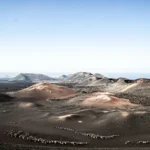
Lanzarote is visited for its volcanic landscapes. Timanfaya National Park protects the craters of the 1730-1736 and 1824 eruptions; the visit is mainly by coach along the volcano route. In La Geria, each vine is planted at the bottom of a hole dug into the ash. On the west coast: the green lagoon of El Golfo, the arches of Los Hervideros and the Janubio salt pans. The artist César Manrique shaped several sites: the Jameos del Agua, the Mirador del Río, the Cactus Garden and his house at Tahíche. Add the Cueva de los Verdes, Teguise’s Sunday market and the excursion to La Graciosa from Órzola.
The beaches
For swimming, Lanzarote has the edge with the Papagayo coves in the south, sheltered from the wind most of the time, reached by a toll track or on foot from Playa Blanca. Avoid swimming at Famara, which is for surfers. In Tenerife, the landscaped beaches of the south are often dark sand; north of Santa Cruz, Las Teresitas, with pale sand, is the most popular with locals. On both islands the ocean can be dangerous: swim at supervised beaches, and note that the UK FCDO says many Spanish beaches use a flag system in which a red flag means you must not enter the water.
Budget: level
| Item (per person per day) | Tenerife | Lanzarote |
|---|---|---|
| Accommodation, tight / comfort | Roughly €25 to €45 / €60 to €130 | Roughly €25 to €45 / €60 to €140 |
| Meals | Roughly €20 to €30 / €40 to €70 | Roughly €20 to €30 / €40 to €70 |
| Transport (shared rental, fuel, buses) | Roughly €10 to €20 / €20 to €40 | Roughly €10 to €20 / €20 to €40 |
| Activities | Roughly €5 to €15 / €15 to €50 | Roughly €10 to €20 / €20 to €50 |
| Total | Roughly €60 to €110 / €135 to €290 | Roughly €65 to €115 / €140 to €300 |
The only difference comes from activities: in Lanzarote, entry fees for Timanfaya and the Manrique sites add up quickly, hence the value of combined tickets. In Tenerife, the guachinches, family-run taverns of the north, let you eat cheaply. On both islands, all-inclusive deals in the big resorts can be good value outside school holidays.
Tenerife or Lanzarote by traveller profile
| Profile | Verdict | Why |
|---|---|---|
| Hiking | Tenerife | Teide, Anaga, Teno, Masca: our guide rates it ideal for hikers |
| Beach and sun | Lanzarote | Drier climate, sheltered Papagayo coves |
| Families | Tenerife | Costa Adeje, Los Cristianos, the seawater pools of Puerto de la Cruz, whale watching |
| Couples | Tie | La Geria vineyards and Manrique sites; or colonial towns and Teide at sunset |
| Culture | Tie | La Laguna and La Orotava; or the work of César Manrique and Teguise |
| Partying | Tenerife | Los Cristianos and Playa de las Américas are very lively, Santa Cruz carnival |
| Surfing and wind sports | Lanzarote | Famara and Costa Teguise |
| Without a car | Tenerife | TITSA bus network and tram; in Lanzarote, the interior and north are poorly served |
Hikers
Tenerife wins clearly: Teide, with its permit for the last stretch, the Anaga ridges and the Teno massif offer varied days of walking. Go equipped: the altitude is noticeable and the weather changes quickly in the mountains. In Lanzarote, free walking is tightly controlled in Timanfaya; ask about guided hikes.
Families
Tenerife offers more activities: the big southern resorts, the Lago Martiánez pools in Puerto de la Cruz, boat trips. Lanzarote also suits, with calmer Costa Teguise and the Papagayo coves; the coach visit to Timanfaya and the caves appeal to children, with good shoes.
Winter sun
Both islands show about 21 °C (70 °F) in the afternoon in January. Lanzarote is drier (15 mm (0.6 in) in January against 29 mm (1.1 in) at Santa Cruz); in Tenerife, stay in the south, the sunniest part. The sea stays cool for many swimmers in winter.
Entry requirements and safety
US citizens (U.S. Department of State, travel.state.gov, last updated August 11, 2025): Spain, including the Canary Islands, applies Schengen Agreement rules. The State Department says your passport should be valid for at least 3 months beyond your period of stay (and recommends at least 6 months of validity remaining), and that you need proof of sufficient funds and a return plane ticket.
UK citizens (UK FCDO, GOV.UK, updated 12 August 2026): your passport must have been issued less than 10 years before you arrive and have an expiry date at least 3 months after the day you plan to leave the Schengen area. You can travel without a visa for up to 90 days in any 180-day period as a tourist. At the border you may be asked for a return or onward ticket, proof of travel insurance, proof that you have enough money for your stay and proof of accommodation. The EU Entry/Exit System (EES) is being rolled out, so you may need to register fingerprints and a photo, and should allow extra time at the border.
Safety (read 26 October 2026): the U.S. Department of State says pickpocketing and other theft are very common in Spain, often using distractions, and that car break-ins are frequent. The UK FCDO warns that some beaches, especially around Spanish islands, may have strong undercurrents; many beaches use a flag system (a red flag means you must not enter the water). It also lists Tenerife among the areas where altitude sickness may be a risk in the higher mountains, and advises taking care when hiking because temperatures can change quickly.
Why not both?
Our guides do not detail a direct link between Tenerife and Lanzarote; check inter-island flights before booking. They suggest instead pairing each island with its neighbour: Tenerife with La Gomera, by ferry from Los Cristianos, and Lanzarote with Fuerteventura, by ferry from Playa Blanca to Corralejo. To compare the other islands, see our Canary Islands guide and our comparisons Lanzarote or Fuerteventura and Tenerife or Gran Canaria. If you are torn with Fuerteventura instead, our comparison Tenerife or Fuerteventura? puts the AEMET normals side by side.
Frequently asked questions
Tenerife or Lanzarote for a first stay in the Canaries?
Tenerife if you want variety: mountains, forests, listed towns and beaches. Lanzarote if you prefer a more compact, drier island centred on volcanoes and the work of César Manrique.
Which island is sunnier?
Lanzarote, which is arid, receives barely 100 mm (3.9 in) of rain a year according to the AEMET normals. In Tenerife the south is very sunny, but the north is often covered by trade-wind cloud.
Which is cheaper?
The budgets in our guides are very close: roughly €60 to €110 per person per day on a tight budget in Tenerife, €65 to €115 in Lanzarote, excluding flights.
Where are the best beaches?
In Lanzarote, with the Papagayo coves, sheltered and pale. The beaches of the southern Tenerife resorts are often dark sand.
How many days do you need?
A week for the essentials of each island. With ten days to two weeks, add La Gomera from Tenerife or Fuerteventura from Lanzarote.
Do you need to rent a car?
It is advisable on both islands. Tenerife has a better bus network (TITSA) and a tram, but mountain areas are poorly served; in Lanzarote, buses serve the interior and the north poorly.
Our sources
- Our published guides, the source of all the data on this page: Tenerife, when to go to Tenerife, Lanzarote, when to go to Lanzarote
- The sources cited in those guides: Agencia Estatal de Meteorología (AEMET) normals (Santa Cruz de Tenerife via WMO/NOAA; Lanzarote airport)
- U.S. Department of State, Spain country information (travel.state.gov, last updated August 11, 2025), read 26 October 2026
- UK FCDO, foreign travel advice for Spain, which covers the Canary Islands (GOV.UK, updated 12 August 2026), read 26 October 2026
- Our methodology
Updated November 2026.
More face-offs await in our destination comparisons.