Things to do in Chamonix: ride up the Aiguille du Midi opposite Mont Blanc, take the Montenvers train to the Mer de Glace, hike to Lac Blanc, ski the Brévent, Flégère or Grands Montets areas and, for experienced skiers, descend the Vallée Blanche with a guide. Choose mid-June to mid-September for hiking and mid-December to April for skiing.
Chamonix-Mont-Blanc, in Haute-Savoie, fills a valley about 20 km (12 mi) long at the foot of the Mont Blanc massif. The village, at just over 1,000 m (3,300 ft), hosted the first Winter Olympics in 1924 and remains a major mountaineering centre. This guide covers the sights, 3 to 7-day itineraries, budget, transport, where to stay and the month-by-month climate based on Météo-France normals.

Our travel deals for Chamonix
Affiliate links: we earn a commission, at no extra cost to you.
 FlightsKiwi.comCompare flights and airline combinations to Chamonix.Compare flights

Chamonix at a glance
- Altitude about 1,035 m (3,396 ft) in the centreAiguille du Midi 3,842 m (12,605 ft); Mont Blanc about 4,805 m (15,764 ft)
- Airports Geneva (GVA) is the closest major airport · detailsBy rail: TGV to Saint-Gervais-Le Fayet, then the Mont-Blanc Express
- Entry Schengen area: no visa for up to 90 days for US and UK citizens · US: travel.state.gov · UK: GOV.UK
- Currency the euro (€); Swiss franc over the border · currencies
- Local transport guest card from your host: free valley trains between Servoz and Vallorcine, up to 50% off buses (winter 2025-2026 terms)
- Recommended stay 3 to 4 days for the main sightsA week to hike or ski
When to go to Chamonix
It all depends on the activity: mid-June to mid-September for hiking and scenic lifts, mid-December to April for skiing. The climate is alpine: cold winters (below 2 °C, or 36 °F, in the afternoon in December and January in the valley), mild summers (24 °C, or 75 °F, in July) and heavy precipitation all year round, peaking from May to August in the form of thunderstorms. At altitude, temperatures are much lower: at the Aiguille du Midi it can freeze in midsummer.
| Month | Max | Min | Precipitation | Crowds | Prices | Verdict |
|---|---|---|---|---|---|---|
| January | 1.2 °C (34 °F) | -5.6 °C (22 °F) | 97.2 mm (3.8 in) | High (ski) | High | ✅ Skiing, snow usually reliable at altitude |
| February | 5.0 °C (41 °F) | -4.8 °C (23 °F) | 77.3 mm (3.0 in) | Very high (holidays) | Very high | ✅ Skiing and longer days, but school holidays |
| March | 9.8 °C (50 °F) | -1.5 °C (29 °F) | 77.8 mm (3.1 in) | High | High | ✅ Spring skiing, Vallée Blanche with a guide |
| April | 14.0 °C (57 °F) | 2.0 °C (36 °F) | 86.8 mm (3.4 in) | Medium | Medium | ⚠️ End of the ski season, low-level snow melting |
| May | 18.0 °C (64 °F) | 6.1 °C (43 °F) | 121.6 mm (4.8 in) | Low | Low | ❌ Shoulder season: most lifts closed, snow at altitude |
| June | 21.8 °C (71 °F) | 9.4 °C (49 °F) | 122.1 mm (4.8 in) | Medium | Medium | ✅ Lifts reopen, high trails sometimes still snowy |
| July | 23.9 °C (75 °F) | 11.1 °C (52 °F) | 121.1 mm (4.8 in) | Very high | High | ✅ Peak hiking season, afternoon thunderstorms |
| August | 23.4 °C (74 °F) | 10.7 °C (51 °F) | 125.7 mm (4.9 in) | Very high | High | ✅ Hiking; UTMB at the end of August: accommodation full |
| September | 18.8 °C (66 °F) | 7.5 °C (46 °F) | 96.9 mm (3.8 in) | Medium | Medium | ✅ Drier air, fewer people, autumn colours |
| October | 14.1 °C (57 °F) | 3.9 °C (39 °F) | 101.4 mm (4.0 in) | Low | Low | ⚠️ Quiet, first snow, lifts closing |
| November | 6.9 °C (44 °F) | -0.9 °C (30 °F) | 93.7 mm (3.7 in) | Very low | Low | ❌ Shoulder season, many lifts and hotels closed |
| December | 0.7 °C (33 °F) | -4.6 °C (24 °F) | 111.1 mm (4.4 in) | High (Christmas) | High | ⚠️ Ski season opens, snow cover varies from year to year |
- Summer (mid-June to mid-September): all lifts and mountain huts are open. This is the season for hiking, via ferrata, paragliding and mountaineering. Afternoon thunderstorms are common: start early.
- Autumn (mid-September to November): September is often settled and less busy. From October, lifts close one after another and snow can fall at altitude.
- Winter (mid-December to March): the season for skiing, off-piste, ski touring and the Vallée Blanche. The Christmas and February school holidays are the most expensive periods.
- Spring (April-May): April extends skiing at altitude; May is a shoulder season, with few lifts open and trails still under snow above about 2,000 m (6,600 ft).
For more seasonal ideas, see our selections of where to go in February and where to go in June.
Things to do in Chamonix: the highlights
The Aiguille du Midi
The Aiguille du Midi cable car climbs in two stages, via the Plan de l’Aiguille, to 3,842 m (12,605 ft). At the top: terraces, a lift to the upper terrace and « Step into the Void », a glass box suspended over the drop. Mont Blanc looks within reach. At this altitude the air is cold and thin: dress warmly, avoid sudden exertion and do not go up if you are ill. The first stage also gives access to the Grand Balcon Nord, a trail to the Montenvers. Book a time slot in summer and check the webcam and the weather before you pay.
For the ride towards Mont Blanc, our guide Aiguille du Midi: tickets, opening hours and the best time to go details official prices, compulsory booking and the annual closure.
The Montenvers and the Mer de Glace
A rack railway leaves from Montenvers station in central Chamonix and climbs to the Montenvers site (1,913 m (6,276 ft)), facing the Mer de Glace, the longest glacier in France. The glacier retreats every year: you have to walk down several hundred steps, marked with dated signs showing its past level, to reach the ice cave dug out each season. The site also has an interpretation centre on glaciers.
Above Chamonix, our page on the Mer de Glace and the Montenvers train covers opening periods, the ice cave and the retreat of the glacier.
The Brévent and the Flégère, facing Mont Blanc
On the other side of the valley, the Brévent (2,525 m (8,284 ft)) and Flégère gondolas and cable cars offer the best overall view of the Mont Blanc massif. They are also the starting points for hikes along the Balcon Sud, the best known of which leads to Lac Blanc.
Hiking to Lac Blanc and the balcony trails
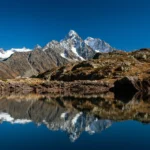
Lac Blanc (about 2,350 m (7,710 ft)) reflects the Aiguilles de Chamonix and Mont Blanc. It is usually reached from the Flégère, in 1 h 30 to 2 hours of climbing; it is one of the busiest hikes in the valley, so start early. Other classics: the Grand Balcon Nord from the Plan de l’Aiguille to the Montenvers, Lac de Chéserys, the Chailloux chalets. Higher up, the Tour du Mont Blanc circles the massif in about ten days through France, Italy and Switzerland.
Skiing in Chamonix
The valley has several separate ski areas, linked by bus: Brévent-Flégère (sunny, facing Mont Blanc), the Grands Montets at Argentière (off-piste and steep slopes), Balme-Le Tour (gentler, family-friendly) and Les Houches (wooded, useful in bad weather). The Mont-Blanc Unlimited pass covers these areas and other sites in the region; check the current offer. Beginners can start on the small areas in the centre (Savoy, Planards).
The Vallée Blanche
This off-piste descent of about 20 km (12 mi) starts at the top of the Aiguille du Midi and crosses the glaciers to the Mer de Glace. It is not a marked run: crevasses, seracs and an exposed access ridge mean you need a high-mountain guide and a good level of skiing. It is usually skied from late December to April, depending on snow cover.
Central Chamonix and its museums
In the village, Rue du Docteur-Paccard, Place Balmat and its statue of Saussure, the church of Saint-Michel and the banks of the Arve are easily explored on foot. The Musée Alpin traces the history of the valley and of mountaineering; the Espace Tairraz displays crystals from the massif. The Parc de Merlet, in Les Houches, lets you see ibex and marmots in semi-freedom.
Crossing into Italy or Switzerland
The Mont Blanc Tunnel links Chamonix with Courmayeur, in Italy, where the Skyway Monte Bianco climbs to Punta Helbronner. In summer, the Panoramic Mont-Blanc gondola links the Aiguille du Midi with Punta Helbronner above the glaciers; check its opening dates. On the Swiss side, the Mont-Blanc Express continues to Martigny, in Valais. To extend your trip, see our guide to Switzerland or, for another spectacular range, the Dolomites.
Itinerary: suggested Chamonix itineraries
3 to 4 days in summer
- Day 1: Aiguille du Midi in the morning, central Chamonix and the Musée Alpin in the afternoon
- Day 2: Montenvers and the Mer de Glace, walking back along the Grand Balcon Nord (for fit hikers)
- Day 3: hike to Lac Blanc from the Flégère
- Day 4: the Brévent, or a trip to Courmayeur through the tunnel
A week of skiing
- Days 1 and 2: Brévent-Flégère for the view and the sunny slopes
- Days 3 and 4: Grands Montets or Balme depending on your level
- Day 5: the Vallée Blanche with a guide (experienced skiers) or lessons with the ESF ski school
- Day 6: Les Houches, or Courmayeur on the Italian side
- Day 7: rest day, the Montenvers train and the village centre
Budget for a trip to Chamonix
The budget depends mostly on the season and the type of accommodation: campsite, gîte or simple B&B on a small budget, boutique hotel for more comfort. Markets and set lunch menus are a good way to eat well for less.
If you plan to take several lifts, a multi-site pass often works out cheaper than single tickets. For hiking, lifts are not essential: many trails start from the valley floor.
Getting there and getting around Chamonix
- Train: TGV or Intercités trains to Saint-Gervais-Le Fayet (with a change on some days), then the Mont-Blanc Express, which runs up the valley to Vallorcine and on into Switzerland. See our tips for travelling cheaply by train.
- Plane: Geneva airport is the closest; shared shuttles and buses run to Chamonix.
- Guest card (carte d’hôte): given by your host on arrival, it allows free travel on SNCF trains between Servoz and Vallorcine stations and up to 50% off bus fares; any journey beyond that (to Saint-Gervais or Martigny, for example) needs a full SNCF ticket, according to the Chamonix valley’s guest card leaflet for winter 2025-2026 (checked 26 October 2026).
- Car: unnecessary in the valley and hard to park. According to GOV.UK, vehicles in certain mountain regions must have winter tyres or carry chains from 1 November to 31 March. UK photocard licences are valid in France (GOV.UK).
Where to stay in Chamonix
Central Chamonix is convenient without a car: station, buses, the Aiguille du Midi cable car and restaurants all within walking distance. Les Praz and Argentière, quieter, are close to the Flégère and the Grands Montets. Les Houches, at the entrance to the valley, is slightly cheaper. Le Tour and Vallorcine suit those looking for peace and quiet. For the February holidays and the UTMB at the end of August, book several months ahead.
Entry requirements, health and safety
- US citizens: you may enter the Schengen area, including France, for up to 90 days for tourism or business without a visa. Your passport should be valid at least three months beyond your stay (six months recommended), and immigration officers may ask for proof of sufficient funds and a return ticket (U.S. Department of State, travel.state.gov, last updated August 11, 2025).
- UK citizens: no visa for up to 90 days in any 180-day period as a tourist; your passport must have been issued less than 10 years before you arrive and be valid at least 3 months after the day you plan to leave the Schengen area. Under the EU Entry/Exit System (EES), fingerprints and a photo may be taken at your first entry, free of charge (UK FCDO, GOV.UK, updated 22 October 2026).
- Health: UK travellers need a GHIC or a valid EHIC for medically necessary state healthcare; whatever your nationality, take out travel insurance that covers medical costs. Emergency number: 112 (GOV.UK).
- Crossing into Switzerland or Italy: carry your passport; the guest card leaflet also reminds visitors that passports are needed for Switzerland.
- Altitude: at 3,842 m (12,605 ft), the Aiguille du Midi can cause breathlessness, headaches or feeling unwell; people with heart or breathing problems should take medical advice before going up, as should parents of young children and pregnant women.
- Mountains: according to GOV.UK, check weather forecasts and avalanche risks on the Météo-France website, do not go out alone, consider hiring a guide and leave your itinerary with someone. Make sure your insurance covers mountain rescue and helicopter evacuation: in Savoie and Haute-Savoie, you may need to be transferred to Switzerland for treatment.
- Sun: high-category sunglasses and sunscreen in every season.
- See our travel insurance guide.
For skiing, off-piste or mountaineering, check that your travel insurance covers search and rescue costs in the mountains.
Practical tips for Chamonix
- Weather: plans are made the day before; keep a spare day for the Aiguille du Midi, which is pointless if the summit is in cloud.
- Timing: in summer, start early to avoid queues and afternoon thunderstorms.
- Gear: hiking boots, a warm jacket and a windproof layer, even in July.
- Food: fondue, raclette, tartiflette, diots (local sausages), Reblochon and Beaufort cheese.
- Mobile data: good coverage in the valley; near the borders your phone may connect to Swiss or Italian networks: check your home carrier’s roaming charges.
Major events in Chamonix
| When | Event |
|---|---|
| January or February | Alpine Ski World Cup (Kandahar, in Les Houches), depending on the FIS calendar |
| June | Marathon du Mont-Blanc |
| Late August | Ultra-Trail du Mont-Blanc (UTMB) and its associated races |
| July-August | Chamonix mountain guides’ festival |
Frequently asked questions
What to do in Chamonix in one day?
Go up the Aiguille du Midi in the morning if the sky is clear, then take the Montenvers train to the Mer de Glace in the afternoon and finish with a stroll around the centre.
What is the best time to go to Chamonix?
Mid-June to mid-September for hiking (21 to 24 °C, or 70 to 75 °F, in the afternoon in the valley from June to August according to Météo-France) and mid-December to April for skiing. Avoid May and November, the shoulder-season months.
Do you need to book the Aiguille du Midi?
It is advisable in summer and during holidays: booking a time slot avoids long waits. Check the weather at the summit before paying.
Can you visit Chamonix without a car?
Yes. The Mont-Blanc Express serves the valley, and the guest card gives free train travel between Servoz and Vallorcine and discounts on buses. Shuttles link Geneva with Chamonix.
Can you see the Mer de Glace without being a mountaineer?
Yes, from the Montenvers site, reached by rack railway. To get to the ice cave, you have to walk down several hundred steps and climb back up.
Can you do the Vallée Blanche on your own?
It is not recommended. It is an off-piste, high-mountain route on a glacier: you need a high-mountain guide, a good level of skiing and safety equipment.
Our sources
- Météo-France: climate data sheet, 1991-2020 statistics, Les Houches station (Haute-Savoie, 1,004 m (3,294 ft)), the closest to Chamonix
- Vallée de Chamonix-Mont-Blanc guest card leaflet, winter 2025-2026 (Mairie de Chamonix-Mont-Blanc), checked on 26 October 2026
- Entry requirements, health and safety checked on 26 October 2026: U.S. Department of State, France country information (last updated August 11, 2025) and UK FCDO, GOV.UK foreign travel advice for France (updated 22 October 2026).
- Our methodology
Updated October 2026.
For more ideas, see our France travel guide and our other destinations in Europe.