Looking for things to do in Lille? The capital of French Flanders is ideal for a weekend: linked to Paris by direct TGV high-speed trains, it combines Old Lille and its Flemish façades, the Grand’Place and the Vieille Bourse, one of the largest museums in France, a Vauban citadel and a lively culture of estaminets (traditional taverns) and markets. This guide covers the highlights, a 2-day plan, day trips nearby (Roubaix, Villeneuve-d’Ascq, Lens), budget, where to stay and the month-by-month weather, with our calculation of the risk of rain over a weekend. On the Opal Coast, our page Nausicaá: opening hours and prices helps you plan a visit to the national sea centre in Boulogne-sur-Mer.

Our travel deals for Lille
Affiliate links: we earn a commission, at no extra cost to you.
 FlightsKiwi.comCompare flights and airline combinations to Lille.Compare flights

Lille at a glance
- Region Hauts-de-France; capital of the Nord department, on the Belgian border
- Population 238,246(2023), about 1.06 million in the urban area
- Getting there TGV high-speed trains to Lille-Flandres or Lille-Europe · details
- Transport driverless metro(opened in 1983), tram, buses, bike sharing
- Entry US and UK citizens: no visa for up to 90 days in the Schengen area · travel.state.gov · GOV.UK
- Ideal length 2 days for the city, 3 to 4 with Roubaix and the Louvre-Lens
- Big event the Braderie 2027Saturday 4 and Sunday 5 September 2027 (checked on 26 October 2026 on the official City of Lille website)
Things to do in Lille: the highlights
The Grand’Place and the Vieille Bourse
Officially Place du Général-de-Gaulle, the Grand’Place is the heart of the city, with the Goddess column and the façade of the Théâtre du Nord. The Vieille Bourse (old stock exchange), built in the mid-17th century in the Flemish Renaissance style, surrounds a courtyard where second-hand booksellers and chess players gather. Next door, Place du Théâtre brings together the Opera and the Chamber of Commerce, topped by its belfry.
Old Lille (Vieux-Lille)
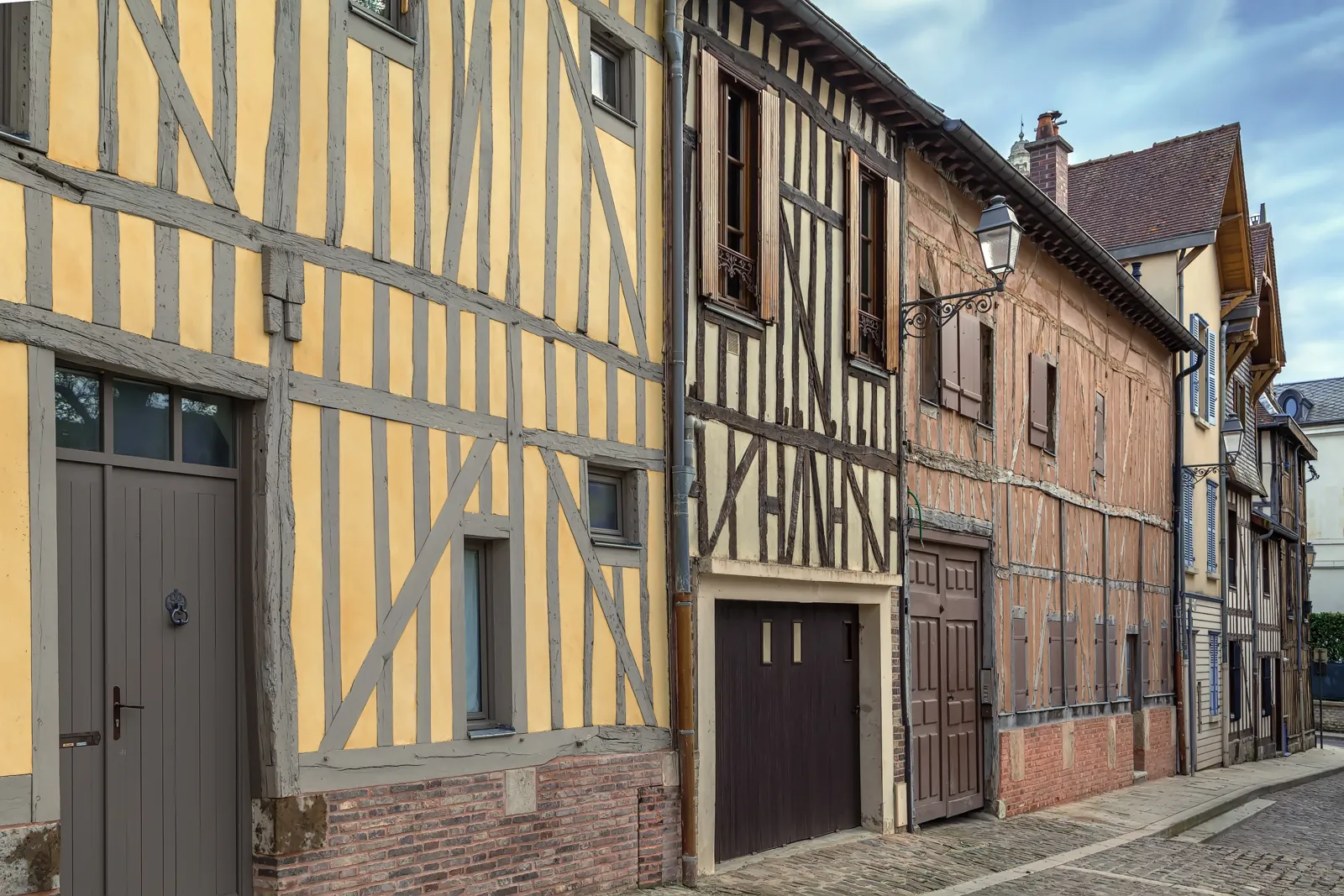
The historic district is lined with 17th-century brick and stone houses with carved façades and cobbled streets full of shops: Rue de la Monnaie, Place aux Oignons, Rue de Gand and its restaurants. Here you will find the Hospice Comtesse museum, a former hospital founded in the Middle Ages, and Notre-Dame-de-la-Treille cathedral, with its contemporary façade. General de Gaulle’s birthplace can also be visited in the district.
The Palais des Beaux-Arts
Built at the end of the 19th century on Place de la République, it is one of the richest museums in France outside Paris: Flemish and European painting, sculpture, and a collection of relief maps of fortified towns. Allow half a day.
The town hall belfry
Just over 100 m (328 ft) tall, the brick and concrete belfry of the town hall is one of the belfries of Belgium and France on the UNESCO World Heritage list. Its panoramic terrace can be visited by reservation, with a lift for part of the climb; book ahead, especially in summer.
The citadel and the Bois de Boulogne
Built from 1670 by Vauban after Louis XIV conquered the city, the star-shaped citadel is still used by the army, but its ramparts are surrounded by a large park, the Bois de Boulogne, with the Jardin Vauban and a zoo. It is the city’s great green space, ideal for a run or a walk with children.
Wazemmes and Gare Saint-Sauveur
The Wazemmes market, around the covered market hall of the same name, is the city’s most popular market, especially on Sunday mornings. A former freight station, Gare Saint-Sauveur hosts exhibitions, a cinema and terraces in a converted industrial setting.
Estaminets and northern French food
To taste the regional cuisine, head into an estaminet: carbonade flamande (beef stewed in beer), potjevleesch (cold meat terrine in aspic), welsh (cheese and beer on toast), moules-frites, Maroilles cheese, with a local beer. For something sweet, waffles filled with vergeoise (beet sugar) are the city’s speciality.
Itinerary: a weekend in Lille in 2 days
| Morning | Afternoon | Evening | |
|---|---|---|---|
| Saturday | Grand’Place, Vieille Bourse, Place du Théâtre, Chamber of Commerce belfry | Old Lille: Rue de la Monnaie and Rue de Gand, Hospice Comtesse, Notre-Dame-de-la-Treille | Dinner in an estaminet in Old Lille |
| Sunday | Wazemmes market | Palais des Beaux-Arts, then up the town hall belfry (by reservation) | Walk around the citadel or an exhibition at Gare Saint-Sauveur |
The Lille City Pass (several durations; check the tourist office website) bundles museums, tours and transport: it pays off if you visit several paid museums in a row. Compare it with your planned visits before buying.
Day trips from Lille
- Roubaix: La Piscine, an art and industry museum set in an Art Deco swimming pool, and the Villa Cavrois, a modernist house by Robert Mallet-Stevens; reached by metro or tram.
- Villeneuve-d’Ascq: the LaM, a museum of modern art, contemporary art and outsider art, in a sculpture park.
- Lens: the Louvre-Lens, a branch of the Louvre, reached by regional train.
- Belgium: Ghent, Bruges and Brussels are within reach by train for a day.
When to go to Lille
Lille has an oceanic climate: it can rain in any season, with 9 to 13 rainy days a month according to Météo-France normals. From May to September, days are mild (18 to 24 °C, 64 to 75 °F, in the afternoon) and long, ideal for café terraces and walks. In early September, the Braderie (Saturday 4 and Sunday 5 September 2027) draws huge crowds: it is an experience in itself, but hotels are booked solid. In December, the Christmas market on Place Rihour and the big wheel on the Grand’Place liven up the centre, with short, cold days. Winter remains a good season for museums.
| Month | Avg max | Avg min | Rain | Rainy days | Rain over a weekend | Sun (h/day) | Verdict |
|---|---|---|---|---|---|---|---|
| January | 6.6 °C (44 °F) | 1.7 °C (35 °F) | 58.2 mm (2.3 in) | 11.2 | 0.7 | 2.0 | ⚠️ Cold, museums |
| February | 7.5 °C (46 °F) | 1.9 °C (35 °F) | 50.8 mm (2.0 in) | 10.6 | 0.8 | 2.6 | ⚠️ Cold, museums |
| March | 11.2 °C (52 °F) | 3.8 °C (39 °F) | 52.1 mm (2.1 in) | 10.1 | 0.7 | 4.1 | ⚠️ Cool |
| April | 15.0 °C (59 °F) | 5.9 °C (43 °F) | 45.3 mm (1.8 in) | 9.2 | 0.6 | 5.9 | ✅ Mild, spring |
| May | 18.4 °C (65 °F) | 9.3 °C (49 °F) | 61.6 mm (2.4 in) | 9.5 | 0.6 | 6.3 | ✅ Pleasant |
| June | 21.3 °C (70 °F) | 12.1 °C (54 °F) | 63.7 mm (2.5 in) | 9.8 | 0.7 | 6.7 | ✅ Pleasant, long days |
| July | 23.7 °C (75 °F) | 14.2 °C (58 °F) | 67.8 mm (2.7 in) | 9.9 | 0.6 | 6.8 | ✅ Warmest |
| August | 23.7 °C (75 °F) | 14.0 °C (57 °F) | 71.3 mm (2.8 in) | 9.9 | 0.6 | 6.3 | ✅ Warmest |
| September | 20.2 °C (68 °F) | 11.4 °C (53 °F) | 56.8 mm (2.2 in) | 9.7 | 0.6 | 5.2 | ✅ Still mild |
| October | 15.4 °C (60 °F) | 8.4 °C (47 °F) | 64.1 mm (2.5 in) | 10.8 | 0.7 | 3.7 | ⚠️ Cool, rain |
| November | 10.3 °C (51 °F) | 4.9 °C (41 °F) | 75.0 mm (3.0 in) | 13.3 | 0.9 | 2.1 | ❌ Wettest |
| December | 7.0 °C (45 °F) | 2.3 °C (36 °F) | 73.3 mm (2.9 in) | 12.2 | 0.8 | 1.7 | ⚠️ Cold, Christmas market |
Our calculation: over a two-day weekend, expect on average 0.6 rainy days in April, the most favourable month, against 0.9 in November. In other words, rain is never ruled out: pack an umbrella whatever the season and keep a museum visit in reserve. As for sunshine, July offers nearly 7 hours a day, December less than 2. To see how Lille compares, check our rankings of the rainiest cities and the sunniest cities in France.
Budget for a weekend in Lille
The budget depends mainly on accommodation: hostels and simple hotels on one side, Old Lille hotels on the other. Estaminets and the Wazemmes market let you eat without spending too much, and the centre is walkable. On Braderie weekend, accommodation prices rise sharply.
Getting there and around Lille
- On foot: the centre, Old Lille and the Grand’Place are easy to explore on foot from both stations.
- Metro: two driverless lines serve the stations, Wazemmes, Roubaix and Villeneuve-d’Ascq; the tram links Lille with Roubaix and Tourcoing.
- Bike: bike-sharing is available across the metropolitan area.
- Car: not needed in town; the centre is dense and parking is paid.
- Arriving: TGV trains link Paris Gare du Nord and many other French cities; Lille-Flandres handles regional trains, Lille-Europe some TGVs and Eurostar trains.
Where to stay in Lille
| Area | Best for | Highlights |
|---|---|---|
| Old Lille | Couples, a charming weekend | Façades, restaurants, evening atmosphere |
| Grand’Place and centre | First visit | Everything on foot, shops |
| Stations (Lille-Flandres, Lille-Europe, Euralille) | Short stay by train | Arrive on foot, chain hotels |
| Wazemmes | Tight budget, local atmosphere | Market, lower prices, metro |
Entry requirements, health and safety
- US citizens: you may enter the Schengen area, including France, for up to 90 days for tourism or business without a visa; your passport should be valid at least three months beyond your period of stay (six months recommended), and immigration officers may ask for proof of sufficient funds and a return ticket (U.S. Department of State, travel.state.gov, last updated August 11, 2025).
- UK citizens: no visa for up to 90 days in any 180-day period as a tourist; your passport must have been issued less than 10 years before you arrive and be valid at least 3 months after the day you plan to leave the Schengen area. The EU Entry/Exit System (EES) is being implemented: fingerprints and a photo may be taken at the border, free of charge (UK FCDO, GOV.UK, updated 22 October 2026).
- Health and emergencies: UK travellers need a GHIC or valid EHIC for medically necessary state healthcare; everyone should have travel insurance covering medical costs. Emergency numbers: 112 (European emergency number, with some English-speaking staff) and 15 (medical emergencies) (GOV.UK; travel.state.gov).
- Safety: the UK FCDO (GOV.UK, updated 22 October 2026) advises sensible precautions against street crime, as pickpockets can work in gangs; keep a closed bag in crowds such as the Braderie.
Practical tips for Lille
- Bookings: the town hall belfry is visited by time slot; popular estaminets are often full on Saturday evenings.
- Braderie: if you are coming for it, wear comfortable shoes; if not, avoid that weekend.
- Sunday: many shops close, but the Wazemmes market and the museums are open (check opening hours).
- Weather: a waterproof jacket is useful even in summer.
Frequently asked questions
What to do in Lille in a weekend?
Old Lille, the Grand’Place and the Vieille Bourse on day one; the Wazemmes market, the Palais des Beaux-Arts and the belfry on day two. Add dinner in an estaminet.
How many days do you need in Lille?
Two days are enough for the city. Allow one or two more days for Roubaix (La Piscine, Villa Cavrois), the LaM or the Louvre-Lens.
What is the best time to visit Lille?
May to September for mild weather and long days; December for the Christmas market; Braderie weekend, if you like crowds.
When is the Braderie de Lille?
The 2027 Braderie will take place on Saturday 4 and Sunday 5 September 2027, according to the City of Lille.
How do you get to Lille by train?
Direct TGV trains link Paris Gare du Nord with Lille-Flandres or Lille-Europe, both in the city centre; Lille-Europe is also served by Eurostar.
Our sources
- Météo-France: 1991-2020 normals for the Lille-Lesquin station, via Meteociel and the Wikipedia article « Lille »
- Destination de Voyage calculation: expected rainy days over a weekend and hours of sunshine per day, based on these normals
- Wikipedia (French edition): « Lille » (population, history, Braderie, transport), accessed 15 October 2026
- City of Lille, official website: Braderie 2027 dates, checked 26 October 2026
- Entry requirements, health and safety checked on 26 October 2026: U.S. Department of State, France country information (last updated August 11, 2025) and UK FCDO, GOV.UK foreign travel advice for France (updated 22 October 2026)
- Our methodology
Updated October 2026.
For other city breaks, see our guides to Paris, Lyon and Strasbourg, and all our destinations in France.