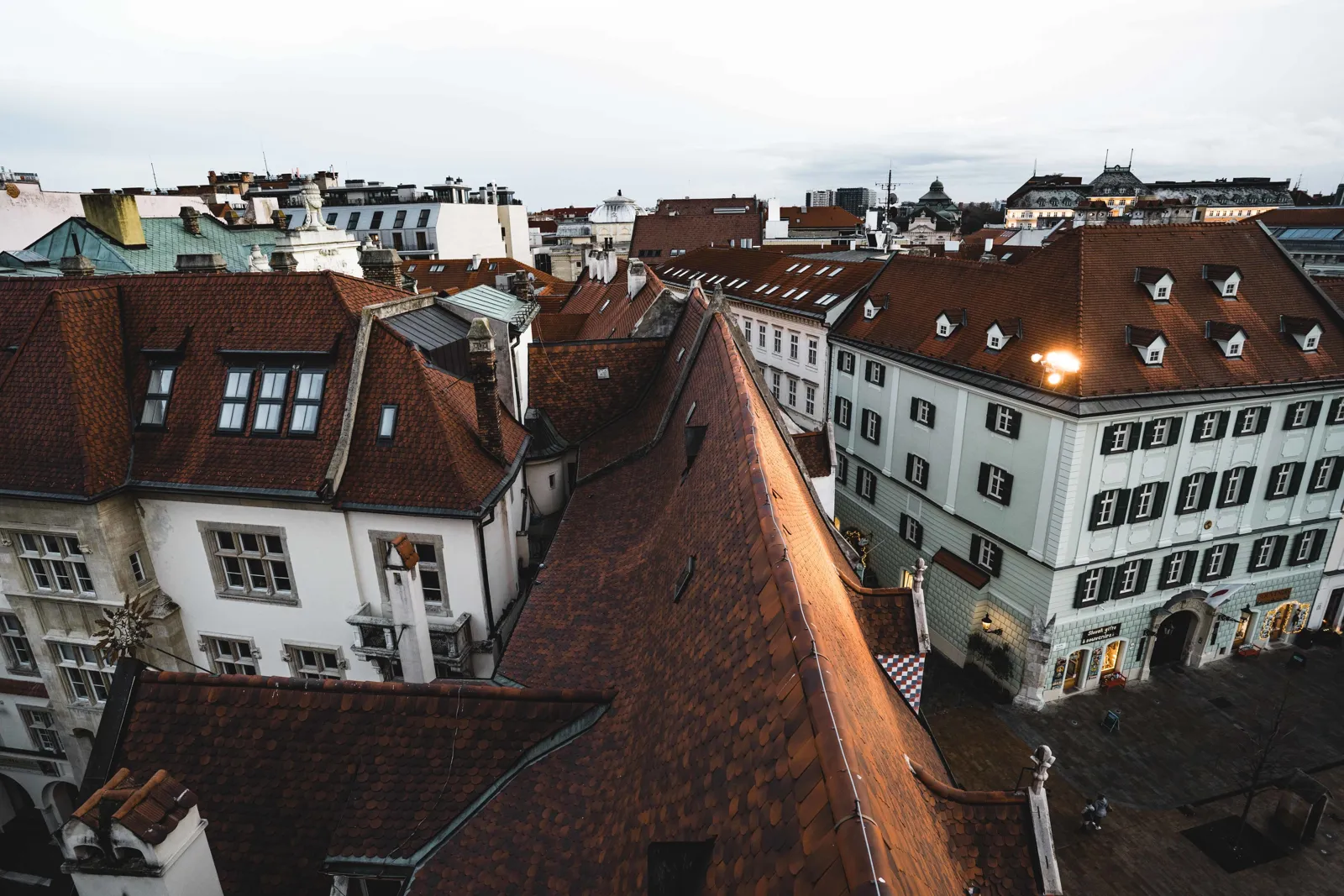
Nuremberg, Bavaria’s second city after Munich, is best explored on foot: an old town ringed by walls, dominated by the Imperial Castle and crossed by the Pegnitz river. Visitors also come for 20th-century history, from the Nazi party rally grounds to the courtroom of the 1945-1946 trial, and, at the end of the year, for its famous Christmas market. Things to do in Nuremberg, how to plan your visit and when to go based on the official normals for the Nuremberg station: here is the essential.
First mentioned in 1050 as the site of an imperial castle, the city prospered thanks to trade routes and became, in the 15th and 16th centuries, a centre of humanism, printing and the arts, with the painter Albrecht Dürer, a native of the city. On 2 January 1945, about 80% of the medieval centre was destroyed in an hour by Allied bombing; much of it was rebuilt after the war.

Our travel deals for Nuremberg
Affiliate links: we earn a commission, at no extra cost to you.
 FlightsKiwi.comCompare flights and airline combinations to Nuremberg.Compare flights
- Airport transferKiwitaxiPrivate driver booked in advance at a fixed price.Book a transfer


Nuremberg at a glance
- Location Franconia, northern Bavaria, on the Pegnitz
- Population 542,544 (October 2022, city statistics office)
- Language and currency German, euro; time zone UTC+1 (UTC+2 in summer)
- Access central station (Hauptbahnhof) served by ICE trains; airport linked to the centre by U-Bahn line U2
- Entry US and UK citizens: no visa for up to 90 days in 180 (Schengen); see entry requirements
- Must-sees Imperial Castle, Hauptmarkt, St. Lorenz and St. Sebald churches, Albrecht Dürer’s House, Germanisches Nationalmuseum, Documentation Centre
- Ideal length 2 days
Things to do in Nuremberg: the main sights
The Imperial Castle (Kaiserburg)
On the rock that overlooks the north of the old town, Nuremberg Castle served as a royal and imperial residence for nearly five centuries. The complex has three parts: the Imperial Castle to the west, the Burgraves’ Castle in the centre and the buildings of the Free Imperial City to the east. Highlights include the two-storey Romanesque chapel (Doppelkapelle), the Sinwell Tower and the Deep Well. From the terrace, the view takes in the rooftops of the old town.
The Hauptmarkt and the Beautiful Fountain
The main square is dominated by the Gothic facade of the Church of Our Lady (Frauenkirche). In one corner stands the Beautiful Fountain (Schöner Brunnen), built around 1385; the one you see is a replica, the original being kept at the Germanisches Nationalmuseum. A ring is set into its railing, said to bring luck to whoever turns it. The Christmas market is also held on this square.
St. Lorenz and St. Sebald churches
South of the Pegnitz, the Gothic St. Lorenz Church (Lorenzkirche), whose main body dates from around 1270-1350, is one of the city’s major buildings. To the north, the even older St. Sebald (Sebalduskirche) is its counterpart; the composer Johann Pachelbel, born in Nuremberg, was its organist. The two churches give their names to the two halves of the old town.
Along the Pegnitz
In the heart of the city, the Holy Spirit Hospital (Heilig-Geist-Spital), founded in 1332, stands on the riverbank; it was one of the largest hospitals of the Middle Ages. Nearby, the Renaissance Fleischbrücke bridge has remained unchanged, and the Kettensteg footbridge is presented as the first chain suspension bridge in continental Europe. Weißgerbergasse, a lane lined with half-timbered houses, completes the walk.
Albrecht Dürer’s House
At the foot of the castle, on Tiergärtnerplatz, the house of the painter and engraver Albrecht Dürer is now a museum. Dürer is buried in St. John’s Cemetery (Johannisfriedhof), a medieval cemetery that also holds the grave of the humanist Willibald Pirckheimer.
The Germanisches Nationalmuseum
The Germanisches Nationalmuseum is Germany’s largest museum of cultural history. It holds works by Dürer, Rembrandt and Ernst Ludwig Kirchner, the original Beautiful Fountain and the oldest surviving terrestrial globe, made in 1492 under the direction of Martin Behaim. A former Carthusian monastery is integrated into the building. Other museums: the Neues Museum (modern and contemporary art), the Toy Museum and the Transport Museum, devoted in particular to German railways.
The Documentation Centre and the Palace of Justice
South-east of the centre, the Nazi party rally grounds (Reichsparteitagsgelände), designed by Albert Speer for the rallies of the 1930s, are partly preserved. Since 2001, a documentation centre in part of the unfinished Congress Hall has traced the rise of Nazism. In 1945-1946, the Palace of Justice hosted the trial of the main Nazi leaders before an international military tribunal. Check visiting conditions for these memorial sites on their official websites before you go.
The Handwerkerhof
Inside the walls, the Craftsmen’s Courtyard recreates a medieval village: family workshops selling glass, wood, leather and ceramics, and traditional restaurants. As for food, the city is known for its small grilled sausages (Nürnberger Rostbratwürstchen), its gingerbread (Lebkuchen) and Schäufele, Franconian roast pork shoulder.
Itinerary: Nuremberg in 2 days
| Time | Day 1: the medieval city | Day 2: museums and the 20th century |
|---|---|---|
| Morning | Imperial Castle, then Albrecht Dürer’s House | Germanisches Nationalmuseum |
| Midday | Hauptmarkt and the Beautiful Fountain | Handwerkerhof, grilled sausages |
| Afternoon | St. Sebald, Holy Spirit Hospital, St. Lorenz | Documentation Centre and rally grounds |
| Evening | Along the Pegnitz, Weißgerbergasse | Old town or Palace of Justice (depending on opening hours) |
When to go to Nuremberg
From May to September: highs reach 19.7 °C (67 °F) in May and 25.1 °C (77 °F) in July, with more than 7 hours of sunshine a day from May to August. July is also the wettest month (76.7 mm / 3.0 in). Winter is cold and dark: 3.5 °C (38 °F) in the afternoon and −2.5 °C (28 °F) at night in January, barely 1.4 hours of sunshine a day in December. Late November and December remain appealing for the Christmas market. With 600.5 mm (23.6 in) a year, Nuremberg is a fairly dry city.
| Month | High °C (°F) | Low °C (°F) | Rain mm (in) | Rainy days | Sun / day | Verdict |
|---|---|---|---|---|---|---|
| January | 3.5 (38) | −2.5 (28) | 40.0 (1.6) | 15.0 | 1.9 h | ❌ Cold, dark |
| February | 5.3 (42) | −2.3 (28) | 32.8 (1.3) | 13.4 | 3.1 h | ⚠️ Cold |
| March | 10.0 (50) | 0.4 (33) | 39.1 (1.5) | 13.6 | 4.2 h | ⚠️ Cool |
| April | 15.4 (60) | 3.5 (38) | 32.9 (1.3) | 12.2 | 6.2 h | ✅ Mild, dry |
| May | 19.7 (67) | 7.8 (46) | 61.3 (2.4) | 13.6 | 7.1 h | ✅ Pleasant |
| June | 23.2 (74) | 11.4 (53) | 64.0 (2.5) | 13.2 | 7.6 h | ✅ Ideal |
| July | 25.1 (77) | 13.3 (56) | 76.7 (3.0) | 14.7 | 7.7 h | ✅ Warmest and wettest |
| August | 24.9 (77) | 12.8 (55) | 59.5 (2.3) | 12.4 | 7.3 h | ✅ Warm, sunny |
| September | 19.9 (68) | 8.8 (48) | 48.9 (1.9) | 11.7 | 5.5 h | ✅ Mild, ideal |
| October | 14.1 (57) | 5.1 (41) | 49.4 (1.9) | 13.8 | 3.7 h | ⚠️ Cool |
| November | 7.8 (46) | 1.5 (35) | 47.1 (1.9) | 14.4 | 1.9 h | ❌ Grey, cold |
| December | 4.1 (39) | −1.3 (30) | 48.8 (1.9) | 17.1 | 1.4 h | ⚠️ Cold, Christmas market |
Sunnier than Paris?
Over the year, Nuremberg gets an average of 1,753 hours of sunshine, against 1,717 in Paris-Montsouris according to Météo-France. Month by month, the Franconian city is sunnier from April to August (May: 7.1 h a day against 6.5 h in Paris) and darker from September to December (November: 1.9 h against 2.3 h). Destination de Voyage calculation.
| Month | Sun / day in Nuremberg | Paris-Montsouris | Difference |
|---|---|---|---|
| January | 1.9 h | 1.9 h | −0.0 h |
| February | 3.1 h | 3.0 h | +0.1 h |
| March | 4.2 h | 4.4 h | −0.2 h |
| April | 6.2 h | 5.9 h | +0.3 h |
| May | 7.1 h | 6.5 h | +0.6 h |
| June | 7.6 h | 6.8 h | +0.8 h |
| July | 7.7 h | 7.2 h | +0.5 h |
| August | 7.3 h | 6.9 h | +0.3 h |
| September | 5.5 h | 5.8 h | −0.3 h |
| October | 3.7 h | 3.8 h | −0.2 h |
| November | 1.9 h | 2.3 h | −0.4 h |
| December | 1.4 h | 1.8 h | −0.4 h |
How many rainy days over a 2-day weekend?
Scaling each month’s average number of days with precipitation to a two-day stay, you can expect about 0.8 days of rain in September, the most favourable month, and 1.1 in December, the least favourable. It rains a little in every season: pack an umbrella. Destination de Voyage calculation based on the 1991-2020 normals.
| Month | Expected rainy days over 2 days | Monthly rainfall | Days with snow (≥ 1 cm) |
|---|---|---|---|
| January | 1.0 | 40 mm (1.6 in) | 4.6 |
| February | 1.0 | 33 mm (1.3 in) | 2.7 |
| March | 0.9 | 39 mm (1.5 in) | 0.7 |
| April | 0.8 | 33 mm (1.3 in) | 0.0 |
| May | 0.9 | 61 mm (2.4 in) | 0.0 |
| June | 0.9 | 64 mm (2.5 in) | 0.0 |
| July | 0.9 | 77 mm (3.0 in) | 0.0 |
| August | 0.8 | 60 mm (2.4 in) | 0.0 |
| September | 0.8 | 49 mm (1.9 in) | 0.0 |
| October | 0.9 | 49 mm (1.9 in) | 0.0 |
| November | 1.0 | 47 mm (1.9 in) | 0.2 |
| December | 1.1 | 49 mm (1.9 in) | 2.4 |
The Christmas market (Christkindlesmarkt)
Set up on the Hauptmarkt, the Christkindlesmarkt is one of Germany’s best-known Christmas markets, famous for its handmade decorations, wooden nutcrackers, Lebkuchen and mulled wine. According to the market’s official site (christkindlesmarkt.de, checked 26 October 2026), the 2026 edition runs from 27 November to 24 December, daily from 10 am to 9 pm, with an opening ceremony on 27 November at 5:30 pm. Check special hours (especially on 24 December) on the official site before booking.
To compare with the rest of the country, see when to go to Germany.
Getting there and getting around
- By train: the central station (Nürnberg Hauptbahnhof) is served by long-distance ICE and IC trains and by Nightjet night trains. A high-speed line links it to Munich via Ingolstadt, and another to Erfurt since 2017. Timetables on the Deutsche Bahn website.
- By air: Nuremberg Airport is the terminus of U-Bahn line U2. The main international gateways are Munich and Frankfurt airports, both with rail links to Nuremberg.
- In town: the U-Bahn (including driverless automated lines), trams, buses and S-Bahn form a single network (VGN). The largely pedestrianised old town is easy to explore on foot.
- Nürnberg Card: the tourist office sells a city card combining public transport and museum entry; check conditions and prices on its website.
Where to stay
In the old town, on the St. Sebald side to be at the foot of the castle, or on the St. Lorenz side to stay near the station and the Handwerkerhof. The area around the station is convenient if you arrive by train. During the Christmas market and major trade fairs, book early.
If you… then…: choosing your trip
| If you… | Then… |
|---|---|
| only have one day | castle, Dürer’s House, Hauptmarkt, St. Sebald and St. Lorenz, all on foot |
| are interested in the 20th century | Documentation Centre and Palace of Justice, after checking visiting conditions |
| are travelling with children | Toy Museum, Transport Museum, the zoo (Tiergarten) in the Reichswald forest |
| come in December | Christmas market from 27 November to 24 December 2026, according to the official site |
| want to see more of Bavaria | continue to Munich by high-speed train |
| want to see the capital | carry on to Berlin |
Entry requirements, health and safety
US citizens: Germany is in the Schengen area. According to the U.S. Department of State (travel.state.gov, last updated August 11, 2025), your passport should be valid for at least 3 months beyond your planned stay (6 months is recommended), and you may need proof of sufficient funds and a return ticket.
UK citizens: according to the UK FCDO (GOV.UK, updated 11 August 2026), you can visit the Schengen area, including Germany, without a visa for up to 90 days in any 180-day period. Your passport must have been issued less than 10 years before you arrive and be valid for at least 3 months after the day you plan to leave. You may have to register your fingerprints and photo under the EU Entry/Exit System (EES), and temporary border controls are in place at Germany’s land borders.
- Safety: crime levels are similar to the UK; take care against bag-snatching and pickpocketing, particularly at airports, railway stations and in crowds (UK FCDO, GOV.UK, updated 11 August 2026).
- Emergencies: dial 112 for ambulance and fire (GOV.UK).
- Customs: for what you can bring home, check your home country’s allowances (e.g. CBP in the US, HMRC in the UK).
Entry requirements checked on 26 October 2026; check them again before you travel. See also our travel insurance guide.
Frequently asked questions
How many days do you need in Nuremberg?
One day is enough for the old town and the castle; allow two days to add the Germanisches Nationalmuseum and the 20th-century memorial sites.
What is the best time to visit Nuremberg?
May to September, with highs of 19.7 to 25.1 °C (67 to 77 °F) according to the 1991-2020 normals for the Nuremberg station. Late November and December for the Christmas market, despite the cold.
When is the Nuremberg Christmas market in 2026?
From 27 November to 24 December 2026, 10 am to 9 pm, according to the official site christkindlesmarkt.de.
Where did the Nuremberg trials take place?
At the Nuremberg Palace of Justice, chosen in part because it was spacious and largely intact after the bombing.
Do US and UK citizens need a visa for Nuremberg?
No, for tourist stays of up to 90 days in any 180-day period in the Schengen area, according to the U.S. Department of State and the UK FCDO; check passport validity rules before you travel.
Our sources
- 1991-2020 normals for the Nuremberg station (WMO no. 10763), World Meteorological Organization (file published by NOAA) and Deutscher Wetterdienst, via the Wikipedia climate box (article « Nuremberg »), accessed 23 October 2026
- Météo-France, Paris-Montsouris climate sheet, for the sunshine comparison
- Official Christkindlesmarkt website, checked 26 October 2026
- Wikipedia: « Nuremberg » (French and English editions), accessed 23 October 2026
- Destination de Voyage calculations: sun per day, difference with Paris, rainy days over a 2-day stay
- Entry requirements, health and safety checked on 26 October 2026: U.S. Department of State, Germany country information (last updated August 11, 2025) and UK FCDO, GOV.UK foreign travel advice for Germany (updated 11 August 2026)
- Our methodology
Updated October 2026.
To extend your trip, see our guides to Germany and Munich and our destinations in Europe.