Things to do in Formentera? Swim in the turquoise water of Ses Illetes and Llevant, wade across to the islet of Espalmador, cycle past the salt lagoons of the natural park, watch the sunset at the Cap de Barbaria lighthouse, climb to the La Mola plateau and lunch on fish in Es Caló. The smallest inhabited Balearic island can be visited in 2 to 5 days from Ibiza, about half an hour away by boat; the best time runs from late May to late September.
Formentera has no airport: you arrive by ferry from Ibiza port. Flat and some twenty kilometers (12 mi) long, the island is known for its white-sand beaches, its protected Posidonia seagrass meadows and a calmer atmosphere than its neighbor. This guide covers the beaches, the sights, getting there, where to stay, the budget and the month-by-month climate based on AEMET, with a “beach calendar” and sunset times calculated by us.

Our travel deals for Formentera
Affiliate links: we earn a commission, at no extra cost to you.
 FlightsKiwi.comCompare flights and airline combinations to Formentera.Compare flights

Formentera at a glance
- Location Balearic island (Spain), south of IbizaWith Ibiza, it forms the Pityusic Islands
- Languages Catalan and Spanish
- Currency the euro (€) · currencies
- Time zone UTC+1, UTC+2 in summer: 1 hour ahead of London, 6 hours ahead of New York · detailsLocal time now: –:–
- Airports fly to Ibiza, then ferry from Ibiza portAbout 30 min to 1 hour depending on the boat
- Entry Schengen area: no visa for UK citizens for up to 90 days in any 180-day period; US citizens need a passport valid 3 months beyond their stay · travel.state.gov · GOV.UK
- Electricity check voltage and plug types before you go · plugs
- Recommended stay a day trip from Ibiza3 to 5 days to really enjoy it
- Budget see our budget section
Things to do in Formentera: the best beaches
Ses Illetes and Llevant
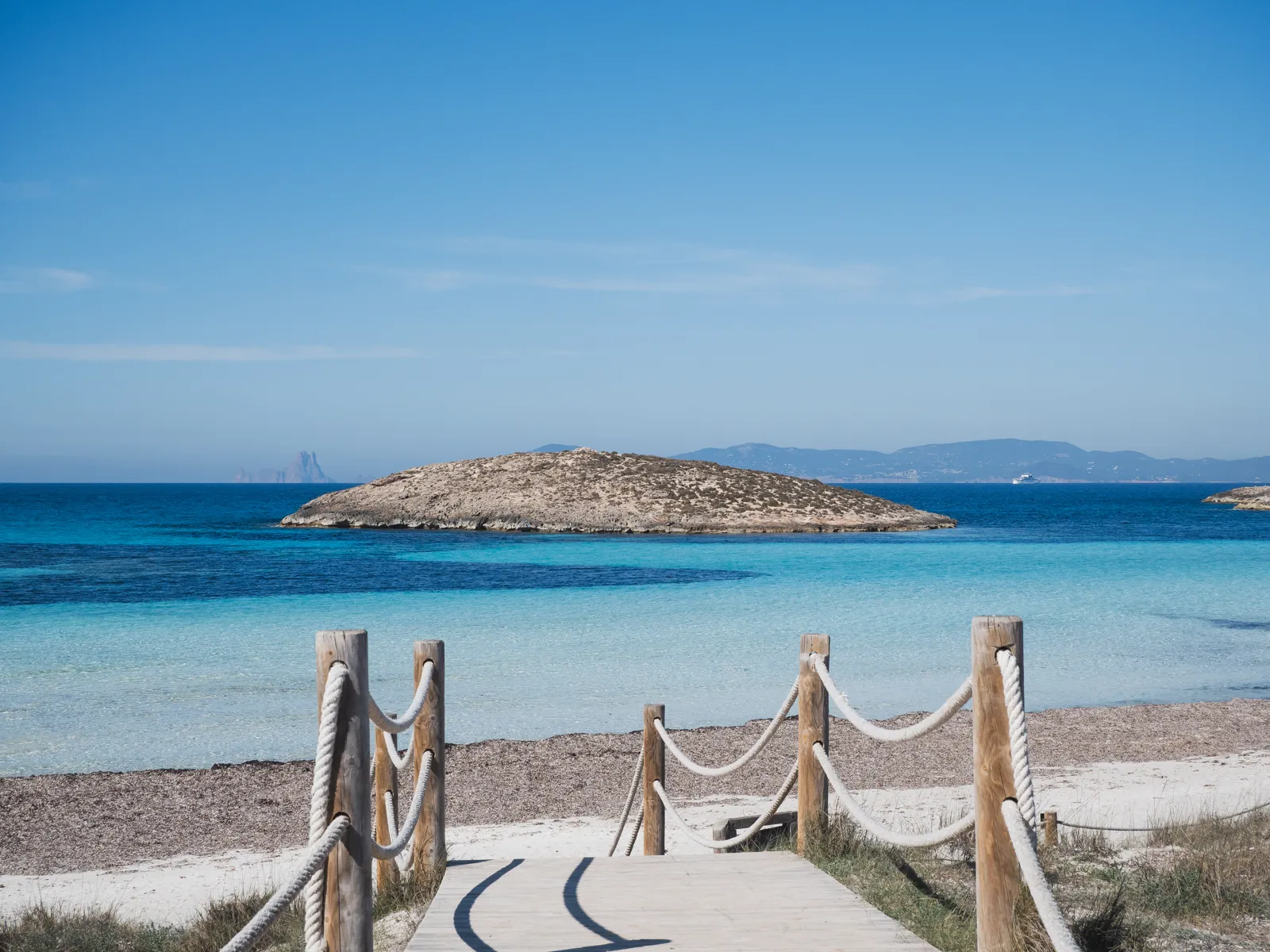
In the north of the island, the sandy spit of Es Trucadors separates two beaches: Ses Illetes, to the west, with shallow, very pale blue water, and Llevant, to the east, wilder and more exposed to the wind. They are part of the Ses Salines d’Eivissa i Formentera natural park: motor vehicle access is charged in season and parking is limited. Come early, by bike or by bus.
The islet of Espalmador
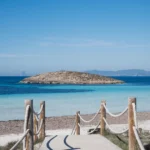
At the tip of Es Trucadors, the private islet of Espalmador is separated from Formentera by a shallow channel, sometimes passable on foot depending on the sea and wind; many visitors go by boat from La Savina. Its S’Alga beach is one of the most beautiful in the Balearics. The crossing can be dangerous in rough seas: don’t attempt it if there is a current.
Migjorn, the great southern beach
On the south coast, Migjorn beach stretches for several kilometers between dunes and small beach restaurants. It is divided into sections (Es Arenals, Es Ca Marí, Es Copinar) and stays less crowded than the north, even in summer.
Es Pujols, Cala Saona and the coves
Es Pujols is the main resort, with hotels, bars and a sheltered beach. To the west, Cala Saona is a cove of reddish sand and turquoise water surrounded by cliffs, lovely at sunset. On the north-east coast, the small rocky inlets of Es Caló, with their wooden boat shelters, are perfect for snorkeling.
Posidonia, a treasure to protect
The clarity of the water owes a lot to the Posidonia seagrass meadows, a protected marine plant that is part of the UNESCO site “Ibiza, Biodiversity and Culture”. For boats, anchoring on Posidonia is regulated: ask your rental company. Banks of dead leaves on some beaches are normal and protect the sand from erosion.
What to do in Formentera beyond the beaches
The Cap de Barbaria lighthouse
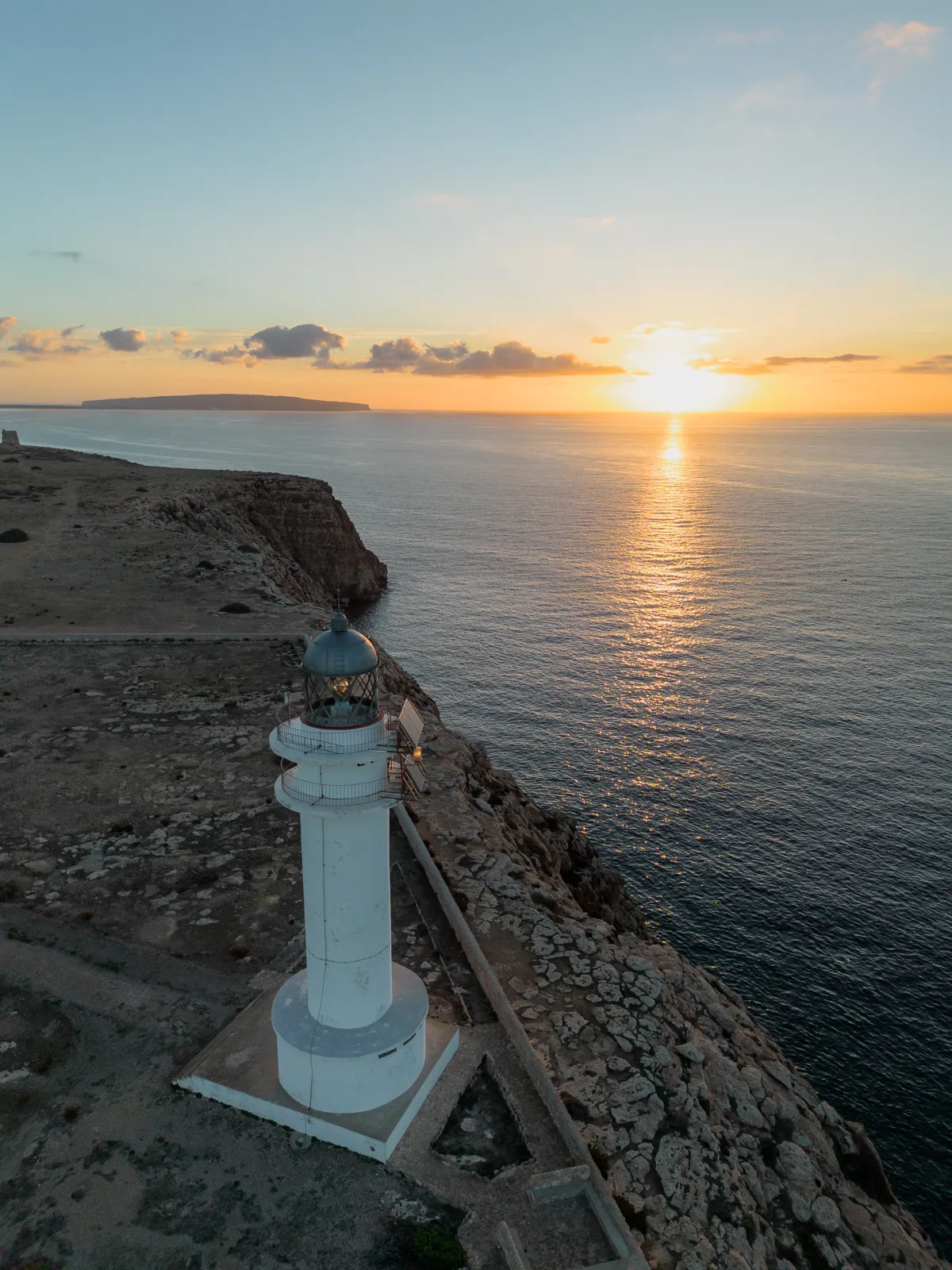
At the end of a straight road across arid scrubland, the Cap de Barbaria lighthouse overlooks the sea in the south of the island. It is the best-known sunset spot (see our calculated times below). The final stretch of road is closed to cars: plan a walk of a few hundred meters, or come by bike.
The La Mola plateau and its lighthouse
To the east, the La Mola plateau rises to nearly 200 m (656 ft). Here you will find the La Mola lighthouse amid cliffs, and the village of El Pilar de la Mola with its craft market, held on certain days in season (check the days with the tourist office). The climb from Es Caló offers fine views over the whole island.
Sant Francesc Xavier and Sant Ferran
The island’s main town, Sant Francesc Xavier, is built around an 18th-century fortified church, with shops, cafés and a small market. Sant Ferran de ses Roques, more modest, has kept the feel of a white village.
The natural park and the salt lagoons
In the north, the Estany Pudent and the Estany des Peix are two lagoons where you can watch birds, including flamingos in some seasons. The old salt pans recall the island’s traditional economy. Waymarked green routes (“circuits verds”) let you explore them on foot or by bike.
Boat trips and snorkeling
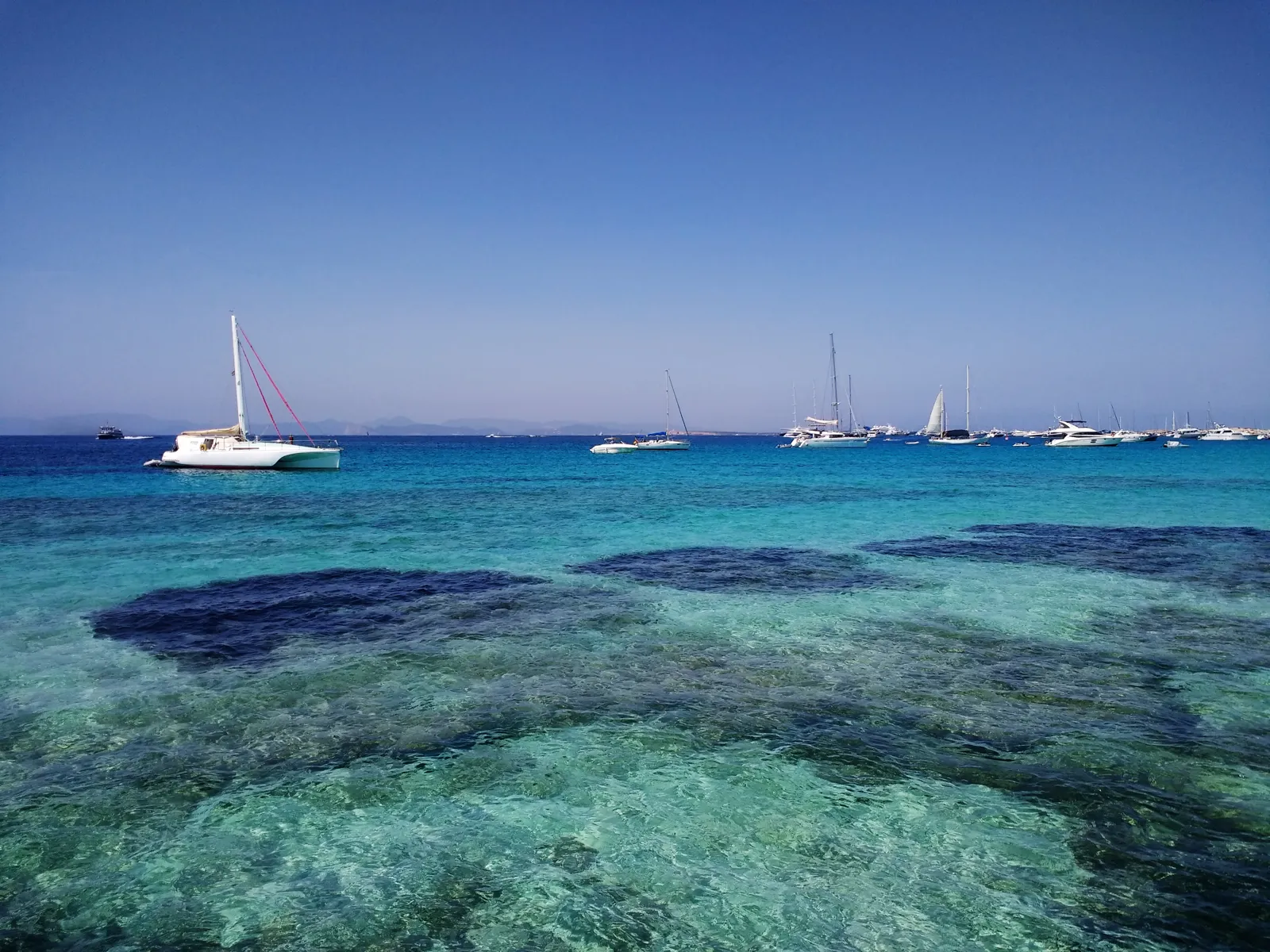
From La Savina, boats offer day trips to Espalmador and the coves, and rental companies offer boats that require no license below a certain engine power. Kayaks and paddleboards let you explore the coast in the calm of the morning.
Itinerary: Formentera in 1 day or 4 days
Formentera in 1 day from Ibiza
- First ferry from Ibiza port, arriving at La Savina
- Rent an e-bike or scooter at the port
- Morning at Ses Illetes before the boats arrive
- Lunch in Es Pujols or Sant Francesc
- Afternoon at Cala Saona, then back on the last ferry (check the time)
Formentera in 4 days
- Day 1: Ses Illetes and Llevant, sunset over Es Trucadors
- Day 2: Espalmador by boat, evening in Es Pujols
- Day 3: Sant Francesc, the salt lagoons, Cala Saona and sunset at Cap de Barbaria
- Day 4: Es Caló, the La Mola plateau and lighthouse, afternoon on Migjorn beach
When to go to Formentera
The best time is from late May to late September, with June and September as the best compromise between heat, sea and crowds. The climate is dry Mediterranean: at the nearest official station, Ibiza airport, AEMET records an average afternoon high of 30.3 °C (87 °F) in August, only 5 mm (0.2 in) of rain in July and 413 mm (16.3 in) over the whole year. Autumn brings short but sometimes heavy rain, peaking in October (58 mm / 2.3 in). Winter is mild (15 to 17 °C / 59 to 63 °F in the afternoon), but many hotels and restaurants close.
| Month | High °C (°F) | Low °C (°F) | Rain mm (in) | Rain days | Crowds | Prices | Verdict |
|---|---|---|---|---|---|---|---|
| January | 15.7 (60) | 8.1 (47) | 37 (1.5) | 4.9 | Very low | Low | ❌ Mild but the island is asleep |
| February | 15.9 (61) | 8.3 (47) | 36 (1.4) | 5.0 | Very low | Low | ❌ Cool, many closures |
| March | 17.7 (64) | 9.6 (49) | 27 (1.1) | 3.3 | Low | Low | ⚠️ Spring, places reopen |
| April | 19.7 (67) | 11.4 (53) | 31 (1.2) | 4.1 | Low to medium | Medium | ⚠️ Pleasant for walking, cool sea |
| May | 22.7 (73) | 14.6 (58) | 27 (1.1) | 3.2 | Medium | Medium | ✅ Mild, few visitors |
| June | 26.8 (80) | 18.4 (65) | 11 (0.4) | 1.4 | High | High | ✅ Hot, dry, long days |
| July | 29.7 (85) | 21.4 (71) | 5 (0.2) | 0.5 | Very high | Very high | ⚠️ Very hot, very busy |
| August | 30.3 (87) | 22.2 (72) | 18 (0.7) | 1.5 | Very high | Very high | ⚠️ Hottest month, peak prices |
| September | 27.7 (82) | 19.9 (68) | 57 (2.2) | 4.2 | High | High | ✅ Hot, fewer visitors |
| October | 24.0 (75) | 16.5 (62) | 58 (2.3) | 5.6 | Medium | Medium | ⚠️ Still mild, first storms |
| November | 19.6 (67) | 12.3 (54) | 53 (2.1) | 5.6 | Very low | Low | ❌ End of season |
| December | 16.7 (62) | 9.5 (49) | 52 (2.0) | 5.4 | Very low | Low | ❌ Quiet, few services |
- Spring (April-May): the island is green and quiet, ideal for cycling; the sea stays cool for many swimmers before June.
- Summer (June-August): near-constant sunshine and almost no rain, but July and August bring the crowds, the highest prices and full ferries. Head to the beaches early.
- Autumn (September-October): September keeps summer heat with fewer visitors; storms become more frequent in October.
- Winter (November-March): mild and bright, pleasant for walking, but much of the tourist offer is closed and there are fewer ferries.
To compare with Mallorca, Menorca and Ibiza, see our page when to go to the Balearic Islands and our ideas for where to go in June or in September.
Our beach calendar and sunset times in Formentera
As there is no official monthly sea temperature normal for Formentera, we don’t show a sea figure. Instead, we have combined AEMET normals month by month (highs, rain days, clear days, sunshine hours) to estimate beach weather, and calculated the sunset time, useful for planning your evening at Cap de Barbaria.
| Month | Sun per day (h) | Clear days | Dry days out of 7 | Sunset on the 15th | Day length on the 15th | Beach weather |
|---|---|---|---|---|---|---|
| January | 5.2 | 6.0 | 5.9 | 5:56 pm | 9 h 46 | ❌ Off-season for the beach |
| February | 5.9 | 4.9 | 5.8 | 6:31 pm | 10 h 47 | ❌ Off-season for the beach |
| March | 6.8 | 7.1 | 6.3 | 7:00 pm | 11 h 56 | ❌ Off-season for the beach |
| April | 8.2 | 6.1 | 6.0 | 8:30 pm | 13 h 13 | ❌ Off-season for the beach |
| May | 8.8 | 6.8 | 6.3 | 8:59 pm | 14 h 17 | ⚠️ Beach possible |
| June | 10.0 | 10.5 | 6.7 | 9:20 pm | 14 h 52 | ✅ Beach |
| July | 10.8 | 15.9 | 6.9 | 9:18 pm | 14 h 37 | ✅ Beach |
| August | 9.8 | 13.0 | 6.7 | 8:49 pm | 13 h 41 | ✅ Beach |
| September | 7.9 | 6.0 | 6.0 | 8:03 pm | 12 h 27 | ⚠️ Beach possible |
| October | 6.6 | 4.1 | 5.7 | 7:16 pm | 11 h 13 | ⚠️ Beach possible |
| November | 5.2 | 4.0 | 5.7 | 5:41 pm | 10 h 05 | ❌ Off-season for the beach |
| December | 4.9 | 4.7 | 5.8 | 5:33 pm | 9 h 29 | ❌ Off-season for the beach |
- July is the safest month: 10.8 hours of sunshine a day on average and only 0.5 rain days in the month.
- June has the longest evenings: sunset around 9:20 pm on 15 June, against 8:03 pm on 15 September.
- September stays hot but moves to “beach possible”: 27.7 °C (82 °F) in the afternoon, but rain days increase (4.2 on average): keep a spare day for Espalmador or boat trips.
- In winter, the sun sets as early as 5:33 pm in mid-December; plan your walks to the lighthouse accordingly.
Getting to Formentera
- By air to Ibiza: Formentera has no airport; Ibiza airport is the gateway.
- From the airport to Ibiza port: bus or taxi, about 20 minutes.
- By ferry: several companies link Ibiza port with La Savina all year round, with frequent departures in summer; fast boats take about 30 minutes. Buy your tickets in advance in July-August.
- With a vehicle: car ferries carry vehicles, but the island limits the entry of non-resident vehicles in summer: under the Consell de Formentera regulation published in the Balearic Official Gazette (BOIB, 2026), a paid authorization is required during the regulated period, with a cap on the number of cars and motorbikes. Renting on the island is simpler.
- By sea from the mainland: no direct link; go via Ibiza (ferries from Barcelona, Valencia or Dénia).
Getting around the island
- Bike and e-bike: the island is flat (except the climb to La Mola) and criss-crossed by cycle paths and green routes; it is the most practical way to get around.
- Scooter: very popular, rented in La Savina; respect parking bans near the beaches.
- Bus: a network of lines links the port, Sant Francesc, Es Pujols, Ses Illetes and La Mola, more frequent in summer.
- Car: useful mainly with children or out of season; parking near Ses Illetes is regulated and charged in season.
Where to stay in Formentera
| Area | Best for | Highlights |
|---|---|---|
| Es Pujols | First stay, no car | Hotels, bars, sheltered beach; lively in the evening |
| Sant Francesc and La Savina | Practical, mid-range budget | Close to the port, shops; not on a beach |
| Migjorn (Es Ca Marí, Es Arenals) | Couples, families | Long beach, quiet; a vehicle is advisable |
| Es Caló and La Mola | A quiet stay | Fishing village, coves, views; far from the north |
| Stay on Ibiza and make the round trip | Budget travelers | More choice; dependent on ferry times |
Budget for Formentera
| Item (per person per day) | Budget | Comfort |
|---|---|---|
| Accommodation (shared double room) | roughly €50 to €80 (hostal, apartment, outside August) | roughly €120 to €250 |
| Meals | roughly €30 to €45 (bocadillos, menu of the day) | roughly €60 to €100 (beach restaurants, fish) |
| Transport | roughly €15 to €25 (bike or bus; add the ferry) | roughly €30 to €50 (scooter or car) |
| Activities | roughly €0 to €10 (beaches, lighthouses) | roughly €30 to €60 (boat, kayak) |
| Total | roughly €100 to €150 | roughly €200 to €400 |
Is Formentera expensive? Yes, it is one of the most expensive Balearic islands in high season, especially for accommodation and beach restaurants. To cut costs, come in June or September, rent a bike rather than a scooter and stay in Sant Francesc or on Ibiza.
Entry requirements, health and safety
- US citizens (travel.state.gov, last updated August 11, 2025): Schengen rules apply. Your passport should be valid for at least 3 months beyond your stay, and you need sufficient proof of funds and a return ticket.
- UK citizens (GOV.UK, updated 12 August 2026): no visa for up to 90 days in any 180-day period as a tourist. Your passport must have been issued less than 10 years before the day you arrive and be valid for at least 3 months after the day you plan to leave the Schengen area. The EU Entry/Exit System (EES) means fingerprints and a photo may be taken at your first entry, free of charge.
- Lost passport: according to GOV.UK, you cannot use a police report to leave Spain: you need a new passport or an emergency travel document.
- Health: UK travellers can use a GHIC or EHIC for medically necessary state healthcare, which does not replace travel insurance; whatever your nationality, take out insurance covering medical costs. Emergency number: 112.
- Safety: the U.S. Department of State notes that pickpocketing and theft are very common at tourist spots, airports, train stations and beach destinations. GOV.UK warns of extreme heat in summer, wildfires and flash floods (follow AEMET warnings), and of strong undercurrents on some beaches: never swim when the red flag is flying.
- Balconies: GOV.UK reports serious, sometimes fatal falls from balconies; hotels can evict you and you may be fined for dangerous behavior, and travel insurance may not cover such incidents. It also notes serious accidents at illegal commercially promoted parties in villas on Ibiza and Mallorca.
- Sun and heat: the island has little shade; water, a hat and sunscreen are essential, especially when cycling.
A travel insurance policy is useful for repatriation and private healthcare.
Practical tips for Formentera
- Money: cards are accepted almost everywhere; keep some cash for certain beach kiosks.
- Mobile data: check your roaming charges before you go; see also our eSIM guide.
- Environment: don’t walk on the dunes, don’t take sand or Posidonia, and respect anchoring zones.
- Meal times: in Spain, lunch is around 2 pm and dinner rarely before 9 pm.
- Ferries: check the time of the last boat back if you are staying on Ibiza; sailings can be cancelled in bad weather.
Frequently asked questions
Is Formentera worth it?
Yes, if you are looking for sandy beaches and very clear water in a calm, unspoiled setting. The island has few cultural sights and is expensive in summer: it suits a few days of relaxation better than a touring trip.
How do you get to Formentera?
Fly to Ibiza, then take a ferry from Ibiza port to La Savina, about 30 minutes by fast boat. There is no airport on Formentera.
What is the best time to go to Formentera?
From late May to late September, ideally in June or September: over 25 °C (77 °F) in the afternoon and very little rain according to AEMET 1981-2010 normals for Ibiza, with fewer visitors than in July-August.
How many days do you need to visit Formentera?
A day trip from Ibiza lets you see Ses Illetes and one or two other spots. Allow 3 to 5 days to enjoy the beaches, Espalmador, La Mola and the sunsets.
Is Formentera expensive?
Yes in high season, especially for accommodation and beach restaurants. June and September, a bike and a room in Sant Francesc or on Ibiza keep the budget down.
Can you walk to Espalmador?
Sometimes, across the shallow passage at the end of Es Trucadors, when the sea is calm. In wind or currents it is dangerous: take a boat from La Savina instead.
Our sources
- AEMET (Agencia Estatal de Meteorología): 1981-2010 climate normals, Ibiza airport station, the closest to Formentera, checked 14 October 2026
- Destination de Voyage calculation: beach index, dry days out of 7, sunset and day length (NOAA solar algorithm, IANA time zone Europe/Madrid)
- Entry requirements, health and safety read on 26 October 2026: U.S. Department of State, Spain country information (travel.state.gov, last updated August 11, 2025), and UK FCDO, foreign travel advice for Spain (GOV.UK, updated 12 August 2026)
- Consell de Formentera, regulation of vehicle entry in summer, Balearic Official Gazette (BOIB, 2026), checked 26 October 2026
- Our methodology
Updated October 2026.
To go further, see our guides things to do in Ibiza and Mallorca, our comparison Mallorca or Menorca, our Balearic Islands page, our Spain travel guide and our destinations in Europe.