Areas that need a permit: according to the UK FCDO (GOV.UK, updated 30 October 2026), some areas of Kazakhstan are closed to visitors unless you have prior permission from the Foreign Ministry, the Interior Ministry and the National Security Committee: the village of Gvardeyskiy in the Almaty region, the town of Baikonur, and the districts of Karmakchi and Kazalinsk in the southern Kyzylorda region. The U.S. Department of State (travel.state.gov, last updated August 13, 2026) adds that you must get permission from the Kazakh government before travelling to certain areas bordering China and cities close to military installations. Check the latest advice before you leave.
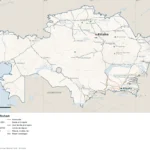
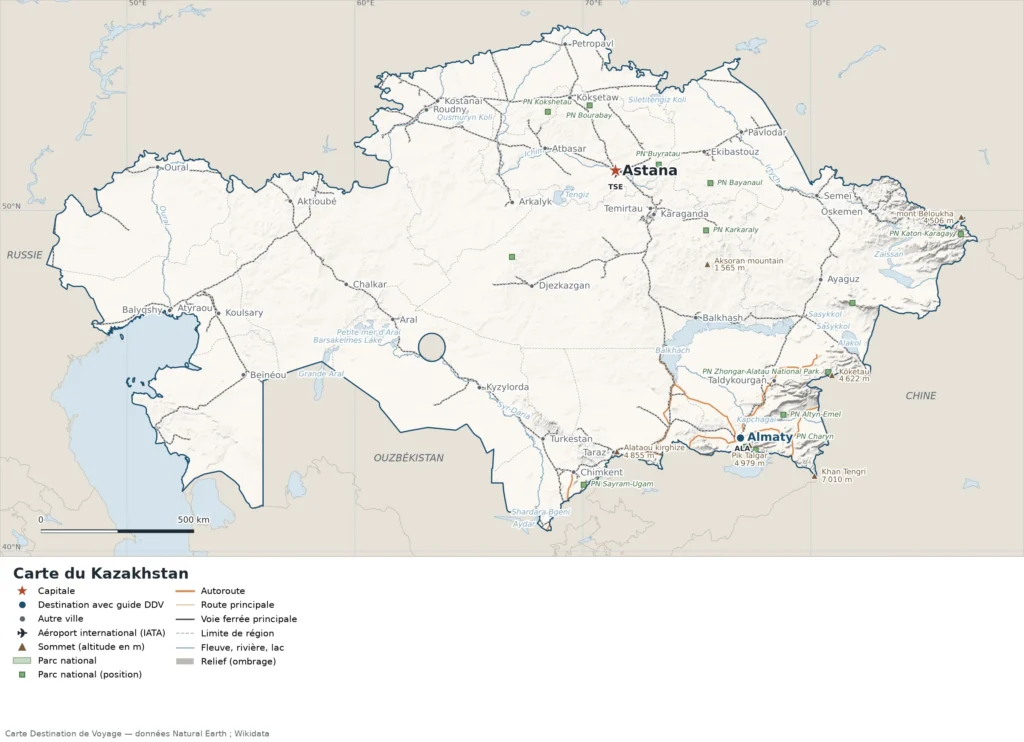
To locate cities, regions, terrain, national parks and airports, see our map of Kazakhstan.
Kazakhstan stretches from the Caspian Sea to the Tian Shan and Altai mountains. A Kazakhstan travel guide usually starts with two very different cities: Almaty, at the foot of the mountains, and Astana, the modern capital on the steppe. This guide gathers the essentials for planning your trip: what US and UK government advice says, climate based on official normals, entry rules (including the new electronic travel authorisation) and the closed areas.

Our travel deals for Kazakhstan
Affiliate links: we earn a commission, at no extra cost to you.
 FlightsKiwi.comCompare flights and airline combinations to Kazakhstan.Compare flights
- eSIMSailyAnother eSIM plan to compare: data, validity, network.See Saily plans


Kazakhstan at a glance
- Capital Astana
- Language Kazakh is the state languageRussian is used officially on an equal footing with Kazakh in state bodies and local government (Constitution, article 7, official text)
- Currency the tenge (KZT) · currenciesIssued by the National Bank of Kazakhstan, which publishes the official rates (read on 11 November 2026)
- Time zone UTC+5 across the country, no daylight saving · details5 h ahead of London and 10 h ahead of New York in winter (4 h and 9 h in summer); a single time zone since 1 March 2024Local time now: –:–
- Airports Almaty and Astana are the main hubsCheck current routes with the airlines
- Entry US and UK: visa-free for up to 30 days per visit (maximum 90 days in any 180 days); electronic travel authorisation (ETA) phased in from 1 November 2026 · travel.state.gov · GOV.UK
- Safety closed areas need prior permission; terrorist attacks cannot be ruled out (GOV.UK)
Kazakhstan: key figures calculated by Destination de Voyage
- Time difference: 5 h ahead of London and 10 h ahead of New York in winter; 4 h and 9 h in summer (single UTC+5 time zone since 1 March 2024). The gap can differ for a few weeks around the US and UK clock changes.
- Day length in Astana: from 7 h 56 min on 15 December to 16 h 32 min on 15 June, a difference of 8 h 36 min (Destination de Voyage calculation using the NOAA solar algorithm, year 2027, clear horizon).
- Summer/winter gap: July averages 20.8 °C (69 °F) against −14.5 °C (6 °F) in January in Astana, a gap of 35.3 °C (64 °F); 24.6 °C (76 °F) against −3.8 °C (25 °F) in Almaty, a gap of 28.4 °C (51 °F) (Destination de Voyage calculation from WMO 1991–2020 normals, mean of maximum and minimum temperatures).
- Driest and wettest months: driest, February in Astana (17 mm, 0.7 in) and September in Almaty (28 mm, 1.1 in); wettest, July in Astana (56 mm, 2.2 in) and April in Almaty (112 mm, 4.4 in) (same normals).
What US and UK government advice says: closed areas and permits
We read the UK FCDO (GOV.UK, updated 30 October 2026) and the U.S. Department of State (travel.state.gov, last updated August 13, 2026) in November 2026. Neither source advises against travel to Kazakhstan as a whole, but both mention areas where special permission is needed.
- UK FCDO: the following areas are closed to visitors unless you have received prior permission from the Foreign Ministry, the Interior Ministry and the Kazakh National Security Committee: Gvardeyskiy village in the Almaty region of south-eastern Kazakhstan; the town of Baikonur; the districts of Karmakchi and Kazalinsk in the southern Kyzylorda region.
- U.S. Department of State: you must receive permission from the Kazakh government before travelling to certain areas bordering China and cities close to military installations. Check the Ministry of Internal Affairs website for the list of closed areas or contact Kazakhstan’s Embassy in Washington, DC.
- Photography: according to the FCDO, there are restrictions on taking photos or videos near military sites, border areas, airports and some official buildings, even where there are no warning signs. The State Department notes that you may be taken in for questioning if you photograph sensitive infrastructure.
Because the two sources describe the closed areas differently, ask the Kazakh Embassy in your country for the current list before heading to a border region. Carry your passport: the FCDO says police may ask for original ID and that copies are not accepted.
When to go to Kazakhstan
When is the best time to visit Kazakhstan? In May, June or September. According to WMO 1991–2020 normals, these are the only months when the average maximum is between 18 and 28 °C (64 and 82 °F) in both Almaty and Astana. Summer suits hiking around Almaty and winter suits skiing at Shymbulak, but January falls to an average minimum of −18.6 °C (−1 °F) in Astana.
The climate is continental: very cold winters, hot summers and little rain. The north (Astana) is much colder than the south (Almaty), which is sheltered by the mountains. The table below gives the official normals for the two main cities.
| Month | Almaty max / min, °C (°F) | Almaty precipitation, mm (in) | Astana max / min, °C (°F) | Astana precipitation, mm (in) |
|---|---|---|---|---|
| January | 0.5 / −8.1 (33 / 17) | 35 (1.4) | −10.3 / −18.6 (13 / -1) | 18 (0.7) |
| February | 2.8 / −6.2 (37 / 21) | 43 (1.7) | −8.8 / −17.9 (16 / 0) | 17 (0.7) |
| March | 10.1 / 0.0 (50 / 32) | 72 (2.8) | −1.4 / −10.3 (29 / 13) | 20 (0.8) |
| April | 17.9 / 6.8 (64 / 44) | 112 (4.4) | 12.3 / 1.2 (54 / 34) | 22 (0.9) |
| May | 22.9 / 11.5 (73 / 53) | 99 (3.9) | 21.0 / 8.3 (70 / 47) | 33 (1.3) |
| June | 27.9 / 16.4 (82 / 62) | 59 (2.3) | 25.9 / 13.5 (79 / 56) | 40 (1.6) |
| July | 30.5 / 18.6 (87 / 65) | 43 (1.7) | 26.6 / 15.0 (80 / 59) | 56 (2.2) |
| August | 29.7 / 17.4 (85 / 63) | 34 (1.3) | 25.5 / 13.1 (78 / 56) | 31 (1.2) |
| September | 24.5 / 12.0 (76 / 54) | 28 (1.1) | 19.0 / 6.9 (66 / 44) | 21 (0.8) |
| October | 16.9 / 5.4 (62 / 42) | 50 (2.0) | 10.5 / 0.6 (51 / 33) | 26 (1.0) |
| November | 8.2 / −0.9 (47 / 30) | 55 (2.2) | −1.3 / −8.6 (30 / 17) | 29 (1.1) |
| December | 2.1 / −6.0 (36 / 21) | 44 (1.7) | −8.0 / −15.9 (18 / 3) | 25 (1.0) |
Reading the table (Destination de Voyage calculation from these normals): the only months with an average maximum between 18 and 28 °C (64 and 82 °F) in both cities are May, June and September. July is the hottest month in Almaty (30.5 °C / 87 °F maximum); in January the average minimum drops to −18.6 °C (−1 °F) in Astana. April is the wettest month in Almaty (112 mm / 4.4 in) and July in Astana (56 mm / 2.2 in).
For mountain hiking around Almaty, summer is the simplest season; for skiing at Shymbulak, winter. The FCDO warns that trekking in Kazakhstan often means travelling to very remote areas, with a high risk of avalanches, landslides and rockfalls; weather can change very quickly, snow is possible at altitude even in summer, and heavy snowfall can block roads and trails in autumn and winter (UK FCDO (GOV.UK, updated 30 October 2026)).
Sunrise, sunset and day length in Astana
| Month | Sunrise on the 15th | Sunset on the 15th | Day length |
|---|---|---|---|
| January | 08:12 | 16:34 | 8 h 22 min |
| February | 07:29 | 17:28 | 9 h 59 min |
| March | 06:31 | 18:17 | 11 h 46 min |
| April | 05:21 | 19:08 | 13 h 47 min |
| May | 04:25 | 19:56 | 15 h 31 min |
| June | 03:58 | 20:30 | 16 h 32 min |
| July | 04:15 | 20:25 | 16 h 10 min |
| August | 04:59 | 19:39 | 14 h 39 min |
| September | 05:47 | 18:31 | 12 h 44 min |
| October | 06:36 | 17:24 | 10 h 48 min |
| November | 07:30 | 16:28 | 8 h 58 min |
| December | 08:11 | 16:07 | 7 h 56 min |
Best time by activity
| Activity | Recommended period | Based on |
|---|---|---|
| Almaty and Astana city visits | May, June, September | average maximum between 18 and 28 °C (64 and 82 °F) in both cities (WMO 1991–2020 normals) |
| Hiking around Almaty | summer | the FCDO warns of snow at altitude even in summer, and of altitude sickness and sunburn (GOV.UK) |
| Skiing at Shymbulak | winter | mountain site on the edge of Almaty |
| Kolsai lakes and Charyn Canyon | May, June, September | Almaty normals; check access and any permit requirements before you go |
Where to go in Kazakhstan: the highlights
What is there to do in Kazakhstan? Discover Almaty and its mountains (Medeu, Shymbulak, Big Almaty Lake), the Kolsai lakes and Charyn Canyon, Astana, the contemporary capital of the steppe, and the Khoja Ahmed Yasawi mausoleum in Turkistan. Before you go, check which areas need a permit (see the section on government advice above).
Almaty
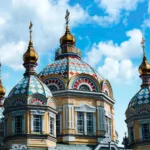
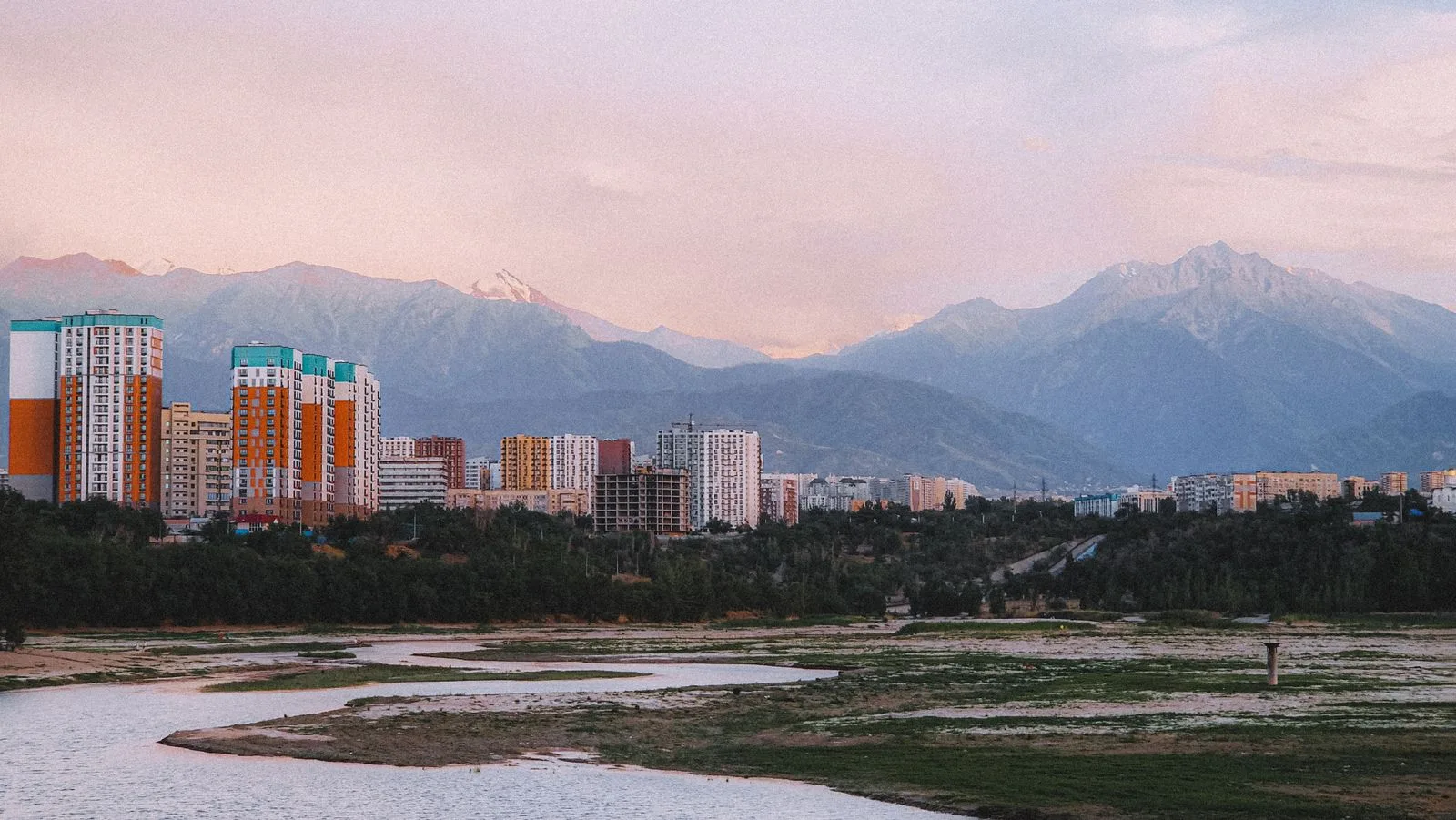
The former capital and the country’s largest city, Almaty sits at the foot of the Tian Shan mountains. The official Kazakh tourism site highlights Panfilov Park with its wooden Ascension Cathedral, the Green Bazaar and Kok Tobe hill, with its television tower and leisure area. The mountains begin at the edge of the city: Medeu skating rink, Shymbulak resort and Big Almaty Lake. See our guide to things to do in Almaty. Almaty is in an active seismic zone (GOV.UK); the State Department ranks the earthquake threat level in the Almaty region as Level 4, the highest.
Astana
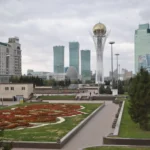
The capital is a city of contemporary architecture set on the steppe, on both banks of the Ishim (Yesil) River. The city tourism office lists the Bayterek monument, the « tree of life », the pyramid-shaped Palace of Peace and Reconciliation, completed in 2006, the Akorda presidential residence and the « Nursultan » mosque, built in 2022. See our guide to what to see in Astana.
The Kolsai lakes and Charyn Canyon
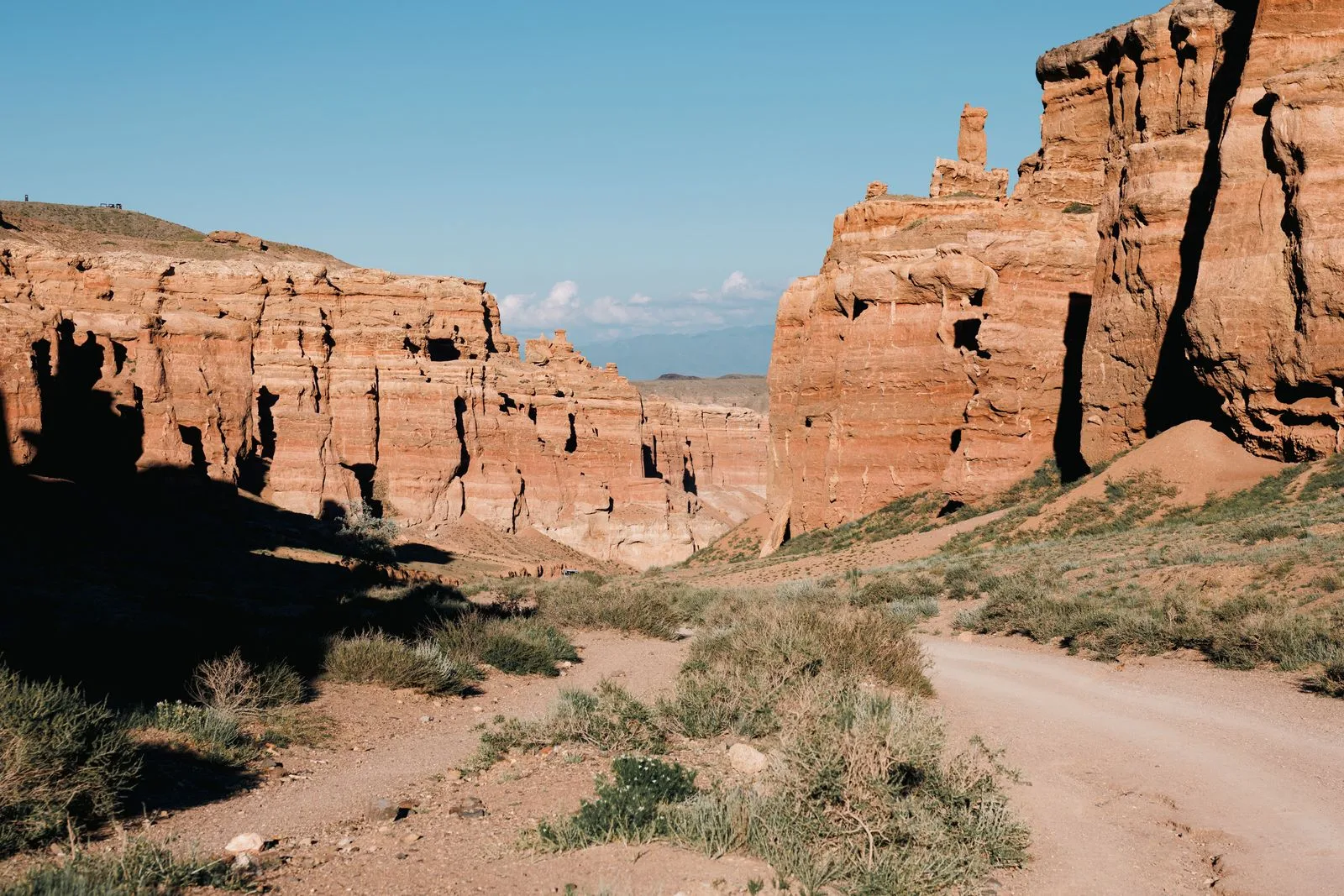
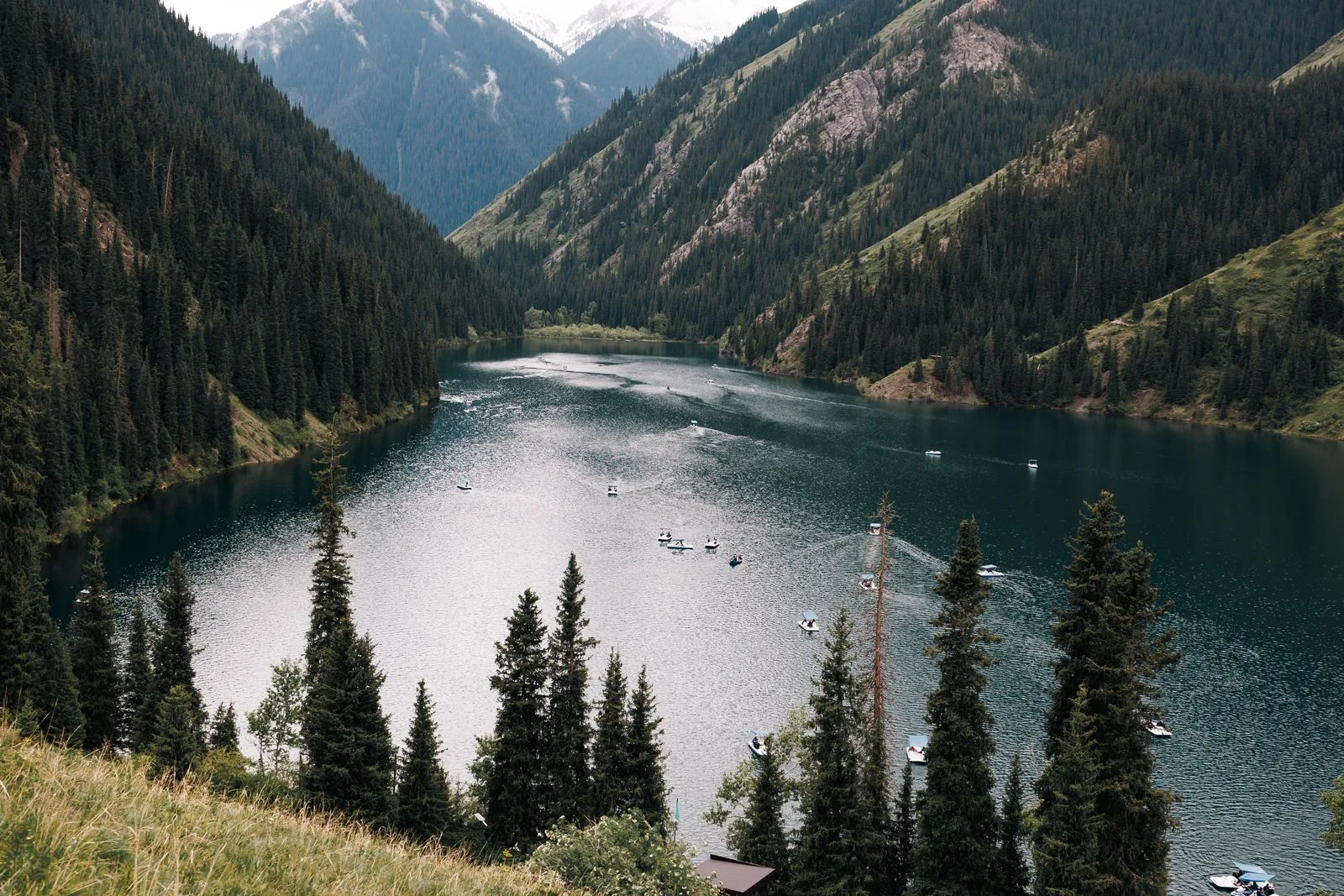
East of Almaty, these mountain and canyon landscapes are among the most photographed in the country. They lie in the eastern part of the Almaty region, close to the Chinese border, where permit rules can apply: the State Department says permission is needed for certain areas bordering China, so check the current list with the Kazakh Embassy or a licensed local operator before you plan an itinerary. In the mountains, the FCDO advises using a reputable trekking agency, not trekking alone and getting insurance that covers activity at altitude.
Big Almaty Lake, Medeu and Shymbulak
These three mountain sites are the easiest excursions from Almaty. The FCDO notes that 24-hour rescue services in Almaty are based in the Shymbulak gorge and by Big Almaty Lake, with a team that patrols mountain routes (the Almaty emergency numbers are 109 or 112). In the mountains, take warm clothing even in summer and check the weather before you leave.
The south: Turkistan and Shymkent
The south of the country, close to Uzbekistan, preserves the legacy of the caravan routes. Turkistan is known for the Khoja Ahmed Yasawi mausoleum. Shymkent serves as a base for the region. Check permit requirements before travelling near the border.
What not to include
Do not plan a visit to Baikonur or to the other closed areas listed above without prior permission from the Kazakh authorities.
Regions at a glance
| Region | Highlights | Permit note |
|---|---|---|
| Almaty and its mountains | city, Panfilov Park, Medeu, Shymbulak, Big Almaty Lake | Gvardeyskiy village (Almaty region) is closed without prior permission (GOV.UK) |
| East of Almaty | Kolsai lakes, Charyn Canyon | near the Chinese border: check permit rules (travel.state.gov) |
| Astana (north) | contemporary architecture, Bayterek, Palace of Peace and Reconciliation | no specific closure listed in the sources read |
| South (Turkistan, Shymkent) | Khoja Ahmed Yasawi mausoleum (UNESCO, 2003) | check permit rules near borders |
| Baikonur (Kyzylorda) | cosmodrome | closed without prior permission (GOV.UK) |
| Karmakchi and Kazalinsk districts (Kyzylorda) | not a tourist destination | closed without prior permission (GOV.UK) |
Steppes and Silk Roads: Kazakhstan’s World Heritage
UNESCO lists seven properties in Kazakhstan, according to its page read on 11 November 2026: the Mausoleum of Khoja Ahmed Yasawi (2003), the petroglyphs of Tamgaly (2004), Saryarka – Steppe and Lakes of Northern Kazakhstan (2008), the Silk Roads: the Routes Network of Chang’an-Tianshan Corridor (2014), Western Tien-Shan (2016), the Turan Desert of Cold Winter (2023) and the Rock-cut Mosques of Mangystau (2026). Before heading for one of them, check that it is not in an area that requires a permit.
Suggested itineraries
7 to 10 days: Almaty and its mountains
- Days 1–3: Almaty (Panfilov Park, Green Bazaar, Kok Tobe, museums)
- Day 4: Medeu and Shymbulak, or Big Almaty Lake
- Days 5–7: Kolsai lakes and Charyn Canyon (check permit rules first)
- Days 8–10: back to Almaty, then a domestic flight or train to Astana
2 weeks: Almaty, Astana and the south
- Days 1–5: Almaty and its mountains
- Days 6–8: Turkistan and Shymkent
- Days 9–12: Astana
- Days 13–14: buffer for travel, which takes a long time in a country this size
Kazakhstan is often combined with neighboring Kyrgyzstan or with Uzbekistan. Entry rules differ in each country, so check each one separately. The FCDO notes that Kazakhstan, Kyrgyzstan, Russia and Belarus form a single customs union, which matters if you travel overland in your own vehicle (GOV.UK).
Getting around Kazakhstan
- Plane: the simplest way to link Almaty and Astana; check flights with the airlines. For U.S. government personnel, the State Department says that, based on European Union Aviation Safety Administration assessments, travel on Kazakh airlines should use Air Astana, Fly Arystan or SCAT unless they do not serve the destination (travel.state.gov, last updated August 13, 2026).
- Train: the rail network links the main cities and journeys are long. The FCDO advises always locking your compartment on an overnight train, as thieves may target luggage (GOV.UK).
- Taxi: both governments advise against unofficial taxis. The FCDO recommends licensed, pre-ordered taxi services and not flagging down cabs; the State Department says ride-hailing apps are widely available and advises against entering a cab that already holds other passengers.
- Car: according to the U.S. Department of State (travel.state.gov, last updated August 13, 2026), roads may be in poor repair, especially in rural areas, with potholes that are often dangerously deep; mountain roads, including the Almaty–Bishkek highway, should be avoided at night or in poor weather, and roads outside towns are often closed in winter. UK drivers need a 1968 international driving permit as well as their UK licence (UK FCDO (GOV.UK, updated 30 October 2026)); you cannot buy one outside the UK. Kazakhstan has a zero-tolerance policy on drink-driving (travel.state.gov). A car with a driver is often simpler for excursions.
Transfers, tickets and excursions
For Kolsai, Charyn or Big Almaty Lake, compare an organised excursion, a private driver and a rental car. Check that the route does not cross a restricted area without permission, what is included and the cancellation policy.
Where to stay in Kazakhstan
In Almaty, the centre (around Panfilov Park and the main avenues) lets you do most things on foot or by metro; the higher districts are closer to the mountains. In Astana, choose between the older right bank and the left bank, where the major monuments stand. Reminder from the FCDO: your hotel or the person hosting you must register your arrival with the Kazakh authorities within 3 working days of your arrival (GOV.UK).
Entry requirements for Kazakhstan
US citizens
- According to the U.S. Department of State (travel.state.gov, last updated August 13, 2026), US citizens may enter Kazakhstan without a visa for stays of up to 30 days on each visit and may not stay more than a cumulative 90 days within a six-month period.
- To stay beyond the 90-day limit, you may apply for a 10-year Kazakh tourist or business visa, which allows maximum stays of 60 or 30 days per visit depending on the type. Overstaying or engaging in activities inconsistent with your visa category may result in fines, imprisonment and/or delays on exit.
- The State Department page says to see the visa page of Kazakhstan’s Embassy in Washington for the most current visa information. It does not mention the electronic travel authorisation described below: check the official QazETA portal before you travel.
UK citizens
- According to the UK FCDO (GOV.UK foreign travel advice, updated 30 October 2026), you can visit Kazakhstan without a visa for up to 30 days for business or tourism. You can make as many visa-free visits as you like, but you must not stay more than 90 days without a visa in any 180-day period.
- Your passport must be valid for at least 30 days from the date you arrive and have at least one blank page. If you have a Kazakh visa, your passport must expire at least 3 months after the visa’s expiry date.
- To stay longer, work or study, check the visa type with the Kazakh Embassy in the UK. You can apply from the Kazakh government’s visa website; British nationals aged 17 or over must give fingerprints for a visa or residency application.
Electronic Travel Authorisation (ETA)
The FCDO (GOV.UK, updated 30 October 2026) says that from 1 November, if you travel to Kazakhstan without a visa, you should apply for an Electronic Travel Authorisation (ETA) through the QazETA portal. Between 1 November and 30 June you will not be refused entry without one but will be told of the requirement on arrival. From 1 July 2027 the ETA becomes mandatory for all visa-free nationals and you will be refused entry without it.
- Apply at least 72 hours before travel; the ETA is free of charge and valid for 180 days from the date of issue.
- The ETA does not extend your permitted visa-free stay and does not replace any visa requirement.
- You do not need an ETA if you are under 16 or over 65, transiting without leaving the international transit area, travelling on a diplomatic or service passport, or holding a valid Kazakh visa or residence permit. The full list of exemptions is in the FAQ of the QazETA portal.
This guidance comes from the UK source. The State Department page we read does not mention the ETA, so US citizens should check the QazETA portal and the Kazakh Embassy in Washington for the rules that apply to them.
Other entry rules
- Registration: your hotel or host must register your arrival within 3 working days (GOV.UK).
- Cash: declare cash worth more than US$10,000 on arrival; you may not export more than US$10,000 in foreign currency cash (if you declare more, it may only be exported in tenge) (GOV.UK).
- Yellow fever: you need a certificate if you arrive from a country listed as a transmission risk (GOV.UK).
- Souvenirs: the FCDO says you cannot export art or antiques of historical, cultural or scientific value, gold, precious stones or rare minerals, or rare specimens of flora or animals.
- Dual nationals: Kazakhstan does not recognise dual nationality; Kazakh-British dual nationals found with a Kazakh and another passport may be fined and lose Kazakh citizenship (GOV.UK).
Entry requirements read in November 2026 (GOV.UK, updated 30 October 2026; travel.state.gov, last updated August 13, 2026). If the two sources differ, or if you are unsure how the rules apply to you, contact the Kazakh Embassy before you travel. See also our guide to travel entry requirements.
Health and safety
- Health: the FCDO advises checking vaccine recommendations at least 8 weeks before your trip (TravelHealthPro); risks include biting insects and ticks, and altitude sickness in parts of the country. The State Department says medical care is limited and well below U.S. standards, and strongly recommends supplemental insurance covering medical evacuation. Most hospitals overseas do not accept U.S. health insurance and Medicare does not apply abroad. Tap water often does not meet U.S. standards; bottled water is generally safe (travel.state.gov). The FCDO says medical staff do not typically speak English.
- Emergency numbers: 112 for the rescue service, 101 fire, 102 police, 103 ambulance (GOV.UK; travel.state.gov). The Almaty mountain rescue numbers are 109 or 112 (GOV.UK).
- Crime: pickpocketing is very common in crowded places, and there have been violent thefts at night in and around bars and nightclubs in Astana, Almaty, Atyrau and Aktau; avoid walking alone at night, pre-arrange transport and watch for drink spiking (GOV.UK). The State Department also reports harassment and extortion by imposters and sometimes genuine officials, and that ATM skimming is prevalent.
- Terrorism and demonstrations: terrorist attacks cannot be ruled out (GOV.UK). Public demonstrations are only permitted when authorised in advance; avoid protests, which can turn confrontational (GOV.UK; travel.state.gov).
- Earthquakes: Kazakhstan has several areas at high risk, and Almaty is in an active seismic zone (GOV.UK). The State Department ranks the earthquake threat in the Almaty region as Level 4.
- Documents: carry your original ID; police may ask for it and copies are not accepted (GOV.UK). The State Department says you may produce your passport or an embassy-certified copy.
- Local laws: penalties for illegal drugs are severe, including cannabis. Vapes and e-cigarettes are illegal to sell, distribute, import or produce, with fines or up to 2 years in prison; smoking is banned in many public places. Insulting religion, culture or national symbols on social media can bring a fine or prison sentence. Same-sex activity is not illegal, but legislation introduced on 30 December 2025 prohibits the ‘promotion’ of non-traditional sexual orientation, and attitudes are conservative, especially outside major cities (GOV.UK).
- Drones: you can bring a drone but operating one without a licence risks a fine, detention and confiscation (GOV.UK).
Practical tips for Kazakhstan
- Money: the currency is the tenge (KZT); use our currency converter for your calculations. Only change money at banks or authorised exchanges, with your passport; booths may refuse damaged notes or US dollars issued before 2013. ATM withdrawals in tenge are possible depending on your bank (GOV.UK).
- Internet: check your carrier’s roaming rates before you go, or see our travel eSIM guide. The FCDO says that to use a local SIM card you must verify your device’s IMEI on the imei.kz portal, which needs a border-crossing certificate from the QazETA mobile app and a Kazakh Individual Identification Number; otherwise the local SIM is blocked after 30 days. If your stay exceeds 30 days and you cannot verify, consider a global eSIM.
- Language: in the cities, Russian and Kazakh are used everywhere; a few words of Kazakh are appreciated: sálemetsiz be (hello, polite form), rahmet (thank you).
- Alcohol: the drinking age is 18, but it is illegal to sell alcohol to anyone aged 20 or under; shops cannot sell alcohol between 11 pm and 8 am (GOV.UK).
- Water and food: the State Department advises bottled or treated water, as tap water in many areas does not meet U.S. standards and surface water is likely contaminated.
If you… then…
| If you… | Then… |
|---|---|
| Want mild temperatures in Almaty and Astana | Aim for May, June or September (calculated from the 1991–2020 normals) |
| Plan Kolsai, Charyn or Big Almaty Lake | Check permit rules for border areas first and use a reputable agency for trekking (GOV.UK) |
| Want to go off the beaten track near a border | Ask the Kazakh Embassy for the current closed-area list and permit procedure before you go |
| Stay with a host | Make sure your host registers your arrival within 3 working days (GOV.UK) |
| Plan to stay over 30 days | Check visa options with the Kazakh Embassy; the visa-free limit is 30 days per visit and 90 days in 180 |
Map: Kazakhstan
Frequently asked questions about travelling to Kazakhstan
Do US and UK citizens need a visa for Kazakhstan?
No for tourist stays of up to 30 days per visit, within a limit of 90 days in any 180 days, according to the U.S. Department of State (last updated August 13, 2026) and the UK FCDO (updated 30 October 2026). The FCDO adds that visa-free travellers should apply for a free electronic travel authorisation (ETA) on the QazETA portal, which becomes mandatory on 1 July 2027.
Is Kazakhstan dangerous?
Neither the UK FCDO nor the U.S. State Department page we read advises against travel to the country as a whole. They warn that terrorist attacks cannot be ruled out, that pickpocketing and nightlife-related thefts occur, and that some areas are closed without prior permission.
Do I need a permit for Charyn or Kolsai?
Check before you go. The State Department says permission is needed for certain areas bordering China, and the FCDO lists closed areas (Gvardeyskiy village, Baikonur, Karmakchi and Kazalinsk districts). Ask the Kazakh Embassy in your country for the current list.
What is the best time to go to Kazakhstan?
May, June and September are the only months when the average maximum is between 18 and 28 °C (64 and 82 °F) in both Almaty and Astana (WMO 1991–2020 normals).
What language is spoken in Kazakhstan?
Kazakh is the state language; Russian is used officially on an equal footing with it in state bodies and local government (Constitution, article 7).
What is the time difference with Kazakhstan?
Kazakhstan is on UTC+5 across the country since 1 March 2024: 5 hours ahead of London and 10 hours ahead of New York in winter, 4 and 9 hours in summer.
Where is Kazakhstan?
In Central Asia: the country stretches from the Caspian Sea to the Tian Shan and Altai mountains. It borders China, Kyrgyzstan and Uzbekistan, among others.
What is there to do in Kazakhstan?
Almaty and its mountains (Medeu, Shymbulak, Big Almaty Lake), the Kolsai lakes and Charyn Canyon, Astana and, in the south, the Khoja Ahmed Yasawi mausoleum in Turkistan, a UNESCO site since 2003.
What is the capital of Kazakhstan?
Astana. Almaty, the former capital, remains the largest city.
What is the currency of Kazakhstan?
The tenge (KZT), issued by the National Bank of Kazakhstan.
Can you visit Baikonur?
The FCDO says the town of Baikonur is closed to visitors unless you have prior permission from the Foreign Ministry, the Interior Ministry and the National Security Committee.
How many hours of daylight are there in Astana?
From 7 h 56 min on 15 December to 16 h 32 min on 15 June, according to a Destination de Voyage calculation based on the NOAA solar algorithm.
Our sources
- UK FCDO, foreign travel advice for Kazakhstan (GOV.UK, updated 30 October 2026), read in November 2026
- U.S. Department of State, Kazakhstan country information (travel.state.gov, last updated August 13, 2026)
- World Meteorological Organization, 1991–2020 normals for the stations of Almaty (36870) and Astana (35188), Kazhydromet, NOAA/NCEI archive
- Constitution of the Republic of Kazakhstan, article 7 (adilet.zan.kz), read on 11 November 2026
- Astana tourism office (visitastana.kz) and the official Kazakh tourism site (kazakhstan.travel), read on 11 November 2026
- Government of Kazakhstan, move to a single UTC+5 time zone on 1 March 2024; IANA Time Zone Database 2026b
- UNESCO World Heritage Centre, Kazakhstan page, read on 11 November 2026
- National Bank of Kazakhstan (nationalbank.kz), read on 11 November 2026
- Astronomical calculations: NOAA solar algorithm, applied by Destination de Voyage to the coordinates of Astana (15th of each month, year 2027, UTC+5)
- Our methodology
Updated November 2026.
Discover our other destinations in Asia.