North Macedonia is a small landlocked Balkan country that combines a many-sided capital, Skopje, with Lake Ohrid, a UNESCO World Heritage Site shared with the town on its shore. This North Macedonia travel guide gathers the essentials: what US and UK government advice says, entry rules, climate based on official normals and the places not to miss.
To locate cities, regions, terrain, national parks and airports, see our map of North Macedonia.
Our travel deals for North Macedonia
Affiliate links: we earn a commission, at no extra cost to you.
FlightsKiwi.comCompare flights and airline combinations to North Macedonia.
LanguageMacedonian, written in the Cyrillic alphabet, is the official languageConstitution, article 7 (text); the 2019 law on the use of languages gives Albanian official use
Currencythe Macedonian denar (MKD) · currenciesIssued by the National Bank of the Republic of North Macedonia (nbrm.mk), which publishes reference rates
Time zoneUTC+1, UTC+2 in summer · details1 h ahead of London and 6 h ahead of New York year-round (the gap can differ by an hour for a few weeks around the clock changes)Local time now: –:–
AirportsSkopje and OhridCheck current routes with the airlines
EntryUS and UK: visa-free for up to 90 days (US, in a six-month period) or 3 months (UK); register with the police within 48 hours (hotels do it for you) · travel.state.gov · GOV.UK
Safetyterrorist attacks cannot be ruled out; pickpocketing in crowded areas of Skopje (GOV.UK; travel.state.gov)
North Macedonia: key figures calculated by Destination de Voyage
Time difference: 1 h ahead of London and 6 h ahead of New York year-round, since North Macedonia changes its clocks on the same dates as the EU; the gap with the US and UK can differ by an hour for a few weeks around the clock changes.
Day length in Skopje: from 9 h 09 min on 15 December to 15 h 13 min on 15 June, a difference of 6 h 04 min (Destination de Voyage calculation using the NOAA solar algorithm, year 2027, clear horizon).
Summer/winter gap in Skopje: July averages 23.1 °C (74 °F) against 0.2 °C (32 °F) in January, a gap of 22.9 °C (41 °F) (Destination de Voyage calculation from the 1971–1990 normals of the Skopje-Petrovec station, supplied to the WMO by the hydrometeorological service of North Macedonia).
Driest and wettest months: driest, August in Skopje (31 mm, 1.2 in) and July in Ohrid (30 mm, 1.2 in); wettest, May in Skopje (62 mm, 2.4 in) and November in Ohrid (90 mm, 3.5 in) (same normals).
What US and UK government advice says
We read the UK FCDO (GOV.UK, updated 13 August 2026) and the U.S. Department of State (travel.state.gov, last updated September 10, 2026) in November 2026. Neither source lists an area of North Macedonia to avoid. Their main points:
Terrorism: the FCDO says terrorist attacks cannot be ruled out and that the authorities have carried out raids against suspected terrorists. The State Department says there have been no recent terrorist events but notes arrests and a concern about lone-wolf attacks.
Crime: attacks against foreigners are extremely rare (GOV.UK) and violent crime against US citizens is rare (travel.state.gov). Organised crime groups are active, particularly in northern areas near the border with Kosovo, and there are occasional shooting incidents, including in Skopje, not targeted at foreigners (GOV.UK).
Pickpockets: both sources report pickpocketing in crowded areas of Skopje, including by gangs of children, and bag snatching in shopping and entertainment areas late at night.
Protests: demonstrations occur sporadically and can disrupt traffic, particularly near the centre of Skopje; avoid large gatherings.
Travel disruption: the FCDO notes that the EU Entry/Exit System is being implemented across the Schengen area and may add waiting time at borders if you travel to and from Schengen countries from North Macedonia.
When to go to North Macedonia
When is the best time to visit North Macedonia? In May, June or September to combine Skopje, Lake Ohrid and the mountains; from June to August to swim in the lake. According to the official normals, the average maximum exceeds 24 °C (75 °F) in Ohrid only in June, July and August, while Skopje reaches 30 °C (86 °F) in the afternoon in July and August (30.0 °C average maximum).
The climate is contrasted: hot, dry summers in the Vardar valley around Skopje and cold winters; around Lake Ohrid, summer is a little milder and autumn clearly wetter. The table compares the official normals for the two towns.
Month
Skopje max / min, °C (°F)
Skopje precipitation, mm (in)
Ohrid max / min, °C (°F)
Ohrid precipitation, mm (in)
January
4.3 / −3.4 (40 / 26)
34 (1.3)
6.2 / −1.5 (43 / 29)
54 (2.1)
February
8.4 / −1.3 (47 / 30)
37 (1.5)
7.6 / −0.9 (46 / 30)
60 (2.4)
March
13.8 / 1.9 (57 / 35)
36 (1.4)
11.0 / 1.2 (52 / 34)
56 (2.2)
April
18.5 / 5.4 (65 / 42)
40 (1.6)
15.1 / 4.6 (59 / 40)
56 (2.2)
May
23.7 / 9.9 (75 / 50)
62 (2.4)
20.4 / 8.7 (69 / 48)
57 (2.2)
June
27.5 / 13.1 (82 / 56)
46 (1.8)
24.8 / 12.0 (77 / 54)
34 (1.3)
July
30.0 / 14.9 (86 / 59)
34 (1.3)
27.6 / 14.0 (82 / 57)
30 (1.2)
August
30.0 / 14.6 (86 / 58)
31 (1.2)
27.7 / 14.2 (82 / 58)
31 (1.2)
September
26.0 / 11.3 (79 / 52)
41 (1.6)
23.6 / 11.2 (74 / 52)
48 (1.9)
October
19.3 / 6.3 (67 / 43)
44 (1.7)
17.7 / 7.2 (64 / 45)
76 (3.0)
November
10.2 / 1.3 (50 / 34)
56 (2.2)
11.6 / 3.1 (53 / 38)
90 (3.5)
December
5.1 / −2.4 (41 / 28)
46 (1.8)
7.2 / 0.0 (45 / 32)
71 (2.8)
Skopje: 1971–1990 normals of the Skopje-Petrovec station (WMO 13586), supplied to the World Meteorological Organization by the hydrometeorological service of North Macedonia (UHMR). Ohrid: 1971–2000 normals from the same service, published on the WMO World Weather Information Service.
Reading the table (Destination de Voyage calculation from these normals): in Ohrid, the average maximum exceeds 24 °C (75 °F) only in June, July and August: that is the lake season. In Skopje, July and August reach 30 °C (86 °F) in the afternoon. November is the wettest month in Ohrid (90 mm / 3.5 in). May, June and September are the most balanced months for combining the capital, the lake and the mountains.
Sunrise, sunset and day length in Skopje
Month
Sunrise on the 15th
Sunset on the 15th
Day length
January
07:00
16:26
9 h 26 min
February
06:32
17:05
10 h 34 min
March
05:48
17:40
11 h 51 min
April
05:55
19:14
13 h 18 min
May
05:15
19:46
14 h 32 min
June
04:58
20:11
15 h 13 min
July
05:11
20:09
14 h 58 min
August
05:41
19:37
13 h 56 min
September
06:13
18:46
12 h 33 min
October
06:45
17:55
11 h 09 min
November
06:24
16:15
9 h 51 min
December
06:55
16:04
9 h 09 min
Destination de Voyage calculation using the NOAA solar algorithm, applied to the coordinates of Skopje (15th of each month, year 2027, local time in Skopje, summer time included from April to October, clear horizon).
Best time by activity
Activity
Recommended period
Based on
Swimming in Lake Ohrid
June to August
average maximum above 24 °C (75 °F) in Ohrid
Visiting Skopje without extreme heat
May, June, September
maximums of 23.7 to 27.5 °C (75 to 82 °F), against 30.0 °C (86 °F) in July–August
Combining the capital, the lake and the mountains (Galičica)
May, June, September
most balanced months according to the normals
Avoiding rain in Ohrid
July–August
30 and 31 mm (1.2 in), against 90 mm (3.5 in) in November
Summary by Destination de Voyage from the normals of the hydrometeorological service of North Macedonia supplied to the WMO (Skopje-Petrovec 1971–1990, Ohrid 1971–2000).
Where to go in North Macedonia: the highlights
What is there to do in North Macedonia? Visit Skopje (Stone Bridge, Old Bazaar, Kale Fortress), stay in Ohrid on the shore of its UNESCO-listed lake, hike in Galičica National Park and discover Struga. In the mountains, check local conditions first: the FCDO notes that organised crime is active in northern areas near the Kosovo border, and the State Department notes that hazardous areas and activities often lack proper signage.
Skopje
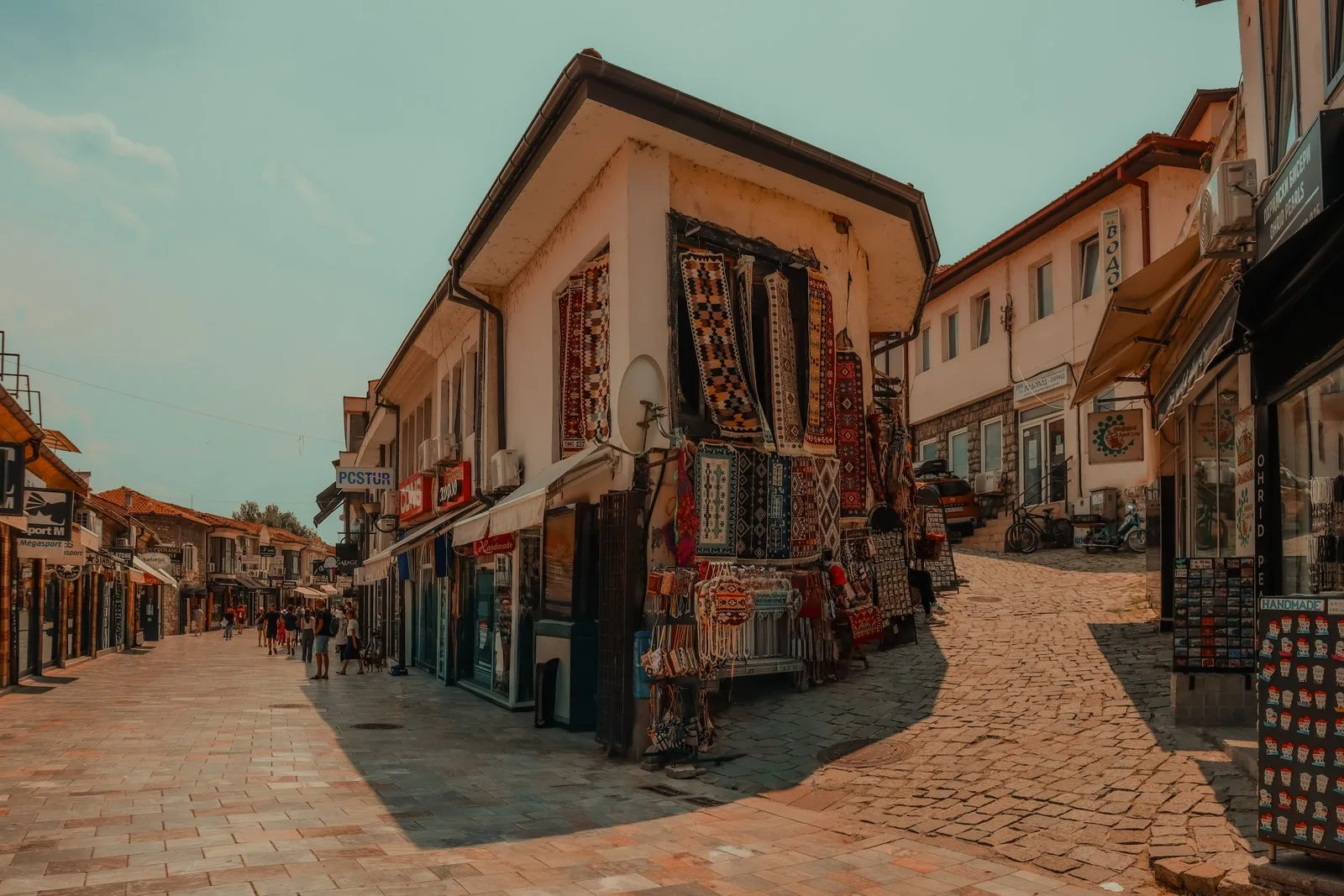
The capital spreads along both banks of the Vardar. The Stone Bridge links the modern centre, full of statues and recent neoclassical façades, to the Old Bazaar, a trading district of Ottoman heritage overlooked by the Kale Fortress. Skopje is also the birthplace of Mother Teresa, who has a memorial house. See our guide to what to see in Skopje. Watch for pickpockets in crowded areas (GOV.UK; travel.state.gov).
The Old Bazaar of Skopje. Photo: ozturkgm / Pexels
Ohrid and its lake
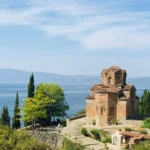
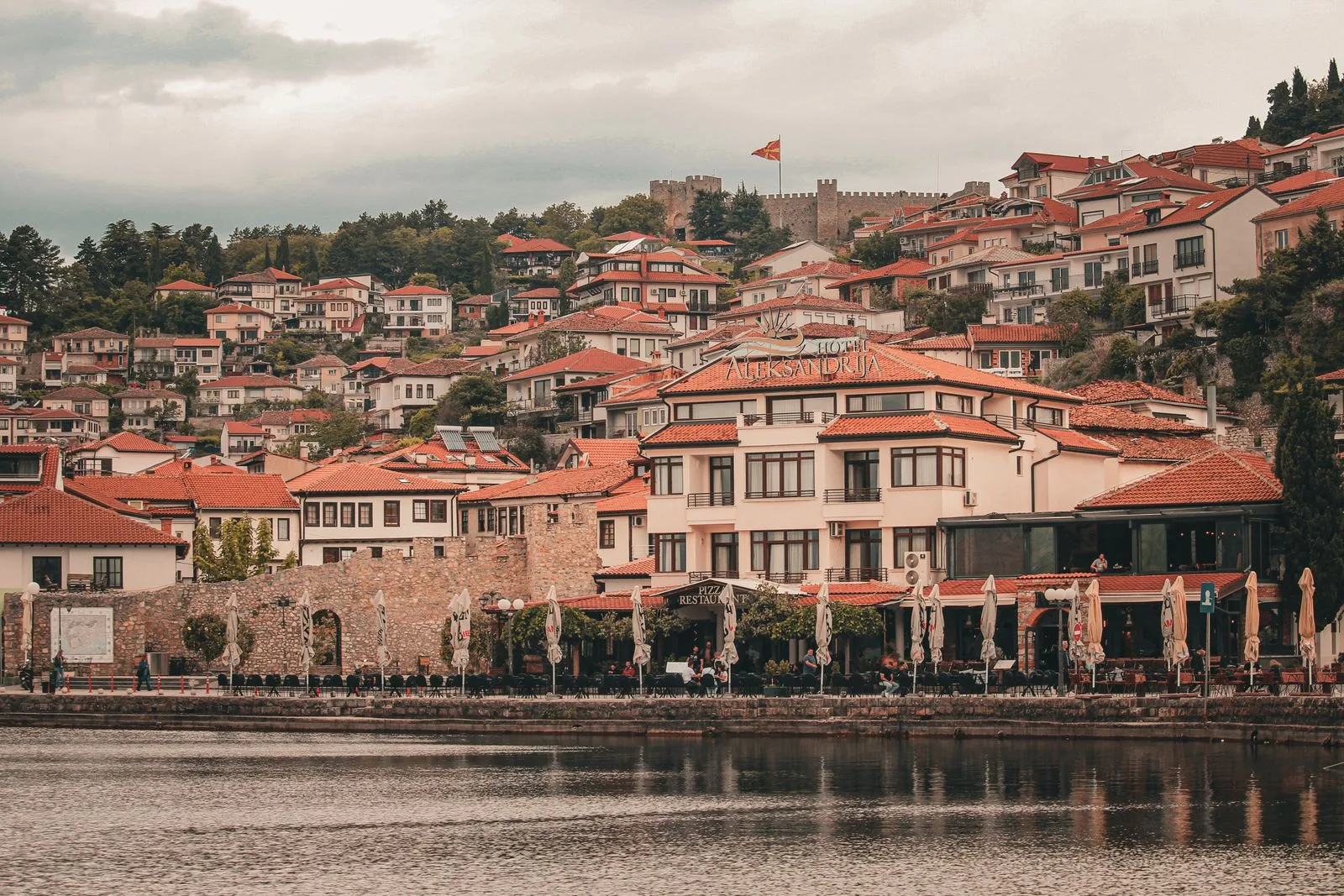
According to UNESCO, the town of Ohrid is one of the oldest human settlements in Europe and is home to the oldest Slavic monastery as well as more than 800 Byzantine-style icons. The deep, ancient lake is a refuge for many endemic species. The property was inscribed in 1979 for its nature and in 1980 for its culture, and extended in 2019 to the Albanian shore. See our guide to Ohrid and Lake Ohrid. The State Department says medical care beyond Skopje generally falls below standard, except for trauma services available in Ohrid.
Between lakes Ohrid and Prespa, this national park manages, according to UNESCO, the natural heritage of its territory. It can be explored on foot or by road, with views over both lakes. The FCDO notes that altitude sickness is a risk in parts of North Macedonia and that wildfires are possible from April to October; avoid lighting fires except in designated areas and follow any forest-access bans in summer.
Struga
Next to Ohrid, Struga developed on the banks of the Black Drin, which flows out of the lake. UNESCO notes that many archaeological sites bear witness to very early occupation, including former pile-dwelling fishing villages.
The northern mountains
The Skopska Crna Gora and Shar massifs attract hikers and skiers. The FCDO notes that organised crime groups are active in northern areas near the border with Kosovo, and the State Department advises against driving at night in rural mountain areas, where lighting is poor or nonexistent.
Regions at a glance
Region
Highlights
Good to know
Skopje (Vardar valley)
Stone Bridge, Old Bazaar, Kale Fortress, Mother Teresa memorial house
hot summers: 30.0 °C (86 °F) average maximum in July; pickpockets in crowded areas
Ohrid and its lake
old town, churches, Byzantine icons; UNESCO site (1979, 1980, extension 2019)
lake season from June to August; trauma services available in Ohrid (travel.state.gov)
Galičica
national park between lakes Ohrid and Prespa
altitude sickness and wildfires are risks (GOV.UK)
Struga
banks of the Black Drin, archaeological sites
next to Ohrid
Northern mountains (Skopska Crna Gora, Shar)
hiking, skiing
organised crime active near the Kosovo border (GOV.UK); avoid night driving in rural mountains (travel.state.gov)
Summary by Destination de Voyage from UNESCO, the UK FCDO (GOV.UK, updated 13 August 2026), the U.S. Department of State (travel.state.gov, last updated September 10, 2026) and the official normals, read in November 2026.
Lake Ohrid, a shared World Heritage Site
North Macedonia has two World Heritage properties, according to the UNESCO page read on 11 November 2026: the Natural and Cultural Heritage of the Ohrid region, inscribed in 1979 for nature and in 1980 for culture, then extended in 2019 to the Albanian shore of the lake, and one component of the transnational property Ancient and Primeval Beech Forests of the Carpathians and Other Regions of Europe. Lake Ohrid is therefore shared with Albania on the opposite shore.
Suggested itineraries
One week: Skopje and Lake Ohrid
Days 1–2: Skopje (centre, Stone Bridge, Old Bazaar, Kale Fortress)
Day 3: drive to Ohrid
Days 4–5: Ohrid, old town and churches, lakeshore
Day 6: Galičica National Park or Struga
Day 7: back to Skopje
10 to 14 days: the neighboring Balkans
North Macedonia combines easily with its neighbors: Albania, across Lake Ohrid, Greece and Thessaloniki to the south, Bulgaria to the east or Serbia to the north. Check the entry rules of each country; the FCDO notes that Serbia has sometimes denied entry to people leaving North Macedonia with Kosovo passport stamps.
Getting around North Macedonia
Bus: intercity buses run between most cities and are widely regarded as reliable and safe (travel.state.gov). Buses in Skopje are mostly reliable. There is no metro, and the State Department says rail service is poor, limited and unreliable. There are no commercial domestic flights.
Taxi: taxis from established companies are considered safe; use metered taxis and carry cash, as most do not take cards. Uber is not present in the country (travel.state.gov).
Car: useful for Galičica and villages. According to the U.S. Department of State (travel.state.gov, last updated September 10, 2026), major highways are generally in good condition but many secondary roads are poorly maintained and lit, and obstacles such as horse-drawn carts, livestock and rocks are frequent. UK visitors can use a UK photocard licence; unless you drive a rental car or hold a residence permit, you also need a 1968 international driving permit (UK FCDO (GOV.UK, updated 13 August 2026)). The State Department says US citizens need a valid US licence and an international driving permit, obtainable only in the US. The two sources differ on the permit for rental cars, so check with your rental company.
Rules of the road: the FCDO lists fines for not using dipped headlights, including during the day, using a mobile phone while driving, not wearing a seatbelt and missing safety equipment, including snow chains where conditions require them; the State Department says winter tyres or snow chains are required from 15 November to 15 March. The blood-alcohol limit is 0.05% (50 mg per 100 ml; England’s limit is 80 mg).
After an accident: do not move your vehicle until the police record the incident and allow you to (GOV.UK). The emergency number is 112; the FCDO also lists police 192, ambulance 194 and roadside assistance 196.
Car rental and transfers
Compare local and international rental companies: excess, insurance, permission to cross the border if you combine the trip with Albania or Greece, and the condition of the vehicle at pick-up. A pre-booked transfer from Skopje or Ohrid airport keeps arrival simple. Hire companies often have stricter requirements, such as at least 2 years of driving experience and a higher minimum age (GOV.UK).
Where to stay in North Macedonia
In Skopje, the centre and the area around the Old Bazaar let you do everything on foot. In Ohrid, the old town is the most practical for sightseeing, while lakeside accommodation is quieter; book early in July–August. Registration with the local police within 48 hours of arrival is mandatory: hotel staff will register you at check-in, but if you stay in private accommodation you must register yourself (GOV.UK; travel.state.gov).
Entry requirements for North Macedonia
US citizens
According to the U.S. Department of State (travel.state.gov, last updated September 10, 2026), a valid US passport is required. No visa is needed for tourist or business trips of less than 90 days within a six-month period; overstaying may mean delayed departure, a court hearing, a fine or a re-entry ban.
To work, study or stay longer than 90 days, get the proper visa from an Embassy of North Macedonia. The State Department says foreign citizens must show travel medical insurance on entry, and recommends carrying copies of your passport and photo ID because the authorities may ask for identification.
Unaccompanied US minors need notarized consent from a parent or guardian.
UK citizens
According to the UK FCDO (GOV.UK foreign travel advice, updated 13 August 2026), you can visit North Macedonia for up to 3 months without a visa. Your passport must have an expiry date at least 90 days after the date you arrive.
If you plan to stay longer, contact the Macedonian Embassy in the UK. If you hold a UK refugee travel document, you need a visa, including to transit North Macedonia on the way to Kosovo.
Before travelling with children alone, with one parent or with an adult who is not their legal guardian, ask your airline whether forms are needed.
Registration and customs
Police registration: register with the local police in the town where you are staying within 48 hours of arrival. Hotels do it at check-in; keep the registration document until you leave. If you registered directly, the FCDO says you must de-register 24 hours before you leave. Failure to register can mean a fine (up to 250 euros according to the State Department), detention and a court hearing, or a restriction on returning.
Cash: declare foreign currency worth 10,000 euros or more on entry; undeclared cash may be seized (GOV.UK; travel.state.gov).
Antiques: strict laws apply to exporting historically valuable items without the proper permit (travel.state.gov).
Kosovo stamps: Serbia has sometimes denied entry to people leaving North Macedonia with passport stamps from Kosovo (GOV.UK).
Entry requirements read in November 2026 (GOV.UK, updated 13 August 2026; travel.state.gov, last updated September 10, 2026). The two sources are consistent on the main rule (about three months without a visa) but word the limit differently, and only the State Department mentions mandatory travel medical insurance on entry. If you are unsure, contact the Embassy of North Macedonia. See also our guide to travel entry requirements.
Health and safety
Health insurance: North Macedonia is not in the EU. The FCDO says a reciprocal healthcare agreement entitles British nationals to free emergency treatment, but you should still have adequate travel insurance, as you may have to pay before some treatment. The State Department strongly recommends supplemental insurance covering medical evacuation; Medicare and Medicaid do not apply abroad.
Care and vaccines: check TravelHealthPro at least 8 weeks before your trip; risks include West Nile virus and other mosquito-borne diseases, and air pollution (GOV.UK). The State Department says medical care varies by location, falls below US standards, and that ambulances are not widely available outside Skopje and major tourist areas such as Ohrid. Emergency number: 112 (travel.state.gov); ambulance 194 (GOV.UK).
Medicines: many medicines approved in the US are not approved in North Macedonia, and insulin is not available to non-citizens (travel.state.gov).
Natural hazards: wildfires are possible from April to October, fog can disrupt flights at Skopje from November to February, and earthquakes occur occasionally (GOV.UK).
Local laws: penalties for illegal drugs are severe, and photographing military or strategic sites is illegal (GOV.UK). Same-sex relationships are legal but LGBT+ people face discrimination and there are few LGBT+ venues (GOV.UK; travel.state.gov).
Practical tips for North Macedonia
Money: the currency is the denar (MKD); calculate your budgets with our currency converter. British banks do not exchange denars, so exchange any unwanted denars before you leave, and change money only at banks or official exchanges, not with street dealers (GOV.UK). Major stores and restaurants typically accept cards, smaller places may not (travel.state.gov). Tolls on major roads can be paid in denars or euros (GOV.UK).
Internet: check your carrier’s roaming rates before you go, or see our travel eSIM guide.
Photography: follow « no photography » signs and do not photograph military or national-security subjects (travel.state.gov).
If you… then…
If you…
Then…
Want to swim in Lake Ohrid
Aim for June to August (average maximum above 24 °C / 75 °F)
Want to visit Skopje without extreme heat
Prefer May, June or September
Stay in private accommodation
Register at the police station within 48 hours of arrival (GOV.UK)
Plan to drive
Check the international driving permit rules with your rental company and avoid night driving in rural mountains
Plan to hike in the mountains
Check conditions locally, take insurance and avoid hiking alone
Frequently asked questions about travelling to North Macedonia
Do US and UK citizens need a visa for North Macedonia?
No for short stays: US citizens can stay up to 90 days in a six-month period (U.S. Department of State, last updated September 10, 2026) and UK citizens up to 3 months (UK FCDO, updated 13 August 2026). UK passports must be valid for at least 90 days after arrival.
Is North Macedonia safe?
Neither the UK FCDO nor the U.S. Department of State lists an area to avoid. Violent crime against foreigners is rare, but terrorist attacks cannot be ruled out and pickpocketing occurs in crowded areas of Skopje.
What language is spoken in North Macedonia?
Macedonian, written in Cyrillic, is the official language; Albanian also has official use under the 2019 law on the use of languages.
When is the best time to go to North Macedonia?
May, June and September to combine Skopje, Ohrid and the mountains; June to August for swimming in Lake Ohrid, according to the official normals.
Is there a time difference with North Macedonia?
North Macedonia is 1 hour ahead of London and 6 hours ahead of New York year-round (it changes its clocks on the same dates as the EU).
Do I need travel health insurance for North Macedonia?
Yes, you should have it. The State Department says foreign citizens must show travel medical insurance on entry; the FCDO says British nationals are entitled to free emergency treatment under a reciprocal agreement but should still have adequate insurance.
Where is North Macedonia?
In the Balkans, without a sea coast. It borders Albania, Greece, Bulgaria, Serbia and Kosovo.
What is the capital of North Macedonia?
Skopje, on the banks of the Vardar.
What is there to do in North Macedonia?
Visit Skopje, stay in Ohrid on the shore of its UNESCO-listed lake, hike in Galičica National Park and discover Struga.
Is Lake Ohrid a UNESCO World Heritage Site?
Yes: the Ohrid region has been inscribed since 1979 for its nature and 1980 for its culture, with an extension to the Albanian shore in 2019.
What is the currency of North Macedonia?
The Macedonian denar (MKD), issued by the National Bank of the Republic of North Macedonia.
Do I have to register with the police in North Macedonia?
Yes, within 48 hours of arrival. Hotels register you at check-in; in private accommodation you must register at the police station (GOV.UK; travel.state.gov).
U.S. Department of State, North Macedonia country information (travel.state.gov, last updated September 10, 2026)
World Meteorological Organization, data from the hydrometeorological service of North Macedonia: Skopje-Petrovec, 1971–1990 normals, station no. 13586 (NOAA NCEI archive); Ohrid, 1971–2000 normals (World Weather Information Service)
UNESCO, « Natural and Cultural Heritage of the Ohrid region » (whc.unesco.org), read on 11 November 2026
Constitution of North Macedonia, article 7 (constituteproject.org) and the 2019 law on the use of languages


 FlightsKiwi.comCompare flights and airline combinations to North Macedonia.Compare flights