Skopje, the capital of North Macedonia, spreads on both sides of the Vardar: on one bank a city centre bristling with statues and recent façades, on the other the old Ottoman-era bazaar, joined by the Stone Bridge. This guide covers things to do in Skopje, how long to stay, what weather to expect, and what the US and UK governments say about entry and safety, based on official sources.
Time zoneUTC+1 (UTC+2 in summer): 1 hour ahead of London, 6 hours ahead of New York
Entryno visa for short tourist stays for US citizens (under 90 days in six months) and UK citizens (up to 3 months); see travel.state.gov and GOV.UK
Safetyneither government lists an area of North Macedonia to avoid; pickpockets are a problem in crowded areas of Skopje
Climateaverage high of 30.0 °C (86 °F) in July and August, average low of −3.4 °C (26 °F) in January (1971–1990 normals, Skopje-Petrovec station, national hydrometeorological service)
Main sightsStone Bridge, old bazaar, Kale Fortress, Mother Teresa Memorial House, Mount Vodno, Matka Canyon
LanguageMacedonian (Cyrillic alphabet)
What to see in Skopje: the highlights
The Stone Bridge and Macedonia Square
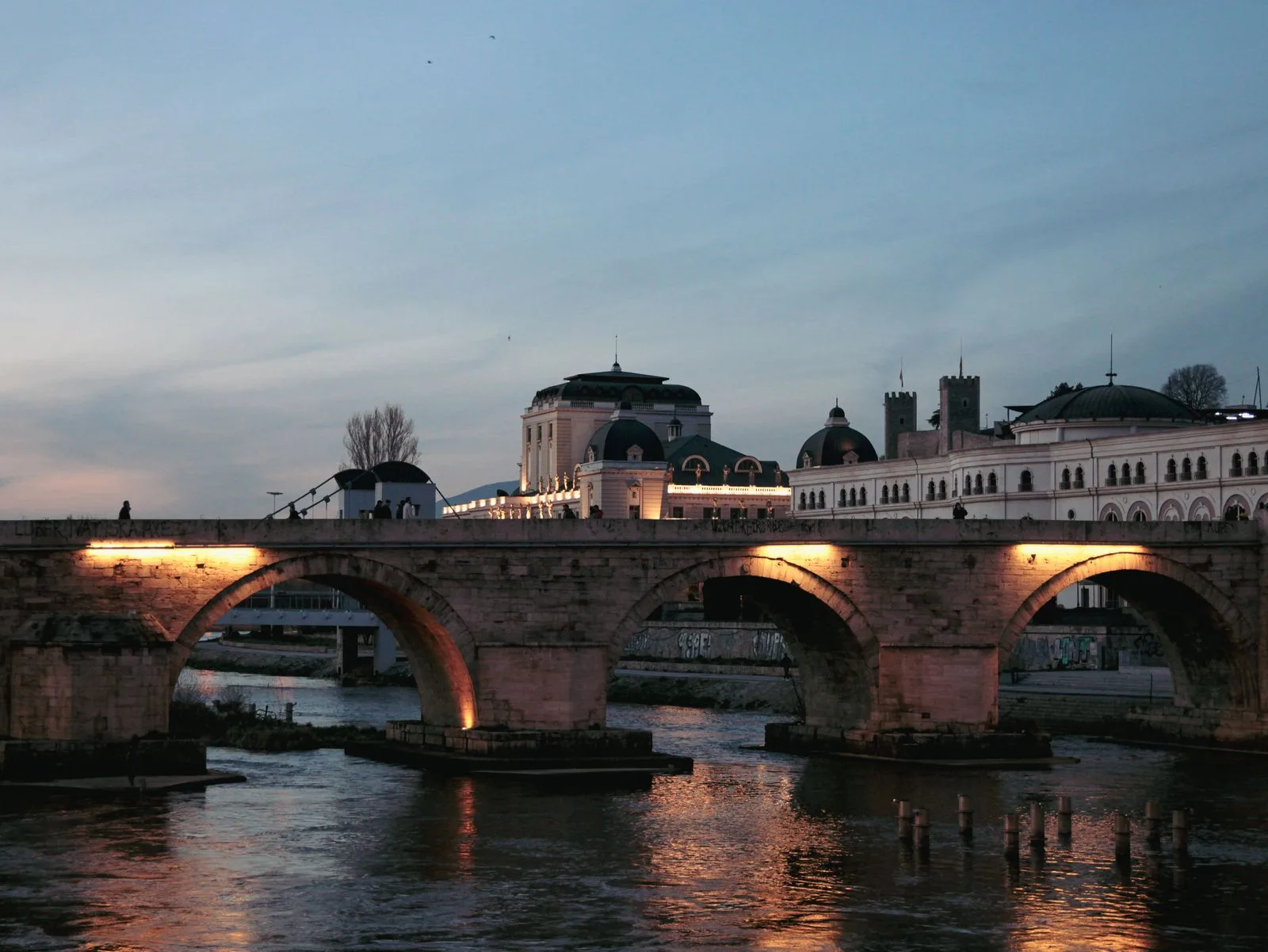
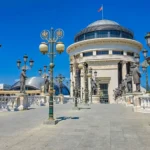
The Stone Bridge spans the Vardar and links the two faces of the city. On the south side, Macedonia Square and the neighbouring streets concentrate statues, fountains and recently built buildings with neoclassical façades. You will either like it or not, but the whole has become the image of the capital.
The Stone Bridge over the Vardar. Photo: Necip Duman / Pexels
The old bazaar (Čaršija)
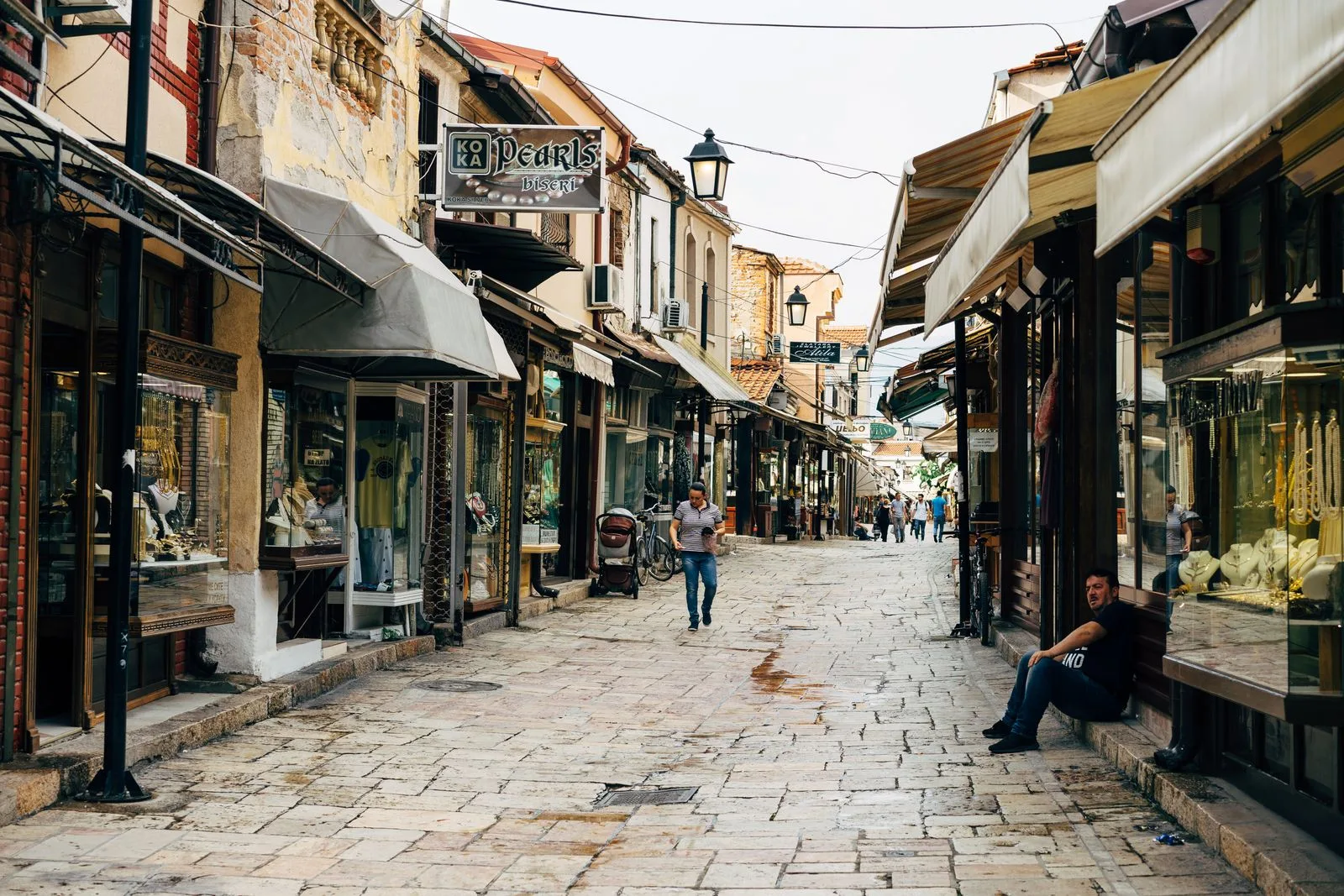
North of the bridge, the old bazaar is a maze of shopping lanes, former caravanserais, mosques and craftsmen’s stalls. It is the liveliest district for strolling and trying local food. Both governments report pickpocketing in crowded areas of Skopje, including by gangs of children using diversionary tactics: keep your belongings close.
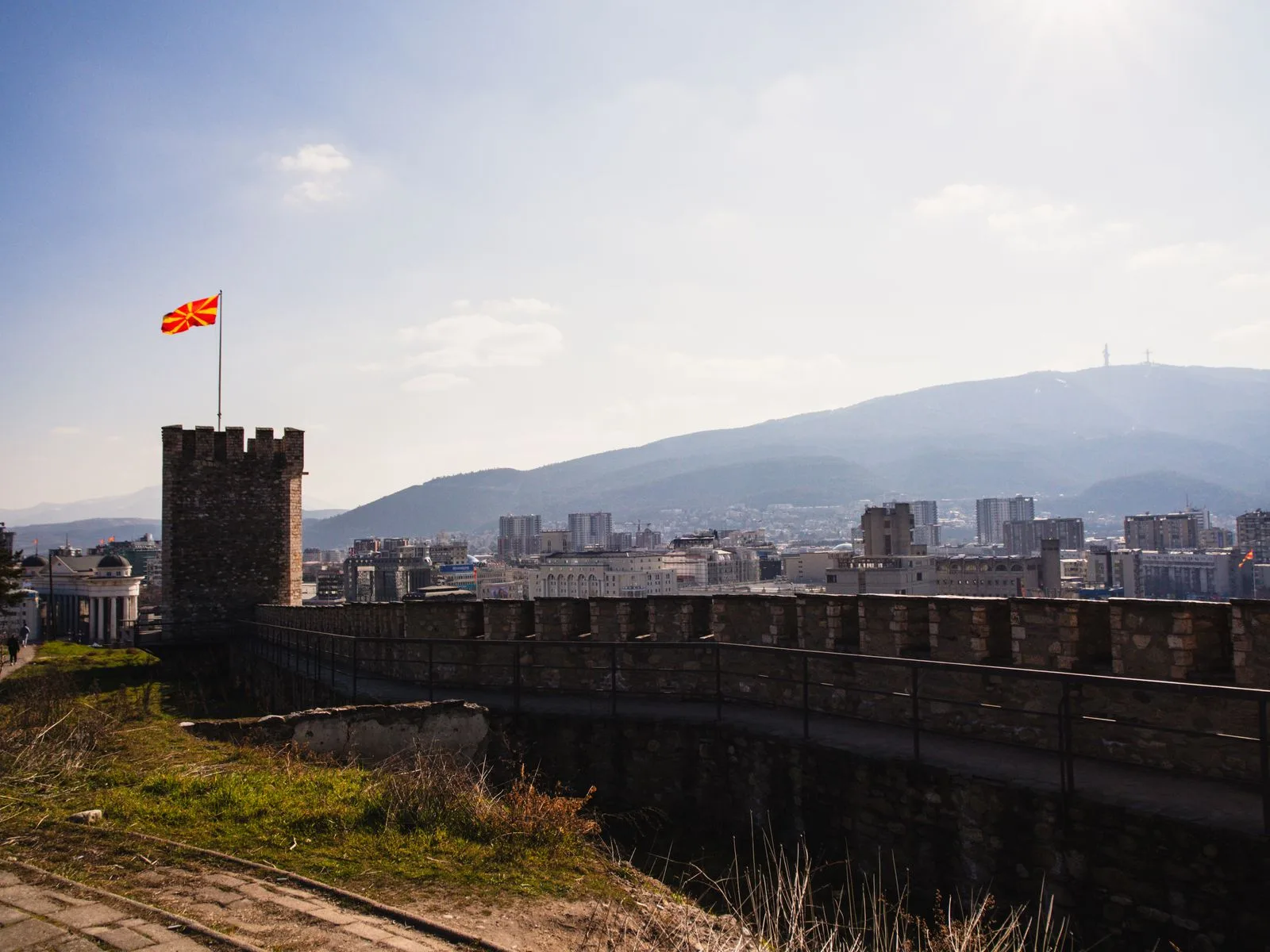
Perched above the old bazaar, the fortress gives an overview of the city, the Vardar and the mountains. The light is best late in the day: see our table of sunset times below.
Mother Teresa was born in Skopje. A memorial house is dedicated to her in the city centre, near Macedonia Square.
Mount Vodno and Matka Canyon
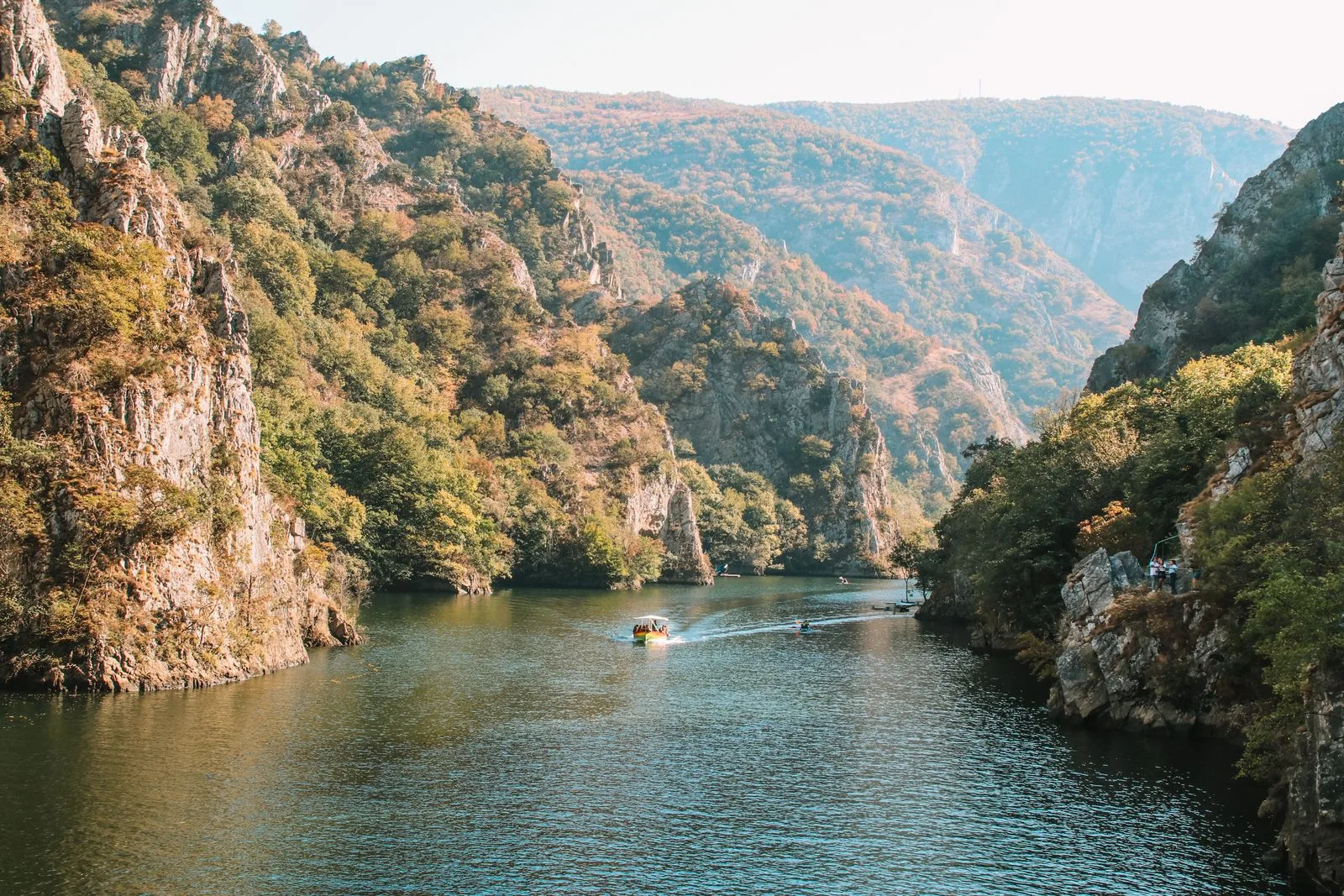
Mount Vodno overlooks the city to the south, with the Millennium Cross at its summit. Outside the city, Matka Canyon is the most common nature excursion, with its reservoir lake and trails. GOV.UK notes that the government commonly bans entry to forest and wilderness areas in summer, when the risk of wildfires is highest, with severe fines for non-compliance: check locally before you hike.
For Matka or a day trip to Ohrid, compare an organized excursion, a driver and a rental car. Check what is included (transport, guide, lake activities), the language of the tour and the cancellation terms.
Skopje in 1 or 2 days
Day 1: Macedonia Square, Mother Teresa Memorial House, Stone Bridge, old bazaar, then Kale Fortress late in the afternoon.
Day 2: Mount Vodno in the morning or Matka Canyon for the day; return along the banks of the Vardar.
When to go to Skopje: climate month by month
Skopje has a continental valley climate: hot, fairly dry summers and cold winters with night frosts, with rainfall spread through the year and peaks in May and November. The table combines the official normals with our astronomical calculations.
Month
Avg. max
Avg. min
Rain
Rainy days
Day/night gap
Sunrise / sunset (15th)
Daylight
January
4.3 °C (40 °F)
−3.4 °C (26 °F)
34 mm (1.3 in)
6
7.7 °C (14 °F)
6:59 am / 4:27 pm
9 h 28 min
February
8.4 °C (47 °F)
−1.3 °C (30 °F)
37 mm (1.5 in)
6
9.7 °C (17 °F)
6:30 am / 5:06 pm
10 h 36 min
March
13.8 °C (57 °F)
1.9 °C (35 °F)
36 mm (1.4 in)
6
11.9 °C (21 °F)
5:46 am / 5:40 pm
11 h 53 min
April
18.5 °C (65 °F)
5.4 °C (42 °F)
40 mm (1.6 in)
7
13.1 °C (24 °F)
5:54 am / 7:14 pm
13 h 20 min
May
23.7 °C (75 °F)
9.9 °C (50 °F)
62 mm (2.4 in)
9
13.8 °C (25 °F)
5:14 am / 7:47 pm
14 h 33 min
June
27.5 °C (82 °F)
13.1 °C (56 °F)
46 mm (1.8 in)
6
14.4 °C (26 °F)
4:58 am / 8:11 pm
15 h 13 min
July
30.0 °C (86 °F)
14.9 °C (59 °F)
34 mm (1.3 in)
5
15.1 °C (27 °F)
5:11 am / 8:08 pm
14 h 57 min
August
30.0 °C (86 °F)
14.6 °C (58 °F)
31 mm (1.2 in)
5
15.4 °C (28 °F)
5:41 am / 7:35 pm
13 h 54 min
September
26.0 °C (79 °F)
11.3 °C (52 °F)
41 mm (1.6 in)
5
14.7 °C (26 °F)
6:13 am / 6:44 pm
12 h 31 min
October
19.3 °C (67 °F)
6.3 °C (43 °F)
44 mm (1.7 in)
6
13.0 °C (23 °F)
6:46 am / 5:53 pm
11 h 07 min
November
10.2 °C (50 °F)
1.3 °C (34 °F)
56 mm (2.2 in)
7
8.9 °C (16 °F)
6:23 am / 4:13 pm
9 h 50 min
December
5.1 °C (41 °F)
−2.4 °C (28 °F)
46 mm (1.8 in)
7
7.5 °C (14 °F)
6:54 am / 4:03 pm
9 h 09 min
Temperatures, rain and rainy days: 1971–1990 normals for the Skopje-Petrovec station (WMO 13586), supplied to the World Meteorological Organization by the hydrometeorological service of North Macedonia (rainy days: precipitation of at least 1 mm). Day/night gap, sunrise/sunset and day length: Destination de Voyage calculations (NOAA solar algorithm, 15th of each month, local time).
Reading the table: July and August (30.0 °C / 86 °F) are the hottest months; May is the wettest (62 mm / 2.4 in) and August the driest (31 mm / 1.2 in). By our calculation, the gap between day and night reaches 15.4 °C (28 °F) in August: bring a warm layer for the evenings, even in summer. May, June and September offer the most pleasant afternoons for walking in the city (23.7, 27.5 and 26.0 °C, or 75, 82 and 79 °F).
The centre, between Macedonia Square and the old bazaar, lets you do everything on foot. The old bazaar is livelier in the evening; the streets around the square are more convenient for buses. If you stay in a private home, you must register with the nearest police station within 48 hours of arrival; in a hotel, the establishment does it for you and gives you a slip (see the entry requirements below).
Getting to Skopje and getting around
Skopje has an international airport and a bus station with services to Ohrid and neighbouring countries. For flights, check the current connections with the airlines: we do not claim any nonstop flight without having seen it on the airport’s page. The centre is visited on foot. If you drive, the U.S. Department of State notes that high fines can be incurred for speeding, and the police issue tickets with instructions to pay the fine online; the police are not authorized to collect fine payments.
Airport transfer
Compare a pre-booked transfer, a taxi and a shuttle. If you arrive late, a pre-booked transfer avoids haggling on the spot.
Entry requirements, health and safety
US citizens: according to the U.S. Department of State (travel.state.gov, last updated September 10, 2026), a valid US passport is required. No visa is needed for tourist or business trips of less than 90 days within a six-month period; overstaying may mean delayed departure, a court hearing, a fine or a re-entry ban. Foreign citizens must show travel medical insurance on entry.
UK citizens: according to the UK FCDO (GOV.UK, updated 13 August 2026), you can visit North Macedonia for up to 3 months without a visa, and your passport must have an expiry date at least 90 days after the date you arrive.
Registration: register with the local police within 48 hours of arrival. Hotels do it at check-in; keep the registration document until you leave. If you registered directly, the FCDO says you must de-register 24 hours before you leave. Failure to register can mean a fine (up to 250 euros according to the State Department), detention and a court hearing, or a restriction on returning.
Crime: attacks against foreigners are extremely rare (GOV.UK) and violent crime against US citizens is rare (travel.state.gov). Both sources report pickpocketing in crowded areas of Skopje, and the FCDO adds bag snatching in the main shopping and entertainment areas late at night, with foreign nationals apparently specifically targeted.
Protests: demonstrations occur sporadically and can disrupt traffic, particularly near the centre of Skopje; avoid large gatherings.
Health: North Macedonia is not in the EU. The FCDO says a reciprocal healthcare agreement entitles British nationals to free emergency treatment, but you should still have adequate travel insurance. The State Department says Skopje has four private hospitals but that care does not match US standards, and strongly recommends insurance covering medical evacuation. Emergency number: 112.
The two sources are consistent on the main rule (about three months without a visa) but word the limit differently. If you are unsure, contact the Embassy of North Macedonia. See also our guide to entry requirements.
Staying connected
North Macedonia is outside the European Union, so check your carrier’s roaming rates before you go. See our travel eSIM guide.
If you… then…
If you…
Then…
Want to walk without excessive heat
Aim for May, June or September
Want the best light over the city
Go up to Kale Fortress before sunset time (see the table above)
Stay in a private home
Have yourself registered with the police within 48 hours
Hike on Vodno or at Matka
Check local conditions and forest-access bans first
Macedonia Square, the Mother Teresa Memorial House, the Stone Bridge, the old bazaar and Kale Fortress late in the day.
How many days should you spend in Skopje?
One day is enough for the centre and the old bazaar; allow a second day for Mount Vodno or Matka Canyon.
What is the best time to visit Skopje?
May, June and September, with average highs of 23.7 to 27.5 °C (75 to 82 °F); July and August are hot (30.0 °C / 86 °F average high).
Is Skopje safe?
Violent crime against foreigners is rare, and neither government lists an area to avoid, but pickpockets operate in crowded places such as the old bazaar (UK FCDO; U.S. Department of State).
Do US and UK citizens need a visa for Skopje?
No, for short tourist stays: under 90 days within six months for US citizens (U.S. Department of State, September 10, 2026) and up to 3 months for UK citizens (UK FCDO, 13 August 2026).
Our sources
UK FCDO, North Macedonia foreign travel advice (GOV.UK, updated 13 August 2026): entry requirements, safety, health, natural hazards; read November 2026
U.S. Department of State, North Macedonia country information (travel.state.gov, last updated September 10, 2026): entry and exit requirements, safety, health, transportation; read November 2026
World Meteorological Organization, 1961–1990 climate normals (period 1971–1990), Skopje-Petrovec station no. 13586, data from the hydrometeorological service of North Macedonia (NOAA NCEI archive), read 11 November 2026
Astronomical calculations: NOAA solar algorithm, applied by Destination de Voyage to the coordinates of Skopje (15th of each month)


 FlightsKiwi.comCompare flights and airline combinations to Skopje.Compare flights