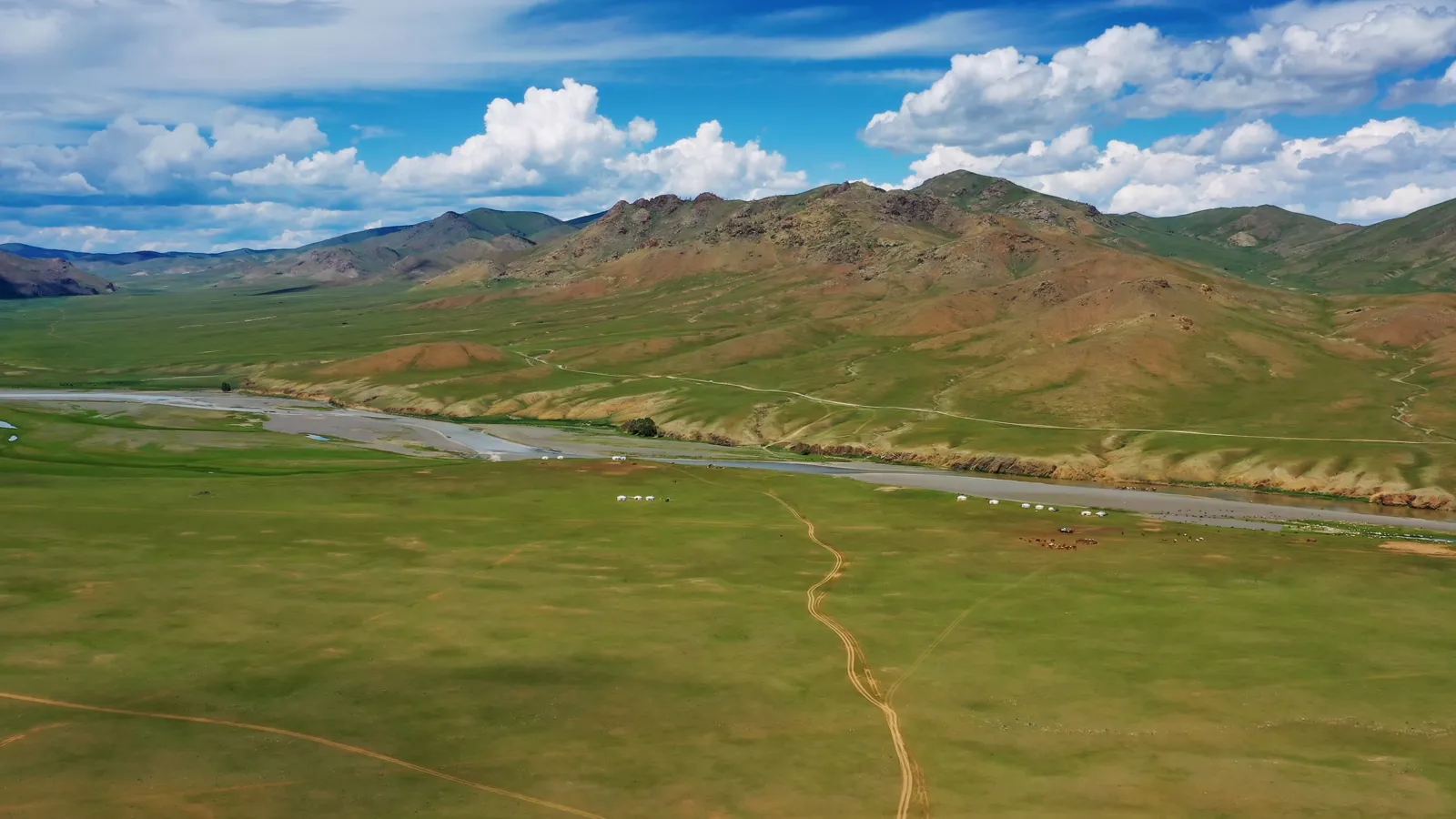
When is the best time to visit Mongolia? June to September: it is the only season when the steppe is green, the tracks are passable and temperatures are mild, with a daily mean of 16 to 19 °C (61 to 66 °F) in Ulaanbaatar. July, the month of the Naadam festival, is the most popular; June and September offer a good balance between weather and crowds. Distances are immense, so our map of Mongolia will help you build a realistic itinerary.
Mongolia has an extreme continental climate. The gap between the seasons is spectacular, from a mean of −21 °C (−6 °F) in January to 19 °C (66 °F) in July in the capital. Depending on your plans (the Gobi Desert, Lake Khövsgöl, the Altai or a nomadic winter experience), the right time is not quite the same. Here is how to choose, based on the official 1991–2020 normals.

Our travel deals for Mongolia
Affiliate links: we earn a commission, at no extra cost to you.
 FlightsKiwi.comCompare flights and airline combinations to Mongolia.Compare flights
- eSIMAiraloData plan to install before you leave (eSIM-compatible phone).See plans


When to go to Mongolia at a glance
- Best overall period June to September, the short warm season
- Most in demand July, with Naadam on July 11, 12 and 13
- To avoid the crowds June and early September, quieter and still mild
- Rainy season July and August have most of the rainfall (74.5 mm (2.9 in) in July in Ulaanbaatar), in the form of showers
- Winter (November to March) dry but extremely cold, −21.3 °C (−6 °F) on average in January in Ulaanbaatar; travel only if well equipped
- For the Gobi late May–June and September, to avoid the peak heat of July
- Good to know spring is the season of strong winds and dust storms
When to go to Mongolia by priority
- Best weather: June to September, the short warm season
- Cheapest: June and September, with shared tours departing from Ulaanbaatar
- Fewest crowds: June and early September, quieter than July–August
- Events: Naadam on July 11, 12 and 13, Tsagaan Sar in January or February, eagle festivals in late September–October (check dates)
To plan your itinerary, see our Mongolia travel guide.
Mongolia: the calendar at a glance
✅ Best months: June, July, August, September
❌ Period to avoid: January, February, March, November, December
Mongolia’s climate month by month
The table below gives the normals for Ulaanbaatar (1303 m (4,275 ft) above sea level), the arrival point for almost every trip. The official data published for Mongolia give the daily mean temperature, precipitation and the number of rain days; we do not show highs and lows, for lack of a consistent official series. Keep in mind that the gap between day and night is large: even in summer, nights are cool on the steppe.
| Month | Mean temp. | Rain | Rain days | Crowds | Prices | Verdict |
|---|---|---|---|---|---|---|
| January | −21.3 °C (−6 °F) | 2.1 mm (0.1 in) | 1.3 | Very low | Low | ❌ Extreme cold |
| February | −16.2 °C (3 °F) | 2.8 mm (0.1 in) | 1.6 | Low | Low | ❌ Very cold, Tsagaan Sar in some years |
| March | −6.7 °C (20 °F) | 4.6 mm (0.2 in) | 1.8 | Low | Low | ❌ Still wintry, windy |
| April | 3.0 °C (37 °F) | 8.4 mm (0.3 in) | 2.5 | Low | Low | ⚠️ Thaw, wind and dust |
| May | 10.3 °C (51 °F) | 21.7 mm (0.9 in) | 3.7 | Moderate | Moderate | ⚠️ Steppe still yellow, cold nights |
| June | 16.6 °C (62 °F) | 47.2 mm (1.9 in) | 6.7 | High | High | ✅ Mild, steppe turning green |
| July | 19.0 °C (66 °F) | 74.5 mm (2.9 in) | 9.9 | Very high | Very high | ✅ Naadam, hottest month |
| August | 16.6 °C (62 °F) | 65.4 mm (2.6 in) | 8.8 | Very high | High | ✅ Green steppe, a few showers |
| September | 10.0 °C (50 °F) | 27.9 mm (1.1 in) | 4.9 | Moderate | Moderate | ✅ Autumn colors, cool nights |
| October | 0.9 °C (34 °F) | 8.6 mm (0.3 in) | 2.1 | Low | Low | ⚠️ First frosts, end of the season |
| November | −10.6 °C (13 °F) | 6.3 mm (0.2 in) | 2.8 | Very low | Low | ❌ Start of winter |
| December | −19.0 °C (−2 °F) | 3.5 mm (0.1 in) | 1.7 | Very low | Low | ❌ Extreme cold |
With 273 mm (10.7 in) of precipitation a year, Ulaanbaatar is a dry city, and almost all the rain falls in summer: 187 mm (7.4 in) in June, July and August alone. It mostly comes as showers or thunderstorms, which sometimes turn tracks into mud but leave long sunny spells. The rest of the year, the sky is mostly clear. The real limiting factor is therefore temperature: the capital’s mean stays below freezing from November to March.
The seasons in Mongolia: pros and cons
Mongolia has only two main seasons, a long winter and a short summer, linked by quick transitions between them.
Summer (June to August): high season
This is the travel season in Mongolia. The steppe is green, nomadic families are settled on their summer pastures and temperatures are pleasant: a mean of 16 to 19 °C (61 to 66 °F) in Ulaanbaatar, more in the Gobi, less on the shores of Lake Khövsgöl. Showers are more frequent in July and August, with about 9 to 10 rain days a month in the capital.
- Pros: all regions accessible, the Naadam festival, active nomadic life, long days
- Cons: crowds and prices at their highest in July, muddy tracks after thunderstorms, marked heat in the Gobi, mosquitoes by lakes and rivers
- Our tip: if you are not aiming for Naadam, June or the second half of August offer comparable conditions with fewer people
Autumn (September to October): the season of colors
September is often dry and bright, with golden larches in the north and nights that are already cold (10 °C (50 °F) daily mean in Ulaanbaatar). October marks the switch to winter: the mean drops to around 1 °C (34 °F) and the first snow is possible. It is also the time of the eagle hunter festivals in the west of the country.
- Pros: fewer visitors, clear skies, autumn colors, eagle festivals in the Altai
- Cons: sub-zero nights, tourist ger camps that gradually close from late September
- Who is it for? Well-equipped travelers looking for quiet
Winter (November to March): the deep cold
Mongolian winter is long, dry and very cold: a mean of −21.3 °C (−6 °F) in January in Ulaanbaatar. The sky is often blue, but any trip outside the capital calls for suitable cold-weather and survival equipment, and a breakdown in a remote area can become dangerous.
- Pros: snowy landscapes, very few tourists, the Tsagaan Sar festival (lunar new year), camel races or winter festivals organized in some years
- Cons: extreme cold, short days, riskier travel, few camps open
- Who is it for? Experienced travelers, accompanied by a local agency
Spring (April to May): wind and thaw
Spring is the least attractive season for many travelers. The steppe is still yellow, the thaw makes some tracks difficult and strong winds raise dust, especially in the Gobi. May warms up noticeably (10.3 °C (51 °F) mean in Ulaanbaatar), with very few people: a good choice for a quiet Gobi if you accept the wind.
When to go to Mongolia by region
Mongolia is huge. The table compares four stations: Ulaanbaatar (center), Dalanzadgad (gateway to the Gobi), Khatgal (southern shore of Lake Khövsgöl, in the north) and Ölgii (Altai, in the far west). Tsetserleg, on the road to the Orkhon Valley, has a climate close to that of Ulaanbaatar, with slightly wetter summers.
| Month | Ulaanbaatar (1303 m (4,275 ft)) | Dalanzadgad / Gobi | Khatgal / Khövsgöl | Ölgii / Altai |
|---|---|---|---|---|
| January | −21.3 °C (−6 °F) / 2 mm (0.1 in) | −13.9 °C (7 °F) / 2 mm (0.1 in) | −23.3 °C (−10 °F) / 1 mm (0.0 in) | −17.1 °C (1 °F) / 1 mm (0.0 in) |
| February | −16.2 °C (3 °F) / 3 mm (0.1 in) | −9.2 °C (15 °F) / 3 mm (0.1 in) | −19.5 °C (−3 °F) / 2 mm (0.1 in) | −12.9 °C (9 °F) / 1 mm (0.0 in) |
| March | −6.7 °C (20 °F) / 5 mm (0.2 in) | −1.1 °C (30 °F) / 4 mm (0.2 in) | −10.7 °C (13 °F) / 3 mm (0.1 in) | −5.1 °C (23 °F) / 2 mm (0.1 in) |
| April | 3.0 °C (37 °F) / 8 mm (0.3 in) | 8.0 °C (46 °F) / 4 mm (0.2 in) | −1.1 °C (30 °F) / 9 mm (0.4 in) | 3.7 °C (39 °F) / 5 mm (0.2 in) |
| May | 10.3 °C (51 °F) / 22 mm (0.9 in) | 14.7 °C (58 °F) / 11 mm (0.4 in) | 5.2 °C (41 °F) / 21 mm (0.8 in) | 10.0 °C (50 °F) / 15 mm (0.6 in) |
| June | 16.6 °C (62 °F) / 47 mm (1.9 in) | 20.4 °C (69 °F) / 22 mm (0.9 in) | 10.6 °C (51 °F) / 51 mm (2.0 in) | 16.0 °C (61 °F) / 25 mm (1.0 in) |
| July | 19.0 °C (66 °F) / 75 mm (3.0 in) | 23.0 °C (73 °F) / 33 mm (1.3 in) | 13.2 °C (56 °F) / 90 mm (3.5 in) | 17.8 °C (64 °F) / 35 mm (1.4 in) |
| August | 16.6 °C (62 °F) / 65 mm (2.6 in) | 21.0 °C (70 °F) / 29 mm (1.1 in) | 11.4 °C (53 °F) / 84 mm (3.3 in) | 15.7 °C (60 °F) / 26 mm (1.0 in) |
| September | 10.0 °C (50 °F) / 28 mm (1.1 in) | 14.8 °C (59 °F) / 15 mm (0.6 in) | 5.2 °C (41 °F) / 34 mm (1.3 in) | 9.3 °C (49 °F) / 7 mm (0.3 in) |
| October | 0.9 °C (34 °F) / 9 mm (0.4 in) | 5.8 °C (42 °F) / 5 mm (0.2 in) | −2.8 °C (27 °F) / 10 mm (0.4 in) | 1.4 °C (35 °F) / 2 mm (0.1 in) |
| November | −10.6 °C (13 °F) / 6 mm (0.2 in) | −3.9 °C (25 °F) / 3 mm (0.1 in) | −12.4 °C (10 °F) / 4 mm (0.2 in) | −7.3 °C (19 °F) / 2 mm (0.1 in) |
| December | −19.0 °C (−2 °F) / 4 mm (0.2 in) | −11.7 °C (11 °F) / 3 mm (0.1 in) | −19.8 °C (−4 °F) / 3 mm (0.1 in) | −14.3 °C (6 °F) / 1 mm (0.0 in) |
Ulaanbaatar and the center (Terelj, Hustai)
The capital and the nearby parks, such as Gorkhi-Terelj or Hustai, are best visited from June to September. The city can still be visited in winter for its museums and monasteries, but the cold is intense, which calls for caution on any excursion.
The Gobi Desert
The Gobi is the hottest and driest region: a mean of 23 °C (73 °F) in July at Dalanzadgad and only 133 mm (5.2 in) of precipitation a year. Afternoons are hot in midsummer. The best windows are late May–June and September, which are milder. In spring, wind and sandstorms are frequent; in winter, nights are freezing despite blue skies.
Lake Khövsgöl and the north
In the north, near the Russian border, Lake Khövsgöl is the coolest and wettest of the four regions: a mean of 13.2 °C (56 °F) in July and 90 mm (3.5 in) of rain at Khatgal. The useful season is short, from mid-June to early September. The lake freezes in winter, and ice festivals are organized in some years: ask a local agency.
The Altai and the west (Bayan-Ölgii)
The far west is mountainous and dry: 120 mm (4.7 in) of precipitation a year at Ölgii. Summer (June to August) suits hiking and expeditions to the Altai peaks. Late September and October are the season of the eagle festivals, organized by the region’s Kazakh hunters, with nights that are already very cold. Access is generally by domestic flight from Ulaanbaatar.
Which region by month?
The main regions do not share the same useful season: the Gobi is best at the start and end of summer, Lake Khövsgöl only in the heart of summer.
| Region | Jan | Feb | Mar | Apr | May | Jun | Jul | Aug | Sep | Oct | Nov | Dec |
|---|---|---|---|---|---|---|---|---|---|---|---|---|
| Ulaanbaatar and the center (Terelj, Orkhon) | ❌ | ❌ | ❌ | ⚠️ | ⚠️ | ✅ | ✅ | ✅ | ✅ | ⚠️ | ❌ | ❌ |
| Gobi Desert | ❌ | ❌ | ❌ | ⚠️ | ⚠️ | ✅ | ⚠️ | ⚠️ | ✅ | ⚠️ | ❌ | ❌ |
| Lake Khövsgöl and the north | ❌ | ❌ | ❌ | ❌ | ❌ | ⚠️ | ✅ | ✅ | ⚠️ | ❌ | ❌ | ❌ |
| Altai and the west (Bayan-Ölgii) | ❌ | ❌ | ❌ | ❌ | ⚠️ | ✅ | ✅ | ✅ | ⚠️ | ⚠️ | ❌ | ❌ |
✅ recommended period, ⚠️ possible with reservations, ❌ unfavorable. A summary of the normals and of the detailed recommendations on this page.
When to go to Mongolia by trip type
| Your trip | Best time | Where? |
|---|---|---|
| First trip (steppe, Gobi, Orkhon Valley) | June to early September | Ulaanbaatar, Gobi, Kharkhorin |
| Attending Naadam | July 11 to 13 | Ulaanbaatar and provincial capitals |
| Gobi Desert | Late May–June, September | Khongoryn Els, Yolyn Am, Bayanzag |
| Lake Khövsgöl | Mid-June to early September | Khatgal, west shore of the lake |
| Horse trekking | June to August | Terelj, Khövsgöl, Orkhon Valley |
| Eagle festivals | Late September–October (check dates) | Bayan-Ölgii province |
| Nomadic winter experience | January–February, with a specialist agency | Center and north of the country |
| Budget | June, September | Shared tours departing from Ulaanbaatar |
Major events to plan your trip around
| Period | Event | Location |
|---|---|---|
| July 11, 12 and 13 | Naadam, national festival: wrestling, horse racing and archery | Ulaanbaatar and across the country |
| January or February (lunar calendar) | Tsagaan Sar, the Mongolian new year | Across the country, with families |
| Late September or October (varies by year) | Eagle festivals of the Kazakh hunters | Bayan-Ölgii province |
| Winter, depending on the year | Ice festivals and camel races | Lake Khövsgöl, Gobi |
During Naadam, hotels in Ulaanbaatar and international flights fill up long in advance. Smaller Naadams take place in the provinces, sometimes on slightly different dates, with a more local atmosphere.
Mongolia weather month by month: what to expect
Mongolia in January: The coldest month: −21.3 °C (−6 °F) mean in Ulaanbaatar. Skies are often clear, but any trip outside the cities requires careful organization.
Mongolia in February: Still very cold (−16.2 °C (3 °F) mean). Tsagaan Sar, the lunar new year, often falls in February: a family holiday, with services sometimes reduced.
Mongolia in March: Still wintry, with the wind returning. Few travelers, apart from occasional winter festivals.
Mongolia in April: Thaw, wind and dust. The mean climbs back above zero (3 °C (37 °F) in Ulaanbaatar). Not well suited to tourism.
Mongolia in May: Quick warming (10.3 °C (51 °F) mean), steppe still yellow, frequent winds. Possible for a quiet Gobi.
Mongolia in June: The start of the good season: steppe turning green, 16.6 °C (62 °F) mean, crowds still moderate. An excellent month.
Mongolia in July: The hottest month (19 °C (66 °F) mean) and the wettest (74.5 mm (2.9 in), mostly showers). Naadam on July 11, 12 and 13 draws the most visitors.
Mongolia in August: Conditions close to July, very green steppe, frequent showers. A good month for the north and the Altai.
Mongolia in September: Often clear skies, 10 °C (50 °F) mean and cold nights. Autumn colors arrive; camps start to close toward the end of the month.
Mongolia in October: The switch to winter (0.9 °C (34 °F) mean in Ulaanbaatar). Eagle festival season in the west, for well-equipped travelers.
Mongolia in November: Winter sets in: −10.6 °C (13 °F) mean. Few tourist services are open outside the capital.
Mongolia in December: Extreme cold (−19 °C (−2 °F) mean), short days. Best kept for organized winter trips.
When to book your trip to Mongolia
For July, and particularly for the Naadam dates, book your flights and tour 5 to 6 months ahead: seats on flights to Ulaanbaatar and experienced driver-guides are limited. For June, August and September, 3 to 4 months is generally enough. 4×4 tours are booked through agencies based in Ulaanbaatar or through international tour operators.
Check flight routings early, as options to Ulaanbaatar are limited. Another way in is by train on the Trans-Mongolian railway from Beijing; any transit through other countries has its own entry rules.
Planning your trip to Mongolia
- Entry requirements: check the current entry requirements for Mongolia for your nationality before you book.
- Connectivity: to stay reachable in the capital and along the main roads, see our page on an eSIM for Mongolia.
- Time difference: Ulaanbaatar is on UTC+8 with no daylight saving time: 8 hours ahead of London in winter and 7 in summer; 13 hours ahead of New York in winter and 12 in summer. The far west of the country is one hour behind.
- Currency: the tugrik (MNT). Use our currency converter to estimate your budget.
To go further, see our complete Mongolia travel guide. Looking for another summer destination in Asia? See also when to go to China or our ideas for where to go in July.
Frequently asked questions
What is the best month to visit Mongolia?
June, July, August and September. July is the hottest (19 °C (66 °F) mean in Ulaanbaatar) and hosts Naadam, but it is also the busiest and the wettest. June and September offer a good balance.
When is Naadam held?
The Naadam national festival is traditionally held on July 11, 12 and 13. The main celebrations take place in Ulaanbaatar, and local Naadams are organized in the provinces. Check the dates before you book.
Is Mongolia very cold in winter?
Yes. The mean temperature in January is −21.3 °C (−6 °F) in Ulaanbaatar, and the capital’s mean stays below freezing from November to March.
When should you go to the Gobi Desert?
From late May to June and in September, to avoid the peak heat of July. In spring, wind and dust storms are frequent.
Does it rain a lot in Mongolia in summer?
It rains mostly in July and August, but in the form of showers: about 9 to 10 rain days a month in Ulaanbaatar, for 65 to 75 mm (2.6 to 3.0 in). The north, around Lake Khövsgöl, is wetter; the Gobi and the west are much drier.
Can you see the eagle festival in Mongolia?
Yes, in Bayan-Ölgii province in the west, generally between late September and October. Dates change depending on the year and the organizers: check them before booking.
What is the hottest month in Mongolia?
July: 19 °C (66 °F) daily mean temperature in Ulaanbaatar according to the 1991–2020 normals, with hotter afternoons and cool nights. It is also the wettest month (74.5 mm (2.9 in)) and the month of Naadam.
Our sources
- World Meteorological Organization, 1991–2020 climate normals (data from the Mongolian meteorological service), archived by NOAA: stations of Ulaanbaatar, Dalanzadgad, Khatgal, Tsetserleg and Ölgii
- Our methodology
For another summer trip in Central Asia, see also when to go to Kyrgyzstan.
Updated November 2026.