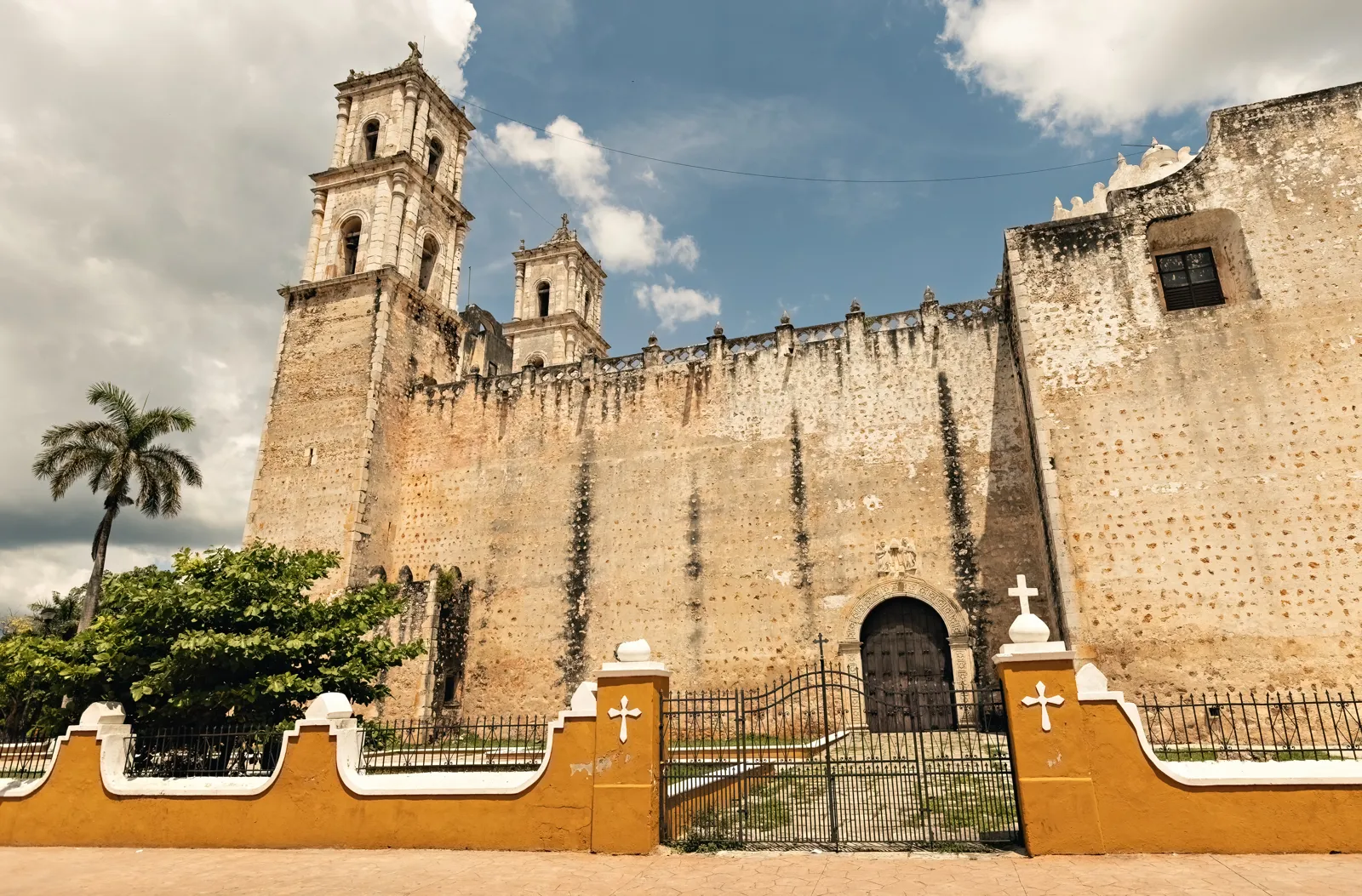
Gyeongju, in southeastern South Korea, was for nearly a thousand years the capital of the Silla kingdom (57 BC – AD 935). Royal burial mounds in the heart of town, the Cheomseongdae observatory, Bulguksa temple and Seokguram grotto: the heritage is so dense that the city is nicknamed the « museum without walls ». This guide to visiting Gyeongju explains what to see, how to organize your visit by area, how to get there and what weather to expect month by month, based on the official normals of the Gyeongju weather station.
To place the city in an itinerary, see our South Korea travel guide, the best time to visit South Korea calendar, and the neighboring stops Busan and Seoul.

Our travel deals for Gyeongju
Affiliate links: we earn a commission, at no extra cost to you.
 FlightsKiwi.comCompare flights and airline combinations to Gyeongju.Compare flights
- eSIMAiraloData plan to install before you leave (eSIM-compatible phone).See plans


Gyeongju at a glance
- Location North Gyeongsang province, between Daegu to the west, Pohang to the north and Ulsan to the south
- UNESCO World Heritage Seokguram grotto and Bulguksa temple, Gyeongju Historic Areas, Yangdong historic village
- Time zone UTC+9 all year (no daylight saving in Korea): London is 9 hours behind in winter and 8 in summer, New York 14 hours behind in winter and 13 in summer
- Climate 5.9 °C (43 °F) average high in January, 31.4 °C (89 °F) in August (KMA 1991–2020 normals)
- Getting there Singyeongju KTX station, on the Gyeongbu line (Seoul, Daejeon, Daegu, Busan)
- Entry visa-free stays of up to 90 days for tourism or business for UK citizens (K-ETA temporarily waived until December 31, 2026) and for US citizens; see the details below (travel.state.gov, GOV.UK)
What to see in Gyeongju: the highlights
Gyeongju’s heritage falls into four families: burial mounds, Buddhist sites, fortresses and palaces, and old architecture. Most Silla-era sites are grouped in Gyeongju National Park. According to Wikipedia, the city has 31 national treasures.
The royal burial mounds in the center
This is the strongest image of Gyeongju: large grassy mounds in the middle of town. There are 35 royal tombs and 155 burial mounds in the center, and 421 others outside it. Two tombs are emblematic of Silla culture: the Gold Crown Tomb (Geumgwanchong) and the Heavenly Horse Tomb (Cheonmachong), where some of the objects now displayed in the national museum were found. The Daereungwon royal tomb complex can be explored on foot.
Cheomseongdae observatory and Anapji pond
A short walk from the mounds, the small stone tower of Cheomseongdae is presented as one of the oldest astronomical observatories in Asia. A little further on, Anapji pond (now called Wolji) and the Donggung palace, a detached residence of the Silla court, form the other major site in the center. These three sites can be visited in the same half-day.
Gyeongju National Museum
Heir to the museum opened in 1915 to display objects found in the tombs, Gyeongju National Museum holds more than 16,000 pieces. It is the best place to see the gold crowns and funerary goods of Silla: visit it before or after the mounds to make sense of the walk. For hours and conditions, see the museum’s official website.
Bulguksa temple and Seokguram grotto
East of the center, Bulguksa is one of the largest Buddhist temples in the country; it was burned during the Japanese invasions of the late 16th century, then rebuilt. Higher up the mountain, the Seokguram grotto hermitage houses a large statue of the Buddha. Both sites are listed together as a UNESCO World Heritage Site: allow half a day for the two.
Namsan mountain
South of the city, Namsan, the « south mountain », is a traditional place of prayer, considered sacred because of the shrines and Buddhist statues that cover its slopes. Some sculptures were mutilated in the early Joseon period. It is hiking territory: closed shoes and water are essential, especially in summer.
Yangdong historic village
North of Gyeongju, in the district of Gangdong, Yangdong village shows life in the Joseon dynasty; it is a World Heritage Site. The village is still inhabited: stay on the paths and do not enter houses unless invited.
The remains of Hwangnyongsa
The « Golden Dragon Temple » was one of Silla’s great sanctuaries; its nine-story wooden pagoda was destroyed by the Mongols in the 13th century. Only the archaeological site remains, to be combined with a visit to the center.
Organizing your visit by area
| Area | Sites | Tip |
|---|---|---|
| Historic center | Daereungwon mounds, Cheomseongdae, Anapji (Wolji) pond and Donggung palace, national museum, Hwangnyongsa | On foot or by bike; Anapji is also visited in the evening |
| East (mountain) | Bulguksa temple, Seokguram grotto | Half a day; start early |
| South | Namsan mountain and its Buddhist statues | Hiking: bring water and proper shoes |
| North | Yangdong historic village | Inhabited village: visit discreetly |
Gyeongju in 2 or 3 days
- Day 1: the mounds in the center, Cheomseongdae, the national museum, then Anapji pond at the end of the day.
- Day 2: Bulguksa and Seokguram in the morning, Hwangnyongsa in the afternoon.
- Day 3: a hike on Namsan or a visit to Yangdong village.
Where to stay in Gyeongju
There are two main options: the historic center, within walking distance of the mounds and the museum, ideal without a car; or accommodation near Bulguksa, handy for visiting the temple and grotto early. Traditional houses (hanok) are numerous in the center. Book early in spring and fall.
Getting to Gyeongju and getting around
Gyeongju has no airport: you arrive by train. The KTX stops at Singyeongju station, located outside the town, in Geoncheon-eup, south of the center; the Gyeongbu line links it to Seoul and Daejeon to the north, Daegu to the west and Busan to the south. International visitors usually land in Seoul, then take the KTX: check schedules and fares on the Korean rail operator’s website (Korail). Busan is the other natural gateway.
On site, the center is visited on foot or by bike; buses serve Bulguksa, Seokguram and Yangdong. A taxi can save time for the Seokguram grotto, on the mountain. The UK FCDO notes that taxi drivers tend to speak little or no English, so it helps to have your destination written in Korean, if possible with a map (GOV.UK, updated 14 May 2026).
Train tickets, transfers and rental: what to check
For the KTX, compare Korail’s official website with resellers (fees, exchange conditions). Rail passes for foreign visitors have their own rules: read them before buying. If you rent a car, note that the FCDO says UK drivers need both the 1949 international driving permit (IDP) and their UK licence, and that the IDP cannot be bought outside the UK (GOV.UK, updated 14 May 2026). Also check insurance and deductible conditions; the legal alcohol limit in South Korea is less than half the limit in England (FCDO).
When to go to Gyeongju: climate month by month
Gyeongju has the typical Korean climate: cold, dry winters and hot, humid summers, with the summer monsoon followed by the risk of typhoons. The table combines the official normals and our calculations.
| Month | Avg. max | Avg. min | Rain | Days with precip. (≥ 1 mm) | Day/night gap | Sunrise / sunset on the 15th | Day length |
|---|---|---|---|---|---|---|---|
| January | 5.9 °C (43 °F) | -4.7 °C (24 °F) | 32 mm (1.3 in) | 3.4 | 10.6 °C (19 °F) | 7:32 am / 5:32 pm | 9 h 59 min |
| February | 8.4 °C (47 °F) | -3.1 °C (26 °F) | 31 mm (1.2 in) | 4.5 | 11.5 °C (21 °F) | 7:10 am / 6:04 pm | 10 h 53 min |
| March | 14.4 °C (58 °F) | 1.0 °C (34 °F) | 60 mm (2.4 in) | 5.9 | 13.4 °C (24 °F) | 6:34 am / 6:29 pm | 11 h 55 min |
| April | 19.7 °C (67 °F) | 6.0 °C (43 °F) | 96 mm (3.8 in) | 7.5 | 13.7 °C (25 °F) | 5:51 am / 6:55 pm | 13 h 05 min |
| May | 25.7 °C (78 °F) | 11.7 °C (53 °F) | 55 mm (2.2 in) | 5.6 | 14.0 °C (25 °F) | 5:18 am / 7:21 pm | 14 h 03 min |
| June | 27.7 °C (82 °F) | 17.0 °C (63 °F) | 101 mm (4.0 in) | 6.9 | 10.7 °C (19 °F) | 5:06 am / 7:40 pm | 14 h 35 min |
| July | 30.6 °C (87 °F) | 21.4 °C (71 °F) | 190 mm (7.5 in) | 9.6 | 9.2 °C (17 °F) | 5:17 am / 7:39 pm | 14 h 22 min |
| August | 31.4 °C (89 °F) | 21.9 °C (71 °F) | 192 mm (7.6 in) | 9.9 | 9.5 °C (17 °F) | 5:41 am / 7:13 pm | 13 h 32 min |
| September | 26.2 °C (79 °F) | 16.2 °C (61 °F) | 194 mm (7.6 in) | 9.3 | 10.0 °C (18 °F) | 6:05 am / 6:31 pm | 12 h 26 min |
| October | 21.6 °C (71 °F) | 9.3 °C (49 °F) | 108 mm (4.3 in) | 4.7 | 12.3 °C (22 °F) | 6:29 am / 5:48 pm | 11 h 19 min |
| November | 15.3 °C (60 °F) | 3.0 °C (37 °F) | 38 mm (1.5 in) | 3.6 | 12.3 °C (22 °F) | 6:58 am / 5:16 pm | 10 h 18 min |
| December | 7.7 °C (46 °F) | -3.2 °C (26 °F) | 24 mm (0.9 in) | 3.7 | 10.9 °C (20 °F) | 7:25 am / 5:10 pm | 9 h 45 min |
Reading the table: July, August and September concentrate the rain (more than 190 mm (7.5 in) a month, nearly 10 days with precipitation). In January the average low falls to −4.7 °C (23 °F). April–May and October offer the best compromise: highs of 19.7 to 25.7 °C (67 to 78 °F) in spring, 21.6 °C (71 °F) in October, and few rainy days in May (5.6) and October (4.7). Destination de Voyage calculation: the biggest day/night gap occurs in May (14.0 °C (25 °F)), so bring a warm layer for the evenings.
To compare with Seoul, Busan or Jeju: when to go to South Korea.
Safety and entry requirements
We read the South Korea advice of the UK FCDO (GOV.UK, updated 14 May 2026) and of the U.S. Department of State (travel.state.gov, South Korea page last updated August 11, 2025; Level 1, « Exercise Normal Precautions », advisory updated May 27, 2025). Gyeongju is not affected by any warning:
- Tensions: the FCDO notes that the demilitarised zone (DMZ) separates North and South Korea and that if you are in the area you should follow local authorities’ advice; the State Department notes that large-scale demonstrations may occur with little notice.
- Typhoons: the FCDO says the typhoon season normally runs from June to November; follow the Korea Meteorological Administration or call 131 for an English-language forecast. The State Department mentions heavy rain and flooding during the June–August monsoon and the May–November typhoon season.
- Demonstrations: avoid large gatherings; it is illegal for foreign nationals to take part in political activities in South Korea (FCDO).
- Emergencies: police 112, ambulance and fire 119; the Korea Tourism Organization hotline, 1330, offers multilingual help (FCDO).
- UK citizens: you can enter for up to 90 days for short-term business or tourism, but you must have an onward or return ticket. Your passport must have an expiry date after the date you leave. British nationals traveling visa-free are temporarily exempt from the K-ETA until December 31, 2026; if you need one, apply only through the official K-ETA website, as other sites offering the service are generally scams (GOV.UK, updated 14 May 2026). You may submit the free e-Arrival card online within 72 hours before arrival.
- US citizens: you need a valid US passport; the State Department page (last updated August 11, 2025) says visas are required for stays over 90 days and for other purposes such as work or teaching English. That page states the K-ETA exemption for US citizens only until December 31, 2024, so it is out of date on this point: check the official K-ETA website and the Korean embassy before you travel.
- Official K-ETA information: k-eta.go.kr (see also the GOV.UK entry requirements). Our page: K-ETA South Korea.
Staying connected
An eSIM installed before departure lets you use maps and bus timetables as soon as you arrive. Check that your phone is compatible and unlocked: see our travel eSIM guide.
If you… then…
| If you… | Then… |
|---|---|
| Have only one day | Stay in the center: mounds, Cheomseongdae, national museum, Anapji |
| Want to see Bulguksa and Seokguram without the crowds | Sleep near Bulguksa and visit early in the morning |
| Like hiking | Namsan mountain, preferably in spring or October |
| Travel from July to September | Watch typhoon alerts (FCDO, KMA) and allow a buffer day |
| Come in winter | Skies are often dry but nights are below freezing from December to February |
| Combine with Busan | Gyeongju and Busan are on the same KTX line (Gyeongbu) |
Frequently asked questions
What should you see first in Gyeongju?
The royal burial mounds in the center, the Cheomseongdae observatory, Anapji pond, the national museum, then Bulguksa temple and Seokguram grotto, both World Heritage Sites.
How many days should you spend in Gyeongju?
Two days for the center and Bulguksa/Seokguram, three to add Namsan or Yangdong village.
How do you get to Gyeongju from Seoul?
By KTX to Singyeongju station, on the Gyeongbu line; it is outside the town, south of the center. Check schedules on the Korail website.
What is the best time to visit Gyeongju?
April–May and October: mild temperatures and few rainy days (KMA 1991–2020 normals). Summer is hot and rainy, with a typhoon risk, which the FCDO says runs from June to November.
Do US and UK citizens need a visa or a K-ETA for South Korea?
No visa for stays of up to 90 days for tourism or business. UK citizens are temporarily exempt from the K-ETA until December 31, 2026 (GOV.UK, updated 14 May 2026). The State Department page is out of date on K-ETA for US citizens, so check the official K-ETA website.
Is Gyeongju safe?
Yes: the U.S. Department of State rates South Korea Level 1, « Exercise Normal Precautions », and the FCDO does not advise against travel to the area. Avoid large demonstrations and follow typhoon warnings.
Our sources
- Entry and safety information: U.S. Department of State, South Korea country information (travel.state.gov, last updated August 11, 2025) and travel advisory (updated May 27, 2025); UK FCDO, foreign travel advice for South Korea (GOV.UK, updated 14 May 2026)
- World Meteorological Organization, 1991–2020 climate normals, Gyeongju station (47283), Korea Meteorological Administration (KMA)
- Wikipedia article « Gyeongju »
- Astronomical calculations: NOAA solar algorithm, applied by Destination de Voyage to Gyeongju’s coordinates (15th of each month, year 2027)
- Our methodology
Updated November 2026.