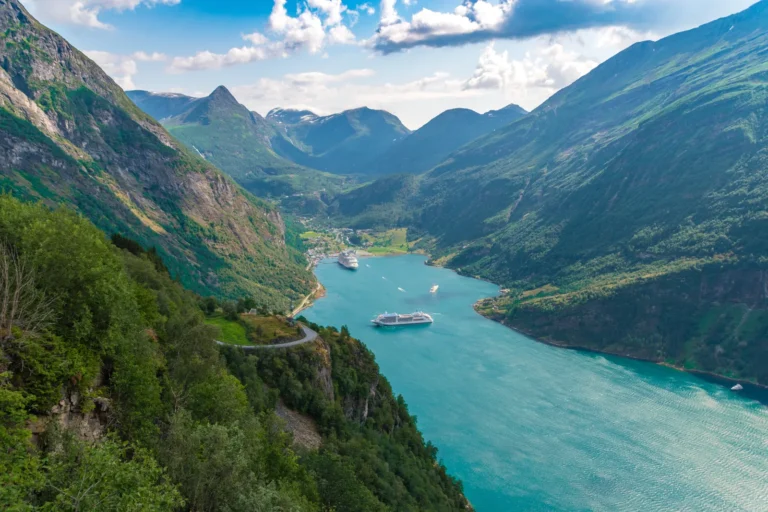
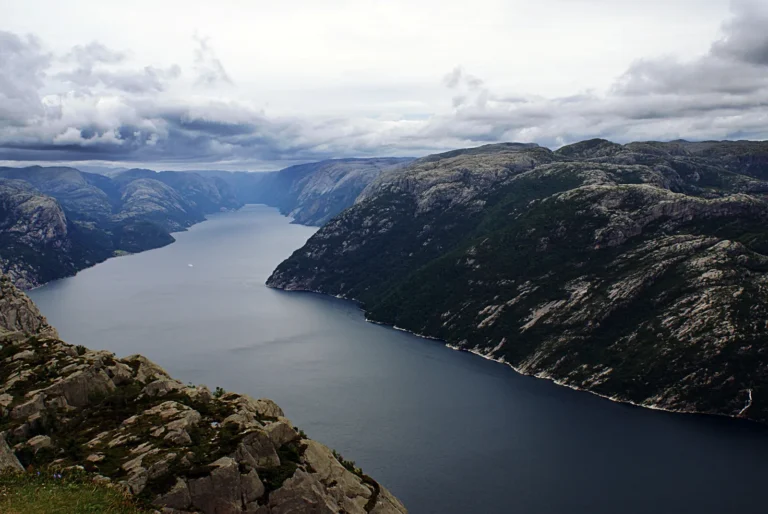
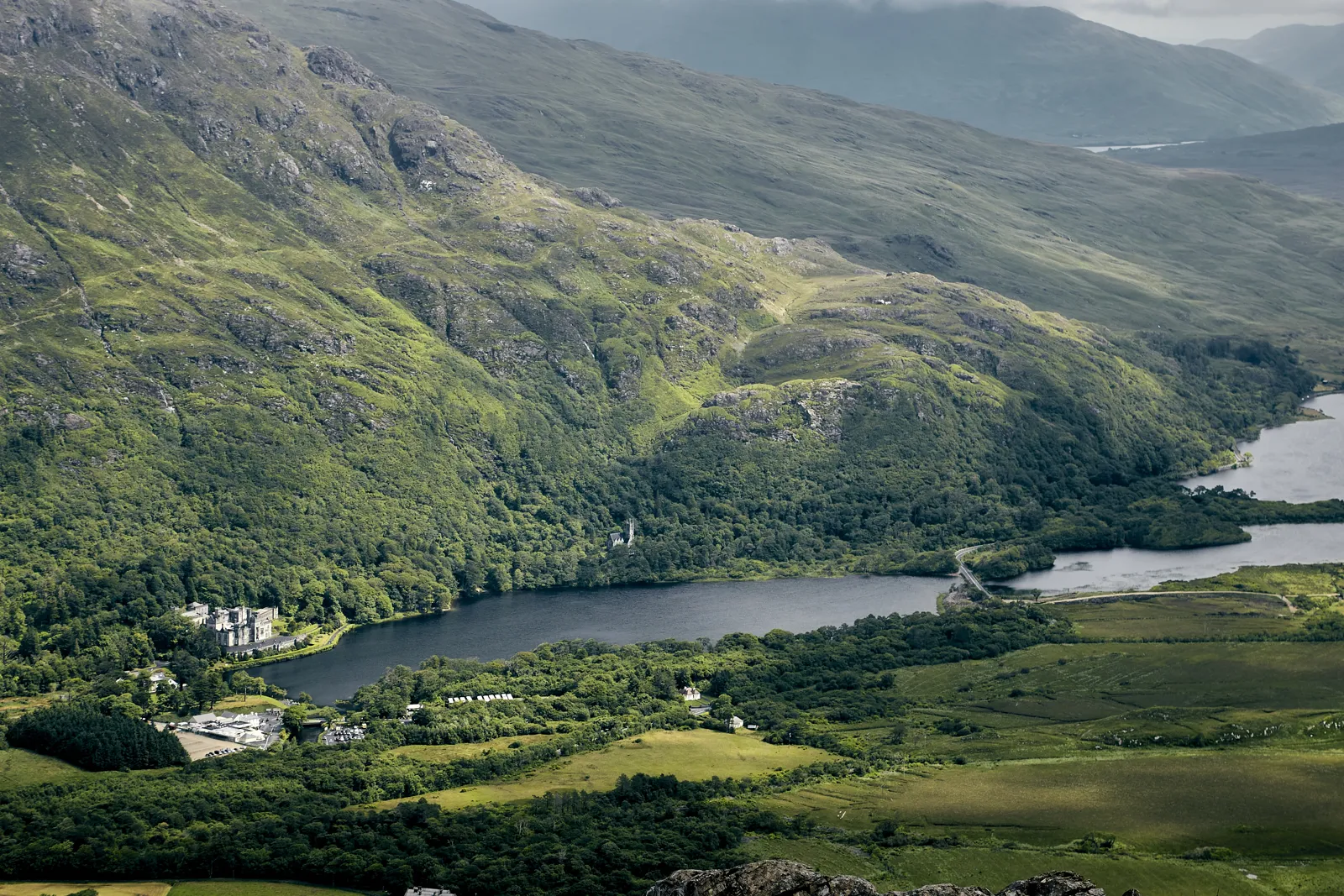
The Lofoten Islands are an archipelago in northern Norway, above the Arctic Circle: granite mountains plunging into the sea, fishing villages with red cabins on stilts, pale sandy beaches and cod-drying racks. Visiting the Lofoten Islands takes a little planning, as you arrive by regional flight or ferry and accommodation is limited. This Lofoten Islands guide covers the villages and beaches to see, the hikes, an itinerary, the budget and the best season.
Our travel deals for Lofoten Islands
Affiliate links: we earn a commission, at no extra cost to you.
FlightsKiwi.comCompare flights and airline combinations to Lofoten Islands.
Things to do in the Lofoten Islands: villages, beaches and views
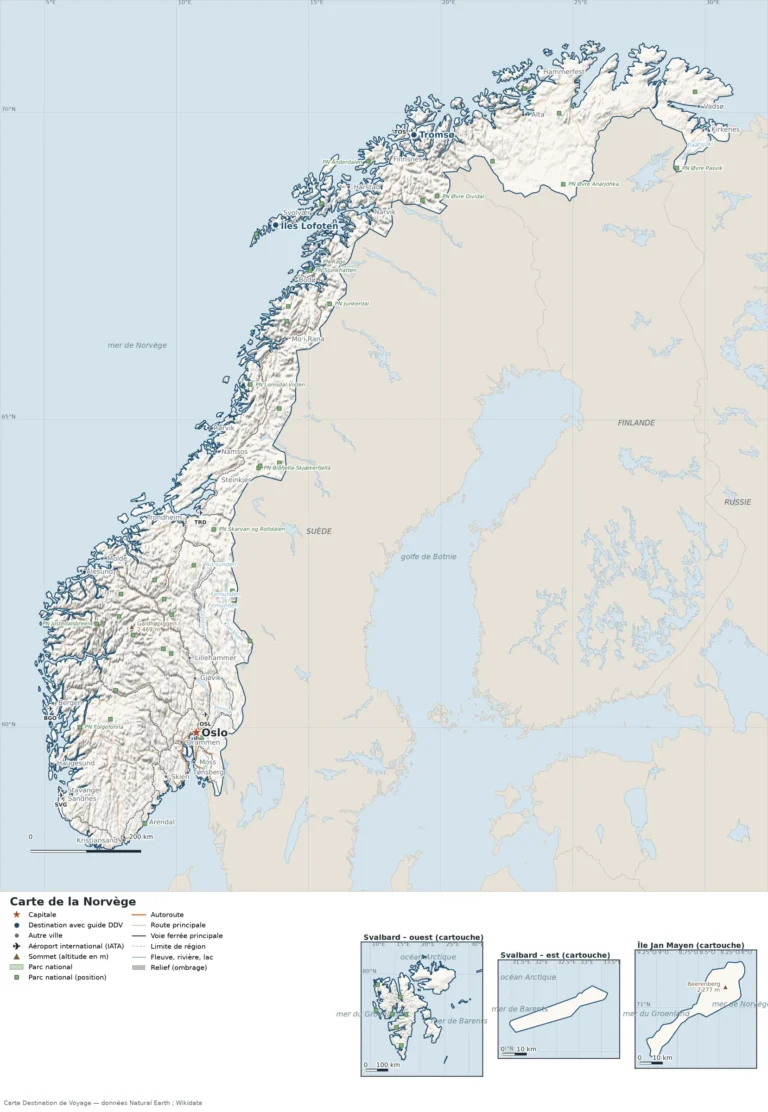
The archipelago stretches for about 150 km (93 mi), linked by the E10 road and a series of bridges and tunnels, from Svolvær in the east to the village of Å at the south-western tip. The sights below follow that order.
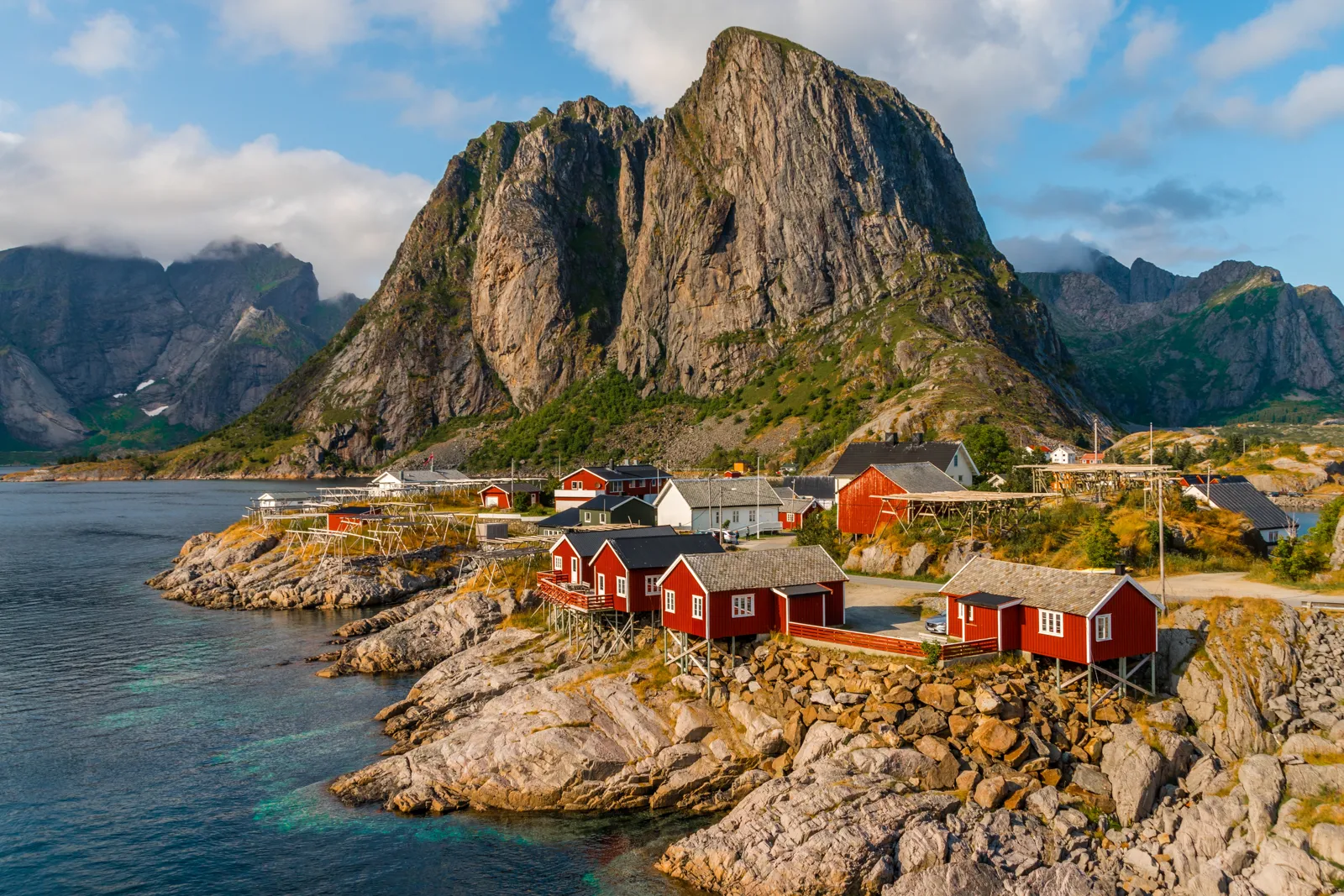
The fishermen’s cabins of Hamnøy.
Svolvær and Kabelvåg
Svolvær is the gateway to the archipelago: harbour, airport, restaurants, galleries and boat trips to the Trollfjord, a narrow fjord framed by sheer walls. The Svolværgeita peak, with its two « horns », towers over the town. A few kilometres away, Kabelvåg has the large wooden Vågan Church, nicknamed the « Lofoten Cathedral », and several fishing museums.
Henningsvær
Built on several islets linked by bridges, Henningsvær is one of the most photographed villages in Lofoten, especially for its football pitch surrounded by rocks and sea. Cafés, art galleries and old fishermen’s houses line the harbour. Come early in the morning or late in the day in summer, when the coaches have left.
The Lofotr Viking Museum at Borg
On the island of Vestvågøy, the Lofotr Museum displays a reconstruction of a Viking chieftain’s longhouse discovered on the site. Exhibitions, costumed craftspeople in summer and a replica ship: a good stop in bad weather, about 15 minutes from Leknes.
Haukland, Uttakleiv and Ramberg beaches
Lofoten surprises with its pale sandy beaches and turquoise, very cold water. Haukland and Uttakleiv, linked by a coastal path, are the best known, north of Leknes. Ramberg, on Flakstadøya, lies along the E10. For surfing, Unstad has schools and surfers all year round. These north-facing beaches are also good spots for the midnight sun and the northern lights.
Nusfjord
At the end of a small dead-end road, Nusfjord is one of the best-preserved fishing villages in Norway, with red and ochre rorbuer (fishermen’s cabins) around a narrow harbour. The rorbuer have been turned into accommodation.
Hamnøy, Reine and Reinebringen
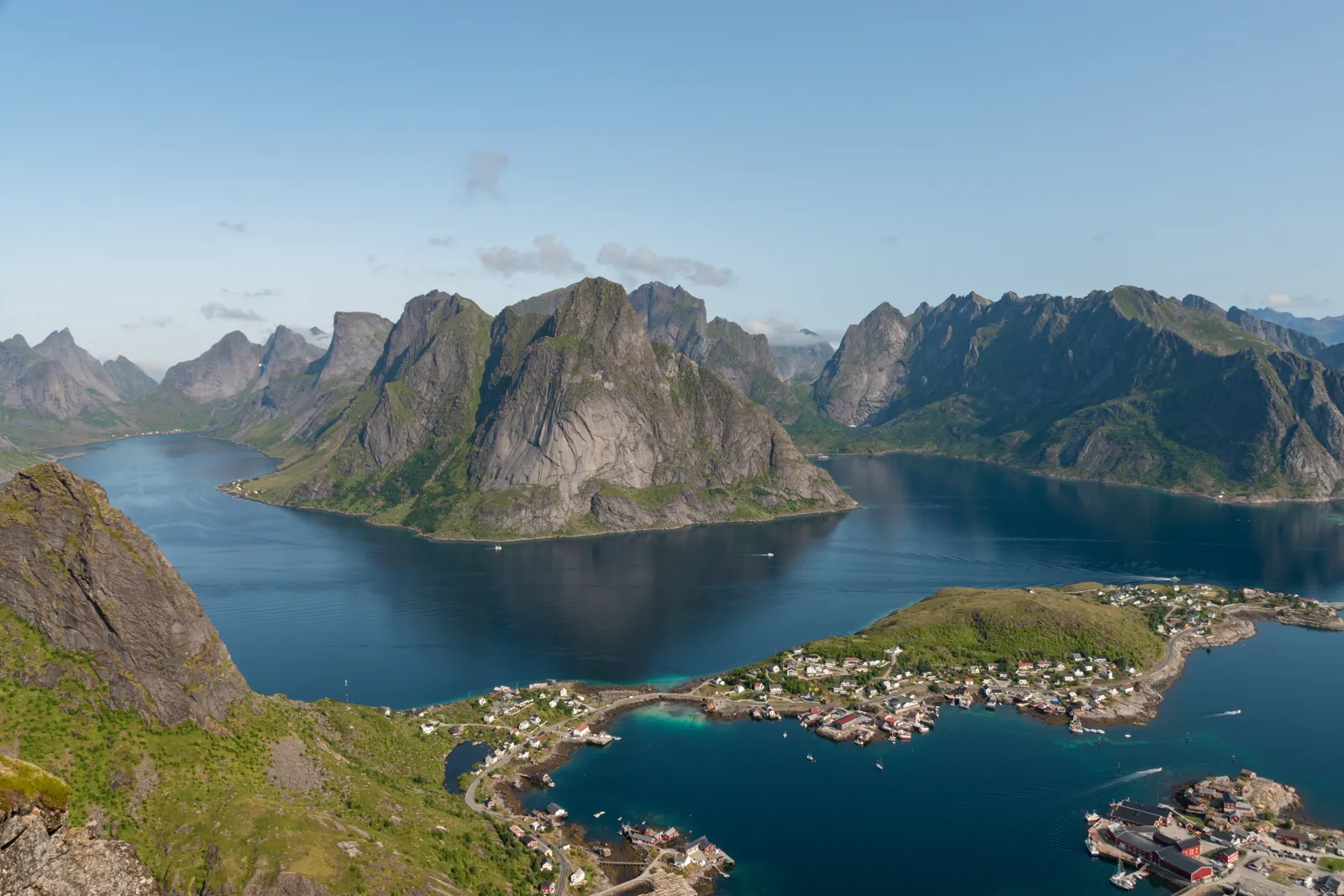
On Moskenesøya, the villages of Hamnøy and Reine offer the archipelago’s most famous view: red cabins on stilts in front of jagged peaks. The summit of Reinebringen, reached by a long stone stairway built by Nepalese Sherpas, towers over Reine and its fjords. The climb is steep and slippery when wet, and not recommended in winter. In summer, boats run from Reine to Bunes fjord and Bunes beach.
Reine seen from the summit of Reinebringen.
Å, at the end of the road
The village of Å, whose name is a single letter, marks the end of the E10. Its fishery buildings house the Norwegian Fishing Village Museum and a stockfish (dried cod) museum. Here you can learn about the Arctic cod (skrei) fishing cycle that has supported the archipelago for centuries.
Hiking
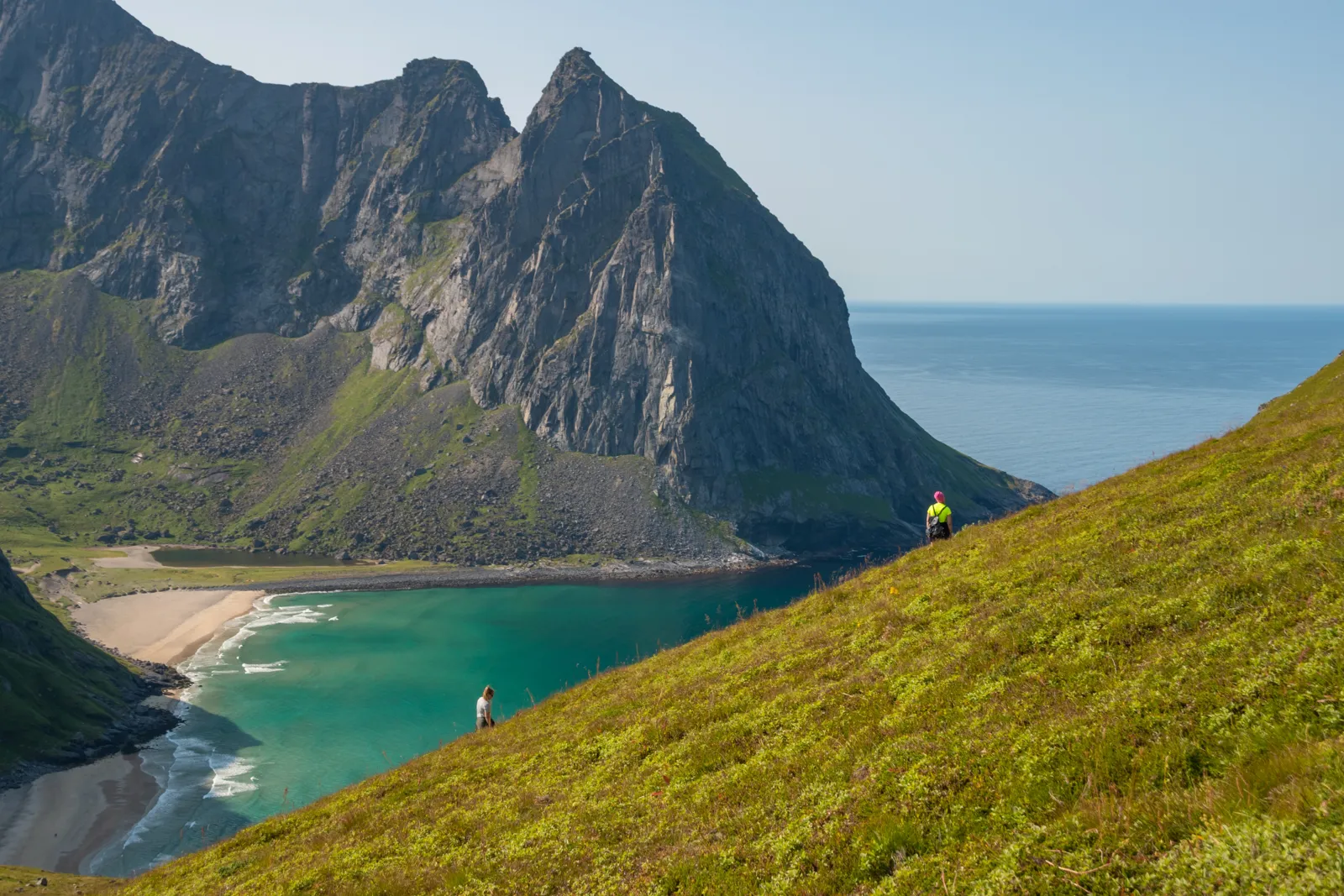
Lofoten is a hiking destination: short climbs to viewpoints (Reinebringen, Festvågtind near Henningsvær, Offersøykammen), trails to isolated beaches (Kvalvika, Bunes) or more demanding summits such as Ryten, above Kvalvika. Trails are often steep, muddy and poorly marked. According to the UK FCDO (GOV.UK, updated 25 August 2026), the weather can change quickly, producing Arctic conditions even in summer on exposed mountain tops: check the forecast on yr.no, take warm and waterproof clothing, and tell someone your route.
Kvalvika beach, reachable only on foot.
Activities at sea
Trips to the Trollfjord from Svolvær, kayaking in the fjords, sea fishing, sea eagle watching: the sea is at the heart of the experience. In winter, outings adapt to the short days and sea conditions.
Itinerary: 5 to 7 days in the Lofoten Islands
Day 1: arrive in Svolvær, walk around the town and Kabelvåg
Day 2: Henningsvær, the Festvågtind hike or a trip to the Trollfjord
Day 3: Lofotr Museum, Haukland and Uttakleiv beaches, evening on a north-facing beach
Day 4: Ramberg, Nusfjord, then Hamnøy and a night in Reine
Day 5: Reinebringen early in the morning, the village of Å
Days 6 and 7: a hike to Kvalvika or Bunes, and a spare day in case of bad weather
Combine Lofoten with the Vesterålen islands, just to the north, or with Tromsø and its northern lights. The coastal express, which calls in the archipelago, also lets you include it in a Norway cruise. To plan the drive, see our road trip guide.
When to go to the Lofoten Islands
✓ Ideal~ Good, with caveats✕ AvoidAverage max. temperature · click a month to see where to go
✅ Best months: February, March, June, July, August, September
❌ Period to avoid: November, December
Go from June to August for hiking and the midnight sun, or from September to March for the northern lights. The climate is mild for the latitude, thanks to the Gulf Stream: the average temperature stays around 0 °C (32 °F) in winter at Leknes and exceeds 12 °C (54 °F) in July. June and July are the driest months. According to Visit Lofoten (checked 26 October 2026), the midnight sun generally shines from 28 May to 14 July, and the northern lights can be seen from late August to mid-April. Month-by-month climate, seasons and events: see our page on the best time to visit Lofoten.
Budget for a trip to the Lofoten Islands
Lofoten is expensive, especially in July and August, when accommodation becomes scarce. Rough amounts per person per day, excluding flights:
Item
Budget
Comfort
Accommodation (based on a shared double room)
roughly NOK 400 to 750 (campsite, hostel, simple rorbu)
roughly NOK 1,150 to 1,900 (renovated rorbu, hotel)
Meals
roughly NOK 350 to 500
roughly NOK 750 to 1,150
Car and fuel (based on two people)
roughly NOK 250 to 400
roughly NOK 350 to 600
Activities (boat, museums)
roughly NOK 50 to 150
roughly NOK 300 to 650
Total per day
roughly NOK 1,050 to 1,550
roughly NOK 2,300 to 3,650
Rough estimates, converted at the European Central Bank rate of 23 October 2026 and rounded; they vary with the season and the exchange rate.
Getting around the Lofoten Islands
Car: the most flexible option, rented in Bodø, Leknes, Svolvær or Evenes. The E10 crosses the whole archipelago; it is narrow in places, with many bridges and tunnels. In winter, snow and ice call for experience.
Ferry: ferries and express boats link the archipelago with the mainland from the north and south; the crossing from Bodø arrives at Moskenes, near Reine. In summer, book if you are travelling by car. Timetables are on the Nordland transport planner (Reis Nordland).
Air: regional flights link Bodø with Leknes and Svolvær. From Evenes airport, a bus line runs to the archipelago. There are no nonstop flights from outside Norway to the islands.
Bus: regular lines serve the main villages, with low frequencies at weekends.
Coastal express: Hurtigruten and Havila ships call at Stamsund and Svolvær.
Where to stay in the Lofoten Islands
Rorbu: the typical accommodation, a renovated fisherman’s cabin by the water, from basic to comfortable (Reine, Hamnøy, Nusfjord, Henningsvær, Svolvær).
Svolvær: the widest choice of hotels, a practical base for the east of the archipelago.
Leknes and Vestvågøy: a central position for the beaches and the Lofotr Museum.
Reine and Moskenesøya: for the most spectacular scenery, with limited accommodation.
Camping: several campsites; wild camping is governed by Norway’s right to roam and restricted on some very busy beaches.
In July and August, book several months ahead. Plan at least two bases to avoid long return trips.
Entry requirements, health and safety
US citizens: Norway applies Schengen rules. Your passport should be valid for at least three months beyond your period of stay (six months recommended), and you need sufficient proof of funds and a return ticket. Svalbard is outside Schengen and requires a passport (U.S. Department of State, travel.state.gov, last updated July 9, 2026).
UK citizens: no visa for up to 90 days in any 180-day period. Your passport must have been issued less than 10 years before the day you arrive and be valid at least 3 months after the day you plan to leave the Schengen area; you may need to show a return or onward ticket. The EU Entry/Exit System (EES) is being implemented (UK FCDO, GOV.UK, updated 25 August 2026).
Health: UK travellers can use a GHIC or EHIC for medically necessary state healthcare (GOV.UK). The U.S. Department of State notes that medical facilities are limited outside big cities and in the remote north, and that dependence on ferries can affect access to care: take out travel insurance covering medical costs and repatriation.
Safety: the risks are natural: changeable weather, slippery trails, cold sea, avalanches in winter. GOV.UK advises checking the avalanche risk with the Norwegian Avalanche Warning Service (Varsom).
Clothing: even in summer, bring a waterproof jacket, a fleece, a hat and waterproof hiking boots.
Groceries: there are supermarkets in the main villages; stock up before heading to remote areas and check Sunday opening hours.
Money: cards are accepted almost everywhere, even for small amounts.
Mobile data: check your home carrier’s roaming charges, and expect patchy coverage in remote areas.
Respect the place: do not park on verges, use public toilets and take your rubbish with you: the archipelago is very busy in summer.
Drones: check Norwegian regulations before flying a drone.
Who is it for?
Our view, traveller by traveller, based on the information in this guide:
Profile
Our verdict
Hikers
Ideal: Reinebringen, Kvalvika, Bunes or Ryten, but on steep, muddy, poorly marked trails: you need experience and an eye on the weather.
Photographers, landscape lovers
Ideal: Reine, Hamnøy, north-facing beaches, the midnight sun in early summer and the northern lights from late August to mid-April, according to Visit Lofoten.
Couples
Yes: a night in a waterside rorbu in Reine or Nusfjord, as long as you book early for July-August.
Families
Possible: children enjoy the Lofotr Museum and the beaches, but the water is very cold and hikes must be chosen carefully.
Budget travellers
Not ideal: allow roughly NOK 1,050 to 1,550 per person per day on a budget, car included; camping, hostels and supermarket shopping keep the bill down.
Beach and swimming
Not ideal: the beaches are superb, but the water stays very cold, even in summer.
The most common route is a flight to Bodø via a major hub, then a regional flight to Leknes or Svolvær, or the ferry to Moskenes. Another option is Evenes airport, about 170 km (106 mi) from Svolvær, then a car or bus.
How many days do you need in the Lofoten Islands?
Allow 5 to 7 days to cross the archipelago from Svolvær to Å, with one or two hikes and a spare day for the weather.
What is the capital of Lofoten?
Svolvær, on the island of Austvågøy, is the main town and the administrative centre of Vågan municipality.
What is the most beautiful place in Lofoten?
The villages of Reine and Hamnøy, on Moskenesøya, offer the most famous views. Henningsvær, Nusfjord and Kvalvika beach are also very popular.
Can you see the northern lights in Lofoten?
Yes. According to Visit Lofoten, they can be seen from late August to mid-April, with clear skies and dark nights. North-facing beaches, away from lights, are good viewing spots.
Lofoten climate: 1991-2020 normals from the Norwegian Meteorological Institute (MET Norway) for the Leknes airport station, in the centre of the archipelago
Visit Lofoten (Lofoten tourist board): midnight sun and northern lights pages, checked on 26 October 2026
Visit Norway (Norwegian tourist board): northern lights and midnight sun pages
European Central Bank: euro reference rates of 23 October 2026 (budget conversion)


 FlightsKiwi.comCompare flights and airline combinations to Lofoten Islands.Compare flights