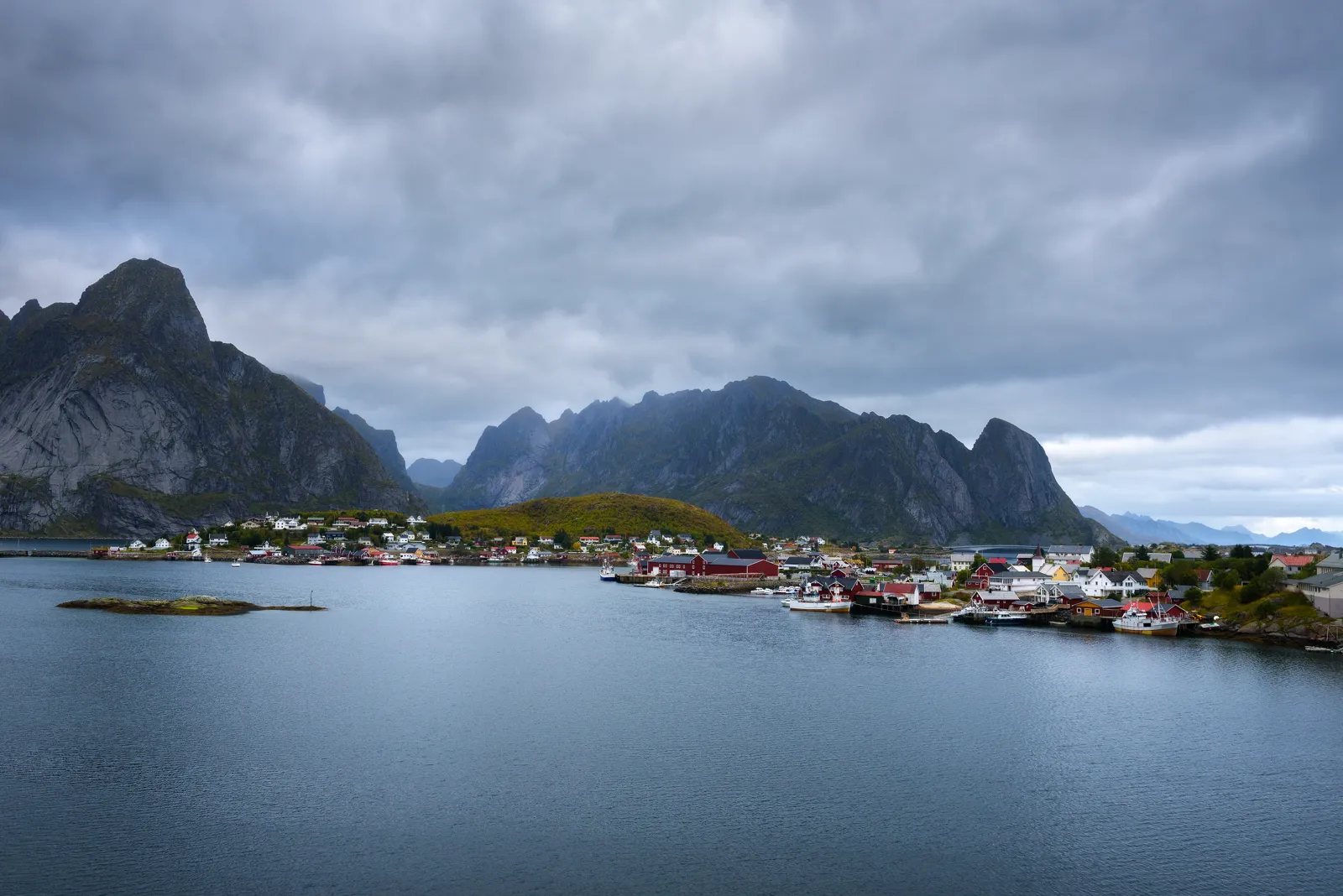
When is the best time to visit the Lofoten Islands? June to August for hiking, beaches and the midnight sun, and September to March for the northern lights. June and July are the driest months in Leknes. Winter, milder than you might imagine thanks to the Gulf Stream, is also the season of cod fishing and snowy landscapes, but days are very short in December.
The choice therefore depends mainly on the light you are looking for: continuous night or endless day. Here is how to choose your month, based on the official 1991–2020 normals of the Norwegian Meteorological Institute (Met Norway) and information from the Visit Lofoten tourist office.
Our travel deals for Lofoten Islands
Affiliate links: we earn a commission, at no extra cost to you.
FlightsKiwi.comCompare flights and airline combinations to Lofoten Islands.
Midnight sungenerally from May 28 to July 14, according to Visit Lofoten (not visible from Svolvær and Leknes, hidden by the mountains)
Northern lightsfrom late August to mid-April, according to Visit Lofoten; in practice September to March
Driest monthsJune and July; wettest: December and January
High seasonJuly–August, accommodation to be booked months ahead
Good compromiselate August–September: auroras possible, hiking still feasible, fewer people
When to go to the Lofoten Islands by priority
Best weather: July, the mildest and driest month in Leknes; June to August for hiking
Cheapest: October to January (low prices), at the cost of very short days
Fewest crowds: April, May and October, when crowds are low
Events: midnight sun generally from May 28 to July 14, northern lights from late August to mid-April (according to Visit Lofoten), cod fishing in winter
July is the mildest month of the archipelago: compare with the other destinations in our picks for where to go in July.
Lofoten Islands: the calendar at a glance
✓ Ideal~ Good, with caveats✕ AvoidBy month: average max. temperature (table and sources below)
✅ Best months: February, March, June, July, August, September
❌ Period to avoid: November, December
The climate in the Lofoten Islands month by month
The table gives the normals for the Leknes airport station, on the island of Vestvågøy, in the center of the archipelago. Met Norway publishes the monthly mean temperature and precipitation there (highs and lows are not available for this station).
Month
Mean temp.
Precipitation
Crowds
Prices
Verdict
January
0.0 °C (32 °F)
203 mm (8.0 in)
Low
Low
⚠️ Auroras, very short days, very wet month
February
−0.6 °C (31 °F)
174 mm (6.9 in)
Moderate
Moderate
✅ Auroras, return of the sun, cod fishing
March
0.0 °C (32 °F)
161 mm (6.3 in)
Moderate
Moderate
✅ Auroras, snow and lengthening days
April
2.8 °C (37 °F)
93 mm (3.7 in)
Low
Moderate
⚠️ Nights too bright for auroras from mid-April
May
6.5 °C (44 °F)
74 mm (2.9 in)
Low
Moderate
⚠️ Quiet, midnight sun from the 28th
June
9.9 °C (50 °F)
45 mm (1.8 in)
High
High
✅ Midnight sun, hiking
July
12.8 °C (55 °F)
38 mm (1.5 in)
Very high
Very high
✅ The mildest and driest, crowds
August
12.2 °C (54 °F)
78 mm (3.1 in)
High
High
✅ Hiking, first auroras in late August
September
9.4 °C (49 °F)
123 mm (4.8 in)
Moderate
Moderate
✅ Auroras and autumn colors
October
5.2 °C (41 °F)
161 mm (6.3 in)
Low
Low
⚠️ Wet and windy, auroras possible
November
2.6 °C (37 °F)
173 mm (6.8 in)
Low
Low
❌ Very short days, unsettled weather
December
1.0 °C (34 °F)
223 mm (8.8 in)
Low
Low
❌ Wettest month, very little light
Mean temperature and precipitation: 1991–2020 normals of the Norwegian Meteorological Institute (Met Norway) for the Leknes airport station, in the center of the archipelago. Crowds and prices: our estimate based on tourist seasons.
The seasons in the Lofoten Islands
Summer (June–August): midnight sun and hiking
Pros: continuous light until mid-July, the driest months, all trails, boats and museums open, beaches suitable for strolling.
Cons: heavy crowds, high prices, full accommodation, packed parking lots at Reine or Henningsvær; temperatures stay cool (mean around 12 to 13 °C (54 to 55 °F) in July).
Autumn (September–October): auroras and colors
Pros: return of the night and the auroras, autumn colors, falling crowds.
Cons: more frequent rain, strong winds, some activities close at the end of the season.
Winter (November–March): auroras, snow and cod
Pros: long nights for the auroras, snowy landscapes, the Arctic cod (skrei) fishing season at the end of winter, with fish drying racks full.
Cons: December and January are the wettest and darkest months; snowy roads, violent winds and ferries sometimes disrupted. February and March offer a better balance between light and night.
Spring (April–May): the quiet season
Pros: few people, lower prices, days lengthening very quickly, snow still on the summits.
Cons: nights become too bright for auroras from mid-April, nature stays brown, some businesses not yet open.
When to go to the Lofoten Islands by trip type
Trip
Best time
Hiking (Reinebringen, Kvalvika, Ryten)
June to early September
Midnight sun
About May 28 to July 14
Northern lights
September to March
Auroras and snow
February–March
Photographing snowy villages
February–March
Surfing at Unstad
All year, with a thick wetsuit; autumn and winter for the swells
Budget, few people
May, September
Conditions vary strongly from year to year: check the weather on yr.no before each outing.
Midnight sun and northern lights: the dates to remember
According to Visit Lofoten, the midnight sun is generally visible from May 28 to July 14, with variations by location (from May 25 to July 18 at Uttakleiv beach, for example). From Svolvær and Leknes, the mountains hide it: head for the outer coast, such as Laukvik or Hov, 20–30 minutes away by road.
The northern lights are visible, again according to Visit Lofoten, from late August to mid-April; between these dates, the night is too bright for them to be seen. Visit Norway adds that activity is often strongest between 11 p.m. and 2 a.m., and that you need a clear, dark sky. Plan several nights on site to improve your chances.
Summer or winter in the Lofoten Islands: the comparison
Criterion
Summer (June–August)
Winter (December–March)
Light
Continuous daylight until mid-July
Long nights; very little daylight in December
Mean temperature in Leknes
About 10 to 13 °C (50 to 55 °F)
About −1 to 1 °C (30 to 34 °F)
Precipitation
The lowest of the year (38 to 78 mm (1.5 to 3.1 in) a month)
The highest (161 to 223 mm (6.3 to 8.8 in) a month)
Star attraction
Midnight sun
Northern lights
Activities
Hiking, kayaking, beaches, boat to Bunes
Auroras, photography, fishing, snowshoeing
Roads
Easy but busy
Snow, ice, wind: experience required
Crowds and prices
At their highest
Quieter, except February–March
Climate data: 1991–2020 normals from Met Norway (Leknes). Dates of the phenomena: Visit Lofoten.
East or west of the archipelago?
The weather changes quickly and can vary from one island to another on the same day: one slope under rain, the other in sunshine. The east (Svolvær, Henningsvær) concentrates services, air links and sea excursions; the west (Moskenesøya, Reine, Å) offers the most spectacular scenery but fewer places to stay. In winter, the center (Vestvågøy, Flakstadøya) and its north-facing beaches are convenient for the auroras. In summer, stay in the west to enjoy early-morning hikes, before day visitors arrive.
The Lofoten Islands month by month
January: long nights for the auroras, but it is one of the wettest months and days stay very short.
February: the sun returns, auroras remain frequent and cod fishing is in full swing: one of the best winter months.
March: snow, auroras and already long days: the best balance for winter photography.
April: nights brighten; the auroras end around mid-April. A quiet month, still snowy at altitude.
May: nature wakes up, crowds stay low; the midnight sun begins in late May.
June: midnight sun, one of the driest months, trails passable: the best time to hike before the July crowds.
July: the mildest and driest month, but the busiest; midnight sun until mid-July.
August: still many people early in the month, then quieter; first auroras possible at the end of the month.
September: auroras, autumn colors, fewer visitors: a good compromise, despite more frequent rain.
October: wet and windy, but the auroras show up under clear skies.
November: very short days and unsettled weather: a month to avoid except for the auroras.
December: the wettest and darkest month; Christmas atmosphere in the villages.
When to book your trip to the Lofoten Islands
For July–August, book accommodation, car and ferry with vehicle several months ahead: supply is limited and the best-placed rorbuer go quickly. For winter, book two to three months ahead, especially for February–March. Regional flights to Leknes and Svolvær are on small aircraft: book them at the same time as your international flight.
Health: travel insurance covering medical costs and repatriation is advisable.
Equipment: warm, waterproof clothing in every season, ice cleats for shoes in winter.
Frequently asked questions
What is the best month to visit the Lofoten Islands?
June or July for hiking and the midnight sun: they are the driest months in Leknes according to Met Norway’s 1991–2020 normals. February and March for the northern lights with snow and days that are already long.
When can you see the northern lights in the Lofoten Islands?
According to Visit Lofoten, from late August to mid-April, under a clear, dark sky. In practice, September to March.
When can you see the midnight sun in the Lofoten Islands?
Generally from May 28 to July 14, according to Visit Lofoten. It is not visible from Svolvær and Leknes, hidden by the mountains: go to the outer coast.
Is it very cold in the Lofoten Islands in winter?
Less than elsewhere at this latitude: the mean temperature stays around 0 °C (32 °F) from January to March in Leknes. Wind and humidity do, however, make it feel colder.
Lofoten in summer or in winter?
Summer for hiking, beaches and continuous light; winter for the auroras, snow and a calmer atmosphere, with short days and harsher weather.
When should you avoid the Lofoten Islands?
November and December are the darkest months, very wet and windy. July–August is the most expensive and busiest period.
Our sources
Met Norway: 1991–2020 normals of the Norwegian Meteorological Institute (Met Norway) for the Leknes airport station, in the center of the archipelago
Visit Lofoten (Lofoten tourist office): pages on the northern lights, the midnight sun, air access, ferries and boats
Visit Norway (Norwegian tourist board): pages on the northern lights and the midnight sun


 FlightsKiwi.comCompare flights and airline combinations to Lofoten Islands.Compare flights