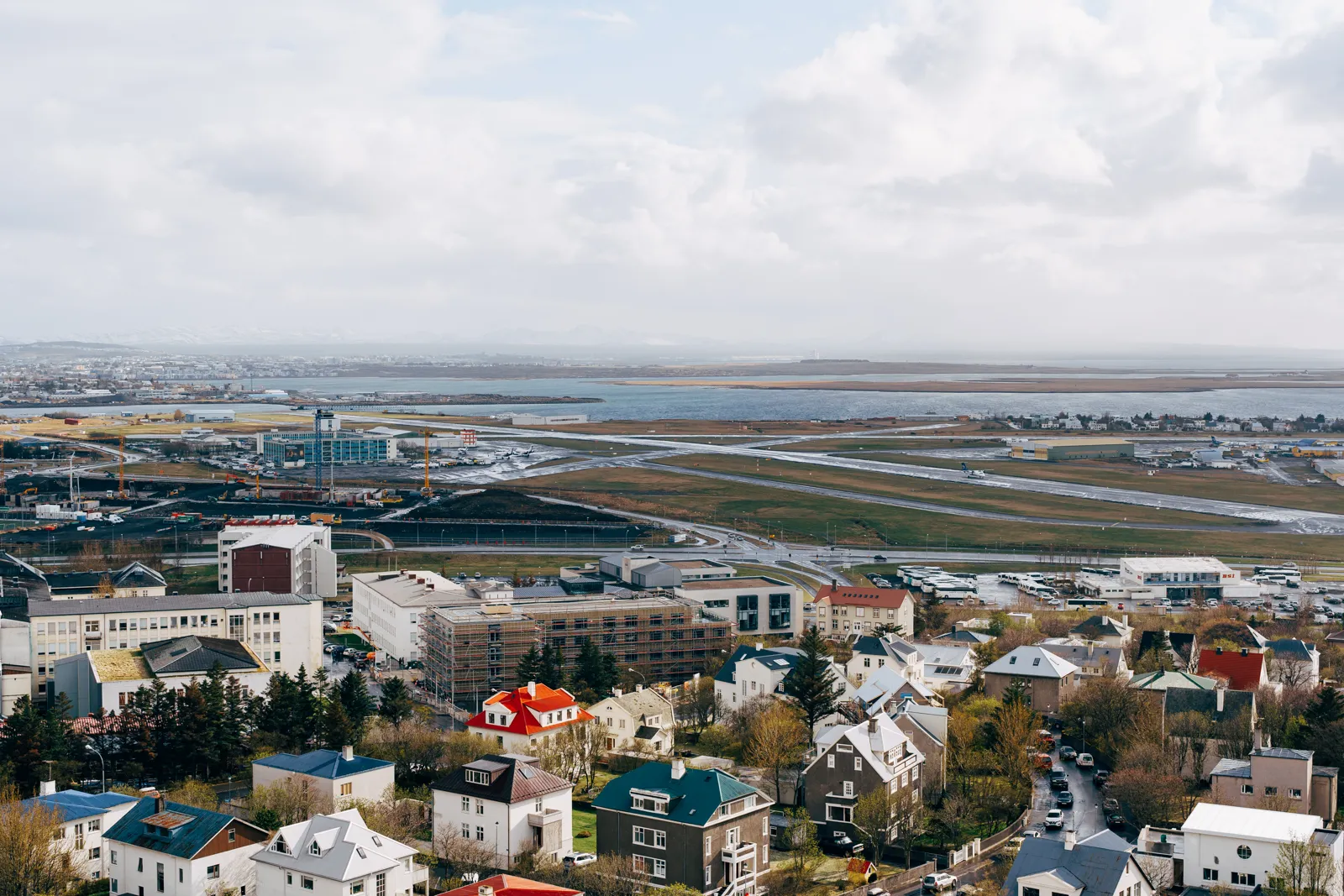
The best time to visit Iceland is from June to August: it is the mildest season (about 13 to 15 °C, or 55 to 59 °F, in the afternoon in Reykjavik), the driest in the capital, with days of almost 20 hours and access to the Highland tracks. If your goal is to see the northern lights, aim instead for September to March, when nights are long and dark enough. Iceland’s climate is oceanic and cool: about 3 °C (37 °F) in the afternoon in winter in Reykjavik, 13 to 15 °C (55 to 59 °F) in summer, with wind all year. Reykjavik and the Ring Road can be located on the map of Iceland.
Iceland has no « bad » season in the strict sense, but two very different trips: summer for hiking, interior roads and constant daylight, winter for the northern lights, snow and ice caves, with short days and less stable weather. Here is how to choose, based on the monthly data published by the Icelandic Meteorological Office (Veðurstofa Íslands).

Our travel deals for Iceland
Affiliate links: we earn a commission, at no extra cost to you.
 FlightsKiwi.comCompare flights and airline combinations to Iceland.Compare flights
- eSIMAiraloData plan to install before you leave (eSIM-compatible phone).See plans


When to go to Iceland at a glance
- Best overall period June to August (mild weather, very long days, F-roads open)
- Best compromise late May – early June and September, fewer people and slightly lower prices
- Northern lights in practice September to March, on dark nights with clear skies
- Midnight sun around the June solstice (about 21 hours of daylight in Reykjavik on June 21)
- Shortest days December (about 4 hours of daylight in Reykjavik at the solstice)
- Highland roads (F-roads) generally closed from mid-September to June–July
- South coast (Vík) the wettest region; the north (Akureyri) is much drier
When to go to Iceland by priority
- Best weather: June to August (about 13 to 15 °C, or 55 to 59 °F, in the afternoon in Reykjavik, F-roads open); May is the sunniest month in Reykjavik
- Cheapest: April, October and November, as well as January–February outside the holidays; prices are at their highest from June to August
- Fewest crowds: late May – early June and September
- Events and phenomena: midnight sun around June 21, national day on June 17, northern lights from September to March, Winter Lights in Reykjavik in February; check dates every year
Iceland: the calendar at a glance
🔎 Month by month: Iceland in August · Iceland in September
✅ Best months: may, June, July, August, September
❌ Period to avoid: December
Climate and weather in Iceland month by month
The table below gives the averages for Reykjavik, the starting point for almost every trip. The climate there is oceanic: winters that are mild for the latitude, cool summers, and wind all year. The north and the south coast are covered further down.
| Month | Avg. max | Avg. min | Rain | Crowds | Prices | Verdict |
|---|---|---|---|---|---|---|
| January | 3.2 °C (38 °F) | -1.7 °C (29 °F) | 87 mm (3.4 in) | Low | Medium | ⚠️ Very short days, northern lights possible |
| February | 3.3 °C (38 °F) | -1.9 °C (29 °F) | 91 mm (3.6 in) | Medium | Medium | ⚠️ Cold and windy, a good month for the northern lights |
| March | 4.2 °C (40 °F) | -1.3 °C (30 °F) | 81 mm (3.2 in) | Medium | Medium | ⚠️ Days lengthening, northern lights still visible |
| April | 6.9 °C (44 °F) | 1.0 °C (34 °F) | 59 mm (2.3 in) | Low | Low to medium | ⚠️ Transition, snow possible on the roads |
| May | 10.1 °C (50 °F) | 4.0 °C (39 °F) | 53 mm (2.1 in) | Medium | Medium | ✅ The sunniest month, few people |
| June | 13.0 °C (55 °F) | 7.2 °C (45 °F) | 43 mm (1.7 in) | High | High | ✅ The driest month, midnight sun |
| July | 14.9 °C (59 °F) | 9.1 °C (48 °F) | 50 mm (2.0 in) | Very high | Very high | ✅ The mildest month, Highlands open |
| August | 14.1 °C (57 °F) | 8.6 °C (47 °F) | 65 mm (2.6 in) | Very high | Very high | ✅ Still mild, F-roads open |
| September | 11.4 °C (53 °F) | 6.2 °C (43 °F) | 87 mm (3.4 in) | Medium | Medium | ✅ Dark nights return, first northern lights |
| October | 7.6 °C (46 °F) | 2.7 °C (37 °F) | 80 mm (3.1 in) | Low | Medium | ⚠️ Rain and wind, F-roads closed |
| November | 4.6 °C (40 °F) | -0.1 °C (32 °F) | 87 mm (3.4 in) | Low | Low | ⚠️ Short days, unstable weather |
| December | 3.3 °C (38 °F) | -1.6 °C (29 °F) | 95 mm (3.7 in) | Medium (holidays) | Medium to high | ❌ About 4 hours of daylight, frequent storms |
Note: the rainfall figures do not tell the whole story. In Iceland it is mainly the wind that makes the weather difficult, particularly from October to March: storms can close roads and delay flights within hours. As for sunshine, Reykjavik gets on average about 209 hours in May, 190 in June, but only 23 in January and 13 in December (same source).
Iceland’s seasons: pros and cons
In practice there are two main tourist seasons: summer (June to August), and a long dark season from October to March. May and September are shoulder seasons that are often worthwhile.
Summer (June to August): high season
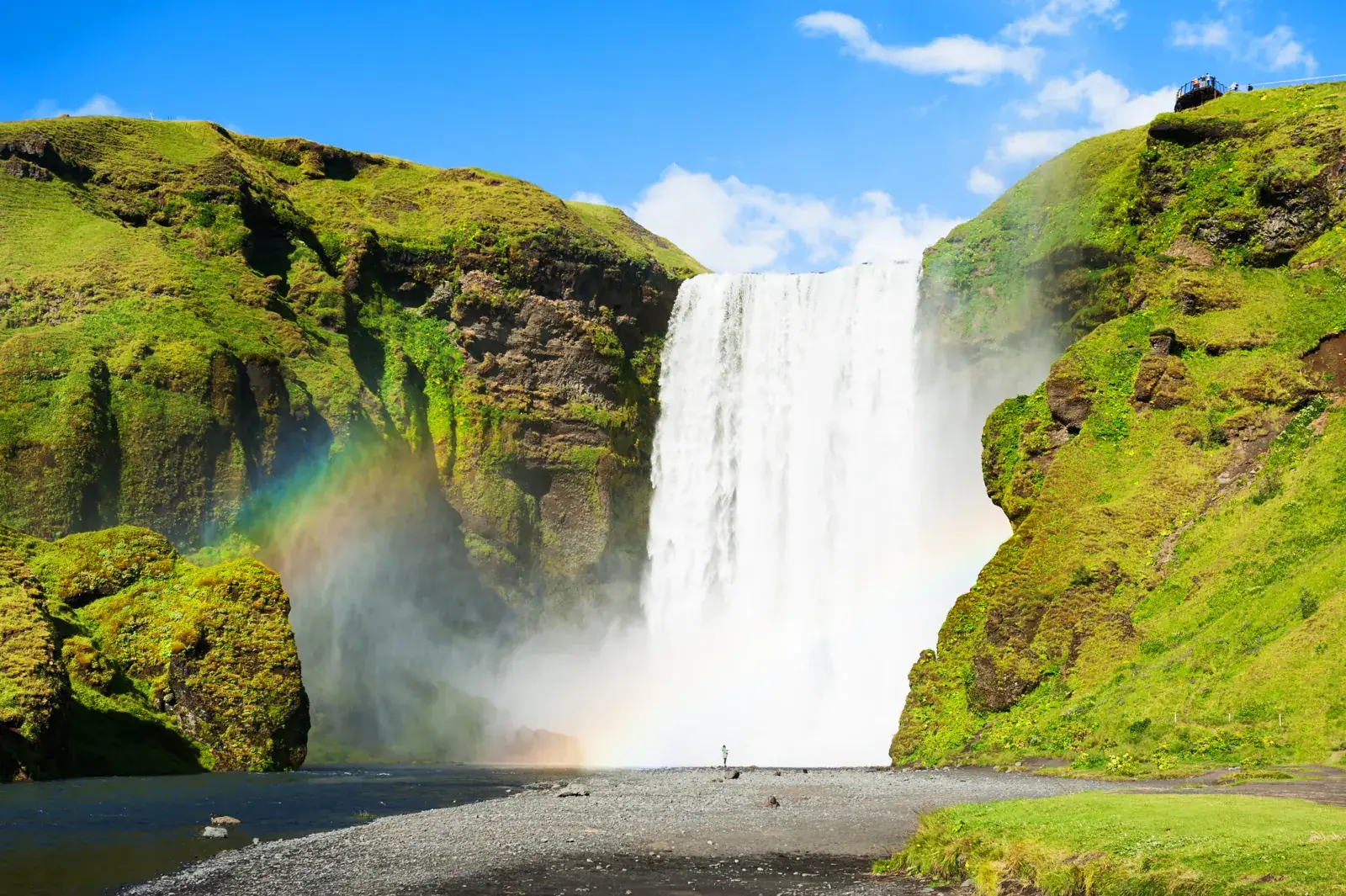
This is the only period when the whole island is accessible. Average highs are around 13 to 15 °C (55 to 59 °F) in Reykjavik and Akureyri, which is still cool: always bring a warm layer and a waterproof jacket. June is the driest month in Reykjavik (43 mm (1.7 in)). Around the solstice, the sun sets for only a few hours, and it never really gets dark.
- Pros: relative mildness, very long days, Highland tracks accessible (Landmannalaugar, Þórsmörk), hiking, puffins on the cliffs, whale watching
- Cons: prices at their highest (accommodation, car rental), very busy sites on the Golden Circle and the south coast, reservations essential
- No northern lights: the sky does not get dark enough from late April to mid-August
- Our tip: to avoid the July peak, aim for the second half of June or late August
Shoulder months (May and September): the good compromise
May is the sunniest month in Reykjavik, with days already very long and fewer visitors than in summer. The F-roads, however, remain closed. September keeps decent temperatures (an average high of 11 °C, or 52 °F), the landscapes take on autumn colors, and nights become dark enough again for the first northern lights. Rain increases markedly from September. Autumn colors and first northern lights: our page on Iceland in September covers this compromise, with roads open and rain on the rise.
Winter (October to March): northern lights, ice and short days
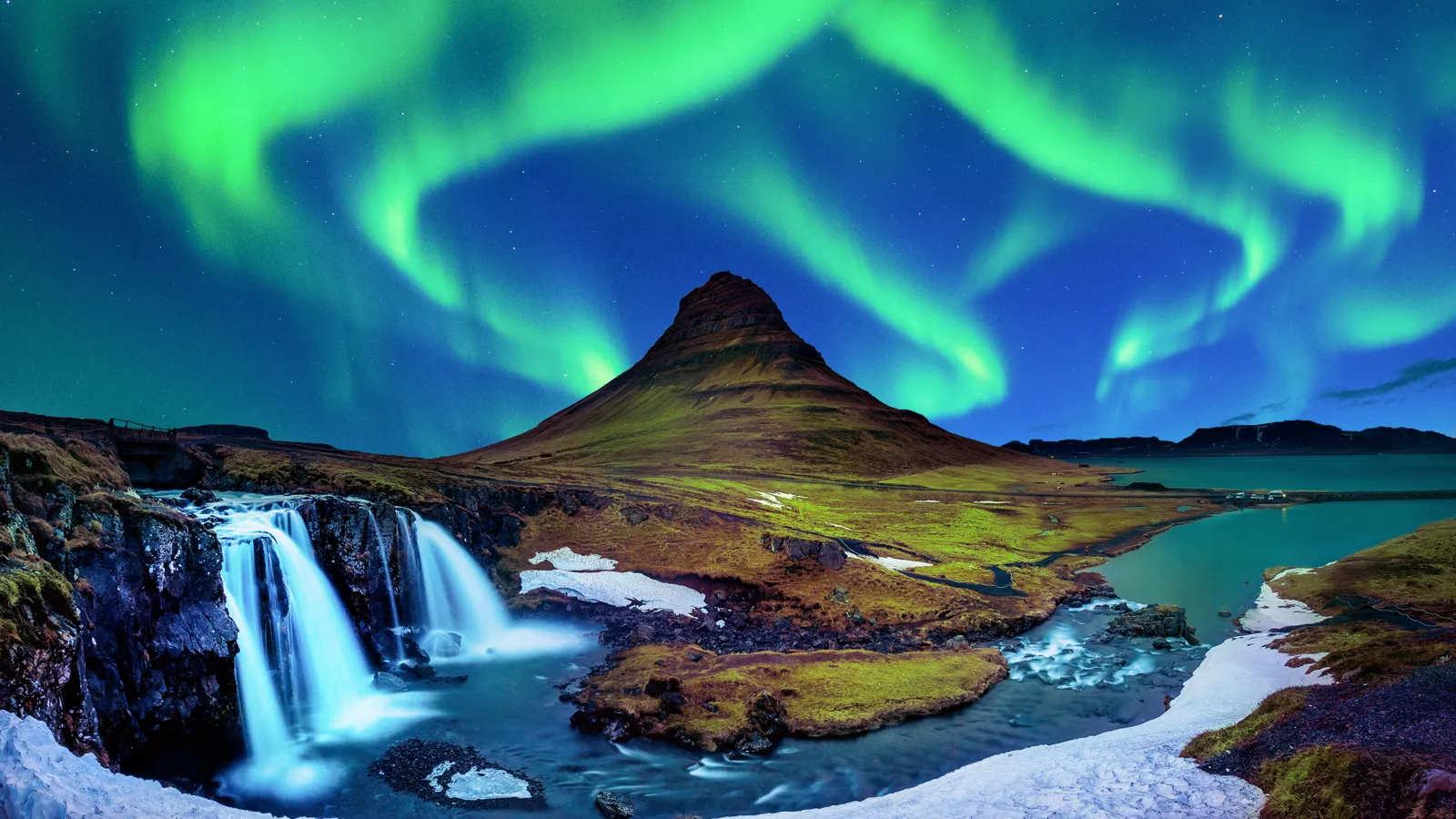
The Icelandic winter is less cold than you might imagine on the coasts: in Reykjavik, highs stay around 3 °C (37 °F) and lows around -2 °C (28 °F) from December to February. The real constraint is light: about 4 hours of daylight at the December solstice in Reykjavik, a little over 3 hours in Akureyri. Wind, snow and ice make driving tricky.
- Pros: northern lights, snowy landscapes, ice caves accessible with a guide, hot springs in the snow, lower prices (outside the holidays)
- Cons: very short days, roads closed by storms, some mountain roads and the Highlands inaccessible, excursions sometimes canceled
- Who is it for? Travelers who come for the northern lights and accept a flexible schedule, preferably around Reykjavik and the south coast
Midnight sun and winter nights: the benchmarks
Iceland lies just below the Arctic Circle, which only the small island of Grímsey, in the north, crosses. There is therefore no true polar night: the sun rises every day, even in December. Approximate day lengths, calculated for the 21st of each month:
| Date | Reykjavik | Akureyri |
|---|---|---|
| March 21 / September 21 | about 12 h | about 12 h |
| April 21 | about 15 h 30 min | about 16 h |
| May 21 | about 19 h | about 19 h 30 min |
| June 21 (solstice) | about 21 h | more than 23 h |
| July 21 | about 19 h | about 20 h |
| October 21 | about 9 h | about 8 h 45 min |
| November 21 | about 5 h 45 min | about 5 h |
| December 21 (solstice) | about 4 h | about 3 h |
In practice, from late May to late July it is light 24 hours a day, even when the sun drops below the horizon. Bring a sleep mask.
When to see the northern lights in Iceland
The northern lights are present all year, but you need a sky that is dark and at least partly clear to see them. In Iceland, that limits viewing in practice to the period from September to March (sometimes from late August and until mid-April). Three tips:
- Get away from the light: move away from Reykjavik and the towns; moonless nights are the best.
- Watch the clouds: the Icelandic Meteorological Office publishes an aurora activity forecast (scale of 0 to 9) and a cloud cover map at vedur.is. A clear sky matters more than activity.
- Stay several nights: on a stay of 3 or 4 nights, the weather can ruin everything. A week clearly improves your chances.
September–October and February–March often offer a good balance: enough night for the northern lights, enough daylight for sightseeing, and roads generally easier to drive than in midwinter.
When to go to Iceland by region
Terrain and exposure to the prevailing winds create real differences. The south coast, facing the Atlantic low-pressure systems, gets a lot of rain; the sheltered north is drier but colder in winter. Comparison of three stations:
| Month | Reykjavik (southwest) | Akureyri (north) | Vík í Mýrdal (south coast) |
|---|---|---|---|
| January | 3.2 °C (38 °F) / 87 mm (3.4 in) | 2.7 °C (37 °F) / 60 mm (2.4 in) | 4.5 °C (40 °F) / 237 mm (9.3 in) |
| February | 3.3 °C (38 °F) / 91 mm (3.6 in) | 2.6 °C (37 °F) / 52 mm (2.0 in) | 4.4 °C (40 °F) / 223 mm (8.8 in) |
| March | 4.2 °C (40 °F) / 81 mm (3.2 in) | 3.5 °C (38 °F) / 47 mm (1.9 in) | 4.9 °C (41 °F) / 219 mm (8.6 in) |
| April | 6.9 °C (44 °F) / 59 mm (2.3 in) | 6.6 °C (44 °F) / 26 mm (1.0 in) | 7.2 °C (45 °F) / 176 mm (6.9 in) |
| May | 10.1 °C (50 °F) / 53 mm (2.1 in) | 10.3 °C (51 °F) / 24 mm (0.9 in) | 10.1 °C (50 °F) / 148 mm (5.8 in) |
| June | 13.0 °C (55 °F) / 43 mm (1.7 in) | 13.7 °C (57 °F) / 21 mm (0.8 in) | 12.4 °C (54 °F) / 155 mm (6.1 in) |
| July | 14.9 °C (59 °F) / 50 mm (2.0 in) | 15.1 °C (59 °F) / 34 mm (1.3 in) | 14.1 °C (57 °F) / 163 mm (6.4 in) |
| August | 14.1 °C (57 °F) / 65 mm (2.6 in) | 14.8 °C (59 °F) / 41 mm (1.6 in) | 13.9 °C (57 °F) / 217 mm (8.5 in) |
| September | 11.4 °C (53 °F) / 87 mm (3.4 in) | 11.8 °C (53 °F) / 53 mm (2.1 in) | 11.5 °C (53 °F) / 265 mm (10.4 in) |
| October | 7.6 °C (46 °F) / 80 mm (3.1 in) | 6.6 °C (44 °F) / 74 mm (2.9 in) | 8.2 °C (47 °F) / 239 mm (9.4 in) |
| November | 4.6 °C (40 °F) / 87 mm (3.4 in) | 3.6 °C (38 °F) / 68 mm (2.7 in) | 5.8 °C (42 °F) / 251 mm (9.9 in) |
| December | 3.3 °C (38 °F) / 95 mm (3.7 in) | 2.6 °C (37 °F) / 73 mm (2.9 in) | 4.5 °C (40 °F) / 220 mm (8.7 in) |
Reykjavik, the Golden Circle and the Reykjanes Peninsula
The easiest region to reach all year. The Golden Circle (Þingvellir, Geysir, Gullfoss) can be visited even in winter, with main roads regularly cleared of snow. The best windows: May to September for sightseeing, September to March for northern lights on excursions from the capital. On the Reykjanes Peninsula, recent volcanic activity can lead to closures: the UK FCDO (GOV.UK, updated 11 August 2026) says there has been a series of eruptions there since December 2023, that further eruptions are likely, and that you should follow the authorities’ advice.
This peninsula, near the airport, is home to the geothermal lagoon featured in our guide to visiting the Blue Lagoon, with its opening times.
The south coast (Vík, Skaftafell, Jökulsárlón)
This is the region of waterfalls (Seljalandsfoss, Skógafoss), black sand beaches and glaciers. It is very wet: more than 200 mm (7.9 in) of rain in most months in Vík, with sometimes violent winds. It can be visited all year via Route 1, but winter storms can close it temporarily. The ice caves of Vatnajökull can be visited in winter, only with a guide.
The north (Akureyri, Lake Mývatn, Húsavík)
Drier (less than 35 mm, or 1.4 in, a month in Akureyri from May to July) and slightly warmer in summer than Reykjavik, but colder in winter (lows around -3.5 °C, or 26 °F, from December to February). June to August is ideal for Mývatn, Dettifoss and whale watching in Húsavík. In winter, the very long nights favor the northern lights, but getting there by road takes experience. For the heart of summer, our page on Iceland in August covers weather, crowds and budget.
The Highlands and the F-roads
The interior of the island (Landmannalaugar, Kjölur, Askja) can only be reached by F-roads, reserved for 4×4 vehicles. According to Safetravel, the Icelandic travel information service, they are generally closed from mid-September until June or July, with dates varying every year depending on the snow. Check whether they are open on umferdin.is (the road service, formerly road.is) before setting off. The UK FCDO (GOV.UK, updated 11 August 2026) likewise says many highland tracks are open for only a short part of the summer and that rivers can change level quickly, even within the same day.
The table below summarizes, month by month, the recommended period for each region.
| Month | Reykjavik and Golden Circle | South coast (Vík) | North (Akureyri, Mývatn) | Highlands (F-roads) |
|---|---|---|---|---|
| January | ⚠️ | ⚠️ | ⚠️ | ❌ |
| February | ⚠️ | ⚠️ | ⚠️ | ❌ |
| March | ⚠️ | ⚠️ | ⚠️ | ❌ |
| April | ⚠️ | ⚠️ | ⚠️ | ❌ |
| May | ✅ | ⚠️ | ⚠️ | ❌ |
| June | ✅ | ✅ | ✅ | ⚠️ |
| July | ✅ | ✅ | ✅ | ✅ |
| August | ✅ | ✅ | ✅ | ✅ |
| September | ✅ | ⚠️ | ⚠️ | ⚠️ |
| October | ⚠️ | ⚠️ | ⚠️ | ❌ |
| November | ⚠️ | ⚠️ | ⚠️ | ❌ |
| December | ❌ | ⚠️ | ⚠️ | ❌ |
When to go to Iceland depending on your plans
| Your plans | Best time | Where? |
|---|---|---|
| First trip, around the island (Route 1) | June to August | Whole island |
| Northern lights | September to March (moonless nights) | Outside the towns: south coast, north, Snæfellsnes |
| Hiking in the Highlands | July to late August | Landmannalaugar, Þórsmörk |
| Puffins | June to early August or so | Látrabjarg cliffs, Westman Islands, Borgarfjörður eystri |
| Whale watching | Summer (best sea conditions) | Húsavík, Akureyri, Reykjavik |
| Ice caves | Winter, with a guide | Vatnajökull |
| Small budget | April, October–November | Reykjavik and the south coast |
| Short stay (3–5 days) | All year | Reykjavik, Golden Circle, south coast |
| Honeymoon | June or September | South coast, Snæfellsnes, north |
Major events to plan your trip around
| When | Event | Where |
|---|---|---|
| January–February (month of Þorri) | Þorrablót: feasts of traditional foods | Whole country |
| February | Winter Lights Festival | Reykjavik |
| June 17 | National Day | Whole country |
| August | Reykjavik Pride | Reykjavik |
| August | Menningarnótt (Culture Night) | Reykjavik |
| End of the year | Christmas and New Year celebrations (fireworks) | Reykjavik |
Iceland month by month
Iceland in January: Midwinter: about 3 °C (37 °F) in the afternoon in Reykjavik, 5 to 6 hours of daylight by the end of the month. A good period for the northern lights and ice caves, but storms are frequent.
Iceland in February: Similar to January, with days lengthening fast (about 9 hours at the end of February). A good month for the northern lights.
Iceland in March: Equinox: 12 hours of daylight, northern lights still possible, frequent snow. One of the best winter compromises.
Iceland in April: Transition: 7 °C (44 °F) in Reykjavik, nights too bright for the northern lights by the end of the month. Prices and crowds still moderate.
Iceland in May: The sunniest month in Reykjavik (about 209 hours). Few people, average prices, but F-roads closed.
Iceland in June: The driest month in Reykjavik, midnight sun around the 21st. The start of high season and of the puffins.
Iceland in July: The mildest month (about 15 °C, or 59 °F) and the busiest. Highlands generally open. Book early.
Iceland in August: Still mild, F-roads open, rain rising on the south coast. Nights start to darken again at the end of the month.
Iceland in September: 11 °C (52 °F) in Reykjavik, autumn colors, first northern lights, fewer people. F-roads generally close around mid-September.
Iceland in October: Rain and wind on the rise, about 9 hours of daylight. A good period for the northern lights, prices falling.
Iceland in November: Short days (less than 6 hours at the end of November), unstable weather. Low prices, best for flexible travelers.
Iceland in December: The shortest days (about 4 hours at the solstice) and the wettest month in Reykjavik. Christmas atmosphere and New Year fireworks.
When to book your trip to Iceland
Iceland has limited accommodation outside Reykjavik. For June to August, book accommodation and a rental car 4 to 6 months ahead, or even earlier for the small hotels of the south coast and Mývatn. The same goes for the year-end holidays. In the shoulder seasons and in winter (outside the holidays), 1 to 2 months is generally enough. Most international flights arrive at Keflavík Airport.
Planning your trip to Iceland
- Entry requirements: see our page on the entry requirements for Iceland.
- Time difference: Iceland is on UTC+0 all year and does not change its clocks: the same time as London in winter and 1 hour behind in summer; 5 hours ahead of New York in winter and 4 in summer.
- Currency: the Icelandic króna (ISK). Use our currency converter to estimate your budget.
- Health: the UK FCDO (GOV.UK, updated 11 August 2026) refers to TravelHealthPro’s Iceland guide for medical entry requirements and recommended vaccinations, and the U.S. Department of State (travel.state.gov, last updated May 14, 2026) says to be up to date on all vaccinations recommended by the U.S. CDC. Both advise appropriate travel insurance or supplemental insurance covering medical evacuation.
- Weather and roads: before each journey, check the forecasts on vedur.is, road conditions on umferdin.is and the alerts on safetravel.is. The weather can damage rental cars in ways not covered by insurance, with strong winds throwing up sand or ash (UK FCDO). Emergency number: 112.
To go further, see our complete Iceland travel guide.
Also worth reading: when to go to Norway for another northern lights destination, and our selections where to go in September and where to go in February.
Frequently asked questions
What is the best month to visit Iceland?
July is the mildest month (an average high of about 15 °C, or 59 °F, in Reykjavik) and the one when all roads are generally open. June is a little drier and a little less busy, which makes it an excellent choice.
When can you see the northern lights in Iceland?
In practice from September to March, when nights are dark enough. You also need a clear sky and to get away from city lights. September–October and February–March combine dark nights with days long enough for sightseeing.
Can you drive around Iceland in winter?
It is possible, but demanding: very short days, ice, storms that sometimes close Route 1 for several hours. Allow spare days, a suitable car and check umferdin.is and safetravel.is every day. For a first winter trip, the Reykjavik area and the south coast are simpler.
When are the F-roads open?
Generally from June or July to mid-September, depending on the year’s snowfall. They are reserved for 4×4 vehicles, and damage is often not covered by rental insurance. Check whether each road is open on umferdin.is.
What is the cheapest time to go to Iceland?
April, October and November are generally the most affordable months, as well as January–February outside the holidays. Accommodation and car rental prices are at their highest from June to August.
Is Iceland very cold in winter?
Less than you might think on the coast: in Reykjavik, averages range between -2 and 3 °C (28 and 37 °F) from December to February. It is the wind that makes the cold unpleasant. The north and the interior are colder.
When can you see whales in Iceland?
Summer offers the best sea conditions for whale watching, from Húsavík, Akureyri or Reykjavik: from June to August the sea is calmer and boat trips more regular.
Should you go to Iceland in September?
September is a good compromise: an average of 11 °C (52 °F) in the afternoon in Reykjavik, fewer people than in summer, more moderate prices and the return of dark nights, which makes the first northern lights possible. It does rain more (87 mm, or 3.4 in, in Reykjavik) and the Highland F-roads gradually close.
Is the weather good in Iceland in January?
Rarely in the usual sense: in Reykjavik, it averages 3 °C (37 °F) in the afternoon and -2 °C (28 °F) at night, with about 87 mm (3.4 in) of rain or snow, and days last only 5 to 6 hours by the end of the month. Storms are frequent. It is, however, a good period for the northern lights and ice caves, with low crowds.
When should you visit Iceland to avoid the crowds?
April, October and November are the least busy months, along with January outside the holidays. May and September are the best compromises: average crowds and still favorable conditions (May is the sunniest month, September marks the return of the northern lights). July and August are the busiest and most expensive months.
Our sources
- Veðurstofa Íslands (the Icelandic Meteorological Office): monthly data for the Reykjavik, Akureyri and Vík í Mýrdal stations (1991–2020 averages, 1991–2014 for Vík, calculated by us); aurora forecast on vedur.is
- Safetravel.is (the Icelandic Association for Search and Rescue): driving in the Highlands and F-roads
- Health, safety and local information read on 26 October 2026: UK FCDO, foreign travel advice for Iceland (GOV.UK, updated 11 August 2026), and U.S. Department of State, Iceland country information (travel.state.gov, last updated May 14, 2026)
- Day lengths: astronomical calculation
- Our methodology
Updated November 2026.