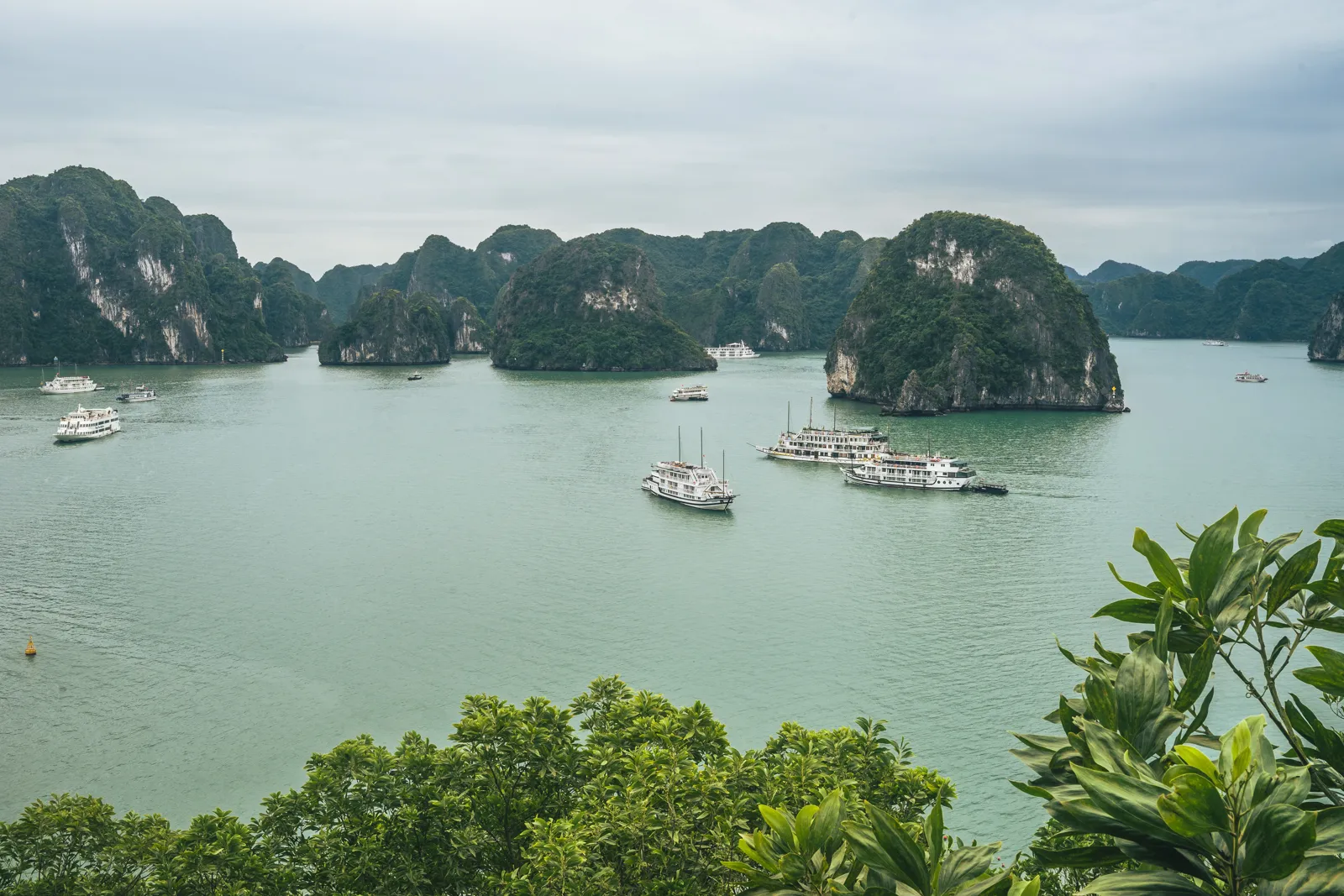
Things to do in Kotor: get lost in the fortified old town, a UNESCO World Heritage Site, climb the walls to St John’s Fortress for the view over the bay, visit St Tryphon’s Cathedral, then take a boat to Perast and the islet of Our Lady of the Rocks. Allow 1 to 2 days to visit Kotor, and choose your day carefully: the town receives hundreds of cruise ship calls a year.
At the far end of the Bay of Kotor, on the coast of Montenegro, the town is easy to reach from Dubrovnik or from Tivat and Podgorica airports. This guide covers the highlights, an itinerary, the budget and the climate, plus something you will not find elsewhere: our analysis of the official 2026 cruise call schedule, so you know which months and days to avoid.

Our travel deals for Kotor
Affiliate links: we earn a commission, at no extra cost to you.
 FlightsKiwi.comCompare flights and airline combinations to Kotor.Compare flights
- eSIMAiraloData plan to install before you leave (eSIM-compatible phone).See plans


Kotor at a glance
- Country Montenegro, at the far end of the Bay of Kotor (Boka Kotorska)
- Language Montenegrin; English widely spoken in tourism
- Currency the euro · currenciesUsed although the country is not a member of the eurozone
- Time zone UTC+1, UTC+2 in summer; 1 hour ahead of London, 6 hours ahead of New York
- Airports Tivat airport, a few kilometres away, or Podgorica · details
- Entry no visa for up to 90 days in 180 for US and UK citizens; registration within 24 hours · travel.state.gov · GOV.UK
- Electricity check plug types and voltage before you go · plugs
- Ideal length 1 to 2 days, 3 to 4 with the bay
- Budget see our budget section
Things to do in Kotor: the highlights
The old town (Stari Grad)
You enter through the Sea Gate, opposite the harbour. Inside, a network of squares and cobbled lanes links churches, Venetian palaces and small shops. The town is part of the « Natural and Culturo-Historical Region of Kotor », a UNESCO World Heritage Site. The many cats have become a symbol of the town, which even has a small museum devoted to them.
The walls and St John’s Fortress
The fortifications climb the mountain behind the town. A stairway, punctuated by the Church of Our Lady of Remedy, leads up to St John’s Fortress (San Giovanni): allow about an hour for the climb, and set off early in the morning or late in the afternoon, as the slope is exposed to the sun. Take water and good shoes.
St Tryphon’s Cathedral and the churches
The Romanesque Cathedral of St Tryphon, consecrated in the 12th century, holds a treasury and frescoes. Nearby, the Orthodox Church of St Nicholas and the small Church of St Luke, which has served both rites, recall the town’s dual Catholic and Orthodox tradition.
Perast and Our Lady of the Rocks
About 15 km (9 mi) away, the Baroque village of Perast faces two islets: St George, with its monastery, and Our Lady of the Rocks (Gospa od Škrpjela), an artificial island built by sailors and reached by small boat from the quay. It is the most popular excursion from Kotor.
The Lovćen road and Cetinje
The hairpin road that climbs from Kotor towards Lovćen National Park gives a bird’s-eye view of the bay. At the top is the Njegoš Mausoleum; further on lies Cetinje, the former royal capital. Allow half a day to a full day, by car or on a tour.
The bay by boat and the coast
Boats leave the harbour for tours of the bay, stopping at Perast and sometimes the Blue Cave, at the mouth of the bay. The resort of Budva and its beaches are about 30 minutes away by road, with Herceg Novi and Tivat (Porto Montenegro) close by.
Kotor and cruise ships: the days to avoid in 2026
The Port of Kotor publishes its provisional schedule of cruise ship calls. For 2026, we counted 522 scheduled calls (cruise ships and small cruise vessels, excluding the regular Dubrovnik-Kotor line). Ships most often arrive around 8 am and leave around 6 pm (median times): this is when the old town is busiest.
| Month | Scheduled calls | Days with 3 or more ships | Days with no call | Highest in one day |
|---|---|---|---|---|
| January | 3 | 0 | 28 | 1 |
| February | 3 | 0 | 25 | 1 |
| March | 8 | 0 | 24 | 2 |
| April | 30 | 2 | 11 | 3 |
| May | 60 | 10 | 1 | 4 |
| June | 71 | 13 | 2 | 6 |
| July | 81 | 19 | 3 | 5 |
| August | 86 | 19 | 2 | 5 |
| September | 82 | 18 | 2 | 6 |
| October | 71 | 13 | 1 | 4 |
| November | 24 | 2 | 14 | 4 |
| December | 3 | 0 | 28 | 1 |
Average number of calls by day of the week, May to October 2026: Monday 1.8, Tuesday 2.3, Wednesday 3.6, Thursday 3.5, Friday 1.9, Saturday 1.6, Sunday 2.5. The busiest days are, on average, Wednesday and Thursday; the quietest are Saturday and Monday.
- To see the old town in peace: before 9 am or after 6 pm, once passengers have returned to their ships.
- For the fortress: at opening time, before the heat and the groups arrive.
- To choose your dates: from December to March there are almost no ships; in April and November, roughly one day in two has no call; from May to October there are ships almost every day.
- For a trip to Perast: go during cruise hours and keep Kotor for early morning or evening.
Itinerary: Kotor in 1 or 2 days
- Day 1, early morning: climb to St John’s Fortress
- Day 1, late morning: St Tryphon’s Cathedral, the churches and squares of the old town
- Day 1, afternoon: Perast and Our Lady of the Rocks, during cruise hours
- Day 1, evening: back to the quieter old town
- Day 2: the Lovćen road and Cetinje, or a boat tour of the bay and Budva
Kotor combines well with Dubrovnik, about 2 hours away by road depending on the border crossing, and with the rest of Montenegro: Budva, Lake Skadar, Durmitor. Many Mediterranean cruises call here.
When to go to Kotor
The best periods are May-June and late September-October: 22 to 28 °C (72 to 82 °F) in the afternoon, and cruise calls that are still frequent but fewer than in high summer. July and August are the hottest months (an average maximum of about 31 °C (88 °F) at Herceg Novi) and the busiest. Be aware that the Bay of Kotor is very wet from November to April, with more than 230 mm (9.1 in) in November and December at Herceg Novi. On the other hand, the town is then almost empty of cruise passengers.
| Month | Max | Min | Rain | Rainy days | Out of 7 days | Sunset | Crowds (cruise calls) | Prices | Verdict |
|---|---|---|---|---|---|---|---|---|---|
| January | 13.0 °C (55 °F) | 4.8 °C (41 °F) | 197 mm (7.8 in) | 10.6 | 2.4 | 4:37 pm | Very low | Low | ⚠️ Mild but very wet, town empty |
| February | 13.7 °C (57 °F) | 4.8 °C (41 °F) | 190 mm (7.5 in) | 10.0 | 2.5 | 5:16 pm | Very low | Low | ⚠️ Wet, quiet |
| March | 15.9 °C (61 °F) | 7.0 °C (45 °F) | 174 mm (6.9 in) | 9.6 | 2.2 | 5:50 pm | Very low | Low | ⚠️ Wet, quiet |
| April | 19.3 °C (67 °F) | 9.9 °C (50 °F) | 162 mm (6.4 in) | 9.8 | 2.3 | 7:26 pm | Low | Medium | ✅ Mild, few calls |
| May | 23.8 °C (75 °F) | 13.9 °C (57 °F) | 105 mm (4.1 in) | 8.4 | 1.9 | 7:59 pm | High | Medium | ✅ Ideal, calls increasing |
| June | 28.3 °C (83 °F) | 17.8 °C (64 °F) | 71 mm (2.8 in) | 5.2 | 1.2 | 8:23 pm | High | High | ✅ Hot, long days |
| July | 31.3 °C (88 °F) | 20.0 °C (68 °F) | 39 mm (1.5 in) | 3.4 | 0.8 | 8:20 pm | Very high | Very high | ⚠️ Very hot, very busy |
| August | 31.7 °C (89 °F) | 20.6 °C (69 °F) | 63 mm (2.5 in) | 4.1 | 0.9 | 7:46 pm | Very high | Very high | ⚠️ Peak of calls and heat |
| September | 26.9 °C (80 °F) | 16.7 °C (62 °F) | 142 mm (5.6 in) | 7.0 | 1.6 | 6:55 pm | Very high | High | ✅ Warm sea, still lively |
| October | 22.5 °C (72 °F) | 13.4 °C (56 °F) | 173 mm (6.8 in) | 9.4 | 2.1 | 6:03 pm | High | Medium | ✅ Mild, still some calls |
| November | 17.9 °C (64 °F) | 9.7 °C (49 °F) | 231 mm (9.1 in) | 11.2 | 2.6 | 4:22 pm | Low | Low | ❌ Wettest month, little open |
| December | 14.0 °C (57 °F) | 6.1 °C (43 °F) | 246 mm (9.7 in) | 12.3 | 2.8 | 4:12 pm | Very low | Low | ⚠️ Very wet, town empty |
For the rest of the country, see the best time to visit Montenegro.
Budget for visiting Kotor
| Item (per person per day) | Budget | Comfort |
|---|---|---|
| Accommodation (based on a shared double room) | roughly €25 to €45 (hostel, guesthouse room) | roughly €80 to €140 (hotel in or near the old town) |
| Meals | roughly €20 to €30 | roughly €40 to €60 |
| Transport | roughly €5 to €10 (local buses) | roughly €20 to €40 (taxi, car) |
| Sightseeing and boats | roughly €10 to €20 | roughly €30 to €50 (bay tour, excursion) |
| Total | roughly €60 to €90 | roughly €140 to €220 |
Getting around Kotor and the bay
- Getting there: Tivat airport is the closest; Podgorica airport is about 1 hour 30 minutes away by road. Buses link Kotor with Budva, Herceg Novi and Podgorica.
- In the old town: on foot only.
- By car: useful for Lovćen and the bay, but parking near the walls is scarce and paid; the bayside road is narrow and busy in summer.
- By boat: water taxis and tours from the harbour to Perast and around the bay.
Where to stay in Kotor
| Area | Best for | Highlights |
|---|---|---|
| Old town | First visit, atmosphere | Everything on foot, quiet lanes in the evening |
| Dobrota and Prčanj | Couples, travellers with a car | On the bay, quieter |
| Perast | Charm, a quiet stay | Baroque village facing the islets |
| Tivat | Convenience, airport | Marina, newer accommodation |
Entry requirements, health and safety
- US citizens: no visa for stays of up to 90 days in a 180-day period. You must register your stay in each municipality where you spend more than 24 hours: hotels do it automatically; otherwise register at the local tourism office and pay the local tourist tax. Failing to register can lead to a fine or difficulties leaving the country (U.S. Department of State, travel.state.gov, last updated September 17, 2026).
- UK citizens: no visa for up to 90 days in any 180-day period; Montenegro is not in the Schengen area, so days there do not count towards your Schengen limit. Your passport must have been issued less than 10 years before you enter and be valid at least 3 months after the day you plan to leave. Make sure it is stamped on entry and exit, and register with the local tourism office or police within 24 hours if your accommodation does not do it (UK FCDO, GOV.UK, updated 13 August 2026).
- Health: Montenegro recognises the GHIC for UK travellers (GOV.UK). The U.S. Department of State notes that ambulance services have limited availability and that many providers accept only cash: take out travel insurance covering medical costs and evacuation.
- Safety: according to the UK FCDO (GOV.UK, updated 13 August 2026), wildfires are common from April to October; watch out for pickpockets in tourist hotspots, on beaches and on public transport. You must always carry ID such as your passport (GOV.UK). Emergencies: 112 (travel.state.gov).
- See our travel insurance guide.
Practical tips for Kotor
- Money: the euro; cards are accepted in most restaurants, but cash is useful for small shops and the boats at Perast.
- Mobile data: Montenegro is not in the European Union: check your home carrier’s roaming charges before you go.
- Heat: in summer, climb to the fortress in the cool of the day and take water.
- Food: seafood from the bay, Njeguši ham, cheese, local wines.
Frequently asked questions
How long do you need to visit Kotor?
One day for the old town and the fortress; two days to add Perast and the Lovćen road.
Which days should you avoid in Kotor because of cruise ships?
According to the port’s 2026 schedule, from May to October Wednesday and Thursday are on average the busiest days and Saturday the quietest. Ships usually stay from 8 am to 6 pm.
What is the best time to visit Kotor?
May-June and late September-October. Summer is very hot and busy; from November to April it rains a lot, but the town is quiet.
Do US and UK citizens need a visa for Kotor?
No, for stays of up to 90 days in a 180-day period, according to the U.S. Department of State (last updated September 17, 2026) and the UK FCDO (updated 13 August 2026). A passport is required, and you must register your stay within 24 hours if your accommodation does not do it for you.
How do you get from Dubrovnik to Kotor?
By road, by bus, car or on a tour: about 2 hours depending on the wait at the border between Croatia and Montenegro.
Is the climb to the fortress difficult?
It is steep and sunny, but manageable for a walker in good health: allow about an hour, with water and good shoes.
Our sources
- World Meteorological Organization (WMO) and NOAA: 1991-2020 normals for the Herceg Novi station, at the entrance to the Bay of Kotor, supplied by Montenegro to the WMO and distributed by NOAA
- Port of Kotor (Luka Kotor): provisional 2026 schedule of calls, « Najave 2026 » file, downloaded on 15 October 2026; Destination de Voyage analysis
- Destination de Voyage calculation: sunset (NOAA solar algorithm), rainy days out of 7
- Entry requirements, health and safety checked on 26 October 2026: U.S. Department of State, Montenegro country information (last updated September 17, 2026) and UK FCDO, GOV.UK foreign travel advice for Montenegro (updated 13 August 2026)
- Our methodology
Updated October 2026.
To extend your trip, see our Montenegro travel guide and our other destinations in Europe.