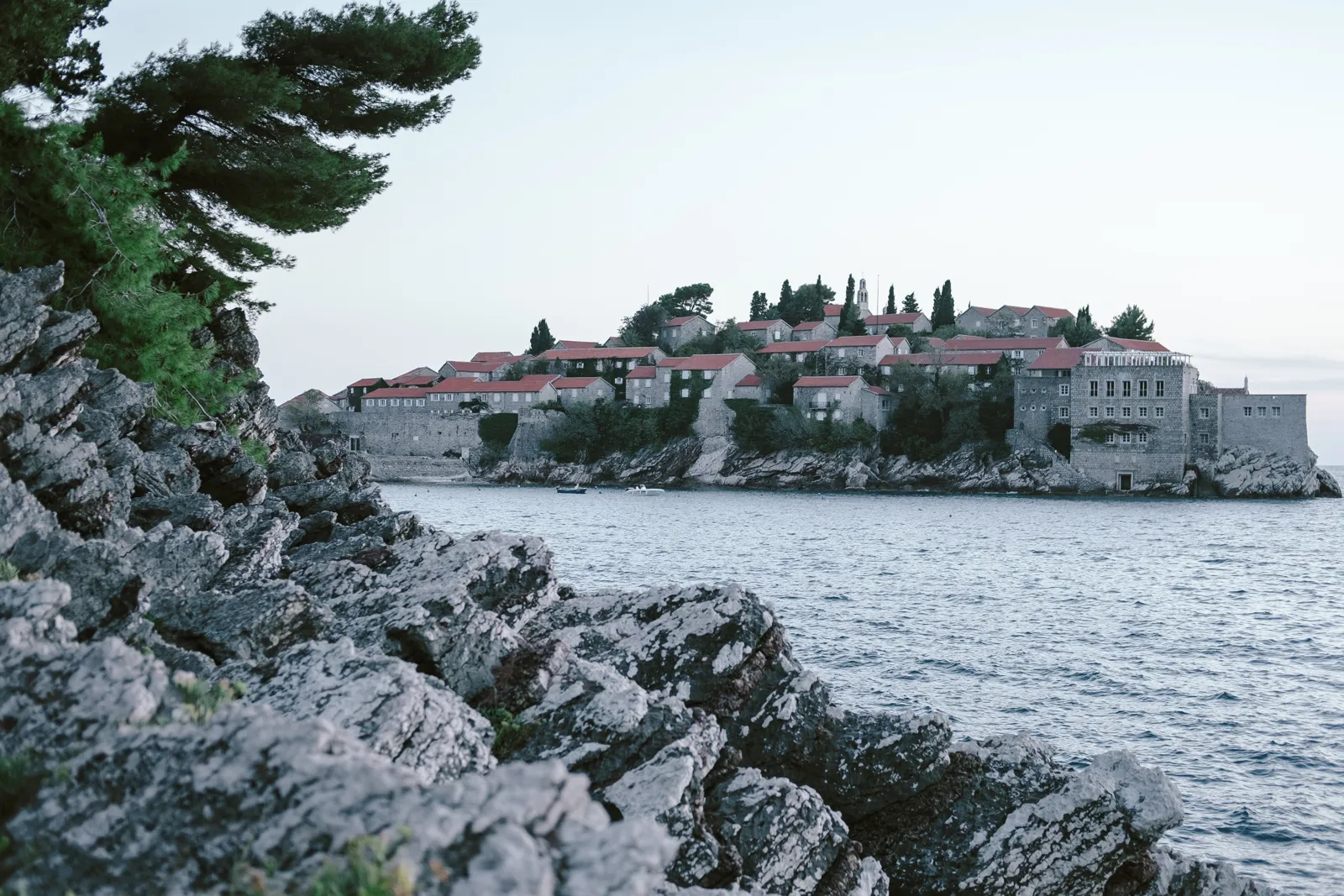
When is the best time to visit Montenegro? Mid-May to late June and September: pleasant warmth, swimmable sea, accessible Durmitor mountains and fewer people than in July–August in the Bay of Kotor and Budva. July and August are very hot and very busy on the coast, but ideal for the mountains. From October to April it is the rainy season, with abundant rain and snow in the north. Kotor, Budva and the northern mountains are shown on our map of Montenegro.
Montenegro is small but very contrasted: a Mediterranean climate on the Adriatic coast (Herceg Novi, Kotor, Budva, Bar, Ulcinj), scorching summers in the Podgorica plain, and a mountain climate in the north (Kolašin, Žabljak) with snowy winters. Here is how to choose your month, based on the 1991–2020 normals reported by Montenegro to the World Meteorological Organization (WMO) and published by NOAA.

Our travel deals for Montenegro
Affiliate links: we earn a commission, at no extra cost to you.
 FlightsKiwi.comCompare flights and airline combinations to Montenegro.Compare flights
- eSIMAiraloData plan to install before you leave (eSIM-compatible phone).See plans


When to go to Montenegro at a glance
- Best times mid-May to late June and September
- For the beach (Budva, Bar, Ulcinj) June to September
- For Kotor and the old towns May–June and September–October
- For Durmitor and the northern mountains generally June to September; winter for skiing
- Avoid if possible mid-July to late August on the coast (heat, crowds, prices) and November, the rainiest month
- Best value May and late September–early October
When to go to Montenegro by priority
- Best weather: mid-May to late June and September; June to September for the beach
- Cheapest: May and late September–early October; winter is the cheapest, but rainy on the coast
- Fewest crowds: April, May, June and the second half of September; avoid mid-July to late August on the coast
- Events: the mimosa festival in Herceg Novi in February, Independence Day in May, Statehood Day in July, Boka Night in Kotor in August; check dates every year
Montenegro: the calendar at a glance
✅ Best months: April, may, June, September, October
❌ Period to avoid: November
Montenegro’s climate month by month
The table below gives the normals for Bar, on the Adriatic coast, where most stays are concentrated. The Bay of Kotor, Podgorica and the mountains are detailed further down.
| Month | Avg. max | Avg. min | Rain | Crowds | Prices | Verdict |
|---|---|---|---|---|---|---|
| January | 13.2 °C (56 °F) | 5.5 °C (42 °F) | 142 mm (5.6 in) | Low | Low | ⚠️ Mild but rainy, snow in the mountains |
| February | 13.7 °C (57 °F) | 5.9 °C (43 °F) | 128 mm (5.0 in) | Low | Low | ⚠️ Damp, short days |
| March | 15.9 °C (61 °F) | 7.8 °C (46 °F) | 131 mm (5.2 in) | Low | Low | ⚠️ Early spring, changeable weather |
| April | 19.0 °C (66 °F) | 10.5 °C (51 °F) | 112 mm (4.4 in) | Low → moderate | Moderate | ✅ Mild, ideal for sightseeing |
| May | 23.6 °C (74 °F) | 14.5 °C (58 °F) | 82 mm (3.2 in) | Moderate | Moderate | ✅ Green countryside, warming sea |
| June | 27.6 °C (82 °F) | 18.4 °C (65 °F) | 54 mm (2.1 in) | Moderate → high | Moderate → high | ✅ Start of beach season, mountains accessible |
| July | 30.1 °C (86 °F) | 20.6 °C (69 °F) | 32 mm (1.3 in) | Very high | High | ⚠️ Hot and dry, very busy coast |
| August | 30.4 °C (87 °F) | 21.0 °C (70 °F) | 45 mm (1.8 in) | Very high | Very high | ⚠️ Peak crowds and prices |
| September | 27.0 °C (81 °F) | 17.7 °C (64 °F) | 134 mm (5.3 in) | Moderate | Moderate | ✅ Warm sea, fewer crowds; first storms |
| October | 23.0 °C (73 °F) | 14.1 °C (57 °F) | 152 mm (6.0 in) | Low | Low | ✅ Still mild, rain increasing |
| November | 18.6 °C (65 °F) | 10.5 °C (51 °F) | 165 mm (6.5 in) | Low | Low | ❌ Very rainy |
| December | 14.4 °C (58 °F) | 7.0 °C (45 °F) | 179 mm (7.0 in) | Low | Low | ⚠️ The wettest month in Bar |
Note: Montenegro is one of the wettest countries in Europe in winter, especially around the Bay of Kotor, which is overlooked by high limestone mountains. But almost all the rain falls from October to April. In July–August, it rains very little on the coast, and heat waves can clearly exceed the averages in the table. According to the UK FCDO (GOV.UK, updated 13 August 2026), wildfires are common in Montenegro from April to October because of the dry, hot weather.
The seasons in Montenegro: pros and cons
Spring (April to June): the most balanced season
Spring is an excellent season for a road trip. On the coast, highs rise from 19 °C (66 °F) in April to nearly 28 °C (82 °F) in June, and rain falls off markedly from May. The old towns of Kotor, Perast and Budva can be visited without excessive heat or crowds. The sea stays cool in April–May and becomes pleasant for most swimmers in June. In the mountains, snow lingers at altitude until the end of spring.
- Pros: mild temperatures, green countryside, moderate prices, quiet sites in April–May
- Cons: showers still frequent in April, cool sea before June, snow-covered high-altitude trails
- Our tip: the second half of June lets you combine the coast, the old towns and the first hikes in Durmitor
Summer (July–August): heat and high season
This is the hottest and busiest period. On the coast, average highs exceed 30 °C (86 °F); in the Podgorica plain, they reach nearly 34 °C (93 °F) in July and 35 °C (95 °F) in August. The beaches of Budva and the lanes of Kotor, where many cruise ships call, are then very crowded. It is, however, the best season for the mountains: in Kolašin, average highs stay around 25 °C (77 °F).
- Pros: warm sea, almost always clear skies, everything open, mountains accessible
- Cons: crowds and traffic jams on the coastal road, expensive accommodation, strong heat, wildfire risk
- Who is it for? Families with fixed dates and hikers: book early and alternate between coast and mountains
Autumn (September–October): warm sea without the crowds
September is often the best month for the coast: the sea stays warm, the air drops below 28 °C (82 °F) and the crowds thin out after the end of the summer holidays. Storms return, however, with more than 130 mm (5.1 in) of rain in Bar in September, often concentrated over a few days. October is still mild (23 °C (73 °F) in Bar) and pleasant for sightseeing, but some beach businesses close. In the mountains, the forests of Durmitor and Biogradska Gora turn color.
- Pros: sea still warm in September, falling prices, autumn colors in the mountains
- Cons: stormy spells, season ending in the mountains with the first snow
- Our tip: the second half of September is a very good compromise between beach and sightseeing
Winter (November to March): rain on the coast, snow in the north
Winter is mild on the coast (13 to 14 °C (55 to 57 °F) in the afternoon in Bar) but very damp: November and December exceed 160 mm (6.3 in) of rain in Bar, and the Bay of Kotor is even wetter. In the north, winter is harsh: in Kolašin, average lows are below zero from December to March, and snow allows skiing at Kolašin and Žabljak.
- Pros: low prices, Kotor and Budva without tourists, skiing in the north
- Cons: heavy rain, cold sea for most swimmers, many seaside hotels closed, mountain roads sometimes difficult
- Who is it for? Fans of old stones without the crowds, and skiers
When to go to Montenegro by region
Mountains and sea meet: a few dozen kilometers separate very different climates. Comparison of the normals of four stations:
| Month | Bar (coast) | Ulcinj (south coast) | Podgorica (plain) | Kolašin (mountains) |
|---|---|---|---|---|
| January | 13.2 °C (56 °F) / 5.5 °C (42 °F) | 11.5 °C (53 °F) / 3.6 °C (38 °F) | 11.0 °C (52 °F) / 2.2 °C (36 °F) | 3.6 °C (38 °F) / −5.1 °C (23 °F) |
| February | 13.7 °C (57 °F) / 5.9 °C (43 °F) | 12.7 °C (55 °F) / 4.4 °C (40 °F) | 12.6 °C (55 °F) / 3.4 °C (38 °F) | 5.0 °C (41 °F) / −4.3 °C (24 °F) |
| March | 15.9 °C (61 °F) / 7.8 °C (46 °F) | 15.6 °C (60 °F) / 6.7 °C (44 °F) | 16.3 °C (61 °F) / 6.4 °C (44 °F) | 8.8 °C (48 °F) / −1.6 °C (29 °F) |
| April | 19.0 °C (66 °F) / 10.5 °C (51 °F) | 19.0 °C (66 °F) / 9.6 °C (49 °F) | 20.7 °C (69 °F) / 9.9 °C (50 °F) | 13.7 °C (57 °F) / 1.9 °C (35 °F) |
| May | 23.6 °C (74 °F) / 14.5 °C (58 °F) | 23.8 °C (75 °F) / 13.7 °C (57 °F) | 25.8 °C (78 °F) / 14.5 °C (58 °F) | 18.6 °C (65 °F) / 5.8 °C (42 °F) |
| June | 27.6 °C (82 °F) / 18.4 °C (65 °F) | 28.1 °C (83 °F) / 17.6 °C (64 °F) | 30.7 °C (87 °F) / 18.9 °C (66 °F) | 22.8 °C (73 °F) / 9.1 °C (48 °F) |
| July | 30.1 °C (86 °F) / 20.6 °C (69 °F) | 30.7 °C (87 °F) / 19.5 °C (67 °F) | 33.9 °C (93 °F) / 21.6 °C (71 °F) | 25.3 °C (78 °F) / 10.3 °C (51 °F) |
| August | 30.4 °C (87 °F) / 21.0 °C (70 °F) | 31.3 °C (88 °F) / 20.1 °C (68 °F) | 34.5 °C (94 °F) / 21.8 °C (71 °F) | 25.9 °C (79 °F) / 10.3 °C (51 °F) |
| September | 27.0 °C (81 °F) / 17.7 °C (64 °F) | 26.8 °C (80 °F) / 16.6 °C (62 °F) | 28.4 °C (83 °F) / 17.0 °C (63 °F) | 20.5 °C (69 °F) / 7.4 °C (45 °F) |
| October | 23.0 °C (73 °F) / 14.1 °C (57 °F) | 22.3 °C (72 °F) / 13.0 °C (55 °F) | 22.8 °C (73 °F) / 12.3 °C (54 °F) | 15.8 °C (60 °F) / 3.9 °C (39 °F) |
| November | 18.6 °C (65 °F) / 10.5 °C (51 °F) | 17.4 °C (63 °F) / 9.0 °C (48 °F) | 16.5 °C (62 °F) / 7.4 °C (45 °F) | 10.0 °C (50 °F) / 0.2 °C (32 °F) |
| December | 14.4 °C (58 °F) / 7.0 °C (45 °F) | 12.6 °C (55 °F) / 4.7 °C (40 °F) | 11.8 °C (53 °F) / 3.5 °C (38 °F) | 4.1 °C (39 °F) / −3.7 °C (25 °F) |
The Bay of Kotor (Kotor, Perast, Herceg Novi, Tivat)
The Mediterranean fjord is sheltered, but the mountains around it trap the clouds: it is the wettest part of the country in winter. Summer is hot. To visit Kotor without the cruise crowds, aim for May–June and late September–October, and arrive early in the morning.
The Budva Riviera and the south (Budva, Petrovac, Bar, Ulcinj)
The most beach-oriented region. In practice, the swimming season runs from June to September. Ulcinj, in the far south near Albania, has the longest sandy beaches (Velika Plaža) and is slightly warmer in summer than Bar. In July–August, Budva is very lively and very expensive: Petrovac and Ulcinj are quieter. As Ulcinj is very close to the border, a trip to Albania can extend a stay on Montenegro’s south coast.
Podgorica, Lake Skadar and Cetinje
The Podgorica plain is the hottest part of the country in summer (nearly 35 °C (95 °F) average high in August) and very wet in winter (more than 230 mm (9.1 in) in November and December). Lake Skadar and the former royal capital Cetinje are best visited from April to June and from September to October.
The northern mountains (Durmitor, Kolašin, Biogradska Gora)
In Kolašin, at about 950 m (3,117 ft) above sea level, summer is cool (25 °C (77 °F) in the afternoon, 10 °C (50 °F) at night in July) and winter is cold and snowy. Žabljak and the Durmitor massif, which are higher, are colder still. For hiking and rafting on the Tara, aim for June to September; for skiing, December to March, depending on snow cover. According to the UK FCDO (GOV.UK, updated 13 August 2026), hikers have got lost in the mountains after leaving marked paths: get expert advice from local guides and tell someone your route and expected return time.
Region-by-region summary: the right month depending on the part of the country you are visiting.
| Month | Bay of Kotor | Budva and the south coast | Podgorica and Lake Skadar | Durmitor and the north |
|---|---|---|---|---|
| January | ❌ Very rainy | ⚠️ Mild but rainy | ⚠️ Cool, rainy | ✅ Skiing |
| February | ❌ Very rainy | ⚠️ Damp | ⚠️ Cool, rainy | ✅ Skiing |
| March | ⚠️ Rainy | ⚠️ Changeable weather | ⚠️ Rainy | ⚠️ Skiing depending on snow |
| April | ⚠️ Mild, showers | ⚠️ Cool sea | ✅ Spring | ⚠️ Snow at altitude |
| May | ✅ Without the crowds | ⚠️ Sea still cool | ✅ Pleasant | ⚠️ Rafting, snow at altitude |
| June | ✅ Pleasant | ✅ Beach | ✅ Warm | ✅ Hiking |
| July | ⚠️ Heat, cruise passengers | ⚠️ Heat, crowds | ❌ Nearly 34 °C (93 °F) | ✅ Hiking |
| August | ⚠️ Heat, crowds | ⚠️ Peak crowds and prices | ❌ Nearly 35 °C (95 °F) | ✅ Hiking |
| September | ✅ Fewer crowds | ✅ Warm sea | ✅ Pleasant | ✅ Hiking |
| October | ✅ Mild | ⚠️ Businesses closed | ✅ Pleasant | ⚠️ Colors, first snow |
| November | ❌ Very rainy | ❌ Very rainy | ❌ Very rainy | ❌ Cold |
| December | ❌ Very rainy | ⚠️ The wettest | ❌ Very rainy | ⚠️ Skiing depending on snow |
✅ favorable conditions, ⚠️ possible with reservations, ❌ avoid. Summary based on the normals cited on this page and the regional advice above.

When to go to Montenegro by trip type
| Your trip | Best time | Where? |
|---|---|---|
| First trip (coast, towns, mountains) | Mid-May to June, September | Kotor, Perast, Budva, Cetinje, Durmitor |
| Beach and swimming | June to September | Budva, Petrovac, Ulcinj |
| Beach without the crowds | June, second half of September | Petrovac, Ulcinj, Luštica peninsula |
| Old towns and heritage | April–June, late September–October | Kotor, Perast, Budva, Cetinje |
| Mountain hiking | June to September | Durmitor, Biogradska Gora, Prokletije |
| Rafting on the Tara | May to September, depending on water level | Tara Canyon |
| Skiing | December to March, depending on snow cover | Kolašin, Žabljak |
| Budget | May, October | Everywhere |
| Full road trip | Mid-May to June, September | From the coast to Durmitor |
Major events to plan your trip around
| Period | Event | Location |
|---|---|---|
| February | Mimosa festival | Herceg Novi |
| Date varies | Orthodox and Catholic Easter | Across the country |
| May | Independence Day (public holiday) | Across the country |
| July | Statehood Day (public holiday) | Across the country |
| July–August | High season, summer festivals and evenings on the coast | Budva, Kotor, Herceg Novi |
| August | Bay boat festivities (Boka Night) | Kotor |
Montenegro month by month
January: Mild on the coast (13 °C (55 °F) in the afternoon in Bar) but rainy; snow and skiing in the north. Lowest prices.
February: Similar to January. Mimosa festival in Herceg Novi. Cold in the mountains, where nights are well below freezing.
March: Days get longer, but rain remains frequent. End of the ski season depending on snow cover.
April: Mild spring (19 °C (66 °F) in Bar), a good month for Kotor, Cetinje and Lake Skadar. Sea still cool.
May: One of the best months: 24 °C (75 °F) on the coast, rain clearly receding, moderate crowds. Independence Day in May.
June: Start of summer: nearly 28 °C (82 °F), pleasant sea, mountain season opening. Crowds still reasonable.
July: Peak season: 30 °C (86 °F) on the coast, nearly 34 °C (93 °F) in Podgorica, very little rain. Ideal for Durmitor.
August: The hottest and busiest month. Book very early or favor the mountains.
September: Warm sea, falling heat (27 °C (81 °F) in Bar), fewer crowds. Storms return. An excellent month. To compare with other destinations, see our picks for where to go in September.
October: Still mild (23 °C (73 °F)) but rainier; many beach businesses close. Autumn colors in the mountains.
November: Very rainy on the coast and in Podgorica. The least favorable month.
December: Rainy on the coast, snow in the north. The ski season may begin.
Which periods should you avoid in Montenegro?
- July–August on the coast: above 30 °C (86 °F) in the afternoon, crowds in Kotor and Budva and prices at their highest
- November and December: the rainiest months (165 to 179 mm (6.5 to 7.0 in) in Bar)
- Durmitor in winter: snow and difficult mountain roads, except for skiing
When to book your trip to Montenegro
For July–August, book flights and accommodation 3 to 5 months ahead, especially in the Bay of Kotor and in Budva, where good-quality options go quickly. In May, June, September and October, 1 to 2 months is generally enough. The country has two international airports, Podgorica and Tivat. Some travelers also come through Dubrovnik, in Croatia, close to Herceg Novi. Compare the current options before booking. Arriving via Dubrovnik can also justify a one- or two-day stay in Dubrovnik before continuing to Herceg Novi.
Planning your trip to Montenegro
- Entry requirements: see our page with the entry requirements for Montenegro.
- Registration: according to the UK FCDO (GOV.UK, updated 13 August 2026), all visitors must register with the local tourism office or police within 24 hours of arrival; hotels and some holiday lets register you, but in private accommodation you must do it yourself, or you may be fined.
- Health and safety: the UK FCDO (GOV.UK, updated 13 August 2026) advises having appropriate travel insurance for local treatment and medical evacuation. The emergency number is 112.
To go further, see our complete Montenegro travel guide. Combining with a neighboring country? See also when to go to Croatia and when to go to Albania. To plan your itinerary, see when to go to Dubrovnik. For currency conversion, use our currency converter.
Frequently asked questions
What is the best month to visit Montenegro?
June and September are the most balanced: pleasant warmth, swimmable sea, accessible mountains and fewer people than in July–August. May and early October suit sightseeing very well.
When can you swim in Montenegro?
From June to September on the coast. July and August are the hottest but also the busiest and most expensive; September offers a still-warm sea with fewer people.
When should you visit Kotor to avoid the crowds?
In May–June and from late September to October, or in winter. In summer, cruise ship calls fill the old town during the day: come early in the morning or in the late afternoon.
When should you go to Durmitor?
From June to September for hiking and rafting on the Tara, when the trails are clear of snow. In winter, the region is snow-covered and offers skiing at Žabljak.
Does it rain a lot in Montenegro?
Yes, from October to April: Bar receives about 165 to 180 mm (6.5 to 7.1 in) in November and December, Podgorica more than 230 mm (9.1 in). Summer, by contrast, is very dry on the coast.
Is Montenegro hot in summer?
Yes: about 30 °C (86 °F) in the afternoon on the coast in July–August and nearly 35 °C (95 °F) in Podgorica in August. The mountains stay cooler, around 25 °C (77 °F) in Kolašin.
Is May a good time to visit Montenegro?
Yes: about 24 °C (75 °F) in the afternoon, 82 mm (3.2 in) of rain on average, green countryside and moderate crowds. The sea is warming up but is still cool for many swimmers.
Is October a good time to visit Montenegro?
For sightseeing, yes: it is still about 23 °C (73 °F) and the crowds have gone. But rain increases markedly (152 mm (6.0 in) on average): plan indoor alternatives.
Our sources
- World Meteorological Organization (WMO): 1991–2020 normals reported by Montenegro for Bar, Ulcinj, Podgorica and Kolašin, published by NOAA
- Safety and registration information read on 26 October 2026: UK FCDO, foreign travel advice for Montenegro (GOV.UK, updated 13 August 2026)
- Our methodology
Updated November 2026.