The best time to visit Croatia is May to June and September: it is already warm on the Dalmatian coast, the sea is getting pleasant, ferries to the islands run regularly and you avoid the crowds and prices of July–August. Summer remains the big beach season, but Dubrovnik, Split and the best-known islands are then packed, and wildfire risk on the coast is at its highest. Climate-wise, Croatia offers a hot, dry summer on the coast and mild but rainy winters.
Croatia has two very distinct climates. The Adriatic coast (Istria, Dalmatia) is Mediterranean: dry, sunny summers and mild but rainy winters. The interior (Zagreb, Plitvice, Slavonia) is continental: cold winters, sometimes with snow, and hot summers with thunderstorms. Here is how to choose your month, based on the climate normals of the Croatian Meteorological and Hydrological Service (DHMZ). Split, Zadar and Dubrovnik lie along the coast on the map of Croatia.

Our travel deals for Croatia
Affiliate links: we earn a commission, at no extra cost to you.
 FlightsKiwi.comCompare flights and airline combinations to Croatia.Compare flights

When to go to Croatia at a glance
- Best times May–June and September
- For beaches and islands June to September; the sea is warmest from July to August and still warm in September
- For Dubrovnik and Split without the crowds May, June, late September and October
- For Zagreb and Plitvice May–June and September–October; December for Advent in Zagreb
- Avoid if possible mid-July to late August (crowds, peak prices, heat) and the August 15 holiday
- Ferries frequent sailings in summer, reduced from autumn to spring
- Best value May and the second half of September
When to go to Croatia by priority
- Best weather: June and September on the coast (warm, pleasant sea); May–June and September–October for Zagreb and Plitvice
- Cheapest: November to March, outside the holidays, for Zagreb and the coastal cities; May and late September to enjoy the sea
- Fewest crowds: May, June, late September and October; avoid mid-July to late August and the August 5 and 15 holidays
- Events: the feast of St. Blaise in Dubrovnik (early February), the Dubrovnik Summer Festival (July–August), the Sinjska alka (early August), Advent in Zagreb (December); check dates every year
Croatia: the calendar at a glance
✅ Best months: April, may, June, September, October
❌ Period to avoid: November
Croatia weather month by month
The table below gives the normals for Split (Marjan station), in the middle of the Dalmatian coast. It is the departure point for most ferries to the islands and a good reference for the coastline. Zagreb, Zadar and Dubrovnik are compared further down.
| Month | Avg. max | Avg. min | Rain | Crowds | Prices | Verdict |
|---|---|---|---|---|---|---|
| January | 10.7 °C (51 °F) | 5.9 °C (43 °F) | 73 mm (2.9 in) | Low | Low | ⚠️ Mild but gray, islands slow |
| February | 11.5 °C (53 °F) | 6.0 °C (43 °F) | 64 mm (2.5 in) | Low | Low | ⚠️ Cool, bora possible, few sailings |
| March | 14.5 °C (58 °F) | 8.5 °C (47 °F) | 58 mm (2.3 in) | Low | Low | ⚠️ Early spring, cold sea |
| April | 18.4 °C (65 °F) | 11.8 °C (53 °F) | 62 mm (2.4 in) | Moderate (Easter) | Moderate | ✅ Mild, ideal for sightseeing |
| May | 23.4 °C (74 °F) | 16.1 °C (61 °F) | 58 mm (2.3 in) | Moderate | Moderate | ✅ The best compromise |
| June | 28.1 °C (83 °F) | 20.2 °C (68 °F) | 49 mm (1.9 in) | High | High | ✅ Summer without the August crowds |
| July | 31.0 °C (88 °F) | 22.8 °C (73 °F) | 25 mm (1.0 in) | Very high | Very high | ⚠️ Heat, crowds, peak prices |
| August | 30.9 °C (88 °F) | 22.9 °C (73 °F) | 32 mm (1.3 in) | Very high (August 15) | Very high | ⚠️ The busiest, fire risk |
| September | 25.4 °C (78 °F) | 18.4 °C (65 °F) | 82 mm (3.2 in) | High, then moderate | High, then moderate | ✅ Warm sea, crowds easing |
| October | 20.5 °C (69 °F) | 14.7 °C (58 °F) | 80 mm (3.1 in) | Moderate → low | Moderate → low | ✅ Mild for sightseeing, end of the beach season |
| November | 15.6 °C (60 °F) | 10.8 °C (51 °F) | 120 mm (4.7 in) | Low | Low | ❌ The wettest month, many places closed |
| December | 11.8 °C (53 °F) | 7.2 °C (45 °F) | 99 mm (3.9 in) | Low | Low | ⚠️ Rainy on the coast, Advent in Zagreb |
Note: Split receives on average over 350 hours of sunshine in July, compared with about 130 in November and December, according to the same normals. In autumn, rain often falls as thundery showers or with the jugo, a humid south-easterly wind.
Sea temperature month by month
In Split, the sea goes from about 17 °C (63 °F) in May to 21 °C (70 °F) in June, then exceeds 23 °C (73 °F) in July and August. It stays above 21 °C (70 °F) in September, which makes it a good swimming month, and drops below 17 °C (63 °F) in November.
| Month | Split |
|---|---|
| January | 12.2 °C (54 °F) |
| February | 11.5 °C (53 °F) |
| March | 12 °C (54 °F) |
| April | 13.9 °C (57 °F) |
| May | 17.3 °C (63 °F) |
| June | 21.1 °C (70 °F) |
| July | 23.2 °C (74 °F) |
| August | 23.5 °C (74 °F) |
| September | 21.7 °C (71 °F) |
| October | 19.5 °C (67 °F) |
| November | 16.6 °C (62 °F) |
| December | 14 °C (57 °F) |
Croatia’s seasons: pros and cons
Spring (April to June): the ideal season to combine everything
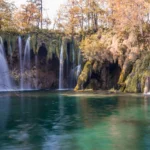
Spring is the most balanced period. In Split, highs go from 18 °C (64 °F) in April to 28 °C (82 °F) in June, and rainfall drops clearly. It is also the best time for Plitvice Lakes and the Krka waterfalls, fed by snowmelt and winter rains. The sea stays cool in April and May, and becomes pleasant in June. Our guide to Krka National Park details tickets and access.
- Pros: mild temperatures, green countryside, prices still reasonable before July, Dubrovnik and Split less crowded
- Cons: sea still cool until late May, ferry and catamaran timetables not yet at summer pace in April
- Our tip: late May and June are the best times for a first trip combining Plitvice, the Dalmatian coast and one or two islands
Summer (July–August): peak beach season
It is the most sought-after season: clear skies, over 30 °C (86 °F) in the afternoon on the coast, almost no rain (25 mm (1.0 in) in July in Split) and a warm sea. But it is also the peak of the holiday period in Europe: Dubrovnik’s Old Town, Diocletian’s Palace in Split, Hvar and the well-known beaches are packed, queues lengthen at the piers and accommodation prices reach their maximum.
- Pros: almost guaranteed good weather, warm sea, all sea links running, summer festivals (Dubrovnik, Split) and nightlife
- Cons: crowds, peak prices, heat in the stone towns, heavy visitor numbers at Plitvice
- Wildfires: according to the UK FCDO (GOV.UK, updated 11 August 2026), wildfires are common during Croatia’s hot, dry summers and can be highly dangerous and unpredictable. Follow the advice of local authorities and call 112 in an emergency.
- Who is it for? Travelers who above all want the beach and whose dates are fixed by school holidays: book early and visit sites at opening time
Autumn (September–October): warm sea without the crowds
September is often the best month for the beach: the sea has stored the summer’s warmth, the air drops to around 25 °C (77 °F) in the afternoon in Split and the crowds recede after the start of the school year. Rain returns gradually (82 mm (3.2 in) in September in Split, 120 mm (4.7 in) in Dubrovnik in October), often in brief thunderstorms. October remains pleasant for sightseeing, but many accommodations and restaurants on the islands close from mid-October.
- Pros: warm sea in September, falling prices, soft light, grape and olive harvests
- Cons: possible thunderstorms, sea links reduced from October, shorter days
- Our tip: the second half of September is an excellent compromise for Dubrovnik and the Dalmatian islands
Winter (November to March): Zagreb and the coast at peace
Winter is mild on the coast (11 to 12 °C (52 to 54 °F) in the afternoon in Split and Dubrovnik in December–January), but it is the rainy season: about 120 mm (4.7 in) in November in Split and over 140 mm (5.5 in) in Dubrovnik. The bora, a cold and violent northerly wind, can disrupt ferries and close some roads and bridges, especially in Kvarner and along the Velebit range. Inland, winter is cold: in Zagreb, average lows fall below 0 °C (32 °F) from December to February.
- Pros: sites without the crowds, low prices, Advent markets in Zagreb, local life in Split and Dubrovnik
- Cons: sea too cold for most swimmers, very quiet islands, accommodation and restaurants often closed outside the cities
- Who is it for? A city break in Zagreb or Dubrovnik, or a low-budget cultural trip
When to go to Croatia by region
Southern Dalmatia is the mildest in winter; the interior is the coldest in winter and the wettest in summer. Comparison of the normals for four cities:
| Month | Zagreb | Zadar | Split | Dubrovnik |
|---|---|---|---|---|
| January | 5.0 °C (41 °F) / 46 mm (1.8 in) | 10.8 °C (51 °F) / 73 mm (2.9 in) | 10.7 °C (51 °F) / 73 mm (2.9 in) | 12.3 °C (54 °F) / 98 mm (3.9 in) |
| February | 7.8 °C (46 °F) / 45 mm (1.8 in) | 11.3 °C (52 °F) / 63 mm (2.5 in) | 11.5 °C (53 °F) / 64 mm (2.5 in) | 12.6 °C (55 °F) / 98 mm (3.9 in) |
| March | 13.0 °C (55 °F) / 48 mm (1.9 in) | 13.6 °C (56 °F) / 64 mm (2.5 in) | 14.5 °C (58 °F) / 58 mm (2.3 in) | 14.4 °C (58 °F) / 93 mm (3.7 in) |
| April | 18.0 °C (64 °F) / 61 mm (2.4 in) | 16.6 °C (62 °F) / 70 mm (2.8 in) | 18.4 °C (65 °F) / 62 mm (2.4 in) | 16.9 °C (62 °F) / 91 mm (3.6 in) |
| May | 22.4 °C (72 °F) / 77 mm (3.0 in) | 21.3 °C (70 °F) / 65 mm (2.6 in) | 23.4 °C (74 °F) / 58 mm (2.3 in) | 21.5 °C (71 °F) / 70 mm (2.8 in) |
| June | 26.2 °C (79 °F) / 91 mm (3.6 in) | 25.2 °C (77 °F) / 54 mm (2.1 in) | 28.1 °C (83 °F) / 49 mm (1.9 in) | 25.3 °C (78 °F) / 44 mm (1.7 in) |
| July | 28.1 °C (83 °F) / 80 mm (3.1 in) | 28.2 °C (83 °F) / 30 mm (1.2 in) | 31.0 °C (88 °F) / 25 mm (1.0 in) | 28.2 °C (83 °F) / 28 mm (1.1 in) |
| August | 28.1 °C (83 °F) / 86 mm (3.4 in) | 28.2 °C (83 °F) / 50 mm (2.0 in) | 30.9 °C (88 °F) / 32 mm (1.3 in) | 28.5 °C (83 °F) / 73 mm (2.9 in) |
| September | 22.6 °C (73 °F) / 104 mm (4.1 in) | 24.3 °C (76 °F) / 104 mm (4.1 in) | 25.4 °C (78 °F) / 82 mm (3.2 in) | 25.1 °C (77 °F) / 86 mm (3.4 in) |
| October | 17.0 °C (63 °F) / 89 mm (3.5 in) | 20.0 °C (68 °F) / 107 mm (4.2 in) | 20.5 °C (69 °F) / 80 mm (3.1 in) | 21.1 °C (70 °F) / 120 mm (4.7 in) |
| November | 10.7 °C (51 °F) / 87 mm (3.4 in) | 15.1 °C (59 °F) / 106 mm (4.2 in) | 15.6 °C (60 °F) / 120 mm (4.7 in) | 16.6 °C (62 °F) / 142 mm (5.6 in) |
| December | 5.3 °C (42 °F) / 62 mm (2.4 in) | 11.9 °C (53 °F) / 95 mm (3.7 in) | 11.8 °C (53 °F) / 99 mm (3.9 in) | 13.4 °C (56 °F) / 120 mm (4.7 in) |
Zagreb and the interior (Plitvice, Slavonia)
Continental climate: cold winters (5 °C (41 °F) in the afternoon in January in Zagreb, −2 °C (28 °F) at night) and hot summers (28 °C (82 °F) in July–August). Unlike the coast, summer is the wettest season, with frequent thunderstorms: at least 80 mm (3.1 in) a month from June to August, and the maximum in September. For Zagreb and Plitvice Lakes, aim for May–June or September–October; December for Advent in Zagreb.
Istria and Kvarner (Pula, Rovinj, Rijeka)
The north of the coast has a Mediterranean climate slightly cooler and wetter than Dalmatia, with winters marked by the bora. The best windows are June and September; spring and autumn suit the villages of inland Istria (Motovun, Grožnjan) and the food scene well.
Northern Dalmatia (Zadar, Šibenik, Krka)
In Zadar, highs reach 28 °C (82 °F) in July–August and rainfall falls to 30 mm (1.2 in) in July, before exceeding 100 mm (3.9 in) a month from September to November. The beach season runs from June to September. Krka is most pleasant in spring and in September.
Split and the Dalmatian islands (Hvar, Brač, Vis, Korčula)
This is the hottest part of the coast in summer: 31 °C (88 °F) average high in July in Split, and the driest month of the year. The island season runs in practice from May to early October, when catamarans and accommodation operate in full.
Dubrovnik and the south
Dubrovnik is the mildest city in winter (12 to 13 °C (54 to 55 °F) in the afternoon) but also the wettest on the coast from October to January (over 140 mm (5.5 in) in November). In summer, the Old Town receives a very large number of visitors, especially on days when cruise ships call. To see it in good conditions, aim for May–June or late September–October, and walk the city walls early in the morning or late in the day.
The table below summarizes, month by month, the recommended period for each region.
| Month | Zagreb and Plitvice | Istria and Kvarner | Northern Dalmatia (Zadar) | Split and the islands | Dubrovnik |
|---|---|---|---|---|---|
| January | ⚠️ | ⚠️ | ⚠️ | ⚠️ | ⚠️ |
| February | ⚠️ | ⚠️ | ⚠️ | ⚠️ | ⚠️ |
| March | ⚠️ | ⚠️ | ⚠️ | ⚠️ | ⚠️ |
| April | ⚠️ | ⚠️ | ⚠️ | ⚠️ | ⚠️ |
| May | ✅ | ⚠️ | ✅ | ✅ | ✅ |
| June | ✅ | ✅ | ✅ | ✅ | ✅ |
| July | ⚠️ | ⚠️ | ⚠️ | ⚠️ | ⚠️ |
| August | ⚠️ | ⚠️ | ⚠️ | ⚠️ | ⚠️ |
| September | ✅ | ✅ | ✅ | ✅ | ✅ |
| October | ✅ | ⚠️ | ⚠️ | ⚠️ | ✅ |
| November | ⚠️ | ❌ | ❌ | ❌ | ❌ |
| December | ⚠️ | ⚠️ | ⚠️ | ⚠️ | ⚠️ |
When to go to Croatia by trip type
| Your trip | Best time | Where? |
|---|---|---|
| First trip (coast, islands and parks) | Late May–June, September | Split, Hvar, Dubrovnik, Plitvice |
| Beach and swimming | June to September | Dalmatian islands, Makarska, Istria |
| Dubrovnik without the crowds | May, late September–October | Dubrovnik, Lokrum, Cavtat |
| National parks and waterfalls | May–June, September–October | Plitvice, Krka |
| Island hopping by ferry or sailboat | June, September | Hvar, Brač, Vis, Korčula, Kornati |
| Hiking | April to June, September–October | Paklenica, Velebit, Biokovo |
| Budget | May, October; winter for Zagreb | Zagreb, Zadar, inland Istria |
| Family trip | June, early September | Istria, Makarska, Zadar |
| Christmas markets | December | Zagreb |
Major events to plan your trip around
| Period | Event | Location |
|---|---|---|
| Early February | Feast of St. Blaise (Sveti Vlaho), the city’s patron saint | Dubrovnik |
| January to March (before Lent, date varies) | Carnival | Rijeka, and in many towns |
| May 7 | Feast of St. Domnius (Sveti Duje), the city’s patron saint | Split |
| July–August | Dubrovnik Summer Festival (theater, music, dance) | Dubrovnik |
| Summer | Split Summer Festival (opera, theater) | Split |
| Early August | Sinjska alka (knights’ tournament) | Sinj, near Split |
| August 5 and 15 | Public holidays (Victory and Homeland Thanksgiving Day, Assumption): heavy crowds | Nationwide |
| December | Advent in Zagreb (Christmas markets and events) | Zagreb |
Croatia month by month: what to expect
January: Mild but rainy on the coast (about 11 °C (52 °F) in the afternoon in Split, 12 °C (54 °F) in Dubrovnik), cold in Zagreb. Islands at a standstill: a month for a low-cost city break.
February: Close to January, with the feast of St. Blaise in Dubrovnik in early February and often the carnival. The bora can blow hard on the northern coast.
March: Nature turns green, but the sea stays cold. A good month for cities without the crowds.
April: Spring settles in (18 °C (64 °F) in Split), the Plitvice and Krka waterfalls are in full flow. Busy Easter weekend.
May: One of the best months: 23 °C (73 °F) in Split, island hotels open, moderate prices. Feast of St. Domnius in Split on May 7. The sea remains cool.
June: Start of summer: 28 °C (82 °F) in Split, pleasant sea, very long days, crowds still reasonable before July. An excellent month for the islands.
July: Peak season: 31 °C (88 °F) average high in Split, the driest and sunniest month, summer festivals, but crowds and high prices.
August: The busiest month, especially around August 5 and 15. Warm sea, heat in the cities. High wildfire risk: follow official advice.
September: Warm sea, easing heat (25 °C (77 °F) in Split), crowds receding after the first half of the month. An excellent month for Dubrovnik and the islands.
October: Still mild (20 to 21 °C (68 to 70 °F) on the coast), but wetter, especially in Dubrovnik. Islands begin to close after mid-October. A good month for Plitvice and Istria.
November: The wettest month on the coast (120 mm (4.7 in) in Split, 142 mm (5.6 in) in Dubrovnik). Season over on the islands.
December: Rainy and mild on the coast, cold in Zagreb, where Advent attracts many visitors.
When to book your trip to Croatia
For July–August, book flights, accommodation and, if you are taking a car, ferries 3 to 6 months ahead: well-located places in Dubrovnik, Split and Hvar go early, and prices climb as summer approaches. Do the same for Easter, Pentecost and August 15 weekends. In May, June, September and October, 1 to 2 months is generally enough; in winter, you can book at the last minute. Flight options to the coast are much broader in summer than in winter, so check schedules early.
Planning your trip to Croatia
- Entry requirements: rules depend on your nationality and can change; see the entry requirements for Croatia in our country guide and check them with official sources before you leave.
- Time difference: Croatia is on Central European Time (UTC+1, or UTC+2 in summer): 1 hour ahead of London and 6 hours ahead of New York.
- Currency: the euro, which Croatia adopted on 1 January 2023 (European Commission). Cards are widely accepted; keep a little cash for small restaurants (konoba), markets and the islands.
- Health: the UK FCDO (GOV.UK, updated 11 August 2026) lists biting insects and ticks among the health risks in Croatia and advises checking vaccine recommendations well before you travel and having appropriate travel insurance.
- Heat and wildfires: in summer, take care when visiting or driving through woodland and forest areas, and call the emergency number 112 if you see a fire (UK FCDO, GOV.UK, updated 11 August 2026).
To go further, see our complete Croatia travel guide.
Also worth reading: our Croatia travel guide (what to see, itineraries, budget), as well as when to go to Italy and when to go to Greece to compare with other Mediterranean destinations.
Frequently asked questions
What is the best month to visit Croatia?
June and September are the most balanced months: pleasant warmth, swimmable sea, little rain in June, all island links running and fewer people than in July–August. May is ideal for sightseeing and national parks, but the sea is still cool.
When should you go to Croatia to swim?
From June to September. The sea is warmest in July and August, and still warm in September. September combines a warm sea, more bearable heat (about 25 °C (77 °F) in the afternoon in Split according to the official normals) and falling crowds.
Can you visit Croatia in July or August?
Yes, it is peak beach season, with very dry, sunny weather. Expect crowds in Dubrovnik, Split and Hvar, high prices and over 30 °C (86 °F) in the afternoon. Book early, visit the old towns early in the morning and follow the guidance in case of wildfires.
What is the cheapest time to go to Croatia?
November to March, outside the holidays, for Zagreb and the coastal cities. To enjoy the sea, May and late September offer the best balance of weather and price.
When should you visit Dubrovnik to avoid the crowds?
In May, June and from late September to October, preferably on weekdays. In summer, walk the city walls at opening time or late in the day, when cruise visitors have left.
Is the weather good in Croatia in winter?
It is mild on the coast (11 to 13 °C (52 to 55 °F) in the afternoon), but it is the rainy season, and the bora can blow hard. In Zagreb, it is cold and it may snow.
What is the rainy season in Croatia?
On the coast, it mainly rains from autumn to early winter: in Split, November is the wettest month (about 120 mm (4.7 in)), followed by December (about 99 mm (3.9 in)), compared with about 25 mm (1.0 in) in July, according to the DHMZ 1991–2020 normals. Autumn rain often falls as thundery showers.
Is it too hot in Croatia in July–August?
It is hot: in Split, the average high reaches about 31 °C (88 °F) in July and August. The heat is bearable by the sea, but reflection off the stone of the old towns is strong: visit early in the morning or late in the day.
Our sources
- Croatian Meteorological and Hydrological Service (DHMZ): 1991–2020 normals for Zagreb-Maksimir, 1971–2000 normals for Zadar-Puntamika and Dubrovnik
- World Meteorological Organization: 1991–2020 normals for the Split-Marjan station (DHMZ), distributed by NOAA NCEI
- Safety and health information read on 26 October 2026: UK FCDO, foreign travel advice for Croatia (GOV.UK, updated 11 August 2026)
- European Commission, Croatia and the euro, read on 11 November 2026
- Deutscher Wetterdienst (DWD), Klimatafeln: average sea temperature in Split (1961–1990)
- Our methodology
Updated November 2026.