Planning a San Francisco trip is different from a stay in other big US cities: the city is compact, built on some forty hills, surrounded by water on three sides, and largely explored on foot, by cable car and by public transit. This San Francisco travel guide covers crossing the Golden Gate Bridge, taking the boat to Alcatraz, wandering through Chinatown, North Beach and the Mission, then heading out of town to the redwoods of Muir Woods or the Napa vineyards. It helps you choose what to do in San Francisco, when to go, where to stay and how much to budget.
For the former prison, our guide to visiting Alcatraz: official tickets and night tours names the only authorized seller, the prices and the sunset time by month.

Our travel deals for San Francisco
Affiliate links: we earn a commission, at no extra cost to you.
 FlightsKiwi.comCompare flights and airline combinations to San Francisco.Compare flights
- Airport transferKiwitaxiPrivate driver booked in advance at a fixed price.Book a transfer
- City passGo CityMulti-attraction pass at a fixed price: worth it only if you visit a lot.See passes
- eSIMAiraloData plan to install before you leave (eSIM-compatible phone).See plans




San Francisco at a glance
- Airports San Francisco International (SFO)about 20 km (12 mi) south of the center, linked by BART regional rail; SFO has many long-haul international routes
- Ideal length 3 to 4 days for the cityA week with Muir Woods, Napa or Yosemite
- Best time mid-August to October, then April-May
- Time zone Pacific Time, UTC−8 (UTC−7 in summer): 8 hours behind London and 3 hours behind New York most of the year · detailsLocal time now: –:–
- Entry US citizens: domestic travel; UK citizens: approved ESTA or US visa before travel · UK: GOV.UK
- Currency US dollar (USD) · currencies
- Budget see our budget section
Things to do in San Francisco: the highlights
The Golden Gate Bridge
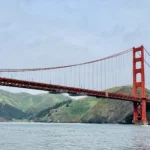
Opened in 1937, the red-orange suspension bridge links San Francisco with Marin County across the mouth of the bay. You can cross it on foot or by bike on the sidewalks (the bridge is about 2.7 km / 1.7 mi long): allow an hour round trip on foot from the Welcome Center on the south side. The best viewpoints are Crissy Field and Fort Point, at the foot of the bridge on the city side, and Battery Spencer on the Marin side, where you see the bridge with the city behind it. Fog often hides it in summer, especially in the morning: keep your schedule flexible.
Alcatraz
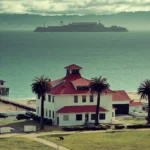
The former federal prison, in operation from 1934 to 1963, occupies a rocky islet in the middle of the bay. According to the National Park Service (nps.gov, checked 26 October 2026), all access to the island is through a private ferry company under contract with the park, Alcatraz City Cruises, from Alcatraz Landing at Pier 33, near Fisherman’s Wharf. The audio tour of the cellhouse tells the story of inmates’ lives and escape attempts. Tickets often sell out weeks ahead in summer: book as soon as your dates are set and beware of unofficial resellers. A night tour is also offered.
The cable cars
The cable-hauled streetcars, running since the late 19th century, are the last manually operated system of their kind in the world. Three lines remain: Powell-Hyde and Powell-Mason, linking Union Square with Fisherman’s Wharf, and California Street, which crosses the Financial District and Nob Hill. Lines are long at the Powell Street terminus; board at an intermediate stop instead, or take the California line, often less crowded. The free Cable Car Museum shows the machinery that drives the cables.
Fisherman’s Wharf and Pier 39
The former fishing port has become the most touristy area of the city. At Pier 39, colonies of sea lions lounge on the floating docks, and stalls serve clam chowder in a sourdough bread bowl. The area is very commercial, but it remains a handy starting point for Alcatraz, bay cruises and bike rentals for the Golden Gate. Further west, the Maritime Museum and Ghirardelli Square, a former chocolate factory, are quieter.
Chinatown and North Beach
Chinatown, one of the oldest Chinese neighborhoods in North America, begins at the Dragon Gate on Grant Avenue. The parallel streets (Stockton Street, Waverly Place) feel more authentic: markets, herbalists, upstairs temples. Just to the north, North Beach is the Italian neighborhood: cafés, bakeries and City Lights bookstore, linked to the Beat Generation writers. From North Beach, walk up to Coit Tower on Telegraph Hill for the view of the bay and its 1930s murals.
Lombard Street and the Painted Ladies
The stretch of Lombard Street between Hyde and Leavenworth Streets drops through eight tight bends between flower beds: walk down the side stairs or drive it at a crawl. The Painted Ladies, a row of colorful Victorian houses facing Alamo Square, offer the postcard view with the downtown skyscrapers behind. They are private homes: admire them from the park.
Golden Gate Park
Larger than New York’s Central Park, it stretches for about 5 km (3 mi) to the ocean. It brings together the de Young art museum, whose observation tower is free, the California Academy of Sciences (aquarium, planetarium and rainforest under one living roof), the Japanese Tea Garden and the Conservatory of Flowers. Renting a bike is the best way to reach Ocean Beach and the windmills at the western end. John F. Kennedy Drive is closed to cars along much of its length.
The Mission, the Castro and Haight-Ashbury
The Mission, the Latino neighborhood, is the sunniest in the city: its Balmy Alley and Clarion Alley are covered in murals, and its taquerias made the « Mission burrito » famous. Dolores Park has a fine view of downtown. The neighboring Castro is the historic heart of the LGBT community, around its 1922 movie theater. Further north, Haight-Ashbury keeps the memory of the 1967 « Summer of Love » alive with its thrift stores, record shops and Victorian houses.
Twin Peaks, Lands End and the Presidio
The two hills of Twin Peaks, at the geographic center of the city, offer a 360° panorama of the bay on clear days. At the northwestern tip, the Lands End coastal trail follows the cliffs between the ruins of the Sutro Baths and views of the Golden Gate; allow about an hour. The Presidio, a former military base turned park, links these spaces with forest trails and viewpoints over the bridge.
The Ferry Building, SFMOMA and the waterfront
At the foot of Market Street, the 1898 Ferry Building houses a food hall and, several mornings a week, a large farmers market. From there, you can walk along the Embarcadero to Pier 39; the Exploratorium, an interactive science museum, occupies Pier 15. In the SoMa district, SFMOMA is one of the great modern and contemporary art museums in the United States.
Day trips from San Francisco
| Day trip | Travel time (approx.) | Why go? |
|---|---|---|
| Sausalito | 30 min by ferry or car | Waterfront village, houseboats; ferry back after cycling over the bridge |
| Muir Woods | 45 min to 1 h by car | Coast redwood forest; parking reservations are required ahead of time, according to the National Park Service (checked 26 October 2026) |
| Berkeley and Oakland | 20 to 30 min by BART | University campus, residential neighborhoods, city views from the hills |
| Napa and Sonoma | 1 h to 1 h 30 by car | Vineyards and tastings, often by reservation |
| Half Moon Bay and the south coast | 45 min by car | Cliffs, beaches and lighthouses on the road to Santa Cruz |
| Yosemite National Park | 4 to 5 h by car | Granite cliffs and waterfalls; allow at least two days |
How many days in San Francisco? Itinerary ideas
San Francisco in 3 to 4 days
- Day 1: Union Square, cable car to Fisherman’s Wharf, Pier 39, Alcatraz in the afternoon (booked ahead)
- Day 2: Chinatown, North Beach, Coit Tower, Lombard Street, then the Ferry Building and the Embarcadero
- Day 3: Crissy Field, cycling across the Golden Gate Bridge to Sausalito, ferry back
- Day 4: Golden Gate Park and its museums, Haight-Ashbury, the Painted Ladies, the Mission and Twin Peaks at sunset
A week with San Francisco
- Add Muir Woods and the Marin coast (one day), then Napa or Sonoma (one day)
- Or head off for two to three days to Yosemite National Park
- Or drive down the coast to Monterey, Big Sur and Los Angeles: see our Los Angeles guide and our California guide
The hills are steep: group your sightseeing by area and combine walking, cable cars and buses. For a road trip, it is often cheaper to pick up the rental car only when you leave the city.
When to go to San Francisco?
The best time to visit San Francisco is mid-August to October: September is the warmest month of the year (an average high of 21.2 °C / 70 °F) and the summer fog becomes rarer. April and May are also pleasant, cool and almost dry. Contrary to popular belief, summer is not the warmest season: in June and July, marine fog often covers the city in the morning and evening, with highs around 19 °C (66 °F). Winter is mild but rainy.
The climate is Mediterranean, strongly moderated by the Pacific, whose water stays cold all year. Temperatures vary little from month to month, but a lot from one neighborhood to another: the west (Sunset, Richmond, Ocean Beach) is most often in the fog, while the Mission and the east of the city are sunnier. The table uses official NOAA normals for downtown.
| Month | High | Low | Rain | Crowds | Prices | Verdict |
|---|---|---|---|---|---|---|
| January | 14.3 °C (58 °F) | 8.1 °C (47 °F) | 112 mm (4.4 in) | Low | Low | ⚠️ Cool and rainy, quiet city |
| February | 15.8 °C (60 °F) | 8.8 °C (48 °F) | 111 mm (4.4 in) | Low to medium | Low → medium | ⚠️ Rainy, Chinese New Year |
| March | 16.7 °C (62 °F) | 9.4 °C (49 °F) | 80 mm (3.1 in) | Medium | Medium | ⚠️ Less rain, changeable weather |
| April | 17.2 °C (63 °F) | 9.8 °C (50 °F) | 41 mm (1.6 in) | Medium (Easter) | Medium | ✅ Mild, green hills |
| May | 17.8 °C (64 °F) | 10.8 °C (51 °F) | 18 mm (0.7 in) | Medium | Medium | ✅ Almost dry, a good month for walking |
| June | 19.2 °C (67 °F) | 11.7 °C (53 °F) | 5 mm (0.2 in) | High | High | ⚠️ Dry but frequent fog |
| July | 19.1 °C (66 °F) | 12.4 °C (54 °F) | 0 mm (0.0 in) | Very high | Very high | ⚠️ Fog and wind, crowds |
| August | 19.9 °C (68 °F) | 13.1 °C (56 °F) | 2 mm (0.1 in) | Very high | Very high | ⚠️ Fog still frequent, high prices |
| September | 21.2 °C (70 °F) | 13.1 °C (56 °F) | 3 mm (0.1 in) | Medium | Medium → high | ✅ The warmest and clearest month |
| October | 21.0 °C (70 °F) | 12.4 °C (54 °F) | 24 mm (0.9 in) | Medium | Medium → high | ✅ Excellent month, festivals |
| November | 17.6 °C (64 °F) | 10.4 °C (51 °F) | 66 mm (2.6 in) | Low to medium | Medium | ⚠️ Rain returns |
| December | 14.4 °C (58 °F) | 8.3 °C (47 °F) | 121 mm (4.8 in) | Medium (holidays) | Medium → high | ❌ The wettest, short days |
According to the same normals, it rains about 11 days a month from December to March, versus one day or fewer from June to September. In total, about 580 mm (22.8 in) falls each year, almost all of it between November and April. The summer fog does not show up in these figures: it brings almost no rain, but it lowers the felt temperature, especially with the wind on the Golden Gate.
Spring (March to May): mild and increasingly dry
Highs reach 17 to 18 °C (63 to 64 °F), rain drops sharply from April and the hills are green. It is a good season for walking in the city and the parks, with prices still reasonable outside Easter.
To choose an attractions card, our San Francisco pass page compares CityPASS, Go City and the Muni Visitor Passport.
Summer (June to August): dry but often gray
It hardly rains, but a marine fog, nicknamed « Karl » by locals, often rolls over the city late in the day and sometimes only clears in the early afternoon. Afternoons stay around 19 °C (66 °F) downtown, cooler by the ocean, while it is much hotter inland (Napa, Yosemite). It is high season: Alcatraz, hotels and cable cars are packed. Bring a windbreaker and layers.
Fall (September and October): the best season
The fog retreats, skies are often clear and September and October are the warmest months of the year, averaging 21 °C (70 °F) with much higher peaks on some days. The US summer vacation is over and the cultural calendar is busy. Note that this is also wildfire season in California, and smoke can degrade air quality.
Winter (November to March): mild, green and rainy
Afternoons reach about 14 to 16 °C (57 to 61 °F) and nights rarely drop below 8 °C (46 °F). Rain comes in spells, with very clear air in between. Prices drop outside the holidays: a good time for museums, with an umbrella and good shoes.
San Francisco month by month
January: 14 °C (58 °F), 112 mm (4.4 in) of rain. Low prices after the holidays; museums and Alcatraz easy to book.
February: rainy but mild. The Chinese New Year parade in Chinatown usually takes place in February: check the date.
March: 17 °C (62 °F), less rain. Changeable weather, but few visitors.
April: 17 °C (63 °F) and 41 mm (1.6 in) of rain. Green hills, a good month for hikes at Lands End and Muir Woods.
May: almost dry. The Bay to Breakers costume race crosses the city, usually in May.
June: 19 °C (67 °F) downtown, frequent morning fog. The Pride parade, one of the largest in the country, takes place in late June.
July: the least sunny month because of the fog, despite the lack of rain. High season and peak prices.
August: fog still frequent, but the end of the month improves. The Outside Lands music festival is usually held in Golden Gate Park.
September: the warmest month (21.2 °C / 70 °F) and one of the clearest. Fewer crowds after Labor Day.
October: 21 °C (70 °F), often clear skies. Fleet Week (air shows over the bay) and the free Hardly Strictly Bluegrass festival usually take place in October.
November: rain returns (66 mm / 2.6 in), moderate prices outside Thanksgiving week. Día de los Muertos is celebrated in the Mission.
December: the wettest month (121 mm / 4.8 in). Lights at Union Square, prices up for the holidays.
Exact event dates change every year: check them on the official websites before booking. Book 3 to 5 months ahead for summer and major events, 2 to 3 months the rest of the year; book Alcatraz as soon as your dates are known.
Budget for a trip to San Francisco
San Francisco is one of the most expensive cities in the United States, especially for accommodation. On top of displayed prices come sales tax, hotel resort fees where applicable and, in restaurants, a tip. Indicative amounts per person per day, excluding flights:
| Item | Budget | Comfort |
|---|---|---|
| Accommodation (based on a shared double room) | about US$65 to 125 | about US$180 to 335 |
| Meals | about US$45 to 65 | about US$90 to 145 |
| Transport (Muni, cable car, BART) | about US$10 to 20 | about US$20 to 45 (with ride-hailing) |
| Sights and activities | about US$20 to 40 | about US$45 to 90 |
| Total per day | roughly US$155 to 245 | roughly US$315 to 535 |
To keep costs down: make the most of the free sights (walking the Golden Gate, Lands End, Twin Peaks, Golden Gate Park, the Cable Car Museum, the de Young tower), travel from January to May outside Easter, and avoid renting a car for the city: hotel parking is often expensive.
Getting around San Francisco
- On foot: most tourist areas are close together, but the hills are steep; wear good shoes.
- Muni: the city network includes buses, streetcars (including the historic F-line streetcars on Market Street and the Embarcadero), light rail and cable cars. The Clipper card (or its app) works on Muni and BART; multi-day passes include the cable cars.
- BART: the regional rail system links SFO airport with downtown and serves Oakland and Berkeley.
- Bike: ideal for the waterfront, the Golden Gate Bridge and Golden Gate Park; bike-share and rental shops near Fisherman’s Wharf.
- Car: unnecessary in the city but handy for Muir Woods, Napa or a road trip. Leave nothing at all in the vehicle (see the safety section).
- Ferries: from the Ferry Building and Fisherman’s Wharf to Sausalito, Tiburon and Oakland: an inexpensive bay cruise.
Where to stay in San Francisco?
The neighborhood matters a lot, as the atmosphere changes from one street to the next. For a first visit, choose a hotel near a cable car or Muni line.
- Union Square: central, very well connected, many hotels in every category; some streets west of the square, toward the Tenderloin, are best avoided at night
- Fisherman’s Wharf: handy for Alcatraz and the Golden Gate, family-friendly but touristy
- North Beach: cafés and restaurants, neighborhood feel, close to Chinatown
- Nob Hill: historic hotels, quiet, on the California cable car line
- Marina and Cow Hollow: residential and polished, near the Presidio and the Golden Gate
- SoMa and the Embarcadero: newer hotels, handy for BART and the museums; livelier on weekdays
Check the total price before booking: many hotels add resort fees and charge for parking by the night.
Entry requirements, health and safety
- US citizens: a trip to San Francisco is domestic travel, with no entry formalities.
- UK citizens: according to the UK FCDO (GOV.UK, updated 18 August 2026), you need an approved ESTA (only via the official ESTA website or ESTA Mobile app) or a US visa before you travel; some travel histories (Cuba since 12 January 2021, Iran, Iraq, Libya, North Korea, Somalia, Sudan, Syria or Yemen since March 2011) and arrests or criminal records can make you ineligible. Your passport must be valid for the length of your stay.
- Health: medical treatment is expensive and some hospitals ask non-residents for a deposit; UK prescriptions are not valid in the US (GOV.UK). Take out insurance covering medical costs. Emergency number: 911.
- Driving: GOV.UK says you can use a UK photocard driving licence, but you may also need the 1949 international driving permit (IDP), depending on the state, and car hire companies may set stricter conditions.
- Safety: according to GOV.UK, violent crime and gun crime rarely affect tourists, but take care in unfamiliar areas and avoid walking alone through quieter areas at night. GOV.UK also advises not leaving any items on display in your car: car break-ins are common in the city.
- Natural hazards: GOV.UK lists California among the states at higher risk of earthquakes and warns about wildfires in dry areas (see the CAL FIRE website): follow the instructions of local authorities.
Practical tips for San Francisco
- Clothing: bring layers and a windbreaker in every season; it can be 10 °C (18 °F) cooler at Ocean Beach than in the Mission on the same day.
- Tipping: in restaurants, it is customary to leave 18 to 20% of the bill. Some restaurants add surcharges (for staff health care, for example): read the bill.
- Money: cards are accepted almost everywhere; check your bank’s foreign transaction fees. Our currency converter helps you estimate your budget.
- Mobile data: check your home carrier’s US roaming charges; a US eSIM is often cheaper.
- Alcohol: the legal age for buying and drinking alcohol is 21 across the US (GOV.UK); ID is often requested.
- Swimming: the ocean is cold at Ocean Beach; follow the posted warnings.
Who is San Francisco for?
Our verdict by profile, based on the information in this guide:
- Couples: yes: cycling across the Golden Gate, the ferry to Sausalito, North Beach and a day in the Napa or Sonoma vineyards.
- Families: yes, with Alcatraz, the cable cars, Pier 39 and its sea lions, the California Academy of Sciences and the Exploratorium.
- Tight budget: difficult: roughly US$155 to 245 per day on a budget, mainly because of accommodation; the free sights (Golden Gate, Lands End, Twin Peaks, Golden Gate Park) help.
- Culture: yes: SFMOMA, the de Young museum, the historic neighborhoods of Chinatown, the Mission and the Castro.
- Nature: yes, on day trips: the Muir Woods redwoods, the Marin coast, Half Moon Bay, and Yosemite with at least two days.
- Beach: no: the ocean is cold.
Further reading
San Francisco is often the first stop on a road trip: our page when to go to California compares the coast, the parks and the desert by month, and the California guide covers the rest of the loop. Before booking calls or meetings, check the time difference with the United States.
Frequently asked questions
How many days do you need in San Francisco?
Three to four days let you see the Golden Gate, Alcatraz, the cable cars, Chinatown, North Beach, Golden Gate Park and the Mission. Allow a week with Muir Woods, Napa or Yosemite.
What is the best time to visit San Francisco?
Mid-August to October: September is the warmest month (an average high of 21.2 °C / 70 °F according to NOAA) and fog is less frequent than in June-July. April and May are also good choices.
Do you need to rent a car in San Francisco?
Not for the city: public transit, cable cars and walking are enough, and parking is expensive. A car is useful for day trips and road trips; leave nothing inside.
How do you get from SFO to downtown San Francisco?
The BART regional rail system links the airport with downtown (Market Street stations). Taxis and ride-hailing are also available.
Do you need to book Alcatraz in advance?
Yes, especially in summer and during holidays: tickets from the official concessioner, Alcatraz City Cruises, departing from Pier 33, often sell out weeks ahead.
Is San Francisco dangerous?
The tourist areas can be visited without particular difficulty, but car break-ins are frequent: GOV.UK advises never leaving items on display in your car and avoiding quieter areas alone at night.
Our sources
- Entry, safety and health information read on 26 October 2026: UK FCDO, foreign travel advice for the USA (GOV.UK, updated 18 August 2026)
- San Francisco climate normals: NOAA (National Weather Service) 1991-2020 normals, San Francisco Downtown station; values converted to °C and mm
- National Park Service: Alcatraz Island, plan your visit and Muir Woods, plan your visit, checked 26 October 2026
- European Central Bank euro reference rates, 23 October 2026 (budget conversions)
- Our methodology
Updated October 2026.
To continue your trip, see our California guide, the page when to go to California, our Los Angeles guide, our Las Vegas guide, our United States travel guide, our guides to New York and Hawaii, and our other destinations in the Americas. For a road trip, read our guides to multi-stop travel and travel insurance, or our ideas for travel in September.