The best time to visit the Philippines is December to April: it is the dry season over most of the archipelago, with little rain in Manila and Palawan, generally calm seas and a low risk of typhoons. March and April are the driest months, but also the hottest. By contrast, June to November is the rainy and typhoon season, with a peak in rainfall in July-August in Manila. To place Manila, the Visayas and Mindanao, see the map of the Philippines.
The archipelago has more than 7,000 islands, and they do not all follow the same rhythm: Manila and western Luzon have sharply defined seasons, while Cebu, the eastern Visayas and Mindanao receive rain spread more evenly through the year. Here is how to choose when to go to the Philippines, based on the 1991-2020 climate normals from PAGASA, the Philippines’ national weather service.

Our travel deals for Philippines
Affiliate links: we earn a commission, at no extra cost to you.
 FlightsKiwi.comCompare flights and airline combinations to Philippines.Compare flights
- eSIMAiraloData plan to install before you leave (eSIM-compatible phone).See plans


When to go to the Philippines at a glance
- Best time overall December to April (dry season)
- Driest months February to April in Manila and Palawan (less than 50 mm (2.0 in) of rain a month)
- Hot season April and May, more than 33 °C (91 °F) in the afternoon in Manila
- Rainy and typhoon season roughly June to November
- Rain peak in Manila July and August, more than 400 mm (15.7 in) a month
- Best value May, then November (outside the holidays)
- Plan ahead for Christmas and New Year, Holy Week (March or April): strong domestic demand
When to go to the Philippines by priority
- Best weather: December to April; March and April are the driest (see also where to go in February)
- Cheapest: May, then November outside the holidays
- Fewest crowds: May, June and November; avoid Christmas, New Year and Holy Week
- Events: Sinulog in Cebu, Ati-Atihan in Kalibo and Dinagyang in Iloilo (January), MassKara in Bacolod (October); check the dates
Philippines: the calendar at a glance
✅ Best months: January, February, March, April, December
❌ Period to avoid: July, August, September
Climate in the Philippines month by month
The table below gives the normals for Manila, the arrival point for most international flights and representative of western Luzon. Cebu, Palawan and Mindanao are covered in more detail below.
| Month | Avg. max | Avg. min | Rain | Crowds | Prices | Verdict |
|---|---|---|---|---|---|---|
| January | 29.9 °C (86 °F) | 23.9 °C (75 °F) | 19 mm (0.7 in) | High | High | ✅ Dry, moderate heat |
| February | 30.7 °C (87 °F) | 24.3 °C (76 °F) | 22 mm (0.9 in) | High | High | ✅ Dry and sunny |
| March | 32.1 °C (90 °F) | 25.3 °C (78 °F) | 22 mm (0.9 in) | High | High | ✅ Very dry, heat rising |
| April | 33.8 °C (93 °F) | 26.7 °C (80 °F) | 23 mm (0.9 in) | High (Holy Week) | High | ✅ The hottest month, still dry |
| May | 33.6 °C (92 °F) | 27.0 °C (81 °F) | 159 mm (6.3 in) | Moderate | Moderate | ⚠️ Heavy heat, rains arrive |
| June | 32.8 °C (91 °F) | 26.5 °C (80 °F) | 253 mm (10.0 in) | Low | Low | ⚠️ Rainy season under way |
| July | 31.5 °C (89 °F) | 25.9 °C (79 °F) | 432 mm (17.0 in) | Moderate | Moderate | ❌ Very wet, typhoons possible |
| August | 31.0 °C (88 °F) | 25.9 °C (79 °F) | 476 mm (18.7 in) | Moderate | Moderate | ❌ The wettest month |
| September | 31.2 °C (88 °F) | 25.7 °C (78 °F) | 396 mm (15.6 in) | Low | Low | ❌ Very wet, typhoons possible |
| October | 31.4 °C (89 °F) | 25.7 °C (78 °F) | 221 mm (8.7 in) | Low | Low | ⚠️ Rain easing, typhoons still possible |
| November | 31.3 °C (88 °F) | 25.3 °C (78 °F) | 120 mm (4.7 in) | Moderate | Moderate | ⚠️ Transition, residual typhoon risk |
| December | 30.3 °C (87 °F) | 24.6 °C (76 °F) | 99 mm (3.9 in) | Very high (holidays) | Very high | ✅ Start of the dry season |
Note: temperatures change little through the year (30 to 34 °C (86 to 93 °F) in the afternoon in Manila). What makes the difference is the rain and the typhoon risk. A single typhoon can disrupt flights and ferries for several days, even outside the wettest months.
Dry season, rainy season and typhoons in the Philippines
PAGASA describes two main seasons, driven by two wind regimes: the amihan, a cooler, drier northeast wind that generally prevails from November-December to February, and the habagat, the rain-laden southwest monsoon, from about June to September. Exact dates vary every year: PAGASA officially announces the start and end of the rainy season.
Dry season (December to April): peak season
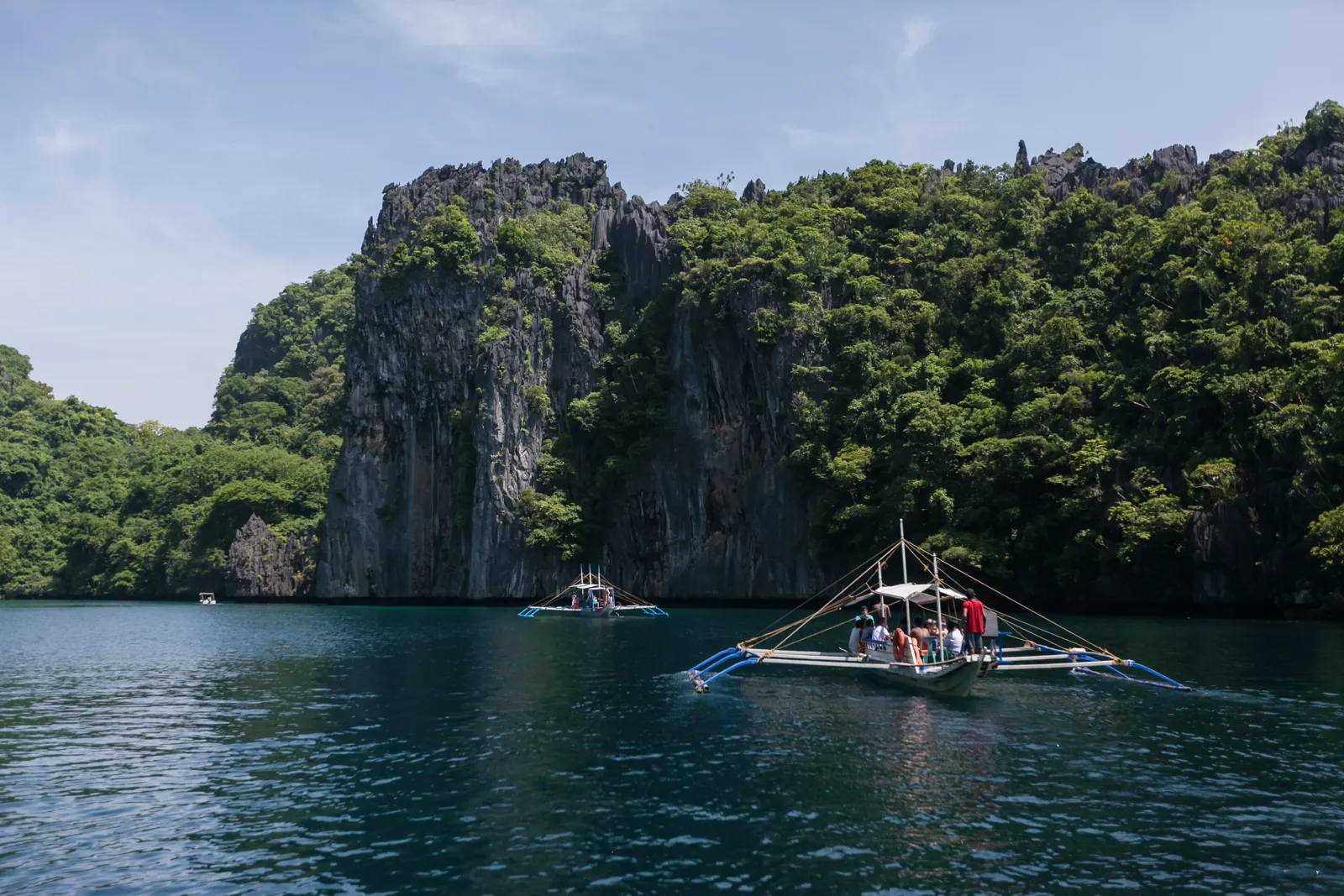
This is the safest period for a first trip. In Manila, less than 25 mm (1.0 in) of rain falls per month from January to April. In Puerto Princesa (Palawan), rainfall stays below 60 mm (2.4 in) from January to April. From December to February, the amihan brings slightly more pleasant nights and less oppressive heat.
- Pros: clear skies, calm seas at most dive and excursion sites, low typhoon risk, more regular boat connections
- Cons: higher prices and heavy demand for accommodation at Christmas, New Year and during Holy Week; the amihan wind can make the sea choppy on some northeast-facing coasts
- Our tip: February and March combine dry weather with heat that is still bearable, outside the big holidays
Hot season (April-May): sun and intense heat
In April and May, highs exceed 33 °C (91 °F) in Manila (33.8 °C (93 °F) in April) and humidity rises. April stays dry, and May brings the first heavy showers (about 159 mm (6.3 in) in Manila).
- Pros: often very calm seas, good conditions for the islands and diving in April
- Cons: heat that makes city sightseeing hard, heavy local demand during Holy Week and the Philippine school holidays
- Who is it for? Travelers focused on beaches and the sea
Rainy and typhoon season (June to November)
The southwest monsoon mostly waters the west of the archipelago: in Manila, 432 mm (17.0 in) in July and 476 mm (18.7 in) in August. This is also when tropical cyclones are most frequent, with a risk of flooding and landslides. Typhoon tracks vary a great deal from year to year, and the peak is not fixed.
- Pros: very green landscapes, lower prices, fewer foreign tourists
- Cons: domestic flights and ferries canceled during typhoon alerts, boat excursions suspended, flooding in Manila
- Good to know: follow PAGASA bulletins and the instructions of local authorities; allow spare days before your return flight
- Who is it for? Flexible travelers, ready to adapt their itinerary day by day
When to go to the Philippines by region
The contrast is between the west of the archipelago (Manila, Palawan), exposed to the southwest monsoon and with a real dry season, and the east and south (Cebu, Mindanao), where rain is spread more evenly through the year. Here are the normals for four cities:
| Month | Manila (Luzon) | Cebu (Visayas) | Puerto Princesa (Palawan) | Davao (Mindanao) |
|---|---|---|---|---|
| January | 29.9 °C (86 °F) / 19 mm (0.7 in) | 29.7 °C (85 °F) / 135 mm (5.3 in) | 30.9 °C (88 °F) / 56 mm (2.2 in) | 30.9 °C (88 °F) / 167 mm (6.6 in) |
| February | 30.7 °C (87 °F) / 22 mm (0.9 in) | 30.0 °C (86 °F) / 89 mm (3.5 in) | 31.1 °C (88 °F) / 31 mm (1.2 in) | 31.3 °C (88 °F) / 114 mm (4.5 in) |
| March | 32.1 °C (90 °F) / 22 mm (0.9 in) | 31.0 °C (88 °F) / 61 mm (2.4 in) | 31.9 °C (89 °F) / 37 mm (1.5 in) | 32.3 °C (90 °F) / 107 mm (4.2 in) |
| April | 33.8 °C (93 °F) / 23 mm (0.9 in) | 32.2 °C (90 °F) / 56 mm (2.2 in) | 32.9 °C (91 °F) / 49 mm (1.9 in) | 33.1 °C (92 °F) / 115 mm (4.5 in) |
| May | 33.6 °C (92 °F) / 159 mm (6.3 in) | 32.8 °C (91 °F) / 94 mm (3.7 in) | 32.9 °C (91 °F) / 126 mm (5.0 in) | 32.7 °C (91 °F) / 166 mm (6.5 in) |
| June | 32.8 °C (91 °F) / 253 mm (10.0 in) | 32.2 °C (90 °F) / 181 mm (7.1 in) | 32.1 °C (90 °F) / 157 mm (6.2 in) | 32.0 °C (90 °F) / 193 mm (7.6 in) |
| July | 31.5 °C (89 °F) / 432 mm (17.0 in) | 31.6 °C (89 °F) / 211 mm (8.3 in) | 31.5 °C (89 °F) / 170 mm (6.7 in) | 31.7 °C (89 °F) / 169 mm (6.7 in) |
| August | 31.0 °C (88 °F) / 476 mm (18.7 in) | 31.9 °C (89 °F) / 158 mm (6.2 in) | 31.6 °C (89 °F) / 173 mm (6.8 in) | 31.8 °C (89 °F) / 167 mm (6.6 in) |
| September | 31.2 °C (88 °F) / 396 mm (15.6 in) | 31.9 °C (89 °F) / 190 mm (7.5 in) | 31.7 °C (89 °F) / 172 mm (6.8 in) | 32.2 °C (90 °F) / 162 mm (6.4 in) |
| October | 31.4 °C (89 °F) / 221 mm (8.7 in) | 31.4 °C (89 °F) / 208 mm (8.2 in) | 31.6 °C (89 °F) / 213 mm (8.4 in) | 32.6 °C (91 °F) / 195 mm (7.7 in) |
| November | 31.3 °C (88 °F) / 120 mm (4.7 in) | 31.0 °C (88 °F) / 131 mm (5.2 in) | 31.4 °C (89 °F) / 196 mm (7.7 in) | 32.2 °C (90 °F) / 140 mm (5.5 in) |
| December | 30.3 °C (87 °F) / 99 mm (3.9 in) | 30.3 °C (87 °F) / 172 mm (6.8 in) | 31.0 °C (88 °F) / 175 mm (6.9 in) | 31.6 °C (89 °F) / 142 mm (5.6 in) |
Manila and Luzon
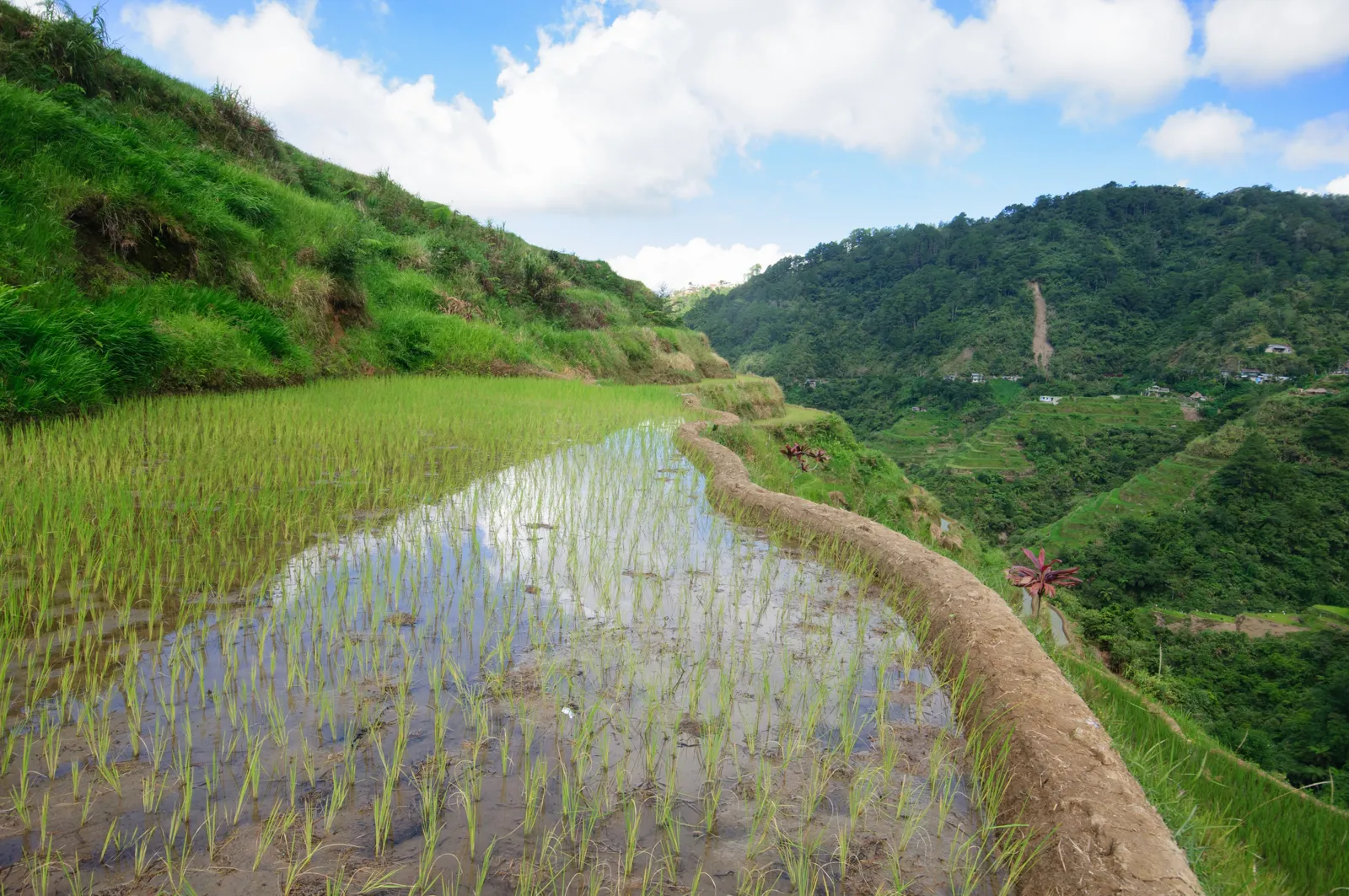
This is the clearest pattern in the country: December to April is dry, June to October very wet. Northern Luzon and the east coast are also among the areas most often hit by typhoons. In the Cordillera (Banaue, Sagada), altitude cools the nights, and the rice terraces are greenest in the rainy season, but mountain roads can be cut by landslides.
Cebu, Bohol and the Visayas
In Cebu it rains in every season, with no truly dry month and no extreme peak: from 56 mm (2.2 in) in April to 211 mm (8.3 in) in July. The least rainy months run from February to May. December and January stay fairly wet (172 mm (6.8 in) and 135 mm (5.3 in)). The central Visayas are crossed by typhoons in some years, especially late in the season: November-December weather there is not guaranteed.
Palawan (El Nido, Coron, Puerto Princesa)
Palawan has a marked dry season from January to April (31 mm (1.2 in) to 56 mm (2.2 in) a month in Puerto Princesa), ideal for boat excursions from El Nido and Coron. From May to December, rainfall exceeds 125 mm (4.9 in) a month, with a maximum in October-November. Sea trips depend on sea conditions and can be canceled in strong winds.
Mindanao
The south of the archipelago lies outside the usual track of most typhoons, which hit the center and north more often. In Davao, rain is spread over the whole year (107 mm (4.2 in) to 195 mm (7.7 in) a month) and the heat stays stable. Please note: conditions on Mindanao vary from one area to another, so check your government’s current travel advice for the specific areas you plan to visit before making any plans in this region.
The table below summarizes the recommended period for each region, month by month.
| Month | Manila and Luzon | Cebu, Bohol and the Visayas | Palawan (El Nido, Coron) |
|---|---|---|---|
| January | ✅ | ⚠️ | ✅ |
| February | ✅ | ✅ | ✅ |
| March | ✅ | ✅ | ✅ |
| April | ✅ | ✅ | ✅ |
| May | ⚠️ | ✅ | ⚠️ |
| June | ⚠️ | ⚠️ | ⚠️ |
| July | ❌ | ⚠️ | ⚠️ |
| August | ❌ | ⚠️ | ⚠️ |
| September | ❌ | ⚠️ | ⚠️ |
| October | ⚠️ | ⚠️ | ⚠️ |
| November | ⚠️ | ⚠️ | ⚠️ |
| December | ✅ | ⚠️ | ⚠️ |

When to go to the Philippines by trip type
| Your trip | Best time | Where? |
|---|---|---|
| First trip (islands and lagoons) | January to April | Palawan (El Nido, Coron), Bohol, Cebu |
| Scuba diving | March to May (seas generally calmest) | Moalboal, Malapascua, Coron, Anilao |
| Rice terraces | Dry season for the roads; rainy season for the green | Banaue, Batad, Sagada |
| Budget | May, June, November (outside the holidays) | Cebu, Bohol, Siquijor |
| Festivals | January | Cebu (Sinulog), Kalibo (Ati-Atihan), Iloilo (Dinagyang) |
| Family trip | February to April, avoiding Holy Week | Bohol, Palawan, Cebu |
| Honeymoon | February to April | El Nido, Coron, Siargao |
Major events in the Philippines
| Period | Event | Location |
|---|---|---|
| January (usually the third Sunday) | Sinulog, festival of the Santo Niño | Cebu |
| January | Ati-Atihan | Kalibo (Aklan) |
| January | Dinagyang | Iloilo |
| March or April (date varies) | Holy Week: many people traveling, some services closed | Nationwide |
| October | MassKara | Bacolod |
| December | Christmas season, very long in the Philippines, and year-end holidays | Nationwide |
The Philippines month by month: what to expect
The Philippines in January: Dry in Manila and Palawan, around 30 °C (86 °F) in the afternoon. Big festival season (Sinulog, Ati-Atihan, Dinagyang). Still fairly wet in Cebu and Davao.
The Philippines in February: One of the best months: dry in the west, moderate heat, seas often calm. A good time to combine Palawan and the Visayas.
The Philippines in March: Very dry in Manila (22 mm (0.9 in)) and Palawan. The heat rises. Check whether Holy Week falls during your stay.
The Philippines in April: The hottest month in Manila (33.8 °C (93 °F)), still very dry. Seas often calm, ideal for the islands and diving. Strong local demand around Easter.
The Philippines in May: A transition month: intense heat, first showers in Manila, weather still decent in Cebu. Prices falling.
The Philippines in June: The rainy season sets in over the west (253 mm (10.0 in) in Manila). Low prices. Typhoon risk rising.
The Philippines in July: Very wet in Manila (432 mm (17.0 in)), typhoons possible. If you travel at this time, keep your itinerary flexible.
The Philippines in August: The wettest month in Manila (476 mm (18.7 in)). Cebu and Davao, at around 160 mm (6.3 in), are less affected by the monsoon.
The Philippines in September: Still very wet on Luzon, high typhoon risk. Low prices: best for flexible travelers.
The Philippines in October: Rain eases in Manila (221 mm (8.7 in)) but stays heavy in Palawan and Cebu. Typhoons still possible. MassKara festival in Bacolod.
The Philippines in November: Transition to the dry season in Manila (120 mm (4.7 in)), but Palawan stays wet (196 mm (7.7 in)). The typhoon risk has not gone away.
The Philippines in December: Drier weather returns to Luzon, Christmas season. Prices and crowds very high during the holidays. Still humid in Cebu and Palawan.
When to book your trip to the Philippines
For peak season, and especially Christmas, New Year and Holy Week, book your flights 4 to 6 months ahead. Accommodation in El Nido and Coron, in limited supply, fills up early, as do domestic flights to Palawan. In the low season, 1 to 2 months is generally enough.
Planning your trip to the Philippines
- Entry requirements: visa rules and the online arrival form depend on your nationality and change over time: see the entry requirements for the Philippines in our country guide.
- Time difference: the Philippines is UTC+8 and does not use daylight saving time: 8 hours ahead of London in winter and 7 in summer; 13 hours ahead of New York in winter and 12 in summer.
- Currency: the Philippine peso (PHP). Keep cash for the islands, where ATMs can be scarce. Use our currency converter to estimate your budget.
- Typhoons: during typhoon season, follow PAGASA bulletins and allow a margin before your international flight.
To go further, see our complete Philippines travel guide. Hesitating with another Southeast Asian destination? Compare with when to go to Thailand or when to go to Indonesia, as well as when to go to Vietnam and when to go to Malaysia.
Frequently asked questions
What is the best month to visit the Philippines?
February, March and April are the most favorable months over most of the archipelago: dry weather in Manila and Palawan, often calm seas and a low typhoon risk. April is, however, the hottest month.
When is the typhoon season in the Philippines?
Typhoons are most frequent from June to November. The north and center of the archipelago are hit more often than Mindanao.
Can you visit the Philippines in July or August?
It is possible, but it is the heart of the rainy season in the west: more than 400 mm (15.7 in) a month in Manila. Cebu and Davao are less wet. Plan a flexible itinerary and insurance that covers cancellations.
When should you go to Palawan?
From January to April, when less than 60 mm (2.4 in) of rain falls per month in Puerto Princesa. It is the best time for boat excursions in El Nido and Coron.
What is the cheapest time to go to the Philippines?
May, June and the rainy season in general, as well as November outside the holidays. Avoid Christmas, New Year and Holy Week if you are looking for low prices.
Do you need a visa for the Philippines?
It depends on your nationality: see the entry requirements for the Philippines in our country guide, and check the latest official rules before you travel.
Is January a good time to go to the Philippines?
Yes: January is dry in Manila (19 mm (0.7 in)) and Palawan, with around 30 °C (86 °F) in the afternoon, and it is the month of the big festivals (Sinulog in Cebu, Ati-Atihan, Dinagyang). Cebu and Davao, however, stay fairly wet.
When does the rainy season start in the Philippines?
Usually around June, as the southwest monsoon (habagat) sets in, and it lasts until about October-November. Dates change every year: PAGASA officially announces the start and end of the rainy season.
Our sources
- PAGASA (Philippine Atmospheric, Geophysical and Astronomical Services Administration): 1991-2020 climate normals for the Manila (Port Area), Cebu (Mactan airport), Puerto Princesa and Davao stations
- Our methodology
Updated November 2026.