When is the best time to visit Seoul? The best period runs from April to early June and from September to early November: afternoons are mild (18 to 27 °C, or 64 to 81 °F), skies are often clear, and the city has two highlights, the cherry blossoms in early April and the autumn colors in late October. Winter is very cold but dry and bright. July and August, in the middle of the summer monsoon, are the wettest and muggiest months.
Safety warning: according to the UK FCDO (GOV.UK, updated 14 May 2026), the demilitarised zone (DMZ) separates North Korea and South Korea; peace has been maintained under an armistice agreement, but no formal peace treaty has ever been signed. If you are in the area of the DMZ, exercise caution and follow the advice of the local authorities. DMZ excursions offered from Seoul go into this area: check the official travel advice before booking.
Seoul has a continental climate with dry winters: harsh winters, with nights below freezing from December to February, a short and windy spring, a rainy season (jangma) that usually starts in late June, then a hot and humid summer. July and August alone bring more than half of the year’s rainfall. Autumn, dry and sunny, is the most stable season. The major Korean holidays (Seollal, the Lunar New Year, and Chuseok, the harvest festival) weigh on transport and on the opening hours of some businesses. Here is how to choose, based on the official normals of the Korea Meteorological Administration (KMA).

Our travel deals for Seoul
Affiliate links: we earn a commission, at no extra cost to you.
 FlightsKiwi.comCompare flights and airline combinations to Seoul.Compare flights
- eSIMAiraloData plan to install before you leave (eSIM-compatible phone).See plans


When to go to Seoul at a glance
- Best times April to early June and September (end of the month) to early November
- Cherry blossoms usually early April; the date changes every year
- Autumn colors usually late October to early November in the city
- Hottest month August, with an average high of 30.0 °C (86 °F)
- Coldest month January, with an average low of −5.5 °C (22 °F)
- Driest month January (17 mm (0.7 in)), followed by December and February
- Wettest month July (414 mm (16.3 in)), ahead of August (348 mm (13.7 in))
- Cheapest period January–February and March, outside the Lunar New Year
When to go to Seoul by priority
- Best weather: May and October (20 to 24 °C, or 68 to 75 °F, in the afternoon, 52 mm (2.0 in) of rain in October); April for the cherry blossoms
- Cheapest: January and February, outside the Lunar New Year (Seollal); March and November remain moderate
- Fewest crowds: January–February outside Seollal, March and November
- Events: cherry blossoms in early April, the Lotus Lantern Festival in April or May, Chuseok in September or early October (closures, full trains), illuminations in December
Seoul: the calendar at a glance
✅ Best months: April, may, June, October, November
❌ Period to avoid: July, August
Seoul weather month by month
The table below uses the 1991–2020 normals for the Seoul station published by the Korea Meteorological Administration. It is the reference station for the center of the capital.
| Month | Avg. max | Avg. min | Rain | Crowds | Prices | Verdict |
|---|---|---|---|---|---|---|
| January | 2.1 °C (36 °F) | −5.5 °C (22 °F) | 17 mm (0.7 in) | Low | Low | ⚠️ Very cold but dry and sunny |
| February | 5.1 °C (41 °F) | −3.2 °C (26 °F) | 28 mm (1.1 in) | Low (high at Lunar New Year) | Low | ⚠️ Cold; closures possible at Seollal |
| March | 11.0 °C (52 °F) | 1.9 °C (35 °F) | 37 mm (1.5 in) | Moderate | Moderate | ⚠️ Cool, windy, dust possible |
| April | 17.9 °C (64 °F) | 8.0 °C (46 °F) | 73 mm (2.9 in) | High | Moderate → high | ✅ Cherry blossoms early in the month, mild |
| May | 23.6 °C (74 °F) | 13.5 °C (56 °F) | 104 mm (4.1 in) | High | Moderate | ✅ Excellent, long days |
| June | 27.6 °C (82 °F) | 18.7 °C (66 °F) | 130 mm (5.1 in) | Moderate | Moderate | ✅ Warm; rain late in the month |
| July | 29.0 °C (84 °F) | 22.3 °C (72 °F) | 414 mm (16.3 in) | High (holidays) | High | ❌ Monsoon: the wettest month |
| August | 30.0 °C (86 °F) | 22.9 °C (73 °F) | 348 mm (13.7 in) | High (holidays) | High | ❌ The hottest, very humid |
| September | 26.2 °C (79 °F) | 17.7 °C (64 °F) | 142 mm (5.6 in) | Moderate (high at Chuseok) | Moderate | ⚠️ Still hot; Chuseok depending on the year |
| October | 20.2 °C (68 °F) | 10.6 °C (51 °F) | 52 mm (2.0 in) | High | Moderate → high | ✅ Dry, clear skies, autumn colors |
| November | 11.9 °C (53 °F) | 3.5 °C (38 °F) | 51 mm (2.0 in) | Moderate | Moderate | ✅ Early in the month: end of the foliage |
| December | 4.2 °C (40 °F) | −3.4 °C (26 °F) | 23 mm (0.9 in) | Moderate (high at Christmas) | Moderate | ⚠️ Cold, year-end illuminations |
Note: according to the same normals, Seoul averages just over 3 days of precipitation (at least 1 mm (0.04 in)) in January and February, compared with 13 in July and 12 in August. Sunshine peaks in May (about 223 hours) and is lowest in July (about 124 hours). The big summer totals often fall during episodes of intense rain, which can cause local flooding.
Seoul’s seasons: pros and cons
Spring (March to May): cherry blossoms and mild weather
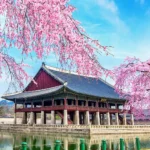
March is still cool (11 °C (52 °F) in the afternoon, barely above freezing at night) and windy. The cherry trees usually bloom in early April, along Yunjung-ro Road on Yeouido Island, around Seokchon Lake or on the slopes of Namsan. April is mild (18 °C (64 °F)) and May is one of the best months of the year (24 °C (75 °F), long sunny days). The bloom lasts about a week in any one place and its date varies from year to year.
One point of caution: according to the UK FCDO (GOV.UK, updated 14 May 2026), air pollution, including yellow dust, is common in South Korea, especially during spring. Follow local media reports and check the KMA website; on high-concentration days, most residents stay indoors or use face masks outside.
- Pros: ideal temperatures for walking, palaces and parks in bloom, pleasant terraces along the Han River
- Cons: March still cold, dust and fine-particle episodes, crowded parks during the cherry blossoms
- Our tip: the second half of April and the month of May offer the best balance
Summer (June to August): monsoon and humid heat
June is hot (28 °C (82 °F)) and still fairly dry until the rainy season arrives, usually in the last part of the month. July becomes the wettest month (414 mm (16.3 in)), August the hottest (30 °C (86 °F)), with nights above 22 °C (72 °F) and high humidity. It does not rain every day, but downpours can be very heavy. According to the UK FCDO (GOV.UK, updated 14 May 2026), the typhoon season normally runs from June to November, and South Korea has heavy rainfall across the country during the summer rainy season, usually in June and July, with possible flooding and landslides; in Seoul, typhoons generally mean mostly heavy rain and gusts.
- Pros: long days, lively nightlife, air-conditioned museums and shopping malls
- Cons: intense rain, muggy heat, Korean summer holidays that push prices up
- Who is it for? Those with no other dates, keeping a flexible program and indoor visits
Autumn (September to November): clear skies and foliage
September is still hot early on (26 °C (79 °F)) and can still see rainy spells; it cools clearly late in the month. October is dry (52 mm (2.0 in)) and mild (20 °C (68 °F)): it is often the most pleasant month. The leaves turn red in the palace gardens, on Namsan or in Bukhansan National Park, usually from late October. In early November, evenings are already cold (an average low of 3.5 °C (38 °F) over the month).
- Pros: often clear skies, little rain in October, easy hikes in the mountains surrounding the city
- Cons: Chuseok (September or early October depending on the year) disrupts transport and closes some businesses, crowds in October
- Our tip: the second half of October, outside Chuseok, is a very safe choice
Winter (December to February): dry cold and low prices
Seoul’s winter is harsh: 2 to 5 °C (36 to 41 °F) in the afternoon and −3 to −6 °C (27 to 21 °F) at night on average from December to February, with a north-west wind that sharpens the feeling of cold. There is little rain or snow (17 to 28 mm (0.7 to 1.1 in) a month), and the sky is often blue. Year-end illuminations and temporary ice rinks liven up the center. During the Lunar New Year (Seollal, late January or February depending on the year), many Koreans return to their families: some restaurants and shops close for a few days.
- Pros: low prices, less crowded sites, clear skies, the option of combining with skiing in Gangwon Province
- Cons: intense cold, short days, closures during Seollal
- Who is it for? Budget travelers and well-equipped visitors who favor museums, covered markets and food
When to go to Seoul by trip type
| Trip | Best time | Where? |
|---|---|---|
| Cherry blossoms | Early April (date varies) | Yeouido, Seokchon Lake, Namsan |
| Autumn colors | Late October – early November | Changdeokgung Palace, Namsan, Bukhansan |
| First cultural stay | May, October | Gyeongbokgung, Bukchon, Insadong, Myeongdong |
| Hiking around the city | May, October | Bukhansan National Park, Inwangsan |
| Budget | January to March, outside Seollal | Everywhere |
| Shopping and nightlife | Year-round | Myeongdong, Hongdae, Gangnam, Dongdaemun |
| Families | May, October | Han River parks, museums, Lotte World |
Major events in Seoul
| Date | Event | Location |
|---|---|---|
| Late January or February (lunar calendar) | Seollal, Lunar New Year: family returns, closures | Nationwide; activities in the palaces |
| Early April (date varies) | Cherry blossoms | Yeouido, Seokchon Lake, Namsan |
| April or May (lunar calendar) | Lotus Lantern Festival, Buddha’s Birthday | Jogyesa Temple, city center |
| Late June to late July approximately | Rainy season (jangma) | Nationwide |
| September or early October (lunar calendar) | Chuseok, harvest festival: mass departures, closures | Nationwide |
| Autumn | Fireworks and outdoor festivals | Banks of the Han River |
| December | Year-end illuminations | Myeongdong, Cheonggyecheon, Gwanghwamun |
Seoul weather month by month: what to expect
Seoul in January: The coldest month (−5.5 °C (22 °F) at night) but also the driest (17 mm (0.7 in)). Low prices; Seollal can fall in late January in some years.
Seoul in February: Still cold (5 °C (41 °F) in the afternoon) and dry. If Seollal falls in February, expect a few closures and full trains.
Seoul in March: The cold recedes (11 °C (52 °F)), the wind blows and dust episodes are possible. Few tourists.
Seoul in April: The cherry blossom month, usually early in the month. Mild (18 °C (64 °F)) and in high demand: book early.
Seoul in May: One of the best months: 24 °C (75 °F), greenery, long days. Lotus Lantern Festival in some years.
Seoul in June: Hot (28 °C (82 °F)) and still fairly dry early in the month; the rainy season usually arrives in the last part of the month.
Seoul in July: The wettest month (414 mm (16.3 in)), hot and humid. Plan indoor visits and a flexible program.
Seoul in August: The hottest (30 °C (86 °F)), muggy, still very wet (348 mm (13.7 in)). Korean summer holidays: high prices.
Seoul in September: The heat eases during the month (26 °C (79 °F) average high). Watch out for Chuseok, which often falls in September.
Seoul in October: Dry (52 mm (2.0 in)), mild (20 °C (68 °F)), clear skies: often the best month. Foliage from late in the month.
Seoul in November: End of the foliage early in the month, then cold (12 °C (54 °F) in the afternoon, 3.5 °C (38 °F) at night). Moderate prices.
Seoul in December: Cold (4 °C (39 °F) in the afternoon) and dry, year-end illuminations. Prices rise around Christmas and December 31.
When to book your stay in Seoul
For the cherry blossoms, October, the summer holidays and the Seollal and Chuseok periods, book your accommodation 2 to 4 months ahead, especially near central subway stations. In January–February (outside Seollal) and March, a few weeks’ notice is often enough.
Planning your trip to Seoul
- Entry requirements: rules depend on your nationality and can change; see the entry requirements for South Korea in our country guide and check them with official sources before you leave.
- Time difference: South Korea is UTC+9 and does not use daylight saving time: 9 hours ahead of London in winter and 8 in summer; 14 hours ahead of New York in winter and 13 in summer.
- Currency: the South Korean won. Cards are accepted almost everywhere. See our currency converter.
- Health: medical and dental care in South Korea is usually of a good standard but can be expensive, so make sure you have adequate travel health insurance covering treatment and repatriation (UK FCDO, GOV.UK, updated 14 May 2026). South Korean customs allow small amounts of medication for personal use in carry-on baggage; take an English-language prescription and check the Ministry of Food and Drug Safety website before you travel (UK FCDO).
- Air quality: especially in spring, check local air-quality reports and the KMA website, and adapt your outdoor activities (UK FCDO, GOV.UK, updated 14 May 2026).
To plan your visit, see our Seoul travel guide. For a wider trip, see when to go to South Korea and our South Korea travel guide. Hesitating with Japan? Compare with when to go to Tokyo, when to go to Japan or when to go to Taiwan. To compare with other destinations, see also our picks for where to go in October.
Frequently asked questions
What is the best month to visit Seoul?
October and May are the most balanced: 20 to 24 °C (68 to 75 °F) in the afternoon, little rain in October (52 mm (2.0 in) according to the KMA) and often clear skies. April suits the cherry blossoms, with more people.
When can you see the cherry blossoms in Seoul?
Usually in early April. The date changes every year depending on the late-winter weather: follow the forecasts published in spring and leave a few days of leeway.
Is Seoul very cold in winter?
Yes: according to the KMA 1991–2020 normals, average lows are −5.5 °C (22 °F) in January and −3.2 °C (26 °F) in February, with 2 to 5 °C (36 to 41 °F) in the afternoon. The wind sharpens the feeling of cold, but the sky is often clear.
What is the wettest month in Seoul?
July, with an average of 414 mm (16.3 in), followed by August (348 mm (13.7 in)). July and August account for more than half of the annual rainfall.
Should you avoid Chuseok and Seollal?
Not necessarily, but plan ahead: during these lunar-calendar holidays, trains and buses are packed and some restaurants and shops close for a few days. The palaces often organize special events.
What is the weather like in Seoul in October?
Mild and dry: 20.2 °C (68 °F) in the afternoon and 10.6 °C (51 °F) at night on average, with 52 mm (2.0 in) of rain, according to the KMA 1991–2020 normals. Autumn colors appear from late in the month.
When should you not go to Seoul?
July and August are the least favorable months: humid heat, monsoon rain (414 mm (16.3 in) in July, 348 mm (13.7 in) in August according to the KMA) and high summer-holiday prices. Also plan around Chuseok and Seollal, and avoid January if you dislike the cold.
What is the cheapest time to visit Seoul?
January and February, outside the Lunar New Year (Seollal), are the cheapest months; March and November remain moderate. Prices rise during the cherry blossoms, in July–August, around Chuseok and in October.
When should you visit Seoul to avoid the crowds?
In January–February (outside Seollal), March and November. Avoid the cherry blossom season, the summer holidays and long holiday weekends if you want calm.
Our sources
- Korea Meteorological Administration (KMA): 1991–2020 climate normals for the Seoul station
- Safety and health information read on 26 October 2026: UK FCDO, foreign travel advice for South Korea (GOV.UK, updated 14 May 2026)
- Our methodology
Updated November 2026.