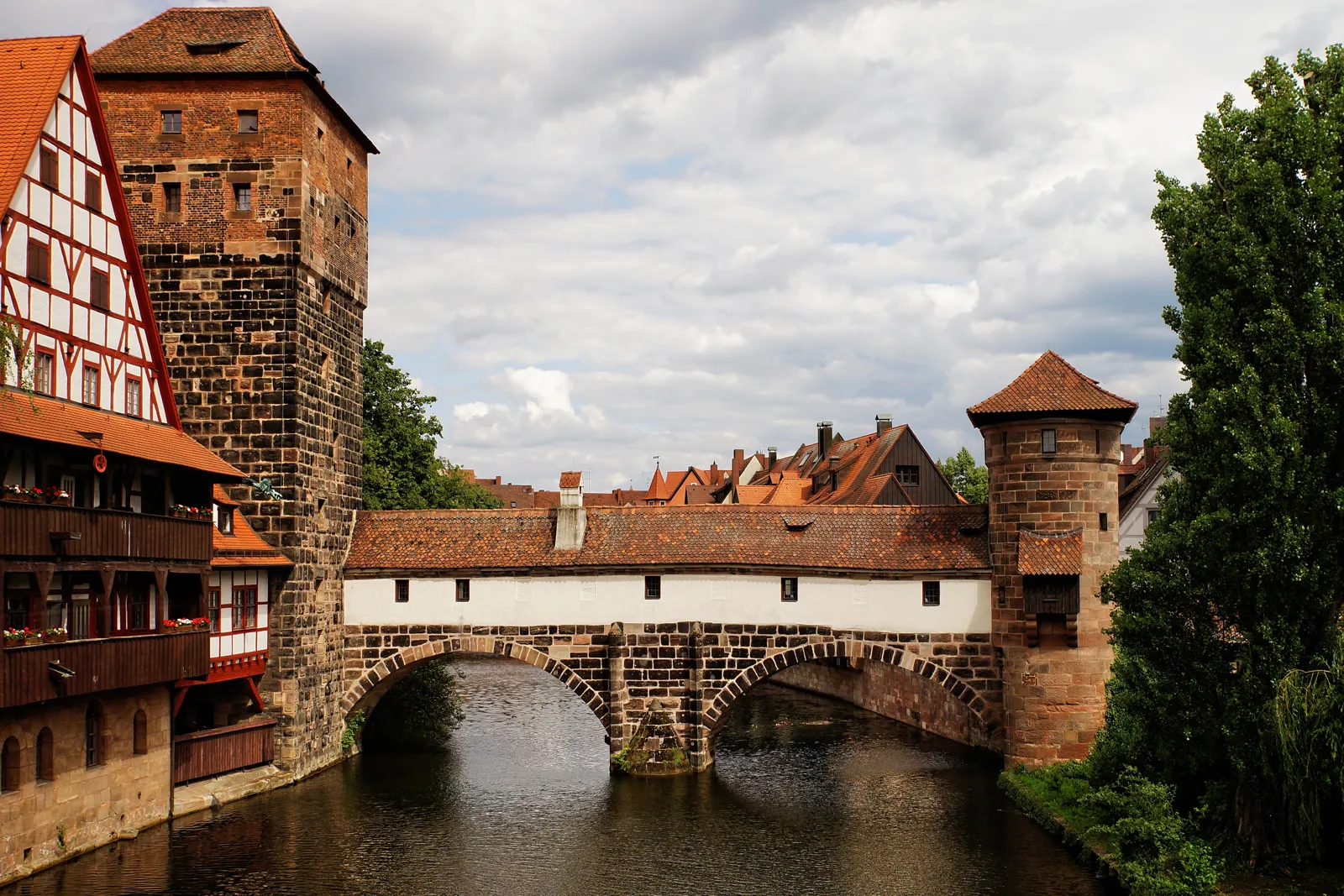
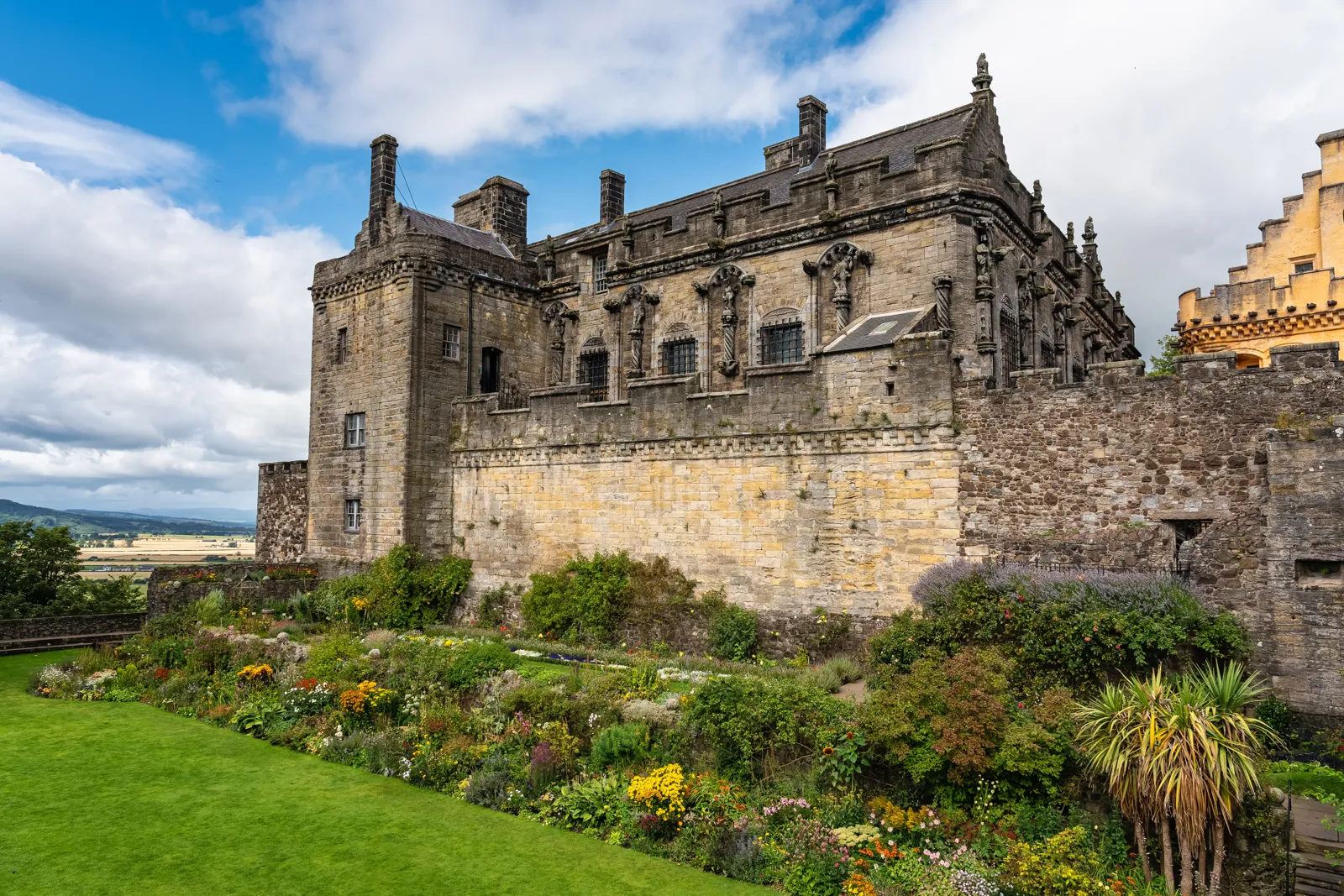
Kaysersberg, « the emperor’s mountain », is a small town in the Haut-Rhin department, tucked into the mouth of the Weiss valley below a ruined castle and the vines of the Schlossberg grand cru. To visit Kaysersberg is to cross a 16th-century fortified bridge, step into a church with a carved altarpiece, climb to the keep and walk past Albert Schweitzer’s birthplace. In 2017 the village won the French TV contest for France’s favourite village.
This Kaysersberg travel guide covers what to see, a half-day walking loop, getting there by bus from Colmar, the climate according to Météo-France and, for Advent, the time darkness falls on the village, calculated for each Saturday.

Our travel deals for Kaysersberg
Affiliate links: we earn a commission, at no extra cost to you.
 FlightsKiwi.comCompare flights and airline combinations to Kaysersberg.Compare flights

Kaysersberg at a glance
- Location Haut-Rhin, at the entrance to the Weiss valley on the Alsace Wine Route, 12 km (7 mi) north-west of Colmar (Wikipedia)
- Municipality part of Kaysersberg Vignoble since 1 January 2016 (with Kientzheim and Sigolsheim), 4,383 inhabitants in 2023
- As the crow flies about 4 km (2 mi) from Riquewihr, 7 km (4 mi) from Ribeauvillé, 11 km (7 mi) from Eguisheim (Destination de Voyage calculation)
- Access no railway station; train to Colmar then regional bus, or car
- Highlights fortified bridge (1514), Holy Cross church and its 1518 altarpiece, town hall (1521), castle, Albert Schweitzer museum
- Time needed half a day; a full day with the vineyards
- Best time May to October; Advent for the Christmas market
Things to do in Kaysersberg: the highlights
The fortified bridge over the Weiss
This is the classic image of Kaysersberg. Built in 1514 to replace a wooden structure, the fortified bridge had loopholes on both parapets to watch over the river. In the middle, a small chapel topped with the arms of the Holy Roman Empire and of the town shelters an 18th-century painted Virgin. The half-timbered houses along the Weiss are best photographed from the bridge or the riverbanks.
Holy Cross church and its altarpiece
Begun around 1230, the Church of the Invention of the Holy Cross combines a Romanesque portal and a 13th-century nave with a choir and aisles from the 15th and 16th centuries. Inside, the 1518 altarpiece by the sculptor Jean Bongart is the centrepiece; also look out for a stone Holy Sepulchre completed in 1514 and a Lamentation of Christ from 1521.
The town hall and Rue du Général-de-Gaulle
The town hall, built in 1521 in the Rhenish Renaissance style, has kept a council chamber with a coffered ceiling. Rue du Général-de-Gaulle, the main street, is lined with old houses: Maison Herzer (1592), Maison Faller-Brief (1594), Maison Bohn (1601). At no. 65, a 16th-century house with a corner oriel bears a painted Baroque Virgin, hence its nickname, the « House of the Virgin ».
The castle and the Kessler tower
The castle ruins overlook the ramparts to the north-west, at the end of a granite ridge. Kaysersberg is first mentioned in 1227, when Emperor Frederick II had the small castle bought to control the Weiss valley, a route into Lorraine. You walk up from the centre; the view takes in the rooftops and the vineyards. The Kessler tower, from 1371, long served as a prison: its original door, set high up, could only be reached by ladder.
Albert Schweitzer, a son of Kaysersberg
Albert Schweitzer, theologian, musician, doctor and winner of the 1952 Nobel Peace Prize, was born in Kaysersberg on 14 January 1875. A museum has been set up in his birthplace and a neighbouring building; it focuses in particular on his hospital work in Lambaréné, Gabon. Check the opening days before you go.
The vineyards and the Schlossberg grand cru
The slopes around Kaysersberg, Kientzheim and Sigolsheim include the Schlossberg grand cru. According to the tradition reported by Wikipedia, the bailiff Lazarus von Schwendi, appointed in 1573, brought back vines from Hungary that made the town’s reputation for wine. Vineyard trails link the villages, and wine cellars in the centre offer tastings.
An imperial town
On 18 March 1293, Kaysersberg became an imperial city, answerable only to the emperor. In 1354 it joined the Decapolis, a league of ten Alsatian towns that lasted three centuries. The Thirty Years’ War ruined the town, which was then gradually repopulated. This history explains the wealth of its merchants’ and winegrowers’ houses.
Itinerary: Kaysersberg in half a day
| Stop | What to see | Tip |
|---|---|---|
| 1 | Fortified bridge and the banks of the Weiss | Morning light falls on the facades |
| 2 | Holy Cross church: 1518 altarpiece, Holy Sepulchre | Enter quietly during services |
| 3 | Town hall, Rue du Général-de-Gaulle, House of the Virgin | Look up at the oriels and signs |
| 4 | Walk up to the castle | Closed shoes; the path is unlit at night |
| 5 | Albert Schweitzer museum, then a wine cellar | Check the opening days |
When to go to Kaysersberg
May to October is best for strolling and walking up to the castle: afternoon highs of 21.0 °C (70 °F) in May, 26.7 °C (80 °F) in July and 22.0 °C (72 °F) in September according to the Météo-France data sheet for Colmar-Meyenheim, the nearest reference station. July and August average 7.4 and 7.3 days above 30 °C (86 °F). Advent draws visitors for the Christmas market, but December is the least sunny month (63 hours), with an average of 15.0 frost days.
| Month | High | Low | Rain | Rainy days | Sunshine/day | Sunshine vs Paris | Verdict |
|---|---|---|---|---|---|---|---|
| January | 5.6 °C (42 °F) | -0.8 °C (31 °F) | 33 mm (1.3 in) | 7.1 | 2.3 h | +0.4 h | ❌ Cold, frequent frost |
| February | 7.6 °C (46 °F) | -0.7 °C (31 °F) | 31 mm (1.2 in) | 7.0 | 3.5 h | +0.6 h | ⚠️ Cold but dry |
| March | 12.6 °C (55 °F) | 1.9 °C (35 °F) | 34 mm (1.3 in) | 7.5 | 5.0 h | +0.7 h | ⚠️ Cool |
| April | 17.1 °C (63 °F) | 5.1 °C (41 °F) | 43 mm (1.7 in) | 8.5 | 6.3 h | +0.4 h | ✅ Mild, spring |
| May | 21.0 °C (70 °F) | 9.4 °C (49 °F) | 70 mm (2.8 in) | 10.6 | 6.8 h | +0.3 h | ✅ Pleasant, showers |
| June | 24.7 °C (76 °F) | 12.9 °C (55 °F) | 66 mm (2.6 in) | 9.4 | 7.8 h | +1.0 h | ✅ Ideal, long days |
| July | 26.7 °C (80 °F) | 14.4 °C (58 °F) | 63 mm (2.5 in) | 9.2 | 8.1 h | +0.9 h | ✅ Hot, holiday season |
| August | 26.5 °C (80 °F) | 14.0 °C (57 °F) | 61 mm (2.4 in) | 9.4 | 7.5 h | +0.6 h | ✅ Hot, holiday season |
| September | 22.0 °C (72 °F) | 10.2 °C (50 °F) | 51 mm (2.0 in) | 7.6 | 6.0 h | +0.2 h | ✅ Mild, grape harvest begins |
| October | 16.3 °C (61 °F) | 6.7 °C (44 °F) | 57 mm (2.2 in) | 9.3 | 3.9 h | +0.1 h | ⚠️ Cool, autumn colours in the vineyards |
| November | 9.8 °C (50 °F) | 2.7 °C (37 °F) | 44 mm (1.7 in) | 7.9 | 2.4 h | +0.1 h | ⚠️ Grey; Advent at the end of the month |
| December | 6.3 °C (43 °F) | 0.2 °C (32 °F) | 43 mm (1.7 in) | 8.1 | 2.0 h | +0.2 h | ⚠️ Cold, Christmas market |
In spring and summer, the Colmar-Meyenheim station gets more sunshine than Paris-Montsouris (July: 8.1 hours a day against 7.2); in winter the gap narrows (December: 2.0 hours against 1.8). Destination de Voyage calculation: monthly sunshine ÷ days in the month, Météo-France 1991-2020 data sheets.
Christmas market: what time does it get dark?
The Christmas lights are at their best after dusk. We calculated sunset times in Kaysersberg for the Saturdays of Advent 2026: arrive an hour before to see the village in daylight, then stay for the lights.
| Saturday | Sunrise | Sunset | Day length |
|---|---|---|---|
| 28 November | 07:56 | 16:41 | 8 h 45 |
| 5 December | 08:05 | 16:38 | 8 h 33 |
| 12 December | 08:12 | 16:37 | 8 h 25 |
| 19 December | 08:17 | 16:38 | 8 h 21 |
Over a two-day weekend in December, expect on average 1.0 frosty mornings and 0.5 days of rain (calculated from the frost and rain days in the Météo-France data sheet). Pack warm clothes and shoes with a good grip on wet cobblestones. For more ideas, see where to go in December.
Getting there and getting around Kaysersberg
- By train and bus: Kaysersberg has no railway station. Take the train to Colmar (TER regional or TGV high-speed trains), then the regional bus line serving the Weiss valley; timetables and operating days are on the Fluo Grand Est website. See also travelling cheaply by train.
- By car: park in the car parks at the entrance to the village; the streets in the centre are narrow.
- On foot and by bike: the centre is best explored on foot; vineyard paths lead to Kientzheim and the neighbouring villages.
Car hire and transfers
A car lets you combine Kaysersberg, Riquewihr and Ribeauvillé in a day. If you hire one in Colmar, Strasbourg or at EuroAirport (Basel-Mulhouse), compare the excess, mileage and drop-off fees, and check the age conditions. A private transfer from Colmar station can be an option in the evening, when buses no longer run.
Where to stay
Staying in Kaysersberg lets you enjoy the village early in the morning and in the evening. During Advent, book very early or stay in Colmar, which has better train connections.
If you… then…: choose your visit
| If you… | Then… |
|---|---|
| only have an hour | fortified bridge, Holy Cross church, Rue du Général-de-Gaulle |
| love history | 1518 altarpiece, town hall, Kessler tower, Albert Schweitzer museum |
| want a view | walk up to the castle, ideally in the morning |
| are coming for the Christmas market | arrive before sunset (see the table), by bus or train via Colmar |
| love wine | Schlossberg grand cru, vineyard trails to Kientzheim |
| are driving the Wine Route | combine with Riquewihr, Colmar and Strasbourg |
Entry requirements, health and safety
- US citizens (travel.state.gov, last updated August 11, 2025): you may enter the Schengen area, including France, for up to 90 days for tourism or business without a visa; your passport should be valid at least three months beyond your stay, and officers may ask for proof of sufficient funds and a return ticket.
- UK citizens (GOV.UK, updated 22 October 2026): no visa for up to 90 days in any 180-day period as a tourist; your passport must have been issued less than 10 years before you arrive and be valid at least 3 months after you leave the Schengen area. The EU Entry/Exit System (EES) is being implemented: fingerprints and a photo may be taken at your first entry, free of charge.
- Health: take out travel insurance that covers medical costs; UK residents can also use a GHIC or a valid EHIC (GOV.UK).
- Safety: the UK FCDO considers that terrorists are very likely to try to carry out attacks in France; stay alert in crowded places such as Christmas markets (GOV.UK).
- Emergencies: 112 (European emergency number), 15 for medical emergencies (travel.state.gov, GOV.UK).
Practical tips for Kaysersberg
- Castle: the path is unlit, so avoid it after dark.
- Tourist office: 39 rue du Général-de-Gaulle, according to the official site of the Kaysersberg valley tourist office (kaysersberg.com, checked 26 October 2026); ask there for Christmas market dates and guided tours.
- Time: France is one hour ahead of London and usually six hours ahead of New York.
Frequently asked questions
How long do you need to visit Kaysersberg?
Half a day for the fortified bridge, Holy Cross church, Rue du Général-de-Gaulle and the walk up to the castle. Add one to two hours for the Albert Schweitzer museum and a wine cellar.
How do you get to Kaysersberg without a car?
By train to Colmar, then by regional bus to the Weiss valley. Check the Fluo Grand Est timetables, especially on Sundays.
Why is Kaysersberg famous?
For its 1514 fortified bridge, its castle, its Schlossberg grand cru vineyards, the birth of Albert Schweitzer in 1875 and its win in the French TV contest for France’s favourite village in 2017.
When is the Kaysersberg Christmas market?
During Advent. The exact dates change every year: check them on the Kaysersberg valley tourist office website before booking.
What is the best time to visit Kaysersberg?
May to October for walking and the castle (afternoon highs of 21.0 to 26.7 °C, or 70 to 80 °F, from May to July, Météo-France 1991-2020 normals for Colmar-Meyenheim), and Advent for the Christmas atmosphere.
Our sources
- Météo-France: climate data sheet for Colmar-Meyenheim (station 68205001, 207 m), 1991-2020 normals (PDF FICHECLIM_68205001, issued 6 June 2025), and the Paris-Montsouris sheet (75114001) for the sunshine comparison, downloaded 24 October 2026
- Wikipedia: « Kaysersberg » (history, monuments, Albert Schweitzer, favourite village TV contest 2017) and « Kaysersberg Vignoble » (new municipality, 2023 population), accessed 24 October 2026
- Kaysersberg valley tourist office (kaysersberg.com), home page checked 26 October 2026
- Destination de Voyage calculations: Advent Saturday sunsets (NOAA algorithm), sunshine per day and difference with Paris, frost and rain over a 2-day stay, straight-line distances
- Entry requirements, health and safety checked on 26 October 2026: U.S. Department of State, France country information (last updated August 11, 2025) and UK FCDO, GOV.UK foreign travel advice for France (updated 22 October 2026).
- Our methodology
Updated October 2026.
To go further, see our Alsace guide, our pages on Colmar, Riquewihr, Eguisheim and Strasbourg, and our destinations in Europe.