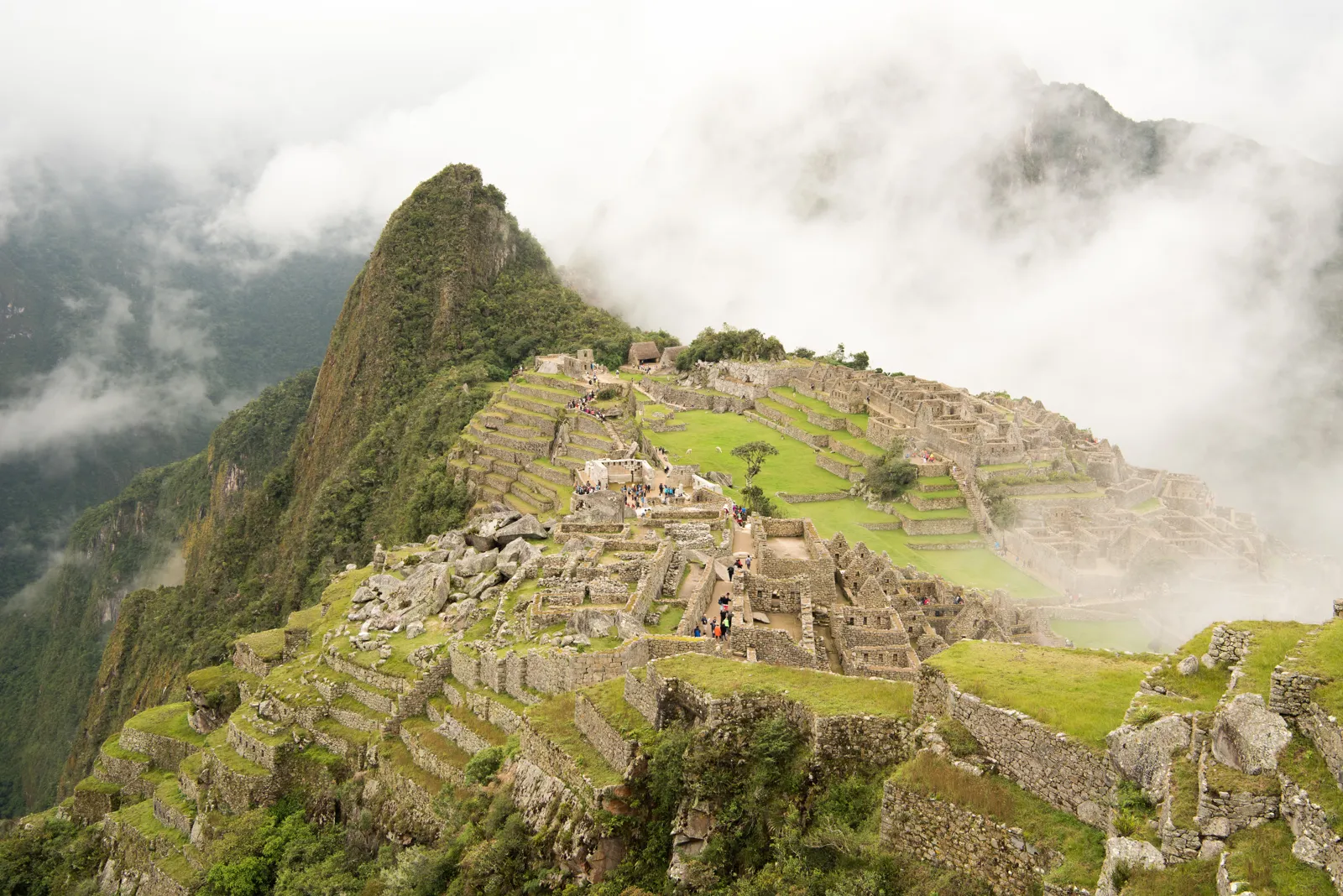
Things to do in Lima, the capital of Peru and the gateway for most trips to the country: this is where international flights land. Many travellers only pass through, yet the city deserves one or two days: a UNESCO-listed historic centre, pre-Columbian sites in the middle of the city, the Miraflores cliffs above the Pacific and a renowned cuisine. This guide tells you what to do in Lima, which neighbourhood to stay in, what precautions to take and in which season the sky is clear.

Our travel deals for Lima
Affiliate links: we earn a commission, at no extra cost to you.
 FlightsKiwi.comCompare flights and airline combinations to Lima.Compare flights
- eSIMSailyAnother eSIM plan to compare: data, validity, network.See Saily plans


Lima at a glance
- Country Peru, Pacific coast; the national capital
- Language Spanish; English spoken in tourism
- Currency the Peruvian sol (PEN); currency converter · currencies
- Time zone UTC−5, no daylight saving · detailsSame as New York in winter, 1 h behind in summer; 5 to 6 h behind LondonLocal time now: –:–
- Airports Jorge Chávez International Airport (Lima-Callao), the country’s main gateway · details
- Entry US and UK: passport valid 6 months from arrival; UK: visa-free, normally up to 90 days · travel.state.gov · GOV.UK
- Electricity check plug types and voltage before you go · plugs
- Safety street crime is a significant problem, according to the UK FCDO: see our safety section
Lima almost always combines with the rest of the country: our Peru travel guide presents the main regions, and our page on visiting Machu Picchu covers the usual next step, via Cusco. For that Andean stop, see also our guide to visiting Cusco.
Things to do in Lima: the highlights
The historic centre and Plaza Mayor
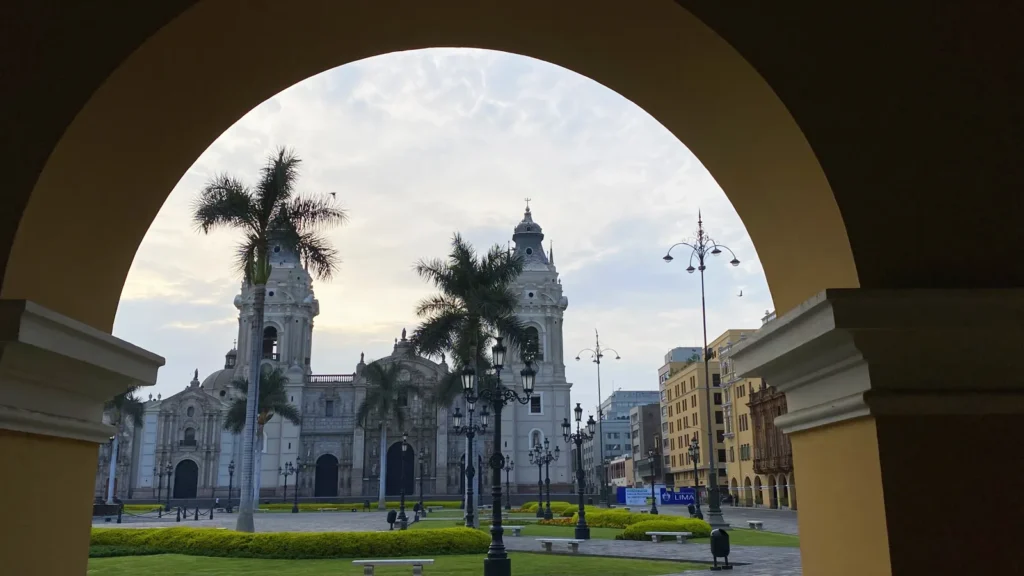
Lima’s historic centre has been a UNESCO World Heritage Site since 1988 (extended in 1991). Around the Plaza Mayor stand the cathedral, the Government Palace and the Archbishop’s Palace, with its carved wooden balconies. Nearby pedestrian streets, such as Jirón de la Unión, lead to other colonial churches. Visit the centre by day: GOV.UK notes that protests often happen in the historic centre, where access can be restricted.
San Francisco monastery and its catacombs
A few streets from the Plaza Mayor, the San Francisco monastery is one of the most popular visits: cloisters, an old library and catacombs where bones are arranged in patterns. Visits are guided, in groups.
Miraflores: the Malecón and Parque del Amor
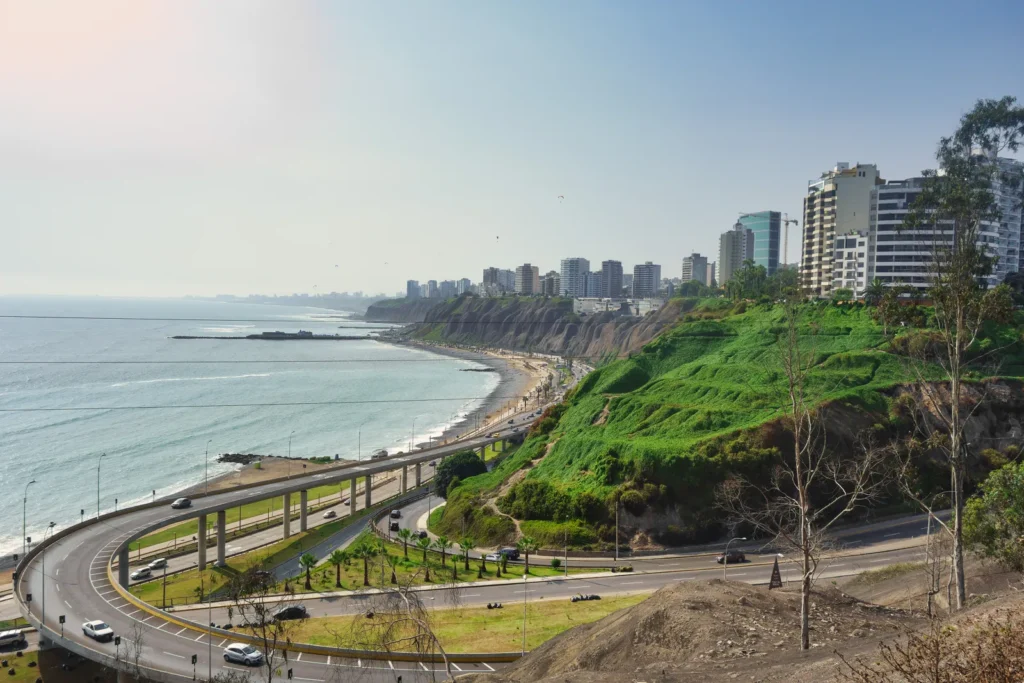
Miraflores is where most visitors stay. Its Malecón promenade runs along the clifftops above the Pacific, with parks, cycle paths and the Parque del Amor. Below, the Costa Verde draws surfers. Parque Kennedy, in the centre of the district, is surrounded by cafés and restaurants.
Huaca Pucllana
In the middle of Miraflores, this great adobe-brick pyramid was built by the Lima culture, long before the Incas. It is visited with a guide and contrasts with the modern buildings around it. A restaurant lets you dine facing the illuminated site.
Barranco, the bohemian district
South of Miraflores, Barranco is lined with colourful houses, galleries, murals and bars. Its Puente de los Suspiros (Bridge of Sighs) and the path down to the sea are the classic stops. It is also a good area for an evening out, staying in the busy streets.
The Larco Museum
Housed in a colonial mansion in the Pueblo Libre district, the Larco Museum presents a vast collection of pre-Columbian ceramics, textiles and jewellery, with storerooms open to visitors. It is a good introduction to the cultures you will come across later in the country.
Food: ceviche, markets and cooking classes
Lima is one of South America’s food capitals. Try ceviche (raw fish marinated in lime), lomo saltado, anticuchos and pisco sour. The central market, in the centre, and Surquillo market, near Miraflores, are the places to discover Andean fruit and produce.
Pachacamac and the Palomino Islands
South of Lima, the archaeological sanctuary of Pachacamac brings together temples from several eras, including an Inca Temple of the Sun. Off the port of Callao, boat trips go to the Palomino Islands, home to sea lion colonies. Each of these trips takes half a day.
Itinerary: Lima in 1 or 2 days
| Morning | Afternoon | Evening | |
|---|---|---|---|
| Day 1 | Historic centre: Plaza Mayor, cathedral, San Francisco monastery | Larco Museum (by taxi) | Miraflores Malecón at sunset, dinner in Miraflores |
| Day 2 | Huaca Pucllana | Barranco: galleries, Bridge of Sighs, path down to the sea | Dinner and a night out in Barranco |
| Option | Palomino Islands (boat from Callao) | Pachacamac | — |
With only one day, keep the historic centre for the morning and Miraflores for the afternoon. If you are going on to Cusco, a night in Lima on arrival also helps you recover from the long flight before heading up to altitude.
When to go to Lima
Lima has a coastal desert climate: it almost never rains (less than 2 mm (0.1 in) a month according to the normals). The real question is the sky. From December to April is the southern summer: 24 to 28 °C (75 to 82 °F) in the afternoon and sunshine. From June to October, the city is often covered by the garúa, a grey, damp mist: 19 to 21 °C (66 to 70 °F) by day, 15 to 16 °C (59 to 61 °F) at night, and less than an hour of sunshine a day on average in August. It does not get in the way of sightseeing, but do not expect blue skies. This grey season coincides with the dry season in the Andes, the best time for Cusco and Machu Picchu.
| Month | Max | Min | Rain | Sunshine (h/day) | Sunset | Verdict |
|---|---|---|---|---|---|---|
| January | 26.8 °C (80 °F) | 20.4 °C (69 °F) | 0.8 mm (0.0 in) | 6.0 | 6:40 pm | ✅ Summer, sunny |
| February | 28.0 °C (82 °F) | 21.0 °C (70 °F) | 0.4 mm (0.0 in) | 5.9 | 6:36 pm | ✅ Warmest |
| March | 27.6 °C (82 °F) | 20.5 °C (69 °F) | 0.4 mm (0.0 in) | 6.1 | 6:22 pm | ✅ Sunny |
| April | 25.4 °C (78 °F) | 18.7 °C (66 °F) | 0.1 mm (0.0 in) | 6.1 | 6:03 pm | ✅ Still fine |
| May | 22.8 °C (73 °F) | 17.3 °C (63 °F) | 0.3 mm (0.0 in) | 3.6 | 5:51 pm | ⚠️ Clouding over |
| June | 20.5 °C (69 °F) | 16.6 °C (62 °F) | 0.7 mm (0.0 in) | 1.5 | 5:51 pm | ⚠️ Grey (garúa) |
| July | 19.6 °C (67 °F) | 15.9 °C (61 °F) | 1.0 mm (0.0 in) | 1.2 | 5:58 pm | ⚠️ Grey (garúa) |
| August | 19.2 °C (67 °F) | 15.4 °C (60 °F) | 1.5 mm (0.1 in) | 0.9 | 6:04 pm | ⚠️ Greyest |
| September | 19.6 °C (67 °F) | 15.3 °C (60 °F) | 0.7 mm (0.0 in) | 1.2 | 6:04 pm | ⚠️ Grey (garúa) |
| October | 20.8 °C (69 °F) | 16.0 °C (61 °F) | 0.2 mm (0.0 in) | 1.9 | 6:04 pm | ⚠️ Grey, milder |
| November | 22.4 °C (72 °F) | 17.1 °C (63 °F) | 0.1 mm (0.0 in) | 3.4 | 6:12 pm | ✅ Sun returns |
| December | 24.4 °C (76 °F) | 18.6 °C (65 °F) | 0.2 mm (0.0 in) | 4.2 | 6:28 pm | ✅ Sunny |
Our calculation: in March, Lima gets an average of 6.1 hours of sunshine a day, against 0.9 in August, about 7 times less. The sun sets between about 5:50 pm and 6:40 pm all year round: the city is close to the equator, so day length varies little. For the rest of the country, see the best time to visit Peru.
Budget for visiting Lima
Lima has options for every budget: cheap set lunches and markets on one side, renowned fine-dining restaurants that cost much more on the other. The Metropolitano bus is cheaper than app-based taxis. Compare accommodation prices in Miraflores and Barranco for your dates.
Getting around Lima
- From the airport: criminals pose as taxi drivers and tour operators at Jorge Chávez airport; use one of the official taxi companies at the desks directly outside the baggage hall (GOV.UK). The State Department notes that authorised taxi booths at the airport charge a flat rate according to the destination. From 7 December, passengers transiting or connecting through Lima airport must pay a fee (TUUA), not included in airline tickets (GOV.UK).
- Taxis: use licensed telephone or app-based taxi services and do not hail taxis on the street (GOV.UK; travel.state.gov).
- Metropolitano: this bus rapid transit network links the historic centre with Miraflores and Barranco; you need a rechargeable card.
- On foot: pleasant along the Malecón and between Miraflores and Barranco, by day.
- Traffic: congestion is heavy; allow plenty of time to get to the airport. The State Department warns of thieves breaking car windows in traffic: keep belongings out of sight.
Where to stay in Lima
| Neighbourhood | Best for | Highlights | Good to know |
|---|---|---|---|
| Miraflores | First visit | Malecón, restaurants, wide choice of hotels | The most practical for a short stay |
| Barranco | Couples, nights out | Atmosphere, galleries, bars | Livelier at night |
| San Isidro | Business travel, quiet | Residential area, El Olivar park | Less going on |
| Historic centre | Cultural visits | Monuments on foot | Quieter and less safe after dark |
| Near the airport | Early-morning connections | Proximity | Do not walk around the area |
Entry requirements, health and safety
Safety in Lima: what the UK and US governments say
- Street crime, including muggings and thefts, is a significant problem in Lima; there have been robberies at gunpoint of British tourists, including in Miraflores and Barranco (GOV.UK, updated 9 October 2026).
- Tourists, especially those travelling alone, are at risk of « express kidnapping », usually at night, often involving criminals posing as taxi drivers (GOV.UK).
- Be alert in public places and when withdrawing cash from ATMs; counterfeit US and Peruvian banknotes are in circulation (GOV.UK).
- Taxis: licensed phone or app-based services only (travel.state.gov).
- US citizens: your passport must be valid for at least six months from the date of entry. Your length of stay is set by border officials on arrival, and overstays lead to fines; make sure your entry is recorded, even at remote land crossings (U.S. Department of State, travel.state.gov, last updated August 20, 2026).
- UK citizens: you can travel to Peru without a visa for tourism; you will normally be allowed to stay up to 90 days in a 180-day period. Your passport must be valid for at least 6 months after the date you arrive. At international airports your entry is registered digitally; if you arrive by land, make sure you get an entry stamp (UK FCDO, GOV.UK, updated 9 October 2026).
- Health: tap water is not drinkable in many areas (travel.state.gov). GOV.UK reports a major dengue outbreak and lists Oropouche virus, yellow fever, malaria and Zika among the health risks; check vaccine recommendations at least 8 weeks before your trip.
- Altitude: Lima is at sea level; altitude sickness concerns the rest of the trip (Cusco, Puno).
- Beaches: there may be no lifeguards on beaches, and there are unauthorised surfboard rentals at Miraflores (GOV.UK).
- Insurance covering medical costs and repatriation is essential: see our travel insurance guide.
Practical tips for Lima
- Money: cards are accepted in most hotels and restaurants in Miraflores; keep some soles in cash for small purchases. Preferably withdraw from ATMs inside banks or shopping centres.
- Garúa: from June to October, bring a sweater and a light jacket: the humidity makes the cool feel sharper.
- Bookings: the best-known restaurants are often booked several weeks ahead.
- Internet: an eSIM or local SIM card makes app-based taxis and navigation easier.
Frequently asked questions
How many days do you need to visit Lima?
One day is enough for the historic centre and Miraflores; two days let you add Barranco, Huaca Pucllana and the Larco Museum. Allow an extra half-day for Pachacamac or the Palomino Islands.
Is Lima dangerous?
The UK FCDO describes street crime as a significant problem in Lima, including in Miraflores and Barranco. Simple precautions: licensed or app-based taxis only, no walking alone at night, belongings watched, care at ATMs.
Which neighbourhood should you stay in in Lima?
Miraflores for a first visit, Barranco for atmosphere and nights out. Avoid staying in the historic centre if you plan to walk back in the evening.
Is the weather good in Lima in July?
It hardly ever rains, but the sky is often grey: about 1 hour of sunshine a day on average in July, with 16 to 20 °C (61 to 68 °F). The sun returns from December to April.
Do US and UK citizens need a visa for Peru?
UK citizens can travel without a visa for tourism, normally for up to 90 days in a 180-day period (GOV.UK, updated 9 October 2026). For US citizens, the State Department (last updated August 20, 2026) stresses that the passport must be valid for at least six months from the date of entry and that the length of stay is set by border officials.
Our sources
- Deutscher Wetterdienst: 1991-2020 normals (temperatures) and 1961-1990 (precipitation, sunshine), Lima-Callao station, via the Wikipedia article « Lima »
- Destination de Voyage calculation: hours of sunshine per day, sunset on the 15th of the month (NOAA solar algorithm)
- Entry requirements, health and safety checked on 26 October 2026: U.S. Department of State, Peru country information (last updated August 20, 2026) and UK FCDO, GOV.UK foreign travel advice for Peru (updated 9 October 2026)
- Wikipedia: « Jorge Chávez International Airport », « Historic Centre of Lima », checked on 15 October 2026
- Our methodology
Updated October 2026.
To continue, see our Peru guide, the Machu Picchu page and our other destinations in Latin America.