Things to do in Cusco (or Cuzco), the former capital of the Inca Empire, the great stop in the Peruvian Andes and the starting point for Machu Picchu. Perched at around 3,400 m (11,155 ft), the city layers Inca walls and colonial churches; its centre has been a UNESCO World Heritage Site since 1983. To visit Cusco and its surroundings, allow 3 to 5 days on site, starting with a few quiet ones to acclimatise. The best period runs from May to September, in the dry season.

Our travel deals for Cusco
Affiliate links: we earn a commission, at no extra cost to you.
 FlightsKiwi.comCompare flights and airline combinations to Cusco.Compare flights
- eSIMSailyAnother eSIM plan to compare: data, validity, network.See Saily plans


Cusco at a glance
- Country Peru, southern Andes; capital of the Cusco region
- Altitude about 3,400 m (11,155 ft); 3,249 m (10,659 ft) at the airport
- Languages Spanish and Quechua; English in tourism
- Currency the Peruvian sol (PEN) · currencies
- Time zone UTC−5, no daylight saving · detailsSame as New York in winter, 1 h behind in summer; 5 to 6 h behind LondonLocal time now: –:–
- Airports domestic flight from Lima to Cusco airport · details
- Entry US and UK: passport valid 6 months from arrival; UK: visa-free, normally up to 90 days · travel.state.gov · GOV.UK
- Climate mild days all year round(20 to 22 °C / 68 to 72 °F), cold nights (1 to 8 °C / 34 to 46 °F), rain from November to March
First things first: altitude
Cusco is higher than most ski resorts in the Alps. The UK FCDO (GOV.UK, updated 9 October 2026) describes altitude sickness as a serious risk in places such as Cusco and Puno, and the U.S. Department of State advises people with pre-existing medical conditions to see a doctor before travelling to high elevations. Symptoms include headache, nausea, tiredness and shortness of breath. Prevention means acclimatising gradually and limiting effort in the first days; if symptoms appear, stop climbing, go down and see a doctor.
- Flying in from Lima: you go from sea level to more than 3,000 m (9,800 ft) in one flight; keep the first day for gentle sightseeing.
- An option often recommended: sleep first in the Sacred Valley (Urubamba, Ollantaytambo), lower than Cusco, then come back up to the city.
- High-altitude hikes (Rainbow Mountain, Salkantay): only after a few days on site, with an experienced guide.
- Before you go: talk to your doctor, especially if you have a heart or respiratory condition.
Things to do in Cusco: the highlights
The Plaza de Armas and the cathedral
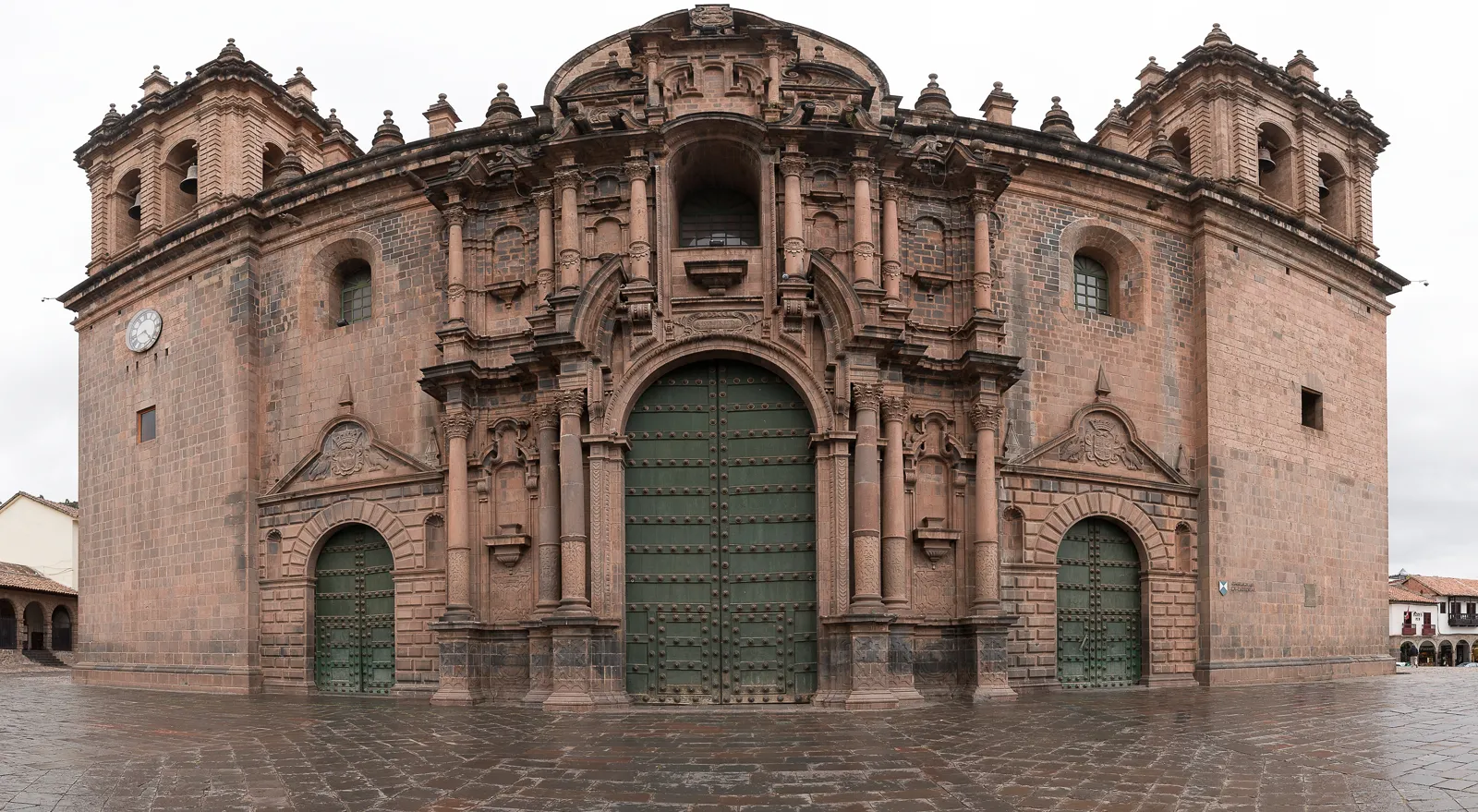
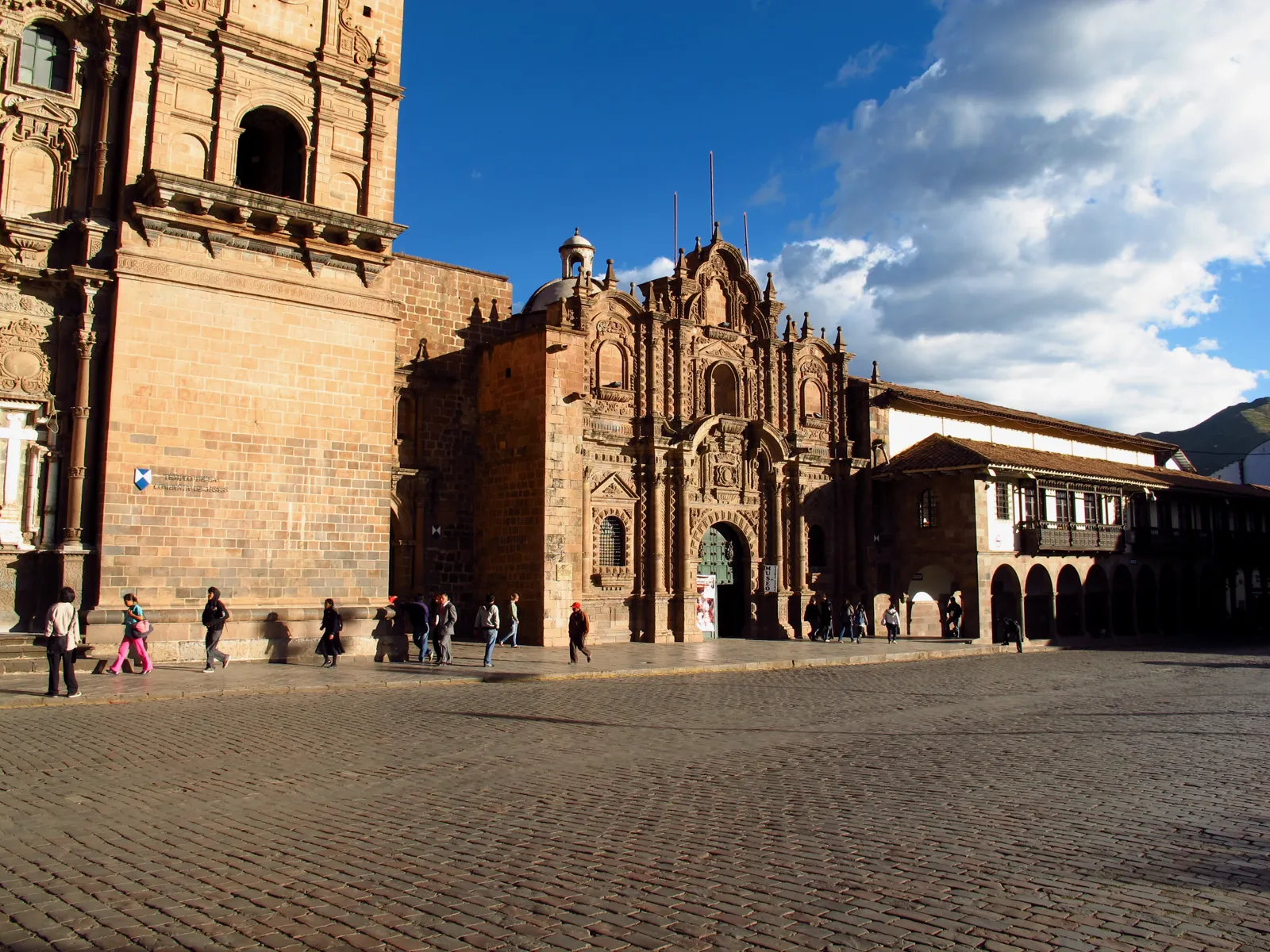
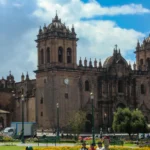
The heart of the Inca and then colonial city, the Plaza de Armas is lined with arcades, wooden balconies and two large churches: the cathedral, built by the Spanish in the 16th century, and the Church of the Society of Jesus. The cathedral houses many paintings from the Cusco School.
Qoricancha and Santo Domingo convent
The Qoricancha was the Incas’ Temple of the Sun. The Dominicans built their convent on its foundations; the 1950 earthquake uncovered part of the Inca walls, whose perfect stonework you can admire. This visit best shows how the two worlds were layered.
Hatun Rumiyoc street and San Blas
On Hatun Rumiyoc street, an Inca wall contains the famous twelve-angled stone, perfectly fitted to its neighbours. Higher up, San Blas is the artisans’ quarter: steep lanes, workshops, cafés and viewpoints over the city’s rooftops. The climbs are tough at this altitude: take it slowly. Symptoms and precautions are covered in our guide to altitude sickness.
Sacsayhuamán and nearby sites
On the hill overlooking the city to the north, Sacsayhuamán lines up zigzag walls made of gigantic blocks. The nearby sites of Q’enqo, Puka Pukara and Tambomachay can be visited in the same half-day (the « four ruins » circuit). The Inti Raymi festival is re-enacted on the Sacsayhuamán esplanade every June (check the date with the organisers).
San Pedro market and the museums
San Pedro market is the best known in the city: fruit juices, soups, cheeses, Andean potatoes of every colour. As for museums, the Museo Inka presents the history and objects of the Inca civilisation, and the Museum of Pre-Columbian Art (MAP) displays pieces from several of the country’s cultures.
The Sacred Valley of the Incas
Between Cusco and Machu Picchu, the Urubamba Valley brings together several major sites: the market and terraces of Pisac, the village and fortress of Ollantaytambo, the Maras salt pans and the circular terraces of Moray, and the village of Chinchero. You can cover it in one or two days, on a tour or staying overnight. The Cusco tourist ticket (boleto turístico) gives access to some of these sites and to sites in the city; check the details locally, as some visits (cathedral, Qoricancha, Maras) are paid separately.
Machu Picchu
Most travellers reach Machu Picchu from Cusco or the Sacred Valley, by train to Aguas Calientes and then by shuttle bus, or on foot along the Inca Trail. Tickets, circuits, opening hours and access are covered on our page visiting Machu Picchu. Book early for the dry season: entries are limited.
Rainbow Mountain (Vinicunca)
This mountain with coloured stripes is a long day trip from Cusco, with a very early start and a walk at nearly 5,000 m (16,400 ft). Do not schedule it in your first days; nearby Palcoyo mountain is a less crowded alternative.
Itinerary: Cusco, the Sacred Valley and Machu Picchu in 5 days
- Day 1: arrive in Cusco (or go straight to the Sacred Valley), rest, short stroll on the Plaza de Armas
- Day 2: Sacred Valley: Pisac, Maras and Moray; night in Ollantaytambo or Urubamba
- Day 3: Ollantaytambo in the morning, train to Aguas Calientes; night there
- Day 4: Machu Picchu early in the morning, back to Cusco by train and bus
- Day 5: Cusco: Qoricancha, San Blas, Hatun Rumiyoc, Sacsayhuamán, San Pedro market
This order (Sacred Valley first) helps acclimatisation, as you sleep lower for the first nights. With an extra day, add Rainbow Mountain; with a week, continue to Puno and Lake Titicaca. If you arrive via Lima, plan a night in Lima to recover from the long flight before heading up to altitude.
When to go to Cusco
Cusco has two seasons. The dry season, from May to September, brings mostly blue skies: less than 20 mm (0.8 in) of rain a month, but very cold nights (average minimums of 1 to 4 °C (34 to 39 °F) in June-July). It is also high season, with Inti Raymi in June and Machu Picchu tickets to book well ahead. The rainy season, from December to March, brings 100 to 150 mm (3.9 to 5.9 in) a month and fifteen to twenty rainy days; the Inca Trail closes for maintenance in February (Peru’s Ministry of Culture; check the dates on the official Machu Picchu website). GOV.UK notes that the rainy season runs from November to May, with heavy rain and snow in the Andes, including Cusco. April and October-November are good compromises.
| Month | Max | Min | Day/night gap (°C) | Rain | Rainy days | Rain out of 7 days | Verdict |
|---|---|---|---|---|---|---|---|
| January | 20.5 °C (69 °F) | 8.0 °C (46 °F) | 12.5 | 153.4 mm (6.0 in) | 19.6 | 4.4 | ❌ Frequent rain |
| February | 20.3 °C (69 °F) | 8.0 °C (46 °F) | 12.3 | 132.1 mm (5.2 in) | 17.2 | 4.3 | ❌ Rainiest |
| March | 20.5 °C (69 °F) | 7.8 °C (46 °F) | 12.7 | 105.9 mm (4.2 in) | 15.6 | 3.5 | ⚠️ Rain |
| April | 21.0 °C (70 °F) | 6.2 °C (43 °F) | 14.8 | 38.4 mm (1.5 in) | 7.3 | 1.7 | ✅ End of the rains, green |
| May | 21.2 °C (70 °F) | 3.6 °C (38 °F) | 17.6 | 7.1 mm (0.3 in) | 2.2 | 0.5 | ✅ Dry, sunny |
| June | 20.8 °C (69 °F) | 1.9 °C (35 °F) | 18.9 | 3.3 mm (0.1 in) | 1.0 | 0.2 | ✅ Dry, cold nights, Inti Raymi |
| July | 20.6 °C (69 °F) | 1.2 °C (34 °F) | 19.4 | 5.9 mm (0.2 in) | 1.2 | 0.3 | ✅ Dry, high season |
| August | 21.5 °C (71 °F) | 2.8 °C (37 °F) | 18.7 | 6.6 mm (0.3 in) | 1.9 | 0.4 | ✅ Dry, high season |
| September | 21.7 °C (71 °F) | 5.0 °C (41 °F) | 16.7 | 18.0 mm (0.7 in) | 3.9 | 0.9 | ✅ Dry, milder |
| October | 21.9 °C (71 °F) | 6.8 °C (44 °F) | 15.1 | 54.5 mm (2.1 in) | 9.3 | 2.1 | ⚠️ Showers return |
| November | 22.3 °C (72 °F) | 7.6 °C (46 °F) | 14.7 | 77.3 mm (3.0 in) | 9.8 | 2.3 | ⚠️ Showers |
| December | 21.1 °C (70 °F) | 7.8 °C (46 °F) | 13.3 | 125.2 mm (4.9 in) | 17.1 | 3.9 | ❌ Frequent rain |
Our calculation: July has the largest gap between afternoon and night (19.4 °C (35 °F) on average). In practice, you go from a T-shirt in the sun to temperatures close to 0 °C (32 °F) in the early morning: bring layers (fleece, light down jacket, hat). Over a week in July, you can expect 0.3 rainy days on average; in January, 4.4 days. To compare with the coast and the Amazon, see the best time to visit Peru.
Budget for visiting Cusco
Cusco remains affordable for meals (set lunch menus, San Pedro market) and simple accommodation, but boutique hotels in the centre and San Blas cost considerably more. The tourist ticket (boleto turístico) pays off over several days of sightseeing. Machu Picchu (entry, train, shuttle bus) is a separate budget, covered on our dedicated page.
Getting around Cusco and the region
- In the centre: everything is on foot, uphill; there are plenty of taxis for longer trips. The U.S. Department of State advises using app-based taxis, taxis ordered by phone or those affiliated with a major hotel rather than hailing one on the street.
- To the Sacred Valley: shared minibuses, organised tours or a private driver to combine several sites in a day.
- To Machu Picchu: train from Poroy station (near Cusco) or Ollantaytambo to Aguas Calientes. GOV.UK notes that train services to and from Machu Picchu are occasionally suspended or disrupted by protests.
- Long-distance buses: to Puno, Arequipa or Lima; the State Department notes that many buses are overcrowded and poorly maintained, often without seat belts.
- Rainy season: landslides can cut roads and railway lines (travel.state.gov).
Where to stay in Cusco
| Area | Best for | Highlights | Good to know |
|---|---|---|---|
| Around the Plaza de Armas | First visit | Everything on foot, flat | Noisier, more expensive |
| San Blas | Couples, atmosphere | Charm, views, cafés | Very steep streets |
| San Pedro / San Cristóbal | Budget travellers | Lower prices, close to the market | Climbs up to San Cristóbal |
| Sacred Valley (Urubamba, Ollantaytambo) | Acclimatisation, peace and quiet | Lower altitude, close to the Machu Picchu train | Far from Cusco’s sights |
Entry requirements, health and safety
- US citizens: your passport must be valid for at least six months from the date of entry. Your length of stay is set by border officials on arrival, and overstays lead to fines; make sure your entry is recorded, even at remote land crossings (U.S. Department of State, travel.state.gov, last updated August 20, 2026).
- UK citizens: you can travel to Peru without a visa for tourism; you will normally be allowed to stay up to 90 days in a 180-day period. Your passport must be valid for at least 6 months after the date you arrive. At international airports your entry is registered digitally; if you arrive by land, make sure you get an entry stamp (UK FCDO, GOV.UK, updated 9 October 2026).
- Crime: street crime, including muggings and thefts, is a significant problem in Cusco and other major cities; unscrupulous tour agents have targeted young women travelling alone in the Cusco area, and street money changers in Cusco tourist areas have passed off out-of-circulation notes (GOV.UK, updated 9 October 2026).
- Protests: Cusco is among the regions that have seen recent protests, and states of emergency have been declared in some parts of Peru (GOV.UK). Avoid demonstrations.
- Health: tap water is not drinkable in many areas and ice may be made with tap water (travel.state.gov). Both governments warn against ayahuasca and San Pedro « spiritual cleansing » ceremonies, offered around Cusco, which are unregulated and have led to serious illness and deaths. Selling souvenirs made from wild animal parts, including condor feathers, is illegal (GOV.UK).
- Insurance: essential (medical costs and repatriation): see our travel insurance guide.
Practical tips for Cusco
- The first days: walk slowly, drink plenty, avoid alcohol and heavy meals. Coca tea is offered everywhere; do not take coca leaves home, and check your home country’s customs rules (e.g. CBP in the US, HMRC in the UK).
- Sun: at altitude, UV is strong even when it feels cool: sunscreen, hat, sunglasses.
- Money: plenty of ATMs in the centre (be alert when withdrawing cash, GOV.UK advises); keep small notes for markets and the paid toilets at sites.
- Bookings: book Machu Picchu and the Inca Trail as early as possible for June-August.
Frequently asked questions
How many days should you spend in Cusco?
Allow 3 to 5 days with the Sacred Valley and Machu Picchu, including at least one quiet first day to acclimatise.
What is the altitude of Cusco?
About 3,400 m (11,155 ft) in the city; the airport weather station is at 3,249 m (10,659 ft). The UK FCDO describes altitude sickness as a serious risk in Cusco.
What is the best time to visit Cusco?
From May to September, in the dry season: less than 20 mm (0.8 in) of rain a month, but cold nights. April and October are good compromises, with fewer crowds.
How do you get from Cusco to Machu Picchu?
By train from Poroy or Ollantaytambo to Aguas Calientes, then by shuttle bus to the site, or on foot along the Inca Trail. All the details are on our Machu Picchu page.
Do you need the boleto turístico?
The combined ticket covers some of the sites in Cusco and the Sacred Valley. It is worthwhile if you visit several sites (Sacsayhuamán, Pisac, Ollantaytambo, Moray); some places, such as the cathedral and the Qoricancha, are paid separately.
Our sources
- NOAA: 1991-2020 climate normals, Cusco airport station, via the Wikipedia article « Cusco »
- Destination de Voyage calculation: day/night gap and expected rainy days over 7 days, based on these normals
- Entry requirements, health and safety checked on 26 October 2026: U.S. Department of State, Peru country information (last updated August 20, 2026) and UK FCDO, GOV.UK foreign travel advice for Peru (updated 9 October 2026)
- Ministry of Culture of Peru: annual closure of the Inca Trail in February
- Wikipedia: « Cusco » and « Alejandro Velasco Astete International Airport », checked on 15 October 2026
- Our methodology
Updated October 2026.
To plan the rest of your trip, see our Peru guide and our other destinations in Latin America.