Motion sickness causes nausea, cold sweats, pallor and sometimes vomiting in a car, boat, plane or train. It comes from a mismatch between what your eyes see and what your inner ear senses. To limit it: pick the seat that moves least, look at the horizon, avoid screens, eat lightly without traveling on an empty stomach, and ask a pharmacist or doctor about medicine you can take before departure.
This guide draws on the NHS, MedlinePlus (US National Library of Medicine) and, for a few points the NHS does not cover, France’s national health insurance (ameli.fr), all read in 2026. It does not replace advice from a pharmacist or doctor, particularly for a child, a pregnant woman or someone on other medication. Our contribution: a table of the best seat by mode of transport and a medicine timing schedule calculated from your departure time.
Motion sickness: key facts
- Very common in children aged 2 to 12, rare in infants (ameli.fr).
- Boats trigger it most often, ahead of planes, cars, coaches and trains (ameli.fr).
- Symptoms usually fade within minutes of the journey stopping (ameli.fr).
- Prevention: a stable seat, eyes on the horizon, fresh air, no reading or screens, a light meal (NHS).
- Medicine: hyoscine tablets at least 30 minutes before you travel (NHS); a scopolamine patch at least 4 hours before (MedlinePlus).
- See a doctor if symptoms persist, keep coming back, or come with fever or vertigo (ameli.fr).
Why does motion sickness happen?
According to the NHS, motion sickness is caused by repeated movement during travel, such as bumps in a car or the up-and-down motion of a boat, plane or train. The inner ear sends the brain different information from what your eyes see, which makes you feel unwell. Winding routes, mountain roads, turbulence and rough seas make it worse. If turbulence makes you more anxious than sick, read our guide to the fear of flying.
Symptoms
- first a feeling of discomfort in the upper abdomen and nausea;
- in young children: refusing food, crying, restlessness, yawning (ameli.fr);
- then pallor, cold sweats, heavy salivation, vomiting and faster breathing;
- the NHS also lists dizziness, headache and feeling cold and pale.
France’s national health insurance (ameli.fr) notes that motion sickness eases with repeated journeys, or after two to three days on a long trip such as a cruise. After you step ashore, a rocking sensation can last a few hours to a few days: this is sometimes called « land sickness ».
People more likely to be affected: children aged 2 to 12, some women (during periods or pregnancy), people who get migraines or have balance disorders (ameli.fr). Having been sick before can create anxiety that reinforces symptoms, sometimes before you even set off.

The best seat by mode of transport
| Transport | Where to sit | Also do |
|---|---|---|
| Car | In front, or driving; for a child, in the middle of the back seat with the seat raised to see outside | Drive smoothly, avoid rush hours and winding roads, stop often |
| Coach | At the front | Look outside, keep the air flowing |
| Train | Facing the direction of travel, by the window | No reading or screens |
| Plane | In the middle of the aircraft, over the wings | Aim the air vent at your face |
| Boat | Midship, close to the waterline (cabin); on deck if the weather allows | Watch the horizon, stay in fresh air |
Before and during the journey: what helps
The NHS and ameli.fr agree on the main habits:
- Eat lightly, but not on an empty stomach: hunger can make symptoms worse (ameli.fr). Avoid heavy or spicy meals and alcohol shortly before or during travel (NHS).
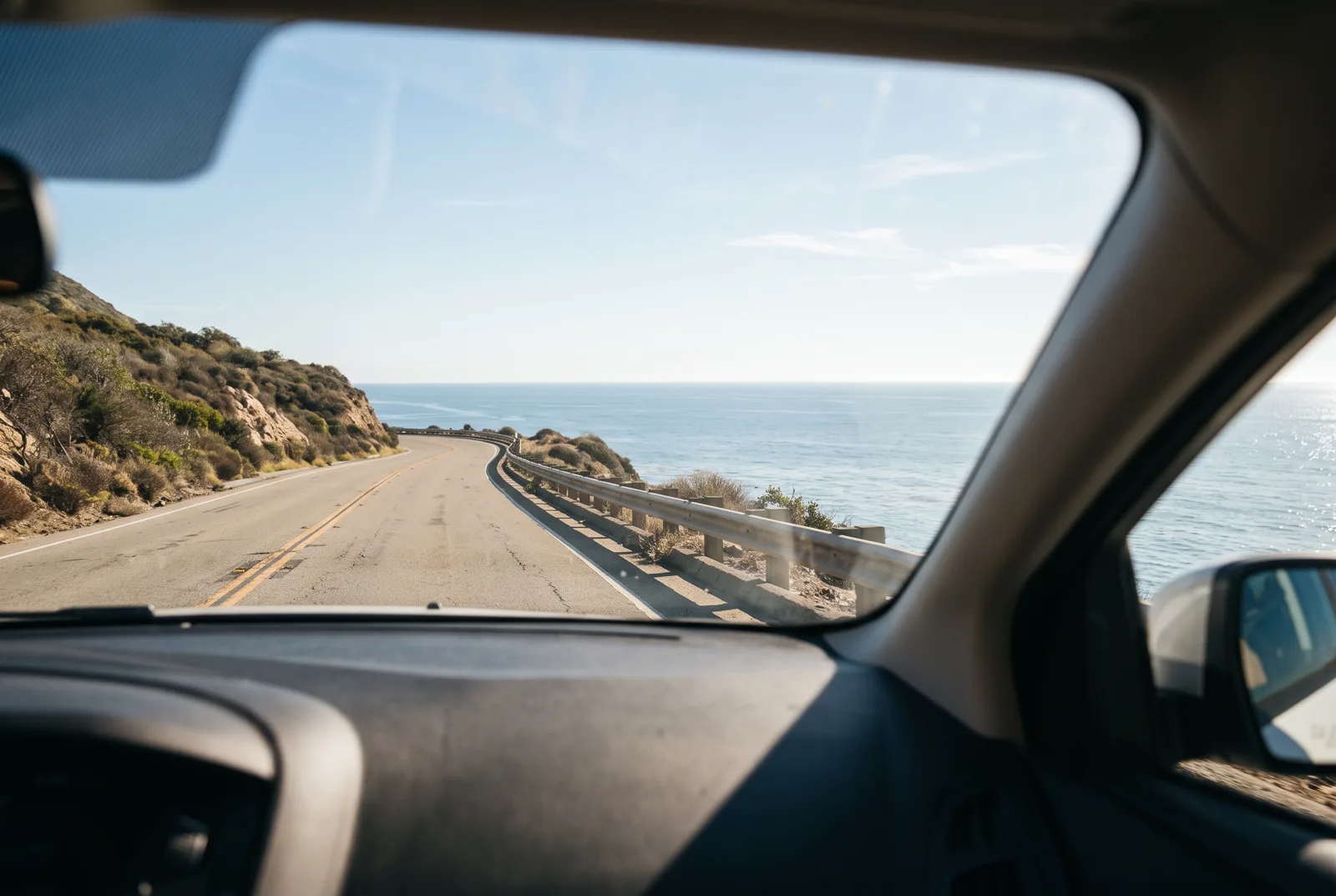
- Look at a fixed point such as the horizon, and keep your head steady (headrest, small cushion).
- No reading, films or electronic devices (NHS, ameli.fr), and don’t watch passing cars or waves.
- Fresh air: open a window or aim the vent at your face.
- Breathe slowly, close your eyes, listen to music, and take breaks to walk, drink water and get air on long journeys.
- With a child: travel at nap time, distract them by talking, listening to music or singing (NHS), and stop often.
- Ginger: the NHS says you can try it as a tablet, biscuit or tea.
- At the first symptoms: open the window, go on deck, get out for a few steps, or lie down for a few minutes with a cool cloth on your forehead. If you vomit, sip sweet or salty drinks to avoid dehydration, especially for young children and older people (ameli.fr).
Medicines: what the health services say
The NHS notes that travel sickness tablets and patches are available from pharmacies, and that a pharmacist can recommend the best option for you or your child. Choose with a pharmacist, doctor or pediatrician according to age and health, and do not combine several medicines.
| Type | What the sources say | Precautions |
|---|---|---|
| Hyoscine (scopolamine) tablets | Take at least 30 minutes before you travel; repeat no sooner than every 6 hours, with at most 3 doses in 24 hours (NHS). Most adults and children aged 4 or over can take them; 300 microgram tablets are for adults and children 11 and over, 150 microgram tablets for children 4 and over (NHS) | Blurred vision, dry mouth, drowsiness, constipation; not suitable with epilepsy, glaucoma, prostate, liver, kidney or heart problems, or at 60 or over (NHS) |
| Scopolamine patch (behind the ear) | Apply at least 4 hours before the effects are needed; it can stay on up to 3 days (72 hours) (MedlinePlus). The NHS says patches suit adults and children over 10 | May cause drowsiness; ask a doctor if you have glaucoma, seizures, difficulty urinating or other conditions; adults 65 and over should discuss risks with a doctor (MedlinePlus) |
| Antihistamines (for example dimenhydrinate, diphenhydramine) | Taken before departure on a pharmacist’s advice (ameli.fr) | Not before age 2, and sometimes not before 6 for dimenhydrinate; drowsiness and dry mouth (ameli.fr) |
The NHS advises against driving, cycling or using machinery if a medicine makes you drowsy, dizzy or blurs your vision, and to avoid alcohol, which can increase drowsiness. MedlinePlus gives the same caution for the patch. According to ameli.fr, these medicines should not be taken with glaucoma or urinary problems linked to the prostate, and only on medical advice during pregnancy, breastfeeding or if you tend to be constipated.
What time should I take my medicine?
Combining the NHS timing (tablet at least 30 minutes before) with ameli.fr (by mouth, 30 minutes to 1 hour before) and MedlinePlus (patch at least 4 hours before, up to 72 hours), here is a schedule calculated by Destination de Voyage:
| Departure | Tablet: take | Patch: apply | Patch: remove |
|---|---|---|---|
| Ferry or flight at 07:00 | between 06:00 and 06:30 | at the latest 03:00 | at the end of the journey, and after 72 hours at the latest |
| Car departure at 09:00 | between 08:00 and 08:30 | at the latest 05:00 | at the end of the journey, and after 72 hours at the latest |
| Boat excursion at 14:00 | between 13:00 and 13:30 | at the latest 10:00 | at the end of the journey, and after 72 hours at the latest |
| Night flight at 22:00 | between 21:00 and 21:30 | at the latest 18:00 | at the end of the journey, and after 72 hours at the latest |
When to see a doctor
According to ameli.fr, make an appointment with your doctor if motion sickness resists precautions and over-the-counter medicines, comes back on almost every trip, causes significant discomfort, causes nausea in anticipation, or comes with other symptoms such as fever. Always seek advice in case of fever or vertigo.
Planning a sensitive trip
For a cruise, choose a central cabin low in the ship and see our cruise guide. On a road trip, plan shorter stages on winding roads. At altitude, don’t confuse motion sickness with altitude sickness, and after a long-haul flight, with jet lag. Keep your medicine in your carry-on bag.
Frequently asked questions
How can I avoid motion sickness in a car?
Sit in front (or drive), look at the horizon, keep your head steady, let fresh air in, avoid reading and screens, eat lightly without traveling on an empty stomach, and take breaks.
What is the best seat on a plane for motion sickness?
In the middle of the aircraft, over the wings, where movement is least, according to ameli.fr.
How long before departure should I take a motion sickness tablet?
At least 30 minutes before for hyoscine tablets (NHS). For a scopolamine patch, at least 4 hours before (MedlinePlus).
Does motion sickness go away with time?
It eases with repeated journeys, or after two to three days on a long trip, and becomes less common in adolescence (ameli.fr).
Does ginger help with motion sickness?
The NHS says you can try it as a tablet, biscuit or tea. Ask a pharmacist for advice if you are taking other medication.
Our sources
- NHS, « Motion sickness » (last reviewed 19 June 2023), checked 12 November 2026.
- NHS, « Hyoscine hydrobromide » (last reviewed 26 August 2026), checked 12 November 2026.
- MedlinePlus (US National Library of Medicine), scopolamine transdermal patch (revised July 15, 2025), checked 12 November 2026.
- Assurance Maladie (France), ameli.fr, « Motion sickness » file: « symptoms and causes », « what to do about motion sickness », « treatment of motion sickness », checked 23 October 2026.
- Our methodology
Updated November 2026.