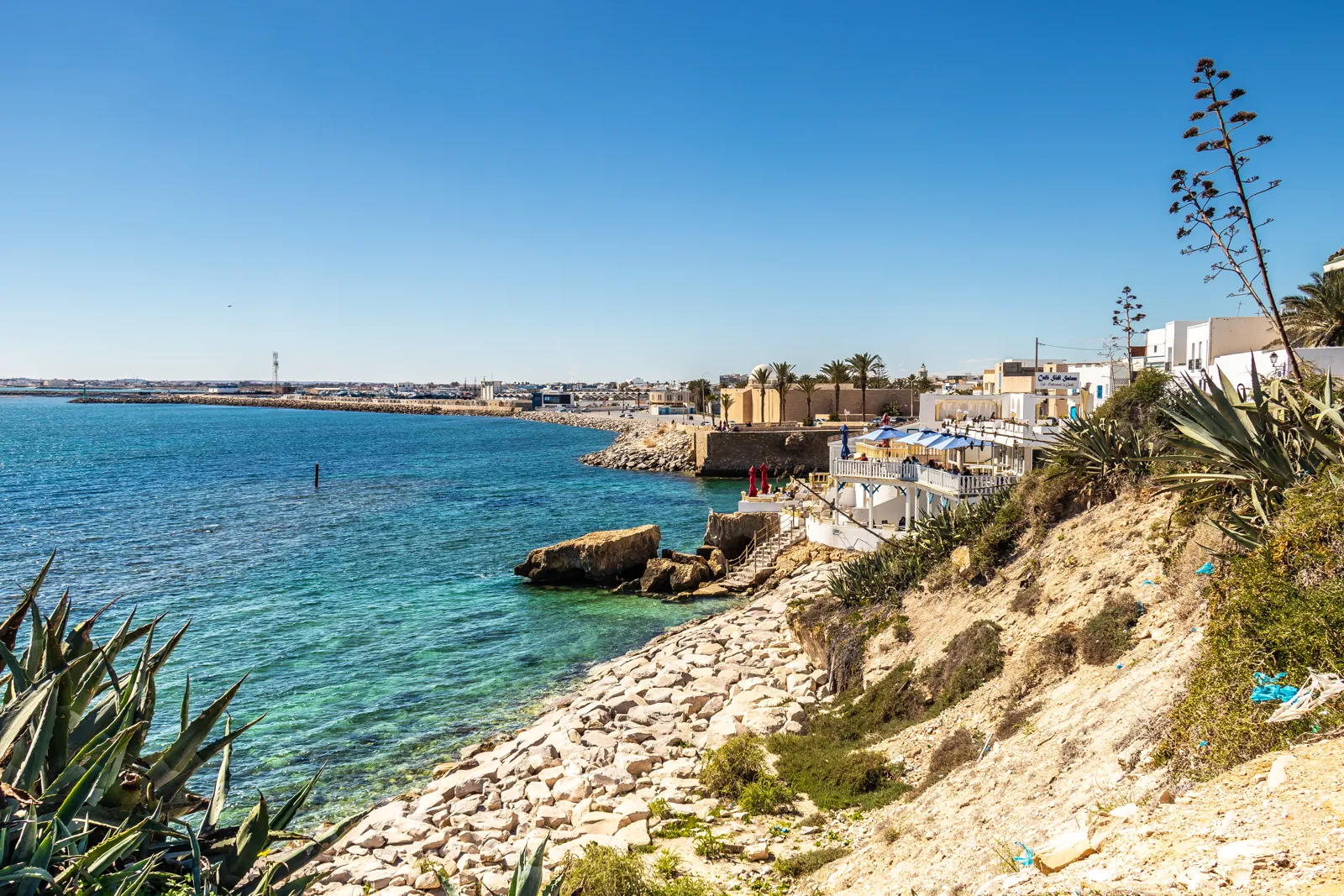
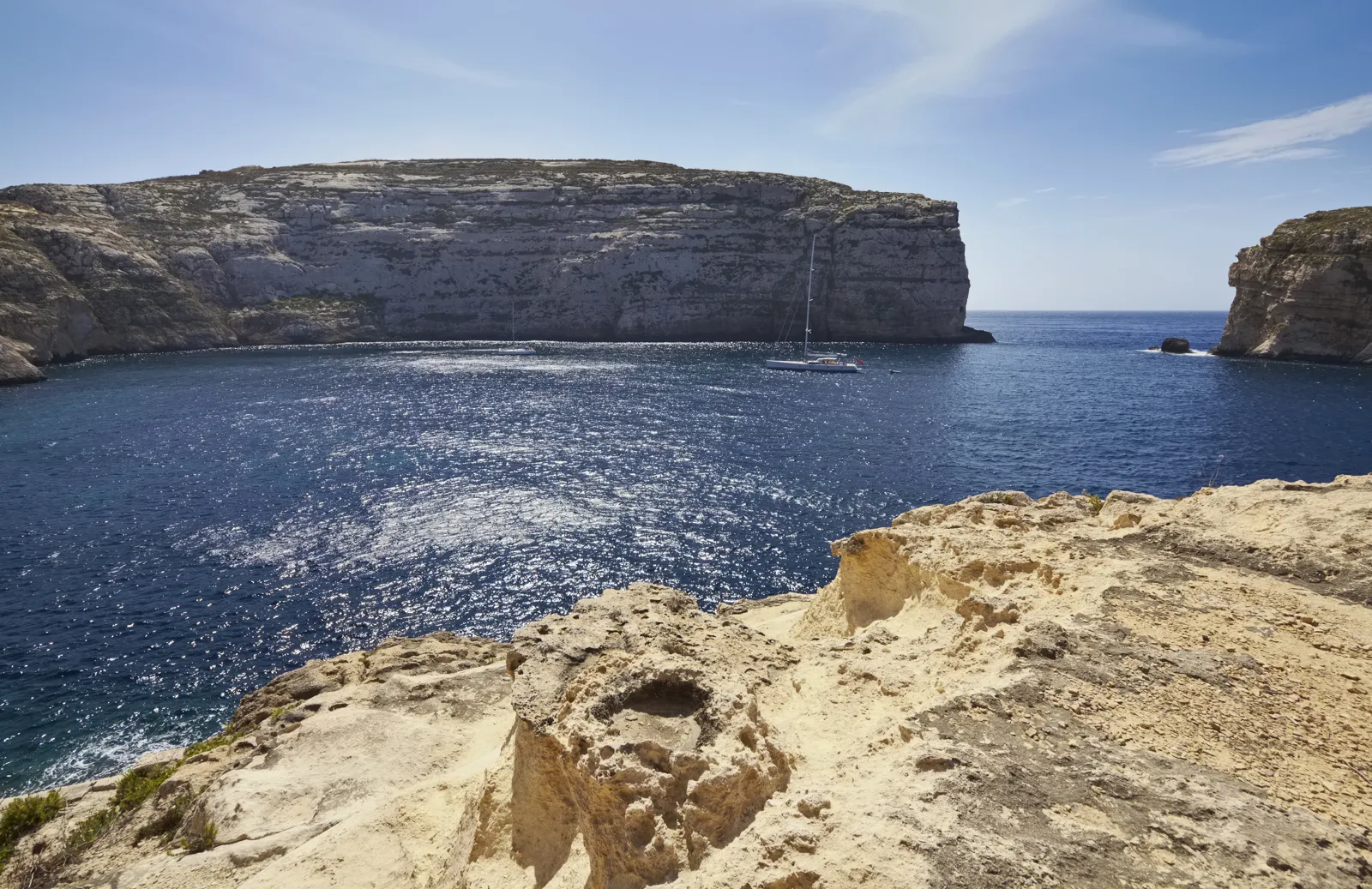
Sousse, on the coast of the Tunisian Sahel, combines an Aghlabid medina, a UNESCO World Heritage Site since 1988, with a long resort strip running toward Port El Kantaoui. Its ribat, the best preserved in Tunisia, its ninth-century Great Mosque and its archaeological museum, the country’s second-largest mosaic collection, make it far more than a beach resort. This guide to visiting Sousse covers what to see, when to come according to the official normals, how to get there and around, and what the US and UK governments say about entry and safety.
To place Sousse in a trip, see our Tunisia travel guide, the calendar when to go to Tunisia, the map of Tunisia, our guides to Monastir, Hammamet and Tunis, and the comparison Morocco or Tunisia.

Our travel deals for Sousse
Affiliate links: we earn a commission, at no extra cost to you.
 Learn the languageTargumiLearn a few words of Tunisian Arabic before you go — 30% off via our link.See the course
- FlightsKiwi.comCompare flights and airline combinations to Sousse.Compare flights
- eSIMAiraloData plan to install before you leave (eSIM-compatible phone).See plans



Sousse at a glance
- Time zone UTC+1 all year (Tunisia does not change its clocks): 1 hour ahead of London in winter, the same time in summer; 5 to 6 hours ahead of New York
- Best times May–June and September–October; swimming from June to September
- Safety Sousse is not in any of the areas the FCDO or the U.S. Department of State advise against; the State Department rates Tunisia Level 2, « Exercise increased caution »
- Entry visa-free for up to 90 days for US and UK citizens (travel.state.gov, GOV.UK)
- Highlights medina, ribat, Great Mosque, archaeological museum, catacombs, Port El Kantaoui
What to see in Sousse: the highlights
The medina, a World Heritage Site
The medina of Sousse is a typical example of the architecture of the first centuries of Islam in the Maghreb. Its ramparts, flanked by square towers and topped with rounded crenellations, circle it and include the kasbah on the west side. One peculiarity: the Great Mosque is not at the center of the city but near the port because, like the ribat, it protected the arsenal basin. The souks stretch between the Great Mosque and the south gate; the Bou Ftata Mosque, built between 838 and 841, bears the oldest sacred Kufic inscription in North Africa.
The ribat
Founded probably in the eighth century and completed under the Aghlabids in the early ninth, the ribat is a fortified monastery where warrior-ascetics lived to defend the coast. An inscription above the door of its cylindrical tower bears the name of Emir Ziyadat Allah I and the date 821. It is the best preserved of the ribats of the region. The watchtower offers a view over the medina and the sea; upstairs there is a small prayer room.
The Great Mosque
According to the inscription on its facade, the Great Mosque was built around 850–851 by the Aghlabid emir Abu al-Abbas, then enlarged at the end of the ninth century. Its fortress-like look recalls its defensive function. Ask on site about hours and visiting conditions.
The archaeological museum in the kasbah
Housed since 1951 in the kasbah, at the high point of the medina, the archaeological museum has the second-largest collection of mosaics in Tunisia after the Bardo. You can see Punic stelae, a head of Medusa, Neptune on his chariot, Nilotic scenes and funerary objects from Hadrumetum, the ancient name of Sousse. The kasbah tower, an Aghlabid lighthouse from 853, overlooks the city. Check the opening hours before going up.
The catacombs
West of the city, the Roman-era catacombs form a labyrinth of 240 galleries over five kilometers (3 mi), with about 15,000 burials. The catacombs of the Good Shepherd and of Hermes yielded some of the objects displayed in the museum.
The corniche, the beaches and Port El Kantaoui
North of the medina lies the new town built under the protectorate, with its seafront promenade and its hotels lined up as far as Port El Kantaoui, a marina and resort. The fine-sand beaches make Sousse one of the Sahel’s beach destinations, from June to September.
Excursions from Sousse
Sousse is centrally located: Monastir and its ribat, Mahdia, the El Jem amphitheater and the holy city of Kairouan are classic excursions. The Sahel Metro links Sousse with Monastir and Mahdia. See our guide to Monastir. For the quietest peninsula on the Sahel, see our guide to visiting Mahdia. Our guide to visiting Kairouan details its monuments and the rules for visiting.
Sousse in two or three days
- Day 1: ribat in the morning, Great Mosque, souks and Bou Ftata Mosque, then the archaeological museum in the kasbah.
- Day 2: catacombs in the morning, beach and corniche in the afternoon, evening at Port El Kantaoui.
- Day 3: excursion to El Jem or Kairouan, or to Monastir and Mahdia on the Sahel Metro.
Where to stay in Sousse
The big beach hotels line the shore from the new town to Port El Kantaoui; most have pools and gardens. To visit the medina on foot, choose the center, near the corniche. Port El Kantaoui, more residential, suits beach and golf stays. According to encyclopedic sources, a number of establishments closed after 2011: check recent reviews before booking.
Getting to Sousse and getting around
The nearest airports are Monastir and Enfidha; Tunis-Carthage is another option. Routes vary by season and airline: check the airport and airline websites. On the ground, the Sahel Metro links Sousse with Monastir and Mahdia. The FCDO (GOV.UK, updated 24 July 2026) notes that rail travel is generally safe, with a risk of petty crime on trains, and that driving at night can be hazardous outside towns; if you rent a car, UK license holders can drive in Tunisia for up to one year with a 1968 International Driving Permit (bought in the UK before travel) plus their UK license, and need a green card as proof of minimum insurance.
Airport transfer: taxi, transfer or rental car?
From Monastir or Enfidha, the usual options are a taxi, a transfer booked by your hotel or a private transfer; from Monastir, the Sahel Metro is an alternative. For excursions (El Jem, Kairouan), a car with a driver or an organized tour saves you from driving. Before booking, check what is included, the vehicle insurance and the cancellation terms. Locals appreciate the effort: learn a few words of Tunisian Arabic before you go with Targumi, with 30% off via our link.
When to go to Sousse: climate month by month
Sousse has a semi-arid Mediterranean climate: hot, dry summers, mild winters and autumn rains that are sometimes stormy. Because there is no Sousse station in the international normals, the table uses the one for Monastir, its neighbor on the same coast, combined with our calculations.
| Month | Avg. max | Avg. min | Rain | Rainy days | Day/night gap | Sunrise / sunset on the 15th | Day length |
|---|---|---|---|---|---|---|---|
| January | 16.9 °C (62 °F) | 8.7 °C (48 °F) | 37 mm (1.5 in) | 4.7 | 8.2 °C (15 °F) | 7:26 am / 5:26 pm | 10 h 00 min |
| February | 17.2 °C (63 °F) | 9.0 °C (48 °F) | 30 mm (1.2 in) | 4.3 | 8.2 °C (15 °F) | 7:04 am / 5:58 pm | 10 h 54 min |
| March | 19.5 °C (67 °F) | 11.2 °C (52 °F) | 34 mm (1.3 in) | 4.1 | 8.3 °C (15 °F) | 6:28 am / 6:24 pm | 11 h 56 min |
| April | 21.8 °C (71 °F) | 13.6 °C (56 °F) | 22 mm (0.9 in) | 4.3 | 8.2 °C (15 °F) | 5:45 am / 6:50 pm | 13 h 05 min |
| May | 25.5 °C (78 °F) | 16.9 °C (62 °F) | 20 mm (0.8 in) | 2.9 | 8.6 °C (15 °F) | 5:12 am / 7:15 pm | 14 h 03 min |
| June | 29.5 °C (85 °F) | 20.5 °C (69 °F) | 6 mm (0.2 in) | 1.3 | 9.0 °C (16 °F) | 5:00 am / 7:35 pm | 14 h 35 min |
| July | 32.5 °C (90 °F) | 23.2 °C (74 °F) | 3 mm (0.1 in) | 0.4 | 9.3 °C (17 °F) | 5:12 am / 7:34 pm | 14 h 22 min |
| August | 33.1 °C (92 °F) | 24.1 °C (75 °F) | 15 mm (0.6 in) | 1.4 | 9.0 °C (16 °F) | 5:35 am / 7:07 pm | 13 h 32 min |
| September | 29.8 °C (86 °F) | 22.1 °C (72 °F) | 65 mm (2.6 in) | 5.0 | 7.7 °C (14 °F) | 5:59 am / 6:25 pm | 12 h 25 min |
| October | 26.5 °C (80 °F) | 18.8 °C (66 °F) | 55 mm (2.2 in) | 4.4 | 7.7 °C (14 °F) | 6:23 am / 5:42 pm | 11 h 19 min |
| November | 21.9 °C (71 °F) | 13.6 °C (56 °F) | 38 mm (1.5 in) | 4.5 | 8.3 °C (15 °F) | 6:53 am / 5:10 pm | 10 h 17 min |
| December | 18.1 °C (65 °F) | 9.9 °C (50 °F) | 41 mm (1.6 in) | 4.6 | 8.2 °C (15 °F) | 7:19 am / 5:04 pm | 9 h 45 min |
Reading the table: from June to August it rains fewer than 2 days a month and the average high reaches 33.1 °C (92 °F) in August. September is the wettest month (65 mm (2.6 in) over 5.0 days), often in stormy showers, but it stays warm (29.8 °C (86 °F)). Winter is mild by day (17 to 18 °C (63 to 64 °F)) with fewer than 5 rainy days a month. The day/night gap stays moderate all year (7 to 10 °C (13 to 18 °F)), an effect of the sea. In June the sun sets around 7:35 pm; in December around 5 pm (calculation).
To compare with Tunis, Djerba and the desert, see when to go to Tunisia and our guide to Djerba.
Entry requirements, health and safety
- US citizens: according to the U.S. Department of State (travel.state.gov, Tunisia page last updated June 04, 2026), a valid passport is required and US passport holders do not need a visa for stays of up to 90 days; a residence permit is needed for longer stays. The Department rates Tunisia Level 2, « Exercise increased caution », because of terrorism, crime and unrest (advisory updated May 20, 2026), and notes a country-wide state of emergency.
- UK citizens: according to the UK FCDO (GOV.UK, updated 24 July 2026), you can visit Tunisia without a visa for up to 90 days, and your passport should be valid for the duration of your stay. Border officials can ask for your contact details, your onward or return ticket and proof of accommodation, and will stamp your passport on arrival: keep the stamp, because overstaying the 90 days without a valid reason means a fine.
- Neither source gives a minimum passport validity beyond the length of your stay: confirm the current rules with your airline and the Tunisian embassy before you travel.
- Hotel tax: the FCDO (GOV.UK, updated 24 July 2026) says you pay a tourist hotel tax on arrival: 8 Tunisian dinars per person per night in 3-star hotels and 12 dinars in 4- and 5-star hotels, for a maximum of ten nights.
- Safety: The FCDO (GOV.UK, updated 24 July 2026) advises against all travel to the Chaambi Mountains National Park and the military operations zones of Mount Salloum, Mount Sammamma and Mount Mghila, against all but essential travel to a number of areas along the Algerian border and in Kasserine Governorate, and against all travel to the militarised zone south of El Borma and Dhehiba, to Ben Guerdane and to the border strip with Libya. The U.S. Department of State advises against travel within 16 km (10 mi) of the Algerian and Libyan borders (with exceptions for Tabarka and Ain Draham), to the same mountain areas, to Mount Orbata and to the desert south of Remada. Sousse is not named in either list; check the maps before any trip toward the south or west.
- Terrorism: the FCDO (GOV.UK, updated 24 July 2026) says terrorists are likely to try to carry out attacks in Tunisia, with higher risk around religious sites, tourist sites and festivals, public transport and crowded places. In June 2015, 38 foreign tourists were killed in an attack at Port El Kantaoui near Sousse. A state of emergency has been in place since 2015 and security forces are visible in many places.
- Crime: The most common crime is theft; avoid displaying expensive items and carry a copy of the photo page of your passport, because security officials may ask for ID at any time (FCDO, GOV.UK).
- Foreign currency: Tunisia has strict currency controls: check the rules and whether you must declare the currency you bring (including pounds sterling) on arrival; failure to declare may result in confiscation, and you may not take Tunisian dinars out of the country (FCDO, GOV.UK). Keep your exchange receipts.
- Swimming: some beaches use a flag system: understand it and follow the warnings, and take extra care where there are no lifeguards, flags or signs (FCDO, GOV.UK).
- See our travel formalities guide.
Staying connected
Tunisia is outside the roaming deals many home plans include, so data charges can be high. An eSIM installed before departure or a local SIM card solves the problem; check that your phone is compatible with our travel eSIM guide.
If you… then…
| If you… | Then… |
|---|---|
| Come for the beach | June to September; September has warm sea but a few storms |
| Prefer sightseeing | March–May or October–November: 19 to 26 °C (66 to 79 °F) in the afternoon |
| Have only one day | Ribat, Great Mosque, souks and archaeological museum |
| Travel without a car | Sahel Metro to Monastir and Mahdia |
| Want to see El Jem or Kairouan | Day trip from Sousse |
| Arrive with foreign currency | Check the declaration rules for arrival, as the FCDO advises |
Frequently asked questions
Is Sousse safe?
Sousse is not in any area the UK FCDO or the U.S. Department of State advise against (read 26 October 2026). The State Department rates Tunisia Level 2, « Exercise increased caution », and the FCDO notes a risk of terrorist attacks, including the 2015 attack near Sousse, so stay aware of your surroundings.
What is the best time to go to Sousse?
May–June and September–October to combine sightseeing and swimming; July–August for the beach, with highs above 32 °C (90 °F) (WMO normals for Monastir).
What can you see in Sousse in one day?
The UNESCO-listed medina: ribat, Great Mosque, souks, then the archaeological museum and its mosaics in the kasbah.
Which airport for Sousse?
The nearest are Monastir and Enfidha; Tunis-Carthage is another option.
Do you need a visa for Sousse?
No visa is needed for US or UK citizens for stays of up to 90 days (U.S. Department of State, last updated June 04, 2026; UK FCDO, GOV.UK, updated 24 July 2026).
Can you swim in Sousse in October?
Usually yes: the average high in Monastir in October is 26.5 °C (80 °F), but autumn rain is more frequent.
Our sources
- U.S. Department of State, Tunisia country information (travel.state.gov, last updated June 04, 2026) and Tunisia travel advisory (Level 2, updated May 20, 2026), read on 26 October 2026
- UK FCDO, foreign travel advice for Tunisia (GOV.UK, updated 24 July 2026), read on 26 October 2026
- World Meteorological Organization, 1991–2020 climate normals, Monastir station (60740), Institut National de la Météorologie (NOAA/NCEI archive)
- Wikipedia articles « Sousse » (FR), « Medina of Sousse », « Ribat of Sousse », « Sousse Archaeological Museum » (EN)
- Astronomical calculations: NOAA solar algorithm, applied by Destination de Voyage to the coordinates of Sousse (15th of each month, year 2027)
- Our methodology
Updated October 2026. Security conditions can change: check the latest FCDO and State Department advice before you go.