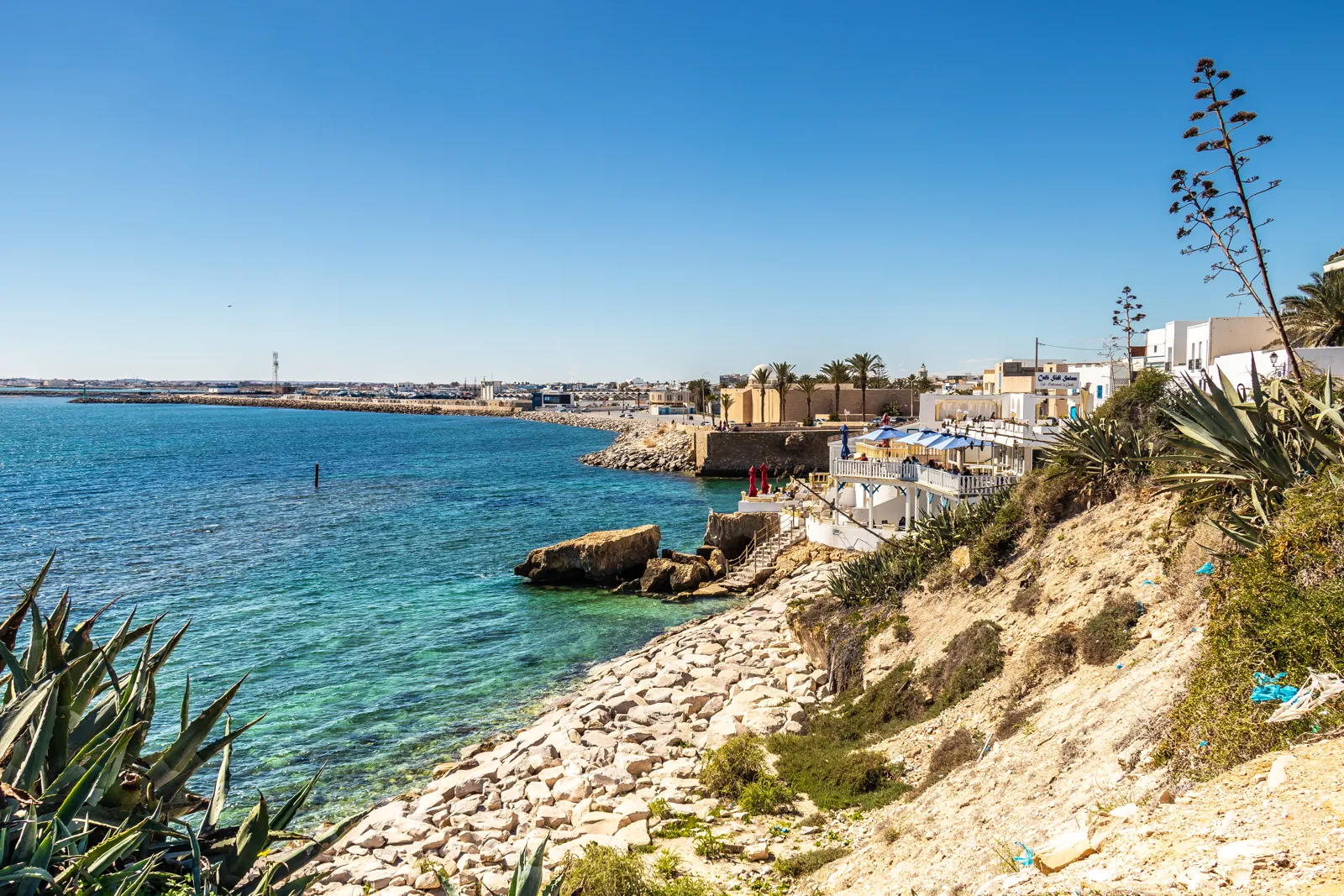
Gozo is the second island of the Maltese archipelago: 67 km² (26 sq mi), a capital, Victoria (Rabat), perched below its citadel, limestone cliffs, a few sandy beaches and the Ġgantija temples, among the oldest places of worship built anywhere in the world. More rural and quieter than Malta, it can be visited as a day trip or, better, on a stay of a few days for hiking and diving. This guide to help you visit Gozo covers what to see, how to get there by ferry, where to stay, what weather to expect month by month and what the US and UK governments say about entry and safety.
To place Gozo in a trip, see our Malta travel guide, the calendar when to go to Malta, the map of Malta and the comparison Malta or Cyprus.

Our travel deals for Gozo
Affiliate links: we earn a commission, at no extra cost to you.
 FlightsKiwi.comCompare flights and airline combinations to Gozo.Compare flights

Gozo at a glance
- Getting there ferry between Ċirkewwa (north Malta) and Mġarr (Gozo), or a fast ferry from Valletta
- Best times April–June and September–October; July and August are dry and hot
- Time zone UTC+1 (UTC+2 in summer): 1 hour ahead of London, 6 hours ahead of New York
- Entry no visa for up to 90 days for US and UK citizens (Schengen rules); see travel.state.gov and GOV.UK
- Main sights Victoria Citadel, Ġgantija, Dwejra, Ramla, Xlendi, diving
What to see in Gozo: the highlights
Victoria and its citadel
In the centre of the island, Victoria, called Rabat by the Gozitans, is the largest town on Gozo. Its citadel (Ċittadella) stands on the site of the acropolis of the Punic-Roman city of Gaulos. In the Middle Ages it served as a refuge for the population; the Ottomans took and sacked it in 1551, and its southern ramparts were rebuilt between 1599 and 1622. From the top of the walls the view takes in much of the island. Inside the walls are the cathedral and several museums; below, the old town and its lanes.
The Ġgantija temples
At Xagħra, the two megalithic temples of Ġgantija date from the Neolithic (around 3600–2500 BC): they are the oldest of Malta’s megalithic temples, older than the pyramids of Egypt, and are inscribed on the UNESCO World Heritage List with the other temples of the archipelago. Their name means “place of the giants” in Maltese. Check opening hours and tickets on the official Maltese heritage site before you go.
Dwejra: the Inland Sea, Fungus Rock and the Blue Hole
In the west of the island, Dwejra Bay brings together the Inland Sea, a lagoon linked to the open sea by an arch, Fungus Rock and the Blue Hole, one of the best-known dive sites in the Mediterranean. The famous Azure Window, a natural arch 28 metres (92 ft) high, collapsed into the sea on 8 March 2017: old photos no longer match the landscape.
Ramla and the beaches
Gozo has few sandy beaches: its coasts are mostly high cliffs. Ramla Bay, in the north-east, and San Blas are the best known. Above Ramla, a cave is presented as the cave of Calypso, the nymph of the Odyssey, tradition identifying Gozo with the island of Ogygia. Marsalforn, on the north coast, and Xlendi, on the south-west coast, are the busiest seaside resorts.
Walking around the island
Gozo has no permanent river and no forest, and its highest point, Ta’ Dbieġi, is no more than 190 m (623 ft): the coast can be explored on foot, and a hiking trail goes right round the island. Paths are not always well marked, so bring good shoes. GOV.UK notes that hunting with firearms is common, normally from 2 hours before sunrise until 2 hours after sunset, in areas that are rarely marked and can overlap with country walkways: be aware of your surroundings in rural areas during the hunting seasons.
The churches and the Xewkija Rotunda
Gozo has a great many Catholic churches and its own bishopric. The Xewkija Rotunda can hold 3,000 people, the whole population of the village.
Diving
Clear water, drop-offs and caves make Gozo a diving destination. In 2006, two ships, the Karwela and the Comino Land, were deliberately sunk off the south coast, at depths of 23 to 39 m (75 to 128 ft), for divers. Choose a certified dive centre and check the equipment.
Gozo in 1, 2 or 3 days
- 1 day: Victoria Citadel, Ġgantija, Dwejra, then Ramla or Xlendi late in the day.
- 2 days: add the Xewkija Rotunda, Marsalforn and a swim at San Blas.
- 3 days: add a hike on the south coast (cliffs), a dive or a boat trip to Comino.
Where to stay in Gozo
Victoria is central, with no direct access to the sea. Marsalforn and Xlendi, on the waterfront, concentrate hotels and restaurants. Mġarr is convenient for the ferries. Country houses with pools (farmhouses), in the villages, are a common choice for quiet stays. When renting accommodation, avoid paying the full amount in advance until you have checked that the property exists.
Getting to Gozo and getting around
There is no airport on Gozo: you arrive at Malta International Airport, at Luqa, and then take the ferry. The company Gozo Channel runs the crossing between Ċirkewwa, at the north-west tip of Malta, and Mġarr, on Gozo, all year round, day and night, for foot passengers and cars. A fast ferry also links Mġarr to the Grand Harbour in Valletta. Check timetables on the operators’ sites; in bad weather, ferries can be disrupted, so check before you travel.
On the island, public buses run and two hop-on hop-off tourist bus services leave from Mġarr. Traffic is often heavy in Victoria and between Victoria and Mġarr.
Ferry, car, scooter or excursion?
For a single day without a car, an organized excursion from Malta or the tourist bus makes things simple. For a longer stay, a rental car gives access to coves and trails. You can take your rental car on the ferry: check that your contract allows it. GOV.UK notes that some roads in Malta are in poor condition, and that a UK photocard driving licence can be used to drive there (a paper licence may need updating or an international driving permit). Compare the official rental company and resellers: excess, insurance, cancellation terms.
When to go to Gozo: climate month by month
Gozo shares Malta’s Mediterranean climate: a very dry, hot summer, and a mild but rainy and windy winter. As there is no Gozo station in the international normals, the table uses the Luqa station, on the main island, combined with our calculations for Gozo.
| Month | Avg. max | Avg. min | Rain | Rainy days | Day/night gap | Sunrise / sunset (15th) | Daylight |
|---|---|---|---|---|---|---|---|
| January | 15.2 °C (59 °F) | 9.2 °C (49 °F) | 89 mm (3.5 in) | 13.7 | 6.0 °C (11 °F) | 7:13 am / 5:11 pm | 9 h 59 min |
| February | 15.5 °C (60 °F) | 9.3 °C (49 °F) | 61 mm (2.4 in) | 10.9 | 6.2 °C (11 °F) | 6:50 am / 5:44 pm | 10 h 53 min |
| March | 16.7 °C (62 °F) | 10.1 °C (50 °F) | 41 mm (1.6 in) | 8.9 | 6.6 °C (12 °F) | 6:14 am / 6:10 pm | 11 h 56 min |
| April | 19.1 °C (66 °F) | 11.9 °C (53 °F) | 22 mm (0.9 in) | 6.4 | 7.2 °C (13 °F) | 6:30 am / 7:36 pm | 13 h 06 min |
| May | 23.3 °C (74 °F) | 14.9 °C (59 °F) | 7 mm (0.3 in) | 2.8 | 8.4 °C (15 °F) | 5:57 am / 8:01 pm | 14 h 04 min |
| June | 27.5 °C (82 °F) | 18.4 °C (65 °F) | 3 mm (0.1 in) | 1.1 | 9.1 °C (16 °F) | 5:45 am / 8:21 pm | 14 h 36 min |
| July | 30.7 °C (87 °F) | 21.0 °C (70 °F) | 0 mm (0.0 in) | 0.4 | 9.7 °C (17 °F) | 5:57 am / 8:20 pm | 14 h 23 min |
| August | 30.7 °C (87 °F) | 21.8 °C (71 °F) | 7 mm (0.3 in) | 1.0 | 8.9 °C (16 °F) | 6:21 am / 7:53 pm | 13 h 32 min |
| September | 28.0 °C (82 °F) | 20.1 °C (68 °F) | 40 mm (1.6 in) | 3.9 | 7.9 °C (14 °F) | 6:45 am / 7:10 pm | 12 h 26 min |
| October | 24.2 °C (76 °F) | 17.1 °C (63 °F) | 90 mm (3.5 in) | 10.2 | 7.1 °C (13 °F) | 7:09 am / 6:27 pm | 11 h 18 min |
| November | 20.1 °C (68 °F) | 13.9 °C (57 °F) | 80 mm (3.1 in) | 10.6 | 6.2 °C (11 °F) | 6:39 am / 4:55 pm | 10 h 16 min |
| December | 16.7 °C (62 °F) | 11.0 °C (52 °F) | 112 mm (4.4 in) | 14.2 | 5.7 °C (10 °F) | 7:06 am / 4:49 pm | 9 h 44 min |
Reading the table: from May to August it rains fewer than 3 days a month, and almost never in July (0.4 days). July and August reach an average high of 30.7 °C (87 °F). Rain returns in September; October (90 mm / 3.5 in) and December (112 mm / 4.4 in, 14.2 days) are the wettest months. The day/night gap stays small (5 to 10 °C, or 9 to 18 °F) thanks to the sea. In June the sun sets at about 8:20 pm and the day lasts more than 14 h 30 min; in December, less than 10 hours (calculation). For hiking, aim for April–May or October; for swimming, June to September.
Full details, including sea temperature and sunshine, are on our page when to go to Malta.
Safety: what the official sources say
We read the UK FCDO’s Malta advice (GOV.UK, updated 11 August 2026) and the U.S. Department of State’s Malta country information (travel.state.gov, last updated July 9, 2026). Useful points for Gozo:
- Swimming: according to GOV.UK, every year people drown in the sea and in swimming pools in Malta. Take care when swimming in the sea; some beaches may have strong undercurrents, and hidden rocks or shallow depths can cause serious injury or death, so do not dive into unknown water. In summer, lifeguards patrol most beaches and use a flag safety system: red flags indicate danger. Follow local advice if jellyfish are present.
- Crime: crime against tourists is rare, but there have been incidents of robbery, handbag snatching, pickpocketing and theft from parked cars (GOV.UK): do not leave valuables in a parked car.
- Hunting: see the note above on hunting with firearms in rural areas.
- Drugs: GOV.UK warns of a long jail sentence and heavy fines for possessing, using or smuggling illegal drugs, and notes that smoking cannabis in public is illegal and attracts a fine.
- Emergencies: 112 (ambulance, fire, police).
Entry requirements
- US citizens: Malta is a party to the Schengen Agreement: according to the U.S. Department of State (travel.state.gov, last updated July 9, 2026), you may enter for up to 90 days for tourism or business without a visa. Your passport should be valid for at least three months beyond your planned departure date, and you need proof of sufficient funds and a return ticket.
- UK citizens: according to the UK FCDO (GOV.UK, updated 11 August 2026), you can travel without a visa for up to 90 days in any 180-day period for tourism. Your passport must have been issued less than 10 years before the day you arrive and expire at least 3 months after the day you plan to leave the Schengen area. At the border you may need to show a return or onward ticket and prove you have enough money for your stay. The EU Entry/Exit System (EES) is being implemented: fingerprints and a photo may be taken, free of charge.
- The two sources agree on the 90-day visa-free stay. For anything else, check with the Maltese embassy or high commission in your country. See also our guide to entry requirements.
Staying connected
Roaming charges in Malta depend on your home plan and provider, so check your data allowance before you leave; our travel eSIM guide explains the options if your plan is limited.
If you… then…
| If you… | Then… |
|---|---|
| Have only one day | Take an early ferry from Ċirkewwa, then the citadel, Ġgantija and Dwejra |
| Want to hike | April–May or October; bring good shoes, the paths are poorly marked |
| Want a sandy beach | Ramla or San Blas, in the north-east |
| Dive | Blue Hole at Dwejra, wrecks off the south coast, with a certified centre |
| Come in winter | Check the marine forecast: ferries can be disrupted |
| Rent accommodation | Do not pay everything in advance; check that the property exists |
Frequently asked questions
How do you get to Gozo from Malta?
By Gozo Channel ferry between Ċirkewwa and Mġarr, all year round, or by fast ferry from Valletta. There is no airport on Gozo.
Is one day on Gozo enough?
For the essentials (citadel, Ġgantija, Dwejra), yes; two or three days let you add beaches, hiking and diving.
Does the Azure Window still exist?
No: the natural arch at Dwejra collapsed into the sea on 8 March 2017. The Inland Sea and the Blue Hole can still be seen.
What is the best time to visit Gozo?
April to June and September–October; July and August are dry and hot (30.7 °C / 87 °F average high at Luqa, 1961–1990 normals).
Are there sandy beaches on Gozo?
Few: Ramla and San Blas are the best known; the rest of the coast is mostly cliffs and rocky coves.
Do US and UK citizens need a visa for Gozo?
No, not for up to 90 days (in any 180-day period for UK citizens), according to the U.S. Department of State (July 9, 2026) and the UK FCDO (11 August 2026).
Our sources
- UK FCDO, Malta foreign travel advice (GOV.UK, updated 11 August 2026): entry requirements, safety and security, local laws, outdoor activities; read November 2026
- U.S. Department of State, Malta country information (travel.state.gov, last updated July 9, 2026): entry and exit requirements; read November 2026
- World Meteorological Organization, World Weather Information Service: 1961–1990 normals for the Luqa station, Malta Meteorological Office
- Wikipedia articles “Gozo” (French and English versions), “Ġgantija”, “Cittadella (Gozo)”, “Dwejra”, “Gozo Channel Line”
- Astronomical calculations: NOAA solar algorithm, applied by Destination de Voyage to the coordinates of Gozo (15th of each month, year 2027)
- Our methodology
Updated November 2026.