The best time to visit Uganda is December to February and June to August: these are the two dry seasons, when tracks are passable, gorilla trails are less muddy and animals are easier to spot in the parks. Avoid April and May if you can, the heart of the long rainy season: more than 250 mm (9.8 in) a month falls in Entebbe.
Safety: conditions can differ from one region of Uganda to another. Check the current travel advice of your government (for example the UK FCDO and the U.S. State Department) before you book and again before you leave. Bwindi, Queen Elizabeth and the Rwenzori are shown on our map of Uganda, which is useful for planning journeys between parks.
Straddling the equator, Uganda has no winter or summer in the usual sense. Temperatures vary little through the year, around 25 to 28 °C (77 to 82 °F) in the afternoon near Lake Victoria and cooler at altitude. What changes is the rain: two wet seasons (roughly March to May, then September to November) alternate with two drier seasons. This guide is based on the official climate normals published by the World Meteorological Organization for Entebbe, Kampala, Gulu and Kasese.

Our travel deals for Uganda
Affiliate links: we earn a commission, at no extra cost to you.
 FlightsKiwi.comCompare flights and airline combinations to Uganda.Compare flights
- eSIMAiraloData plan to install before you leave (eSIM-compatible phone).See plans


When to go to Uganda at a glance
- Best times December to February, then June to August (dry seasons)
- Avoid April and May, the wettest months (264 mm (10.4 in) in April in Entebbe)
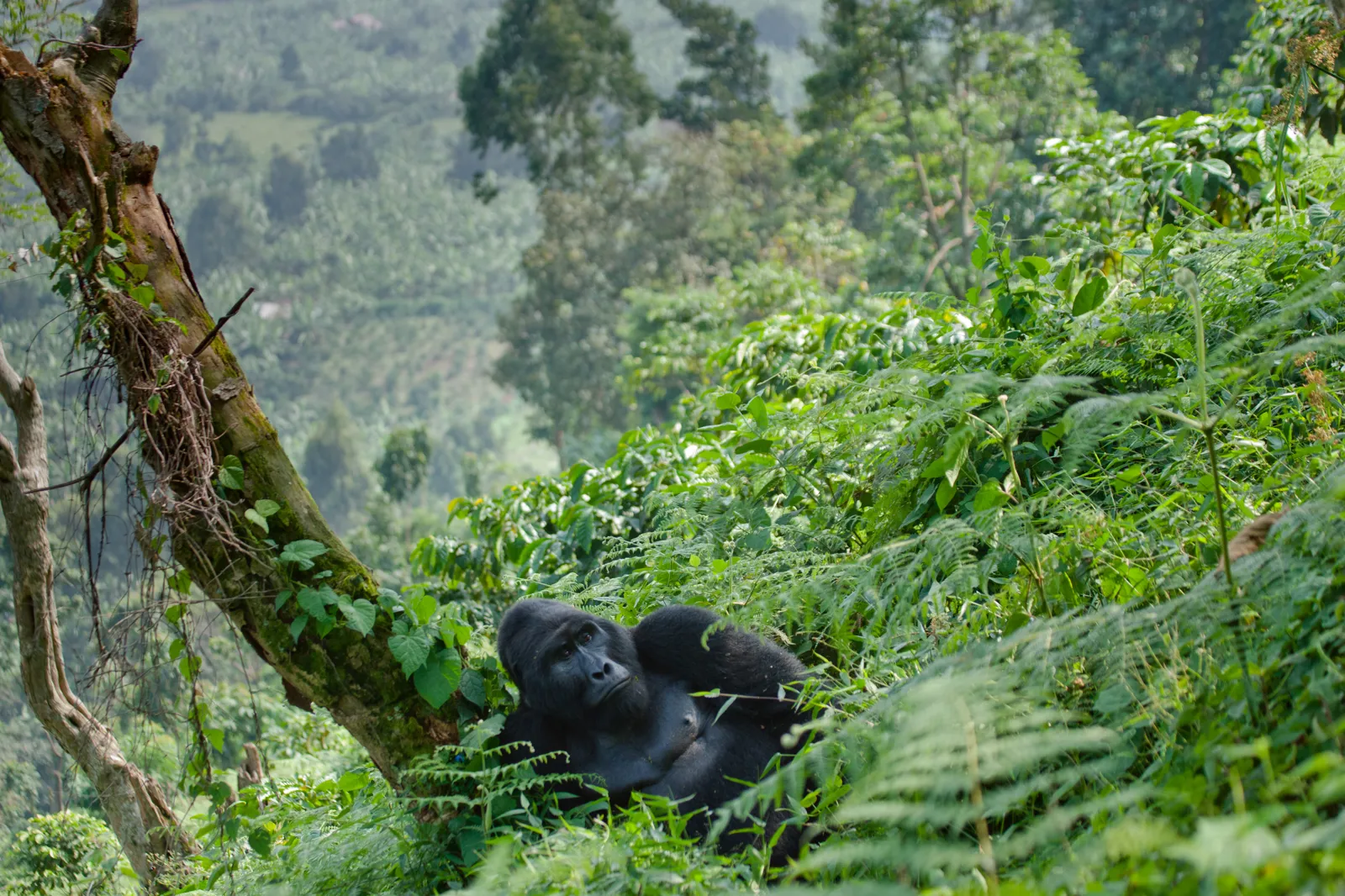
- Gorillas and chimpanzees can be seen all year; trails are easier in the dry season, and permits go fast in July-August
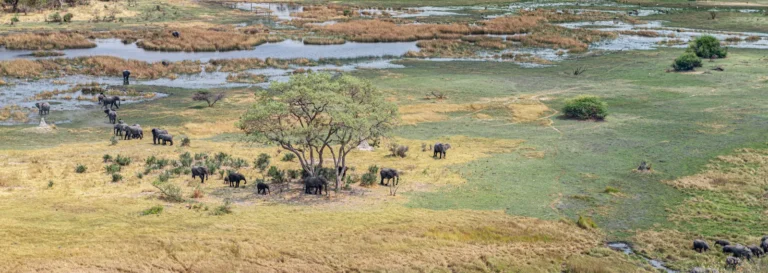
- Safari (Murchison Falls, Queen Elizabeth) preferably in the dry season, when the vegetation is lower and animals gather near water
- Temperatures stable all year, about 25 to 28 °C (77 to 82 °F) in the afternoon in Entebbe and Kampala, 16 to 18 °C (61 to 64 °F) at night
- Good deal late May-early June and November, when the rains ease and crowds stay moderate
When to go by priority
- Best weather: June to August and December to February, the two dry seasons
- Cheapest: March to May and October-November (low prices), accepting the rain; April and May are still best avoided
- Fewest crowds: January and February (moderate crowds) rather than July-August, when gorilla permits are in high demand
- Events: Martyrs’ Day on June 3 at Namugongo (very high crowds), Independence Day on October 9
January, in the middle of the dry season, features in our picks for where to go in January.
Uganda: the calendar at a glance
✅ Best months: January, February, June, July, August, December
❌ Period to avoid: April, may
Climate and weather in Uganda month by month
The table below gives the normals for Entebbe, on the shore of Lake Victoria, home to the country’s main international airport. Kampala, about 40 km (25 mi) away, has similar temperatures but a little less rain. The other regions are covered below.
| Month | Avg. max | Avg. min | Rain | Crowds | Prices | Verdict |
|---|---|---|---|---|---|---|
| January | 26.3 °C (79 °F) | 18.0 °C (64 °F) | 87 mm (3.4 in) | Moderate | Moderate | ✅ Dry season, good month for gorillas |
| February | 27.3 °C (81 °F) | 18.3 °C (65 °F) | 84 mm (3.3 in) | Moderate | Moderate | ✅ Dry and warm, the warmest month in Entebbe |
| March | 26.7 °C (80 °F) | 18.5 °C (65 °F) | 185 mm (7.3 in) | Low | Low | ⚠️ Rains return, often at the end of the month |
| April | 26.0 °C (79 °F) | 18.4 °C (65 °F) | 264 mm (10.4 in) | Low | Low | ❌ Wettest month |
| May | 25.4 °C (78 °F) | 18.0 °C (64 °F) | 254 mm (10.0 in) | Low | Low | ❌ Heavy rain, muddy tracks |
| June | 25.2 °C (77 °F) | 17.8 °C (64 °F) | 116 mm (4.6 in) | Moderate | Moderate | ✅ Start of the dry season |
| July | 25.3 °C (78 °F) | 17.2 °C (63 °F) | 72 mm (2.8 in) | High (summer holidays) | High | ✅ Dry and cool, high season |
| August | 25.9 °C (79 °F) | 17.4 °C (63 °F) | 78 mm (3.1 in) | High (summer holidays) | High | ✅ Dry, gorilla permits in high demand |
| September | 26.5 °C (80 °F) | 17.4 °C (63 °F) | 79 mm (3.1 in) | Moderate | Moderate | ⚠️ Still fairly dry in Entebbe, rain elsewhere |
| October | 26.5 °C (80 °F) | 17.7 °C (64 °F) | 128 mm (5.0 in) | Low | Low | ⚠️ Short rainy season |
| November | 26.0 °C (79 °F) | 17.9 °C (64 °F) | 172 mm (6.8 in) | Low | Low | ⚠️ Rainy, showers often in the afternoon |
| December | 26.5 °C (80 °F) | 17.8 °C (64 °F) | 121 mm (4.8 in) | High (festive season) | High | ✅ Dry weather returns from mid-December |
In Entebbe, the gap between the warmest and coolest month is no more than 2 °C (36 °F). The climate is therefore about rain: roughly 1640 mm (64.6 in) a year, concentrated from March to May and from October to December. Even in the dry season a shower remains possible, especially near Lake Victoria and in the highland forests.
Uganda’s seasons: pros and cons
In the center and south of the country, the calendar has four phases: a dry season from December to February, a long rainy season from March to May, a second dry season from June to August, then a short rainy season from September to November. The north, around Gulu, follows a different rhythm, with a single long wet season from April to October.
Dry season from June to August: high season
This is the period most in demand. Rainfall is 72 mm (2.8 in) in July and 78 mm (3.1 in) in August in Entebbe, and 43 mm (1.7 in) in July in Kampala. It is also the coolest period, with nights around 17 °C (63 °F) near the lake and much cooler at altitude, around Bwindi and Lake Bunyonyi.
- Pros: drier trails for gorilla and chimpanzee trekking, passable tracks, good wildlife viewing in the savannas of Murchison Falls and Queen Elizabeth
- Cons: flights and lodges in high demand, gorilla permits and lodges booked well in advance
- Our tip: book your gorilla permit several months ahead if you travel in July-August
Dry season from December to February: the other good window
After the short rainy season, the weather turns drier from mid-December. January and February are the warmest months (27.3 °C (81 °F) in the afternoon in February in Entebbe, more than 31 °C (88 °F) in Gulu in the north). Rainfall stays under 90 mm (3.5 in) a month in Entebbe and under 65 mm (2.6 in) in Kampala.
- Pros: good conditions in the parks, more moderate crowds than in summer outside the festive period, pleasant warmth
- Cons: high prices during the year-end holidays
- Our tip: the second half of January and February combine dry weather and lower crowds
Rainy seasons (March to May, September to November): the green season
The long rainy season peaks in April and May: 264 mm (10.4 in) in April and 254 mm (10.0 in) in May in Entebbe. Showers are often heavy, late in the day, but it rarely rains all day. The short rainy season, October to November, is less marked (128 mm (5.0 in) in October, 172 mm (6.8 in) in November in Entebbe).
- Pros: very green landscapes, far fewer visitors, lower rates at some lodges, migratory birds present from about November to April
- Cons: muddy tracks and longer journeys, slippery forest trails, harder wildlife viewing in tall vegetation
- Who is it for? Travelers flexible about comfort, birdwatchers and tight budgets
When to go to Uganda by region
Altitude and latitude change the climate. The north, lower and more continental, is hotter and has a single rainy season. The west, at the foot of the Rwenzori, is a little drier than Entebbe. The mountainous southwest (Bwindi, Kabale, Lake Bunyonyi) is much cooler. Comparison of the normals for four stations:
| Month | Entebbe (Lake Victoria) | Kampala | Gulu (north) | Kasese (west) |
|---|---|---|---|---|
| January | 26.3 °C (79 °F) / 87 mm (3.4 in) | 28.3 °C (83 °F) / 46 mm (1.8 in) | 31.3 °C (88 °F) / 17 mm (0.7 in) | 30.6 °C (87 °F) / 28 mm (1.1 in) |
| February | 27.3 °C (81 °F) / 84 mm (3.3 in) | 28.6 °C (83 °F) / 61 mm (2.4 in) | 31.7 °C (89 °F) / 29 mm (1.1 in) | 31.1 °C (88 °F) / 38 mm (1.5 in) |
| March | 26.7 °C (80 °F) / 185 mm (7.3 in) | 27.8 °C (82 °F) / 131 mm (5.2 in) | 30.7 °C (87 °F) / 85 mm (3.3 in) | 30.8 °C (87 °F) / 84 mm (3.3 in) |
| April | 26.0 °C (79 °F) / 264 mm (10.4 in) | 26.2 °C (79 °F) / 169 mm (6.7 in) | 29.2 °C (85 °F) / 166 mm (6.5 in) | 29.8 °C (86 °F) / 130 mm (5.1 in) |
| May | 25.4 °C (78 °F) / 254 mm (10.0 in) | 25.8 °C (78 °F) / 138 mm (5.4 in) | 28.4 °C (83 °F) / 176 mm (6.9 in) | 29.3 °C (85 °F) / 100 mm (3.9 in) |
| June | 25.2 °C (77 °F) / 116 mm (4.6 in) | 25.7 °C (78 °F) / 66 mm (2.6 in) | 27.9 °C (82 °F) / 152 mm (6.0 in) | 29.6 °C (85 °F) / 46 mm (1.8 in) |
| July | 25.3 °C (78 °F) / 72 mm (2.8 in) | 25.4 °C (78 °F) / 43 mm (1.7 in) | 27.0 °C (81 °F) / 169 mm (6.7 in) | 29.4 °C (85 °F) / 37 mm (1.5 in) |
| August | 25.9 °C (79 °F) / 78 mm (3.1 in) | 25.9 °C (79 °F) / 86 mm (3.4 in) | 27.4 °C (81 °F) / 238 mm (9.4 in) | 29.6 °C (85 °F) / 68 mm (2.7 in) |
| September | 26.5 °C (80 °F) / 79 mm (3.1 in) | 26.8 °C (80 °F) / 108 mm (4.3 in) | 28.5 °C (83 °F) / 175 mm (6.9 in) | 29.8 °C (86 °F) / 88 mm (3.5 in) |
| October | 26.5 °C (80 °F) / 128 mm (5.0 in) | 27.1 °C (81 °F) / 121 mm (4.8 in) | 28.6 °C (83 °F) / 187 mm (7.4 in) | 29.3 °C (85 °F) / 116 mm (4.6 in) |
| November | 26.0 °C (79 °F) / 172 mm (6.8 in) | 26.9 °C (80 °F) / 140 mm (5.5 in) | 28.6 °C (83 °F) / 109 mm (4.3 in) | 28.7 °C (84 °F) / 104 mm (4.1 in) |
| December | 26.5 °C (80 °F) / 121 mm (4.8 in) | 27.4 °C (81 °F) / 95 mm (3.7 in) | 29.1 °C (84 °F) / 37 mm (1.5 in) | 29.0 °C (84 °F) / 62 mm (2.4 in) |
At a glance: the recommended period for each main region, month by month.
| Region | Jan | Feb | Mar | Apr | May | Jun | Jul | Aug | Sep | Oct | Nov | Dec |
|---|---|---|---|---|---|---|---|---|---|---|---|---|
| Kampala, Entebbe and Jinja | ✅ | ✅ | ⚠️ | ⚠️ | ⚠️ | ✅ | ✅ | ✅ | ⚠️ | ⚠️ | ⚠️ | ✅ |
| West (Queen Elizabeth, Kibale) | ✅ | ✅ | ⚠️ | ❌ | ❌ | ✅ | ✅ | ✅ | ⚠️ | ⚠️ | ⚠️ | ✅ |
| Southwest (Bwindi, Mgahinga) | ✅ | ✅ | ⚠️ | ❌ | ❌ | ✅ | ✅ | ✅ | ⚠️ | ⚠️ | ⚠️ | ✅ |
| North (Murchison Falls) | ✅ | ✅ | ✅ | ⚠️ | ⚠️ | ⚠️ | ⚠️ | ❌ | ⚠️ | ⚠️ | ⚠️ | ✅ |
Kampala, Entebbe and Jinja
Around Lake Victoria it is mild all year: 25 to 28 °C (77 to 82 °F) in the afternoon, 16 to 18 °C (61 to 64 °F) at night. The driest months are December to February and June to August; in Kampala, July (43 mm (1.7 in)) and January (46 mm (1.8 in)) are the driest. These cities can be visited in any season, as the rain falls mostly as showers.
The west: Queen Elizabeth, Kibale and the Rwenzori
Kasese, at the foot of the Rwenzori Mountains and at the gates of Queen Elizabeth National Park, is hotter (29 to 31 °C (84 to 88 °F) in the afternoon) and fairly dry: less than 50 mm (2.0 in) of rain in June and July. June to August and December to February are the best periods for safari and for the chimpanzees of Kibale. In the high Rwenzori it rains far more and the weather changes quickly.
The southwest: Bwindi, Mgahinga and Lake Bunyonyi
No official normals are available for this mountain region, but altitude makes nights cool and rain frequent, even in the dry season. Gorillas can be visited all year; June to August and December to February simply make walking in the forest less demanding. Pack a waterproof jacket and warm clothes for the evening, whatever the season.
The north: Murchison Falls and Gulu
The north has a more marked climate: a dry season from December to February (17 mm (0.7 in) in January in Gulu) and a long wet season from April to October, peaking in August (238 mm (9.4 in)). Afternoons exceed 31 °C (88 °F) in February. For Murchison Falls National Park, December to March is the best period; June and July remain possible.
When to go to Uganda by trip type
| Trip | Best time | Where? |
|---|---|---|
| Gorilla trekking | June to August, December to February | Bwindi, Mgahinga |
| Chimpanzees | June to August, December to February | Kibale, Kyambura Gorge |
| Safari | December to March, June to August | Murchison Falls, Queen Elizabeth, Lake Mburo |
| Rafting and the Nile | All year, better in the dry season | Jinja |
| Birdwatching | November to April (migratory birds) | Mabamba, Murchison Falls, Queen Elizabeth |
| Mountain hiking | June to August, December to February | Rwenzori, Mgahinga |
| Budget trip | March to May, October-November | Whole country, low rates at some lodges |
| Honeymoon | January-February, June | Lake Bunyonyi, Queen Elizabeth, Bwindi |
To compare with neighboring countries, see also our pages when to go to Rwanda and when to go to Kenya: the seasons follow a fairly similar rhythm there.
Major events to plan your trip around
| When | Event | Location |
|---|---|---|
| June 3 | Martyrs’ Day (pilgrimage, very high crowds) | Namugongo shrine, near Kampala |
| October 9 | Independence Day | Nationwide |
| December 25 | Christmas (high demand for transport and lodges) | Nationwide |
| June to August, December to February | High season for gorilla treks | Bwindi, Mgahinga |
Uganda month by month: what to expect
January: Dry season: one of the best months for gorillas, chimpanzees and safaris. 26 °C (79 °F) in the afternoon in Entebbe, more than 31 °C (88 °F) in the north.
February: Dry and warm, the warmest month in Entebbe (27.3 °C (81 °F)). A very good month for Murchison Falls and Queen Elizabeth.
March: The rains return, especially at the end of the month (185 mm (7.3 in) in Entebbe). Prices fall, first muddy tracks.
April: The wettest month (264 mm (10.4 in) in Entebbe). Treks remain possible, but harder. Low rates.
May: Still very wet in the center and south. Rains start to ease at the end of the month in the west.
June: Dry weather returns in the center and west (66 mm (2.6 in) in Kampala, 46 mm (1.8 in) in Kasese). A good compromise before the high season. Martyrs’ Day on June 3.
July: High season: dry (43 mm (1.7 in) in Kampala) and cool. Book gorilla permits and lodges very early.
August: Still dry in the center and west, but very wet in the north (238 mm (9.4 in) in Gulu). High crowds.
September: Still fairly dry in Entebbe (79 mm (3.1 in)), wetter in Kampala and the north. Crowds fall after the holidays.
October: Short rainy season. Showers often in the afternoon. Independence Day on October 9.
November: Rainy (172 mm (6.8 in) in Entebbe), but green landscapes and migratory birds. Low prices before the holidays.
December: Gradual return of dry weather from mid-December. High demand during the holidays: book early.
When to book your trip to Uganda
For a trip in July-August or over the year-end holidays, book 4 to 6 months ahead: the number of gorilla permits is limited each day, and lodges near Bwindi have few rooms. For other periods, 2 to 3 months is generally enough. Gorilla and chimpanzee permits are issued by the Uganda Wildlife Authority (UWA), directly or through a local agency; check current permit availability with the UWA when you book.
Planning your trip to Uganda
- Entry requirements: see the entry requirements for Uganda in our travel guide to Uganda.
- Time difference: Uganda is UTC+3 all year: 3 hours ahead of London in winter and 2 in summer; 8 hours ahead of New York in winter and 7 in summer.
- Currency: the Ugandan shilling (UGX). Use our currency converter.
- What to pack: waterproof walking shoes, gardening gloves for gorilla trekking, long clothes in neutral colors, a rain jacket and a sweater for evenings at altitude.
Frequently asked questions
Can you visit Uganda in August?
Yes. It is still dry in the center and west, but very wet in the north (238 mm (9.4 in) in Gulu). Crowds are high.
What is the best time to see gorillas in Uganda?
Gorillas can be visited all year, but trails are easier during the dry seasons, from June to August and from December to February. It can rain in Bwindi in any season: always bring a waterproof jacket.
What is the wettest month in Uganda?
April, with an average of 264 mm (10.4 in) of rain in Entebbe, followed by May (254 mm (10.0 in)). In the north, in Gulu, the rainfall peak falls in August.
Is it cold in Uganda?
No, except at altitude. Near Lake Victoria it is 25 to 28 °C (77 to 82 °F) in the afternoon and 16 to 18 °C (61 to 64 °F) at night all year. Around Bwindi, Lake Bunyonyi and in the Rwenzori, nights are cool.
Can you visit Uganda in the rainy season?
Yes. Showers are often short and prices lower, but tracks turn muddy, journeys get longer and forest treks are harder. Preferably avoid April and May.
Do you need a visa for Uganda?
Entry requirements depend on your nationality and can change: see the entry requirements for Uganda in our travel guide to Uganda and check with the official Ugandan immigration authorities before you go.
Is Uganda safe for tourists?
Conditions vary by region. Check the current travel advice of your government (for example the UK FCDO and the U.S. State Department) before you book and again before you leave.
Our sources
- World Meteorological Organization (WMO), climate normals for Entebbe, Gulu and Kasese (1961-1990) and for Kampala
- Public holiday dates (Martyrs’ Day, June 3; Independence Day, October 9): Uganda Public Holidays Act (Chapter 255), checked November 11, 2026
- Our methodology
Updated November 2026.
To plan the rest of your trip, see our travel guide to Uganda and our other destinations in Africa.