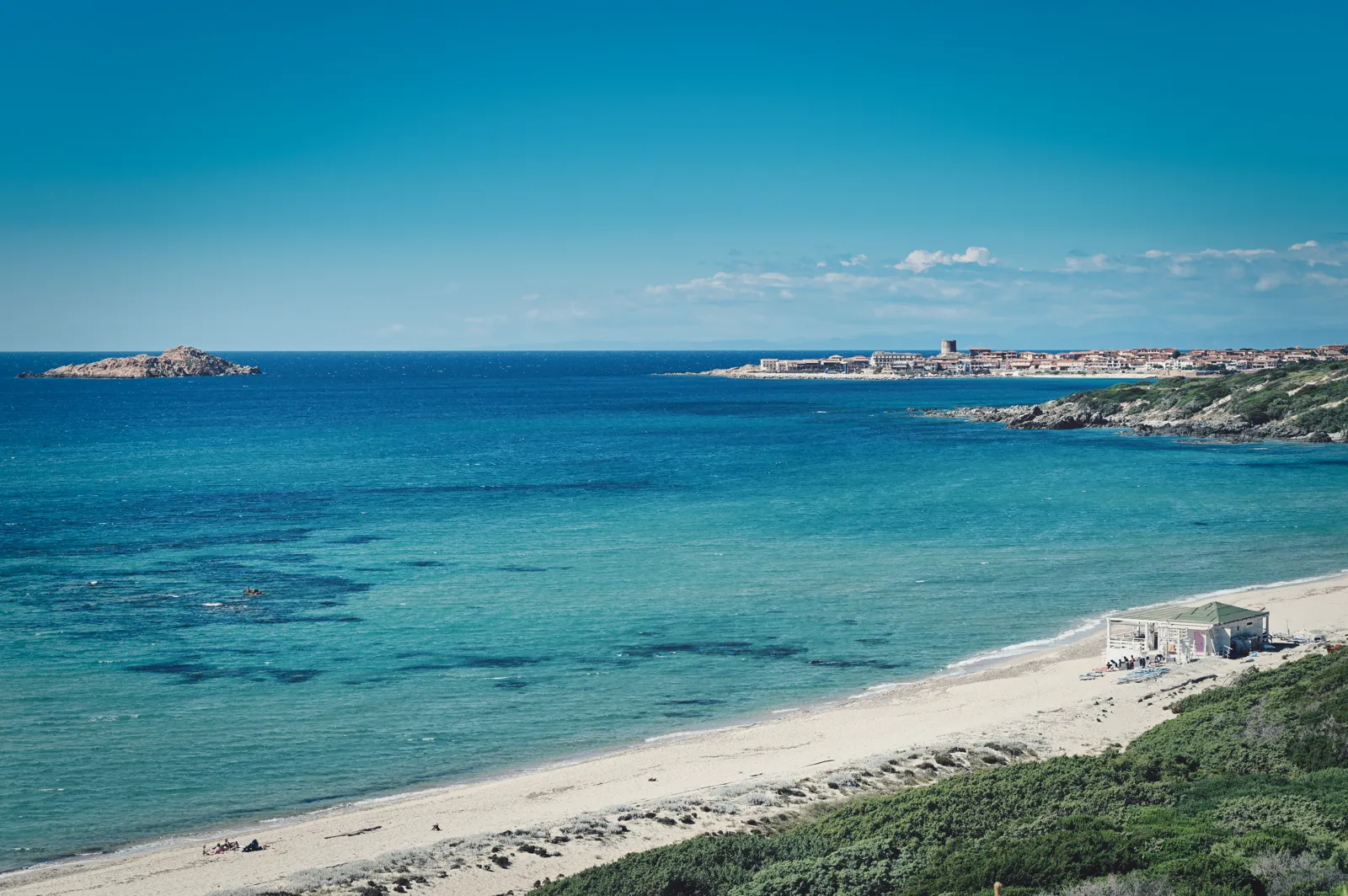
Looking for things to do in Cagliari? The capital of Sardinia is easy to explore on foot, from the hilltop citadel of Castello down to the harbour district of Marina. Visitors come for its viewpoints over the gulf, its archaeological museum and the giants of Mont’e Prama, then for Poetto beach and the flamingos of the Molentargius salt pans on the edge of the city. Allow 2 to 3 days, ideally in May-June or September-October.
This guide brings together the highlights, a three-day plan, the budget, the best areas to stay and the official climate, with a calculation other guides do not give: the number of rainy days to expect during a one-week stay, by month.

Our travel deals for Cagliari
Affiliate links: we earn a commission, at no extra cost to you.
 FlightsKiwi.comCompare flights and airline combinations to Cagliari.Compare flights

Cagliari at a glance
- Region Sardinia(Italy), the island’s capital, at the head of the Gulf of Angels
- Language Italian and Sardinian; English widely spoken in tourism
- Currency euro (€) · currencies
- Time zone Central European Time (UTC+1, UTC+2 in summer): one hour ahead of London, six hours ahead of New York
- Airports Cagliari-Elmas (CAG), about 6 km (4 mi) from the centre as the crow flies(many routes are seasonal; from further afield, connect via Rome, Milan or another European hub)
- Entry Schengen area: no visa for up to 90 days for US citizens (tourism or business) and UK citizens (in any 180-day period) · US: travel.state.gov · UK: GOV.UK
- Electricity Italy uses a 220-volt system, according to the U.S. Department of State: check that your devices accept it and bring a plug adapter · plugs
- Budget see our budget section
Things to do in Cagliari: the highlights
Castello and the Bastion of Saint Remy
Castello is the upper town, enclosed by Pisan and Aragonese walls. Climb up via the monumental stairways of the Bastion of Saint Remy, built at the turn of the 20th century: its terrace offers one of the finest views over the rooftops, the port and the gulf. In the lanes you pass the Royal Palace and the Archbishop’s Palace, and find the medieval Elephant and San Pancrazio towers, which are sometimes closed for works.
Santa Maria Cathedral
Castello’s cathedral, founded in the 13th century, was given a neo-Romanesque façade in the 20th century. The Baroque interior and the Crypt of the Martyrs, carved into the rock, are worth a visit. Modest dress required (shoulders and legs covered).
The National Archaeological Museum and the Citadel of Museums
At the northern entrance to Castello, the Citadel of Museums brings together several collections. The National Archaeological Museum traces the prehistory and Nuragic civilisation of Sardinia, with the stone statues of the giants of Mont’e Prama. The National Art Gallery is next door.
Marina, Stampace and Villanova
Below Castello, Marina is the district of restaurants and shops, lined by the arcades of Via Roma facing the port. Stampace, to the west, and Villanova, to the east, are more residential, with churches and lanes full of flowers. The covered San Benedetto market is the best place to discover Sardinian produce; come in the morning.
The Roman amphitheatre and the Tuvixeddu necropolis
The amphitheatre, partly carved out of the rock, recalls Roman Karales. Tuvixeddu hill holds a vast Punic necropolis, with tombs dug into the limestone.
Poetto, the Sella del Diavolo and the flamingos
Poetto, a long city beach, is reached by bus from the centre. At its western end, the Sella del Diavolo (“Devil’s Saddle”) can be walked for views over the gulf, starting from Calamosca cove. Behind the beach, the Molentargius-Saline nature park is home to flamingos that can be seen all year round.
Around Cagliari
The archaeological site of Nora, to the south-west, combines Phoenician and Roman remains by the sea. The Nuragic village of Su Nuraxi at Barumini, a UNESCO site, is reached by road to the north. To the east, Villasimius and the coast towards Costa Rei have beaches with clear water. A car is useful for these trips.
Itinerary: Cagliari in 3 days
- Day 1: Castello (Bastion of Saint Remy, cathedral, Citadel of Museums), then sunset from a viewpoint
- Day 2: San Benedetto market in the morning, Marina and the amphitheatre, afternoon at Poetto
- Day 3: an early-morning hike up the Sella del Diavolo, the Molentargius salt pans, or a trip to Nora or Barumini
Cagliari is also a good base for exploring the south of the island. For a longer tour, see our Sardinia travel guide, and to choose between islands, our comparisons Corsica or Sardinia and Sicily or Sardinia.
When to go to Cagliari: climate month by month
The best times are May-June and September-October: 24 to 29 °C (75 to 84 °F) in the afternoon, little rain and a less crowded city than in summer. In July and August, the average high exceeds 31 °C (88 °F), with almost no rain: ideal for the beach, less so for sightseeing in the middle of the day. Winter is mild (about 15 °C, or 59 °F, in the afternoon), but November and December are the wettest months.
| Month | Avg max | Avg min | Rain | Sunshine (h/day) | Rain days per 7 days | Sunset | Verdict |
|---|---|---|---|---|---|---|---|
| January | 14.7 °C (58 °F) | 5.4 °C (42 °F) | 37 mm (1.5 in) | 5.0 | 1.5 | 17:24 | ⚠️ Mild, quiet |
| February | 15.0 °C (59 °F) | 5.1 °C (41 °F) | 34 mm (1.3 in) | 5.9 | 1.4 | 18:00 | ⚠️ Mild, quiet |
| March | 17.5 °C (64 °F) | 7.3 °C (45 °F) | 32 mm (1.3 in) | 7.0 | 1.3 | 18:30 | ✅ Cool sightseeing |
| April | 19.9 °C (68 °F) | 9.7 °C (49 °F) | 46 mm (1.8 in) | 7.4 | 1.5 | 20:00 | ✅ Pleasant spring |
| May | 24.1 °C (75 °F) | 13.3 °C (56 °F) | 26 mm (1.0 in) | 8.8 | 0.9 | 20:29 | ✅ Ideal |
| June | 28.7 °C (84 °F) | 17.3 °C (63 °F) | 12 mm (0.5 in) | 10.4 | 0.5 | 20:51 | ✅ Sea and sightseeing |
| July | 31.7 °C (89 °F) | 19.9 °C (68 °F) | 3 mm (0.1 in) | 11.0 | 0.1 | 20:49 | ⚠️ Very hot |
| August | 32.1 °C (90 °F) | 20.5 °C (69 °F) | 11 mm (0.4 in) | 10.1 | 0.3 | 20:19 | ⚠️ Very hot, crowds |
| September | 28.1 °C (83 °F) | 17.5 °C (64 °F) | 38 mm (1.5 in) | 8.0 | 1.0 | 19:32 | ✅ Warm sea, fewer people |
| October | 23.9 °C (75 °F) | 13.9 °C (57 °F) | 44 mm (1.7 in) | 6.4 | 1.2 | 18:45 | ✅ Mild, pleasant |
| November | 19.0 °C (66 °F) | 10.0 °C (50 °F) | 74 mm (2.9 in) | 5.0 | 1.9 | 17:09 | ⚠️ Wettest month |
| December | 15.7 °C (60 °F) | 6.8 °C (44 °F) | 55 mm (2.2 in) | 4.5 | 1.8 | 17:01 | ⚠️ Cool, damp |
A week in Cagliari: how many rainy days?
- In July, expect on average 0.1 rainy days in a week: practically none.
- From May to September, at most one rainy day a week (0.1 to 1.0).
- In November and December, nearly two rainy days a week (1.9 and 1.8): plan some indoor visits.
- Destination de Voyage calculation based on the WMO average number of rain days (1991-2020 normals); an average, not a forecast.
To compare with the rest of the island, see the best time to visit Sardinia. The feast of Sant’Efisio, in spring, brings a large procession in traditional costume: check the date with the city and book early.
Budget for visiting Cagliari
We do not publish unverified budget figures. The main costs are accommodation, meals, local transport and admission fees; prices rise sharply in July and August. Compare rates for your dates.
Getting around Cagliari
- On foot: the centre (Castello, Marina, Stampace, Villanova) is compact but hilly; public lifts link the lower town with Castello.
- From the airport: train or bus to the centre, or taxi; check timetables when you arrive.
- City buses: for Poetto and Calamosca. If you buy a ticket from a kiosk or machine, validate it before your journey; inspectors issue on-the-spot fines (GOV.UK). Some buses and trams accept contactless payment on board.
- Car: useful for Nora, Barumini, Villasimius and Chia; avoid driving in the old centre.
- Ferry: connections with mainland Italy, depending on the season.
Where to stay in Cagliari
| Area | Best for | Highlights |
|---|---|---|
| Marina | First visit | Restaurants, port, near the station and buses |
| Castello | Couples, views | Quiet in the evening, viewpoints; steep lanes |
| Villanova | Local atmosphere | Quieter, often cheaper |
| Poetto | Beach stay | Direct sea access; bus to the centre |
Entry requirements, health and safety
- US citizens: you may enter Italy for up to 90 days for tourism or business without a visa. Your passport must be valid at least 3 months beyond your stay, and you need proof of sufficient funds and a return ticket; a passport that has ever been reported lost or stolen may be refused (U.S. Department of State, travel.state.gov, last updated August 11, 2025).
- UK citizens: no visa for up to 90 days in any 180-day period as a tourist. Your passport must have been issued less than 10 years before the day you arrive and be valid at least 3 months after the day you plan to leave the Schengen area; you may be asked for proof of accommodation, travel insurance, a return ticket and sufficient funds. The EU Entry/Exit System (EES) is being implemented: fingerprints and a photo may be taken at your first entry, free of charge (UK FCDO, GOV.UK, updated 21 October 2026).
- ID: police can stop you at any time for an identity check: carry photo ID at all times (GOV.UK).
- Theft: crime levels are generally low, but bag-snatching and pickpocketing are more common in city centres, at major tourist attractions and in main train and metro stations (UK FCDO, GOV.UK, updated 21 October 2026). Thefts from parked cars are common: do not leave luggage in a vehicle, even in the boot.
- Wildfires: wildfires are a risk in the extended summer months: follow the advice of local authorities (GOV.UK).
- Health: UK travellers can use a GHIC or EHIC for state healthcare; whatever your nationality, take out travel insurance covering medical costs. See our travel insurance guide.
- Emergencies: dial 112 (GOV.UK and travel.state.gov).
Practical tips for Cagliari
- Heat: in July and August, visit Castello early in the morning or late in the day.
- Opening hours: many shops close in the early afternoon; San Benedetto market is best in the morning.
- Dress: shoulders and legs covered in churches.
- Tourist tax: many Italian cities charge a small tourist tax, usually paid at your hotel and often in cash; the rate varies by city and hotel category (GOV.UK).
- Specialities: bottarga (cured fish roe), fregola with clams, pane carasau flatbread, Sardinian wines.
Frequently asked questions
How many days do you need to visit Cagliari?
Two days are enough for the city (Castello, museums, Marina, Poetto); three to four days let you add Nora, Barumini or the beaches of Villasimius.
Is Cagliari worth visiting?
Yes, to combine city and beach: a citadel, an archaeological museum and views over the gulf, with a large city beach and a flamingo park on the edge of the centre.
Can you swim in Cagliari?
Yes, at Poetto, the large city beach, and in Calamosca cove, mainly from June to September.
How do you fly to Cagliari?
Cagliari-Elmas Airport (CAG) has many seasonal European routes; from further afield, connect via Rome, Milan or another European hub. Check current routes with the airport and the airlines.
What is the best time to visit Cagliari?
May-June and September-October: moderate heat, about one rainy day a week at most and fewer crowds than in August.
Our sources
- World Meteorological Organization: 1991-2020 normals for the Cagliari-Elmas station (airport), published by NOAA (NCEI), via the Wikipedia article “Cagliari” (accessed 15 October 2026)
- Entry requirements, health and safety checked on 26 October 2026: U.S. Department of State, Italy country information (last updated August 11, 2025) and UK FCDO, GOV.UK foreign travel advice for Italy (updated 21 October 2026)
- Destination de Voyage calculation: rain days per 7 days, sunset times (NOAA solar algorithm), straight-line distance from the airport to the centre (Wikipedia and Wikidata coordinates)
- Our methodology
Updated October 2026.
To extend your trip, see our Italy travel guide and our other destinations in Europe.