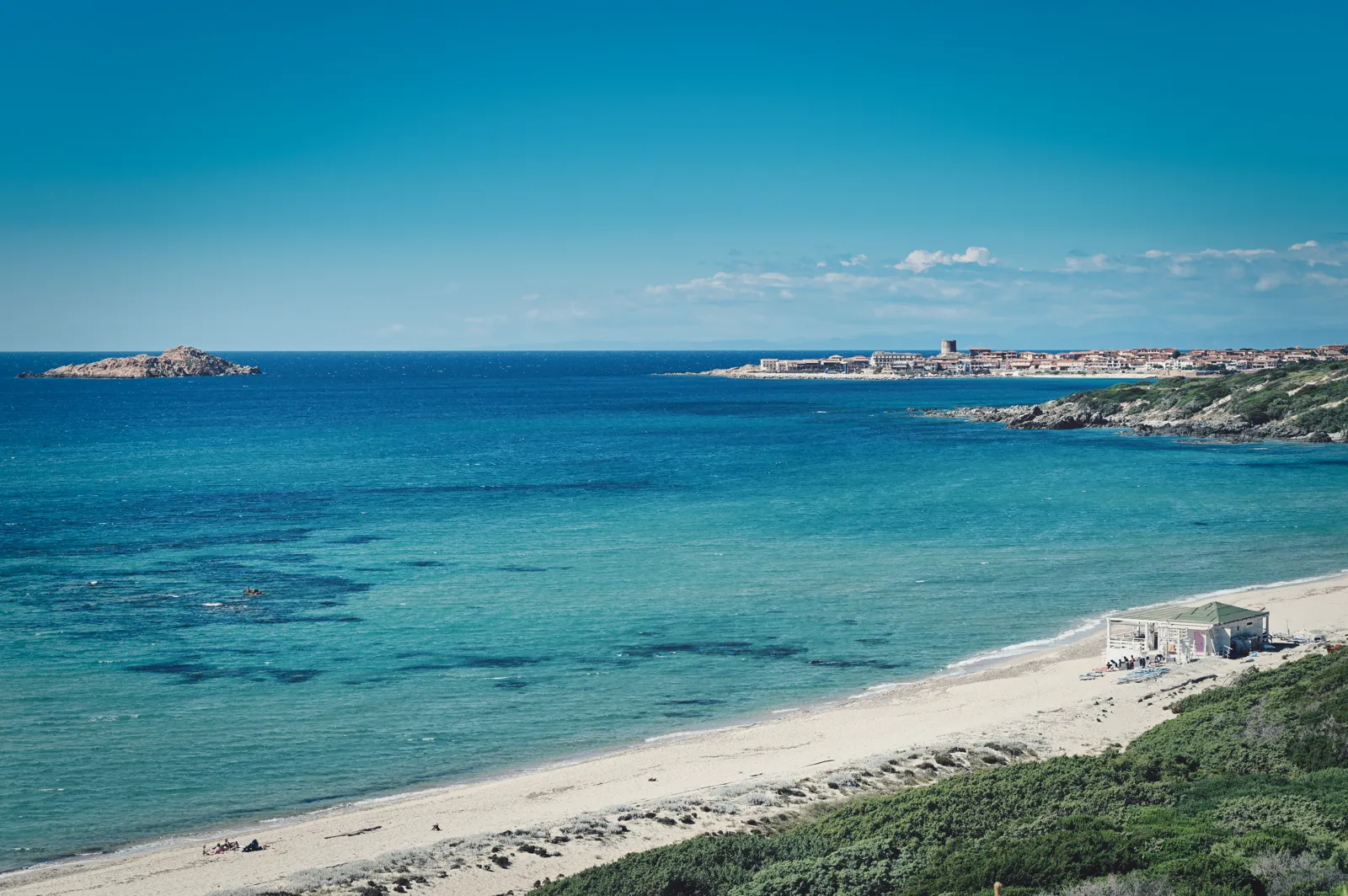
When is the best time to visit Sardinia? Late May to late June and September to early October: afternoons are 24 to 29 °C (75 to 84 °F), it hardly rains and the sea is warm enough for swimming, without the crowds or the prices of August. July and August are hot, dry and very busy; winter is mild on the coast near Cagliari, but windy and wetter, and many seaside accommodations close.
Sardinia has a Mediterranean climate: long, hot, very dry summers, mild winters, and rain concentrated from October to January. The island is often swept by wind, in particular the mistral, known here as the maestrale, which cools the air but can stir up the sea on the west coast and in the Strait of Bonifacio. The mountainous interior (Barbagia, Gennargentu massif) is markedly cooler in winter than the coast. Here is how to choose your month, based on the official 1991–2020 climate normals.

Our travel deals for Sardinia
Affiliate links: we earn a commission, at no extra cost to you.
 FlightsKiwi.comCompare flights and airline combinations to Sardinia.Compare flights

When to go to Sardinia at a glance
- Best times late May to late June, September to early October
- Best compromise June and the first half of September
- Hottest July–August, an average high of about 32 °C (90 °F) in Cagliari
- Wettest November (about 74 mm (2.9 in)) and December (about 55 mm (2.2 in))
- For swimming June to September, often until early October
- Plan ahead for August (Italian summer holidays), summer ferries and the wind
When to go to Sardinia by priority
- Best weather: late May to late June and September to early October: 24 to 29 °C (75 to 84 °F) in the afternoon, fairly warm sea
- Cheapest: May and October, at mid-range prices; November to March, low prices but a sleepy coast
- Fewest crowds: May and October; the first half of September for a warm sea with fewer people than in August
- Events: Barbagia carnivals in February, Sant’Efisio festival in Cagliari in early May, Ferragosto on August 15
Sardinia: the calendar at a glance
✅ Best months: April, may, June, September, October
❌ Period to avoid: November
Climate in Sardinia month by month
| Month | Avg. max | Avg. min | Rain | Rainy days | Crowds | Prices | Verdict |
|---|---|---|---|---|---|---|---|
| January | 14.7 °C (58 °F) | 5.4 °C (42 °F) | 37 mm (1.5 in) | 7 | Low | Low | Mild by day, cool at night, deserted coasts ⚠️ |
| February | 15.0 °C (59 °F) | 5.1 °C (41 °F) | 34 mm (1.3 in) | 6 | Low (carnivals) | Low | Interior carnivals, no swimming ⚠️ |
| March | 17.5 °C (64 °F) | 7.3 °C (45 °F) | 32 mm (1.3 in) | 6 | Low | Low | Early spring, frequent wind ⚠️ |
| April | 19.9 °C (68 °F) | 9.7 °C (49 °F) | 46 mm (1.8 in) | 6 | Moderate (Easter) | Moderate | Hiking and towns, sea still cold ✅ |
| May | 24.1 °C (75 °F) | 13.3 °C (56 °F) | 26 mm (1.0 in) | 4 | Moderate | Moderate | Ideal for a road trip, swimming at the end of the month ✅ |
| June | 28.7 °C (84 °F) | 17.3 °C (63 °F) | 13 mm (0.5 in) | 2 | High | High | Good sea, prices still reasonable ✅ |
| July | 31.7 °C (89 °F) | 19.9 °C (68 °F) | 3 mm (0.1 in) | 1 | Very high | Very high | Hot and dry, very busy beaches ⚠️ |
| August | 32.1 °C (90 °F) | 20.5 °C (69 °F) | 11 mm (0.4 in) | 1 | Very high (Ferragosto) | Very high | The hottest and most expensive month ⚠️ |
| September | 28.1 °C (83 °F) | 17.5 °C (64 °F) | 39 mm (1.5 in) | 4 | High, then falling | High to moderate | Warm sea, crowds falling ✅ |
| October | 23.9 °C (75 °F) | 13.9 °C (57 °F) | 44 mm (1.7 in) | 5 | Low to moderate | Moderate | Still mild, closures at the end of the month ✅ |
| November | 19.0 °C (66 °F) | 10.0 °C (50 °F) | 74 mm (2.9 in) | 8 | Low | Low | The wettest month, sleepy coast ❌ |
| December | 15.7 °C (60 °F) | 6.8 °C (44 °F) | 55 mm (2.2 in) | 8 | Low (holidays) | Low | Mild but gray, cold interior ⚠️ |
The Cagliari-Elmas station is in the south of the island, near the coast, in one of the driest parts of Sardinia. The northeast (Olbia, Costa Smeralda) and the west (Alghero, Oristano) have fairly similar summer temperatures, but generally get a little more rain in winter. In the interior, around Nuoro or in the Gennargentu, winter nights are cold and snow is possible on the summits. According to the UK FCDO (GOV.UK, updated 21 October 2026), wildfires are a risk in Italy during the extended summer months: check local alerts before a hike. This heat and wildfire risk also affects the neighboring French island: our comparison to choose between Corsica and Sardinia sets them side by side.
Sunshine in Sardinia month by month
The sun is very present from May to September, with more than 10 hours a day on average in June, July and August. In winter, Cagliari still gets 4 to 5 hours of sunshine a day.
| Month | Sunshine hours per month | Average per day |
|---|---|---|
| January | 156 | 5.0 |
| February | 166 | 5.9 |
| March | 218 | 7.0 |
| April | 223 | 7.4 |
| May | 271 | 8.8 |
| June | 312 | 10.4 |
| July | 340 | 11.0 |
| August | 314 | 10.1 |
| September | 240 | 8.0 |
| October | 199 | 6.4 |
| November | 150 | 5.0 |
| December | 141 | 4.5 |
The seasons in Sardinia: pros and cons
Spring (March to May): nature and hiking
Highs climb from 17 °C (63 °F) in March to 24 °C (75 °F) in May. The maquis is in flower, the hills are green and the trails of the Supramonte, the Gulf of Orosei or the west coast are walkable without the heat. The sea stays cool until late May, and many beach businesses only open from Easter or May.
- Pros: ideal temperatures for walking, green landscapes, moderate prices, uncrowded archaeological sites
- Cons: cool swimming before late May, frequent wind, tourist services still partial in March and April
- Our tip: May is the best month for an active Sardinia (hiking, kayaking, Nuragic sites)
Summer (June to August): beach season
June is dry and sunny, with a sea that warms up quickly. In July and August, the average high is above 31 °C (88 °F) in Cagliari and it barely rains. This is peak season: famous beaches are very crowded, ferries and flights are full, accommodation is at its most expensive, especially around August 15 (Ferragosto). Some very popular beaches apply limited or reservation-only access in summer: check with the municipality concerned.
- Pros: warm sea, near-guaranteed sun, all boat excursions run, nightlife on the coast
- Cons: crowds on the well-known beaches, high prices, heat inland, wildfire risk
- Who is it for? A beach or family vacation; in August, book several months ahead
Autumn (September to November): the shoulder season
September is still hot (28 °C (82 °F)) and the sea has stored up the summer’s warmth. Italian families have gone home and prices fall. The rains return gradually: 39 mm (1.5 in) in September, 44 mm (1.7 in) in October, then 74 mm (2.9 in) in November, the wettest month. From mid-October, many seaside hotels and campsites close until spring.
- Pros: warm sea, calmer beaches, falling prices, grape harvest
- Cons: first thunderstorms, gradual closures, reduced sea connections late in the season
- Our tip: the first half of September offers a very good compromise between sea and peace and quiet
Winter (December to February): inland Sardinia
It is still 15 °C (59 °F) in the afternoon in Cagliari, but 5 °C (41 °F) at night, with 6 to 8 rainy days a month. The coast is quiet and many seaside resorts are closed. On the other hand, this is the season of the traditional festivals of the interior, notably the Barbagia carnivals, and a pleasant time to discover Cagliari, Alghero or the Nuragic sites with no one around.
- Pros: low prices, local traditions, towns that are lively all year
- Cons: no swimming, wind, reduced hotel offering on the coast, fewer ferries
- Who is it for? A short cultural trip or a trip off the beaten path
When to go to Sardinia by region
| Area | Highlights | Best time | Good to know |
|---|---|---|---|
| Cagliari and the south (Chia, Villasimius) | City, beaches, ancient sites | May–June, September–October | The driest part of the island |
| Northeast (Olbia, Costa Smeralda, La Maddalena) | Coves, archipelago, boat trips | June, September | Very expensive and very crowded in August |
| East coast (Gulf of Orosei, Cala Gonone) | Coves, hiking, kayaking | May–June, September | Many coves reachable only on foot or by boat |
| Northwest (Alghero, Stintino, Bosa) | Catalan town, cliffs, beaches | May–June, September–October | Coast exposed to the mistral |
| Interior (Barbagia, Gennargentu) | Villages, traditions, mountains | April–June, September–October | Cold winters, hot summers |
Cagliari and the south
Cagliari is the most pleasant city out of season: the Castello district, museums, the Poetto city beach. Farther southwest, Chia and the Teulada coast, and to the east Villasimius and Costa Rei, are beach areas that mainly operate from May to October. The Nora site, an ancient Phoenician and Roman city, can be visited all year.
The northeast: Olbia, Costa Smeralda and La Maddalena
This is the most touristy and most expensive coast, particularly in July–August. The La Maddalena Archipelago National Park is explored by boat from Palau. In June and September, the coves are calmer and prices are much lower. Santa Teresa Gallura is the port for connections to Bonifacio, in Corsica.
The east coast: Gulf of Orosei and Ogliastra
Limestone cliffs, coves reached by trail or by boat from Cala Gonone or Santa Maria Navarrese: this is the ideal region to combine hiking and swimming. In spring and September, walks are more pleasant than in the heart of summer, when the heat makes some trails punishing.
The west: Alghero, Bosa and Oristano
Alghero, a fortified town with a Catalan heritage, is lively from April to October. The west coast is more exposed to the wind: on a mistral day, the sea can be rough there while the east coast stays calm. Bosa, with its colorful houses, and the Tharros site near Oristano are best visited in spring and autumn.
When to go to Sardinia by trip type
| Your trip | Best time | Good to know |
|---|---|---|
| Beaches and swimming | June to September | June and September: good sea and fewer people than in August |
| Boat trips (La Maddalena, Gulf of Orosei) | June to September | Trips canceled in strong wind |
| Hiking (Supramonte, Gulf of Orosei) | April–May, late September–October | Avoid the summer heat and wildfire risk |
| Nuragic sites and culture | April–June, September–October | Open all year, reduced hours in winter |
| Family trip | June, early September | Warm sea without the August crowds |
| Small budget | May, late September–October | Beach hotels open, lower prices |
| Traditions and carnivals | February | Barbagia carnivals, dates vary |
Major events in Sardinia
| Date | Event | Good to know |
|---|---|---|
| February (date varies) | Barbagia carnivals, notably in Mamoiada | Traditional masks, program varies by village |
| March or April (date varies) | Holy Week and Easter | Processions in many towns and villages |
| Early May | Sant’Efisio festival in Cagliari | Large procession in traditional costume |
| July–August | Patron saint festivals and summer festivals | Very numerous across the island |
| August 15 | Ferragosto | Peak of the Italian holidays |
Sardinia month by month: what to expect
Sardinia in January: Mild by day (15 °C (59 °F) in Cagliari) but cool at night. Very quiet coast, many beach accommodations closed. A month suited to discovering Cagliari and the archaeological sites.
Sardinia in February: Similar to January, a little drier. The interior carnivals, with their traditional masks, are the main reason to come.
Sardinia in March: Spring begins (17.5 °C (64 °F)). The maquis blooms, the wind often blows. Good for hiking, not for the beach.
Sardinia in April: Mild (20 °C (68 °F)), but still fairly wet (46 mm (1.8 in)). Easter draws crowds. The first beach businesses reopen.
Sardinia in May: An excellent month for a road trip: 24 °C (75 °F), 4 rainy days on average, prices still moderate. Swimming becomes possible at the end of the month for the hardy.
Sardinia in June: The best month for the sea before the crowds: 29 °C (84 °F), very little rain, very long days.
Sardinia in July: Hot (32 °C (90 °F)) and dry (about 3 mm (0.1 in) of rain). Peak season on the coast: book accommodation, cars and ferries early.
Sardinia in August: The hottest and busiest month, especially around the 15th. Prices at their highest, famous beaches packed.
Sardinia in September: Warm sea, 28 °C (82 °F), crowds and prices falling after the Italian back-to-school period. A few thunderstorms at the end of the month.
Sardinia in October: Mild (24 °C (75 °F)) and still pleasant for swimming early in the month. Closures multiply at the end of the month.
Sardinia in November: The wettest month (74 mm (2.9 in), 8 rainy days). Sleepy coast; not recommended for a first trip.
Sardinia in December: Mild on the coast (16 °C (61 °F)) but gray and windy. Festive atmosphere in Cagliari and the villages.
When to book your trip to Sardinia
For July and August, book accommodation, a rental car and any ferry 4 to 6 months ahead: the island is in high demand from Italians and other Europeans alike, and rental cars can run out. For June and September, 2 to 3 months is generally enough; for May and October, 1 to 2 months. The main airports are Cagliari in the south, Olbia in the northeast and Alghero in the northwest; outside the season, direct service is reduced. You can also reach the island by ferry, notably from Corsica (Bonifacio to Santa Teresa Gallura) or from mainland ports; routes and frequencies vary by season, so check with the operators.
Planning your trip to Sardinia
- Entry requirements: rules depend on your nationality; see our guide to the entry requirements for Italy.
- Currency: the euro.
- Health and safety: the UK FCDO (GOV.UK, updated 21 October 2026) lists dengue, west nile disease and biting insects and ticks among the health risks in Italy: use insect repellent. It also notes that wildfires are a risk during the extended summer months, and that heavy rainfall is common in winter and can cause local flooding.
To plan your itinerary, see our Sardinia travel guide. If you are still undecided about the destination, compare with our ideas for where to go in May, in June, in September or in October, or with when to go to Corsica. To compare with the rest of the country, see when to go to Italy, or the other large Italian island with when to go to Sicily.
Frequently asked questions
What is the best month to visit Sardinia?
June for the sea before the big crowds (29 °C (84 °F) in the afternoon, very little rain), and the first half of September for a warm sea with fewer people. May is the best month for hiking and sightseeing.
Can you swim in Sardinia in October?
Often yes early in the month: the sea keeps some of the summer’s warmth and highs are around 24 °C (75 °F) in Cagliari. Late in the month, the weather becomes more changeable and many beach businesses close.
What is the wettest month in Sardinia?
November, with about 74 mm (2.9 in) and 8 rainy days at Cagliari-Elmas according to the 1991–2020 normals, followed by December. In July it barely rains.
Is Sardinia too hot in summer?
Average highs reach about 32 °C (90 °F) in Cagliari in July–August, more in the interior during heatwaves. On the coast, the wind often makes the heat bearable. Avoid hiking in the middle of the day.
Is Sardinia a good destination in winter?
For the beach, no: swimming is not possible and many accommodations close. For Cagliari, Alghero, the Nuragic sites and the traditions of the interior, winter can work, with low prices.
Is wind a problem in Sardinia?
It can be: the mistral (maestrale) blows often, especially on the west coast and in the north. It stirs up the sea and can lead to the cancellation of boat excursions or crossings. Choosing a sheltered beach according to the wind direction is a local habit.
Is the water warm in Sardinia?
From June to September, the sea is pleasant for swimming, and it often keeps its warmth until early October. In spring, it stays cool until late May; in winter, swimming is out of the question for most travelers.
What is the rainy season in Sardinia?
There is no rainy season in the tropical sense. Rain is concentrated from October to January, peaking in November (about 74 mm (2.9 in) at Cagliari-Elmas), while July receives only about 3 mm (0.1 in) according to the 1991–2020 normals.
Is April a good time to visit Sardinia?
Yes for hiking, towns and Nuragic sites: highs reach about 20 °C (68 °F) in Cagliari and the maquis is in flower. The sea is still cold, there is still a little rain (about 46 mm (1.8 in)) and Easter draws crowds; some beach businesses have not reopened yet.
Our sources
- NOAA (data from the World Meteorological Organization): 1991–2020 normals for the Cagliari-Elmas station (temperatures, rainfall, rainy days, sunshine; file consulted on October 5, 2026)
- UK FCDO, foreign travel advice for Italy (GOV.UK, updated 21 October 2026, read on 26 October 2026): summer wildfires, winter flooding and health risks
- Our methodology
Updated November 2026.