⚠️ Safety notice (official travel advice). The UK FCDO (GOV.UK, updated 29 September 2026) advises against all but essential travel to river areas in the west of Amazonas State (along the Amazon River west of Codajás, the Itaquaí and Japurá rivers, and the Rio Negro north or west of Barcelos). The U.S. Department of State (travel.state.gov, last updated August 6, 2026) advises against travel anywhere within 160 km (100 mi) of Brazil’s land borders with Venezuela, Colombia, Peru, Bolivia, Guyana, Suriname, French Guiana and Paraguay (this does not apply to Foz do Iguaçu National Park or Pantanal National Park), and notes a high violent crime rate in most urban centers, including in Rio de Janeiro. Check your government’s current advice before finalizing your itinerary.
There is no single best time to visit Brazil: the best compromise for a circuit runs from August to November. At this time, there is little rain in Rio de Janeiro, the dry season is in full swing on the north coast of the Northeast (Fortaleza, Jericoacoara) and in the Amazon, and Salvador comes out of its rainy season. For beaches and the atmosphere of the austral summer, December to March remains the peak season in Rio and Bahia, with Carnival, but also the most expensive.
When is the best time to visit Brazil? It all depends on the region. Brazil is larger than the European Union and straddles the equator. Its seasons are the opposite of those in the northern hemisphere: summer runs from December to March, winter from June to September. Above all, each region has its own rainfall calendar. Here is how to choose, based on the official climate normals of Brazil’s National Institute of Meteorology (INMET).

Our travel deals for Brazil
Affiliate links: we earn a commission, at no extra cost to you.
 FlightsKiwi.comCompare flights and airline combinations to Brazil.Compare flights
- eSIMSailyAnother eSIM plan to compare: data, validity, network.See Saily plans


When to go to Brazil at a glance
- Best compromise for a circuit August to November
- Rio de Janeiro April to November for drier weather and moderate heat; December to March for summer, the beach and Carnival
- Salvador and Bahia September to March; avoid April to July if possible, the wettest months
- Fortaleza, Jericoacoara (northern Northeast) August to December, almost no rain; rainy season from February to May
- Amazon (Manaus) June to October, the least rainy period; December to May very humid
- Iguaçu Falls all year; hot summer (33 °C (91 °F) in January), cool winter (below 10 °C (50 °F) at night in July)
- Carnival 2027 Saturday February 6 to Tuesday February 9, 2027; prices and crowds at their highest
When to go to Brazil by priority
- Best weather: September to November for a Rio, Iguaçu, Bahia and Northeast circuit; August if the Amazon is on the program
- Cheapest: May, June and September, in the low season; December to February is the most expensive
- Fewest crowds: May, June and September; Carnival and the year-end holidays draw the biggest crowds
- Events: New Year’s Eve at Copacabana on December 31, Iemanjá festival in Salvador on February 2, Carnival (February 6 to 9, 2027), Festas Juninas in June, Círio de Nazaré in Belém in October; check dates every year
Brazil: the calendar at a glance
✅ Best months: April, may, June, July, August, September, October, November
Climate in Brazil month by month
The table below gives the normals for Rio de Janeiro, the entry point for most trips and representative of the Southeast (Paraty, Ilha Grande). The Northeast, the Amazon and Iguaçu, which follow other rhythms, are detailed below.
| Month | Avg. max | Avg. min | Rain | Crowds | Prices | Verdict |
|---|---|---|---|---|---|---|
| January | 31.5 °C (89 °F) | 24.1 °C (75 °F) | 137 mm (5.4 in) | Very high | Very high | ⚠️ Hot, stormy summer, high season |
| February | 32.2 °C (90 °F) | 24.4 °C (76 °F) | 130 mm (5.1 in) | Very high (Carnival) | Very high | ⚠️ Hottest month, Carnival |
| March | 31.2 °C (88 °F) | 24.0 °C (75 °F) | 136 mm (5.4 in) | Moderate | Moderate | ⚠️ Still hot and rainy |
| April | 30.0 °C (86 °F) | 23.0 °C (73 °F) | 95 mm (3.7 in) | Moderate (Easter) | Moderate | ✅ Less rain, gentler heat |
| May | 27.8 °C (82 °F) | 20.7 °C (69 °F) | 70 mm (2.8 in) | Low | Low | ✅ Mild and drier, low season |
| June | 26.7 °C (80 °F) | 19.3 °C (67 °F) | 43 mm (1.7 in) | Low | Low | ✅ Dry, mild austral winter |
| July | 26.4 °C (80 °F) | 18.7 °C (66 °F) | 42 mm (1.7 in) | Moderate (holidays) | Moderate | ✅ Driest month in Rio |
| August | 27.0 °C (81 °F) | 19.1 °C (66 °F) | 45 mm (1.8 in) | Moderate | Moderate | ✅ Dry; also ideal in the Amazon and Fortaleza |
| September | 26.7 °C (80 °F) | 19.6 °C (67 °F) | 54 mm (2.1 in) | Low | Low | ✅ Dry, start of the austral spring |
| October | 28.2 °C (83 °F) | 21.1 °C (70 °F) | 87 mm (3.4 in) | Moderate | Moderate | ✅ Good compromise, the heat returns |
| November | 29.4 °C (85 °F) | 22.3 °C (72 °F) | 98 mm (3.9 in) | Moderate | Moderate | ✅ Pleasant, more frequent showers |
| December | 30.3 °C (87 °F) | 23.2 °C (74 °F) | 134 mm (5.3 in) | Very high (holidays) | Very high | ⚠️ Hot and rainy, New Year’s Eve |
In Rio, summer rain falls mostly as late-afternoon thunderstorms. The austral winter is not cold at all, but the sea water is cooler.
The seasons in Brazil: pros and cons
Dry and rainy seasons do not fall in the same months in every region: summer in the Southeast, April to June in Bahia, February to May on the north coast of the Northeast, December to May in the Amazon.
Austral summer (December to March): beach, Carnival and crowds
This is the main Brazilian holiday season, from the year-end festivities to Carnival. It is hot everywhere: average highs above 31 °C (88 °F) in Rio, Salvador, Fortaleza and Foz do Iguaçu in January. Salvador is then in its driest period (63 mm (2.5 in) in December, 77 mm (3.0 in) in January). To plan this stop, see our guide to visiting Salvador de Bahia. According to GOV.UK (updated 29 September 2026), the rainy season runs from November to March in the south and southeast of Brazil, including Rio de Janeiro, and flash floods and landslides are common where mountains are close to the coast, including in tourist areas.
- Pros: warm sea, festive atmosphere, Carnival, fine weather in Salvador and on the Bahia coast
- Cons: prices at their highest and accommodation booked up early, frequent thunderstorms in Rio, rainy season in the Amazon and, from February, in Fortaleza
- Who is it for? Travelers who want the beach and Carnival, and who book early
Austral autumn (April–May): the in-between in Rio
Rain drops markedly in Rio (95 mm (3.7 in) in April, 70 mm (2.8 in) in May) and the heat becomes more bearable. This is, however, the heart of the rainy season in Salvador (285 mm (11.2 in) in April, 302 mm (11.9 in) in May) and in Fortaleza (385 mm (15.2 in) in April).
- Pros: lower prices after Easter, Rio and the Southeast pleasant
- Cons: Bahia and the Northeast under rain
Austral winter (June to September): the dry season of the center and north
This is the driest season in Rio (less than 55 mm (2.2 in) a month) and in the Amazon (56 mm (2.2 in) in August in Manaus). In Fortaleza, rain almost disappears from August (20 mm (0.8 in)). The south of the country is cooler: in Foz do Iguaçu, minimums fall below 10 °C (50 °F) in July. July coincides with Brazilian school holidays. Our guide to visiting Manaus details the city and excursions in the Amazon.
- Pros: a good period for the Amazon, the Pantanal and Rio, pleasant temperatures for sightseeing
- Cons: Salvador still rainy in June–July; cooler sea in the Southeast; forest fires are common from May to September, especially in July and August, during the dry season (GOV.UK, updated 29 September 2026): check the latest alerts and follow local authorities’ advice
- Who is it for? Nature and wildlife lovers and circuits combining several regions
Austral spring (October–November): the good compromise
The heat returns without reaching summer levels, Fortaleza stays very dry (less than 10 mm (0.4 in) in October and November) and Salvador gets moderate rain again. Rain gradually resumes in Rio and in the Amazon in November.
- Pros: fine weather over much of the country, prices still reasonable before the holidays
- Cons: October is the wettest month in Foz do Iguaçu (220 mm (8.7 in)); strong heat in the Amazon (34 °C (93 °F))
- Who is it for? A first trip combining Rio, Bahia and the Northeast
When to go to Brazil by region
Comparison of the normals for five cities, from the temperate south to the equatorial Amazon:
| Month | Rio de Janeiro | Salvador | Fortaleza | Manaus (Amazon) | Foz do Iguaçu |
|---|---|---|---|---|---|
| January | 31.5 °C (89 °F) / 137 mm (5.4 in) | 31.0 °C (88 °F) / 77 mm (3.0 in) | 31.2 °C (88 °F) / 156 mm (6.1 in) | 31.3 °C (88 °F) / 306 mm (12.0 in) | 33.0 °C (91 °F) / 196 mm (7.7 in) |
| February | 32.2 °C (90 °F) / 130 mm (5.1 in) | 31.1 °C (88 °F) / 99 mm (3.9 in) | 31.1 °C (88 °F) / 187 mm (7.4 in) | 31.1 °C (88 °F) / 297 mm (11.7 in) | 32.6 °C (91 °F) / 180 mm (7.1 in) |
| March | 31.2 °C (88 °F) / 136 mm (5.4 in) | 30.9 °C (88 °F) / 147 mm (5.8 in) | 30.8 °C (87 °F) / 337 mm (13.3 in) | 31.2 °C (88 °F) / 321 mm (12.6 in) | 31.1 °C (88 °F) / 175 mm (6.9 in) |
| April | 30.0 °C (86 °F) / 95 mm (3.7 in) | 29.6 °C (85 °F) / 285 mm (11.2 in) | 30.6 °C (87 °F) / 385 mm (15.2 in) | 31.3 °C (88 °F) / 331 mm (13.0 in) | 28.2 °C (83 °F) / 151 mm (5.9 in) |
| May | 27.8 °C (82 °F) / 70 mm (2.8 in) | 28.1 °C (83 °F) / 302 mm (11.9 in) | 30.8 °C (87 °F) / 229 mm (9.0 in) | 31.5 °C (89 °F) / 233 mm (9.2 in) | 25.2 °C (77 °F) / 128 mm (5.0 in) |
| June | 26.7 °C (80 °F) / 43 mm (1.7 in) | 27.1 °C (81 °F) / 238 mm (9.4 in) | 30.5 °C (87 °F) / 130 mm (5.1 in) | 31.9 °C (89 °F) / 117 mm (4.6 in) | 23.1 °C (74 °F) / 138 mm (5.4 in) |
| July | 26.4 °C (80 °F) / 42 mm (1.7 in) | 26.6 °C (80 °F) / 194 mm (7.6 in) | 30.6 °C (87 °F) / 70 mm (2.8 in) | 32.5 °C (90 °F) / 67 mm (2.6 in) | 23.7 °C (75 °F) / 84 mm (3.3 in) |
| August | 27.0 °C (81 °F) / 45 mm (1.8 in) | 26.7 °C (80 °F) / 130 mm (5.1 in) | 31.1 °C (88 °F) / 20 mm (0.8 in) | 33.6 °C (92 °F) / 56 mm (2.2 in) | 25.3 °C (78 °F) / 107 mm (4.2 in) |
| September | 26.7 °C (80 °F) / 54 mm (2.1 in) | 27.7 °C (82 °F) / 99 mm (3.9 in) | 31.4 °C (89 °F) / 14 mm (0.6 in) | 34.1 °C (93 °F) / 79 mm (3.1 in) | 26.9 °C (80 °F) / 147 mm (5.8 in) |
| October | 28.2 °C (83 °F) / 87 mm (3.4 in) | 29.1 °C (84 °F) / 91 mm (3.6 in) | 31.6 °C (89 °F) / 10 mm (0.4 in) | 34.0 °C (93 °F) / 114 mm (4.5 in) | 28.8 °C (84 °F) / 220 mm (8.7 in) |
| November | 29.4 °C (85 °F) / 98 mm (3.9 in) | 29.8 °C (86 °F) / 108 mm (4.3 in) | 31.7 °C (89 °F) / 10 mm (0.4 in) | 33.0 °C (91 °F) / 188 mm (7.4 in) | 31.0 °C (88 °F) / 154 mm (6.1 in) |
| December | 30.3 °C (87 °F) / 134 mm (5.3 in) | 30.6 °C (87 °F) / 63 mm (2.5 in) | 31.7 °C (89 °F) / 37 mm (1.5 in) | 32.0 °C (90 °F) / 254 mm (10.0 in) | 32.6 °C (91 °F) / 189 mm (7.4 in) |
In one table: the recommended period for each main region, month by month.
| Region | Jan | Feb | Mar | Apr | May | Jun | Jul | Aug | Sep | Oct | Nov | Dec |
|---|---|---|---|---|---|---|---|---|---|---|---|---|
| Rio de Janeiro and the Southeast (Rio de Janeiro) | ⚠️ | ⚠️ | ⚠️ | ✅ | ✅ | ✅ | ✅ | ✅ | ✅ | ✅ | ✅ | ⚠️ |
| Salvador and the Bahia coast | ✅ | ✅ | ✅ | ⚠️ | ⚠️ | ⚠️ | ⚠️ | ⚠️ | ✅ | ✅ | ✅ | ✅ |
| Fortaleza and the northern Northeast | ⚠️ | ⚠️ | ⚠️ | ⚠️ | ⚠️ | ⚠️ | ⚠️ | ✅ | ✅ | ✅ | ✅ | ✅ |
| Amazon (Manaus) | ⚠️ | ⚠️ | ⚠️ | ⚠️ | ⚠️ | ✅ | ✅ | ✅ | ✅ | ✅ | ⚠️ | ⚠️ |
| Iguaçu Falls and the South | ✅ | ✅ | ✅ | ✅ | ✅ | ✅ | ✅ | ✅ | ✅ | ✅ | ✅ | ✅ |
Rio de Janeiro and the Southeast (Paraty, Ilha Grande, Minas Gerais)
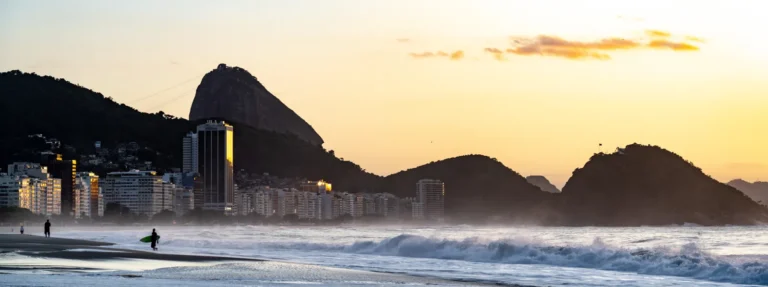
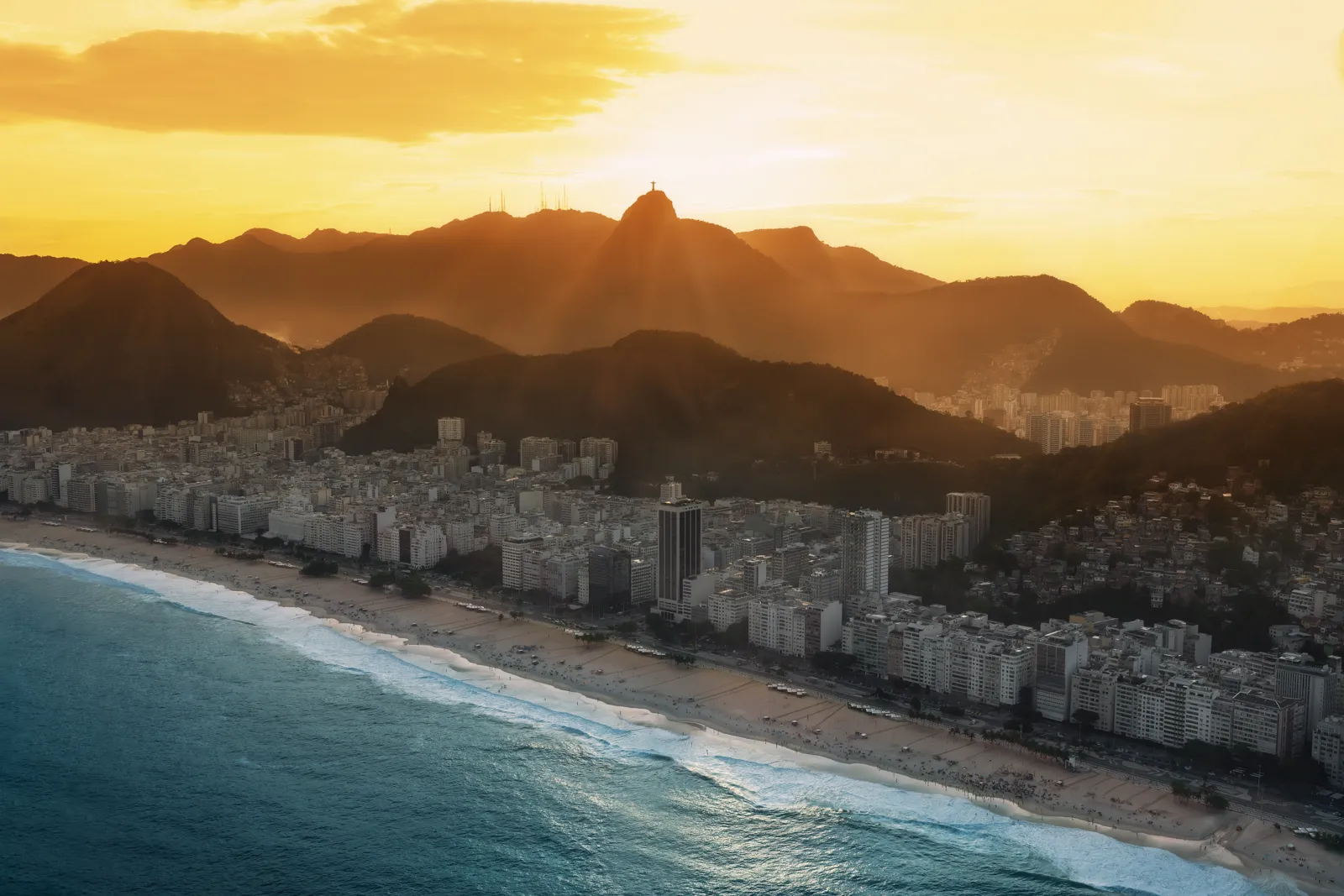
Rio can be visited all year. From April to November, the weather is drier and temperatures moderate (26 to 30 °C (79 to 86 °F) in the afternoon). From December to March, it is hotter and more humid, with thunderstorms, but it is the season for the beach and Carnival.
Salvador and the Bahia coast
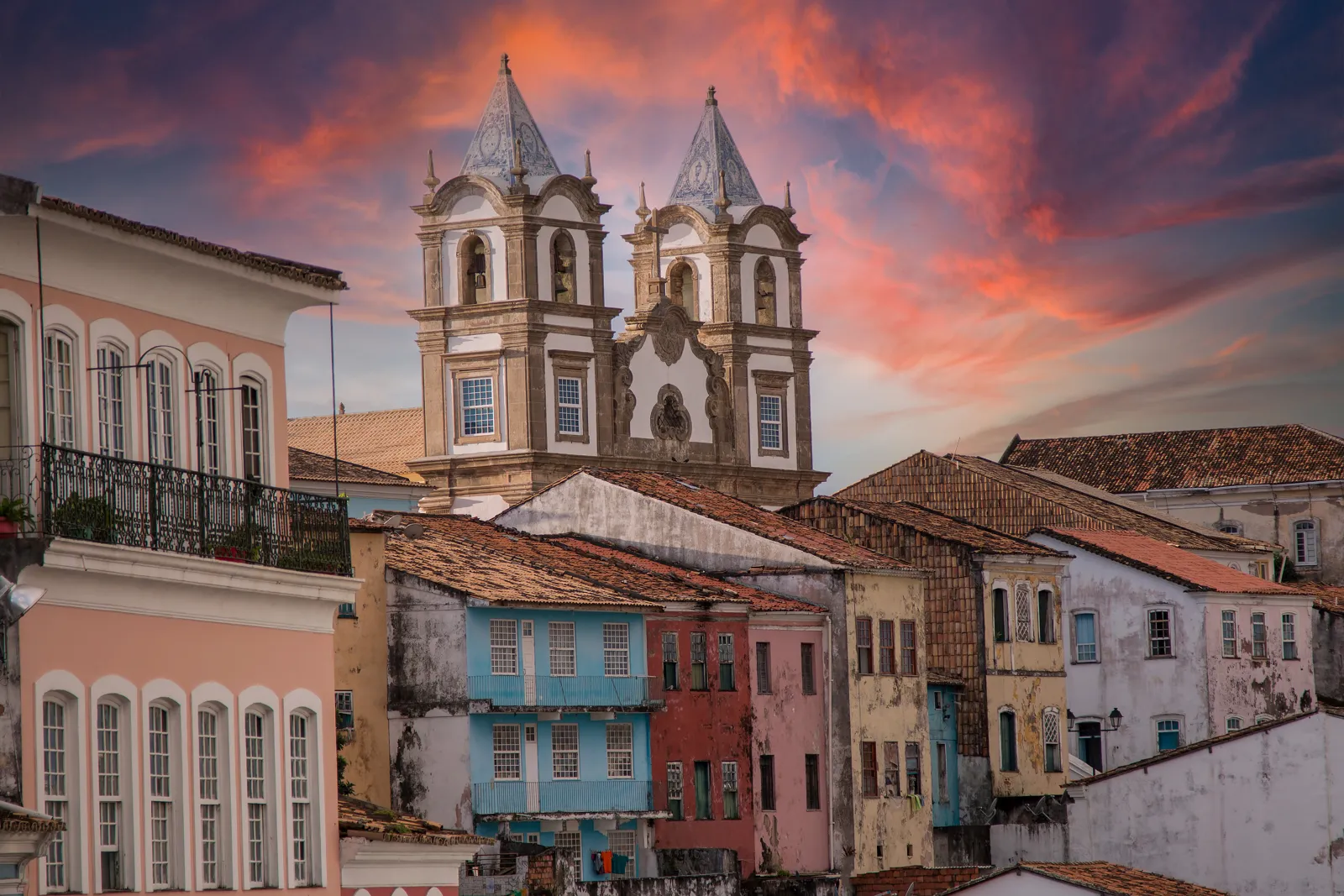
The calendar is offset from Rio’s: September to March is the best period, with less than 110 mm (4.3 in) a month and a dry peak in December–January. From April to July, Salvador receives between 190 and 300 mm (7.5 and 11.8 in) a month. Temperature varies little: 27 to 31 °C (81 to 88 °F) all year.
Fortaleza, Jericoacoara and the northern Northeast
The north coast of the Northeast has one of the most marked dry seasons in the country: from August to December, less than 40 mm (1.6 in) a month falls in Fortaleza, and barely 10 mm (0.4 in) in October–November. The rainy season is concentrated from February to May (385 mm (15.2 in) in April). The lagoons of the Lençóis Maranhenses, farther west, fill up during this rainy season: they are generally most beautiful after the rains, around June to September. Fortaleza and the Lençóis Maranhenses are in the northeast, as our map of Brazil shows. GOV.UK (updated 29 September 2026) gives the rainy season in the north-east of Brazil as April to July.
The Amazon (Manaus)
It is hot and humid all year (31 to 34 °C (88 to 93 °F) in the afternoon, 24 °C (75 °F) at night). The difference is in the rain: from June to October, it stays under 120 mm (4.7 in) a month in Manaus, against more than 290 mm (11.4 in) from January to April. River levels follow with a delay: waters are generally high around June, which allows canoe trips in the flooded forest, and low around October–November, when sand beaches and trails appear.
Iguaçu Falls and the South
In Foz do Iguaçu, it rains all year (from 84 to 220 mm (3.3 to 8.7 in) a month): the falls can be visited in any season. Summer is hot (33 °C (91 °F) in January), winter cool, with nights below 10 °C (50 °F) in July. The flow of the falls depends on rain in the Iguaçu River basin and varies from year to year.

When to go to Brazil by trip type
| Trip | Best time | Where? |
|---|---|---|
| First trip (Rio, Iguaçu, Bahia) | September to November | Rio de Janeiro, Foz do Iguaçu, Salvador |
| Beach in the northern-hemisphere winter (December to March) | December to March | Rio, Salvador, Bahia coast, Florianópolis |
| Beach in July–August | July to September | Fortaleza, Jericoacoara, Rio (cooler water) |
| Carnival | February or early March depending on the year | Rio de Janeiro, Salvador, Recife and Olinda |
| Amazon | June to October (less rain); around June for the flooded forest | Manaus and Rio Negro lodges |
| Pantanal and wildlife viewing | Dry season, roughly May to October | Pantanal (Mato Grosso, Mato Grosso do Sul) |
| Lençóis Maranhenses | Roughly June to September | Barreirinhas, Atins |
| Budget | April–May, August–September (outside holidays) | Rio, Minas Gerais, Iguaçu |
| Honeymoon | September to November | Paraty, Ilha Grande, Bahia coast, Jericoacoara |
Major events to plan your trip around
| Date | Event | Location |
|---|---|---|
| December 31 | Réveillon (New Year’s Eve) on the beach | Copacabana, Rio de Janeiro |
| January | Lavagem do Bonfim (procession and washing of the steps of the Bonfim church) | Salvador |
| February 2 | Festival of Iemanjá, goddess of the sea | Salvador (Rio Vermelho) |
| February 6 to 9, 2027; late February 2028 | Carnival (dates tied to Easter, variable every year) | Rio, Salvador, Recife and Olinda, nationwide |
| June, especially around June 24 | Festas Juninas and São João | Northeast (Caruaru, Campina Grande), nationwide |
| Late June | Parintins folklore festival | Parintins (Amazonas) |
| October | Círio de Nazaré (large religious procession) | Belém |
| October | Oktoberfest | Blumenau (Santa Catarina) |
During Carnival, GOV.UK notes that criminals target large-scale celebrations in major cities: be aware of your personal security and surroundings, keep your belongings close and leave your passport and valuables in a safe place.
Brazil month by month
January: High summer and Brazilian holidays: thunderstorms in Rio, fine weather in Salvador, rain in the Amazon. Very high prices.
February: The hottest month in Rio (32.2 °C (90 °F)) and, in 2027, the month of Carnival. The rains begin in Fortaleza.
March: Still hot and humid in Rio; heavy rain in Fortaleza (337 mm (13.3 in)) and the Amazon.
April: Rio becomes more pleasant. Wettest month in Fortaleza and Manaus; start of the rains in Salvador.
May: A good month for Rio, Minas Gerais and Iguaçu, in the low season. The wettest in Salvador (302 mm (11.9 in)).
June: Mild, dry winter in Rio. Festas Juninas in the Northeast. High water in the Amazon.
July: The driest month in Rio, cool at Iguaçu. Brazilian school holidays.
August: Excellent compromise: dry in Rio, Fortaleza and Manaus. Dry season in the Pantanal.
September: Dry in Rio and Fortaleza, Salvador under 100 mm (3.9 in). Very hot in the Amazon (34 °C (93 °F)).
October: A good month for Bahia and the northern Northeast. The wettest in Foz do Iguaçu (220 mm (8.7 in)).
November: Rising heat and showers in Rio. Very dry in Fortaleza. The last month before the high season.
December: Start of summer: prices at their highest for the holidays. The driest month in Salvador, rainy in Rio and Manaus.
When to book your trip to Brazil
For the year-end holidays, the Copacabana New Year’s Eve and Carnival, book flights and accommodation 5 to 6 months ahead: hotels in Rio and Salvador often show minimum stays and higher rates on these dates. The same logic applies to July, which combines Brazilian and northern-hemisphere summer holidays. The rest of the year, 2 to 3 months is generally enough.
Planning your trip to Brazil
- Entry requirements: see our country guide for the entry requirements for Brazil.
- Time difference: Rio, Salvador and São Paulo are on UTC−3 all year: 3 hours behind London in winter (4 in summer) and 2 hours ahead of New York in winter (1 in summer). Manaus is on UTC−4, one hour behind.
- Currency: the Brazilian real (BRL). Cards are very widely accepted. Use our currency converter to estimate your budget.
To go further, see our complete Brazil travel guide. Still hesitating? See also where to go in July, in August, in November and in January. To combine with a neighboring country, see when to go to Argentina.
Frequently asked questions
What is the best month to visit Brazil?
For a Rio, Iguaçu, Bahia and Northeast circuit, September to November offers the best compromise: fairly dry weather, moderate heat, reasonable prices. August is ideal if the Amazon is on the program.
When is the rainy season in Brazil?
It depends on the region: December to March in Rio and the Southeast, April to July in Salvador, February to May in Fortaleza and December to May in the Amazon. There is therefore no month when it rains everywhere.
When is Carnival in Rio?
Its dates depend on Easter and change every year. In 2027, Carnival runs from Saturday February 6 to Tuesday February 9. In 2028, it falls in late February. Book several months ahead.
Can you visit Brazil in July or August?
Yes. It is austral winter, but it is about 26–27 °C (79–81 °F) in the afternoon in Rio, with little rain. It is also a good time for the Amazon, the Pantanal and Fortaleza; Salvador remains rainy in July.
When is the best time to visit the Amazon?
From June to October, when rain is lowest in Manaus (56 mm (2.2 in) in August against more than 300 mm (11.8 in) in March–April). Waters are generally high around June and low around October–November.
What is the cheapest time to visit Brazil?
April–May and August–September, outside Brazilian holidays (December to February and July), the year-end festivities and Carnival.
What is the climate in Brazil?
Brazil straddles the equator and its seasons are the opposite of those in the northern hemisphere. Rio has a hot, stormy summer (32.2 °C (90 °F) in February) and a mild, dry winter (the driest month is July, with 42 mm (1.7 in)). The Northeast and the Amazon have their own rainy seasons: March–April in Fortaleza and Manaus, April–May in Salvador.
What is the weather like in Brazil in December?
It is the start of the austral summer: hot and rainy in Rio and Manaus, but the driest month in Salvador. Prices are at their highest for the year-end holidays.
Our sources
- Brazil’s National Institute of Meteorology (INMET), Climate normals of Brazil (official files): 1991–2020 for Salvador (Ondina), Fortaleza and Manaus; 1981–2010 (temperatures) and 1961–1990 (precipitation) for Rio de Janeiro; 1961–1990 for Foz do Iguaçu
- Safety information read on 26 October 2026: UK FCDO, foreign travel advice for Brazil (GOV.UK, updated 29 September 2026), and U.S. Department of State, Brazil country information (travel.state.gov, last updated August 6, 2026)
- Government of Bahia, Festa de Iemanjá in Salvador (held on February 2 in Rio Vermelho), checked 11 November 2026
- Our methodology
Updated November 2026.