Bolivia: what the official travel advice says
- Protests and roadblocks: the UK FCDO (GOV.UK, updated 22 September 2026) says protestors may block roads: do not try to cross roadblocks, allow extra time and be ready to change your plans. The U.S. Department of State (travel.state.gov, last updated May 7, 2026) notes that demonstrations occur frequently and advises avoiding areas around protests.
- Rainy season (November to March): according to GOV.UK, floods and landslides are common in mountainous areas and roads can be blocked or impassable for days; travelers may be stranded in high, remote areas, so carry food, water and warm clothing.
- Roads and vehicles: GOV.UK warns that serious accidents can happen on the main tourist routes, that vehicles are often not well maintained and that four-wheel drive vehicles are often needed, especially in the rainy season.
- Altitude: GOV.UK lists altitude sickness as a risk in parts of Bolivia, including La Paz and the Salar de Uyuni.
- The situation can change: check the current advice from your government before booking and during your trip.
The best time to visit Bolivia is the dry season, from May to October: clear skies over the Altiplano, passable roads and accessible tracks in the Southwest Lípez. Less than 13 mm (0.5 in) of rain falls a month in La Paz from May to August, against more than 120 mm (4.7 in) in January. To see the Uyuni salt flat as a mirror, you need on the contrary to aim for the rainy season, generally January to March, and accept more difficult roads.
Bolivia is a land of high plateaus: La Paz spans 3,300 to 3,800 m (10,827 to 12,467 ft), and Uyuni and Lake Titicaca exceed 3,600 m (11,811 ft). Temperatures therefore depend mostly on altitude and time of day: afternoons are mild in the sun, nights cold, even freezing in June–July on the Altiplano. The eastern lowlands (Santa Cruz) and the Amazon (Rurrenabaque) are hot all year. The figures on this page are official normals from the Servicio Nacional de Meteorología e Hidrología (SENAMHI), the Bolivian meteorological service.
When to go to Bolivia at a glance
- Best overall period May to October, dry season on the Altiplano and in the valleys
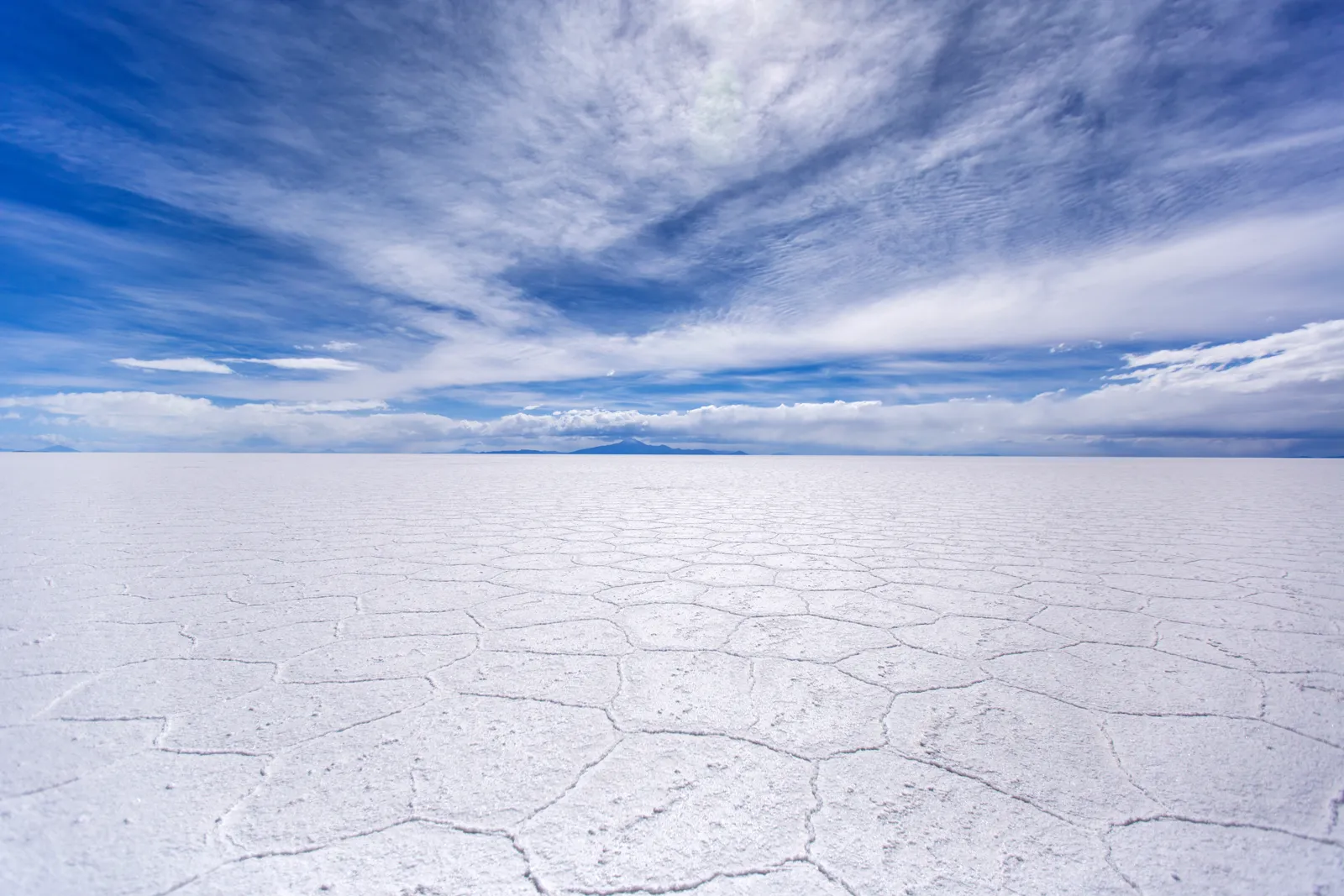
- Uyuni salt flat as a mirror generally January to March, when a thin layer of water covers the salt; some areas and tracks may then be inaccessible
- Coldest months June and July, with nights averaging below −9 °C (16 °F) in Uyuni
- Rainy season December to March on the Altiplano; December to April for the Yungas and the Amazon, with landslides and floods possible
- High season July–August (northern-hemisphere summer holidays) and the Carnival period
- Good compromise April–May and September–October, dry, less cold and less crowded
When to go to Bolivia by priority
- Best weather: May to October, the dry season; January to March for the Uyuni mirror
- Cheapest: April, October and November
- Fewest crowds: April, October and November, outside Todos Santos (early November)
- Events: Alasitas from January 24 in La Paz, Oruro Carnival in February or March, Independence Day in August
September is an excellent compromise in Bolivia: compare with our ideas for traveling in September.

Our travel deals for Bolivia
Affiliate links: we earn a commission, at no extra cost to you.
 FlightsKiwi.comCompare flights and airline combinations to Bolivia.Compare flights
- eSIMSailyAnother eSIM plan to compare: data, validity, network.See Saily plans


Bolivia: the calendar at a glance
✅ Best months: April, may, June, July, August, September, October
Climate and weather in Bolivia month by month
The table below gives the normals for La Paz (Laikakota park station, 3,650 m or 11,975 ft), representative of the Altiplano and Lake Titicaca. The contrast between the rainy season (December to March) and the dry season (May to September) is very sharp there. The other regions are detailed below.
| Month | Avg. max | Avg. min | Rain | Crowds | Prices | Verdict |
|---|---|---|---|---|---|---|
| January | 18.5 °C (65 °F) | 7.4 °C (45 °F) | 126 mm (5.0 in) | Moderate (Alasitas on the 24th) | Moderate | ⚠️ Wettest month, salt flat mirror |
| February | 18.7 °C (66 °F) | 7.3 °C (45 °F) | 81 mm (3.2 in) | High (Carnival in some years) | High at Carnival | ⚠️ Rain, Oruro Carnival |
| March | 18.9 °C (66 °F) | 7.2 °C (45 °F) | 68 mm (2.7 in) | Moderate | Moderate | ⚠️ End of the rains, mirror still possible |
| April | 19.2 °C (67 °F) | 6.3 °C (43 °F) | 27 mm (1.1 in) | Low | Low | ✅ Dry weather returns, few people |
| May | 19.1 °C (66 °F) | 4.6 °C (40 °F) | 9 mm (0.4 in) | Moderate | Moderate | ✅ Dry and sunny |
| June | 17.8 °C (64 °F) | 3.3 °C (38 °F) | 8 mm (0.3 in) | Moderate | Moderate | ✅ Dry but very cold nights |
| July | 17.4 °C (63 °F) | 2.8 °C (37 °F) | 5 mm (0.2 in) | High | High | ✅ Driest and coldest month |
| August | 18.4 °C (65 °F) | 3.7 °C (39 °F) | 12 mm (0.5 in) | High | High | ✅ Dry, wind possible |
| September | 19.0 °C (66 °F) | 4.8 °C (41 °F) | 25 mm (1.0 in) | Moderate | Moderate | ✅ Excellent compromise |
| October | 19.8 °C (68 °F) | 6.2 °C (43 °F) | 38 mm (1.5 in) | Low | Moderate | ✅ Mild, a few showers |
| November | 20.4 °C (69 °F) | 7.0 °C (45 °F) | 44 mm (1.7 in) | Low | Low | ⚠️ Start of the rains |
| December | 20.0 °C (68 °F) | 7.5 °C (46 °F) | 82 mm (3.2 in) | Moderate | Moderate | ⚠️ Rainy season |
These averages hide large swings through the day: afternoons are mild in the sun, while nights in La Paz can fall close to freezing. On the Altiplano, pack full sun protection, mountain-grade sunglasses and warm clothing for the evening, whatever the season.
The seasons in Bolivia: pros and cons
Dry season (May to October): the high season
This is the easiest time to travel. In La Paz, less than 40 mm (1.6 in) of rain falls a month from April to October, and next to nothing in Uyuni from May to November (less than 4 mm (0.2 in) a month). The tracks of the Southwest Lípez, toward the Colorada and Verde lagoons, are passable, and hiking in the Cordillera Real or around Lake Titicaca is done in good conditions.
- Pros: blue skies, accessible roads and tracks, good visibility on the Cordillera peaks, a favorable season for the Amazon (Rurrenabaque is less wet from July to September)
- Cons: very cold nights in June–July (an average minimum of −9.7 °C (15 °F) in July in Uyuni), little or no heating in Southwest Lípez accommodation, crowds in July–August
- Our tip: aim for May or September–October, equally dry, with slightly less harsh nights and fewer people
Rainy season (November to March): the salt flat mirror
The rains arrive gradually in November and peak in January (126 mm (5.0 in) in La Paz, 79 mm (3.1 in) in Uyuni). They often take the form of afternoon thunderstorms. This is the season of the famous mirror effect on the Uyuni salt flat, when a thin film of water reflects the sky.
- Pros: mirror effect on the salt flat, greener landscapes, less cold nights, Oruro Carnival
- Cons: frequent landslides and blocked roads (GOV.UK, updated 22 September 2026), floods in the Amazon (Beni, Pando), some tracks on the salt flat and in Southwest Lípez cut off, risk of getting bogged down
- Who is it for? Photographers who want the Uyuni mirror and travelers who accept a flexible itinerary
When to go to Bolivia by region
With more than 3,000 m (9,843 ft) of difference in altitude between the Altiplano and the eastern plains, each region has its own climate. Comparison of the normals for four towns:
| Month | La Paz (3,650 m / 11,975 ft) | Uyuni (3,680 m / 12,073 ft) | Sucre (2,890 m / 9,482 ft) | Santa Cruz (lowlands) |
|---|---|---|---|---|
| January | 18.5 °C (65 °F) / 7.4 °C (45 °F) / 126 mm (5.0 in) | 20.6 °C (69 °F) / 5.5 °C (42 °F) / 79 mm (3.1 in) | 21.6 °C (71 °F) / 10.6 °C (51 °F) / 148 mm (5.8 in) | 31.1 °C (88 °F) / 22.8 °C (73 °F) / 136 mm (5.4 in) |
| April | 19.2 °C (67 °F) / 6.3 °C (43 °F) / 27 mm (1.1 in) | 18.6 °C (65 °F) / −1.3 °C (30 °F) / 2 mm (0.1 in) | 21.5 °C (71 °F) / 8.8 °C (48 °F) / 28 mm (1.1 in) | 29.4 °C (85 °F) / 20.6 °C (69 °F) / 115 mm (4.5 in) |
| July | 17.4 °C (63 °F) / 2.8 °C (37 °F) / 5 mm (0.2 in) | 13.1 °C (56 °F) / −9.7 °C (15 °F) / 0 mm (0 in) | 20.7 °C (69 °F) / 4.1 °C (39 °F) / 3 mm (0.1 in) | 26.1 °C (79 °F) / 16.1 °C (61 °F) / 53 mm (2.1 in) |
| September | 19.0 °C (66 °F) / 4.8 °C (41 °F) / 25 mm (1.0 in) | 16.5 °C (62 °F) / −5.4 °C (22 °F) / 2 mm (0.1 in) | 22.6 °C (73 °F) / 7.3 °C (45 °F) / 27 mm (1.1 in) | 31.1 °C (88 °F) / 20.0 °C (68 °F) / 52 mm (2.0 in) |
| November | 20.4 °C (69 °F) / 7.0 °C (45 °F) / 44 mm (1.7 in) | 20.6 °C (69 °F) / 0.1 °C (32 °F) / 4 mm (0.2 in) | 23.1 °C (74 °F) / 10.0 °C (50 °F) / 66 mm (2.6 in) | 31.7 °C (89 °F) / 22.2 °C (72 °F) / 104 mm (4.1 in) |
La Paz and Lake Titicaca
On the lake shore, in Copacabana (3,815 m or 12,516 ft), afternoons hover around 13 to 16 °C (55 to 61 °F) all year, and the rainy season is marked from December to March (185 mm (7.3 in) in January). The best window for Isla del Sol and lake hikes runs from April to October. Boat crossings can run late: allow some margin.
Uyuni and Southwest Lípez
The Uyuni salt flat, the largest salt desert in the world, has two faces. In the dry season (April to November), the white, cracked crust is easy to cross, and the three-day tours to the lagoons of Southwest Lípez are accessible; nights are however freezing from May to August. In the rainy season (mostly January to March), water creates the mirror effect, but some areas become inaccessible. Book with a reputable agency and check the condition of the vehicle, as GOV.UK warns that vehicles are often not well maintained.
Sucre, Potosí and Cochabamba
The valleys are milder than the Altiplano. In Sucre, it is 21 to 23 °C (70 to 73 °F) in the afternoon all year; the dry season runs from April to October there, with less than 10 mm (0.4 in) of rain from May to August. Cochabamba (2,548 m or 8,360 ft), nicknamed the city of eternal spring, follows the same rhythm. Potosí, above 4,000 m (13,123 ft), is markedly colder.
Santa Cruz and the eastern lowlands
Tropical climate: 26 to 32 °C (79 to 90 °F) in the afternoon and rain present all year, heavier from November to April (more than 100 mm (3.9 in) a month). The months of June to September are drier and cooler, ideal for Samaipata and the Jesuit missions of Chiquitos. Cold snaps from the south can drop temperatures for a few days in the austral winter.
The Amazon (Rurrenabaque, Madidi park)
It rains a lot from November to April (more than 300 mm (11.8 in) in January–February in Rurrenabaque), with frequent floods in the Beni. Prefer June to September (less than 90 mm (3.5 in) a month in July–August), when trails are more passable and wildlife is easier to see around water points. Travel with a reputable operator.
Which region by month?
Altitude is everything: the Altiplano is dry from May to October, while the lowlands and the Amazon stay warm and wetter.
| Region | Jan | Feb | Mar | Apr | May | Jun | Jul | Aug | Sep | Oct | Nov | Dec |
|---|---|---|---|---|---|---|---|---|---|---|---|---|
| La Paz, Altiplano and Lake Titicaca | ⚠️ | ⚠️ | ⚠️ | ✅ | ✅ | ✅ | ✅ | ✅ | ✅ | ✅ | ⚠️ | ⚠️ |
| Uyuni salt flat and Southwest Lípez (mirror January to March) | ⚠️ | ⚠️ | ⚠️ | ✅ | ✅ | ✅ | ✅ | ✅ | ✅ | ✅ | ✅ | ⚠️ |
| Sucre, Potosí and Cochabamba | ⚠️ | ⚠️ | ⚠️ | ✅ | ✅ | ✅ | ✅ | ✅ | ✅ | ✅ | ⚠️ | ⚠️ |
| Santa Cruz and eastern lowlands | ⚠️ | ⚠️ | ⚠️ | ⚠️ | ⚠️ | ✅ | ✅ | ✅ | ✅ | ⚠️ | ⚠️ | ⚠️ |
| Amazon (Rurrenabaque, Madidi) | ❌ | ❌ | ❌ | ❌ | ⚠️ | ✅ | ✅ | ✅ | ✅ | ⚠️ | ❌ | ❌ |
✅ recommended period, ⚠️ possible with reservations, ❌ not very favorable. A summary of the normals and the detailed recommendations on this page.
When to go to Bolivia by trip type
| Trip | Best time | Where? |
|---|---|---|
| Uyuni salt flat as a mirror | January to March (depending on rainfall) | Uyuni |
| Salt flat and lagoons of Southwest Lípez | April to November (very cold nights from May to August) | Uyuni, Southwest Lípez |
| Lake Titicaca and the Altiplano | April to October | Copacabana, Isla del Sol, La Paz |
| Trekking and mountaineering | May to September | Cordillera Real, Condoriri, Huayna Potosí |
| Amazon | June to September | Rurrenabaque, Madidi park |
| Colonial cities | April to October | Sucre, Potosí |
| Carnival | February or March (dates vary) | Oruro |
| Budget | April, October–November | All over the Altiplano |
Major events to plan your trip around
| Date | Event | Location |
|---|---|---|
| January 24 and following days | Alasitas, miniatures fair | La Paz |
| February or March (dates vary) | Oruro Carnival, with its great diablada | Oruro |
| May or June (dates vary) | Gran Poder festival, a large dance parade | La Paz |
| Around the June solstice | Andean-Amazonian New Year (Willkakuti) | Tiwanaku and nationwide |
| Early August | Independence Day | Nationwide |
| Mid-August | Festival of the Virgin of Urkupiña | Quillacollo (near Cochabamba) |
| Early November | Todos Santos (All Saints, day of the dead) | Nationwide |
Bolivia month by month
January: The wettest month on the Altiplano (126 mm (5.0 in) in La Paz). Start of the period favorable to the mirror effect on the Uyuni salt flat. Alasitas in La Paz from the 24th.
February: Rain is still frequent, roads sometimes cut. Oruro Carnival takes place in February or March depending on the year: book very early.
March: The rains ease (68 mm (2.7 in) in La Paz). The Uyuni mirror often remains visible. A good month to combine the salt flat and the Altiplano.
April: Dry weather returns (27 mm (1.1 in) in La Paz), nights still bearable, few tourists. A very good month.
May: Dry and sunny everywhere on the Altiplano, nights become cold in Uyuni. Start of the best trekking season.
June: Blue skies, but very cold nights. Andean New Year around the solstice at Tiwanaku. Drier in the Amazon and Santa Cruz.
July: The driest month (5 mm (0.2 in) in La Paz) and the coldest (an average minimum of −9.7 °C (15 °F) in Uyuni). High season: book early.
August: Still dry, wind possible on the Altiplano. Independence Day in early August and the Urkupiña festival in mid-August. Heavy crowds.
September: Excellent compromise: dry, a little less cold, fewer people. A very good time for the Amazon.
October: Mild weather and a few showers (38 mm (1.5 in) in La Paz). Dry salt flat and accessible lagoons, crowds falling.
November: Start of the rains on the Altiplano, still very dry in Uyuni (4 mm (0.2 in)). Todos Santos in early November.
December: The rainy season is established (82 mm (3.2 in) in La Paz), afternoon thunderstorms. The salt flat may start to fill with water late in the month, depending on the year.
When to book your trip to Bolivia
For July–August and Oruro Carnival, book flights and accommodation 3 to 5 months ahead; hotels in Oruro are stormed during Carnival. Outside these periods, 2 to 3 months is generally enough. For Southwest Lípez, book your tour with a recognized agency, checking the condition of the vehicles. La Paz, Santa Cruz and Southwest Lípez can be located on our map of Bolivia.
Planning your trip to Bolivia
- Entry requirements: see our country guide for the entry requirements for Bolivia.
- Time difference: Bolivia is on UTC−4 all year: 4 hours behind London in winter (5 in summer), and 1 hour ahead of New York in winter (same time in summer).
- Currency: the boliviano (BOB).
- Altitude: allow time to acclimatize gradually; GOV.UK lists altitude sickness as a risk in La Paz and the Salar de Uyuni (updated 22 September 2026).
To build your itinerary, see our Bolivia travel guide. Combining with a neighboring country? See also when to go to Peru.
Also worth reading: when to go to Ecuador and travel to Chile, to extend a trip through the Andes.
Frequently asked questions
What is the best month to visit Bolivia?
May, September and October offer the best balance: dry season, clear skies, nights less cold than in June–July and moderate crowds. July and August are also very dry, but colder and busier.
When can you see the Uyuni salt flat as a mirror?
During the rainy season, generally January to March, when a thin layer of water covers the salt. The effect depends on the year’s rainfall, and some tracks may be cut: ask your agency before booking.
Is Bolivia cold?
On the Altiplano, yes at night: the average minimum falls to 2.8 °C (37 °F) in July in La Paz and to −9.7 °C (15 °F) in Uyuni. Afternoons remain mild in the sun (17 to 20 °C (63 to 68 °F) in La Paz). The Santa Cruz lowlands and the Amazon are hot all year.
When is the rainy season in Bolivia?
On the Altiplano, from December to March, with a peak in January. In the Yungas and the Amazon, from about December to April, with landslides and floods possible.
Can you visit Bolivia in the rainy season?
Yes, notably for the Uyuni mirror or Oruro Carnival. Build margins into your itinerary: cut roads, delays and roadblocks are more frequent in this season.
What should you watch out for when traveling in Bolivia?
According to the UK FCDO (GOV.UK, updated 22 September 2026), protestors may block roads and you should not try to cross roadblocks; the U.S. Department of State (travel.state.gov, last updated May 7, 2026) notes that demonstrations occur frequently. Check your government’s current advice, including for specific regions, before you go.
What is the weather like in Bolivia in August?
It is the dry season: 12 mm (0.5 in) of rain on average in La Paz, 18.4 °C (65 °F) in the afternoon and 3.7 °C (39 °F) at night, with possible wind on the Altiplano. Nights are very cold in Southwest Lípez. August is also a busy month, with Independence Day in early August.
What is the climate of Bolivia?
It depends mostly on altitude: on the Altiplano (La Paz, Titicaca, Uyuni), mild days around 17 to 20 °C (63 to 68 °F) and cold nights, with a dry season from May to October; in the eastern lowlands and the Amazon, humid heat and rain concentrated from November to March.
Our sources
- Servicio Nacional de Meteorología e Hidrología de Bolivia (SENAMHI): 1981–2010 normals for La Paz (Laikakota), Uyuni and Copacabana, 1991–2020 for Santa Cruz (El Trompillo), normals for Sucre and Rurrenabaque
- Safety and health information read on 26 October 2026: UK FCDO, foreign travel advice for Bolivia (GOV.UK, updated 22 September 2026), and U.S. Department of State, Bolivia country information (travel.state.gov, last updated May 7, 2026)
- UNESCO, Alasitas (intangible cultural heritage; the rituals begin on 24 January), checked 11 November 2026
- Our methodology
Updated November 2026.