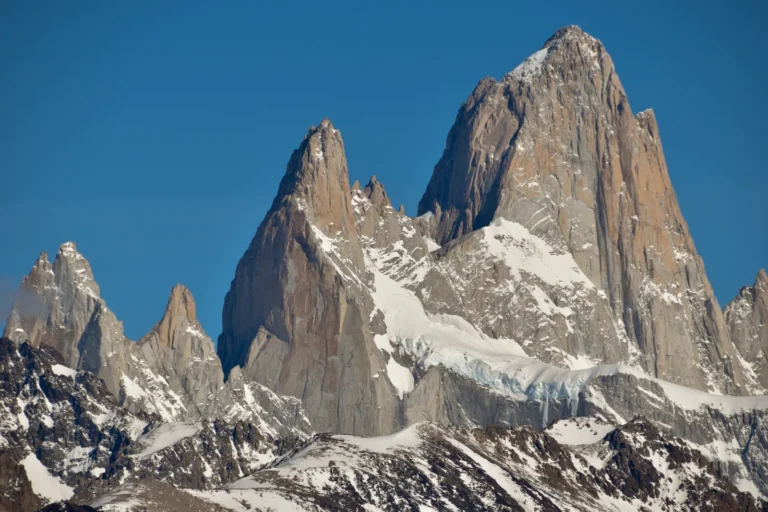
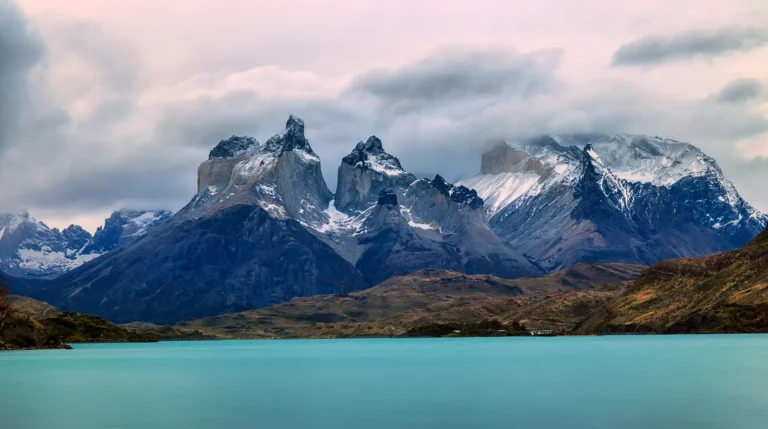
When is the best time to visit Chile? For a trip combining the Atacama Desert, Santiago and Patagonia, the best period runs from October–November to March–April, during the southern spring and summer. It is the only season when Patagonia (Torres del Paine, Punta Arenas) is fully accessible. The very dry Atacama can be visited all year; Santiago and the central valley are pleasant in spring (October–November) and autumn (March–April), when the dry heat of January eases. South of the central valley, the far south is planned separately: our Patagonia travel guide covers glaciers, itineraries and access.
The seasons are reversed compared with the Northern Hemisphere. Chile stretches more than 4,000 km (2,485 mi) from north to south, with an average width of barely 180 km (112 mi): you go from the driest desert in the world to a rainy, forested coast, then to the glaciers and windswept steppes of Patagonia. This guide is based on the official climate normals of the Dirección Meteorológica de Chile (DMC), the Chilean weather service.

Our travel deals for Chile
Affiliate links: we earn a commission, at no extra cost to you.
 FlightsKiwi.comCompare flights and airline combinations to Chile.Compare flights
- eSIMSailyAnother eSIM plan to compare: data, validity, network.See Saily plans


When to go to Chile at a glance
- Best period for a full circuit November to March, with October and April as shoulder seasons
- Patagonia (Torres del Paine, Punta Arenas) November to March; in winter it freezes and some services close
- Atacama Desert all year, cold nights in winter (June–August); summer storms can reach the altiplano in January–February
- Santiago and the central valley October–November and March–April; summer is hot and dry (average high of 30.4 °C (87 °F) in January)
- Lake District and Chiloé December to March, the least rainy season
- Skiing in the Andes the southern winter, roughly from June–July to September depending on snow
- Busy periods January–February (Chilean summer holidays), the July winter holidays and the national holidays on September 18 and 19
When to go to Chile by priority
- Best weather: November to March for a full circuit including Patagonia; October–November and March–April for Santiago; the Atacama all year
- Cheapest: May, June and August, outside the July winter holidays
- Fewest crowds: November, before the Chilean summer holidays, and March–April, after they end
- Events: Tapati festival on Easter Island in early February, grape harvest in March–April, La Tirana festival around July 16, national holidays on September 18 and 19
Chile: the calendar at a glance
✅ Best months: January, February, March, April, October, November, December
Climate in Santiago month by month
The table below gives the normals for Santiago, the arrival point for most trips. The verdict takes the whole country into account, in particular access to Patagonia.
| Month | Avg. max | Avg. min | Rain | Crowds | Prices | Verdict |
|---|---|---|---|---|---|---|
| January | 30.4 °C (87 °F) | 13.6 °C (56 °F) | 0.6 mm (0.02 in) | High (summer holidays) | High | Peak season in Patagonia, hot and dry in Santiago ✅ |
| February | 29.7 °C (85 °F) | 13.0 °C (55 °F) | 1.3 mm (0.05 in) | High (summer holidays) | High | Patagonia; grape harvest starts late in the month ✅ |
| March | 27.9 °C (82 °F) | 11.5 °C (53 °F) | 4.1 mm (0.2 in) | Moderate | Moderate | Very good month everywhere, grape harvest ✅ |
| April | 23.3 °C (74 °F) | 8.8 °C (48 °F) | 17.5 mm (0.7 in) | Low to moderate | Moderate | Autumn colors, end of the season in Patagonia ✅ |
| May | 19.2 °C (67 °F) | 6.6 °C (44 °F) | 42.6 mm (1.7 in) | Low | Low | Good for the Atacama, Patagonia closing down ⚠️ |
| June | 16.0 °C (61 °F) | 4.7 °C (40 °F) | 80.4 mm (3.2 in) | Low | Low | Wettest month in Santiago, start of skiing ⚠️ |
| July | 15.7 °C (60 °F) | 3.8 °C (39 °F) | 50.4 mm (2.0 in) | Moderate (winter holidays) | Moderate | Skiing, freezing nights in the desert ⚠️ |
| August | 17.6 °C (64 °F) | 4.9 °C (41 °F) | 44.1 mm (1.7 in) | Low | Low | Skiing, dry Atacama, cold and damp south ⚠️ |
| September | 20.1 °C (68 °F) | 6.8 °C (44 °F) | 25.3 mm (1.0 in) | High around the 18th | Moderate to high | National holidays, spring arriving ⚠️ |
| October | 23.1 °C (74 °F) | 8.5 °C (47 °F) | 12.1 mm (0.5 in) | Moderate | Moderate | Pleasant spring, Patagonia reopening ✅ |
| November | 26.6 °C (80 °F) | 10.4 °C (51 °F) | 4.9 mm (0.2 in) | Moderate | Moderate | Excellent compromise, few crowds ✅ |
| December | 29.0 °C (84 °F) | 12.2 °C (54 °F) | 3.0 mm (0.1 in) | High (holidays) | High | Summer, Patagonia in season ✅ |
Santiago has a Mediterranean-type climate: about three-quarters of the rain falls between May and August, and summer is almost totally dry (less than 2 mm (0.08 in) in January–February). The gap between day and night is large in every season: bring a warm layer for the evenings, even in summer.
The seasons in Chile: pros and cons
Southern summer (December to February): the Patagonia season
This is the best season for the south: at Punta Arenas it is about 16 °C (61 °F) in the afternoon in January, with very long days. The Torres del Paine trails, the boats to the glaciers and the Carretera Austral operate fully. In the Lake District (Puerto Montt) it is also the least rainy period (77 mm (3.0 in) in January against more than 200 mm (7.9 in) in June). Santiago is hot and dry, and Easter Island is at its warmest (27 °C (81 °F) in the afternoon).
- Pros: Patagonia, the lakes and Chiloé at their best, long days, all excursions open
- Cons: peak season and Chilean summer holidays, Torres del Paine refuges and hotels full very early, often violent wind in Patagonia, dry heat in Santiago
- Who is it for? Hikers and everyone for whom Patagonia is a priority
Southern autumn (March to May): the ideal shoulder season
March and April are among the best months for combining regions: Santiago is mild again (23.3 °C (74 °F) in the afternoon in April), the wine valleys are in the thick of the harvest, the Atacama stays dry and Patagonia is covered in autumn colors, with fewer visitors. The UK FCDO (GOV.UK, updated 9 October 2026) advises following SENAPRED, Chile’s national disaster prevention service, for heavy-rain warnings that can affect road travel. In May, the south turns cold and many services there close.
- Pros: pleasant temperatures in the center, grape harvest, falling crowds and prices after the summer holidays
- Cons: days shortening quickly in the south, progressive closures in Patagonia, first rains in the Lake District
- Who is it for? An Atacama – Santiago – wine valleys circuit, with Patagonia in March or early April
Southern winter (June to August): skiing and desert
Winter is cool in Santiago (15.7 °C (60 °F) in the afternoon in July) and it is the rainy season in the center and the south: Valparaíso receives 106 mm (4.2 in) in June, Puerto Montt more than 200 mm (7.9 in). At Punta Arenas, the average high falls to around 5 °C (41 °F) and lows are below freezing. The desert stays dry (less than 1.5 mm (0.06 in) a month at Calama), but nights are cold, around 0 °C (32 °F) at Calama and much colder at altitude. It is the skiing season in the resorts near Santiago.
- Pros: skiing in the Andes, sunny and quiet Atacama, low prices outside the July holidays
- Cons: Patagonia hard to reach, rain in the center and the south; between June and September, winter weather sometimes temporarily closes the Chile–Argentina border crossings high in the Andes, including Los Libertadores between Santiago and Mendoza (UK FCDO, GOV.UK, updated 9 October 2026)
- Who is it for? Skiers, and July–August travelers who focus on the north and Santiago
Southern spring (September to November): nature wakes up
Spring brings mild weather back to Santiago (23.1 °C (74 °F) in October, 26.6 °C (80 °F) in November) and Patagonia reopens gradually from October. September is marked by the national holidays on September 18 and 19 (« Fiestas Patrias »), when Chileans travel a lot.
- Pros: good balance in November, moderate prices, few people early in the season in the south
- Cons: the south stays cold and windy in September–October, busy transport and accommodation around September 18
- Who is it for? A first trip in November
When to go to Chile by region
Here is a comparison of the normals from six stations, from the northern desert to Tierra del Fuego and the Pacific:
| Month | Calama (Atacama) | Santiago | Valparaíso | Puerto Montt | Punta Arenas | Easter Island |
|---|---|---|---|---|---|---|
| January | 24.8 °C (77 °F) / 0.4 mm (0.02 in) | 30.4 °C (87 °F) / 0.6 mm (0.02 in) | 21.9 °C (71 °F) / 0.2 mm (0.008 in) | 20.0 °C (68 °F) / 77 mm (3.0 in) | 16.3 °C (61 °F) / 38 mm (1.5 in) | 26.9 °C (80 °F) / 81 mm (3.2 in) |
| February | 24.7 °C (76 °F) / 1.4 mm (0.06 in) | 29.7 °C (85 °F) / 1.3 mm (0.05 in) | 22.2 °C (72 °F) / 1.2 mm (0.05 in) | 19.9 °C (68 °F) / 69 mm (2.7 in) | 16.1 °C (61 °F) / 32 mm (1.3 in) | 27.5 °C (82 °F) / 69 mm (2.7 in) |
| March | 24.3 °C (76 °F) / 0.8 mm (0.03 in) | 27.9 °C (82 °F) / 4.1 mm (0.2 in) | 21.9 °C (71 °F) / 2.8 mm (0.1 in) | 18.1 °C (65 °F) / 99 mm (3.9 in) | 15.4 °C (60 °F) / 43 mm (1.7 in) | 26.9 °C (80 °F) / 87 mm (3.4 in) |
| April | 23.6 °C (74 °F) / 0.2 mm (0.008 in) | 23.3 °C (74 °F) / 17.5 mm (0.7 in) | 19.8 °C (68 °F) / 14.9 mm (0.6 in) | 15.1 °C (59 °F) / 142 mm (5.6 in) | 12.1 °C (54 °F) / 45 mm (1.8 in) | 25.5 °C (78 °F) / 123 mm (4.8 in) |
| May | 22.3 °C (72 °F) / 1.3 mm (0.05 in) | 19.2 °C (67 °F) / 42.6 mm (1.7 in) | 18.5 °C (65 °F) / 66 mm (2.6 in) | 12.9 °C (55 °F) / 181 mm (7.1 in) | 8.8 °C (48 °F) / 37 mm (1.5 in) | 23.4 °C (74 °F) / 117 mm (4.6 in) |
| June | 21.4 °C (71 °F) / 0.6 mm (0.02 in) | 16.0 °C (61 °F) / 80.4 mm (3.2 in) | 17.1 °C (63 °F) / 106 mm (4.2 in) | 10.5 °C (51 °F) / 213 mm (8.4 in) | 5.5 °C (42 °F) / 31 mm (1.2 in) | 21.9 °C (71 °F) / 109 mm (4.3 in) |
| July | 21.1 °C (70 °F) / 1.0 mm (0.04 in) | 15.7 °C (60 °F) / 50.4 mm (2.0 in) | 16.3 °C (61 °F) / 67 mm (2.6 in) | 10.2 °C (50 °F) / 177 mm (7.0 in) | 4.9 °C (41 °F) / 31 mm (1.2 in) | 21.2 °C (70 °F) / 113 mm (4.4 in) |
| August | 22.4 °C (72 °F) / 0.8 mm (0.03 in) | 17.6 °C (64 °F) / 44.1 mm (1.7 in) | 17.3 °C (63 °F) / 61 mm (2.4 in) | 11.2 °C (52 °F) / 175 mm (6.9 in) | 7.0 °C (45 °F) / 30 mm (1.2 in) | 21.2 °C (70 °F) / 97 mm (3.8 in) |
| September | 23.4 °C (74 °F) / 0.1 mm (0.004 in) | 20.1 °C (68 °F) / 25.3 mm (1.0 in) | 17.3 °C (63 °F) / 25 mm (1.0 in) | 12.9 °C (55 °F) / 116 mm (4.6 in) | 10.2 °C (50 °F) / 25 mm (1.0 in) | 21.6 °C (71 °F) / 97 mm (3.8 in) |
| October | 24.3 °C (76 °F) / 0 mm (0.0 in) | 23.1 °C (74 °F) / 12.1 mm (0.5 in) | 19.0 °C (66 °F) / 12.7 mm (0.5 in) | 14.5 °C (58 °F) / 121 mm (4.8 in) | 12.9 °C (55 °F) / 25 mm (1.0 in) | 22.5 °C (73 °F) / 91 mm (3.6 in) |
| November | 24.8 °C (77 °F) / 0 mm (0.0 in) | 26.6 °C (80 °F) / 4.9 mm (0.2 in) | 20.0 °C (68 °F) / 3.8 mm (0.1 in) | 16.5 °C (62 °F) / 102 mm (4.0 in) | 14.2 °C (58 °F) / 23 mm (0.9 in) | 23.8 °C (75 °F) / 75 mm (3.0 in) |
| December | 25.0 °C (77 °F) / 0 mm (0.0 in) | 29.0 °C (84 °F) / 3.0 mm (0.1 in) | 21.5 °C (71 °F) / 2.5 mm (0.10 in) | 18.5 °C (65 °F) / 93 mm (3.7 in) | 15.2 °C (59 °F) / 32 mm (1.3 in) | 25.5 °C (78 °F) / 70 mm (2.8 in) |
The Atacama Desert and the Far North
Northern Chile is one of the driest regions in the world: at Calama, the gateway to San Pedro de Atacama, no more than 1.4 mm (0.06 in) of rain falls in the wettest month. It is mild all year in the afternoon (21 to 25 °C (70 to 77 °F)) but nights are cold, especially from May to September (lows close to 0 °C (32 °F) at Calama, below freezing at altitude, at the El Tatio geysers or on the altiplano). The desert can therefore be visited all year. In January–February, summer storms can reach the Andean highlands and disrupt some high-altitude excursions. The dry northern nights also make it a great stargazing region, notably in the Elqui Valley.
Santiago, Valparaíso and the central valley
Mediterranean climate: hot, dry summers and mild, damp winters. Valparaíso, on the Pacific, is noticeably cooler than the capital in summer (21.9 °C (71 °F) in the afternoon in January against 30.4 °C (87 °F) in Santiago). The best periods are October–November and March–April, with the grape harvest in the Casablanca, Maipo or Colchagua valleys in late summer and autumn.
The Lake District, Pucón and Chiloé
Lakes, volcanoes and wet forests: this is one of the rainiest regions of the country. At Puerto Montt, roughly 100 mm (3.9 in) or more falls each month from March to November, peaking in June (213 mm (8.4 in)). Aim for December to March, the driest and mildest period (around 20 °C (68 °F) in the afternoon), for hikes around Pucón and Villarrica volcano, the lakes route and the island of Chiloé. Puerto Montt, Pucón and Chiloé are in the south of our map of Chile.
Chilean Patagonia (Torres del Paine, Punta Arenas, Carretera Austral)
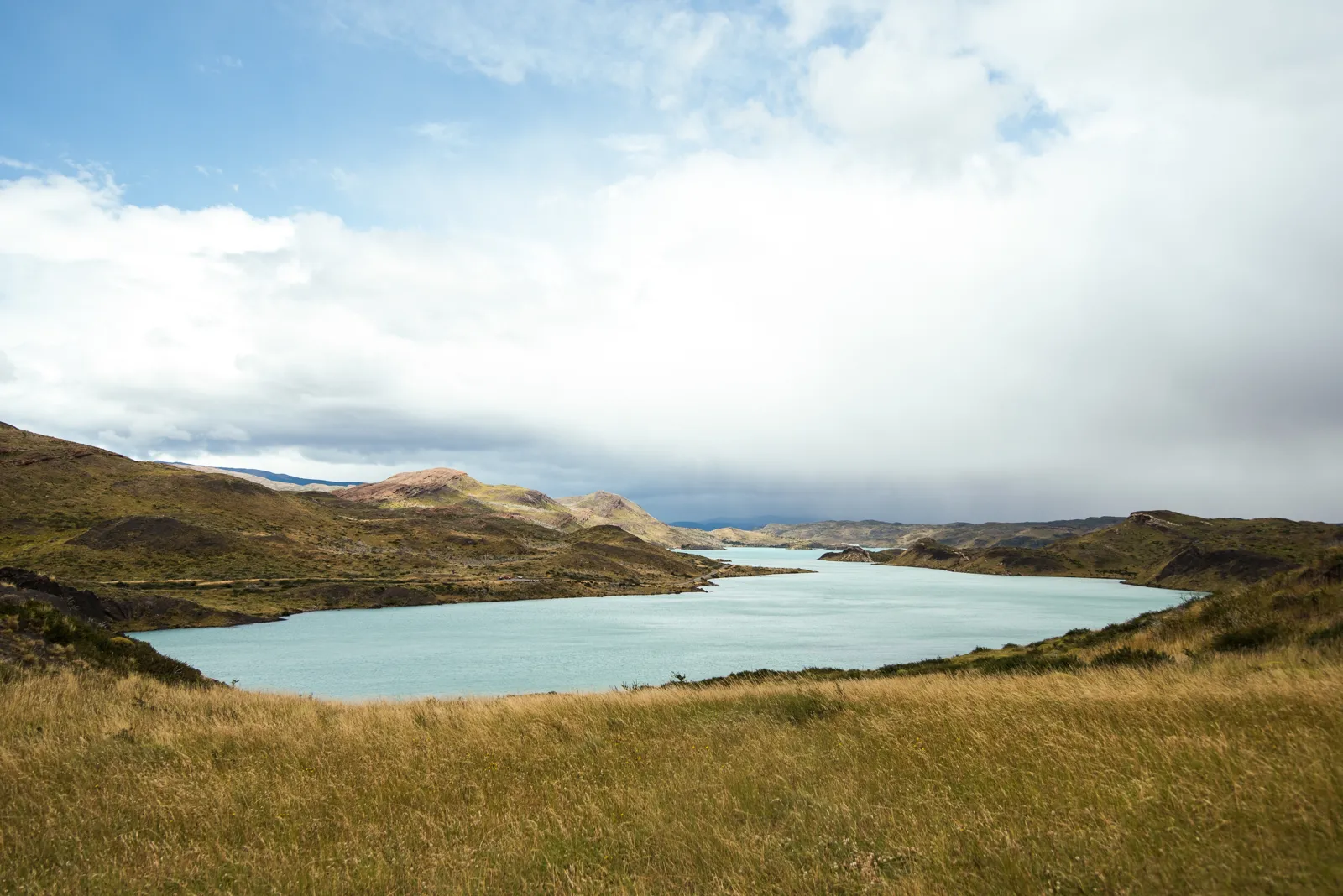
The far south is cool all year: even in January, the average high does not exceed 16.3 °C (61 °F) at Punta Arenas. The wind, often very strong, makes the cold feel sharper. The tourist season runs roughly from November to March, with October and April as shoulder seasons. In winter (June to August), highs are around 5 °C (41 °F), days are very short and some accommodation and services close.
Easter Island (Rapa Nui)
Located more than 3,500 km (2,175 mi) from the coast, the island has a mild subtropical climate all year: 21 to 27 °C (70 to 81 °F) in the afternoon depending on the season. It rains in every season, a little more from April to July (more than 100 mm (3.9 in) a month). The southern summer (December to March) is the warmest and most in-demand period, notably during the Tapati festival, usually held in early February. Entry to the island has additional requirements: see our entry requirements for Chile.
Region-by-region summary: the right month depending on the part of the country you are visiting.
| Month | Atacama Desert | Santiago and central valley | Lakes and Chiloé | Patagonia | Easter Island |
|---|---|---|---|---|---|
| January | ⚠️ Storms on the altiplano | ⚠️ Hot and dry (30 °C (86 °F)) | ✅ Least rainy season | ✅ Peak season | ✅ Warm |
| February | ⚠️ Storms on the altiplano | ⚠️ Hot and dry | ✅ Least rainy season | ✅ Peak season | ✅ Warm, Tapati festival |
| March | ✅ Dry | ✅ Pleasant, grape harvest | ✅ Still fine | ✅ Fewer crowds | ✅ Warm |
| April | ✅ Dry | ✅ Mild, grape harvest | ⚠️ Rain increasing | ⚠️ End of the season | ⚠️ A little more rain |
| May | ✅ Dry | ⚠️ Rain returns | ❌ Very wet | ❌ Services closed | ⚠️ A little more rain |
| June | ⚠️ Freezing nights | ⚠️ Wettest | ❌ Wettest | ❌ Winter | ⚠️ A little more rain |
| July | ⚠️ Freezing nights | ⚠️ Coolest | ❌ Very wet | ❌ Winter | ⚠️ A little more rain |
| August | ⚠️ Freezing nights | ⚠️ Cool | ❌ Very wet | ❌ Winter | ✅ Mild |
| September | ✅ Dry | ⚠️ Spring, national holidays | ⚠️ Wet | ❌ Cold, windy | ✅ Mild |
| October | ✅ Dry | ✅ Spring | ⚠️ Wet | ⚠️ Reopening | ✅ Mild |
| November | ✅ Dry | ✅ Excellent | ⚠️ Wet | ✅ Season under way | ✅ Mild |
| December | ✅ Dry | ⚠️ Hot | ✅ Least rainy season | ✅ Peak season | ✅ Warm |
✅ favorable conditions, ⚠️ possible with reservations, ❌ to avoid. Summary based on the normals cited on this page and the regional advice above.
When to go to Chile by trip type
| Trip | Best time | Where? |
|---|---|---|
| First trip (desert, capital, Patagonia) | November or March | San Pedro de Atacama, Santiago, Torres del Paine |
| Hiking in Patagonia | December to March (November and April as shoulder seasons) | Torres del Paine, Carretera Austral |
| Atacama Desert | All year (very cold nights in winter) | San Pedro de Atacama, Moon Valley, El Tatio geysers |
| Stargazing | All year, moonless nights preferably | Elqui Valley, San Pedro de Atacama |
| Wine and grape harvest | March–April | Casablanca, Maipo, Colchagua |
| Lakes and volcanoes | December to March | Pucón, Puerto Varas, Chiloé |
| Easter Island | All year, warmest from December to March | Rapa Nui |
| Skiing | July to September roughly, depending on snow | Resorts near Santiago |
| Trip in July–August | July–August | Atacama, Santiago, skiing |
Major events in Chile
| Period | Event | Location |
|---|---|---|
| January–February | Chilean summer holidays (heavy crowds in the south and on the coast) | Nationwide |
| Early February (dates vary) | Tapati Rapa Nui festival | Easter Island |
| March–April | Grape harvest and wine festivals (« Fiestas de la Vendimia ») | Wine valleys, including Colchagua |
| March or April (dates vary) | Holy Week | Nationwide |
| Around July 16 | La Tirana festival (dances and costumes) | La Tirana, Tarapacá region |
| July | Winter holidays (crowds in the ski resorts) | Central Andes |
| September 18 and 19 | National holidays (« Fiestas Patrias ») | Nationwide |
Chile month by month: what to expect
Chile in January: Midsummer: peak season in Patagonia and the Lake District, Chilean holidays. Hot and dry in Santiago (30.4 °C (87 °F)). Storms possible on the altiplano.
Chile in February: Still peak season in the south. Tapati festival on Easter Island, start of the grape harvest late in the month.
Chile in March: One of the best months: grape harvest, Patagonia still accessible, Santiago more pleasant (27.9 °C (82 °F)), crowds falling.
Chile in April: Autumn colors in the south and the vineyards, 23.3 °C (74 °F) in Santiago. Last weeks of the season in Patagonia. Watch out for Holy Week.
Chile in May: A good month for the Atacama and Santiago. Rain returns in the center (42.6 mm (1.7 in) in Santiago) and the south closes down.
Chile in June: The wettest month in Santiago (80.4 mm (3.2 in)) and Puerto Montt (213 mm (8.4 in)). Desert dry but nights cold. Low prices.
Chile in July: The coolest month in Santiago (15.7 °C (60 °F)). Ski season and Chilean winter holidays. La Tirana festival in the north.
Chile in August: Skiing, sunny Atacama. Cold, damp south. A quiet, inexpensive month outside the resorts.
Chile in September: Spring arrives (20.1 °C (68 °F) in Santiago). National holidays on the 18th and 19th: busy transport and accommodation.
Chile in October: A good shoulder season: spring in Santiago, Patagonia reopening but still cold and windy. North still dry.
Chile in November: Excellent compromise: season under way in Patagonia, 26.6 °C (80 °F) in Santiago, still few crowds.
Chile in December: Start of summer and the holidays: peak season in the south. Lakes and Chiloé at their best.
When to book your trip to Chile
For December to February, book your flights 5 to 6 months ahead: it is the peak season in Patagonia and the period of the Chilean summer holidays. The refuges and campsites of Torres del Paine, the accommodation in Puerto Natales and the domestic flights to Punta Arenas or Easter Island go quickly. In the shoulder seasons (October–November, March–April), 2 to 4 months is usually enough.
Planning your trip to Chile
- Entry requirements: for passport and visa rules, see our entry requirements for Chile.
- Time difference: mainland Chile changes its clocks on different dates from Europe and North America, so the gap varies during the year.
- Currency: the Chilean peso (CLP). Estimate your spending with our currency converter.
- Health: the UK FCDO (GOV.UK, updated 9 October 2026) notes that altitude sickness is a risk in parts of Chile, that hantavirus is present in Chile, and that there are confirmed cases of dengue fever on Rapa Nui (Easter Island), so take steps to avoid mosquito bites there; the U.S. Department of State (travel.state.gov, last updated July 2, 2026) says dengue is endemic to Easter Island but not found on the mainland. In the Atacama and on the altiplano, go up gradually. Travel insurance covering medical costs and repatriation is strongly recommended.
- Weather alerts: SENAPRED, the Chilean national disaster prevention service, issues warnings for heavy rain and other hazards (GOV.UK, travel.state.gov): follow them before setting out.
To go further, see our complete Chile travel guide. Combining with a neighboring country? See when to go to Argentina or when to go to Peru.
To compare with other destinations at the same time of year, see our selections where to go in November, in January and in February, as well as the best time to visit Bolivia.
Frequently asked questions
What is the best month to visit Chile?
For a trip combining the Atacama, Santiago and Patagonia, November and March are the most balanced months: Patagonia is accessible, Santiago is mild and the crowds of the Chilean holidays are absent. December to February also work, but it is the peak season.
When should you go to Chilean Patagonia?
From November to March, during the southern spring and summer. Even in January, it is only about 16 °C (61 °F) in the afternoon at Punta Arenas and the wind is often strong. In winter, days are short and some services close.
When should you go to the Atacama Desert?
All year, because it almost never rains there (less than 1.5 mm (0.06 in) a month at Calama). In winter (June–August), nights are freezing, especially at altitude; in January–February, storms can reach the Andean highlands.
Can you go to Chile in July or August?
Yes, by adapting the itinerary: the Atacama Desert is sunny, it is the skiing season near Santiago, and Easter Island stays mild. The capital is cool and wetter, and Patagonia is cold and partly closed.
When should you go to Easter Island?
The island can be visited all year, with 21 to 27 °C (70 to 81 °F) in the afternoon. The southern summer (December to March) is the warmest and most in-demand period, notably during the Tapati festival, usually in early February.
What is the most expensive time to go to Chile?
January–February, the period of the Chilean summer holidays and peak season in Patagonia, as well as the July winter holidays in the ski resorts and the days around the national holidays on September 18 and 19.
Is going to Chile in November a good idea?
Yes, it is an excellent compromise: the season is under way in Patagonia, it is 26.6 °C (80 °F) in the afternoon in Santiago and crowds are still limited.
What is the weather like in Chile in July?
It is the southern winter: the coolest month in Santiago (15.7 °C (60 °F) in the afternoon), the ski season and Chilean winter holidays. The south is cold and wet.
Our sources
- Dirección Meteorológica de Chile (DMC, the Chilean weather service): 1991–2020 normals for the stations of Santiago (Quinta Normal), Calama, Valparaíso (Punta Ángeles), Puerto Montt (El Tepual), Punta Arenas and Easter Island (Mataveri)
- Safety, health and winter road information read on 26 October 2026: UK FCDO, foreign travel advice for Chile (GOV.UK, updated 9 October 2026), and U.S. Department of State, Chile country information (travel.state.gov, last updated July 2, 2026)
- Our methodology
Updated November 2026.