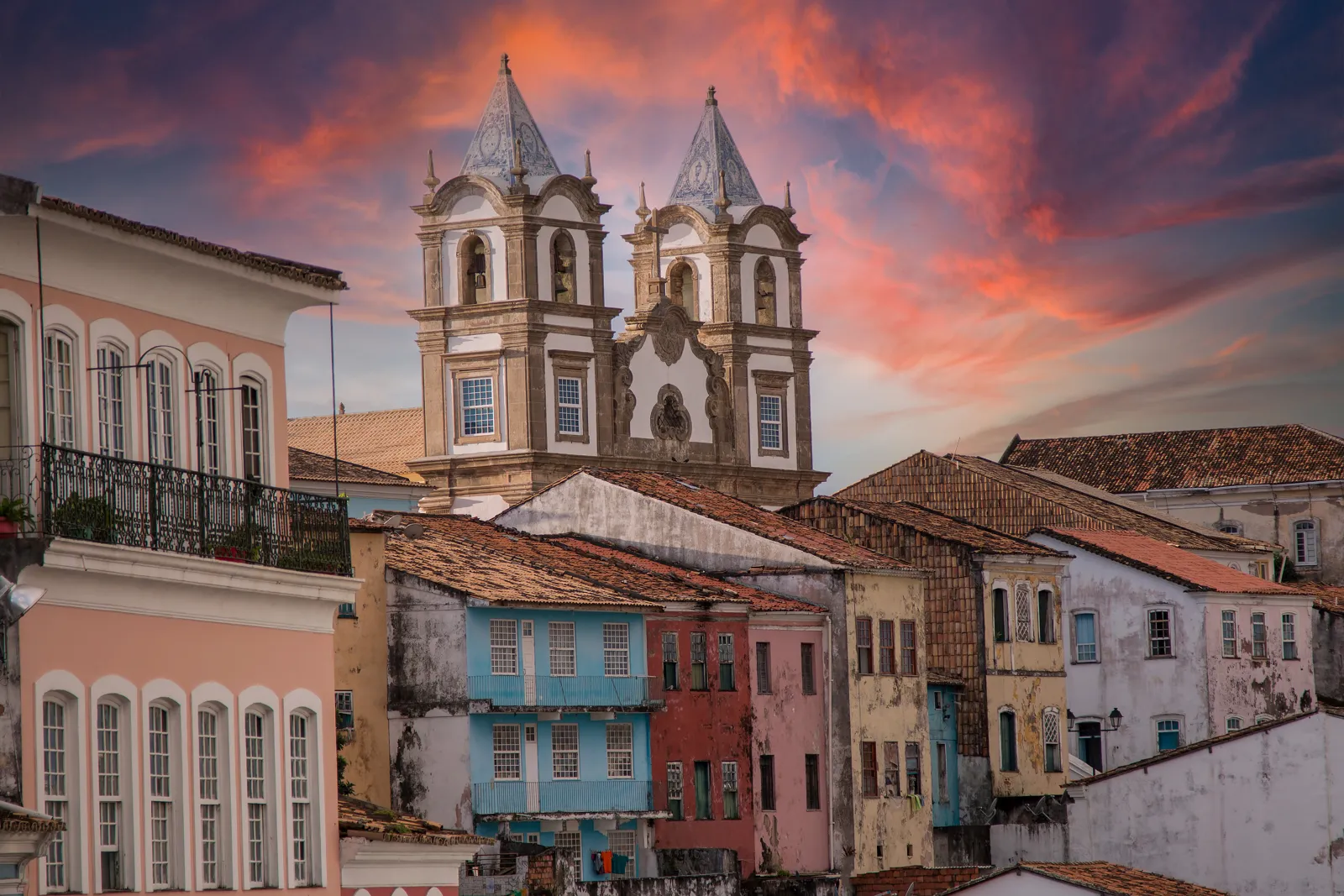
Things to do in Bogotá? Wander the colonial La Candelaria district and Plaza de Bolívar, discover the pre-Columbian goldwork of the Gold Museum and the paintings of the Botero Museum, ride up Monserrate for a view over the city, browse the Sunday market in Usaquén and join a street-art tour. Allow 3 days for the city, plus a day for the Zipaquirá Salt Cathedral. Bogotá can be visited year-round: December to February are the driest months.
The capital of Colombia spreads out at about 2,600 m (8,530 ft) on a high Andean plateau. It is cool all year and safety requires real attention: this guide covers the highlights, an itinerary, neighborhoods to stay in, official US and UK safety advice and the month-by-month climate, with a calculation useful for packing: the temperature gap between day and night.

Our travel deals for Bogotá
Affiliate links: we earn a commission, at no extra cost to you.
 FlightsKiwi.comCompare flights and airline combinations to Bogotá.Compare flights
- eSIMSailyAnother eSIM plan to compare: data, validity, network.See Saily plans


Bogotá at a glance
- Country Colombia(capital), one of the largest cities in South America
- Altitude about 2,600 m / 8,530 ft (2,547 m / 8,356 ft at the airport)
- Language SpanishEnglish is not widely spoken outside hotels and tourist sites
- Currency Colombian peso (COP); see our currency converter · currencies
- Time zone UTC−5, no daylight saving time in Colombia · detailsLocal time now: –:–
- Airports El Dorado International Airport (BOG), the country’s main international hub · details
- Entry US and UK citizens: visa-free for up to 90 days, return or onward ticket · travel.state.gov · GOV.UK
- Electricity 110 V, 60 Hz, type A/B plugs (two flat pins) · plugsUS plugs fit; UK travelers need an adapter
- Ideal length 3 days, 4 with Zipaquirá or Guatavita
Safety in Bogotá: what the US and UK governments say
- U.S. Department of State: Colombia is at Level 3: Reconsider Travel (travel advisory updated March 2026) due to crime, terrorism, civil unrest, kidnapping and natural disasters; street crime can quickly become violent: if you are targeted, do not resist
- UK FCDO: pickpocketing, mugging and armed robbery are a problem in major cities, including Bogotá; British nationals have been robbed at gunpoint in the Candelaria area (GOV.UK, updated 15 October 2026)
- Taxis: do not hail taxis on the street: use licensed telephone or app-based services or book through your hotel; at El Dorado airport, only authorized yellow taxis pick up at the terminals (UK FCDO)
- Drugging: criminals use drugs such as scopolamine, in drinks, food, cigarettes or even flyers, and use dating apps to lure foreigners: never leave your drink unattended (UK FCDO)
- Fake police: criminals posing as police operate in Bogotá; if approached, ask to be escorted to the nearest police station (CAI) (UK FCDO)
Things to do in Bogotá: the highlights
La Candelaria, the historic center
La Candelaria brings together cobbled streets and colonial houses with wooden balconies, churches, universities and many murals. Here you will find the Chorro de Quevedo, a small square where tradition places the founding of the city, and cafés serving hot chocolate with cheese. Visit by day: the UK FCDO reports armed robberies of British nationals in the area.
Plaza de Bolívar
The political heart of the country, Plaza de Bolívar is surrounded by the Primatial Cathedral, the National Capitol (seat of Congress), the Palace of Justice and the city hall (Liévano Palace). The presidential palace, Casa de Nariño, is just behind.
The Gold Museum
Run by the Banco de la República, the Museo del Oro holds one of the world’s largest collections of pre-Columbian goldwork, with pieces from the Muisca, Quimbaya and Tairona cultures. The Muisca raft, linked to the ceremony behind the El Dorado legend, is its most famous piece.
The Botero Museum and La Candelaria’s museums
The Botero Museum, also part of the Banco de la República, shows the works of Fernando Botero, with his rounded figures, as well as the international art collection he donated (Picasso, Monet, Renoir and more). It connects with the Banco de la República Art Museum. Further on, the National Museum, housed in a former prison, traces the country’s history.
Monserrate
The Monserrate sanctuary overlooks the city at more than 3,100 m (10,171 ft). You go up by cable car or funicular, and the view takes in the vast urban plain. There is a footpath, but the effort is real at altitude: wait until you are acclimatized. The neighboring Guadalupe hill, with its statue of the Virgin, offers another panorama.
Street art
Bogotá is known for its murals, especially in La Candelaria and along Calle 26. Guided walking tours, often in English or Spanish, explain the artists and the political messages of the works.
Usaquén, Chapinero and the north
A former colonial village swallowed by the city, Usaquén hosts a large crafts and food market on Sundays. Further south, Chapinero and the streets of Quinta Camacho, with English-style brick houses, are full of restaurants and specialty coffee shops; the Zona T and the Zona G (for food) are the nightlife districts.
Markets and parks
Paloquemao market is the best place to discover Colombian fruit (lulo, granadilla, passion fruit and more) and flowers. Simón Bolívar Metropolitan Park, larger than Central Park, and the José Celestino Mutis Botanical Garden, devoted to Andean flora, offer green breaks. On Sundays and public holidays, the Ciclovía closes major roads to cars for cyclists and pedestrians.
Day trips from Bogotá
The Zipaquirá Salt Cathedral, carved into a salt mine, is the most popular day trip. Guatavita lagoon, the sacred lake of the Muisca linked to the El Dorado legend, is often combined with it. The colonial village of Villa de Leyva, further away, needs at least one night. For the rest of the country (Cartagena, the coffee region, Medellín), see our Colombia travel guide.
Itinerary: Bogotá in 3 days (and more)
- Day 1 (acclimatization): La Candelaria, Chorro de Quevedo, Plaza de Bolívar, Botero Museum; an easy day to get used to the altitude
- Day 2: Gold Museum in the morning, up Monserrate, guided street-art tour in the afternoon
- Day 3: Paloquemao market, botanical garden or Simón Bolívar Park, dinner in the Zona G or Usaquén (market on Sundays)
- Day 4: Zipaquirá Salt Cathedral and Guatavita lagoon
- Days 5 and 6: Villa de Leyva, or a flight to the Caribbean coast or the coffee region
When to go to Bogotá
Bogotá can be visited year-round, with a preference for December to February, the driest months (33 mm / 1.3 in and about 5 rainy days in January). Altitude and proximity to the equator give a cool, stable climate: highs around 19 to 20 °C (66 to 68 °F) and lows of 6 to 10 °C (43 to 50 °F) every month. There are two wet seasons: April-May and October-November, with around 110 mm (4.3 in) a month and frequent afternoon showers. July and August, less rainy, are also good months, often windier.
| Month | High °C (°F) | Low °C (°F) | Day/night gap (°C) | Precip. mm (in) | Rain days / 7 days | Crowds | Verdict |
|---|---|---|---|---|---|---|---|
| January | 20.1 (68) | 6.4 (44) | 13.7 | 33 (1.3) | 1.1 | High | ✅ Driest, sunny |
| February | 20.2 (68) | 7.6 (46) | 12.6 | 51 (2.0) | 1.9 | Medium | ✅ Dry, few visitors |
| March | 19.8 (68) | 8.6 (47) | 11.2 | 83 (3.3) | 2.5 | Medium | ⚠️ Rain returns |
| April | 19.5 (67) | 9.6 (49) | 9.9 | 117 (4.6) | 3.1 | Medium (Holy Week) | ⚠️ Wet season |
| May | 19.4 (67) | 9.6 (49) | 9.8 | 109 (4.3) | 3.0 | Low | ⚠️ Wet season |
| June | 18.9 (66) | 9.1 (48) | 9.8 | 57 (2.2) | 2.4 | Medium | ✅ Lull |
| July | 18.5 (65) | 8.6 (47) | 9.9 | 49 (1.9) | 2.1 | High | ✅ Fairly dry, holidays |
| August | 18.8 (66) | 8.4 (47) | 10.4 | 44 (1.7) | 2.1 | High | ✅ Fairly dry, windy |
| September | 19.2 (67) | 7.8 (46) | 11.4 | 57 (2.2) | 2.1 | Low | ✅ Lull, few visitors |
| October | 19.4 (67) | 8.3 (47) | 11.1 | 108 (4.3) | 2.7 | Low | ⚠️ Wet season |
| November | 19.4 (67) | 8.6 (47) | 10.8 | 107 (4.2) | 2.8 | Low | ⚠️ Wet season |
| December | 19.8 (68) | 7.5 (46) | 12.3 | 61 (2.4) | 1.7 | High | ✅ Dry, end-of-year holidays |
A spring-like city… with cool nights
The biggest gap between day and night comes in January (13.7 °C / 25 °F): it is also the driest month, because clear skies let the heat escape at night. In practice, a January day can start around 6 °C (43 °F) and climb to 20 °C (68 °F). Pack layers (T-shirt, sweater, waterproof windbreaker) rather than a heavy coat: see what to pack. At this altitude the sun is strong: wear sunscreen and a hat even on cool days.
Another feature: near the equator, day length hardly changes. The sun sets around 6 pm all year, which leaves little time for sightseeing late in the day, especially as walking after dark is not advisable.
| Month | Day length in Bogotá | Sunset in Bogotá |
|---|---|---|
| January | 11 h 53 | 6:01 pm |
| March | 12 h 05 | 6:07 pm |
| May | 12 h 20 | 6:02 pm |
| July | 12 h 22 | 6:13 pm |
| September | 12 h 09 | 5:55 pm |
| November | 11 h 54 | 5:38 pm |
For the Caribbean coast, the Amazon and the coffee region, see when to go to Colombia.
Budget for visiting Bogotá
- Accommodation: hostels and guesthouses on a tight budget, hotels in Chapinero or Usaquén for more comfort.
- Meals: the set lunch (« corrientazo » or « almuerzo ») is the cheapest option at midday.
- Transport: TransMilenio and app-booked taxis remain affordable.
- Activities: several Banco de la República museums are free or inexpensive; guided tours and day trips cost more.
Getting around Bogotá
- From El Dorado airport: according to the UK FCDO, only authorized taxis can pick up passengers at the terminals: they are yellow, with white license plates and plate numbers on the doors and roof. App-booked vehicles are another option; journey times depend heavily on traffic.
- Taxis and ride-hailing: the UK FCDO advises using licensed telephone or internet-based taxi services, or booking through your hotel, and not hailing taxis on the street; the U.S. Department of State notes that US citizens have been killed during robberies in taxis hailed on the street.
- TransMilenio: the bus rapid transit network covers the whole city; it is packed at rush hour, so watch your belongings.
- On foot: practical by day in La Candelaria and the north; avoid walking after dark.
Where to stay in Bogotá
| Neighborhood | Best for | Pros and cons |
|---|---|---|
| La Candelaria | Budget, culture | Walking distance to museums; very quiet at night, armed robberies reported by the UK FCDO |
| Chapinero / Quinta Camacho | A good compromise | Cafés, restaurants, good transport links |
| Zona T / Parque 93 | Comfort, nightlife | Hotels and restaurants; be careful at night (drugging reported in nightlife areas) |
| Usaquén | Quiet, families | Village feel, Sunday market, far from the historic center |
Entry requirements, health and safety
- US citizens: according to the U.S. Department of State (travel.state.gov, last updated August 11, 2025), you do not need a visa for tourism or business stays of 90 days or less (180 days per calendar year in total). You need a valid US passport and may be denied entry without a return ticket. Complete the free online Check-Mig form 72 hours before your flight.
- UK citizens: according to the UK FCDO (GOV.UK, updated 15 October 2026), you can visit for up to 90 days without a visa, at the discretion of the immigration officer, with an onward or return ticket. The authorities recommend at least 6 months’ passport validity after your departure date. Check-Mig speeds up entry but is not mandatory for UK travelers: the two sources differ, so complete it to be safe.
- Altitude: altitude sickness is a risk in parts of Colombia, including Bogotá (UK FCDO). Drink plenty of water and take it easy on the first day; ask your doctor before traveling at altitude with young children, during pregnancy or with a medical condition.
- Yellow fever: a vaccination certificate is required if you arrive from certain countries with a transmission risk, and you may be asked for it in high-risk areas of Colombia: carry it at all times (UK FCDO).
- Water: tap water is safe to drink only in Bogotá (UK FCDO), though it is not available every day in some areas (U.S. Department of State).
- Areas to avoid: the UK FCDO advises against all or all but essential travel to several parts of Colombia, including border areas with Venezuela and Ecuador and much of the Pacific coast: check its map before any road trip.
- Emergencies: 123 for police and ambulance. Take out travel insurance.
Practical tips for Bogotá
- Money: use ATMs inside shopping centers or banks, during the day; express kidnappings often target people around ATMs at night (UK FCDO). Cards are accepted in most restaurants and hotels.
- Phone: keep it in an inside pocket: ride-by robberies of phones and bags are common (U.S. Department of State).
- Internet: a local eSIM lets you use taxi apps and maps: see our eSIM guide.
- Tipping: in restaurants, a service charge of about 10% is often suggested on the bill; you can accept or decline it.
- Rain: showers mostly come in the afternoon; plan outdoor visits (Monserrate) for the morning.
Frequently asked questions
How many days do you need to visit Bogotá?
Three days for the city, four with the Zipaquirá Salt Cathedral and Guatavita lagoon.
When is the best time to go to Bogotá?
December to February, the driest months; July-August are also good. April-May and October-November are the wettest.
Is it cold in Bogotá?
It is cool: about 19 to 20 °C (66 to 68 °F) in the afternoon and 6 to 10 °C (43 to 50 °F) at night, all year, according to IDEAM normals.
Is Bogotá dangerous?
The U.S. Department of State rates Colombia Level 3: Reconsider Travel, and the UK FCDO reports armed robberies in major cities including Bogotá. Avoid walking at night, keep your phone out of sight and never hail taxis on the street.
How do you get to Bogotá?
Most international travelers fly into El Dorado International Airport, Colombia’s main hub; check the airlines serving your departure city.
Is altitude sickness a problem in Bogotá?
Some travelers get headaches and shortness of breath in the first days; the UK FCDO lists altitude sickness as a risk in Bogotá. Plan an easy first day.
Our sources
- IDEAM (Instituto de Hidrología, Meteorología y Estudios Ambientales): 1991-2020 normals, El Dorado airport station, 2,547 m (8,356 ft), via the climate table of the Wikipedia article « Bogotá »
- Destination de Voyage calculation: day/night gap, rain days per 7 days, day length and sunset in Bogotá (NOAA solar algorithm)
- U.S. Department of State, Colombia country information (travel.state.gov, last updated August 11, 2025) and Colombia travel advisory (Level 3, updated March 2026), read on 26 October 2026
- UK FCDO, foreign travel advice for Colombia (GOV.UK, updated 15 October 2026), read on 26 October 2026
- Wikipedia: « El Dorado International Airport »
- Our methodology
Updated October 2026.
To plan the rest of your trip, see our Colombia travel guide and our other destinations in Latin America.