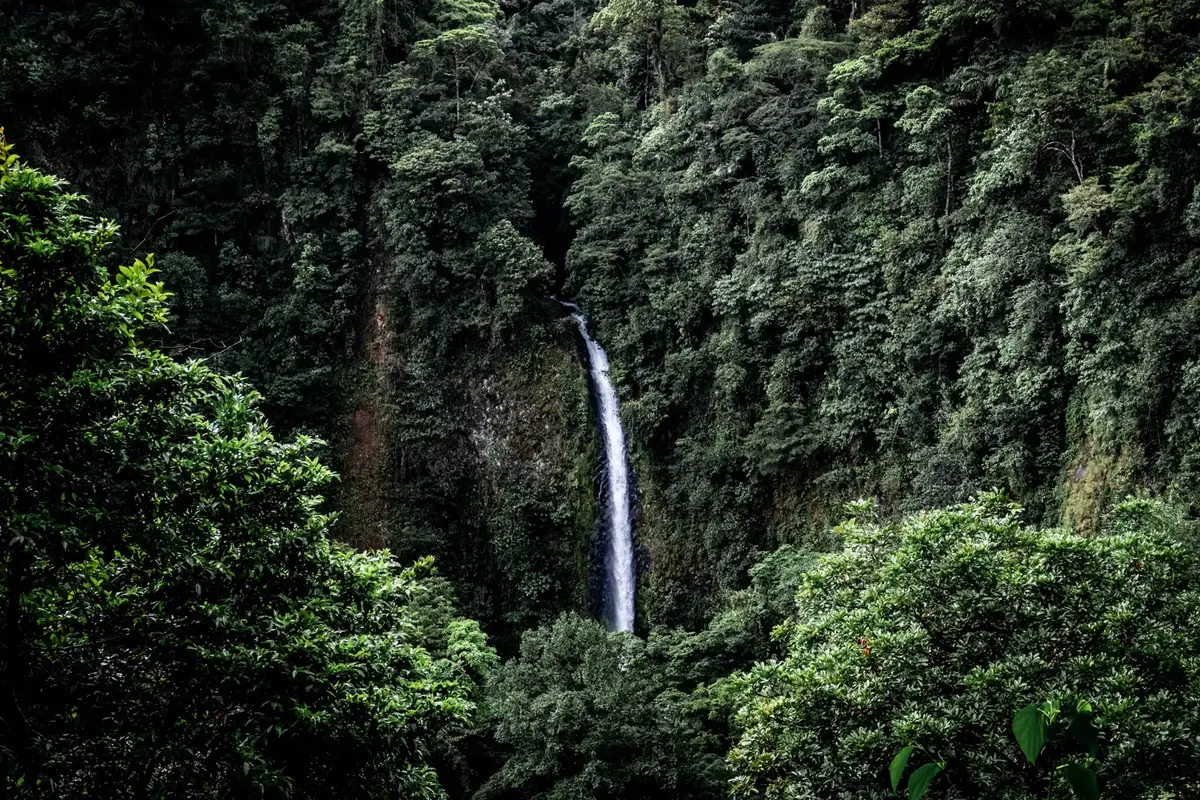
The best time to visit Costa Rica is the dry season, from December to April: on the Pacific coast and in the Central Valley, almost no rain falls, the Guanacaste beaches are sunny and the tracks are passable everywhere. The trade-off: it is high season, with high prices and bookings to make early. The Caribbean coast is the exception: its driest months are September and October, in the middle of the rainy season on the Pacific side. Costa Rica’s climate therefore depends as much on the coast you choose as on the month. This contrast between the Caribbean and Pacific coasts is also found next door: the best time to visit Panama also depends on which side you choose.
Costa Rica is small, but its mountains separate two very different rainfall regimes. The « green season » (May to November) should therefore not be dismissed: often sunny mornings, lush nature, turtles on the beaches and gentler prices. Here is how to choose, using normals from Costa Rica’s Instituto Meteorológico Nacional (IMN) and the German weather service (DWD).

Our travel deals for Costa Rica
Affiliate links: we earn a commission, at no extra cost to you.
 FlightsKiwi.comCompare flights and airline combinations to Costa Rica.Compare flights
- eSIMSailyAnother eSIM plan to compare: data, validity, network.See Saily plans


When to go to Costa Rica at a glance
- Best time December to April (dry season) for the Pacific coast, Guanacaste and the Central Valley
- Caribbean coast (Tortuguero, Cahuita, Puerto Viejo) September and October are the least rainy months
- Good compromise late April and early May, or July (a relative lull in the rains, the veranillo)
- Avoid if possible September and October on the Pacific coast (the wettest months), and the year-end holidays and Holy Week for prices
- For turtles July to October at Tortuguero
- For humpback whales two seasons on the south Pacific coast, roughly December–April and July–October
When to go to Costa Rica by priority
- Best weather: December to April on the Pacific side and in the Central Valley; September–October on the Caribbean side
- Cheapest: May–June and September to November (green season)
- Fewest crowds: June, and April after Holy Week
- Events: green turtles at Tortuguero from July to October, humpback whales roughly December to April and July to October, Independence Day on September 15
Costa Rica: the calendar at a glance
✅ Best months: January, February, March, April, July, December
❌ Period to avoid: September, October
Costa Rica weather month by month
The table below gives the normals for Liberia, in Guanacaste (north-west), the driest region of the country and the gateway to the north Pacific beaches. The contrast between the dry and rainy seasons is very marked there. The other regions are detailed below. Liberia and the Guanacaste beaches are in the north-west of our map of Costa Rica.
| Month | Avg. max | Avg. min | Rain | Crowds | Prices | Verdict |
|---|---|---|---|---|---|---|
| January | 33.4 °C (92 °F) | 20.7 °C (69 °F) | 1 mm (0.0 in) | High | High | ✅ Dry, sunny, windy |
| February | 34.4 °C (94 °F) | 21.1 °C (70 °F) | 2 mm (0.1 in) | High | High | ✅ Full sun, ideal for the beach |
| March | 35.4 °C (96 °F) | 21.6 °C (71 °F) | 4 mm (0.2 in) | High (Holy Week) | High | ✅ Very dry, hot |
| April | 35.9 °C (97 °F) | 22.7 °C (73 °F) | 24 mm (0.9 in) | High, then moderate | High, then moderate | ✅ The hottest month, first showers |
| May | 33.9 °C (93 °F) | 23.4 °C (74 °F) | 194 mm (7.6 in) | Low | Moderate | ⚠️ Rains begin, often in the afternoon |
| June | 32.0 °C (90 °F) | 23.2 °C (74 °F) | 246 mm (9.7 in) | Low | Low | ⚠️ Rainy, very green countryside |
| July | 32.1 °C (90 °F) | 22.8 °C (73 °F) | 153 mm (6.0 in) | Moderate (holidays) | Moderate | ✅ Relative lull (veranillo) |
| August | 32.1 °C (90 °F) | 22.6 °C (73 °F) | 209 mm (8.2 in) | Moderate | Moderate | ⚠️ Frequent showers |
| September | 31.3 °C (88 °F) | 22.4 °C (72 °F) | 346 mm (13.6 in) | Low | Low | ❌ The wettest month |
| October | 30.9 °C (88 °F) | 22.3 °C (72 °F) | 310 mm (12.2 in) | Low | Low | ❌ Very rainy, difficult tracks |
| November | 31.6 °C (89 °F) | 21.5 °C (71 °F) | 98 mm (3.9 in) | Low, then moderate | Moderate | ⚠️ End of the rains, lush greenery |
| December | 32.5 °C (91 °F) | 21.0 °C (70 °F) | 12 mm (0.5 in) | High (very high at Christmas) | High, then very high | ✅ Dry weather returns, expensive holidays |
Worth noting: in the rainy season, it rarely rains all day. The most common pattern is a sunny morning followed by showers or thunderstorms in the afternoon. Plan your activities early in the morning.
Costa Rica’s seasons: pros and cons
Dry season (December to April): high season
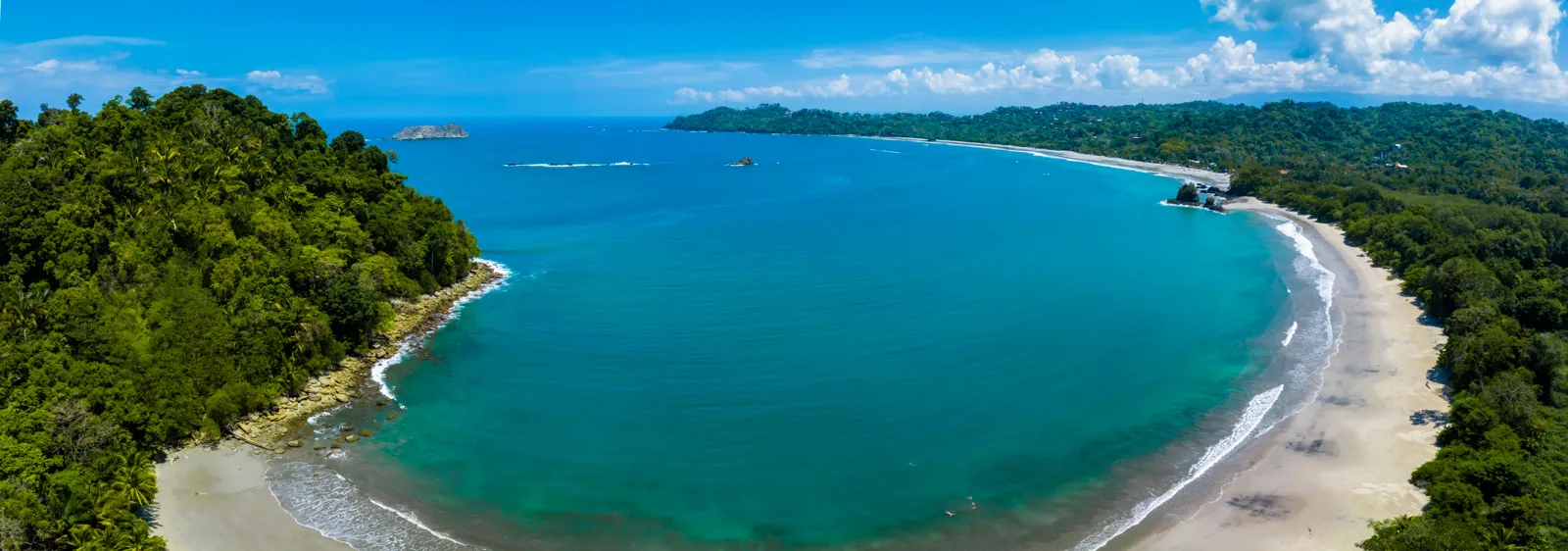
Costa Ricans call it verano (summer). On the Pacific side and in the Central Valley, the rains almost completely stop: 6 to 14 mm (0.2 to 0.6 in) a month from January to March in San José, less than 5 mm (0.2 in) in Liberia. Guanacaste turns dry and golden, the beaches are sunny and dirt roads are easy to travel.
- Pros: almost guaranteed sun on the Pacific side, all tracks and parks accessible, a good season for birdwatching and for humpback whales from the northern hemisphere
- Cons: prices at their highest (especially between Christmas and New Year and during Holy Week), busy national parks, bookings needed long in advance
- Caribbean side: there is not really a dry season there: December and January are among the wettest months in Limón
- Our tip: aim for February–March or the second half of April (after Holy Week) to enjoy the good weather with slightly fewer people
Green season (May to November): rain, nature and low prices
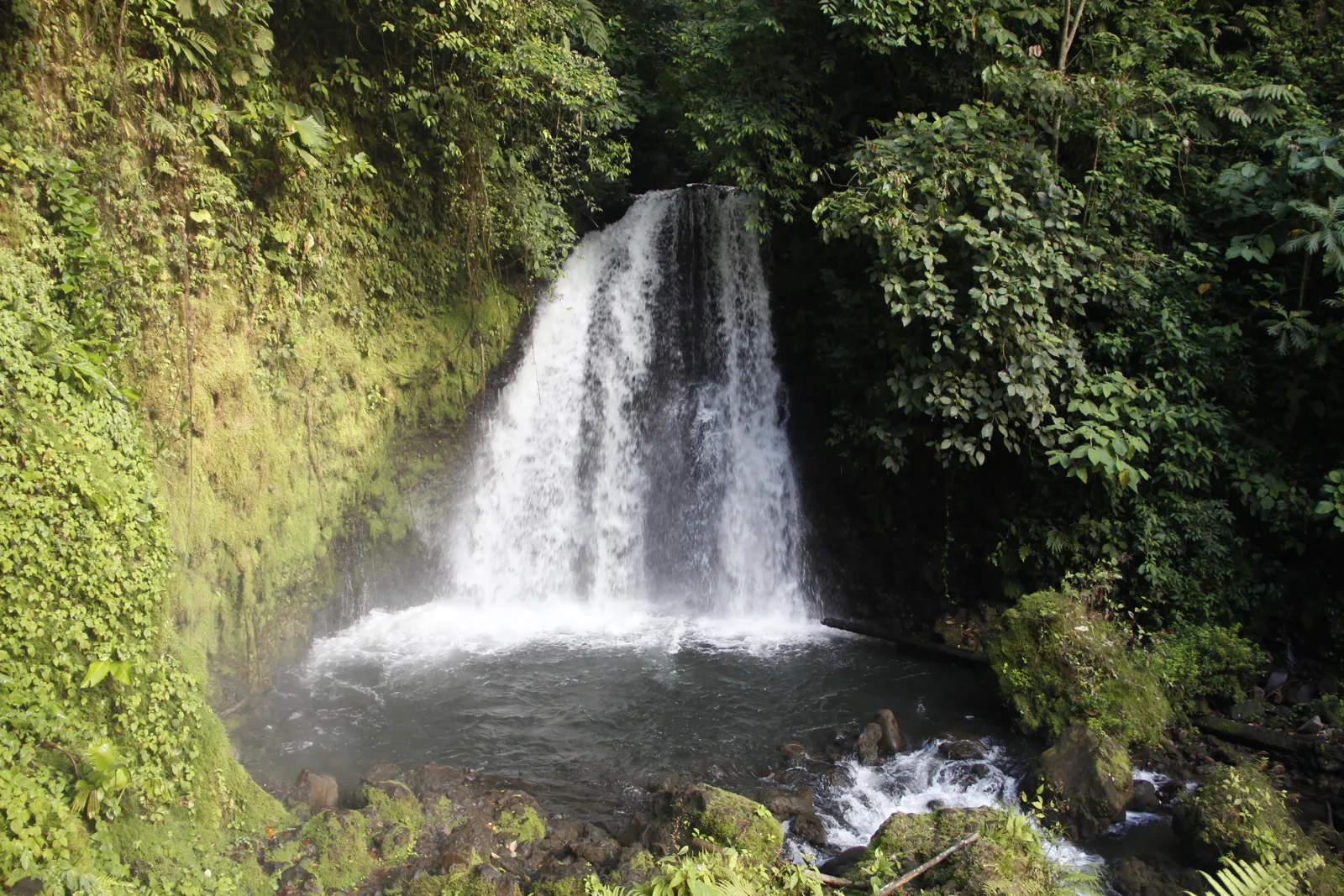
We say « green season » rather than rainy season: the forest is at its densest, the waterfalls at their strongest, and prices fall. Rainfall does rise clearly from May to October, though: over 300 mm (11.8 in) in September and October in San José as in Liberia, and over 500 mm (19.7 in) in Quepos (Manuel Antonio).
- Pros: cheaper and more available accommodation, very green landscapes, green turtle nesting at Tortuguero (July to October), southern-hemisphere humpback whales on the south Pacific coast
- Cons: near-daily afternoon showers, some muddy or cut-off tracks (the Osa Peninsula in particular), slippery trails, skies often overcast over the volcanoes
- The veranillo: a relative lull in the rains usually comes in late June–July on the Pacific side; it shows in the normals (182 mm (7.2 in) in July in San José against 280 mm (11.0 in) in June)
- Who is it for? Flexible travelers, tight budgets, wildlife lovers and surfers (steadier swell on the Pacific)
When to go to Costa Rica by region
Costa Rica is cut in two by a chain of volcanoes and mountains. The Pacific side follows the dry season / green season pattern, while the Caribbean coast receives rain all year, with a dip in September–October. Comparison of the normals for four stations:
| Month | San José (Central Valley) | Liberia (Guanacaste) | Quepos (central Pacific) | Limón (Caribbean) |
|---|---|---|---|---|
| January | 28.2 °C (83 °F) / 18.5 °C (65 °F) – 6 mm (0.2 in) | 33.4 °C (92 °F) / 20.7 °C (69 °F) – 1 mm (0.0 in) | 31.3 °C (88 °F) / 22.0 °C (72 °F) – 46 mm (1.8 in) | 28.8 °C (84 °F) / 20.7 °C (69 °F) – 320 mm (12.6 in) |
| March | 29.9 °C (86 °F) / 18.8 °C (66 °F) – 14 mm (0.6 in) | 35.4 °C (96 °F) / 21.6 °C (71 °F) – 4 mm (0.2 in) | 32.4 °C (90 °F) / 22.6 °C (73 °F) – 40 mm (1.6 in) | 29.7 °C (85 °F) / 21.2 °C (70 °F) – 209 mm (8.2 in) |
| May | 28.8 °C (84 °F) / 19.2 °C (67 °F) – 268 mm (10.6 in) | 33.9 °C (93 °F) / 23.4 °C (74 °F) – 194 mm (7.6 in) | 31.4 °C (89 °F) / 23.3 °C (74 °F) – 389 mm (15.3 in) | 30.4 °C (87 °F) / 22.8 °C (73 °F) – 334 mm (13.1 in) |
| July | 28.2 °C (83 °F) / 19.0 °C (66 °F) – 182 mm (7.2 in) | 32.1 °C (90 °F) / 22.8 °C (73 °F) – 153 mm (6.0 in) | 30.5 °C (87 °F) / 22.8 °C (73 °F) – 445 mm (17.5 in) | 29.6 °C (85 °F) / 22.6 °C (73 °F) – 426 mm (16.8 in) |
| September | 27.8 °C (82 °F) / 18.3 °C (65 °F) – 355 mm (14.0 in) | 31.3 °C (88 °F) / 22.4 °C (72 °F) – 346 mm (13.6 in) | 30.3 °C (87 °F) / 22.6 °C (73 °F) – 544 mm (21.4 in) | 30.6 °C (87 °F) / 22.5 °C (73 °F) – 142 mm (5.6 in) |
| October | 27.1 °C (81 °F) / 18.5 °C (65 °F) – 331 mm (13.0 in) | 30.9 °C (88 °F) / 22.3 °C (72 °F) – 310 mm (12.2 in) | 30.0 °C (86 °F) / 22.6 °C (73 °F) – 534 mm (21.0 in) | 30.4 °C (87 °F) / 22.3 °C (72 °F) – 207 mm (8.1 in) |
| December | 27.9 °C (82 °F) / 18.3 °C (65 °F) – 34 mm (1.3 in) | 32.5 °C (91 °F) / 21.0 °C (70 °F) – 12 mm (0.5 in) | 30.6 °C (87 °F) / 22.3 °C (72 °F) – 160 mm (6.3 in) | 28.9 °C (84 °F) / 21.2 °C (70 °F) – 445 mm (17.5 in) |
In one table: the recommended period for each major region, month by month.
| Region | Jan | Feb | Mar | Apr | May | Jun | Jul | Aug | Sep | Oct | Nov | Dec |
|---|---|---|---|---|---|---|---|---|---|---|---|---|
| Central Valley (San José) | ✅ | ✅ | ✅ | ✅ | ⚠️ | ⚠️ | ⚠️ | ⚠️ | ⚠️ | ⚠️ | ⚠️ | ✅ |
| Guanacaste and Nicoya | ✅ | ✅ | ✅ | ✅ | ⚠️ | ⚠️ | ⚠️ | ⚠️ | ❌ | ❌ | ⚠️ | ✅ |
| Central and south Pacific (Manuel Antonio, Osa) | ✅ | ✅ | ✅ | ✅ | ⚠️ | ⚠️ | ⚠️ | ⚠️ | ❌ | ❌ | ⚠️ | ⚠️ |
| Caribbean coast (Tortuguero, Puerto Viejo) | ⚠️ | ⚠️ | ⚠️ | ⚠️ | ⚠️ | ⚠️ | ⚠️ | ⚠️ | ✅ | ✅ | ❌ | ❌ |
| Arenal and Monteverde | ✅ | ✅ | ✅ | ✅ | ⚠️ | ⚠️ | ⚠️ | ⚠️ | ⚠️ | ⚠️ | ⚠️ | ✅ |
The Central Valley (San José, Cartago, Alajuela)
Thanks to the altitude (about 900 to 1,400 m, or 2,950 to 4,590 ft), it is mild all year: 27 to 30 °C (81 to 86 °F) in the afternoon, 18 to 19 °C (64 to 66 °F) at night. The dry season runs from December to April; from May to October, afternoon thunderstorms are the rule. The climate never really causes problems for a night or two on the way.
Guanacaste and the Nicoya Peninsula (north Pacific)
This is the driest and hottest region of the country, with over 35 °C (95 °F) in March–April in Liberia. The beaches (Tamarindo, Sámara, Nosara, Santa Teresa) are at their best from December to April. The rains arrive in May and peak in September–October, but remain less abundant than further south.
The central and south Pacific (Manuel Antonio, Uvita, Osa Peninsula)
The Pacific side gets wetter and wetter heading south. In Quepos, near Manuel Antonio, over 500 mm (19.7 in) falls per month in September and October. January to April is the best period, in particular for the Osa Peninsula and Corcovado National Park, whose tracks and trails become difficult in the middle of the rainy season. Ask local operators about conditions for this period.
The Caribbean coast (Tortuguero, Cahuita, Puerto Viejo)
Here the logic is reversed. It rains in every season (over 200 mm (7.9 in) almost every month in Limón), but September and October are the driest months, just when the Pacific is under water. February–March is a decent second window.
The volcanoes and the cloud forest (Arenal, Monteverde)
These mountain regions, under the influence of Atlantic winds, are humid and often in the clouds all year. Monteverde is cool (bring a fleece) and the cloud forest lives up to its name. The summit of Arenal volcano clears more often in the dry season, with no guarantee.

When to go to Costa Rica by trip type
| Your trip | Best time | Where? |
|---|---|---|
| Beaches and sun | December – April | Guanacaste, Nicoya, Manuel Antonio |
| Caribbean-side beaches | September – October, February – March | Cahuita, Puerto Viejo |
| Sea turtles | July – October (green turtles) | Tortuguero |
| Humpback whales | Roughly December – April and July – October | Uvita (Marino Ballena National Park), Drake |
| Hiking and forest wildlife | January – April | Corcovado, Manuel Antonio, Rincón de la Vieja |
| Rafting | June – November (high rivers), possible all year | Pacuare River, Sarapiquí River |
| Surfing | All year, steadier swell on the Pacific side in the green season | Tamarindo, Santa Teresa, Dominical |
| Budget | May – June, September – November | Everywhere, accepting the rain |
| Family trip | School-holiday periods, avoiding the wettest months | Arenal, Manuel Antonio, Guanacaste |
Major events to plan your trip around
| Period | Event | Location |
|---|---|---|
| January | Fiestas de Palmares (concerts, rodeo, parades) | Palmares |
| March or April (date varies) | Holy Week (Semana Santa): processions, national holidays, heavy crowds on the beaches | Nationwide |
| July 25 | Annexation of Guanacaste (Nicoya) holiday | Liberia and Guanacaste |
| August 2 | Pilgrimage of the Virgen de los Ángeles (La Negrita) | Cartago |
| September 15 | Independence Day (lantern parades the evening before) | Nationwide |
| October | Limón Carnival | Limón |
| Late December – early January | Fiestas de Zapote and year-end celebrations | San José |
Costa Rica month by month: what to expect
January: The heart of the dry season on the Pacific side (1 mm (0.0 in) of rain on average in Liberia). An excellent month for beaches and wildlife, but prices are high and the Caribbean coast is rainy.
February: Perhaps the best month for a first trip: dry, sunny, slightly fewer people than in January. Humpback whales can be seen on the south Pacific coast.
March: Still very dry and getting hotter in Guanacaste (35 °C (95 °F)). Watch out for Holy Week, which falls in March in some years: crowded beaches and full accommodation.
April: The hottest month. First showers late in the month. After Holy Week, crowds ease: a good compromise.
May: The rains set in on the Pacific side, often in the afternoon. Prices fall, the countryside quickly turns green. An interesting month for flexible travelers.
June: Rainy across most of the country (280 mm (11.0 in) in San José). Low prices, few people, waterfalls and rivers at their strongest.
July: The veranillo often brings a lull on the Pacific side. Start of the green turtle season at Tortuguero, whales on the south coast. Local holidays: slightly more people.
August: Frequent showers, but mornings are often sunny. Turtles at Tortuguero, whales at Uvita. Moderate prices.
September: The wettest month on the Pacific side (346 mm (13.6 in) in Liberia, 544 mm (21.4 in) in Quepos). On the other hand, it is the ideal time for the Caribbean coast, the driest of the year in Limón.
October: Still very wet on the Pacific side and in the Central Valley, with roads sometimes cut. A good month on the Caribbean side, end of the turtle season at Tortuguero.
November: Rainfall drops clearly on the Pacific side late in the month. Very green countryside, prices still gentle before the high season. Avoid the Caribbean coast (400 mm (15.7 in) in Limón).
December: Dry weather returns on the Pacific side from the first half of the month. Prices soar from mid-December to early January.
When to book your trip to Costa Rica
For Christmas, New Year and Holy Week, book flights, accommodation and a rental car 4 to 6 months ahead: well-located lodges (Tortuguero, Corcovado, Monteverde) and 4x4s go fast. For the rest of the dry season, allow 3 to 4 months. In the green season, 1 to 2 months is generally enough, except in July.
Planning your trip to Costa Rica
- Entry requirements: rules depend on your nationality and can change; see the entry requirements for Costa Rica in our country guide and check them with official sources before you leave.
- Time difference: Costa Rica is UTC−6 and does not use daylight saving time: 6 hours behind London in winter and 7 in summer; 1 hour behind New York in winter and 2 in summer.
- Currency: the Costa Rican colón (CRC). The US dollar is widely accepted in tourist areas and cards work almost everywhere. Our currency converter helps you estimate your budget.
- Insurance: we recommend a policy covering medical costs and repatriation; see our travel insurance guide.
To go further, see our complete Costa Rica travel guide.
Also worth reading: our Costa Rica travel guide (itineraries, budget, transport). To compare: when to go to Mexico and when to go to the Dominican Republic.
Frequently asked questions
What is the best month to visit Costa Rica?
February and March are the safest months for weather: the dry season is well established on the Pacific coast and in the Central Valley. For the Caribbean coast, prefer September or October.
What is the rainy season in Costa Rica?
On the Pacific side and in the Central Valley, the rainy season (or green season) lasts from May to November, with a peak in September–October. The Caribbean coast receives rain all year, but September and October are its driest months.
Can you visit Costa Rica in the rainy season?
Yes. It mostly rains in the afternoon, mornings are often clear and prices are lower. Just avoid September–October if you are heading to the south Pacific coast or the Osa Peninsula, where some tracks become difficult.
What is the cheapest time to go to Costa Rica?
From May to June and from September to mid-November, outside local school holidays. Flights and accommodation are clearly cheaper than between December and April.
When can you see turtles in Costa Rica?
At Tortuguero, on the Caribbean coast, the green turtle nesting season runs from July to October.
Are there hurricanes in Costa Rica?
Costa Rica is rarely hit directly by hurricanes, but it can see heavy rain linked to storms during the hurricane season (June to November, according to the U.S. National Hurricane Center). Check the alerts of Costa Rica’s national emergency commission (CNE) if in doubt.
Which months should you avoid in Costa Rica?
On the Pacific side, September and October are the wettest months (346 mm (13.6 in) and 310 mm (12.2 in) in Liberia according to the IMN), with tracks sometimes difficult. They are, however, the driest months on the Caribbean coast (Tortuguero, Cahuita, Puerto Viejo).
What is the weather like in Costa Rica in July and August?
It is the green season: frequent showers, often in the afternoon, very green countryside and average prices. In July, a relative lull in the rains, called the veranillo, is common on the Pacific side.
Our sources
- Instituto Meteorológico Nacional (IMN) of Costa Rica: climate normals for the Liberia (temperatures 1977–2013, rainfall 1957–2012) and Limón (temperatures 1970–2012, rainfall 1941–2012) stations
- Deutscher Wetterdienst (DWD): climate table for San José, Juan Santamaría airport
- World Meteorological Organization (WMO): 1984–2003 normals for Quepos
- Ministry of Labor and Social Security (MTSS) of Costa Rica: official holidays (MTSS press release on the July 25 holiday), read on 11 November 2026
- U.S. National Hurricane Center (NOAA): official hurricane season dates
- Our methodology
Updated November 2026.