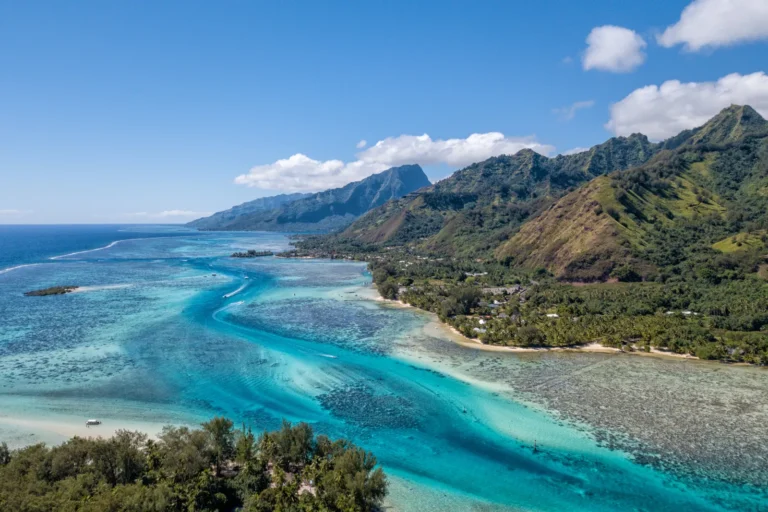
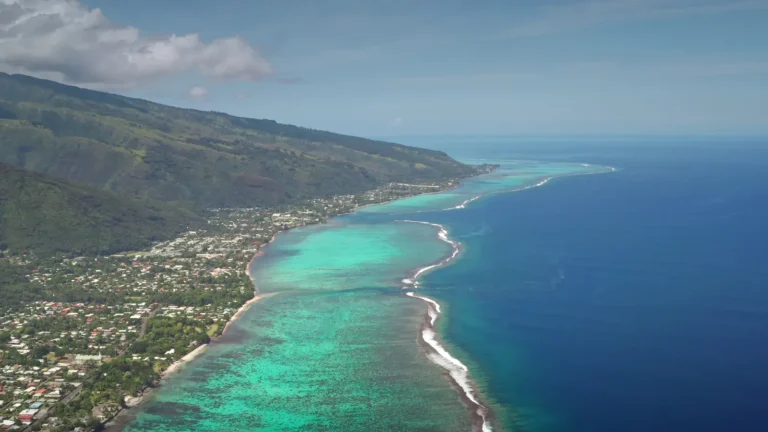
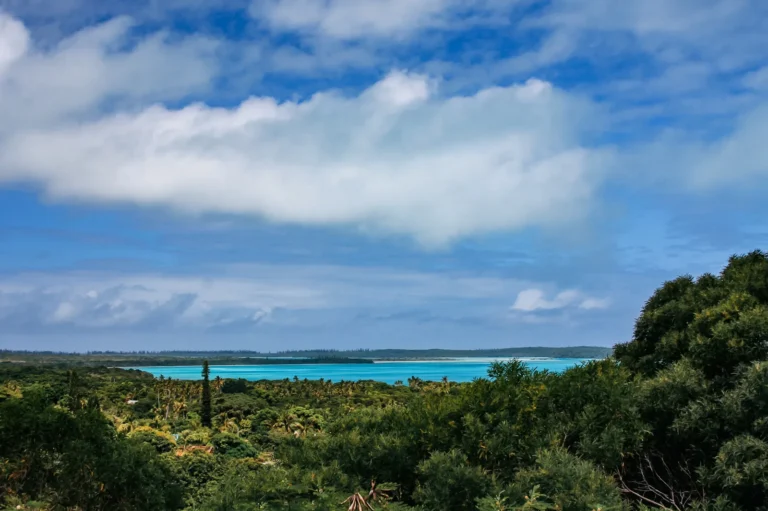
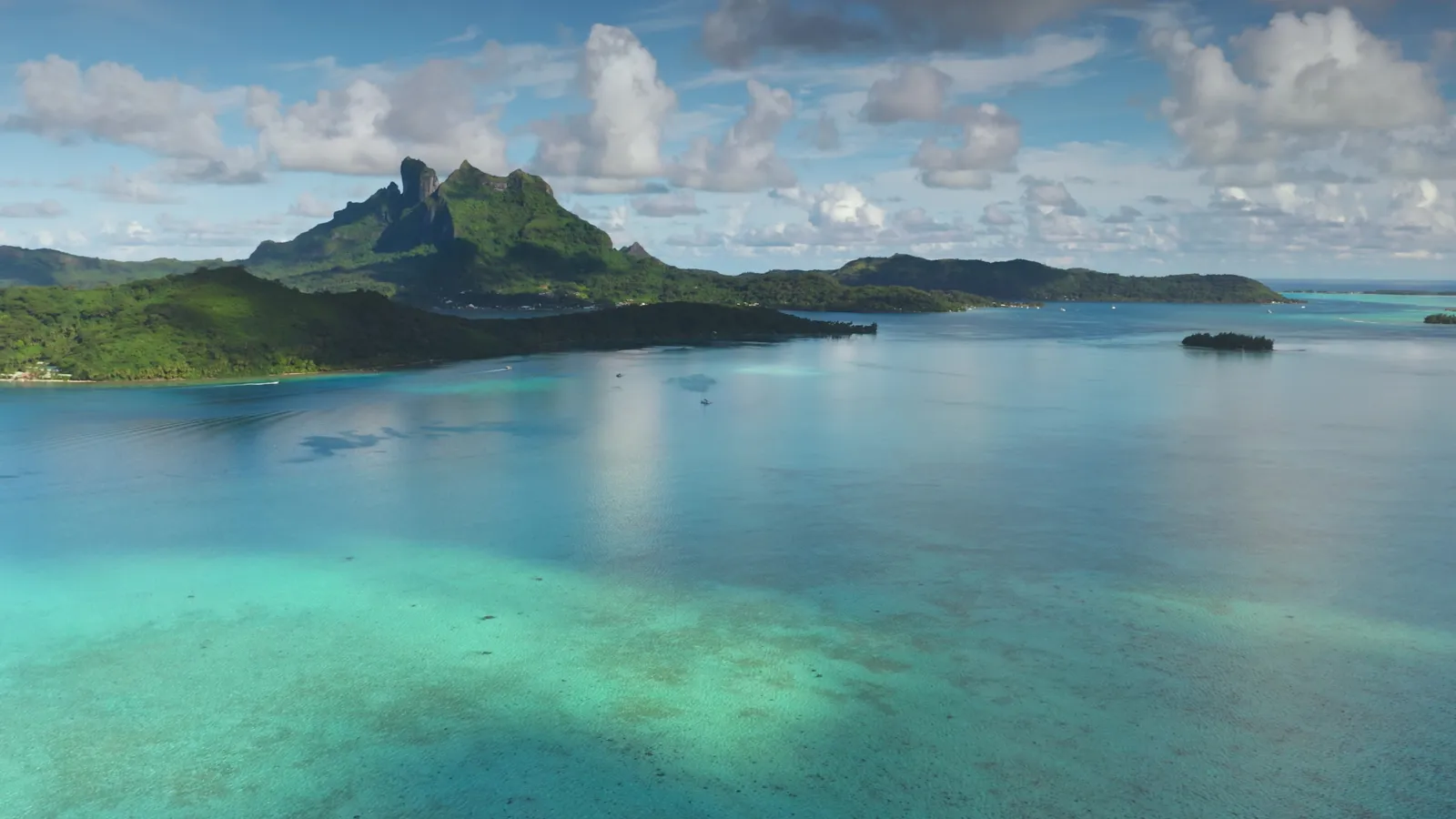
The best time to visit Bora Bora is May to October, during the cooler, drier season; July, August and September are the least rainy months (62 mm (2.4 in) to 65 mm (2.6 in)). It is warm all year, between 29 °C (84 °F) and 31 °C (88 °F) in the afternoon, and the lagoon stays swimmable twelve months a year. From November to April, the warm season brings heavy showers and a risk of cyclones. April, May, June and October offer the best compromise between weather, prices and crowds.
Bora Bora belongs to the Leeward Islands, in the Society archipelago, about 260 km (162 mi) northwest of Tahiti. Seasons are reversed compared with the Northern Hemisphere: the « austral winter », from May to October, is the best season. As everywhere in French Polynesia, it is not the temperature that changes from month to month, but the rain and the wind. Here is how to choose your dates, based on the official Météo-France normals measured on the airport motu.

Our travel deals for Bora Bora
Affiliate links: we earn a commission, at no extra cost to you.
 FlightsKiwi.comCompare flights and airline combinations to Bora Bora.Compare flights
- eSIMSailyAnother eSIM plan to compare: data, validity, network.See Saily plans


When to go to Bora Bora at a glance
- Best time May to October (cooler, drier season, no cyclones)
- Driest months July, August and September, about 62 mm (2.4 in) to 65 mm (2.6 in) of rain a month
- Wettest months December and January, about 245 mm (9.6 in) to 250 mm (9.8 in)
- Temperatures 29 to 31 °C (84 to 88 °F) in the afternoon and 24 to 26 °C (75 to 79 °F) at night, all year
- Cyclones possible from November to April, according to Météo-France
- Honeymoon May-June and September-October for the best balance of weather and price
- Cheapest period January to March, if you accept the rain
When to go to Bora Bora by priority
- Best weather: July, August and September, the least rainy months (62 mm (2.4 in) to 65 mm (2.6 in)); more broadly May to October
- Cheapest: January to March, accepting the rain and the cyclone risk; April, May and November are good compromises
- Fewest crowds: February and March; in the dry season, September once the school holidays are over
- Events: Heiva in Vaitape in July (check the dates every year), finish of the Hawaiki Nui Va’a race in late October, humpback whales from about July to October
Bora Bora: the calendar at a glance
✅ Best months: April, may, June, July, August, September, October
❌ Period to avoid: February
Climate in Bora Bora month by month
The table below gives the normals for the Météo-France station at Bora Bora, located on Motu Mute, where the airport sits, in the north of the lagoon. They are representative of the motu and of the coast of the main island.
| Month | Avg. max | Avg. min | Rain | Crowds | Prices | Verdict |
|---|---|---|---|---|---|---|
| January | 31.1 °C (88 °F) | 25.3 °C (78 °F) | 245 mm (9.6 in) | Moderate | Moderate | ⚠️ Very wet, cyclones possible |
| February | 31.1 °C (88 °F) | 25.4 °C (78 °F) | 212 mm (8.3 in) | Low | Low | ❌ Wet, cyclone risk |
| March | 31.4 °C (89 °F) | 25.8 °C (78 °F) | 168 mm (6.6 in) | Low | Low | ⚠️ Hot, humid, rain easing |
| April | 31.1 °C (88 °F) | 25.8 °C (78 °F) | 144 mm (5.7 in) | Moderate (Easter) | Moderate | ✅ Transition, often pleasant |
| May | 30.2 °C (86 °F) | 25.2 °C (77 °F) | 112 mm (4.4 in) | Moderate | Moderate | ✅ Start of the cooler season |
| June | 29.3 °C (85 °F) | 24.5 °C (76 °F) | 86 mm (3.4 in) | Moderate to high | High | ✅ Dry and sunny |
| July | 28.9 °C (84 °F) | 24.1 °C (75 °F) | 62 mm (2.4 in) | High (holidays) | Very high | ✅ Very dry, peak season |
| August | 29.0 °C (84 °F) | 23.9 °C (75 °F) | 64 mm (2.5 in) | High (holidays) | Very high | ✅ Dry, peak season |
| September | 29.4 °C (85 °F) | 24.0 °C (75 °F) | 65 mm (2.6 in) | Moderate to high | High | ✅ Dry, fewer people |
| October | 29.9 °C (86 °F) | 24.5 °C (76 °F) | 109 mm (4.3 in) | Moderate (holiday period) | High | ✅ Pleasant, softer prices |
| November | 30.7 °C (87 °F) | 25.0 °C (77 °F) | 138 mm (5.4 in) | Moderate | Moderate | ⚠️ Showers return |
| December | 30.8 °C (87 °F) | 25.2 °C (77 °F) | 251 mm (9.9 in) | High (holidays) | Very high | ⚠️ The wettest month |
The gap between the warmest month (March, 31.4 °C (89 °F) average maximum) and the coolest (July, 28.9 °C (84 °F)) is only 2.5 °C (37 °F). Nights stay very mild, around 24 °C (75 °F) even in August. Rainfall, on the other hand, varies fourfold: 62 mm (2.4 in) in July against 251 mm (9.9 in) in December. Even in the dry season, short showers pass regularly: Bora Bora averages about 9 rainy days a month from June to September, but with small totals.
The seasons in Bora Bora: pros and cons
Cooler season (May to October): the best season
Skies are more often clear, humidity drops and the light on the lagoon is at its best. The trade wind blows more steadily: it cools the air but can make the lagoon choppy on some days, especially in July-August. It is also the humpback whale season in Polynesian waters, from July to about late October, although they are more often seen around other islands.
- Pros: less rain, no cyclone risk, clear water for snorkeling, easier hiking
- Cons: prices at their highest in July-August, overwater villas booked long in advance, sometimes strong wind
- Our tip: May-June or September-October, for dry-season weather at slightly softer prices
Warm season (November to April): heat, showers and low prices
The air becomes muggier (31 °C (88 °F) in the afternoon, 25 °C (77 °F) at night) and showers, sometimes violent, alternate with sunny spells. December and January exceed 240 mm (9.4 in) of rain. According to the UK FCDO (GOV.UK, updated 10 December 2025), tropical storms including cyclones can happen in French Polynesia from November to April. In return, hotels lower their rates and the lagoon is very warm.
- Pros: lower prices from January to March, fewer people, very warm water, green vegetation
- Cons: rainy days, high humidity, cyclone risk, boat trips sometimes canceled
- Who is it for? Travelers with a flexible schedule, who put price first and accept a few gray days. April and November are the most favorable transition months

When to go to Bora Bora by trip type
| Trip | Best time | Good to know |
|---|---|---|
| Honeymoon | May-June, September-October | Book the villa 6 to 12 months ahead |
| Snorkeling and the lagoon | May to October (clear water, less rain) | Possible all year, warmer water in the warm season |
| Scuba diving (manta rays, sharks) | All year | Better visibility in dry weather |
| Hiking (Mount Pahia) | June to September | Slippery trails after rain, guide recommended |
| Combining Tahiti, Moorea and Bora Bora | May to October | Book inter-island flights early in summer |
| Budget | January to March, November | Guesthouses on the main island |
Major events in Bora Bora
| Period | Event | Location |
|---|---|---|
| July | Heiva: traditional songs, dances and sports, on each island (the biggest is held in Papeete) | Vaitape |
| Late October | Hawaiki Nui Va’a, outrigger canoe race between Huahine, Raiatea, Taha’a and Bora Bora | Finish in Bora Bora |
| July to about October | Humpback whale season in French Polynesia | Polynesian waters |
Bora Bora month by month: what to expect
Bora Bora in January: Warm (31 °C (88 °F)) and very wet (245 mm (9.6 in)). Cyclones possible. Prices fall after the holidays.
Bora Bora in February: Still humid (212 mm (8.3 in)), the highest cyclone risk of the season. One of the cheapest months.
Bora Bora in March: The warmest month (31.4 °C (89 °F)), rain easing (168 mm (6.6 in)). Good deals possible.
Bora Bora in April: Transition: 144 mm (5.7 in) of rain, very warm sea. A good compromise outside the Easter holidays.
Bora Bora in May: Start of the cooler season, 112 mm (4.4 in). Excellent weather-to-price ratio for a honeymoon. If that ratio appeals for a honeymoon, see our ideas for budget honeymoons, closer to home or further away.
Bora Bora in June: Dry (86 mm (3.4 in)), 29 °C (84 °F), steady trade wind. A very good month before peak season.
Bora Bora in July: One of the driest (62 mm (2.4 in)) and the coolest (28.9 °C (84 °F)). Peak season, Heiva in Vaitape.
Bora Bora in August: Dry (64 mm (2.5 in)), nights at 24 °C (75 °F). Prices at their highest, wind sometimes strong on the lagoon.
Bora Bora in September: Still dry (65 mm (2.6 in)), fewer people once the school holidays are over. An ideal month for many travelers.
Bora Bora in October: Pleasant (30 °C (86 °F)), rain slightly up (109 mm (4.3 in)). Finish of the Hawaiki Nui Va’a race.
Bora Bora in November: Heat and showers return (138 mm (5.4 in)). Softer prices, start of the cyclone season.
Bora Bora in December: The wettest (251 mm (9.9 in)). Year-end holidays: high crowds and prices.
When to book your trip to Bora Bora
For July-August, other school holiday periods and the year-end holidays, book flights and accommodation 6 to 12 months ahead: the overwater villas and best-placed guesthouses are snapped up, especially by honeymooners. Outside holidays, 3 to 4 months is generally enough. Bora Bora is normally reached by connecting through Tahiti (Papeete) and taking a domestic flight: book the domestic flight at the same time as the international one, with a comfortable margin in case of delays. This stopover can turn into a short stay in Tahiti before you continue to Bora Bora.
Planning your trip to Bora Bora
- Entry requirements: Bora Bora is in French Polynesia, an overseas collectivity of France, and the local authorities set the entry rules, which depend on your nationality: see the entry requirements for French Polynesia in our country guide.
- Time difference: French Polynesia is on Tahiti time (UTC-10) and does not use daylight saving time: 10 hours behind London in winter and 11 in summer; 5 hours behind New York in winter and 6 in summer.
- Currency: the CFP franc (XPF), pegged to the euro at a fixed rate: 1,000 XPF is worth about 8.38 euros (roughly US$9.4 or £7.0 at the European Central Bank rates of 23 October 2026). Our currency converter helps you estimate your budget.
- Health: the UK FCDO (GOV.UK, updated 10 December 2025) lists dengue among the health risks in French Polynesia and says you need a yellow fever vaccination certificate if you are coming from a country listed as a transmission risk. Protect yourself from mosquitoes and from the sun, which is very strong all year.
To plan your stay, see our Bora Bora guide. For the other islands, see when to go to French Polynesia, when to go to Tahiti and our French Polynesia guide. Hesitating over the date? See our ideas for traveling in May or in September.
Frequently asked questions
What is the best month to go to Bora Bora?
June and September: dry weather (65 mm (2.6 in) to 86 mm (3.4 in) of rain), about 29 °C (84 °F) in the afternoon and smaller crowds than in July-August. May and October are also very good choices, often a little cheaper.
What is the rainy season in Bora Bora?
From November to April. December and January are the wettest, with about 245 mm (9.6 in) to 250 mm (9.8 in) of rain according to Météo-France’s 1991-2020 normals. Showers often alternate with sunny spells.
Are there cyclones in Bora Bora?
They are possible from November to April, during the warm season. French Polynesia is not the most exposed region of the Pacific, but follow Météo-France Polynésie bulletins if you travel at this time.
Is the weather good in Bora Bora in December?
It is hot (nearly 31 °C (88 °F)) but it is the wettest month (251 mm (9.9 in)), in the middle of cyclone season and with holiday prices. Build some flexibility into your activities.
What is the cheapest time to go to Bora Bora?
January to March, outside the holidays, if you accept the rain and the cyclone risk. April, May and November are good compromises between price and weather.
Can you swim in Bora Bora all year?
Yes. The lagoon stays warm all year; it is only choppier on some windy days in the cooler season and sometimes cloudy after heavy rain in the warm season.
Our sources
- Météo-France: 1991-2020 normals for the Bora Bora station (Motu Mute, airport); description of the seasons and cyclone risk (Météo-France Polynésie)
- Health and cyclone information read on 26 October 2026: UK FCDO, foreign travel advice for French Polynesia (GOV.UK, updated 10 December 2025)
- European Central Bank: euro foreign exchange reference rates of 23 October 2026 (US dollar and pound sterling)
- Our methodology
Updated November 2026.