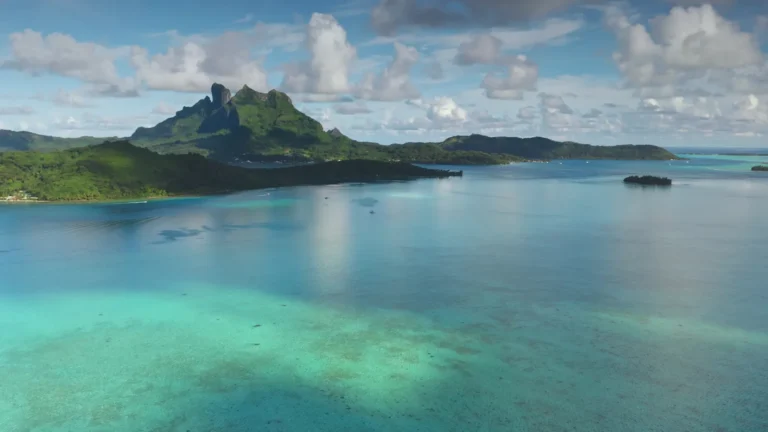
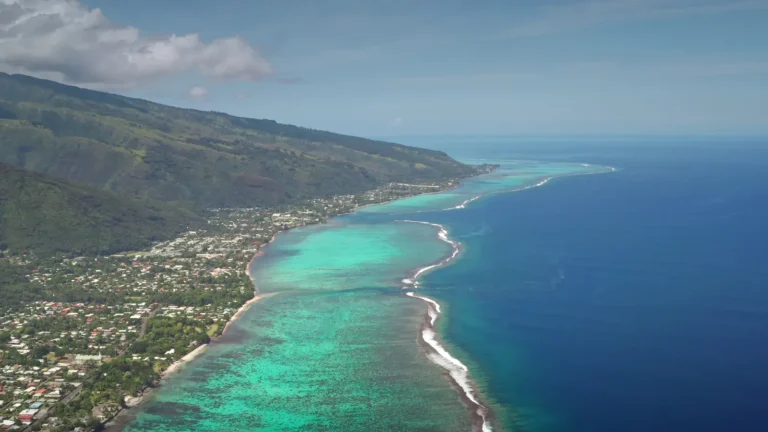
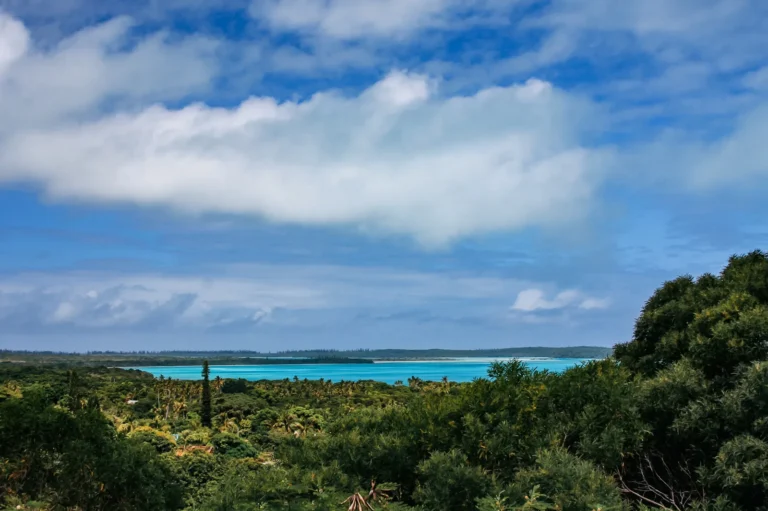
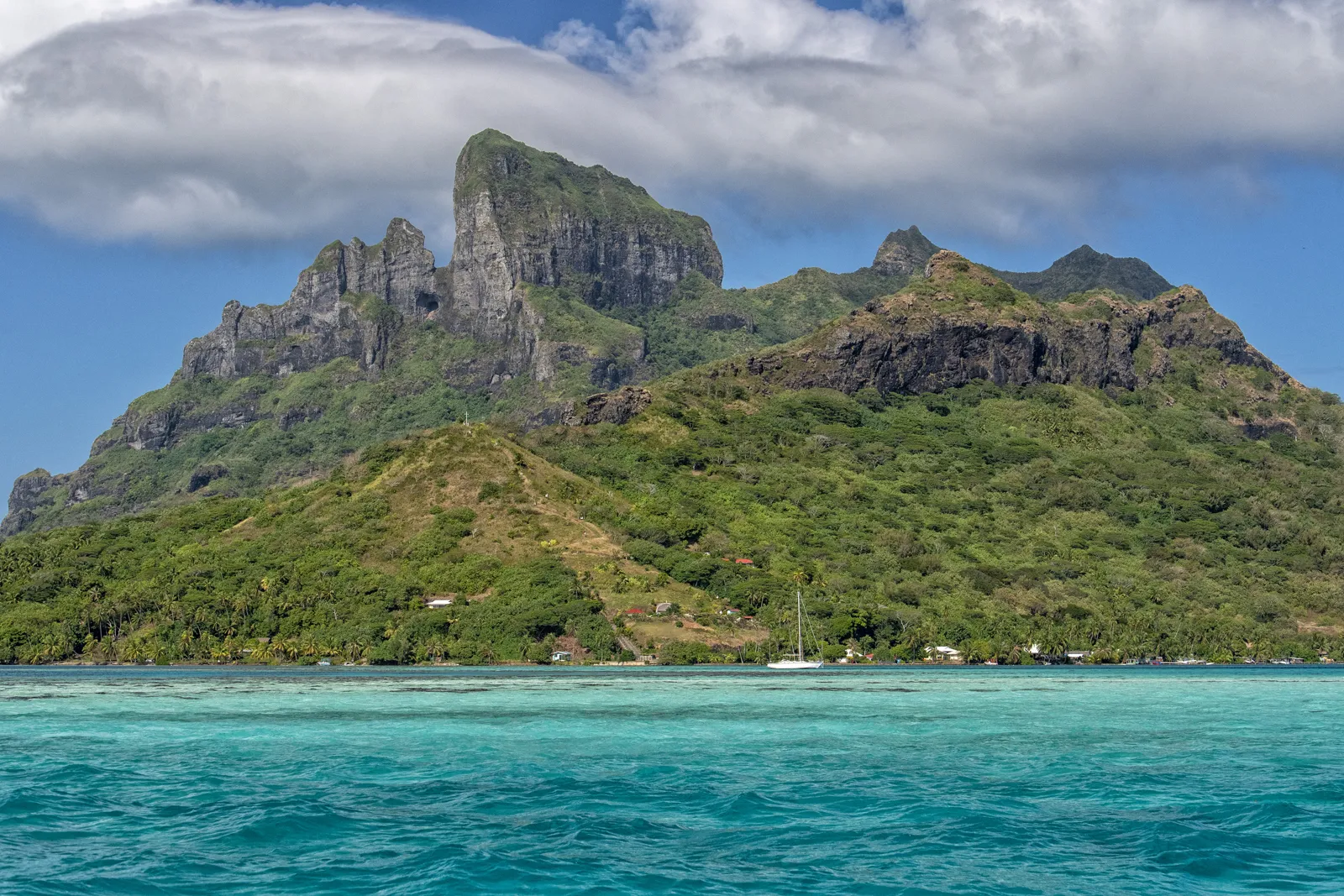
When is the best time to visit French Polynesia? The best period, in Tahiti as in Bora Bora, runs from May to October, during the so-called « cool » season: it rains much less, the air is less heavy and there is practically no cyclone risk. The driest months are July, August and September, which also coincide with the Heiva (July) and the humpback whale season. From November to April, the warm season is rainier and is the cyclone period, with a higher risk in February. To find your way around the archipelagos, open the map of French Polynesia.
French Polynesia has five archipelagos scattered over an ocean area comparable to the size of Europe. Tahiti, Moorea and Bora Bora (Society Islands) follow the classic pattern, but the Marquesas have a different rhythm and the Austral Islands are cooler. Here is how to choose your dates, based on the official 1991-2020 climate normals from Météo-France.

Our travel deals for French Polynesia
Affiliate links: we earn a commission, at no extra cost to you.
 FlightsKiwi.comCompare flights and airline combinations to French Polynesia.Compare flights
- eSIMSailyAnother eSIM plan to compare: data, validity, network.See Saily plans


When to go to French Polynesia at a glance
- Best time overall May to October (cooler, drier season)
- Driest months in Tahiti July to September, about 41 mm (1.6 in) to 50 mm (2.0 in) of rain a month at Faa’a
- Warm, humid season November to April, with the heaviest rain in December and January
- Cyclones only in the warm season (November to April), higher risk in February according to Météo-France; practically no risk from May to October
- Humpback whales from July to about late October (Society, Austral, Tuamotu and Gambier islands)
- Flagship event the Heiva i Tahiti, a dance and singing festival, in July in Papeete
- Marquesas drier season from September to December, the opposite of the rest of the territory
When to go to French Polynesia by priority
- Best weather: May to October, with July to September the driest months
- Cheapest: February-March (accepting rain and cyclone risk), May and November
- Fewest crowds: February to March, then September once the school holidays are over
- Events: Heiva i Tahiti in July, humpback whales from July to about late October, Hawaiki Nui Va’a in late October
To choose your islands, see our French Polynesia travel guide. September combines dry weather and whales: compare with our ideas for traveling in September.
French Polynesia: the calendar at a glance
✅ Best months: April, may, June, July, August, September, October
❌ Period to avoid: February
Climate in French Polynesia month by month
The table below gives the normals for Faa’a, the station at Tahiti’s international airport, where all long-haul flights arrive. They are representative of the Society Islands (Tahiti, Moorea, and to a large extent Bora Bora, Huahine and Raiatea). The other archipelagos are covered in more detail below.
| Month | Avg. max | Avg. min | Rain | Crowds | Prices | Verdict |
|---|---|---|---|---|---|---|
| January | 31.0 °C (88 °F) | 24.4 °C (76 °F) | 268 mm (10.6 in) | Moderate (holidays early in the month) | Moderate | ⚠️ Very wet, cyclones possible |
| February | 31.1 °C (88 °F) | 24.5 °C (76 °F) | 244 mm (9.6 in) | Low | Low | ❌ Wet, highest cyclone risk |
| March | 31.5 °C (89 °F) | 24.7 °C (76 °F) | 166 mm (6.5 in) | Low | Low | ⚠️ Still hot and humid, cyclones possible |
| April | 31.3 °C (88 °F) | 24.5 °C (76 °F) | 99 mm (3.9 in) | Moderate (Easter holidays) | Moderate | ✅ Transition, rain clearly down |
| May | 30.4 °C (87 °F) | 23.6 °C (74 °F) | 104 mm (4.1 in) | Moderate | Moderate | ✅ Start of the cooler season |
| June | 29.6 °C (85 °F) | 22.6 °C (73 °F) | 74 mm (2.9 in) | Moderate | Moderate to high | ✅ Dry and sunny |
| July | 29.2 °C (85 °F) | 22.1 °C (72 °F) | 44 mm (1.7 in) | High (Heiva, holidays) | High | ✅ Very dry, Heiva, start of the whales |
| August | 29.0 °C (84 °F) | 21.9 °C (71 °F) | 41 mm (1.6 in) | High (holidays) | High | ✅ The driest month, whales |
| September | 29.3 °C (85 °F) | 22.3 °C (72 °F) | 50 mm (2.0 in) | Moderate | Moderate to high | ✅ Dry, whales, fewer people |
| October | 29.7 °C (85 °F) | 23.0 °C (73 °F) | 103 mm (4.1 in) | Moderate (holiday period) | Moderate to high | ✅ Still pleasant, whales until late October |
| November | 30.4 °C (87 °F) | 23.9 °C (75 °F) | 105 mm (4.1 in) | Moderate | Moderate | ⚠️ Heat returns, start of cyclone season |
| December | 30.6 °C (87 °F) | 24.3 °C (76 °F) | 279 mm (11.0 in) | High (holidays) | High | ⚠️ The wettest month |
Note: temperatures change little through the year (about 29 °C (84 °F) in the afternoon in August, 31 °C (88 °F) in March). What changes is the rain: at Faa’a, there are on average 14 rainy days (at least 1 mm (0.04 in)) in December, against 4 to 5 days a month from July to September. More than six times as much rain falls in December as in August.
The seasons in French Polynesia: pros and cons
Météo-France distinguishes two main seasons in French Polynesia: a « warm » season, or austral summer, from November to April, which is wetter, and a « cool » season, or austral winter, from May to October, which is drier. The seasons are therefore reversed compared with the Northern Hemisphere. Météo-France points out that this pattern does not apply in the same way to every island.
Cool season (May to October): the dry season
This is the most in-demand period, and for good reasons. In Tahiti, rainfall is 41 mm (1.6 in) to 50 mm (2.0 in) a month from July to September, and highs hover around 29 °C (84 °F), with nights around 22 °C (72 °F). The steadier trade wind makes the heat pleasant. It is also the humpback whale season and the time of the big July festivals.
- Pros: skies more often clear, easier hiking in the valleys of Tahiti and Moorea, no cyclone risk, whales from July to late October, Heiva in July
- Cons: strong demand and higher prices in July-August (school holidays and the Heiva), sometimes strong wind that makes the lagoon choppy, stronger swell on some coasts
- Our tip: May-June and September-October offer the best compromise between weather, prices and crowds; September combines dry weather and whales
Warm season (November to April): rain and cyclones
The warm season is muggier: about 31 °C (88 °F) in the afternoon and 24 °C (75 °F) at night in Tahiti, with sometimes violent showers. At Faa’a, about 270 mm (10.6 in) to 280 mm (11.0 in) of rain falls in December and January. Showers often alternate with sunny spells. This is also the only period when cyclones can form. According to Météo-France, French Polynesia is not the most exposed area of the globe, but cyclone activity extends further during El Niño episodes. The UK FCDO (GOV.UK, updated 10 December 2025) likewise says tropical storms including cyclones can happen from November to April.
- Pros: fewer tourists from January to March, softer prices, lush vegetation, waterfalls flowing, very warm sea
- Cons: rainy days, high humidity, slippery trails, risk of a cyclone or tropical depression (especially in February), domestic flights sometimes disrupted
- Good to know: when a threat arises, the High Commission triggers alert levels (including orange and red alerts) based on Météo-France bulletins. Follow local instructions and the Météo-France Polynésie bulletins
- Who is it for? Flexible travelers looking for lower prices who accept a few rainy days, especially in April, a transition month that is often favorable
When to go to French Polynesia by archipelago
Temperatures vary little from one archipelago to another, but rain does. Here are the normals for four Météo-France stations:
| Month | Tahiti (Faa’a) | Bora Bora | Tuamotu (Takaroa) | Marquesas (Hiva Oa) |
|---|---|---|---|---|
| January | 31.0 °C (88 °F) / 268 mm (10.6 in) | 31.1 °C (88 °F) / 245 mm (9.6 in) | 30.7 °C (87 °F) / 197 mm (7.8 in) | 31.2 °C (88 °F) / 134 mm (5.3 in) |
| February | 31.1 °C (88 °F) / 244 mm (9.6 in) | 31.1 °C (88 °F) / 212 mm (8.3 in) | 30.8 °C (87 °F) / 171 mm (6.7 in) | 31.5 °C (89 °F) / 116 mm (4.6 in) |
| March | 31.5 °C (89 °F) / 166 mm (6.5 in) | 31.4 °C (89 °F) / 168 mm (6.6 in) | 31.1 °C (88 °F) / 129 mm (5.1 in) | 31.5 °C (89 °F) / 178 mm (7.0 in) |
| April | 31.3 °C (88 °F) / 99 mm (3.9 in) | 31.1 °C (88 °F) / 144 mm (5.7 in) | 31.0 °C (88 °F) / 116 mm (4.6 in) | 31.2 °C (88 °F) / 170 mm (6.7 in) |
| May | 30.4 °C (87 °F) / 104 mm (4.1 in) | 30.2 °C (86 °F) / 112 mm (4.4 in) | 30.4 °C (87 °F) / 110 mm (4.3 in) | 30.5 °C (87 °F) / 136 mm (5.4 in) |
| June | 29.6 °C (85 °F) / 74 mm (2.9 in) | 29.3 °C (85 °F) / 86 mm (3.4 in) | 29.5 °C (85 °F) / 93 mm (3.7 in) | 29.6 °C (85 °F) / 152 mm (6.0 in) |
| July | 29.2 °C (85 °F) / 44 mm (1.7 in) | 28.9 °C (84 °F) / 62 mm (2.4 in) | 28.9 °C (84 °F) / 65 mm (2.6 in) | 29.0 °C (84 °F) / 151 mm (5.9 in) |
| August | 29.0 °C (84 °F) / 41 mm (1.6 in) | 29.0 °C (84 °F) / 64 mm (2.5 in) | 28.8 °C (84 °F) / 66 mm (2.6 in) | 29.0 °C (84 °F) / 121 mm (4.8 in) |
| September | 29.3 °C (85 °F) / 50 mm (2.0 in) | 29.4 °C (85 °F) / 65 mm (2.6 in) | 29.1 °C (84 °F) / 83 mm (3.3 in) | 29.6 °C (85 °F) / 88 mm (3.5 in) |
| October | 29.7 °C (85 °F) / 103 mm (4.1 in) | 29.9 °C (86 °F) / 109 mm (4.3 in) | 29.7 °C (85 °F) / 122 mm (4.8 in) | 30.4 °C (87 °F) / 87 mm (3.4 in) |
| November | 30.4 °C (87 °F) / 105 mm (4.1 in) | 30.7 °C (87 °F) / 138 mm (5.4 in) | 30.3 °C (87 °F) / 158 mm (6.2 in) | 30.9 °C (88 °F) / 94 mm (3.7 in) |
| December | 30.6 °C (87 °F) / 279 mm (11.0 in) | 30.8 °C (87 °F) / 251 mm (9.9 in) | 30.5 °C (87 °F) / 219 mm (8.6 in) | 31.1 °C (88 °F) / 69 mm (2.7 in) |
Tahiti and Moorea (Windward Islands)
The climate described above: dry from June to September (less than 75 mm (3.0 in) a month at Faa’a), very wet from December to February. Météo-France points out that coasts exposed to the trade wind, and especially the high ground, receive much more rain: the east coast of Tahiti and the interior of the island are markedly wetter than the west coast, where the airport and most hotels are. Ideal period: May to October. A drier west coast, with hotels and the airport nearby: our Tahiti travel guide helps you choose where to stay on the island.
Bora Bora, Huahine, Raiatea and Taha’a (Leeward Islands)
The same rhythm as Tahiti, with slightly warmer nights (about 24 °C (75 °F) in July-August in Bora Bora, against 22 °C (72 °F) at Faa’a) and slightly more rainy days: about 9 a month from June to September, against 4 to 5 at Faa’a, but with small totals (62 mm (2.4 in) to 86 mm (3.4 in)). Ideal period: May to October; April and November remain decent months. Low rainfall and an ideal period from May to October: to plan your trip to Bora Bora, aim for these dry months first.
The Tuamotu (Rangiroa, Fakarava, Tikehau)
These flat atolls are slightly less rainy than the high islands in the warm season, and the wind blows across them unobstructed. Météo-France places the rainy season there from November to April, with the biggest totals in December and January: at Takaroa, about 200 mm (7.9 in) to 220 mm (8.7 in), against 65 mm (2.6 in) in July-August. Diving in the passes can be done all year. Ideal period: May to October.
The Marquesas (Nuku Hiva, Hiva Oa)
This is the exception. According to Météo-France, the warm, wet season there stretches from January to August, and the cool season runs from September to December. Hiva Oa’s data confirm it: more than 150 mm (5.9 in) of rain a month in March-April and in June-July, but less than 95 mm (3.7 in) from September to November and 69 mm (2.7 in) in December. Ideal period: September to December.
The Austral Islands and the Gambier
These are the southernmost and coolest archipelagos. Météo-France describes rain spread through the year, average temperatures below 25 °C (77 °F), stronger winds and the lowest sunshine in the territory. The Australs, and Rurutu in particular, are best known for humpback whales from July to October: pack warm clothes for the evenings.
Which archipelago by month?
The Society Islands and the Tuamotu follow the same rhythm; the Marquesas have their dry season from September to December.
| Region | Jan | Feb | Mar | Apr | May | Jun | Jul | Aug | Sep | Oct | Nov | Dec |
|---|---|---|---|---|---|---|---|---|---|---|---|---|
| Tahiti and Moorea | ⚠️ | ❌ | ⚠️ | ✅ | ✅ | ✅ | ✅ | ✅ | ✅ | ✅ | ⚠️ | ⚠️ |
| Bora Bora and the Leeward Islands | ⚠️ | ❌ | ⚠️ | ✅ | ✅ | ✅ | ✅ | ✅ | ✅ | ✅ | ⚠️ | ⚠️ |
| Tuamotu (Rangiroa, Fakarava, Tikehau) | ⚠️ | ❌ | ⚠️ | ⚠️ | ✅ | ✅ | ✅ | ✅ | ✅ | ✅ | ⚠️ | ⚠️ |
| Marquesas (Nuku Hiva, Hiva Oa) | ⚠️ | ⚠️ | ⚠️ | ⚠️ | ⚠️ | ⚠️ | ⚠️ | ⚠️ | ✅ | ✅ | ✅ | ✅ |
| Australs (Rurutu) and Gambier | ⚠️ | ⚠️ | ⚠️ | ⚠️ | ⚠️ | ⚠️ | ✅ | ✅ | ✅ | ✅ | ⚠️ | ⚠️ |
✅ recommended period, ⚠️ possible with reservations, ❌ less favorable. Summary of the normals and the detailed recommendations on this page.
When to go to French Polynesia by trip type
| Your trip | Best time | Where? |
|---|---|---|
| Lagoon, beach and relaxing | May to October | Bora Bora, Moorea, Taha’a, Tikehau |
| Honeymoon | May to October; April and November for softer prices | Bora Bora, Moorea, Taha’a |
| Humpback whale watching | July to about late October (supervised outings from July 20 to November 20) | Moorea, Tahiti, Rurutu |
| Scuba diving (manta rays, sharks) | All year, more comfortable from May to October | Rangiroa, Fakarava, Bora Bora |
| Hiking | June to September (drier trails) | Tahiti, Moorea, Marquesas |
| Polynesian culture | July (Heiva) | Papeete |
| Marquesas | September to December | Nuku Hiva, Hiva Oa |
| Budget | February-March (accepting the risk of rain and cyclones), May, November | Tahiti, Moorea, Huahine, family guesthouses |
| Family trip | School holiday periods in spring, summer and autumn | Tahiti, Moorea, Bora Bora |
Major events in French Polynesia
| Period | Event | Location |
|---|---|---|
| July | Heiva i Tahiti: dance and singing competitions, traditional sports, crafts | Papeete, To’ata square |
| July to about late October | Humpback whale season | Society, Austral, Tuamotu and Gambier islands |
| August | Tahiti Pro, a stop on the world surfing circuit | Teahupo’o, Tahiti Iti peninsula |
| Late October | Hawaiki Nui Va’a, a major outrigger canoe race between the Leeward Islands | Huahine, Raiatea, Taha’a, Bora Bora |
| Late December – early January | Year-end holidays (strong demand) | Whole territory |
French Polynesia month by month: what to expect
French Polynesia in January: Warm (31 °C (88 °F)) and very wet (268 mm (10.6 in) at Faa’a), in the middle of cyclone season. Stay flexible.
French Polynesia in February: The month when Météo-France observes the highest cyclone risk, whatever the El Niño or La Niña phase. Still 244 mm (9.6 in) of rain at Faa’a. Often the cheapest month.
French Polynesia in March: The warmest month (31.5 °C (89 °F) average maximum), but rain falls (166 mm (6.5 in)). Cyclones still possible. Few people.
French Polynesia in April: Transition: rainfall around 100 mm (3.9 in) in Tahiti, skies clear more often. End of the cyclone season. A good month for still-moderate prices.
French Polynesia in May: Start of the cooler season: 30 °C (86 °F) in the afternoon, about 7 to 8 rainy days a month. A balanced month.
French Polynesia in June: Dry and sunny (74 mm (2.9 in) at Faa’a), steadier trade wind. A very good month, with crowds still reasonable.
French Polynesia in July: Very dry (44 mm (1.7 in)) and the coolest (29 °C (84 °F) in the afternoon, 22 °C (72 °F) at night). Heiva in Papeete, first whales. Peak season: book early.
French Polynesia in August: The driest month in Tahiti (41 mm (1.6 in)). Whales, surfing at Teahupo’o. School holidays: high prices and crowds.
French Polynesia in September: Still very dry (50 mm (2.0 in)), whales well present, crowds falling once the school holidays are over. One of our favorite months. Start of the best period in the Marquesas.
French Polynesia in October: Rain creeps up a little (103 mm (4.1 in) at Faa’a), but the weather stays pleasant. Last whales, Hawaiki Nui Va’a race at the end of the month in the Leeward Islands.
French Polynesia in November: Official start of the warm, cyclone season, but the risk stays low early in the season. Moderate rain (105 mm (4.1 in)). A good month for the Marquesas.
French Polynesia in December: The wettest month in Tahiti (279 mm (11.0 in), 14 rainy days) and Bora Bora (251 mm (9.9 in)). Year-end holidays: high prices. In the Marquesas, by contrast, it is the driest month.
Which months should you avoid in French Polynesia?
- December and January: the wettest months in Tahiti (279 mm (11.0 in) and 268 mm (10.6 in) at Faa’a) and Bora Bora (251 mm (9.9 in) and 245 mm (9.6 in)), with expensive year-end holidays.
- February: the month when Météo-France observes the highest cyclone risk; low prices in return.
- July-August, for budget: the driest months, but also the most in demand (Heiva, school holidays).
- In the Marquesas: March-April and June-July, with more than 150 mm (5.9 in) of rain a month at Hiva Oa.
No month needs to be ruled out: the temperature stays around 29 to 31 °C (84 to 88 °F) all year. The « months to avoid » are mostly those when rain, cyclone risk or prices weigh most. For Bora Bora, the calendar is the same as for Tahiti: May to October, with April and November as decent months.
When to book your trip to French Polynesia
For July-August and the year-end holidays, book your flights 6 months ahead or more: seats on long-haul flights fill quickly, and the most in-demand overwater bungalows and family guesthouses sell out. Remember also that domestic flights between islands, essential for moving from one island to another, fill up in peak season. Outside holidays, 3 to 4 months is generally enough. There is no short route to the islands: allow for long travel times and plan a margin for connections.
Planning your trip to French Polynesia
- Entry requirements: French Polynesia is an overseas collectivity of France, and the local authorities set the entry rules, which depend on your nationality: see the entry requirements for French Polynesia in our country guide.
- Time difference: Tahiti is on UTC-10 and French Polynesia does not use daylight saving time: 10 hours behind London in winter and 11 in summer; 5 hours behind New York in winter and 6 in summer. The Marquesas are 30 minutes ahead of Tahiti (UTC-9:30), the Gambier one hour (UTC-9).
- Currency: the CFP franc (XPF), pegged to the euro at a fixed rate: 1,000 XPF is worth about 8.38 euros (roughly US$9.4 or £7.0 at the European Central Bank rates of 23 October 2026). Do your sums with our currency converter.
- Health: the UK FCDO (GOV.UK, updated 10 December 2025) lists dengue among the health risks and says you need a yellow fever vaccination certificate if you are coming from a country listed as a transmission risk. Use mosquito repellent.
To go further, see our complete French Polynesia travel guide. Looking for another lagoon? Compare with when to go to the Maldives, the Seychelles or Mauritius, and browse all our destinations in Oceania.
Frequently asked questions
When is the best time to go to Tahiti?
From May to October, during the cool season. The driest months in Tahiti are July, August and September, with 41 mm (1.6 in) to 50 mm (2.0 in) of rain a month and about 29 °C (84 °F) in the afternoon. May, June and September offer the best balance of weather, prices and crowds.
What is the best month to visit French Polynesia?
September is often the most balanced: little rain, humpback whales present and crowds falling after the summer holidays. June is also an excellent choice. For the Marquesas, prefer September to December.
When is the cyclone season in French Polynesia?
According to Météo-France, cyclones occur only in the warm season, from November to April, with a higher risk in February. In the cool season, the risk is practically nil. French Polynesia is not the most exposed area of the Pacific, but the risk increases during El Niño episodes.
When can you see whales in French Polynesia?
Humpback whales arrive in French Polynesia from July to about late October, around the Society, Austral, Tuamotu and Gambier islands. Whale-watching outings require authorization and are allowed only between July 20 and November 20, with regulated approach distances.
When is the Heiva i Tahiti?
Every year in July, in Papeete. The dates for each edition are published in Tahiti Tourisme’s events calendar.
Can you visit French Polynesia in December or January?
Yes, it is warm and the sea is pleasant, but these are the wettest months in Tahiti and Bora Bora (about 250 mm (9.8 in) to 280 mm (11.0 in)), in the middle of cyclone season. Keep your schedule flexible and take out travel insurance.
Which months should you avoid in French Polynesia?
December and January are the wettest in Tahiti and Bora Bora (about 245 mm (9.6 in) to 280 mm (11.0 in)), and February has the highest cyclone risk according to Météo-France. July and August are dry but expensive. In the Marquesas, avoid March-April and June-July instead.
When is the best time to go to Bora Bora?
From May to October, as in Tahiti: in Bora Bora, about 62 mm (2.4 in) to 86 mm (3.4 in) of rain falls per month from June to September, against 245 mm (9.6 in) to 251 mm (9.9 in) in December-January. April and November remain decent months.
Our sources
- Météo-France: climate records, 1991-2020 normals for the Faa’a, Bora Bora, Takaroa and Hiva Oa stations
- Météo-France Polynésie française: climate by archipelago, cyclone season and alerts
- Environment Directorate of French Polynesia: rules for observing marine mammals
- Tahiti Tourisme: events calendar
- Cyclone and health information read on 26 October 2026: UK FCDO, foreign travel advice for French Polynesia (GOV.UK, updated 10 December 2025)
- European Central Bank: euro foreign exchange reference rates of 23 October 2026 (US dollar and pound sterling)
- Our methodology
Updated November 2026.