
Choose Rome for antiquity, the Vatican and a big, lively capital with a great deal to see: allow three to four days. Choose Florence for the Renaissance, a smaller city that can be covered entirely on foot, and Tuscany around it. For a first trip to Italy, the two combine very well; if you must pick one, Rome offers more variety, Florence more concentration.
Rome or Florence? The question comes up often when planning a first trip to Italy. Both cities require you to book certain museums in advance. They differ in size, eras and climate: Florence, in a basin far from the sea, is hotter in the afternoon in summer and colder at night in winter. We compared the official normals of the two cities and calculated the day/night temperature range, month by month. Our detailed guides: Rome and Florence.
Rome or Florence: the essentials
- Antiquity, the Vatican, a big city: Rome (Colosseum, Forum, Vatican Museums, Pantheon, Trastevere)
- Renaissance, a walkable city, Tuscany: Florence (Duomo, Uffizi, David, Ponte Vecchio, Oltrarno)
- Length of stay: 3 to 4 days for Rome; 2 to 3 days for Florence, 4 to 5 with Siena, Pisa or Chianti
- Climate: Florence hotter in the afternoon from March to September, colder at night all year (our calculation from WMO normals published by NOAA)
- Book ahead: Vatican, Colosseum, Borghese Gallery in Rome; Duomo dome, Uffizi, Accademia in Florence
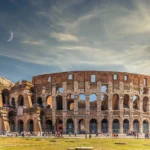
Rome or Florence: criteria compared
| Criterion | Rome | Florence | Advantage |
|---|---|---|---|
| Headline era | Roman antiquity, baroque, the papacy | Renaissance | Depends on your taste |
| Size and getting around | Large city: walking, metro, bus | Compact center, everything on foot | Florence |
| Museums | Vatican Museums, Borghese Gallery, Capitoline Museums | Uffizi, Accademia (David), Pitti Palace | Tie |
| Monuments | Colosseum, Forum, Pantheon, St Peter’s, Trevi | Duomo and dome, baptistery, Palazzo Vecchio, Ponte Vecchio | Rome (more variety) |
| Day trips | Ostia Antica, Tivoli | Siena, Pisa, Chianti, San Gimignano | Florence |
| July (high / rainy days) | 31.0 °C (88 °F) / 2 days | 32.3 °C (90 °F) / 3 days | Rome |
| January (high / low) | 12.0 °C (54 °F) / 3.4 °C (38 °F) | 11.2 °C (52 °F) / 2.1 °C (36 °F) | Rome |
| November (rain) | 108 mm (4.3 in), 9 days | 115 mm (4.5 in), 10 days | Rome, narrowly |
| Entry (UK citizens) | Schengen rules: passport issued less than 10 years before arrival and valid 3 months after you leave; visa-free up to 90 days in any 180 | Same | Tie |
| Entry (US citizens) | Passport valid at least 3 months beyond your stay; proof of funds and a return ticket; no visa up to 90 days | Same | Tie |
| Official safety advice | U.S. Level 2 (terrorism) for Italy; bag-snatching and pickpocketing in city centers and at major attractions | Same | Tie |
Comparing the climate: our day/night range calculation
Both cities have a Mediterranean climate, but Florence, at the bottom of a basin, heats up more in the afternoon and cools down more at night. To measure it, we calculated the temperature range (high minus low) for each month.
| Month | Rome: high / low · rain (days) | Florence: high / low · rain (days) | High-temperature gap (Florence − Rome) | Day/night range Rome / Florence |
|---|---|---|---|---|
| January | 12.0 / 3.4 °C (54 / 38 °F) · 66 mm (2.6 in) (7 days) | 11.2 / 2.1 °C (52 / 36 °F) · 58 mm (2.3 in) (8 days) | −0.8 °C (−1 °F) | 8.6 / 9.1 °C (15 / 16 °F) |
| February | 13.0 / 3.4 °C (55 / 38 °F) · 63 mm (2.5 in) (8 days) | 12.7 / 2.5 °C (55 / 36 °F) · 64 mm (2.5 in) (7 days) | −0.3 °C (−1 °F) | 9.6 / 10.2 °C (17 / 18 °F) |
| March | 15.8 / 5.9 °C (60 / 43 °F) · 59 mm (2.3 in) (7 days) | 16.2 / 5.1 °C (61 / 41 °F) · 61 mm (2.4 in) (7 days) | +0.4 °C (+1 °F) | 9.9 / 11.1 °C (18 / 20 °F) |
| April | 18.8 / 8.6 °C (66 / 47 °F) · 69 mm (2.7 in) (7 days) | 20.0 / 8.1 °C (68 / 47 °F) · 67 mm (2.6 in) (9 days) | +1.2 °C (+2 °F) | 10.2 / 11.9 °C (18 / 21 °F) |
| May | 22.3 / 12.6 °C (72 / 55 °F) · 57 mm (2.2 in) (6 days) | 24.3 / 11.9 °C (76 / 53 °F) · 63 mm (2.5 in) (8 days) | +2.0 °C (+4 °F) | 9.7 / 12.4 °C (17 / 22 °F) |
| June | 28.1 / 16.7 °C (83 / 62 °F) · 30 mm (1.2 in) (3 days) | 29.1 / 16.0 °C (84 / 61 °F) · 45 mm (1.8 in) (5 days) | +1.0 °C (+2 °F) | 11.4 / 13.1 °C (21 / 24 °F) |
| July | 31.0 / 19.3 °C (88 / 67 °F) · 20 mm (0.8 in) (2 days) | 32.3 / 18.4 °C (90 / 65 °F) · 25 mm (1.0 in) (3 days) | +1.3 °C (+2 °F) | 11.7 / 13.9 °C (21 / 25 °F) |
| August | 31.6 / 19.8 °C (89 / 68 °F) · 30 mm (1.2 in) (2 days) | 32.4 / 18.5 °C (90 / 65 °F) · 36 mm (1.4 in) (4 days) | +0.8 °C (+1 °F) | 11.8 / 13.9 °C (21 / 25 °F) |
| September | 26.7 / 16.0 °C (80 / 61 °F) · 65 mm (2.6 in) (6 days) | 27.3 / 15.0 °C (81 / 59 °F) · 67 mm (2.6 in) (6 days) | +0.6 °C (+1 °F) | 10.7 / 12.3 °C (19 / 22 °F) |
| October | 22.2 / 12.4 °C (72 / 54 °F) · 88 mm (3.5 in) (7 days) | 21.5 / 10.9 °C (71 / 52 °F) · 105 mm (4.1 in) (9 days) | −0.7 °C (−1 °F) | 9.8 / 10.6 °C (18 / 19 °F) |
| November | 16.9 / 8.5 °C (62 / 47 °F) · 108 mm (4.3 in) (9 days) | 15.6 / 6.4 °C (60 / 44 °F) · 115 mm (4.5 in) (10 days) | −1.3 °C (−2 °F) | 8.4 / 9.2 °C (15 / 17 °F) |
| December | 12.7 / 4.7 °C (55 / 40 °F) · 98 mm (3.9 in) (9 days) | 11.4 / 2.6 °C (53 / 37 °F) · 81 mm (3.2 in) (10 days) | −1.3 °C (−2 °F) | 8.0 / 8.8 °C (14 / 16 °F) |
What our calculation shows:
- From March to September, Florence is hotter in the afternoon: 0.4 to 2.0 °C (0.7-3.6 °F) more, with the widest gap in May (+2.0 °C / +3.6 °F). In summer, both cities exceed 31 °C (88 °F) in July-August.
- From October to February, Rome is milder: 0.3 to 1.3 °C (0.5-2.3 °F) more in the afternoon, and less cold nights all year (1.3 °C / 2.3 °F more in January).
- Florence has the biggest day/night ranges: up to 13.9 °C (25 °F) in July, against 11.7 °C (21 °F) in Rome the same month. Pack a layer for the evening in spring and autumn.
- Rain follows the same calendar: very little in July-August, a maximum in October-November in both cities, slightly more marked in Florence.
Climate conclusion: in spring, Rome is slightly cooler and Florence slightly warmer in the afternoon, two good options. In summer, both are very hot; sightsee early in the morning. In winter, Rome stays more pleasant. The UK FCDO notes that heavy rainfall is common throughout Italy in winter and can cause local flooding.
What to see: antiquity or the Renaissance
Rome
Rome layers nearly three thousand years of history. The Colosseum, the Forum and the Palatine form the archaeological park, with a timed-entry ticket. The Vatican holds two separate visits: the Vatican Museums, up to the Sistine Chapel, and St Peter’s Basilica. Add the Pantheon, Piazza Navona, the Trevi Fountain, the Spanish Steps, the Borghese Gallery (by reservation) and Trastevere in the evening. The city is large: group your visits by neighborhood.
Florence
Florence is visited on foot. The Duomo, Brunelleschi’s dome (climbed by reservation), Giotto’s bell tower and the baptistery form the first ensemble. The Uffizi Gallery brings together Botticelli, Leonardo da Vinci, Raphael and Michelangelo; the Accademia displays the original David. Piazza della Signoria, the Palazzo Vecchio, the Ponte Vecchio, then the Oltrarno, the Pitti Palace and the Boboli Gardens complete the stay. Florence is also the gateway to Tuscany: Siena, Pisa, Chianti.
Rome or Florence by traveler profile
| Profile | Verdict | Why |
|---|---|---|
| First trip to Italy, a single stop | Rome | More variety: antiquity, the Vatican, baroque, lively neighborhoods |
| Painting and sculpture lovers | Florence | Uffizi, Accademia and Pitti Palace within a few streets |
| 2-day weekend | Florence | Compact center: the essentials can be seen on foot in two days |
| Families | Rome, narrowly | The Colosseum, gladiators, catacombs and wide spaces captivate children |
| Couples | Florence | Oltrarno, sunset at Piazzale Michelangelo, the Tuscan countryside |
| Winter | Rome | Milder, less cold nights according to the normals |
| With a car | Florence | Base for Tuscany (no cars in the historic centers) |
First trip to Italy
If you can see only one city, Rome offers the widest panorama of Italian history. But it needs three to four days and good shoes. Florence, smaller, is less tiring. Verdict: Rome, and Florence if you add two days.
Art lovers
Rome has major collections (Vatican, Borghese) and churches full of Caravaggio and Bernini. Florence concentrates the Renaissance in a small area, and its museums can be visited without transport. Verdict: Florence for the Renaissance, Rome for antiquity and the baroque.
Entry requirements and safety
UK citizens. According to the UK FCDO (GOV.UK, updated 21 October 2026, read 26 October 2026), Italy follows Schengen rules: your passport must have been issued less than 10 years before arrival and expire at least 3 months after the day you plan to leave the Schengen area, and you can travel without a visa for up to 90 days in any 180-day period; you may be asked to show a return or onward ticket. US citizens. According to the U.S. State Department (travel.state.gov, last updated August 11, 2025), your passport must be valid for at least 3 months beyond your stay, you need proof of sufficient funds and a return ticket, and you may enter for up to 90 days for tourism or business without a visa.
On safety, the FCDO says crime levels are generally low but petty crime, particularly bag-snatching and pickpocketing, is higher in city centers and at major tourist attractions; it also notes it is an offence to enter or bathe in public fountains in many cities, including Florence and Rome. The U.S. State Department lists Italy at Level 2 (exercise increased caution) due to terrorism and says organized groups of thieves operate at major tourist destinations and in train stations (advisory read 26 October 2026).
Why not both?
It is the classic combination for a first trip to Italy: three days in Rome, two to three in Florence, possibly followed by Venice or the Cinque Terre. The two cities are linked by fast trains; check the rail operators’ timetables before booking. If possible, fly into one city and out of the other.
When to go to Rome or Florence
April to June and late September to October in both cities: 19 to 28 °C (66-82 °F) in the afternoon in Rome, 20 to 29 °C (68-84 °F) in Florence according to the normals. July-August is very hot and very busy. Winter is quiet and cooler, with the least crowded museums. Details on our pages when to go to Rome, when to go to Tuscany and when to go to Italy.
Frequently asked questions
Rome or Florence for a first trip to Italy?
Rome if you visit only one city: antiquity, the Vatican and the old neighborhoods offer more variety. Florence if you prefer a smaller city, entirely on foot, and Renaissance art. With five days or more, combine the two.
How many days in Rome and in Florence?
Three to four days for Rome, including at least half a day for the Vatican; two to three days for Florence, four to five with Siena, Pisa or Chianti.
Where is it hotter in summer?
In Florence, narrowly: 32.3 °C (90 °F) average high in July against 31.0 °C (88 °F) at Rome-Ciampino, according to the WMO 1991-2020 normals published by NOAA. Nights there are slightly cooler, however.
Rome or Florence in winter?
Rome: it is slightly milder in the afternoon and clearly less cold at night (3.4 °C / 38 °F against 2.1 °C / 36 °F in January). Both cities are then quiet, ideal for museums.
What documents do I need for Italy?
According to the UK FCDO and the U.S. State Department (read 26 October 2026), a passport is required: for UK citizens, issued less than 10 years before arrival and valid at least 3 months after you leave the Schengen area; for US citizens, valid at least 3 months beyond your stay. Both can stay up to 90 days without a visa.
Our sources
- NOAA (National Oceanic and Atmospheric Administration): WMO 1991-2020 normals for the Rome-Ciampino and Florence-Peretola stations, read via Wikipedia (articles citing NOAA) on 23 October 2026; gaps and ranges: Destination de Voyage calculation
- Entry and safety, read on 26 October 2026: UK FCDO, Italy travel advice (GOV.UK, updated 21 October 2026); U.S. Department of State, Italy country information (last updated August 11, 2025), and the travel advisories on travel.state.gov
- Our methodology
To go further: our Italy travel guide and our other destination comparisons, such as Sicily or Sardinia or Barcelona or Madrid.
Updated November 2026.