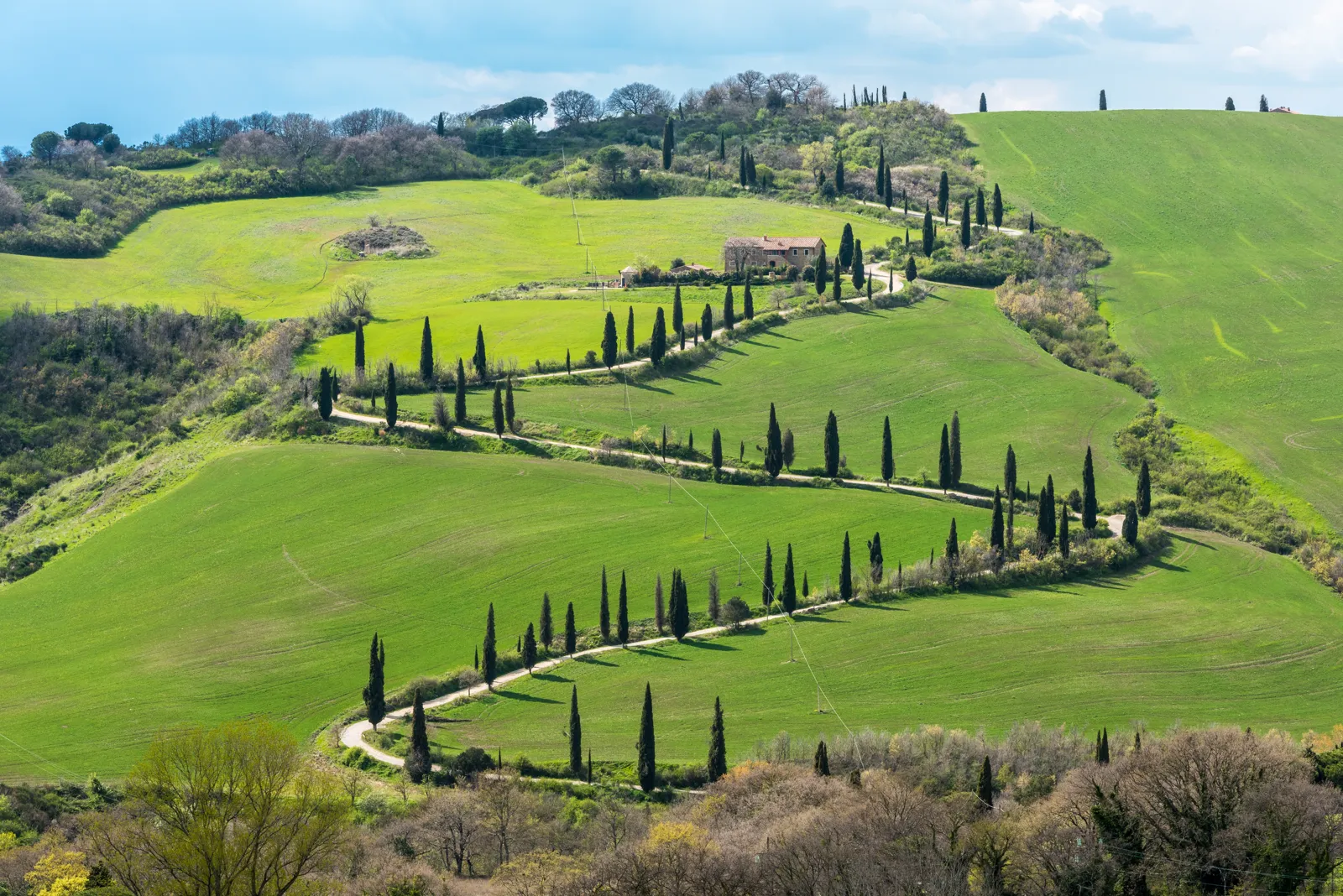
When is the best time to visit Tuscany? Late April to early June and September to mid-October: afternoons are 20 to 27 °C (68 to 81 °F), the hills are green in spring or golden in autumn, and the art cities are less crowded than in summer. July and August are hot (an average high above 32 °C (90 °F) in Florence) and very busy; winter is cool and quiet, ideal for museums at low prices, but October and November are the wettest months.
Tuscany has a Mediterranean climate, with marked differences between the milder coast and the interior: Florence, set in a basin, is hot in summer and cool in winter. The hills of Chianti and the Val d’Orcia follow the same pattern, with cooler nights. Rain falls mostly from October to December, often in intense stormy spells in autumn. Here is how to choose your month, based on the official 1991–2020 climate normals.

Our travel deals for Tuscany
Affiliate links: we earn a commission, at no extra cost to you.
 FlightsKiwi.comCompare flights and airline combinations to Tuscany.Compare flights

When to go to Tuscany at a glance
- Best times late April to early June, September to mid-October
- Best compromise May and the second half of September
- Hottest July–August, an average high of about 32 °C (90 °F) in Florence
- Wettest November (about 115 mm (4.5 in)) and October (about 105 mm (4.1 in)) in Florence
- For the sea June to September on the coast and on the island of Elba
- Plan ahead for Easter, the spring long weekends, summer in Florence and the dates of the Siena Palio
When to go to Tuscany by priority
- Best weather: late April to early June and September to mid-October; May is the best month for a road trip (see also where to go in May)
- Cheapest: November to March, outside holidays, ideal for museums
- Fewest crowds: January to March and November; in spring and September, the art cities stay busy
- Events: Viareggio Carnival (February), Scoppio del Carro in Florence (Easter), Siena Palio (July 2 and August 16), grape harvest (September–October)
Tuscany: the calendar at a glance
✅ Best months: April, may, June, September, October
❌ Period to avoid: November

Climate in Tuscany: temperatures and rain month by month
| Month | Avg. max | Avg. min | Rain | Rainy days | Crowds | Prices | Verdict |
|---|---|---|---|---|---|---|---|
| January | 11.2 °C (52 °F) | 2.1 °C (36 °F) | 58 mm (2.3 in) | 8 | Low | Low | Cold in the morning, museums without queues ⚠️ |
| February | 12.7 °C (55 °F) | 2.5 °C (37 °F) | 64 mm (2.5 in) | 7 | Low (Viareggio Carnival) | Low | Cool, good for the art cities ⚠️ |
| March | 16.2 °C (61 °F) | 5.1 °C (41 °F) | 61 mm (2.4 in) | 7 | Moderate | Low to moderate | Early spring, changeable weather ⚠️ |
| April | 20.0 °C (68 °F) | 8.1 °C (47 °F) | 67 mm (2.6 in) | 9 | High (Easter) | Moderate to high | Green countryside, rain still frequent ✅ |
| May | 24.3 °C (76 °F) | 11.9 °C (53 °F) | 63 mm (2.5 in) | 8 | High | High | The best month for a road trip ✅ |
| June | 29.1 °C (84 °F) | 16.0 °C (61 °F) | 45 mm (1.8 in) | 5 | High | High | Long days, start of the heat ✅ |
| July | 32.3 °C (90 °F) | 18.4 °C (65 °F) | 25 mm (1.0 in) | 3 | Very high | Very high | Strong heat in Florence and Siena ⚠️ |
| August | 32.4 °C (90 °F) | 18.5 °C (65 °F) | 37 mm (1.5 in) | 4 | Very high (Ferragosto) | Very high | The hottest month, crowded coast ⚠️ |
| September | 27.3 °C (81 °F) | 15.0 °C (59 °F) | 67 mm (2.6 in) | 6 | High | High | Grape harvest, heat easing ✅ |
| October | 21.5 °C (71 °F) | 10.9 °C (52 °F) | 105 mm (4.1 in) | 9 | Moderate | Moderate | Autumn colors, but rain increasing ✅ |
| November | 15.6 °C (60 °F) | 6.4 °C (44 °F) | 115 mm (4.5 in) | 10 | Low | Low | The wettest month ❌ |
| December | 11.4 °C (53 °F) | 2.6 °C (37 °F) | 81 mm (3.2 in) | 10 | Low (holidays) | Low to moderate | Cool and damp, Christmas atmosphere ⚠️ |
These figures are for Florence, in the interior. On the coast, the sea softens the extremes: at Pisa, the 1991–2020 normals show a July high of about 30 °C (86 °F) (against 32 °C (90 °F) in Florence), but an even wetter autumn, with about 129 mm (5.1 in) in October and 131 mm (5.2 in) in November. In the hills around Siena and the Val d’Orcia, nights are cooler; in the Apennines and on Monte Amiata, snow is possible in winter. According to the UK FCDO (GOV.UK, updated 21 October 2026), wildfires are a risk in Italy during the extended summer months.
Sea temperature month by month
On the coast, the sea reaches about 23 to 24 °C (73 to 75 °F) in August and stays above 21 °C (70 °F) in September. It drops to around 13–14 °C (55–57 °F) in February–March. It is a little warmer in the south, at Grosseto, than at Pisa.
| Month | Pisa | Grosseto |
|---|---|---|
| January | 13.5 °C (56 °F) | 14.1 °C (57 °F) |
| February | 13.2 °C (56 °F) | 13.7 °C (57 °F) |
| March | 13.4 °C (56 °F) | 14.0 °C (57 °F) |
| April | 14.5 °C (58 °F) | 14.8 °C (59 °F) |
| May | 16.6 °C (62 °F) | 17.2 °C (63 °F) |
| June | 19.6 °C (67 °F) | 20.6 °C (69 °F) |
| July | 22.6 °C (73 °F) | 23.5 °C (74 °F) |
| August | 23.4 °C (74 °F) | 24.3 °C (76 °F) |
| September | 21.8 °C (71 °F) | 22.8 °C (73 °F) |
| October | 19.6 °C (67 °F) | 20.4 °C (69 °F) |
| November | 17.1 °C (63 °F) | 17.8 °C (64 °F) |
| December | 14.7 °C (58 °F) | 15.1 °C (59 °F) |
The seasons in Tuscany: pros and cons
Spring (March to May): green Tuscany
Highs climb from 16 °C (61 °F) in March to 24 °C (75 °F) in May in Florence. The hills of the Val d’Orcia and Chianti are an intense green, poppies bloom in May and the days lengthen. This is the ideal season to combine art cities and country roads. Rain remains fairly frequent (8 to 9 days a month in April–May), and Easter and the spring long weekends draw many visitors to Florence.
- Pros: green landscapes, ideal temperatures for walking in town and cycling, café terraces reopening
- Cons: showers, crowds and high prices around Easter and the long weekends, sea still cold
- Our tip: May is the most balanced month for a first trip
Summer (June to August): heat and festivals
June is hot and bright. In July and August, Florence has an average high above 32 °C (90 °F), with frequent heatwaves, and the historic centers are very busy. This is, on the other hand, the season for the sea (Versilia, Maremma, the island of Elba) and the great festivals, such as the Siena Palio on July 2 and August 16. Around August 15 (Ferragosto), the coast is packed and some shops in the cities close.
- Pros: long days, warm sea, festivals and evenings outdoors
- Cons: heat that makes sightseeing hard, queues at the major museums, prices at their highest
- Who is it for? A sea-and-countryside trip, sightseeing early in the morning; book early
Autumn (September to November): grape harvest and colors
September stays hot (27 °C (81 °F)) and marks the start of the grape harvest in Chianti, Montalcino and Montepulciano. October is milder (21 °C (70 °F)), with vines changing color, but it is also the start of the rainy season: 105 mm (4.1 in) in October and 115 mm (4.5 in) in November in Florence. The olive harvest and the white truffle season, notably around San Miniato, enliven the villages in autumn.
- Pros: light, grape harvest, seasonal food, crowds falling after September
- Cons: sometimes violent thunderstorms, shorter days, swimming over by October
- Our tip: the second half of September and early October for the countryside
Winter (December to February): the art cities in peace
Afternoons are 11 to 13 °C (52 to 55 °F) in Florence, but 2 to 3 °C (36 to 37 °F) in the early morning, and it rains 7 to 10 days a month. The countryside is gray and some agriturismi close. Yet this is the best season to visit the Uffizi, the Accademia or the churches of Florence and Siena without long queues, with cheaper accommodation, except over the year-end holidays.
- Pros: museums easier to visit, low prices, local atmosphere
- Cons: damp cold, short days, less appealing countryside
- Who is it for? A cultural city break in Florence, Siena or Lucca
When to go to Tuscany by region
| Area | Highlights | Best time | Good to know |
|---|---|---|---|
| Florence | Museums, architecture, food | April–May, late September–October, winter for the museums | Very hot and very crowded in summer |
| Siena, Chianti and San Gimignano | Medieval towns, vineyards | May–June, September–October | Siena Palio on July 2 and August 16 |
| Val d’Orcia (Pienza, Montepulciano, Montalcino) | Landscapes, wines, thermal baths | May, September–October | Green hills in spring, golden in summer |
| Pisa, Lucca and Versilia | Monuments, city walls, beaches | May–June, September | Very busy coast in August |
| Maremma and the island of Elba | Sea, nature, thermal baths | June, September | More ferries to Elba in season |
Florence
Florence can be visited all year. In spring and autumn, the climate is ideal but the city is very busy; in summer, the heat and the crowds make days punishing; in winter, it is cool but the major museums are easier to get into. Whatever the season, book your Uffizi and Accademia Gallery tickets in advance.
Siena, Chianti and San Gimignano
Between Florence and Siena, the Chianti hills are best explored by car or by bike, preferably from May to October. Siena is especially lively during the Palio, on July 2 and August 16: a unique spectacle, but a packed city and very expensive accommodation. San Gimignano, with its medieval towers, is more pleasant early in the morning or late in the day.
The Val d’Orcia
This landscape of hills, cypress trees and isolated farms is a UNESCO World Heritage Site. In May, the fields are green; in July, the wheat is harvested and the hills turn golden. September and October suit wine lovers (Montalcino, Montepulciano) and thermal baths, such as those at Bagno Vignoni.
The coast, Pisa and the island of Elba
The Tuscan coast (Versilia to the north, Maremma to the south) and the island of Elba are good for swimming from June to September. Pisa and Lucca, close by, can be visited all year; their autumn is the wettest in the region. For Elba, ferries from Piombino are more frequent in summer.
When to go to Tuscany by trip type
| Your trip | Best time | Good to know |
|---|---|---|
| Art cities (Florence, Siena, Pisa) | April–May, October, winter outside holidays | Book museums in advance |
| Road trip in the hills | May–June, September–October | Green landscapes in May, grape harvest in September |
| Wine and grape harvest | September–October | Book winery visits |
| Sea and beaches | June to September | August is the most expensive and most crowded month |
| Cycling and hiking | April–June, September–October | Avoid the hot hours of summer |
| Small budget | November to March, outside holidays | Accommodation at its lowest prices |
| Family trip | June, September | Combine towns in the morning with pool or sea in the afternoon |
Major events in Tuscany
| Date | Event | Good to know |
|---|---|---|
| February (date varies) | Viareggio Carnival | Parades of allegorical floats |
| Easter (date varies) | Scoppio del Carro in Florence | Easter Sunday tradition in front of the cathedral |
| June | Calcio storico in Florence | Matches in historic costume, Piazza Santa Croce |
| July 2 and August 16 | Siena Palio | Horse race on the Piazza del Campo, packed city |
| August 15 | Ferragosto | Peak of the Italian holidays |
| September–October | Grape harvest and wine festivals | Program varies by village |
Tuscany month by month: what to expect
Tuscany in January: The coldest month (11 °C (52 °F) in the afternoon, 2 °C (36 °F) in the morning in Florence). Museums easy to get into, prices at their lowest, countryside dormant.
Tuscany in February: Still cool, a little rain. The Viareggio Carnival enlivens the coast. A good month for a city break in Florence.
Tuscany in March: Spring arrives (16 °C (61 °F)), the weather is changeable. The first flowers appear in the hills.
Tuscany in April: Mild (20 °C (68 °F)) but still rainy (9 days). Easter and the long weekends draw many people: book early.
Tuscany in May: The best month for a road trip: 24 °C (75 °F), green countryside, poppies. Strong demand in Florence.
Tuscany in June: Hot (29 °C (84 °F)) and drier. Long days, start of the beach season, calcio storico in Florence.
Tuscany in July: Very hot (32 °C (90 °F) in Florence), little rain. Siena Palio on the 2nd. Sightsee early in the morning.
Tuscany in August: The hottest and busiest month on the coast. Siena Palio on the 16th, Ferragosto on the 15th.
Tuscany in September: Still hot (27 °C (81 °F)), start of the grape harvest. One of the best months for the countryside and the sea.
Tuscany in October: Mild (21 °C (70 °F)) and colorful, but rain increases markedly (105 mm (4.1 in)). Mushroom and truffle season.
Tuscany in November: The wettest month (115 mm (4.5 in), 10 rainy days). New olive oil, quiet cities.
Tuscany in December: Cool (11 °C (52 °F)) and damp. Christmas markets and lights in Florence, prices rising over the holidays.
When to book your trip to Tuscany
For Easter, the May long weekends, summer and the Palio dates, book accommodation and a rental car 3 to 5 months ahead. Tickets for Florence’s major museums (Uffizi, Accademia) and access to the cathedral dome should also be booked in advance, sometimes several weeks ahead in high season. In winter and in November, 3 to 4 weeks is generally enough. The two main airports are Florence and Pisa. Florence can also be reached by train, usually with a change. Once in Florence, our Florence travel guide helps you spread museums and neighborhoods over several days.
Planning your trip to Tuscany
- Entry requirements: rules depend on your nationality; see our guide to the entry requirements for Italy.
- Currency: the euro.
- Health and safety: the UK FCDO (GOV.UK, updated 21 October 2026) lists dengue, west nile disease and biting insects and ticks among the health risks in Italy: use insect repellent. It also notes that wildfires are a risk during the extended summer months, and that heavy rainfall is common in winter and can cause local flooding.
To plan your itinerary, see our Tuscany travel guide. To compare with the rest of the country, see when to go to Italy and our Italy travel guide. For an Italian island, see when to go to Sicily and when to go to Sardinia.
Frequently asked questions
What is the best month to visit Tuscany?
May for green landscapes and pleasant temperatures (24 °C (75 °F) in Florence), and the second half of September for the grape harvest and milder heat. Early October is also a good choice, accepting a few rainy days.
Is Florence too hot in summer?
In July and August, average highs exceed 32 °C (90 °F) in Florence according to the 1991–2020 normals, and heatwaves are frequent. Sightsee early in the morning, book your museums and plan breaks during the hot hours.
What is the wettest month in Tuscany?
November, with about 115 mm (4.5 in) and 10 rainy days in Florence, followed by October. On the coast, at Pisa, autumn is even wetter.
Can you swim in Tuscany?
Yes, from June to September, on the coast (Versilia, Maremma) and on the island of Elba. Outside this period, the water is cool.
Is Tuscany a good destination in winter?
For the art cities, yes: Florence, Siena and Lucca are quieter and cheaper. For the countryside and the sea, winter is less suitable: damp weather, short days and some agriturismi closed.
When can you see the Siena Palio?
The Palio is run every year on July 2 and August 16 on the Piazza del Campo. The city is then very busy: book your accommodation long in advance.
Is April a good time to visit Tuscany?
Yes for a road trip: about 20 °C (68 °F) in the afternoon in Florence and green countryside, but still 9 rainy days on average. Easter and the long weekends draw many people: book early.
What is the weather like in Tuscany in October?
Mild, around 21 °C (70 °F) in the afternoon in Florence, with colorful vines and fewer crowds. Rain increases markedly (about 105 mm (4.1 in) in Florence), and swimming is over.
What is the best month to visit Florence?
April–May and late September–October for the weather; winter, outside holidays, to visit the major museums with less waiting. In July–August, the average high exceeds 32 °C (90 °F).
Can it snow in Tuscany?
Rarely in the cities, but snow is possible in winter in the Apennines and on Monte Amiata. In Florence, January mornings hover around 2 °C (36 °F).
When should you visit Tuscany to avoid the crowds?
From January to March (outside the Viareggio Carnival in February) and in November, crowds are light and prices low, but it is cool and November is the wettest month. The best compromise is late October or March, or failing that May and September on weekdays, booking the major museums.
What is the temperature in Tuscany in summer?
In Florence, the average high reaches 29 °C (84 °F) in June and more than 32 °C (90 °F) in July and August, with nights around 18 °C (64 °F). On the coast, at Pisa, it is around 30 °C (86 °F) in July. Rainy days are rare (3 to 5 a month).
Is September a good time to visit Tuscany?
Yes: about 27 °C (81 °F) in the afternoon in Florence, easing heat and the start of the grape harvest. Crowds remain heavy and rain picks up (67 mm (2.6 in) on average over the month).
Our sources
- NOAA (data from the World Meteorological Organization): 1991–2020 normals for the Florence-Peretola and Pisa-San Giusto stations
- UK FCDO, foreign travel advice for Italy (GOV.UK, updated 21 October 2026, read on 26 October 2026): summer wildfires, winter flooding and health risks
- Deutscher Wetterdienst (DWD), climate tables: average sea water temperature at Pisa and Grosseto (1967–2002)
- Our methodology
Updated November 2026.