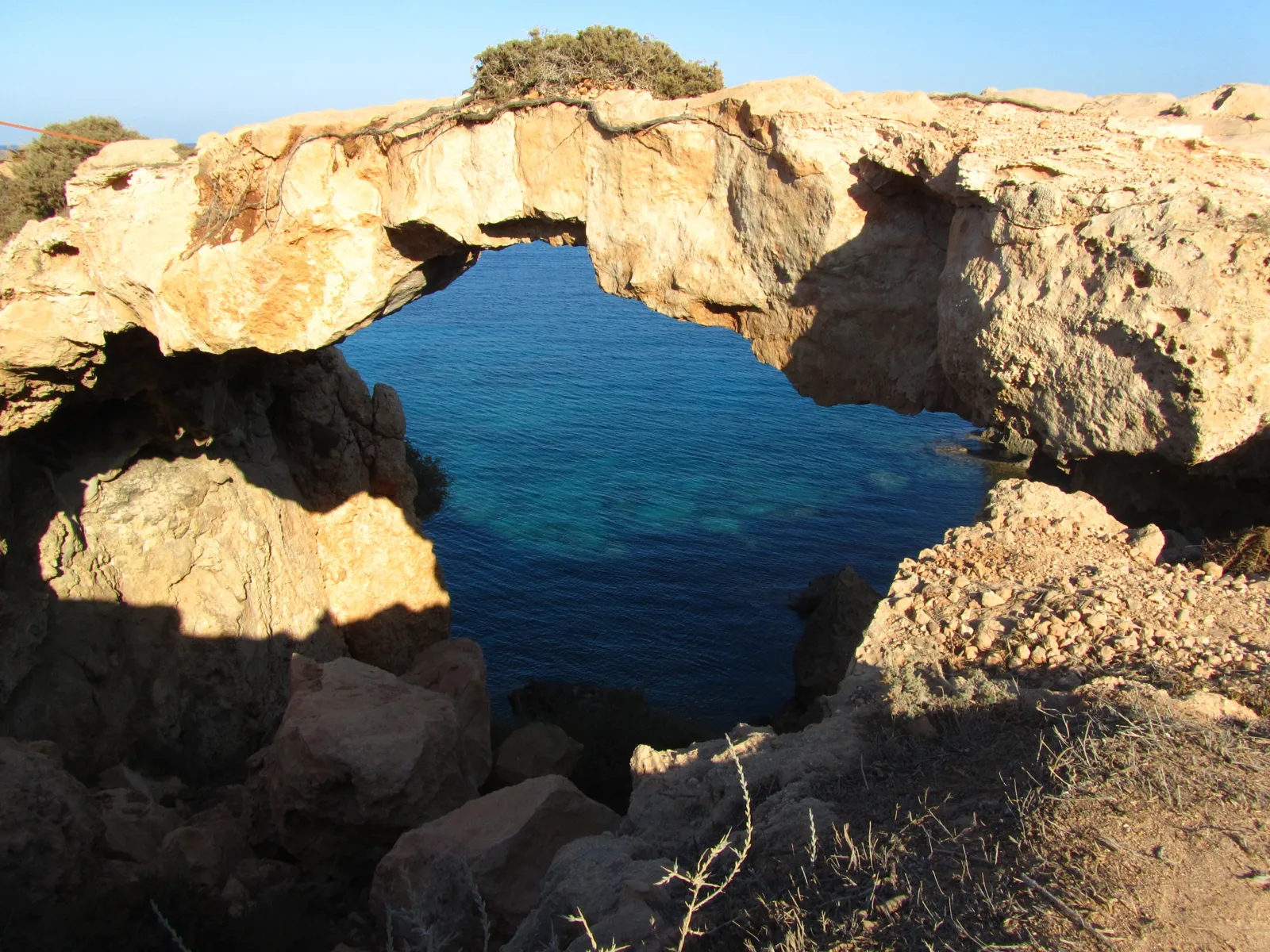
The best time to visit Cyprus is April to June and September to October: it is 22 to 31 °C (72 to 88 °F) in the afternoon on the coast, it hardly rains and the sea is pleasant from late spring. July and August are very hot and very busy. Winter is mild on the coast, but it is the rainy season. To enjoy the still-pleasant sea without the summer heat, the weather in Cyprus in October details temperatures and sunshine.
Cyprus, the third-largest island in the Mediterranean by area, has a very sunny Mediterranean climate: a long, hot, dry summer from May to October, and a mild winter during which most of the rain falls. The interior of the island is much hotter than the coast in summer (more than 37 °C (99 °F) in the afternoon in Nicosia in July), while the Troodos massif stays cool and can be snowy in winter. The choice of season therefore depends as much on your plans (beach, hiking, ancient sites) as on the weather. Here is how to choose, based on the official normals of the Cyprus weather service. Larnaca, Paphos and Nicosia are located on our map of Cyprus.
Safety and entry notes (UK FCDO, GOV.UK, updated 14 August 2026; U.S. Department of State, travel.state.gov, last updated August 13, 2026, both read on 26 October 2026):

Our travel deals for Cyprus
Affiliate links: we earn a commission, at no extra cost to you.
 FlightsKiwi.comCompare flights and airline combinations to Cyprus.Compare flights

- Regional context: the UK FCDO says events in the Middle East have led to heightened tensions, that demonstrations are likely in Cyprus, and that you should avoid protests and political gatherings.
- North of the island: the north is not under the control of the Republic of Cyprus. The FCDO can only provide limited consular support there.
- UN buffer zone (the « Green Line »): do not enter the buffer zone anywhere other than at a designated crossing point (U.S. Department of State).
- Arriving on the island: the U.S. Department of State advises entering and exiting the Republic of Cyprus only at Larnaca and Paphos airports and the seaports of Limassol, Larnaca and Paphos; the UK FCDO warns that entering the Republic through the north (for example via Ercan Airport) is treated as illegal entry.
- Check the latest advice from your government shortly before you travel.
When to go to Cyprus at a glance
- Best times April to June, September–October
- For the beach June to October; May and November for those who feel the cold less
- For hiking and ancient sites March to May, October–November
- Hottest month August, with an average high of 32.7 °C (91 °F) at Larnaca
- Wettest month December (94.5 mm (3.7 in) at Larnaca), followed by January
- Dry season from June to September, it hardly rains at all
- Winter 17 to 18 °C (63 to 64 °F) in the afternoon on the coast; snow possible on the Troodos summits
When to go to Cyprus by priority
- Best weather: April to June and September–October (see also where to go in May)
- Cheapest: November to March, when the coast is mild but rainy
- Fewest crowds: April–May outside Orthodox Easter, and October; July–August are the busiest months
- Events: Limassol carnival (February or March), Orthodox Easter, Kataklysmos (May or June); dates vary with the Orthodox calendar
Cyprus: the calendar at a glance
🔎 Month by month: Cyprus in April · Cyprus in October · Cyprus in November
✅ Best months: April, may, June, September, October
Climate in Cyprus month by month
The table below uses the normals for the Larnaca airport station, on the south-east coast, the island’s main gateway. They are representative of the southern coast; Paphos, in the west, is slightly less hot in summer, and Nicosia, inland, noticeably hotter.
| Month | Avg. max | Avg. min | Rain | Crowds | Prices | Verdict |
|---|---|---|---|---|---|---|
| January | 16.8 °C (62 °F) | 7.5 °C (46 °F) | 78 mm (3.1 in) | Low | Low | Mild by day, rainy, cool sea ⚠️ |
| February | 16.8 °C (62 °F) | 6.9 °C (44 °F) | 41 mm (1.6 in) | Low | Low | Cool, almond trees in bloom, hiking possible ⚠️ |
| March | 19.1 °C (66 °F) | 8.7 °C (48 °F) | 34 mm (1.3 in) | Low to moderate | Low | Early spring, good for walking ⚠️ |
| April | 22.5 °C (73 °F) | 11.7 °C (53 °F) | 18 mm (0.7 in) | Moderate (Orthodox Easter) | Moderate | Ideal for sightseeing and hiking ✅ |
| May | 26.5 °C (80 °F) | 16.0 °C (61 °F) | 9 mm (0.4 in) | Moderate | Moderate | One of the best months, first swims ✅ |
| June | 30.3 °C (87 °F) | 19.8 °C (68 °F) | 3 mm (0.1 in) | High | High | Fine and hot, pleasant sea ✅ |
| July | 32.4 °C (90 °F) | 22.2 °C (72 °F) | 0.6 mm (0.02 in) | Very high | Very high | Very hot, crowded beaches ⚠️ |
| August | 32.7 °C (91 °F) | 22.6 °C (73 °F) | 0.4 mm (0.02 in) | Very high | Very high | Hottest and most expensive month ⚠️ |
| September | 30.9 °C (88 °F) | 19.9 °C (68 °F) | 7 mm (0.3 in) | High | High | Warm sea, heat still strong ✅ |
| October | 28.1 °C (83 °F) | 17.1 °C (63 °F) | 14 mm (0.6 in) | Moderate | Moderate | Excellent compromise between beach and sightseeing ✅ |
| November | 22.6 °C (73 °F) | 12.5 °C (55 °F) | 53 mm (2.1 in) | Low | Low | Mild but the rains return ⚠️ |
| December | 18.3 °C (65 °F) | 9.2 °C (49 °F) | 95 mm (3.7 in) | Low (holidays) | Low to moderate | The wettest month ⚠️ |
According to the same normals, Larnaca has about 8 rainy days (at least 1 mm (0.04 in)) in January and December, compared with practically none from June to September. Sunshine exceeds 370 hours a month in June and July. These averages smooth out extremes: heat waves sometimes push temperatures above 40 °C (104 °F) inland in summer.
Sea temperature month by month
The sea is warmest from August to October (24 to 27 °C (75 to 81 °F)) and drops to 16 °C (61 °F) in February. In midsummer, it is slightly warmer at Larnaca than at Paphos.
| Month | Larnaca | Paphos |
|---|---|---|
| January | 17 °C (63 °F) | 16 °C (61 °F) |
| February | 16 °C (61 °F) | 16 °C (61 °F) |
| March | 17 °C (63 °F) | 17 °C (63 °F) |
| April | 18 °C (64 °F) | 18 °C (64 °F) |
| May | 19 °C (66 °F) | 20 °C (68 °F) |
| June | 22 °C (72 °F) | 21 °C (70 °F) |
| July | 25 °C (77 °F) | 23 °C (73 °F) |
| August | 27 °C (81 °F) | 24 °C (75 °F) |
| September | 26 °C (79 °F) | 25 °C (77 °F) |
| October | 24 °C (75 °F) | 24 °C (75 °F) |
| November | 21 °C (70 °F) | 21 °C (70 °F) |
| December | 18 °C (64 °F) | 18 °C (64 °F) |
The seasons in Cyprus: pros and cons
Spring (March to May): green countryside and mild temperatures
March is still cool in the morning but pleasant in the afternoon (19 °C (66 °F)). April (22.5 °C (73 °F)) and May (26.5 °C (80 °F)) are the best months for hiking in the Akamas or the Troodos, visiting ancient sites and villages, before the heat. Rain becomes rare from April. The sea is still cool in April and warms gradually in May. Orthodox Easter, whose date changes every year, is a major holiday and a period of high demand. This rare rain and still-cool sea are covered in our page on the weather in Cyprus in April, including the Easter period.
- Pros: green, flowering countryside, ideal temperatures for walking, prices still moderate
- Cons: cool swimming before May, crowds around Orthodox Easter
- Our tip: May, to combine sites, hiking and the first swims
Summer (June to August): guaranteed sun, heat and crowds
It hardly rains, highs exceed 30 °C (86 °F) on the coast and 37 °C (99 °F) in Nicosia. This is the peak beach season: the beaches of Ayia Napa, Protaras and Paphos are very busy and prices are at their highest. The Troodos, cooler at altitude, offers an escape. The UK FCDO (GOV.UK, updated 14 August 2026) says there is a high risk of wildfires during the summer season from April to October and advises registering your mobile phone to receive emergency alerts; the emergency number is 112.
- Pros: guaranteed fine weather, warm sea, nightlife in the beach resorts
- Cons: crushing heat inland, crowds, high prices, hiking difficult during the day
- Who is it for? Beach lovers whose dates are fixed: book early and visit sites early in the morning
Autumn (September to November): warm sea without the crowds
September (31 °C (88 °F)) and October (28 °C (82 °F)) are often the best months for swimming: the sea has stored the summer heat and crowds thin out. The first rains return in October, without spoiling stays. November is mild (22.6 °C (73 °F)) but wetter, and marks the end of the beach season for most visitors. This mild but wetter month is covered in our page on the weather in Cyprus in November, for both swimming and sightseeing.
- Pros: warm sea, falling prices, bearable heat again for sightseeing
- Cons: days getting shorter, more frequent showers in November
- Our tip: October, the best compromise between beach, sightseeing and budget
Winter (December to February): mild on the coast, snow on the Troodos
On the coast, it is still 17 to 18 °C (63 to 64 °F) in the afternoon, but it is the rainy season: December and January are the wettest months. In the Troodos massif, the Prodromos station (1,380 m (4,528 ft)) records only 6 to 8 °C (43 to 46 °F) as a high in winter, and snow sometimes allows skiing on the slopes of Mount Olympus. Many beach hotels reduce their activity.
- Pros: low prices, ancient sites and cities without the crowds, mild weather that is rare in Europe
- Cons: rain, cold sea, some beach venues closed
- Who is it for? A cultural stay, hiking on the coast, those escaping the cold
What is the climate like in the different regions of Cyprus?
The island is small, but relief and distance from the sea create real differences between the coast, the central plain and the mountains.
| Station | January high | January low | July high | Rain (wettest month) |
|---|---|---|---|---|
| Larnaca (south-east coast) | 16.8 °C (62 °F) | 7.5 °C (46 °F) | 32.4 °C (90 °F) | 95 mm (3.7 in) in December |
| Paphos (west coast) | 17.0 °C (63 °F) | 8.0 °C (46 °F) | 29.9 °C (86 °F) | 94 mm (3.7 in) in December |
| Limassol (south coast) | 17.6 °C (64 °F) | 8.8 °C (48 °F) | 33.2 °C (92 °F) | 100 mm (3.9 in) in December |
| Nicosia (inland) | 15.8 °C (60 °F) | 5.7 °C (42 °F) | 37.5 °C (100 °F) | 64 mm (2.5 in) in December |
| Prodromos, Troodos (1,380 m (4,528 ft)) | 6.3 °C (43 °F) | 0.7 °C (33 °F) | 28.1 °C (83 °F) | 170 mm (6.7 in) in December |
The south and east coast: Larnaca, Limassol, Ayia Napa
This is the hottest part of the coast in summer (32 to 33 °C (90 to 91 °F) in July–August) and the driest. The resorts of Ayia Napa and Protaras, in the east, are the busiest with beach lovers. June and September are excellent there.
The west coast: Paphos and the Akamas
Paphos is slightly less hot in summer (30 °C (86 °F) in July), thanks to the influence of the sea. It is the best base for the ancient sites of the west and the Akamas peninsula, to be explored in spring or autumn.
Nicosia and the interior
The capital, on the Mesaoria plain, has very hot summers (37 °C (99 °F) in July) and winters cooler than the coast. Visit it in spring, autumn or winter rather than in midsummer.
The Troodos massif
At altitude, temperatures are markedly lower: 28 °C (82 °F) in the afternoon in July at Prodromos, but barely 6 °C (43 °F) in January, with the island’s heaviest winter precipitation. It is the ideal refuge in summer, and a snow destination in midwinter in some years.
The table below summarizes, month by month, the recommended period for each region.
| Month | South and east coast (Larnaca, Limassol, Ayia Napa) | Paphos and the Akamas | Nicosia and the interior | Troodos massif |
|---|---|---|---|---|
| January | ⚠️ | ⚠️ | ⚠️ | ⚠️ |
| February | ⚠️ | ⚠️ | ⚠️ | ⚠️ |
| March | ⚠️ | ⚠️ | ✅ | ⚠️ |
| April | ✅ | ✅ | ✅ | ⚠️ |
| May | ✅ | ✅ | ✅ | ⚠️ |
| June | ✅ | ✅ | ⚠️ | ✅ |
| July | ⚠️ | ⚠️ | ❌ | ✅ |
| August | ⚠️ | ⚠️ | ❌ | ✅ |
| September | ✅ | ✅ | ⚠️ | ✅ |
| October | ✅ | ✅ | ✅ | ⚠️ |
| November | ⚠️ | ⚠️ | ✅ | ⚠️ |
| December | ⚠️ | ⚠️ | ⚠️ | ⚠️ |
When to go to Cyprus by trip type
| Trip | Best time | Where? |
|---|---|---|
| Beach and swimming | June to October | Ayia Napa, Protaras, Paphos, Limassol |
| Hiking | March to May, October–November; summer at altitude | Akamas, Troodos |
| Ancient sites and culture | March to May, October to December | Paphos, Kourion, Nicosia |
| Diving | June to October | Larnaca, Protaras, Paphos |
| Budget | November to March | Everywhere |
| Family | May–June, September–October | South and east coast |
Major events in Cyprus
| Date | Event | Location |
|---|---|---|
| February or March | Carnival (dates tied to the Orthodox calendar) | Limassol mainly |
| March, April or May | Orthodox Easter (dates vary): the biggest holiday of the year | Whole island |
| May or June | Kataklysmos, the water festival at Orthodox Pentecost (dates vary) | Coastal towns, Larnaca especially |
| Late summer | Wine festival (dates to be checked) | Limassol |
| December | Christmas and year-end holidays | Whole island |
Cyprus month by month: what to expect
Cyprus in January: Mild by day on the coast (17 °C (63 °F)) but rainy (78 mm (3.1 in)). Snow possible on the Troodos. Low prices, quiet sites.
Cyprus in February: Cool (17 °C (63 °F) in the afternoon, 7 °C (45 °F) at night). Almond trees in bloom, carnival in some years.
Cyprus in March: Early spring (19 °C (66 °F)), green countryside. A good month for hiking and sites.
Cyprus in April: Mild (22.5 °C (73 °F)) and almost dry. Orthodox Easter in some years: book early.
Cyprus in May: One of the best months: 26.5 °C (80 °F), very little rain, first swims.
Cyprus in June: Hot (30 °C (86 °F)) and dry, pleasant sea. Start of the peak season.
Cyprus in July: Very hot (32 °C (90 °F) on the coast, 37 °C (99 °F) in Nicosia) and very busy. Beach, and sightseeing early in the morning.
Cyprus in August: The hottest and most expensive month. Take refuge in the Troodos in the hot hours.
Cyprus in September: Warm sea, heat still strong (31 °C (88 °F)). Fewer people once school is back.
Cyprus in October: Excellent compromise (28 °C (82 °F)), sea still warm, first showers.
Cyprus in November: Mild (22.6 °C (73 °F)) but the rains return (53 mm (2.1 in)). End of the beach season.
Cyprus in December: The wettest month (95 mm (3.7 in)), 18 °C (64 °F) in the afternoon. Christmas atmosphere, low prices.
Which periods should you avoid for Cyprus?
- July–August: more than 32 °C (90 °F) in the afternoon at Larnaca, more than 37 °C (99 °F) in Nicosia, crowds and prices at their highest
- December and January for the beach: the wettest months (95 mm (3.7 in) and 78 mm (3.1 in) at Larnaca) and a cool sea
- The Troodos in midwinter if you are not coming for the snow
When to book your stay in Cyprus
For Orthodox Easter, July–August and school holidays, book flights and accommodation 3 to 4 months ahead. For May, June, September and October, 1 to 2 months is often enough. Arrive through the airports of Larnaca or Paphos (see the safety and entry notes at the top of this page).
Planning your trip to Cyprus
- Entry requirements: Cyprus is an EU member, but the island is divided and the rules differ between the south and the north. For passport and visa rules, see our entry requirements for Cyprus.
- Time difference: Cyprus is on UTC+2 in winter and UTC+3 in summer.
- Currency: the euro in the Republic of Cyprus.
- Health: to get medically necessary state healthcare in Cyprus, UK travelers need a GHIC or EHIC (UK FCDO, GOV.UK, updated 14 August 2026). Check that your travel insurance also covers the north if you plan to go there. The emergency number is 112.
To organize your trip, see our Cyprus travel guide. Other Mediterranean islands: when to go to Malta and Crete. To compare, see also when to go to Greece and when to go to Turkey.
Frequently asked questions
What is the best month to visit Cyprus?
May and October are the best compromises: 26 to 28 °C (79 to 82 °F) in the afternoon, very little rain, a pleasant sea and moderate crowds. June and September also suit the beach very well.
Is Cyprus too hot in summer?
On the coast, July and August average a high of about 32 to 33 °C (90 to 91 °F); in Nicosia, more than 37 °C (99 °F). Heat waves sometimes push temperatures above 40 °C (104 °F). Plan visits early in the morning.
Can you swim in Cyprus in winter?
The sea is cool from December to April: swimming is for the hardiest. For pleasant water, aim for June to October.
What is the wettest month in Cyprus?
December, with about 95 mm (3.7 in) at Larnaca, followed by January. From June to September, it practically never rains on the coast.
Does it snow in Cyprus?
Yes, on the summits of the Troodos massif in winter. On the coast, snow is exceptional.
Can you visit the north of Cyprus?
Yes: the crossing points are the official routes between the two sides. The UK FCDO (GOV.UK, updated 14 August 2026) says it can only provide limited consular support in areas of the north not under the control of the Republic of Cyprus, so check your own government’s advice before you go.
Is Cyprus in October a good idea?
Yes, it is one of the best months: about 28 °C (82 °F) in the afternoon at Larnaca, 14 mm (0.6 in) of rain on average, a still-warm sea and moderate crowds.
Cyprus in April or May?
April (about 22.5 °C (73 °F)) suits sightseeing and hiking, with green countryside; May (26.5 °C (80 °F), 9 mm (0.4 in) of rain) also allows the first swims. Both are cheaper and quieter than summer.
Our sources
- Cyprus Meteorological Service: normals published for the stations of Larnaca, Paphos, Limassol, Nicosia and Prodromos (Troodos massif) (reference period not specified by the source)
- Safety, entry and health information read on 26 October 2026: UK FCDO, foreign travel advice for Cyprus (GOV.UK, updated 14 August 2026), and U.S. Department of State, Cyprus country information (travel.state.gov, last updated August 13, 2026)
- Deutscher Wetterdienst (DWD), climate tables: average sea temperature at Larnaca and Paphos
- Our methodology
Updated November 2026.