The things to do in Prague add up to a thousand years of architecture on foot: the castle and St. Vitus Cathedral tower over the Vltava, Charles Bridge leads to the Old Town and its astronomical clock, and the lanes of Malá Strana climb toward Baroque gardens. The city is compact and affordable compared with Western European capitals, but very busy. This guide helps you choose your sights, your neighbourhood, the best season and your day trips for a 3- to 5-day stay.

Our travel deals for Prague
Affiliate links: we earn a commission, at no extra cost to you.
 Learn the languageTargumiLearn a few words of Czech before you go — 30% off via our link.See the course
- FlightsKiwi.comCompare flights and airline combinations to Prague.Compare flights
- Airport transferKiwitaxiPrivate driver booked in advance at a fixed price.Book a transfer
- City passGo CityMulti-attraction pass at a fixed price: worth it only if you visit a lot.See passes




Prague at a glance
- Airports Václav Havel Airport PragueWest of the city, not served by the metro
- Ideal length 3 days, plus a day tripKutná Hora, Karlštejn
- Best time May–June and September; December for the Christmas markets
- Time zone UTC+1, UTC+2 in summer1 hour ahead of London, 6 hours ahead of New YorkLocal time now: –:–
- Entry Schengen area: no visa for short stays for US and UK citizens · travel.state.gov · GOV.UKRegister your address within 3 days (usually done by your accommodation)
- Currency Czech koruna (CZK) · currenciesThe euro is not the official currency
- Electricity check plug types and voltage before you go · plugs
- Budget see our budget section
Things to do in Prague: the highlights
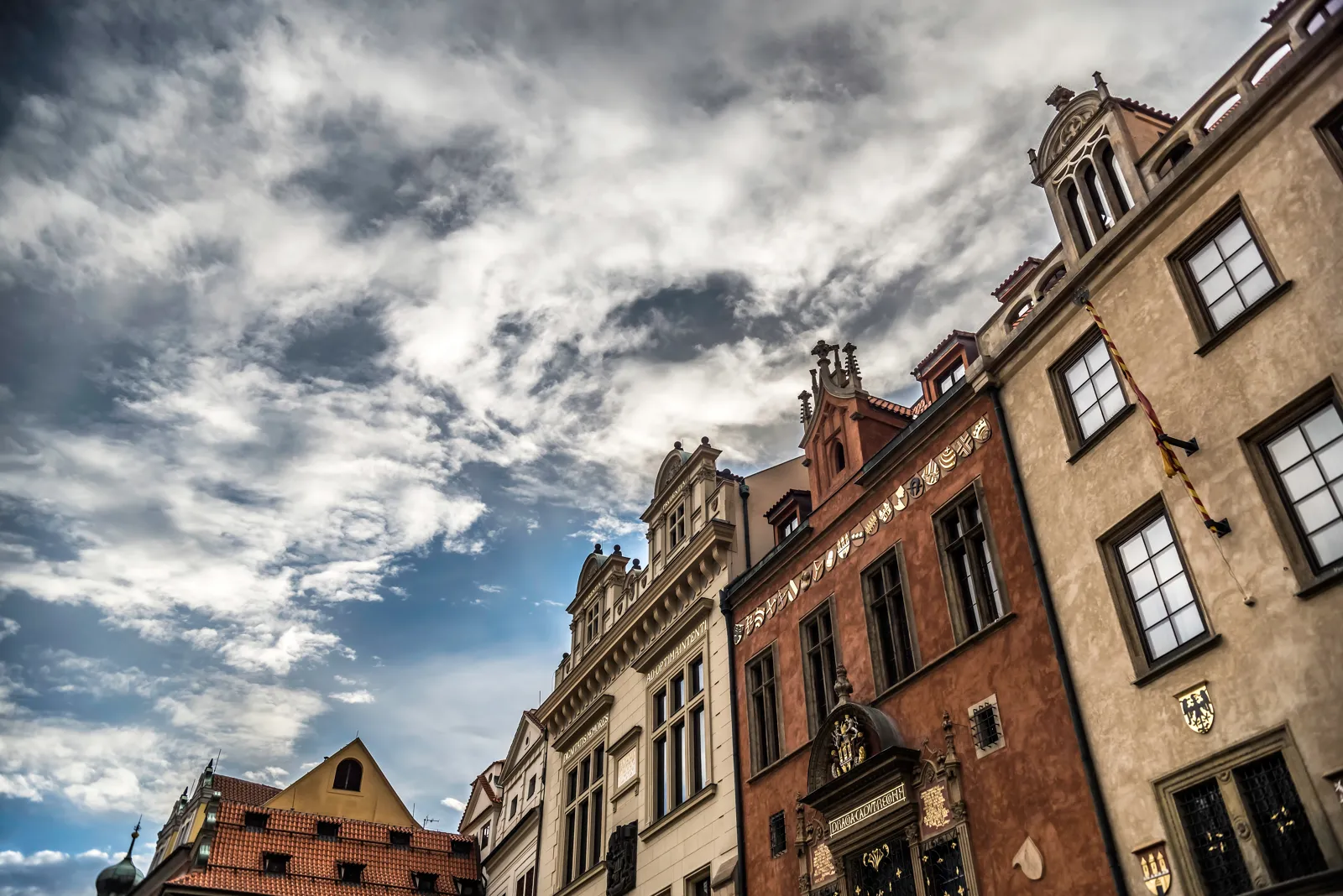
Prague Castle and St. Vitus Cathedral
On Hradčany hill, Prague Castle is a vast complex of palaces, courtyards, churches and gardens, the historic seat of the kings of Bohemia and today of the presidency. You can visit Gothic St. Vitus Cathedral, the Old Royal Palace, St. George’s Basilica and Golden Lane, lined with small colourful houses. Allow half a day and arrive at opening time: security checks at the entrance create queues in high season. The changing of the guard takes place at noon.
Charles Bridge
Built in the 14th century under Charles IV, this stone pedestrian bridge links the Old Town to Malá Strana. Its thirty Baroque statues and Gothic towers make it one of the city’s symbols. During the day it is packed with visitors and vendors: go early in the morning or late in the evening to enjoy it. The Old Town Bridge Tower is open to visitors and has a fine view.
Old Town Square and the astronomical clock
Old Town Square (Staroměstské náměstí) is framed by the Church of Our Lady before Týn, St. Nicholas Church and the Old Town Hall, whose medieval astronomical clock sets its figures in motion every hour during the day. The town hall tower offers one of the best views over the rooftops. The square is also the heart of the Easter and Christmas markets.
Josefov, the former Jewish quarter
Between Old Town Square and the Vltava, Josefov preserves several synagogues, including the Old-New Synagogue, one of the oldest active synagogues in Europe, and the Spanish Synagogue, with rich Moorish decoration. The Jewish Museum in Prague runs a circuit on a combined ticket that includes the Old Jewish Cemetery and the Pinkas Synagogue, covered with the names of Czech victims of the Holocaust.
Malá Strana and Petřín Hill
Below the castle, the « Lesser Town » is a Baroque district of palaces, embassies and gardens, dominated by St. Nicholas Church. The Wallenstein Gardens are free to visit in the warmer months, and the graffiti-covered John Lennon Wall draws photographers. Above, wooded Petřín Hill, reached by funicular, has orchards in bloom in spring, a metal lookout tower and a view over the whole city.
New Town and Wenceslas Square
Founded in the 14th century, the New Town is laid out around Wenceslas Square, a broad boulevard dominated by the National Museum and the scene of the 1968 and 1989 demonstrations. On the Vltava, the Dancing House, designed by Frank Gehry and Vlado Milunić, contrasts with the neighbouring Art Nouveau buildings. For dinner, this district is often cheaper than the Old Town.
Vyšehrad and Strahov Monastery
South of the centre, Vyšehrad fortress, on a rock above the Vltava, is a quiet place for a walk, with the Basilica of Saints Peter and Paul and the cemetery where Dvořák and Smetana are buried. Above the castle, Strahov Monastery has two remarkable Baroque library halls, viewed from the doorway.
Day trips from Prague
Kutná Hora, a former mining town and UNESCO World Heritage Site, is a little over an hour away by train: visit St. Barbara’s Church and the Sedlec Ossuary. Karlštejn Castle, under an hour by train, is the country’s most visited Gothic fortress. Terezín, a former Nazi camp and ghetto, is a major memorial site. Český Krumlov, a medieval town on the Vltava, deserves an overnight stay, as the trip takes about three hours.
Prague neighbourhoods
- Old Town (Staré Město): central and picturesque, but expensive and very busy
- Malá Strana: Baroque charm, quiet in the evening, at the foot of the castle
- New Town (Nové Město): well connected, more choice of hotels, lively
- Vinohrady: residential, cafés and parks, a few metro or tram stops away
- Žižkov and Karlín: more affordable, neighbourhood life, restaurants and bars
- Hradčany: around the castle, very quiet in the evening but uphill
Itinerary: 3 to 5 days in Prague
- Day 1: Old Town Square, the astronomical clock, Josefov, then Charles Bridge at sunset
- Day 2: Prague Castle and St. Vitus Cathedral in the morning, Malá Strana, the Wallenstein Gardens and Petřín Hill in the afternoon
- Day 3: New Town, Wenceslas Square, the Dancing House, then Vyšehrad; in the evening, a Vltava cruise or a concert
- Day 4: day trip to Kutná Hora or Karlštejn
- Day 5: Strahov Monastery, the Vinohrady or Karlín district, or two days in Český Krumlov
With only two days, focus on the Old Town, Charles Bridge, Malá Strana and the castle.
When to go to Prague
The best time to visit Prague is May to June and September: 20 to 24 °C (68 to 76 °F) in the afternoon, long days and slightly smaller crowds than in summer. July and August are the warmest (26 °C, 80 °F) and busiest. December is the other high point, for the Christmas markets, despite the cold. Prague has a temperate climate with a continental tendency: warm summers, sometimes stormy, and cold winters around 0 °C (32 °F). Notably, summer brings most of the rain, in showers, while winter is fairly dry.
The table uses normals for the Clementinum station, in the heart of the historic centre, from the Czech Hydrometeorological Institute.
| Month | High °C (°F) | Low °C (°F) | Rain mm (in) | Crowds | Prices | Verdict |
|---|---|---|---|---|---|---|
| January | 3.9 (39) | -0.5 (31) | 18 (0.7) | Low | Low | ❌ Cold, short days, low prices |
| February | 5.6 (42) | 0.0 (32) | 16 (0.6) | Low | Low | ⚠️ Cold but dry, quiet city |
| March | 10.0 (50) | 2.9 (37) | 26 (1.0) | Low to moderate | Low → medium | ⚠️ End of winter, changeable weather |
| April | 16.1 (61) | 6.9 (44) | 25 (1.0) | Moderate (Easter) | Medium | ✅ Spring, Easter markets |
| May | 20.9 (70) | 11.3 (52) | 58 (2.3) | High | Medium → high | ✅ Mild and in bloom, Prague Spring festival |
| June | 24.4 (76) | 14.8 (59) | 69 (2.7) | High | High | ✅ Long days, possible thunderstorms |
| July | 26.5 (80) | 16.6 (62) | 67 (2.6) | Very high | High | ⚠️ Warmest, crowds in the centre |
| August | 25.9 (79) | 16.3 (61) | 62 (2.4) | Very high | High | ⚠️ Warm and very busy |
| September | 20.4 (69) | 12.2 (54) | 34 (1.3) | Moderate to high | Medium | ✅ The best compromise |
| October | 14.4 (58) | 7.9 (46) | 30 (1.2) | Moderate | Medium | ✅ Autumn colours, cooler |
| November | 8.5 (47) | 3.9 (39) | 26 (1.0) | Low | Low | ⚠️ Grey and cool, Christmas markets at month’s end |
| December | 4.8 (41) | 0.6 (33) | 23 (0.9) | High (Christmas markets) | High over the holidays | ⚠️ Christmas atmosphere, cold |
- Spring (April–May): 16 to 21 °C (61 to 70 °F) in the afternoon, Petřín orchards in bloom, Easter markets; nights stay cool in April. The Prague Spring classical music festival opens on 12 May.
- Summer (June–August): 24 to 26 °C (76 to 80 °F), café terraces and Vltava cruises, but late-afternoon thunderstorms, possible heatwaves above 30 °C (86 °F) and peak crowds at the castle and on Charles Bridge.
- Autumn (September–October): September stays mild (20 °C, 68 °F) and dry; October brings autumn colours and cool mornings. November is grey and quiet.
- Winter (December–February): 4 to 6 °C (39 to 42 °F) in the afternoon, nights around 0 °C (32 °F), possible snow. The Christmas markets open from late November; January and February are the quietest and cheapest months.
| Trip type | Best time |
|---|---|
| City break and sights | May–June, September–October |
| Christmas markets | Late November to December |
| Classical concerts | May–June (Prague Spring), year-round in churches |
| Low budget, few crowds | January to March, November |
| Day trips (Český Krumlov, Karlštejn) | May to October |
For a tour of Bohemia and Moravia, see our page on when to go to the Czech Republic, and to compare with other destinations, where to go in May or where to go in December.
Budget for a trip to Prague
Prague remains cheaper than Western European capitals for meals, beer and transport, but prices in the historic centre have risen sharply. Indicative amounts per person per day, excluding flights, converted at the European Central Bank rate of 23 October 2026:
| Item | Budget | Comfort |
|---|---|---|
| Accommodation (shared double room) | about CZK 600 to 1,200 | about CZK 1,700 to 3,400 |
| Meals | about CZK 500 to 750 | about CZK 1,000 to 1,700 |
| Transport (metro, tram) | about CZK 100 to 200 | about CZK 200 to 350 |
| Sights | about CZK 250 to 500 | about CZK 600 to 1,000 |
| Total per day | roughly CZK 1,450 to 2,450 per person per day | roughly CZK 3,400 to 6,100 per person per day |
To keep costs down: have the weekday lunch menu (denní menu), eat away from Old Town Square, and enjoy the gardens, Petřín and Vyšehrad, which are free.
Prague: who is it for?
Our verdict by travel style, based on the information in this guide:
- Culture and architecture: ideal: the castle and St. Vitus Cathedral, Charles Bridge, Josefov, the Strahov libraries.
- Weekend: ideal: a compact city you can explore on foot.
- Low budget: yes: roughly CZK 1,450 to 2,450 per person per day, with the daily lunch menu (denní menu) and free gardens.
- Couples: yes: Malá Strana is quiet in the evening, Petřín Hill, Charles Bridge early in the morning.
- Families: possible: children enjoy the astronomical clock and the Petřín funicular, but many old buildings have no lift.
- Christmas markets: yes in December, on Old Town Square; book accommodation several months ahead.
Getting around Prague
- From the airport: the metro does not serve the airport. City buses run to the nearest metro stations, and an express bus (AE) links the main railway station. Taxis and ride-hailing are also available; book through the app or at the official counter.
- On foot: the centre is best explored on foot, with cobblestones and climbs up to the castle.
- Metro and trams: three metro lines and a dense tram network, including at night. Tram 22 runs through Malá Strana and up to the castle.
- Tickets: according to the UK FCDO (GOV.UK, updated 11 August 2026), you must validate your ticket in a machine before starting your journey (tickets bought from self-service terminals on trams and buses need no validation). Inspectors issue on-the-spot fines of CZK 1,000 without a validated ticket. The 30- and 90-minute tickets are not valid on the Petřín funicular, which requires its own CZK 60 ticket or a 24-hour (or longer) ticket.
- Train: the main station (Hlavní nádraží) serves Kutná Hora, Karlštejn and the main cities of the country and neighbouring countries.
- Car: pointless in the city. Czechia has zero tolerance for alcohol or drugs at the wheel: fines of up to CZK 50,000, licence confiscation and possible imprisonment (GOV.UK).
Prague airport transfer: buses 59 and 100, Airport Express and taxi
Václav Havel Airport is not served by the metro: public transport consists of bus lines (and a trolleybus) that connect to a metro station, plus an express line to the main railway station. All leave from outside the arrival halls.
Trolleybus 59 and bus 100: the city network
According to the official site of Prague Airport (checked 26 October 2026), trolleybus 59 runs to Veleslavín station (metro line A) in about 15 minutes, and bus 100 to Zličín (metro line B) in about 18 minutes; at night, lines 910 and 907 reach the centre in about 45 minutes. Both stop outside the arrival halls of Terminals 1 and 2 and use ordinary Prague public transport (PID) tickets. Buy your ticket before boarding: machines in the arrival halls and at the stops (most accept contactless cards), SMS, the PID Lítačka app or the public transport counters in the arrival halls.
Airport Express (AE) to the main station
The AE line links Terminal 1 to the main railway station (Praha hlavní nádraží) with no change, in about 40 minutes depending on traffic. It has its own fare: ordinary network tickets are not valid. From the airport, tickets are sold at the Visitor Centre in the arrival hall or by the driver; toward the airport, by the driver, the Prague public transport information centre or Czech Railways. The airport warns that roadworks at the Aviatická intersection may lengthen journey times at rush hour (prg.aero, checked 26 October 2026).
Taxi
Taxis at Prague airport can be booked through Uber, in the app, at self-service kiosks or at service counters; booking through a kiosk is usually slightly more expensive (GOV.UK). The UK FCDO also warns of drivers posing as taxis in unmarked cars and overcharging: use a major taxi company and check the rates on the side of the car before getting in.
| Option | Where to catch it | Fare | Source |
|---|---|---|---|
| Trolleybus 59 + metro A | Stops outside the arrival halls | Ordinary PID ticket | prg.aero |
| Bus 100 + metro B | Stops outside the arrival halls | Ordinary PID ticket | prg.aero |
| Airport Express (AE) | Terminal 1 → main station | Own fare (PID tickets not valid) | prg.aero |
| Taxi (Uber) | App, kiosks, counters | Price shown when booking | GOV.UK |
Booking a transfer in Prague
A private transfer booked in advance (a driver waiting on arrival, price fixed at booking) mainly makes sense for late arrivals, bulky luggage, families with young children or groups sharing the cost. Before booking, check what the price includes (tolls, luggage, waiting time if your flight is delayed), the exact meeting point in the terminal, the cancellation terms and the name of the company actually doing the trip.
Sources: Prague Airport, « Public Transport Buses » and « Airport Express » pages (prg.aero), checked 26 October 2026; UK FCDO, Czechia travel advice (GOV.UK, updated 11 August 2026).
Where to stay in Prague
For a first visit, the Old Town and Malá Strana let you do everything on foot, but they are the most expensive and busiest areas. The New Town is a good compromise with the largest choice of hotels. Vinohrady, Žižkov and Karlín, a few minutes away by tram or metro, are quieter and cheaper.
Old buildings do not always have a lift or air conditioning, which is useful in July–August. For the Christmas markets, New Year and summer, book several months ahead.
Entry requirements, health and safety
- US citizens: according to the U.S. Department of State (travel.state.gov, last updated December 11, 2025), Czechia applies Schengen rules. The State Department recommends a passport valid for at least six months beyond your arrival date in the Schengen area; you need sufficient proof of funds, a return ticket and proof of valid medical insurance covering hospitalisation and treatment costs.
- UK citizens: according to the UK FCDO (GOV.UK, updated 11 August 2026), you can stay without a visa for up to 90 days in any 180-day period. Your passport must have been issued less than 10 years before the day you arrive and be valid for at least 3 months after the day you plan to leave the Schengen area; you may be asked for a return or onward ticket. The EU Entry/Exit System (EES) is being implemented.
- Registration and ID: without a Czech residence permit, you must register your address with the foreign police within 3 days of arrival, which hotels and accommodation services can do for you; failing to register can lead to a fine of up to CZK 3,000. Carrying ID is a legal requirement: always carry your passport (GOV.UK).
- Health: UK travellers need a GHIC or EHIC for medically necessary state healthcare (GOV.UK). The U.S. Department of State notes that patients usually pay at the time of treatment and then claim from their insurer.
- Pickpockets and scams: GOV.UK reports that petty theft is a problem in Prague’s tourist areas, notably on busy metro and bus routes from the airport and on trams to Prague Castle. Beware of fake plainclothes police officers asking to see your money and passport, and change money at an exchange office or bank, never on the street, where notes are often counterfeit.
- Behaviour: you may be arrested or fined for drunken or offensive behaviour, and some city-centre bars refuse stag groups (GOV.UK). Nightclub consumption charges are often high.
- Emergencies: dial 112. Every lamppost in Prague has a 6-digit number at eye level to help you tell the police where you are (GOV.UK).
Before you go, see our travel insurance guide.
Practical tips for Prague
- Money: cards are very widely accepted. If you are offered the option of paying by card in your home currency or in euros, choose koruna to avoid an unfavourable conversion. Be wary of exchange offices advertising very attractive rates, and take care when using cash machines.
- Shoes: the cobblestones in the centre are slippery in the rain and in winter.
- Mobile data: check your provider’s roaming charges before you leave, or use a travel eSIM.
- Language: English is widely spoken in the centre; a few words of Czech (« dobrý den » for hello, « děkuji » for thank you) are appreciated. To learn a few words before you go, try Targumi’s online Czech lessons with native teachers (30% off via our link).
Read also
To set your dates, see when to go to the Czech Republic. To continue by train, our guides to Vienna and things to do in Krakow cover two other Central European cities.
Frequently asked questions
How many days do you need in Prague?
Three days let you see the Old Town, Charles Bridge, Malá Strana and the castle. Allow four to five days to add Vyšehrad and a day trip to Kutná Hora or Karlštejn.
What is the best time to visit Prague?
May–June and September, with 20 to 24 °C (68 to 76 °F) in the afternoon according to ČHMÚ 1991–2020 normals. December is very popular for the Christmas markets, despite the cold.
Can you pay in euros in Prague?
The official currency is the Czech koruna. Some tourist shops accept euros, but often at a poor rate: pay in koruna, by card or in cash withdrawn from a bank ATM.
How do you get from the airport to central Prague?
The metro does not serve the airport. Take trolleybus 59 or bus 100 to a metro station, the AE express bus to the main station, or a taxi booked through the official channels or an app.
How much does 3 days in Prague cost?
Allow roughly CZK 4,400 to 7,300 per person on a budget and CZK 10,200 to 18,200 in comfort, excluding flights, depending on the season and the area where you stay.
Is Prague safe?
Generally yes, but the UK FCDO reports frequent petty theft in tourist areas, on airport bus and metro routes and on trams to the castle, as well as scams by fake police officers.
Before buying a tourist card, read our comparison of the Prague pass options (official Visitor Pass or Go City).
Our sources
- Czech Hydrometeorological Institute (ČHMÚ): 1991–2020 normals, Prague-Clementinum station
- Entry, health and safety information read on 26 October 2026: U.S. Department of State, Czechia country information (travel.state.gov, last updated December 11, 2025), and UK FCDO, foreign travel advice for Czechia (GOV.UK, updated 11 August 2026)
- Prague Airport (prg.aero): public transport and Airport Express pages, checked 26 October 2026
- European Central Bank reference rates of 23 October 2026 (budget conversion)
- Our methodology
Updated October 2026.
To extend your trip, see our Czech Republic travel guide, as well as our guides to Austria, Hungary, Poland and Germany, and our other destinations in Europe.