Things to do in Krakow start with history: Poland’s former royal capital was spared the destruction of the Second World War, leaving a medieval Old Town around the vast Market Square, Wawel Castle and Cathedral above the Vistula, and Kazimierz, the former Jewish quarter that is now the heart of the city’s nightlife. Krakow is also the base for visits to Auschwitz-Birkenau and the Wieliczka Salt Mine. This guide helps you choose what to see, where to stay, when to go and how to plan 3 to 5 days.
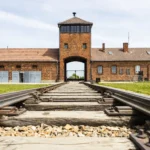
For the memorial, our guide to visiting Auschwitz-Birkenau covers booking, opening hours and getting there from Krakow.

Our travel deals for Krakow
Affiliate links: we earn a commission, at no extra cost to you.
 Learn the languageTargumiLearn a few words of Polish before you go — 30% off via our link.See the course
- FlightsKiwi.comCompare flights and airline combinations to Krakow.Compare flights
- Airport transferKiwitaxiPrivate driver booked in advance at a fixed price.Book a transfer



Krakow at a glance
- Airports Kraków John Paul II Airport(Balice), west of the city, linked to the main station by train
- Ideal length 3 days for the city4 to 5 days with Auschwitz-Birkenau and Wieliczka
- Best time May–June and September; December for the Christmas market
- Time zone UTC+1, UTC+2 in summer1 hour ahead of London, 6 hours ahead of New YorkLocal time now: –:–
- Entry Schengen area: no visa for short stays for US and UK citizens · travel.state.gov · GOV.UK
- Currency Polish złoty (PLN) · currenciesThe euro is not the official currency
- Electricity check plug types and voltage before you go · plugs
- Budget see our budget section
Things to do in Krakow: the highlights
Market Square (Rynek Główny) and the Cloth Hall
At roughly 200 m (656 ft) per side, Rynek Główny is one of the largest medieval squares in Europe. In the middle, the Cloth Hall (Sukiennice), a Renaissance covered market, has amber and craft stalls on the ground floor and a gallery of 19th-century Polish painting upstairs. Beneath the square, the Rynek Underground museum displays the remains of the medieval town. The Town Hall Tower, the only surviving part of the old town hall, is open to visitors. Torn between Krakow and the capital? Our Krakow or Warsaw comparison puts the two cities side by side.
St. Mary’s Basilica
Its two unequal towers dominate the Market Square. Inside, the carved wooden altarpiece by Veit Stoss, from the late 15th century, is a masterpiece of late Gothic art. Every hour a trumpeter plays the hejnał from the taller tower, a tune that breaks off mid-phrase in memory, legend says, of a watchman struck by an arrow. Tourists pay to visit the nave, and modest dress is expected.
Wawel Hill: castle and cathedral
On a rise above the Vistula, Wawel was the seat of Poland’s kings for centuries. The cathedral, where kings were crowned and buried, can be visited with its crypt and the tower of the Sigismund Bell. The Renaissance castle, with its arcaded courtyard, is seen on several separate paid routes (State Rooms, Treasury and Armoury, etc.): tickets are limited, so book online in high season. At the foot of the hill, the Dragon’s Den recalls the city’s founding legend.
Kazimierz, the former Jewish quarter
Originally a separate town, Kazimierz was for centuries one of the great centres of Jewish life in Europe. You can visit the Old Synagogue, now a museum, the Remuh Synagogue and its cemetery, and the Tempel Synagogue. The district, with its weathered façades, is now full of cafés, galleries and bars, especially around Plac Nowy, known for the zapiekanki (toasted open baguettes) sold at its central round market hall.
Podgórze, the ghetto and Oskar Schindler’s factory
Across the Vistula, Podgórze was the site of the ghetto set up by the Nazis in 1941. Ghetto Heroes Square has a memorial of metal chairs, and Tadeusz Pankiewicz’s pharmacy is now a museum. Oskar Schindler’s former factory houses an exhibition on Krakow under occupation from 1939 to 1945: entry is by timed slot, often sold out, so book ahead.
The Old Town, the Planty and the university
The Royal Route runs from the Barbican, a brick fortification, and St. Florian’s Gate to Wawel, via Floriańska Street, the Market Square and Grodzka Street. The Old Town is ringed by the Planty, a belt of gardens laid out where the city walls once stood. The Collegium Maius, the oldest building of the Jagiellonian University, where Copernicus studied, has a Gothic courtyard and can be visited with a guide.
Kościuszko Mound and Nowa Huta
West of the centre, Kościuszko Mound, an artificial hill raised in the 19th century, offers a panorama of the city and, on clear days, of the Tatra Mountains. To the east, Nowa Huta, a workers’ town built in the 1950s around a huge steelworks, is a rare example of socialist realist urban planning; it is reached by tram from the centre.
Auschwitz-Birkenau
The former Nazi concentration and extermination camp of Auschwitz-Birkenau, in Oświęcim, about 70 km (43 mi) west of Krakow, is now a memorial and museum listed as a UNESCO World Heritage Site. Visiting both sites (Auschwitz I and Birkenau) takes at least half a day on site, plus the trip by bus, train or organised tour. Entry must be booked on the Memorial’s official website, and a guided tour is often required at the busiest times. The visit is emotionally demanding and not recommended for young children.
Wieliczka Salt Mine
About 15 km (9 mi) southeast of Krakow, the Wieliczka Salt Mine, worked since the Middle Ages, can only be visited with a guide. The tourist route descends several dozen metres underground through galleries, underground lakes and St. Kinga’s Chapel, carved entirely from salt. Allow about three hours, plenty of stairs on the way down and a cool temperature all year: bring a sweater. Regional trains and buses run there from the centre.
Krakow neighbourhoods
- Old Town (Stare Miasto): at the centre of everything, walking distance from Wawel and Kazimierz; the most expensive, lively in the evening
- Kazimierz: charm, restaurants and bars, very lively; noisy at weekends
- Podgórze: south of the Vistula, quieter and cheaper, near Schindler’s factory
- Kleparz and the station area: handy for day trips and the airport, a 10-minute walk from the Market Square
- Zwierzyniec and Salwator: residential, along the Vistula, toward Kościuszko Mound
Itinerary: 3 to 5 days in Krakow
- Day 1: Barbican, Floriańska Street, Market Square, St. Mary’s Basilica, Cloth Hall and Rynek Underground, then a walk around the Planty
- Day 2: Wawel Hill (cathedral and castle) in the morning, then Kazimierz, its synagogues and dinner on Plac Nowy
- Day 3: Podgórze, Ghetto Heroes Square and Oskar Schindler’s factory, then sunset at Kościuszko Mound
- Day 4: a day at the Auschwitz-Birkenau Memorial
- Day 5: Wieliczka Salt Mine in the morning, Nowa Huta or the Collegium Maius in the afternoon
With only two days, focus on the Old Town, Wawel and Kazimierz. With a week, add two days in Zakopane, at the foot of the Tatras, about two hours away by bus or train.
When to go to Krakow
The best time to visit Krakow is May to June and September: 20 to 23 °C (68 to 73 °F) in the afternoon, long days and café terraces open on the Market Square. July and August are the warmest months (25 °C, 77 °F) but also the wettest, with thunderstorms, and the busiest. Winter is cold, with nights below freezing from December to March, but the Christmas market livens up the Market Square in December. Krakow has a temperate climate with a continental tendency.
The table uses normals for the Kraków Airport station, about 10 km (6 mi) west of the centre, from the Polish Institute of Meteorology and Water Management (IMGW).
| Month | High °C (°F) | Low °C (°F) | Rain mm (in) | Crowds | Prices | Verdict |
|---|---|---|---|---|---|---|
| January | 1.6 (35) | -4.7 (24) | 38 (1.5) | Low | Low | ❌ Cold, frost, short days |
| February | 3.7 (39) | -3.7 (25) | 32 (1.3) | Low | Low | ❌ Cold but dry, low prices |
| March | 8.4 (47) | -0.8 (31) | 38 (1.5) | Low | Low | ⚠️ End of winter, cold nights |
| April | 15.1 (59) | 3.7 (39) | 46 (1.8) | Moderate (Easter) | Medium | ⚠️ Cool spring, changeable weather |
| May | 19.8 (68) | 8.5 (47) | 79 (3.1) | High | Medium → high | ✅ Mild, parks in bloom |
| June | 23.2 (74) | 12.2 (54) | 77 (3.0) | High | High | ✅ Long days, Jewish Culture Festival |
| July | 25.3 (78) | 13.8 (57) | 98 (3.9) | Very high | High | ⚠️ Warmest and wettest |
| August | 25.0 (77) | 13.4 (56) | 73 (2.9) | Very high | High | ⚠️ Warm, crowded |
| September | 19.5 (67) | 9.2 (49) | 66 (2.6) | Moderate to high | Medium | ✅ The best compromise |
| October | 14.0 (57) | 4.7 (40) | 51 (2.0) | Moderate | Medium | ✅ Autumn colours, cool mornings |
| November | 7.6 (46) | 0.6 (33) | 41 (1.6) | Low | Low | ⚠️ Grey and cold, Christmas market at month’s end |
| December | 2.7 (37) | -3.4 (26) | 33 (1.3) | High (Christmas market) | Medium → high | ⚠️ Cold, Christmas atmosphere |
- Spring (April–May): April stays cool (15 °C (59 °F) in the afternoon, nights close to 4 °C (39 °F)); May turns mild and green, with showers. Easter and May long weekends draw many visitors.
- Summer (June–August): 23 to 25 °C (73 to 77 °F) in the afternoon and long evenings, but this is thunderstorm season: July is the wettest month (98 mm, 3.9 in). Queues at Wawel, Schindler’s factory and Auschwitz-Birkenau are longest. The Jewish Culture Festival fills Kazimierz in summer (check the dates each year).
- Autumn (September–October): September stays mild (19.5 °C, 67 °F) and less crowded; October is cool but colourful in the Planty. November is grey and cold.
- Winter (December–February): 2 to 4 °C (36 to 39 °F) in the afternoon, frost at night and frequent snow. The Christmas market sets up on the Market Square from late November, and the Christmas crib (szopki) competition, a tradition on UNESCO’s Intangible Cultural Heritage list, takes place in early December.
| Trip type | Best time |
|---|---|
| City break and sights | May–June, September–October |
| Auschwitz-Birkenau and Wieliczka | All year; winter for fewer crowds (bring warm clothes for Birkenau) |
| Christmas market | Late November to December |
| Hiking in the Tatras (Zakopane) | June to September |
| Low budget, few crowds | January to March, November |
For a tour of the rest of the country, see our page on when to go to Poland, and to compare with other destinations, where to go in May, where to go in September or where to go in December.
Budget for a trip to Krakow
Krakow remains one of the most affordable major tourist cities in Central Europe, especially for food and transport. Old Town accommodation and organised tours weigh more heavily on the budget. Indicative amounts per person per day, excluding flights, converted at the European Central Bank rate of 23 October 2026:
| Item | Budget | Comfort |
|---|---|---|
| Accommodation (shared double room) | about PLN 90 to 175 | about PLN 260 to 530 |
| Meals | about PLN 65 to 110 | about PLN 155 to 240 |
| Transport (tram, bus, regional trains) | about PLN 13 to 26 | about PLN 26 to 53 |
| Sights and excursions | about PLN 55 to 90 | about PLN 110 to 175 |
| Total per day | roughly PLN 220 to 375 per person per day | roughly PLN 525 to 925 per person per day |
To keep costs down: eat lunch at a bar mleczny (milk bar, a traditional canteen) or choose a set menu of the day, reach Wieliczka and Oświęcim by regional train or bus, and enjoy the Planty, the Vistula riverbanks and Kościuszko Mound for free.
Krakow: who is it for?
Our verdict by travel style, based on the information in this guide:
- History and remembrance: ideal: Wawel, Kazimierz, Oskar Schindler’s factory, the Auschwitz-Birkenau Memorial and the Wieliczka Salt Mine.
- Weekend: yes: three days are enough for the city, and the airport is linked to the centre by train.
- Low budget: very suitable: roughly PLN 220 to 375 per person per day, with milk bars and regional trains for day trips.
- Couples: yes: cafés and galleries in Kazimierz, the Christmas market in December, the view from Kościuszko Mound.
- Families: possible: children enjoy the Wieliczka mine (bring a sweater, many stairs), but Auschwitz-Birkenau is not recommended for young children.
- Nightlife: yes: Kazimierz is packed with bars and restaurants, at the cost of noisy weekends.
Getting around Krakow
- From the airport: a train links the airport to the main station (Kraków Główny). City buses also run to the centre, and taxis wait outside the terminal.
- On foot: the Old Town, Wawel and Kazimierz are easy to explore on foot; the heart of the Old Town is largely pedestrianised.
- Trams and buses: a dense network serves Podgórze, Nowa Huta and the outer districts. Buy tickets from machines or on board where available, and validate them: the UK FCDO (GOV.UK, updated 11 August 2026) and the U.S. Department of State both warn that you will be fined if inspectors find you with an unvalidated ticket.
- Day trips: regional trains to Wieliczka, buses and trains to Oświęcim (Auschwitz-Birkenau), buses and trains to Zakopane.
- Train: the main station serves Warsaw, Wrocław, Gdańsk and cities in neighbouring countries.
Krakow airport transfer: train, bus and taxi
Kraków John Paul II Airport (Balice) lies west of the city. The train to the main station (Kraków Główny) is the most direct way to the Old Town; buses are mainly useful for other districts or at night.
Train to Kraków Główny
A railway station serves the airport, with trains to the main station, a few minutes’ walk from the Market Square. Fares and timetables were not listed on the airport’s page when we checked: see the regional rail operator’s website or the ticket machines on site. Buy your ticket directly from the operator rather than through a reseller.
Bus
According to the official site of Kraków Airport (checked 26 October 2026), two regular lines (209 and 300) and a night line (902) serve the airport. They use Krakow metropolitan tickets, for example PLN 6.00 for a single or 30-minute ticket. Ticket machines are in the arrivals hall (level 0) and at the bus stop, accepting cash or card; validate your ticket when you board.
Taxi
The airport offers a « Kraków Airport Taxi » booking service on its website. Have the price or fare basis confirmed before setting off. The UK FCDO warns that unofficial taxi drivers often overcharge.
| Option | Where to catch it | Official fare | Source |
|---|---|---|---|
| Train | Airport station → Kraków Główny | See the operator | krakowairport.pl |
| Bus 209, 300 (night: 902) | Terminal bus stop | Metropolitan tickets, from PLN 6.00 per single trip | krakowairport.pl |
| Taxi | Booking on the airport website | Price confirmed when booking | krakowairport.pl |
Booking a transfer in Krakow
A private transfer booked in advance (a driver waiting on arrival, price fixed at booking) mainly makes sense for late arrivals, bulky luggage, families with young children or groups sharing the cost. Before booking, check what the price includes (tolls, luggage, waiting time if your flight is delayed), the exact meeting point in the terminal, the cancellation terms and the name of the company actually doing the trip.
Sources: Kraków Airport, « From/to Krakow Airport » and transport pages (krakowairport.pl), checked 26 October 2026.
Where to stay in Krakow
For a first visit, the Old Town lets you do everything on foot, but it is the most expensive area, and rooms on busy streets can be noisy. Kazimierz is ideal for going out and dining, 10 to 15 minutes’ walk from the Market Square. Podgórze, across the Vistula, is quieter and cheaper. The station area, north of the Old Town, is convenient for day trips and the airport.
For the Christmas market, long weekends and summer, book several weeks ahead. Many places to stay are apartments in old buildings, not always with a lift.
Entry requirements, health and safety
- US citizens: according to the U.S. Department of State (travel.state.gov, last updated August 20, 2026), Poland applies Schengen rules. Your passport should be valid for at least three months beyond your period of stay, and you need sufficient proof of funds and a return ticket.
- UK citizens: according to the UK FCDO (GOV.UK, updated 11 August 2026), you can stay without a visa for up to 90 days in any 180-day period. Your passport must have been issued less than 10 years before the day you arrive and be valid for at least 3 months after the day you plan to leave the Schengen area; you may be asked for a return or onward ticket. The EU Entry/Exit System (EES) is being implemented. Polish border guards carry out checks at the German and Lithuanian borders, so carry valid ID if you arrive by road or rail.
- Health: UK travellers need a GHIC or EHIC to get medically necessary state healthcare, and GOV.UK flags biting insects and ticks among health risks. The U.S. Department of State notes that air pollution in Krakow is often above U.S. health-based standards in winter. Take out travel insurance covering medical costs.
- Safety: the U.S. Department of State warns that thieves and pickpockets operate at major tourist sites, stations, trams and buses, and advises going out at night in a group in busy areas such as Krakow’s Market Square; adult entertainment venues have presented foreign customers with inflated bills. The UK FCDO reports spiked drinks and overcharging by card in bars and nightclubs: never accept a drink from a stranger and check your bill.
- Local laws: drinking alcohol in public places is illegal and can lead to a fine (GOV.UK).
- Emergencies: dial 112 (GOV.UK and travel.state.gov).
Before you go, see our travel insurance guide.
Practical tips for Krakow
- Money: if a card terminal offers to charge you in your home currency or in euros, choose złoty. Avoid independent ATMs with high fees and use bank machines; at an exchange office (kantor), compare the posted rates.
- Bookings: book Auschwitz-Birkenau, Schindler’s factory, Wieliczka and the Wawel routes online, especially from April to October.
- Mobile data: check your provider’s roaming charges before you leave, or use a local or travel eSIM.
- Language: English is common in the centre. « Dzień dobry » (hello) and « dziękuję » (thank you) are appreciated. To learn a few words before you go, try Targumi’s online Polish lessons with native teachers (30% off via our link).
Read also
To choose your season, see when to go to Poland. Krakow pairs well with other Central European capitals: our guide to visiting Prague and our Vienna guide will help you plan a rail tour.
Frequently asked questions
How many days do you need in Krakow?
Three days for the Old Town, Wawel, Kazimierz and Podgórze. Allow four to five days to add Auschwitz-Birkenau and the Wieliczka Salt Mine, each taking half a day to a full day.
What is the best time to visit Krakow?
May–June and September, with 20 to 23 °C (68 to 73 °F) in the afternoon according to IMGW 1991–2020 normals. December draws visitors for the Christmas market despite the cold. July is the wettest month.
How do you get to Auschwitz-Birkenau from Krakow?
By bus or train to Oświęcim, about 70 km (43 mi) away, or on an organised tour. Book your entry on the Memorial’s official website and allow at least half a day on site.
Can you pay in euros in Krakow?
No, the currency is the złoty. Pay by card, choosing złoty on the terminal, or in cash withdrawn from a bank ATM.
Is Krakow safe?
Generally yes, but the U.S. Department of State warns of pickpockets at tourist sites and on public transport, and both the State Department and the UK FCDO report inflated bills and drink spiking in some bars and nightclubs.
Our sources
- Krakow climate: 1991–2020 normals from the Institute of Meteorology and Water Management (IMGW), Kraków-Airport (Balice) station
- Entry, health and safety information read on 26 October 2026: U.S. Department of State, Poland country information (travel.state.gov, last updated August 20, 2026), and UK FCDO, foreign travel advice for Poland (GOV.UK, updated 11 August 2026)
- Kraków Airport, « From/to Krakow Airport » page (krakowairport.pl), checked 26 October 2026
- European Central Bank reference rates of 23 October 2026 (budget conversion)
- Our methodology
Updated October 2026.
To extend your trip, see our Poland travel guide, our guides to Prague, Berlin, Hungary and Austria, and our other destinations in Europe.