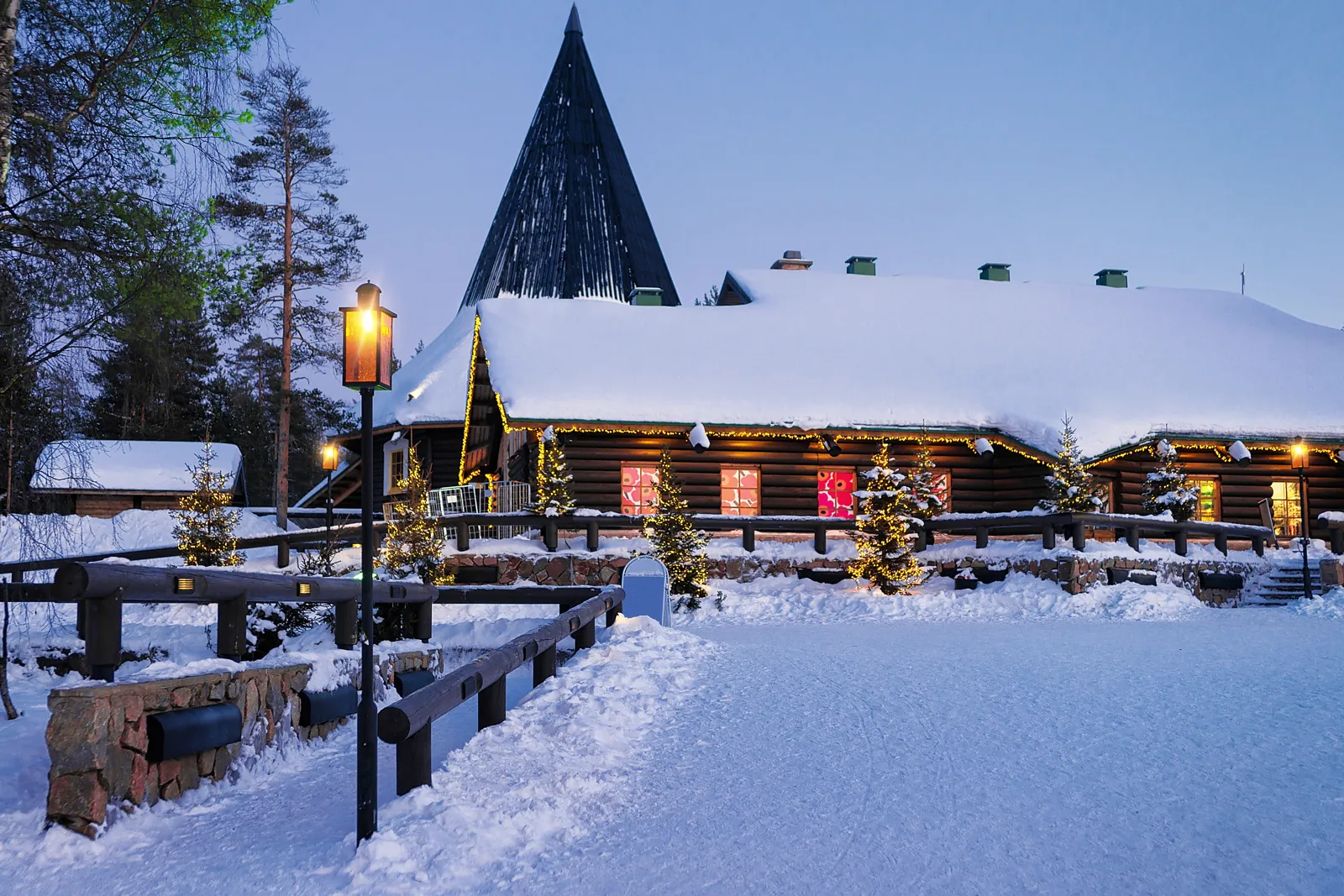
The best time to visit Lapland is December to March for snow, winter activities and the northern lights, and ideally late February and March: the snow is deep, the days are getting longer and the cold becomes more bearable. For hiking, the midnight sun and autumn colors, aim for July to mid-September.
Finnish Lapland has a subarctic climate: a long, cold winter from November to April and a short, mild summer. Precipitation is low, from 25 to 80 mm (1.0 to 3.1 in) per month depending on the station, mostly falling as snow in winter. What decides the best time to go is above all the light: polar night around Christmas, midnight sun in June and July. Here is how to choose, based on the official normals of the Finnish Meteorological Institute (FMI).

Our travel deals for Lapland
Affiliate links: we earn a commission, at no extra cost to you.
 FlightsKiwi.comCompare flights and airline combinations to Lapland.Compare flights

When to go to Lapland at a glance
- Best time for winter late February to late March (snow, light, less intense cold)
- Christmas atmosphere December, with very short days and the highest prices of the year
- Northern lights from late August to early April, when nights are dark enough and the sky is clear
- Coldest months January and February, with an average of -7.3 °C (19 °F) in the afternoon and -13.5 °C (8 °F) at night in Rovaniemi, and clearly colder further north
- Hottest month July, with an average high of 20.1 °C (68 °F) in Rovaniemi
- Best avoided May (snowmelt, few activities); late June to July if you dislike mosquitoes
- Autumn colors (ruska) usually late August to mid-September in the north
When to go to Lapland by priority
- Best weather: late February and March for snow and auroras; July to mid-September for hiking
- Cheapest: April, August and September, at mid-range prices; December is the most expensive period
- Fewest crowds: January outside New Year for winter; August–September for summer
- Events: Sámi National Day on February 6, Juhannus (Midsummer, the Friday and Saturday between June 19 and 26), ruska from late August to mid-September, Christmas in Rovaniemi
Lapland: the calendar at a glance
✅ Best months: January, February, March, August, September, December
❌ Period to avoid: may
Climate and weather in Lapland month by month
The table below gives the normals for the Rovaniemi airport station, the main gateway to Lapland, located on the Arctic Circle. Further north (Sodankylä, Ivalo, Saariselkä, Levi), winter nights are 3 to 5 °C (5 to 9 °F) colder on average. For Sámi country, see our guide to Inari.
| Month | Avg. max | Avg. min | Rain | Crowds | Prices | Verdict |
|---|---|---|---|---|---|---|
| January | -7.3 °C (19 °F) | -13.5 °C (8 °F) | 46 mm (1.8 in) | Moderate (high at New Year) | High | ✅ Deep cold, snow, auroras |
| February | -7.3 °C (19 °F) | -13.3 °C (8 °F) | 37 mm (1.5 in) | High | High | ✅ Deep snow, lengthening days |
| March | -1.9 °C (29 °F) | -9.1 °C (16 °F) | 37 mm (1.5 in) | High | High | ✅ The best winter compromise |
| April | 4.1 °C (39 °F) | -3.4 °C (26 °F) | 34 mm (1.3 in) | Moderate | Moderate | ⚠️ Spring skiing, nights too bright for auroras |
| May | 11.0 °C (52 °F) | 2.5 °C (37 °F) | 48 mm (1.9 in) | Low | Low | ❌ Snowmelt, few activities |
| June | 17.0 °C (63 °F) | 8.5 °C (47 °F) | 64 mm (2.5 in) | Moderate | Moderate | ⚠️ Midnight sun, mosquitoes |
| July | 20.1 °C (68 °F) | 11.8 °C (53 °F) | 81 mm (3.2 in) | Moderate | Moderate | ⚠️ Mild and bright, mosquitoes |
| August | 17.2 °C (63 °F) | 9.6 °C (49 °F) | 68 mm (2.7 in) | Moderate | Moderate | ✅ Hiking, first auroras at the end of the month |
| September | 11.1 °C (52 °F) | 4.9 °C (41 °F) | 60 mm (2.4 in) | Moderate | Moderate | ✅ Ruska, auroras, cool nights |
| October | 3.1 °C (38 °F) | -1.3 °C (30 °F) | 54 mm (2.1 in) | Low | Low | ⚠️ Dark, often no snow or frozen lakes yet |
| November | -2.1 °C (28 °F) | -6.7 °C (20 °F) | 55 mm (2.2 in) | Moderate, high at the end of the month | Moderate → high | ⚠️ Uncertain snow, very short days |
| December | -4.9 °C (23 °F) | -10.6 °C (13 °F) | 51 mm (2.0 in) | Very high | Very high | ✅ Christmas, polar night, peak prices |
The sunshine measured by the FMI in Rovaniemi sums up the rhythm of the year: about 3 hours of sun in the whole month of December, 15 hours in January, then 132 hours in March and more than 260 hours in June and July.
The seasons in Lapland: pros and cons
Midwinter (December to January): Christmas and polar night
In December and January, afternoon highs stay below -5 °C (23 °F) in Rovaniemi and the sun barely rises. North of the Arctic Circle it does not rise at all for a period ranging from a few days to nearly two months depending on latitude: this is the kaamos, the polar night. It is not dark all day, though: around noon, a bluish light illuminates the snow for a few hours.
- Pros: Christmas atmosphere at Santa Claus Village, snowy landscapes, long nights favorable to the northern lights
- Cons: sometimes extreme cold (spells below -25 °C (-13 °F) are possible), little daylight for activities, prices and crowds at their peak from mid-December to New Year
Late winter (February to March): the best season
In February the days lengthen quickly and the snow reaches its maximum depth. March is often the most pleasant month: afternoons hover around -2 °C (28 °F) in Rovaniemi, the sun shines more than 130 hours in the month, and nights remain dark enough to watch the auroras.
- Pros: ideal conditions for dog sledding, snowmobiling, cross-country skiing and snowshoeing, bright days, auroras still visible
- Cons: Finnish winter holiday periods and school holidays in Europe and North America make February busy: book early
Spring (April to May): spring skiing, then the thaw
April often keeps a good snow cover in the north, with positive afternoon temperatures: it is spring skiing season in resorts such as Levi or Saariselkä. In May the snow melts, paths turn soggy, lakes thaw and many operators take a break.
- Pros: sunshine, relative mildness, skiing and ski touring in April, lower prices
- Cons: nights too bright for auroras from mid-April, off-season in May
Summer (June to August): midnight sun and hiking
In summer it is mild (17 to 20 °C (63 to 68 °F) in the afternoon in Rovaniemi) and the sun does not set for several weeks around the solstice north of the Arctic Circle. It is the season for hiking in the national parks, canoeing and fishing. July is also the wettest month, with showers rather than long spells of rain.
- Pros: permanent daylight, accessible nature, marked trails and open huts in the national parks, moderate prices
- Cons: very many mosquitoes and small flies from late June to July, no auroras, no snow
Autumn (September to November): ruska and first auroras
In September the tundra and dwarf birch forests turn red and gold: this is the ruska, usually from late August to mid-September in the north. Nights are dark again and the auroras can be reflected in the lakes, which are not yet frozen. October and November are grayer: it is cold, but the snow does not always settle before the end of November.
- Pros: autumn colors, auroras without severe cold, few visitors
- Cons: no snow activities before winter, often overcast in October and November
When to go to Lapland by region
Finnish Lapland stretches more than 300 km (186 mi) from south to north. The further north you go, the longer and colder the winter, and the longer the polar night and the midnight sun last. Here is a comparison of the official normals from three stations:
| Month | Rovaniemi | Sodankylä | Ivalo |
|---|---|---|---|
| January | -7.3 °C (19 °F) / -13.5 °C (8 °F) | -8.1 °C (17 °F) / -17.5 °C (1 °F) | -7.9 °C (18 °F) / -16.5 °C (2 °F) |
| February | -7.3 °C (19 °F) / -13.3 °C (8 °F) | -7.6 °C (18 °F) / -17.2 °C (1 °F) | -7.4 °C (19 °F) / -16.1 °C (3 °F) |
| March | -1.9 °C (29 °F) / -9.1 °C (16 °F) | -1.8 °C (29 °F) / -12.9 °C (9 °F) | -2.2 °C (28 °F) / -12.3 °C (10 °F) |
| April | 4.1 °C (39 °F) / -3.4 °C (26 °F) | 4.0 °C (39 °F) / -6.0 °C (21 °F) | 3.2 °C (38 °F) / -5.8 °C (22 °F) |
| May | 11.0 °C (52 °F) / 2.5 °C (37 °F) | 10.5 °C (51 °F) / 0.7 °C (33 °F) | 9.3 °C (49 °F) / 0.5 °C (33 °F) |
| June | 17.0 °C (63 °F) / 8.5 °C (47 °F) | 16.9 °C (62 °F) / 6.9 °C (44 °F) | 15.4 °C (60 °F) / 6.4 °C (44 °F) |
| July | 20.1 °C (68 °F) / 11.8 °C (53 °F) | 20.2 °C (68 °F) / 10.1 °C (50 °F) | 19.1 °C (66 °F) / 9.9 °C (50 °F) |
| August | 17.2 °C (63 °F) / 9.6 °C (49 °F) | 17.4 °C (63 °F) / 7.8 °C (46 °F) | 16.4 °C (62 °F) / 7.8 °C (46 °F) |
| September | 11.1 °C (52 °F) / 4.9 °C (41 °F) | 11.1 °C (52 °F) / 3.3 °C (38 °F) | 10.7 °C (51 °F) / 3.5 °C (38 °F) |
| October | 3.1 °C (38 °F) / -1.3 °C (30 °F) | 2.9 °C (37 °F) / -2.8 °C (27 °F) | 2.8 °C (37 °F) / -2.4 °C (28 °F) |
| November | -2.1 °C (28 °F) / -6.7 °C (20 °F) | -2.8 °C (27 °F) / -9.2 °C (15 °F) | -2.8 °C (27 °F) / -9.3 °C (15 °F) |
| December | -4.9 °C (23 °F) / -10.6 °C (13 °F) | -5.7 °C (22 °F) / -14.0 °C (7 °F) | -5.6 °C (22 °F) / -13.3 °C (8 °F) |
Rovaniemi and the Arctic Circle
Rovaniemi is the most accessible and liveliest, with Santa Claus Village, its airport and its train station. Winters are a little milder than further north, and the sun disappears completely only for a few days around the solstice. Best times: December for Christmas, February–March for activities.
The center: Sodankylä, Levi and Ylläs
Further north, Sodankylä and the Kittilä region (Levi, Ylläs) have clearly colder nights: an average minimum of -17.5 °C (1 °F) in January in Sodankylä, and -18 °C (0 °F) at Kittilä Pokka. Levi and Ylläs are the country’s major ski resorts. Best times: February to April.
The north: Saariselkä, Ivalo and Inari
Around Ivalo and Saariselkä, winter is long and dry: 22 to 29 mm (0.9 to 1.1 in) of precipitation per month from December to March. The very dark sky favors the auroras. Inari, on the shore of the largest lake in Lapland, is the center of Sámi culture. Best times: late February to March for winter, late August to mid-September for ruska.
When to go to Lapland for your plans
| Your plan | Best time | What to plan for |
|---|---|---|
| Seeing the northern lights | September, then February–March | Several nights on site; a clear sky is essential |
| Meeting Santa Claus | December (the village is open all year) | Book 6 to 12 months ahead, peak prices |
| Dog sledding, snowmobiling | December to March | Extreme-cold overalls are often lent by operators |
| Downhill and cross-country skiing | February to April | Levi, Ylläs, Saariselkä, Pyhä |
| Tight budget | Early January (after the holidays), late March–April, summer | Outside peak holiday periods |
| Hiking | July to mid-September | Mosquito repellent in July, national park huts |
| Autumn colors | Late August to mid-September | Saariselkä, Urho Kekkonen National Park, Pallas |
Major events to fit into your trip
| Period | Event | Location |
|---|---|---|
| All year, with a peak in December | Santa Claus Village and Arctic Circle crossing | Rovaniemi |
| December–January | Polar night (kaamos) | North of the Arctic Circle, lasting longer the further north you go |
| February 6 | Sámi National Day | All of Lapland, notably Inari |
| Late February – March | Peak season for winter activities, reindeer races in some years | Rovaniemi, Inari and villages across Lapland |
| Friday and Saturday between June 19 and 26 | Juhannus, the Finnish Midsummer festival | Nationwide (bonfires by the lakes) |
| June–July | Midnight sun | North of the Arctic Circle |
| Late August – mid-September | Ruska, the autumn colors | Northern Lapland |
| December 6 | Independence Day | Nationwide |
Northern lights special: when and how to see them
The northern lights occur all year, but they are only visible in a dark sky. In Lapland the season therefore runs from late August to early April, when nights are dark enough. Three conditions matter: darkness, a clear sky and sufficient solar activity. The first two are predictable, the third much less so.
To maximize your chances: stay at least 3 to 5 nights, get away from lights, watch the cloud cover and the aurora forecasts published by the FMI, and dress to wait outside in severe cold.
Iceland is another classic destination for the auroras, with a milder but windier and cloudier winter: see our article on when to go to Iceland, or compare with when to go to Norway and when to go to Sweden. For more seasonal ideas, see also where to go in February and where to go in March.
Lapland month by month
Lapland in January: The heart of winter: an average of -7.3 °C (19 °F) in the afternoon and -13.5 °C (8 °F) at night in Rovaniemi, much colder in Sodankylä or Ivalo. Little daylight, but reliable snow and long nights for the auroras. Prices ease after the first week.
Lapland in February: Still very cold, but the days lengthen quickly. Excellent snow for all activities. Sámi National Day on February 6. High demand during school holiday periods.
Lapland in March: The best month for many travelers: deep snow, -1.9 °C (29 °F) in the afternoon in Rovaniemi, more than 130 hours of sunshine, auroras still visible at night.
Lapland in April: Spring skiing in the sun in the northern resorts, positive afternoon temperatures. Nights become too bright for auroras from mid-April. Moderate crowds, except at Easter.
Lapland in May: Snowmelt makes paths muddy and lakes impassable. Many operators close: the least interesting month.
Lapland in June: Midnight sun around the solstice, nature turning green again, 17 °C (63 °F) in the afternoon. Mosquitoes appear at the end of the month. Juhannus (Midsummer), the weekend closest to June 24.
Lapland in July: The hottest month (average high of 20.1 °C (68 °F) in Rovaniemi) and the wettest (81 mm (3.2 in)). Hiking, canoeing, fishing. Bring an effective mosquito repellent.
Lapland in August: Still mild, with fewer insects at the end of the month. Nights get dark again: first auroras possible in late August. Ruska sometimes begins in the far north.
Lapland in September: Autumn colors, cool nights (an average of 4.9 °C (41 °F) in Rovaniemi) and auroras reflected in the lakes. Few visitors: an excellent month for hiking and photography.
Lapland in October: Gray, cold and dark, often without lasting snow. Low prices, but few activities: a transition period to avoid on a first trip.
Lapland in November: Snow generally settles during the month, with no guarantee at the start. Very short days. Ski resorts open, and prices rise sharply from the end of the month.
Lapland in December: Christmas atmosphere, polar night north of the Arctic Circle, -4.9 °C (23 °F) in the afternoon and -10.6 °C (13 °F) at night in Rovaniemi. The most expensive and busiest month, especially around Christmas and New Year.
Lapland in December, January, February or March: comparison
The four winter months differ mainly in light, cold and prices. This table repeats the data from the climate table above to help you decide.
| Month | Avg. max / min in Rovaniemi | Sunshine | Who is it for? |
|---|---|---|---|
| December | -4.9 °C (23 °F) / -10.6 °C (13 °F) | About 3 hours over the month | Christmas, polar night, maximum prices |
| January | -7.3 °C (19 °F) / -13.5 °C (8 °F) | About 15 hours over the month | Deep cold, reliable snow, lower prices after New Year |
| February | -7.3 °C (19 °F) / -13.3 °C (8 °F) | Lengthening days | Deep snow, winter holidays: book early |
| March | -1.9 °C (29 °F) / -9.1 °C (16 °F) | About 132 hours over the month | The best compromise: snow, light, auroras |
When to book your trip to Lapland
For Christmas and New Year, book 6 to 12 months ahead: accommodation in Rovaniemi, glass igloos and cabins near Santa Claus Village fill up early. For the February school-holiday period, allow 4 to 6 months. For March, summer and autumn, 2 to 3 months is generally enough. In winter, also book your activities (husky safaris, snowmobiling) before you leave, especially for peak dates.
Planning your trip to Lapland
- Entry requirements: rules depend on your nationality: see our entry requirements for Finland.
- Currency: the euro. Bank cards and contactless payment are accepted almost everywhere, even for small amounts.
- Health: according to the UK FCDO (GOV.UK, updated 11 August 2026), health risks in Finland include insect bites and ticks; check the latest vaccine recommendations for your destination before you travel.
- Winter driving: according to the U.S. State Department (travel.state.gov, last updated May 14, 2026), winter driving in Finland can be hazardous and daylight hours are very short, so drivers should be comfortable driving in darkness.
To plan your stay on site, see our Finnish Lapland travel guide: Rovaniemi, Levi, Saariselkä, activities and where to stay.
Frequently asked questions
What is the best month to visit Lapland?
March is often the best compromise: deep snow, an average of -1.9 °C (29 °F) in the afternoon in Rovaniemi, more than 130 hours of sunshine in the month and nights still dark enough for the auroras. February is also excellent, with more cold. For Christmas, choose December.
When can you see the northern lights in Lapland?
From late August to early April, when nights are dark enough. September and March offer a good balance between darkness and moderate cold. You need a clear sky: allow at least 3 to 5 nights on site and get away from city lights.
Is Lapland very cold in winter?
Yes. In January the average maximum is -7.3 °C (19 °F) and the average minimum -13.5 °C (8 °F) in Rovaniemi, according to the FMI. Further north, the average minimum drops to around -17 °C (1 °F) in Sodankylä, and much colder spells are possible. Extreme-cold clothing is essential.
When should you go to Lapland to see Santa Claus?
Santa Claus Village in Rovaniemi is open all year. The atmosphere is strongest in December, but it is also the most expensive and busiest period. Late November and early December offer a Christmas atmosphere with slightly fewer visitors, provided you accept that snow is not always plentiful.
Can you go to Lapland in summer?
Yes: from June to August it is 17 to 20 °C (63 to 68 °F) in the afternoon in Rovaniemi and the sun does not set for several weeks north of the Arctic Circle. It is the season for hiking, canoeing and fishing. Bring mosquito repellent, especially from late June to July.
What is the weather like in Lapland in November?
In Rovaniemi, about -2.1 °C (28 °F) in the afternoon and -6.7 °C (20 °F) at night according to the FMI’s 1991–2020 normals, with very short days. Snow generally settles during the month, with no guarantee at the start: to be sure of snow, aim for December to March.
Lapland in December or March: which to choose?
December for the Christmas atmosphere and Santa Claus Village, with the polar night and the highest prices. March for snow activities: it is -1.9 °C (29 °F) in the afternoon in Rovaniemi against -4.9 °C (23 °F) in December, the days are long and the auroras are still visible.
How should you dress for Lapland in winter?
Wear three layers: a wool or synthetic thermal layer, an insulating layer and a windproof layer. Add a hat, mittens, wool socks and insulated boots. Activity operators often lend extreme-cold overalls.
Is Lapland a good idea in spring?
In April, yes: snow still lies in the north, afternoons turn positive and it is spring skiing season in Levi or Saariselkä, at lower prices. But nights become too bright for auroras from mid-April, and May, the thaw season, is a dead season.
Finnish, Swedish or Norwegian Lapland: is the best time the same?
Broadly, yes: these regions around and beyond the Arctic Circle share the same alternation of polar night in winter and midnight sun in summer, with a snow season from December to March. See also when to go to Sweden and when to go to Norway.
What about the rest of Finland?
To combine Lapland with the rest of the country, see our Finland travel guide.
Our sources
- Lapland: 1991–2020 normals from the Finnish Meteorological Institute (FMI): Rovaniemi (airport), Sodankylä (Tähtelä), Ivalo (airport), Kittilä (Pokka), including monthly sunshine duration for Rovaniemi and Sodankylä
- Entry, health and safety information read on 26 October 2026: UK FCDO, foreign travel advice for Finland (GOV.UK, updated 11 August 2026), and U.S. Department of State, Finland country information (travel.state.gov, last updated May 14, 2026). Event dates checked on 11 November 2026: Infofinland, Finnish holidays and Sámi Parliament of Finland
- Our methodology
Updated November 2026.